Nombre total de pages vues
09/08/2024
SANTé/MEDECINE - Les moustiques attaquent ? Techniques naturelles vont vous en débarrasser (3/3)
ASTRONOMY - A Perseid Below
2024 August 9
Image Credit: Ron Garan, ISS Expedition 28 Crew, NASA
Explanation: Denizens of planet Earth typically watch meteor showers by looking up. But this remarkable view, captured on August 13, 2011 by astronaut Ron Garan, caught a Perseid meteor by looking down. From Garan's perspective on board the International Space Station orbiting at an altitude of about 380 kilometers, the Perseid meteors streak below, swept up dust from comet Swift-Tuttle. The vaporizing comet dust grains are traveling at about 60 kilometers per second through the denser atmosphere around 100 kilometers above Earth's surface. In this case, the foreshortened meteor flash is near frame center, below the curving limb of the Earth and a layer of greenish airglow, just below bright star Arcturus. Want to look up at a meteor shower? You're in luck, as the 2024 Perseid meteor shower is active now and predicted to peak near August 12. With interfering bright moonlight absent, this year you'll likely see many Perseid meteors under clear, dark skies after midnight.
08/08/2024
SANTé/MEDECINE - Les moustiques attaquent ? Techniques naturelles vont vous en débarrasser (2/3)
ASTRONOMY - Periodic Comet Swift-Tuttle
Image Credit & Copyright: Gerald Rhemann
Explanation: A Halley-type comet with an orbital period of about 133 years, Comet 109P/Swift-Tuttle is recognized as the parent of the annual Perseid Meteor Shower. The comet's last visit to the inner Solar System was in 1992. Then, it did not become easily visible to the naked eye, but it did become bright enough to see from most locations with binoculars and small telescopes. This stunning color image of Swift-Tuttle's greenish coma, long ion tail and dust tail was recorded using film on November 24, 1992. That was about 16 days after the large periodic comet's closest approach to Earth. Comet Swift-Tuttle is expected to next make an impressive appearance in night skies in 2126. Meanwhile, dusty cometary debris left along the orbit of Swift-Tuttle will continue to be swept up creating planet Earth's best-known July and August meteor shower.
07/08/2024
SANTé/MEDECINE - Les moustiques attaquent ? Techniques naturelles vont vous en débarrasser (1/3)
INVENTIONS DE DEMAIN - Tout le crédit sur une même carte
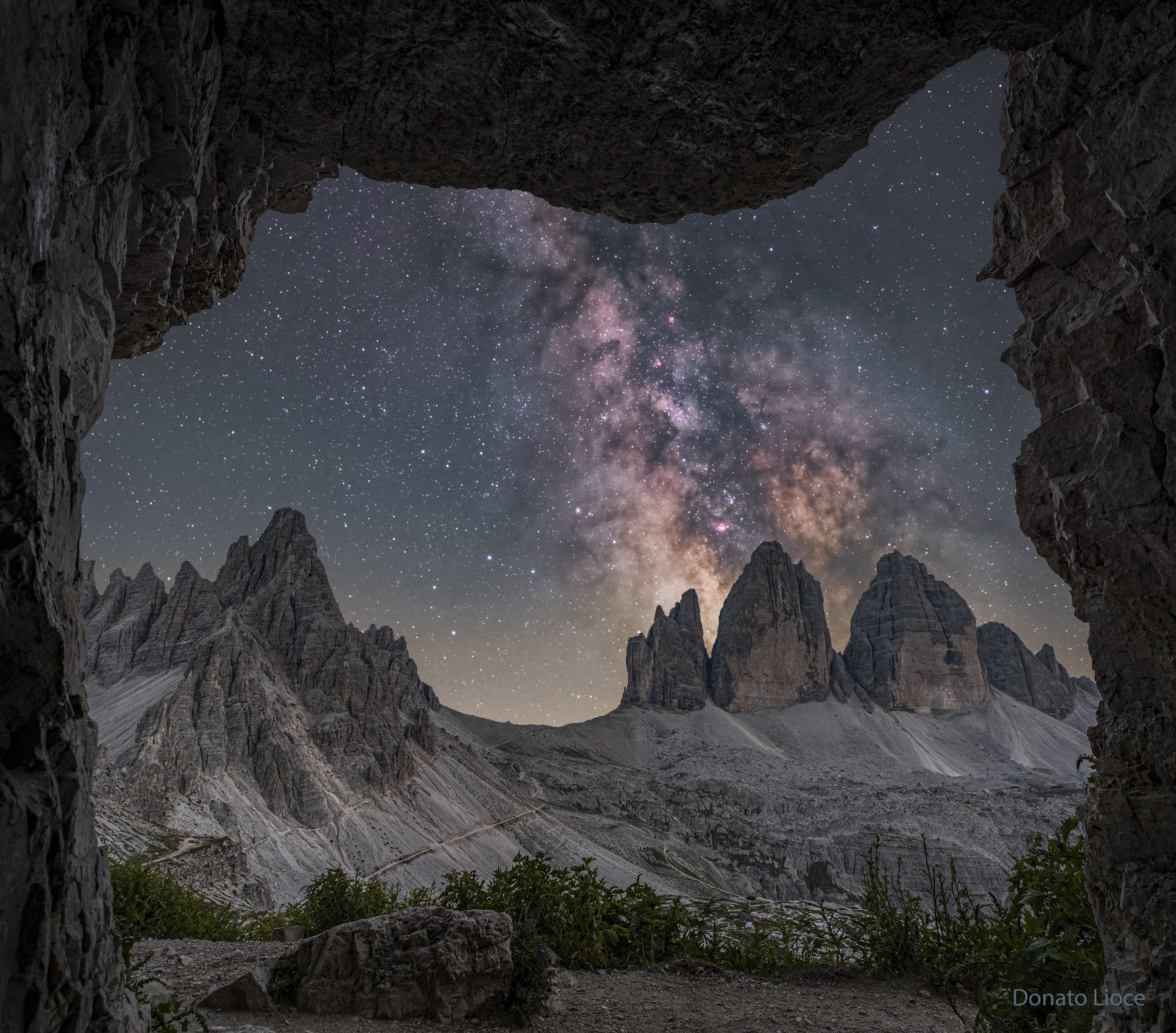
ASTRONOMY - Milky Way Behind Three Merlons
Image Credit & Copyright: Donato Lioce; Text: Natalia Lewandowska (SUNY Oswego)
Explanation: To some, they look like battlements, here protecting us against the center of the Milky Way. The Three Merlons, also called the Three Peaks of Lavaredo, stand tall today because they are made of dense dolomite rock which has better resisted erosion than surrounding softer rock. They formed about 250 million years ago and so are comparable in age with one of the great extinctions of life on Earth. A leading hypothesis is that this great extinction was triggered by an asteroid about 10-km across, larger in size than Mount Everest, impacting the Earth. Humans have gazed up at the stars in the Milky Way and beyond for centuries, making these battlefield-like formations, based in the Sexten Dolomites, a popular place for current and ancient astronomers.
06/08/2024
SANTé/MEDECINE - Savoir lire les résultats d'une prise de sang - (1-e) - Le Volume Globulaire Moyen
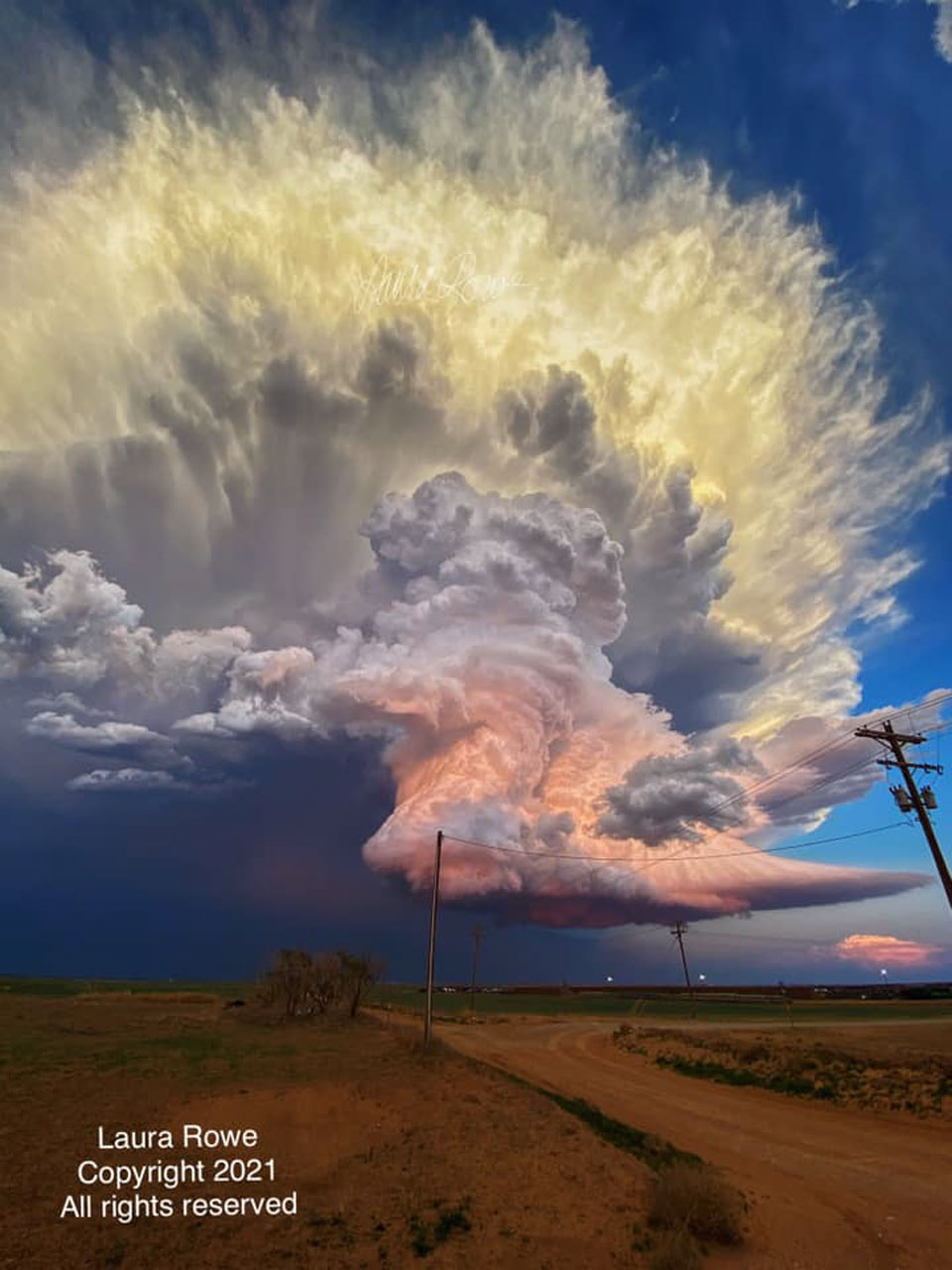
ASTRONOMY - Storm Cloud Over Texas
2024 August 6
Image Credit & Copyright: Laura Rowe (Used with permission)
Explanation: What makes this storm cloud so colorful? First, the cloud itself is composed of millions of tiny droplets of water and ice. Its bottom is almost completely flat -- but this isn't unusual. Bottom flatness in clouds is generally caused by air temperature dropping as you go up, and that above a specific height, water-saturated air condenses out water droplets. The shape of the cloud middle is caused by a water-droplet-laden column of air being blown upward. Most unusual, though, are the orange and yellow colors. Both colors are caused by the cloud's water drops reflecting sunlight. The orange color in the cloud's middle and bottom sections are reflections of a nearly red sunset. In contrast, the yellow color of the cloud's top results from reflection of light from a not-yet-setting Sun, where some -- but less -- blue light is being scattered away. Appearing to float above the plains in Texas, the featured impressive image of a dynamic cumulonimbus cloud was captured in 2021 while investigating a tornado.
05/08/2024
ASTRONOMY - A Solstice Sun Tattoo
025 December 20 A Solstice Sun Tattoo Image Credit & Copyright : Marcella Pace Explanation: The word solstice is from the Latin fo...
-
2022 September 26 All the Water on Planet Earth Illustration Credit: Jack Cook, Adam Nieman, Woods Hole Oceanographic Institution ; Data ...
-
2025 May 11 The Surface of Venus from Venera 14 Image Credit: Soviet Planetary Exploration Program , Venera 14 ; Processing & Copyri...