"Magnificat"
29/10/2024

LES NUAGES DIEUX DU CIEL - La formation du nuage lenticulaire

L'altocumulus lenticularis, ou nuage lenticulaire, est un nuage stationnaire, en forme de profil d'aile d'avion, qui se forme sous le vent des montagnes, signant la présence d'un ressaut ou onde. En réalité, il se forme en permanence du côté du vent et se dissout de l'autre côté, réalisant un nuage stationnaire contrastant avec un vent fort. Il se trouve souvent en empilements de plusieurs exemplaires formant une pile d'assiettes. Il est apprécié des vélivoles (ceux qui pratiquent le vol à voile) car il montre la présence d'une ascendance stable et puissante. Il est parfois cité par les sceptiques comme un stimulus possible à l'origine de visions d'ovnis. Cependant, il semblerait qu'à l'heure actuelle aucun cas de la casuistique ufologique de ce type n'ait été identifié avec certitude.
Texte d'après Wikipédia © DR
ASTRONOMY - NGC 602: Stars Versus Pillars from Webb
2024 October 29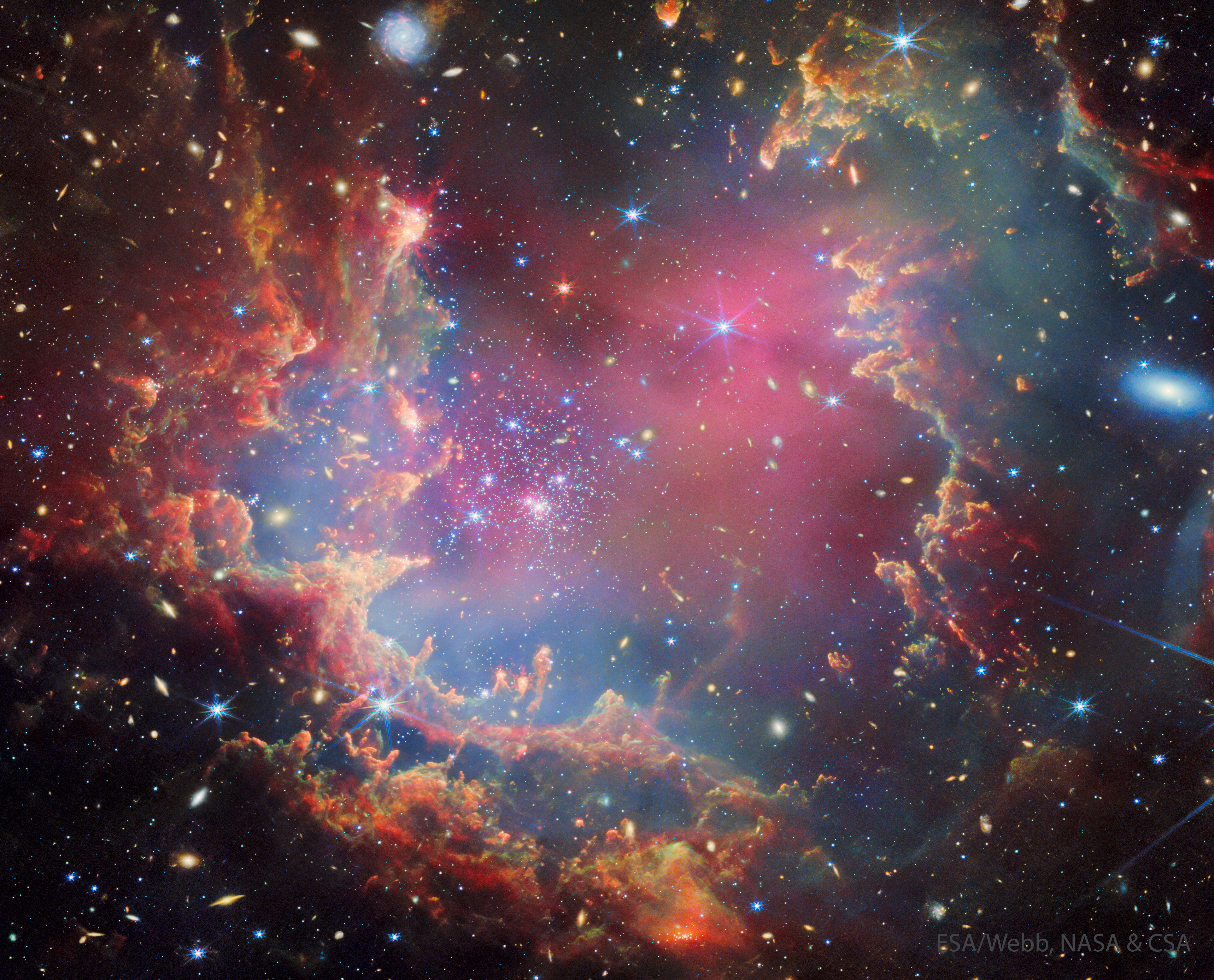
Credit: ESA/Webb, NASA & CSA, P. Zeidler, E. Sabbi, A. Nota, M. Zamani (ESA/Webb)
Explanation: The stars are destroying the pillars. More specifically, some of the newly formed stars in the image center are emitting light so energetic that is evaporating the gas and dust in the surrounding pillars. Simultaneously, the pillars themselves are still trying to form new stars. The whole setting is the star cluster NGC 602, and this new vista was taken by the Webb Space Telescope in multiple infrared colors. In comparison, a roll-over image shows the same star cluster in visible light, taken previously by the Hubble Space Telescope. NGC 602 is located near the perimeter of the Small Magellanic Cloud (SMC), a small satellite galaxy of our Milky Way galaxy. At the estimated distance of the SMC, the featured picture spans about 200 light-years. A tantalizing assortment of background galaxies are also visible -- mostly around the edges -- that are at least hundreds of millions of light-years beyond.
28/10/2024
VILLES BIONIQUES DU FUTUR - Coral Reef : un nouveau village pour Haïti

Après tous les désastres sismiques, Haïti est à reconstruire et le projet Coral Reef a pour objectif de bâtir un millier de logements préfabriqués en bord de mer, autonomes en énergie. À partir d'un module unique, l'ensemble prend la forme de deux vagues, inspirées des récifs coralliens, ménageant un espace central qui abrite un milieu naturel.
© Vincent Callebaut
ASTRONOMY - A Glowing River over France
2024 October 28
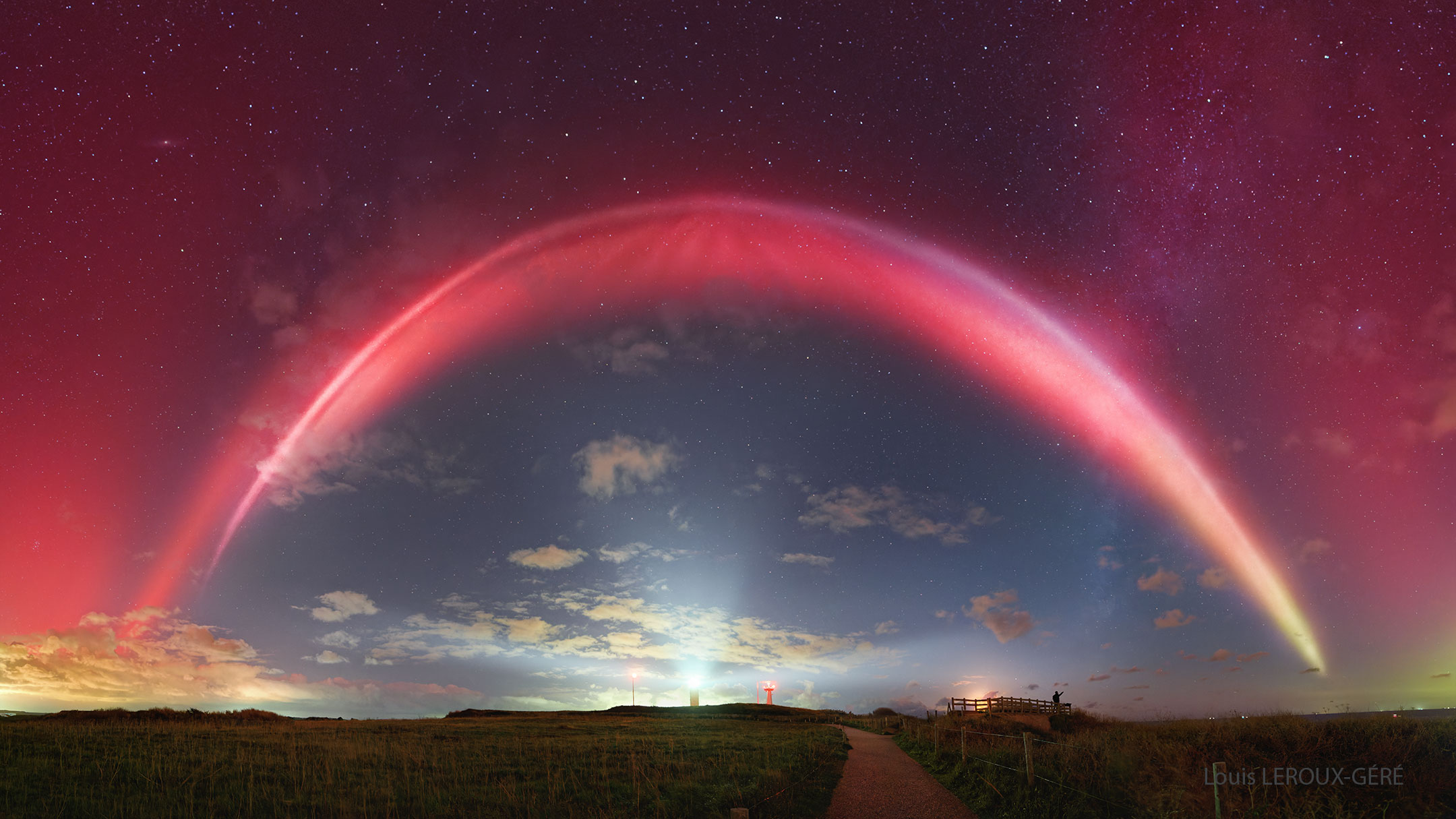
Credit & Copyright: Louis LEROUX-GÉRÉ
Explanation: Sometimes a river of hot gas flows over your head. In this case the river created a Strong Thermal Emission Velocity Enhancement (STEVE) that glowed bright red, white, and pink. Details of how STEVEs work remain a topic of research, but recent evidence holds that their glow results from a fast-moving river of hot ions flowing over a hundred kilometers up in the Earth's atmosphere: the ionosphere. The more expansive dull red glow might be related to the flowing STEVE, but alternatively might be a Stable Auroral Red (SAR) arc, a more general heat-related glow. The featured picture, taken earlier this month in Côte d'Opale, France, is a wide-angle digital composite made as the STEVE arc formed nearly overhead. Although the apparition lasted only a few minutes, this was long enough for the quick-thinking astrophotographer to get in the picture -- can you find him?
LES NUAGES DIEUX DU CIEL - Stratocumulus en Nouvelle-Zélande

Stratocumulus photographiés en Nouvelle-Zélande.
© John Day, Cloudman's Gallery, www.cloudman.com
27/10/2024
ASTRONOMY - LDN 43: The Cosmic Bat Nebula
2024 October 27
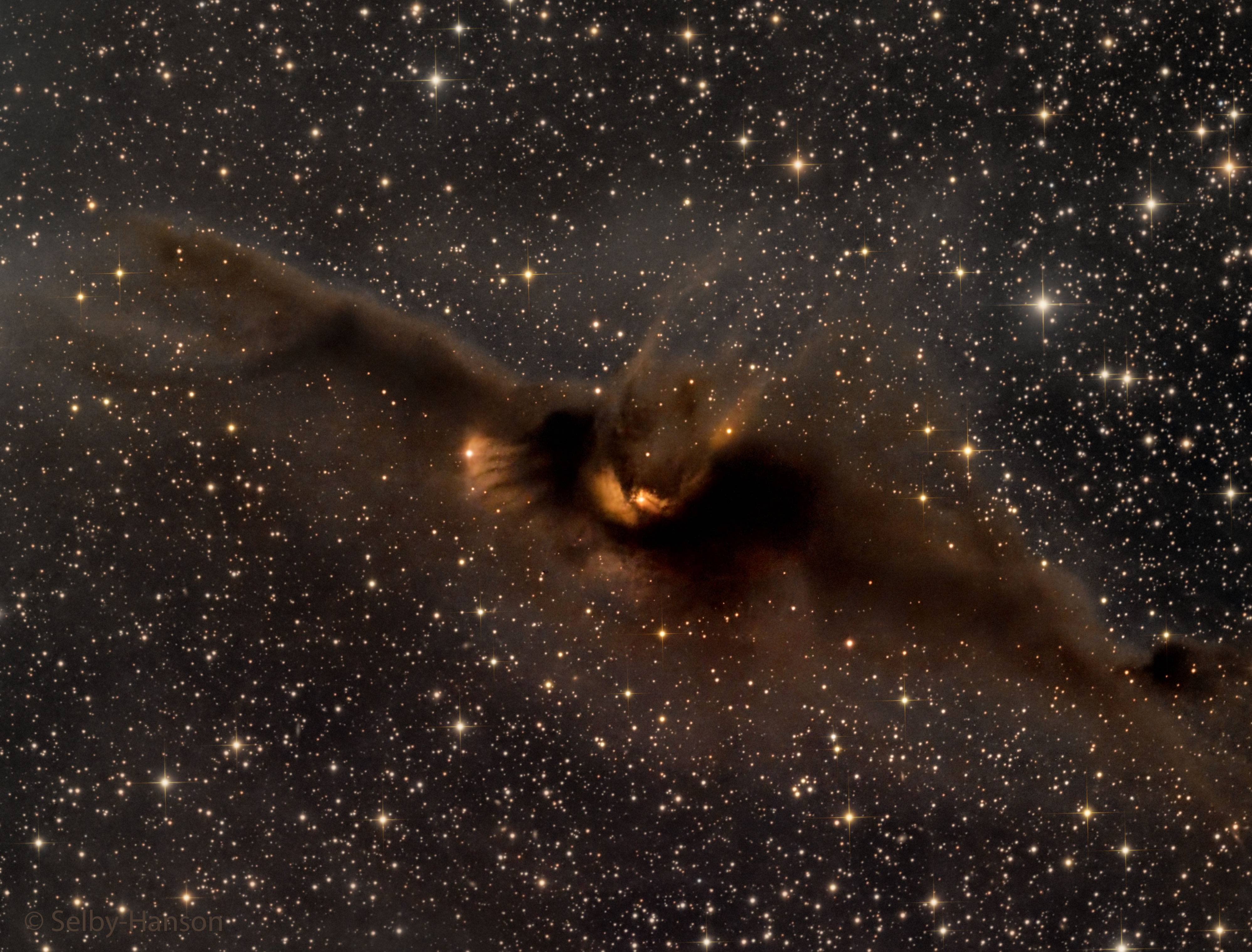
Credit & Copyright: Mark Hanson and Mike Selby; Text: Michelle Thaller (NASA's GSFC)
Explanation: What is the most spook-tacular nebula in the galaxy? One contender is LDN 43, which bears an astonishing resemblance to a vast cosmic bat flying amongst the stars on a dark Halloween night. Located about 1400 light years away in the constellation Ophiuchus, this molecular cloud is dense enough to block light not only from background stars, but from wisps of gas lit up by the nearby reflection nebula LBN 7. Far from being a harbinger of death, this 12-light year-long filament of gas and dust is actually a stellar nursery. Glowing with eerie light, the bat is lit up from inside by dense gaseous knots that have just formed young stars.
26/10/2024
VILLES BIONIQUES DU FUTUR - Dragonfly : un projet bionique pour New York

Ces deux ailes de libellule forment un ensemble d'habitation, de travail et de production agricole. Conçu pour New York et ses fortes fluctuations de température, ce prototype ménage en son centre un immense volume fermé par un voile de verre et d'acier. Les lieux habités se trouvent sur la circonférence des ailes et l'espace entre les deux constitue une serre où prennent place des cultures variées. La moitié de l'énergie vient du bouclier photovoltaïque sur la proue sud et l'autre de trois éoliennes.
© Vincent Callebaut
ASTRONOMY - Phantoms in Cassiopeia
2024 October 26
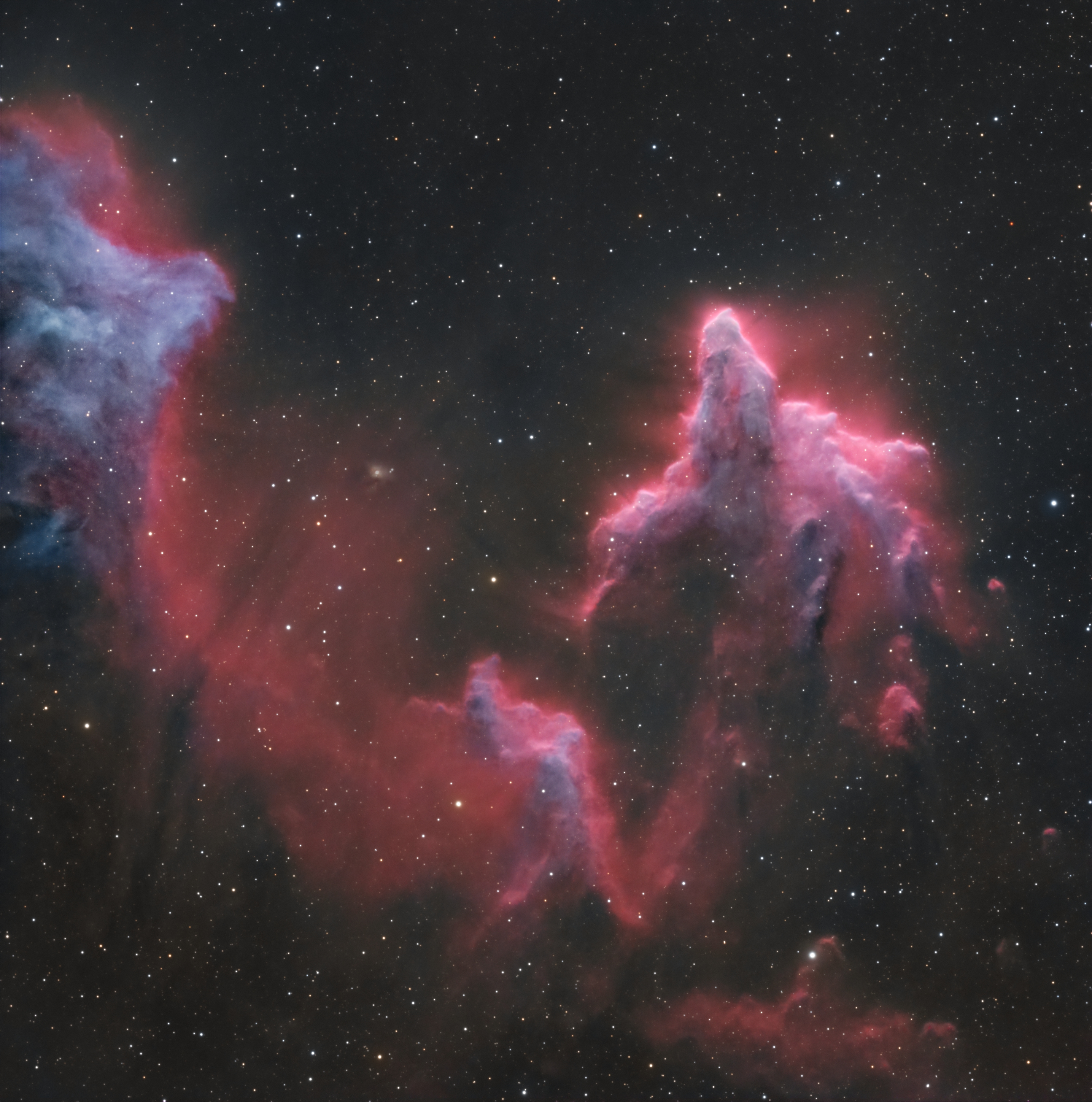
Image Credit & Copyright: Christophe Vergnes, Hervé Laur
Explanation: These brightly outlined flowing shapes look ghostly on a cosmic scale. A telescopic view toward the constellation Cassiopeia, the colorful skyscape features the swept-back, comet-shaped clouds IC 59 (left) and IC 63. About 600 light-years distant, the clouds aren't actually ghosts. They are slowly disappearing though, under the influence of energetic radiation from hot, luminous star gamma Cas. Gamma Cas is physically located only 3 to 4 light-years from the nebulae and lies just above the right edge of the frame. Slightly closer to gamma Cas, IC 63 is dominated by red H-alpha light emitted as hydrogen atoms ionized by the hot star's ultraviolet radiation recombine with electrons. Farther from the star, IC 59 shows less H-alpha emission but more of the characteristic blue tint of dust reflected star light. The field of view spans over 1 degree or 10 light-years at the estimated distance of the interstellar apparitions.
24/10/2024
ASTRONOMY - NGC 7293: The Helix Nebula
2024 October 24
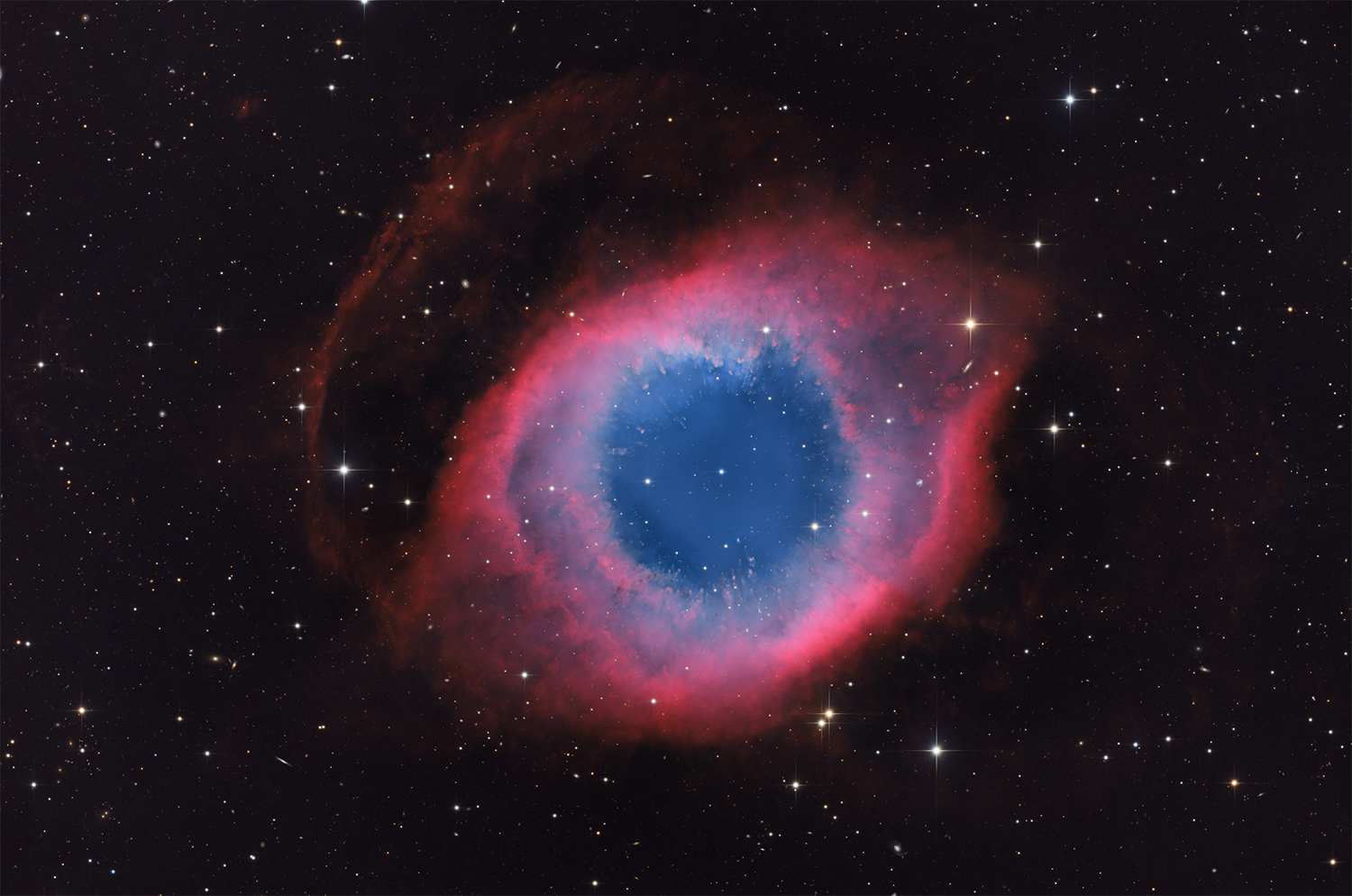
Image Credit & Copyright: Patrick Winkler
Explanation: A mere seven hundred light years from Earth toward the constellation Aquarius, a star is dying. The once sun-like star's last few thousand years have produced the Helix Nebula. Also known as NGC 7293, the cosmic Helix is a well studied and nearby example of a Planetary Nebula, typical of this final phase of stellar evolution. Combining narrow band data from emission lines of hydrogen atoms in red and oxygen atoms in blue-green hues, this deep image shows tantalizing details of the Helix, including its bright inner region about 3 light-years across. The white dot at the Helix's center is this Planetary Nebula's hot, dying central star. A simple looking nebula at first glance, the Helix is now understood to have a surprisingly complex geometry.
Inscription à :
Commentaires (Atom)
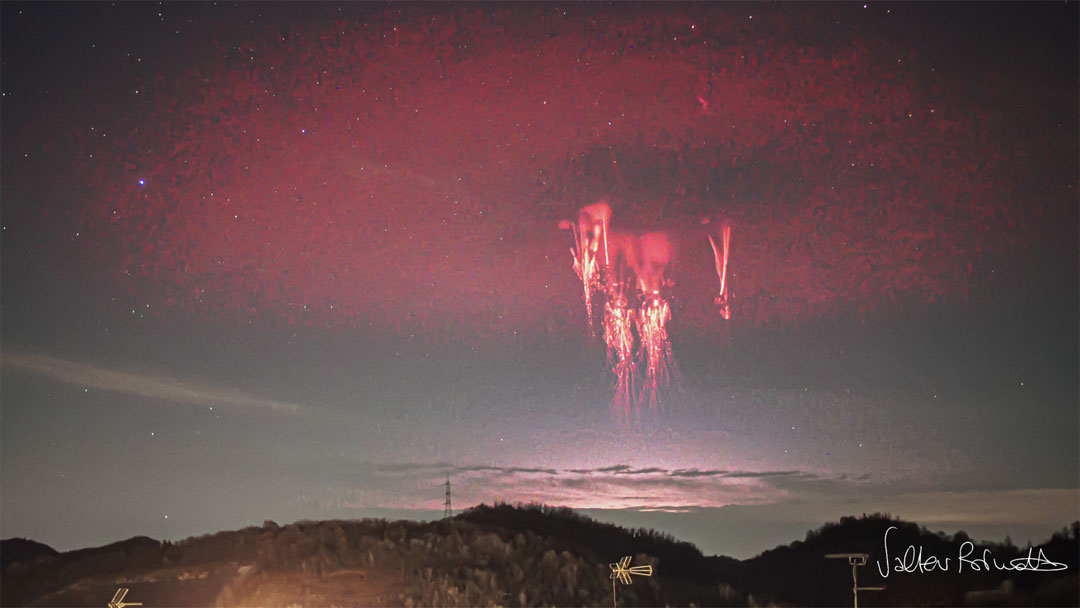
ASTRONOMY - Red Sprites and Circular Elves Lightning over Italy
2025 December 23 Red Sprites and Circular Elves Lightning over Italy Image Credit & Copyright: Valter Binotto Explanation: What's...
-
2022 September 26 All the Water on Planet Earth Illustration Credit: Jack Cook, Adam Nieman, Woods Hole Oceanographic Institution ; Data ...
-
2025 May 11 The Surface of Venus from Venera 14 Image Credit: Soviet Planetary Exploration Program , Venera 14 ; Processing & Copyri...


