Publiée en novembre 1997, cette image représente les quatre lunes galiléennes de Jupiter. De haut en bas, on peut apercevoir Io, Europe, Ganymède et Callisto.
2025 January 1
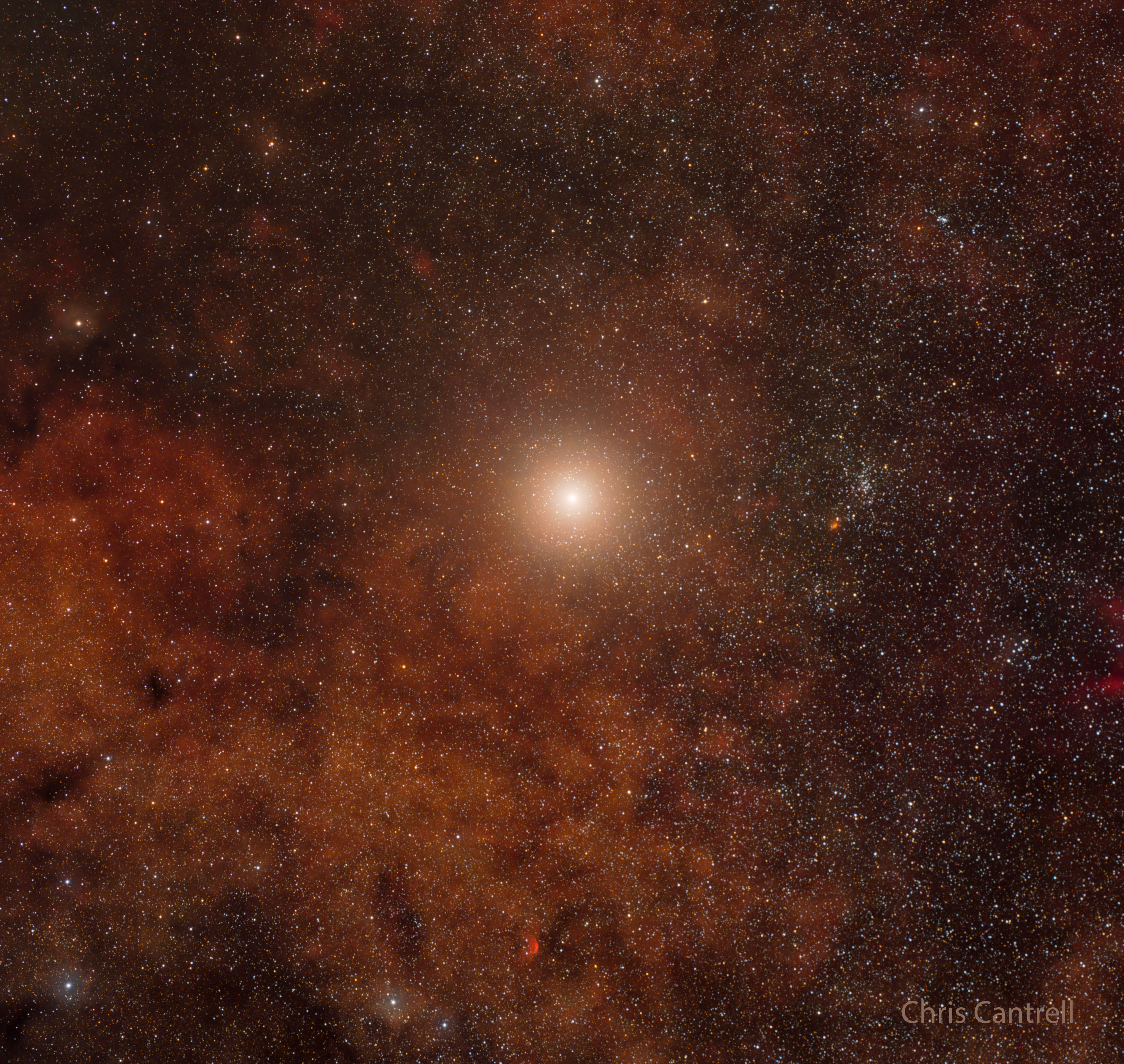
Explanation: The closest star system to the Sun is the Alpha Centauri system. Of the three stars in the system, the dimmest -- called Proxima Centauri -- is actually the nearest star. The bright stars Alpha Centauri A and B form a close binary as they are separated by only 23 times the Earth- Sun distance - slightly greater than the distance between Uranus and the Sun. The Alphasystem is not visible in much of the northern hemisphere. Alpha Centauri A, also known as Rigil Kentaurus, is the brightest star in the constellation of Centaurus and is the fourth brightest star in the night sky. Sirius is the brightest even though it is more than twice as far away. By an exciting coincidence, Alpha Centauri A is the same type of star as our Sun, and Proxima Centauri is now known to have a potentially habitable exoplanet.

2024 December 31
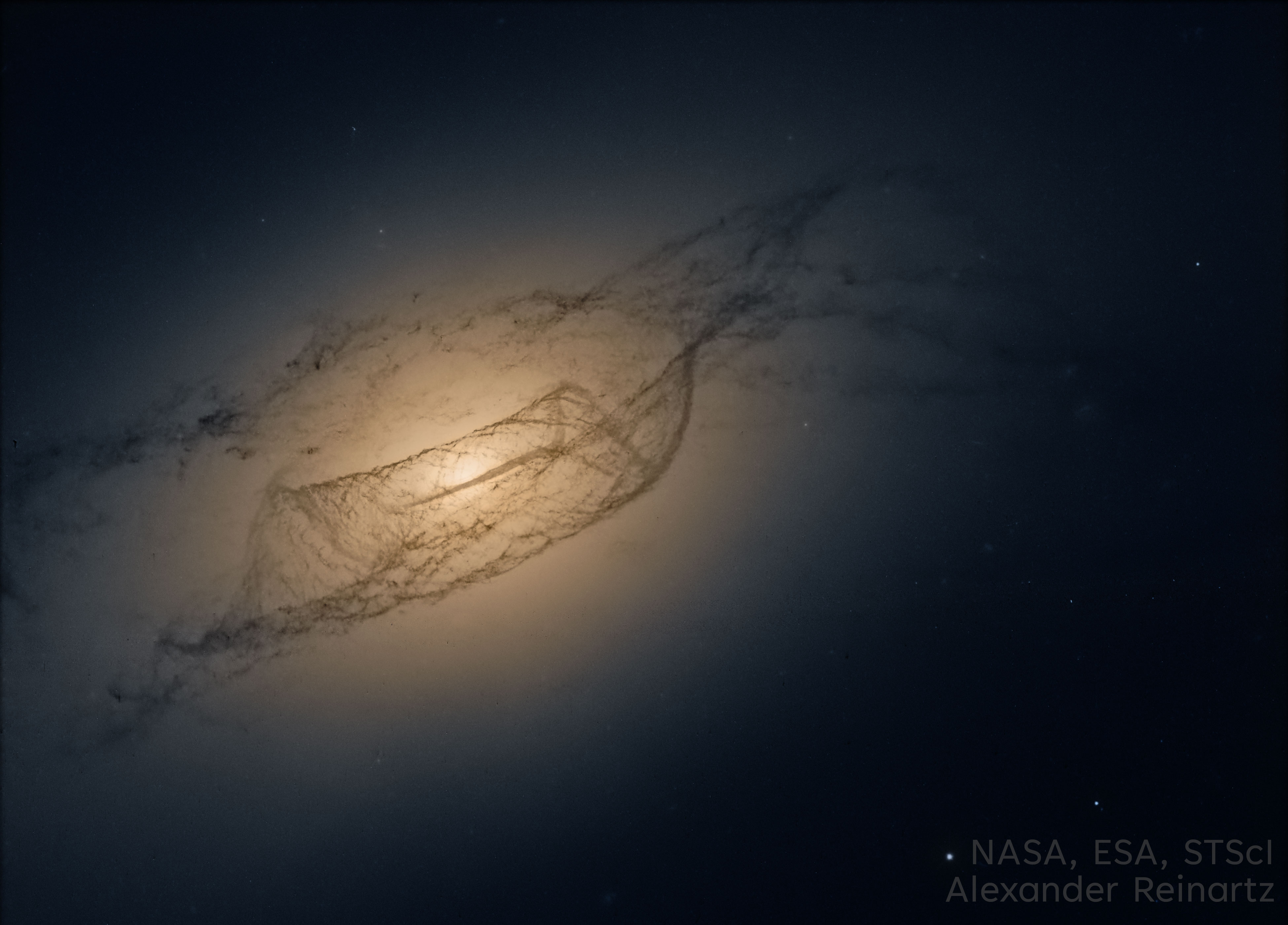
Explanation: What do you think this is? Here’s a clue: it's bigger than a bread box. Much bigger. The answer is that pictured NGC 4753 is a twisted disk galaxy, where unusual dark dust filaments provide clues about its history. No one is sure what happened, but a leading model holds that a relatively normal disk galaxy gravitationally ripped apart a dusty satellite galaxy while its precession distorted the plane of the accreted debris as it rotated. The cosmic collision is hypothesized to have started about a billion years ago. NGC 4753 is seen from the side, and possibly would look like a normal spiral galaxy from the top. The bright orange halo is composed of many older stars that might trace dark matter. The featured Hubble image was recently reprocessed to highlight ultraviolet and red-light emissions.
2024 December 30
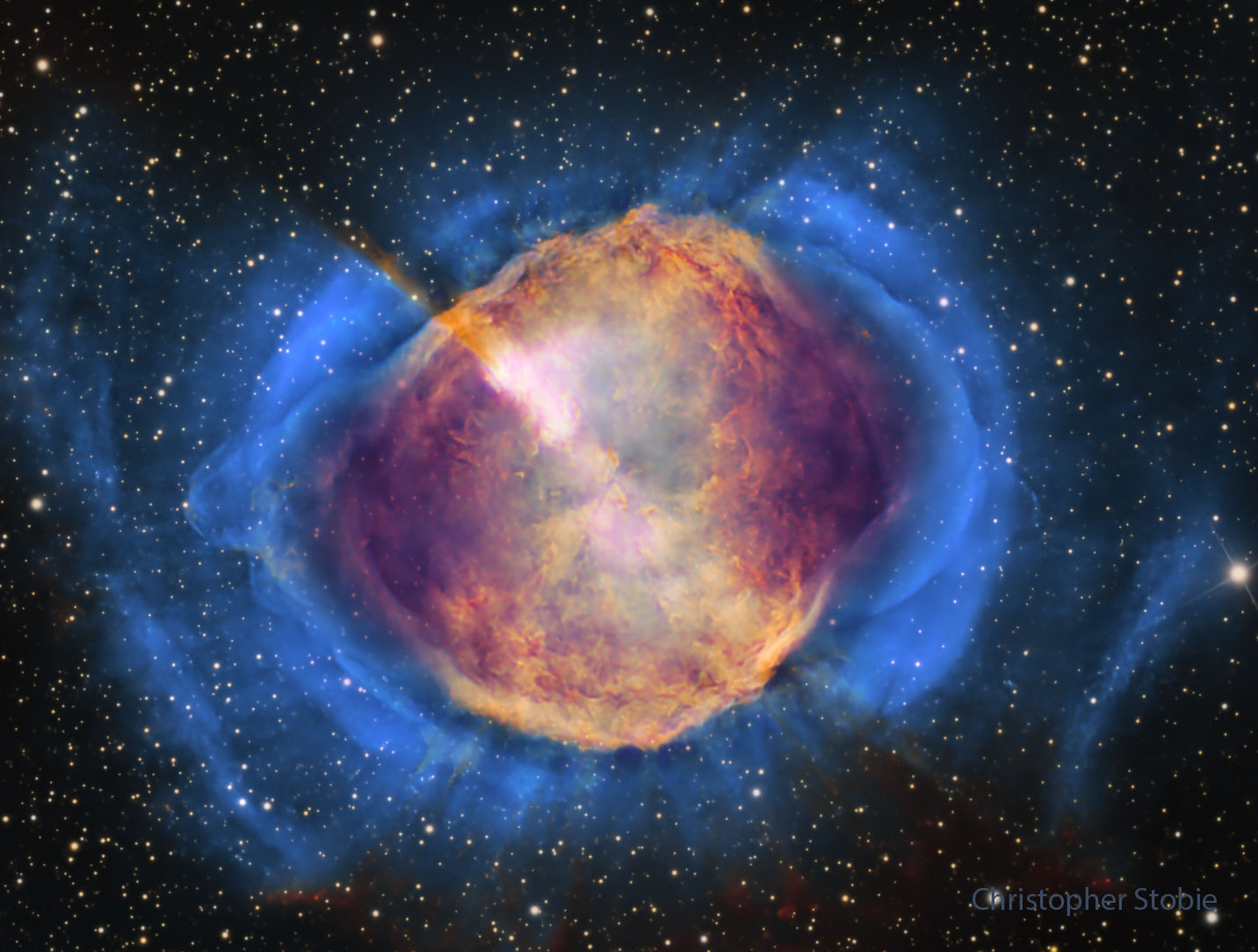
Explanation: Is this what will become of our Sun? Quite possibly. The first hint of our Sun's future was discovered inadvertently in 1764. At that time, Charles Messier was compiling a list of diffuse objects not to be confused with comets. The 27th object on Messier's list, now known as M27 or the Dumbbell Nebula, is a planetary nebula, one of the brightest planetary nebulas on the sky and visible with binoculars toward the constellation of the Fox (Vulpecula). It takes light about 1000 years to reach us from M27, featured here in colors emitted by sulfur (red), hydrogen (green) and oxygen (blue). We now know that in about 6 billion years, our Sun will shed its outer gases into a planetary nebula like M27, while its remaining center will become an X-ray hot white dwarf star. Understanding the physics and significance of M27 was well beyond 18th century science, though. Even today, many things remain mysterious about planetary nebulas, including how their intricate shapes are created.
2024 December 29

Explanation: What are these bubbles frozen into Lake Baikal? Methane. Lake Baikal, a UNESCO World Heritage Site in Russia, is the world's largest (by volume), oldest, and deepest lake, containing over 20% of the world's fresh water. The lake is also a vast storehouse of methane, a greenhouse gas that, if released, could potentially increase the amount of infrared light absorbed by Earth's atmosphere, and so increase the average temperature of the entire planet. Fortunately, the amount of methane currently bubbling out is not climatologically important. It is not clear what would happen, though, were temperatures to significantly increase in the region, or if the water level in Lake Baikal were to drop. Pictured, bubbles of rising methane froze during winter into the exceptionally clear ice covering the lake.

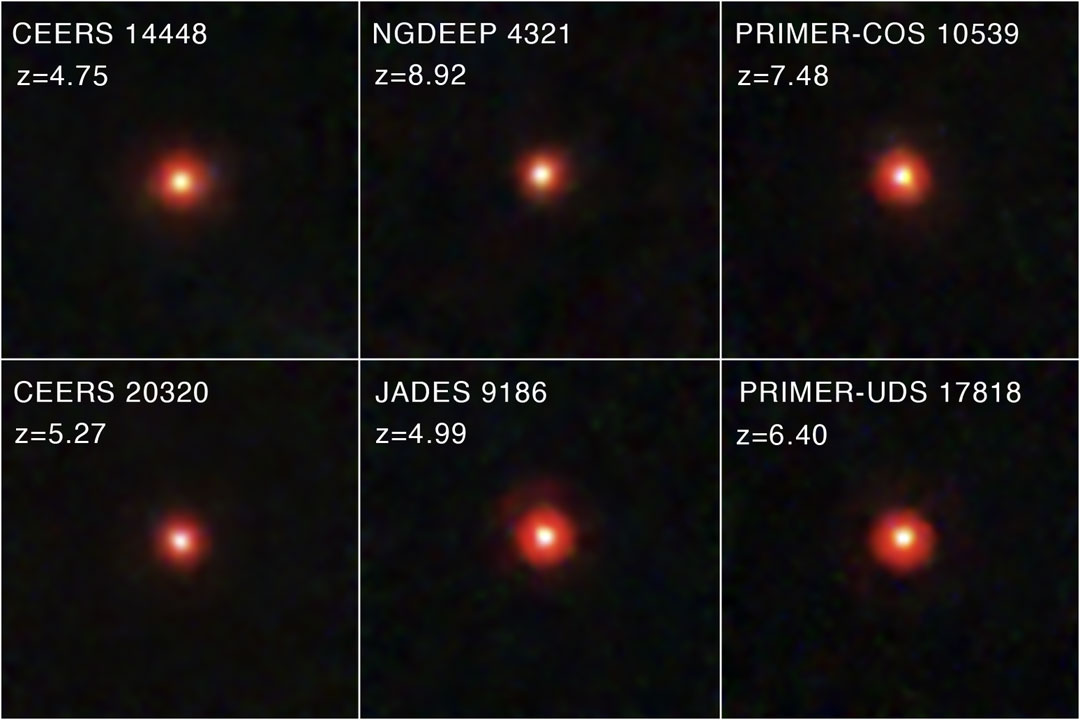
2025 December 24 Mystery: Little Red Dots in the Early Universe Image Credit: NASA , ESA , CSA , STScI , JWST ; Dale Kocevski ( Colb...