Nombre total de pages vues
23/01/2025
SANTé/MEDECINE - A ladécouverte de l'oreille - Le neurinome de l’acoustique
ASTRONOMY - NGC 7814: Little Sombrero
2025 January 23
Image Credit & Copyright: Mike Selby
Explanation: Point your telescope toward the high flying constellation Pegasus and you can find this cosmic expanse of Milky Way stars and distant galaxies. NGC 7814 is centered in the sharp field of view that would almost be covered by a full moon. NGC 7814 is sometimes called the Little Sombrero for its resemblance to the brighter more famous M104, the Sombrero Galaxy. Both Sombrero and Little Sombrero are spiral galaxies seen edge-on, and both have extensive halos and central bulges cut by a thin disk with thinner dust lanes in silhouette. In fact, NGC 7814 is some 40 million light-years away and an estimated 60,000 light-years across. That actually makes the Little Sombrero about the same physical size as its better known namesake, appearing smaller and fainter only because it is farther away.
22/01/2025
SANTé/MEDECINE - A la découverte de l'oreille - Étrier droit - vue antérieure
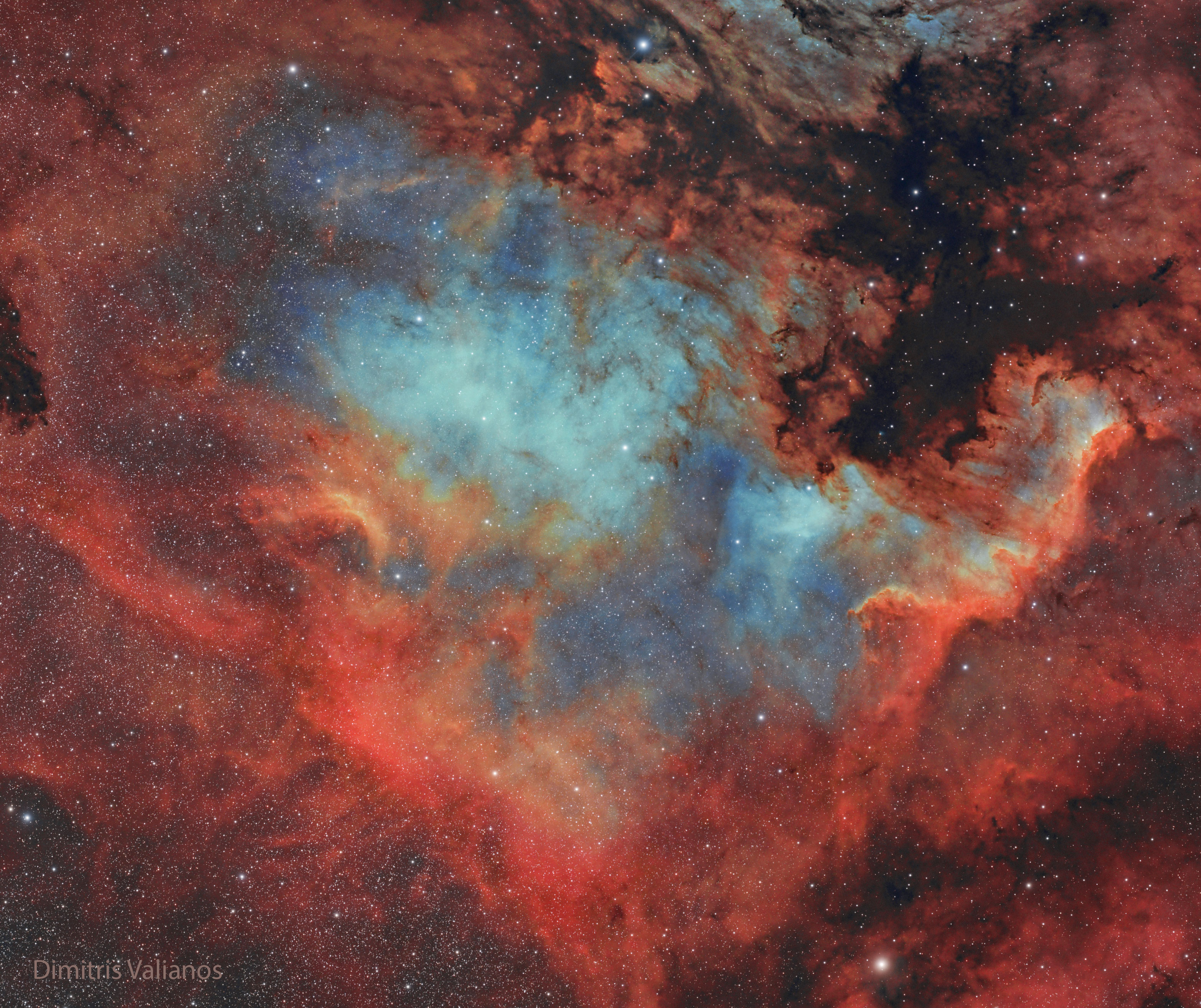
ASTRONOMY - The North America Nebula
Image Credit & Copyright: Dimitris Valianos
Explanation: The North America nebula on the sky can do what the North America continent on Earth cannot -- form stars. Specifically, in analogy to the Earth-confined continent, the bright part that appears as the east coast is actually a hot bed of gas, dust, and newly formed stars known as the Cygnus Wall. The featured image shows the star forming wall lit and eroded by bright young stars and partly hidden by the dark dust they have created. The part of the North America nebula (NGC 7000) shown spans about 50 light years and lies about 1,500 light years away toward the constellation of the Swan (Cygnus).
21/01/2025
AERONAUTIQUE - La grande épopée des ballons dirigeables - 2010 : le ballon captif de surveillance 101230-N-0020T-144
SANTé/MEDECINE - A la découverte de l'oreille - L'oreille interne
ASTRONOMY - Comet ATLAS over Brasília
2025 January 21
Image Credit: Frederico Danin
Explanation: What's that in the sky? Above the city, above most clouds, far in the distance: it's a comet. Pictured, the impressive tail of Comet C/2024 G3 (ATLAS) was imaged from Brasília, Brazil four days ago. Last week the evolving comet rounded the Sun well inside the orbit of planet Mercury, going so close there was early concern that it might break up -- and recent evidence that it really did. At one point near perihelion, Comet ATLAS was so bright that sightings were even reported during the day -- over the bright sky near the Sun -- by careful observers. Over the past few days, Comet ATLAS has developed a long tail that has been partly visible with unaided eyes after sunset, most notably in Earth's southern hemisphere.
20/01/2025
ASTRONOMY - Comet ATLAS Rounds the Sun
2025 January 20
Image Credit: NASA, SOHO Spacecraft, LASCO C3; Processing: Rolando Ligustri
Explanation: Why does Comet ATLAS have such colorful tails? Last week Comet C/2024 G3 (ATLAS) passed its closest to the Sun -- well inside the orbit of Mercury -- and brightened dramatically. Unfortunately, the comet was then so angularly near the Sun that it was very hard for humans to see. But NASA's SOHO spacecraft saw it. Pictured is a SOHO (LASCO C3) image of Comet ATLAS that is a composite of several different color filters. Of the several tails visible, the central white tails are likely made of dust and just reflecting back sunlight. The red, blue, and green tails are likely ion tails with their colors dominated by light emitted by specific gases that were ejected from the comet and energized by the Sun. Currently, Comet ATLAS is showing long tails in southern skies but fading as it moves out of the inner Solar System.
19/01/2025
SANTé/MEDECINE - A la découverte de l'oreille - Les osselets dans l'oreille
ASTRONOMY - Titan Touchdown: Huygens Descent Movie
2025 January 19
Video Credit: ESA, NASA, JPL, U. Arizona, E. Karkoschka
Explanation: What would it look like to land on Saturn's moon Titan? The European Space Agency's Huygens probe set down on the Solar System's cloudiest moon in 2005, and a time-lapse video of its descent images was created. Huygens separated from the robotic Cassini spacecraft soon after it achieved orbit around Saturn in late 2004 and began approaching Titan. For two hours after arriving, Huygens plummeted toward Titan's surface, recording at first only the shrouded moon's opaque atmosphere. The computerized truck-tire sized probe soon deployed a parachute to slow its descent, pierced the thick clouds, and began transmitting images of a strange surface far below never before seen in visible light. Landing in a dried sea and surviving for 90 minutes, Huygen's returned unique images of a strange plain of dark sandy soil strewn with smooth, bright, fist-sized rocks of ice.
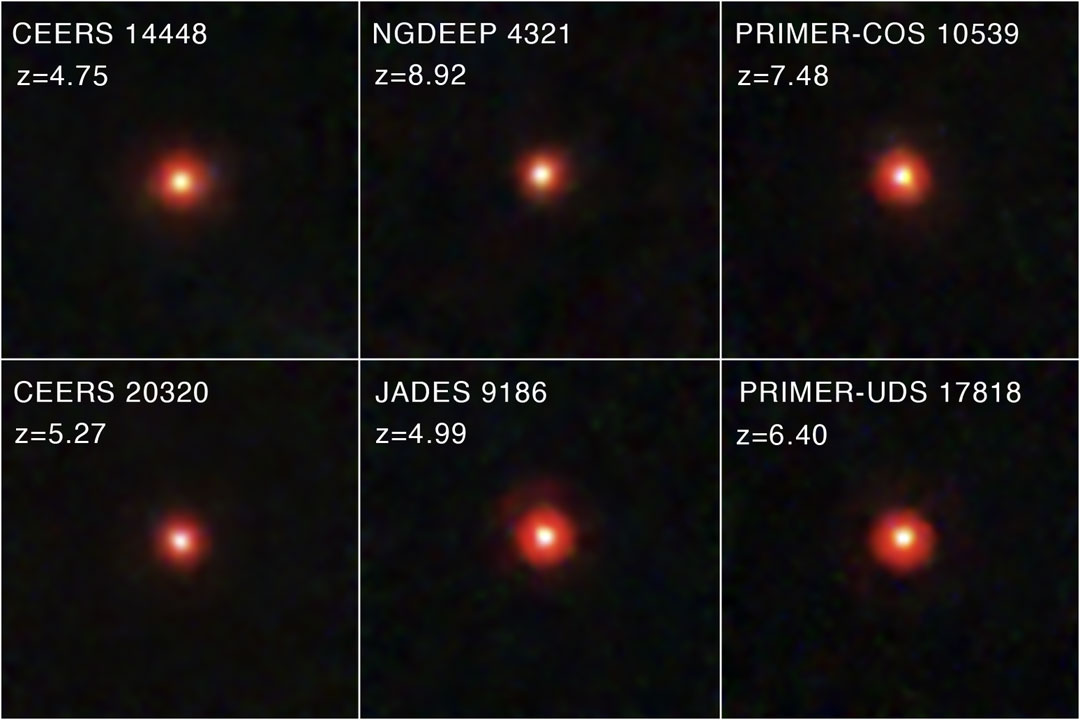
ASTRONOMY - Mystery: Little Red Dots in the Early Universe
2025 December 24 Mystery: Little Red Dots in the Early Universe Image Credit: NASA , ESA , CSA , STScI , JWST ; Dale Kocevski ( Colb...
-
2022 September 26 All the Water on Planet Earth Illustration Credit: Jack Cook, Adam Nieman, Woods Hole Oceanographic Institution ; Data ...
-
2025 May 11 The Surface of Venus from Venera 14 Image Credit: Soviet Planetary Exploration Program , Venera 14 ; Processing & Copyri...