Nombre total de pages vues

28/01/2025

ASTRONOMY - Comet G3 ATLAS over Uruguay

 2025 January 28

A foreground grass field is shown below a distant field 
of stars. On the grass field are some trees. Dwarfing the 
trees, in the sky, is a comet with a long tail. 
Please see the explanation for more detailed information.

Comet G3 ATLAS over Uruguay
Image Credit & Copyright: Mauricio Salazar

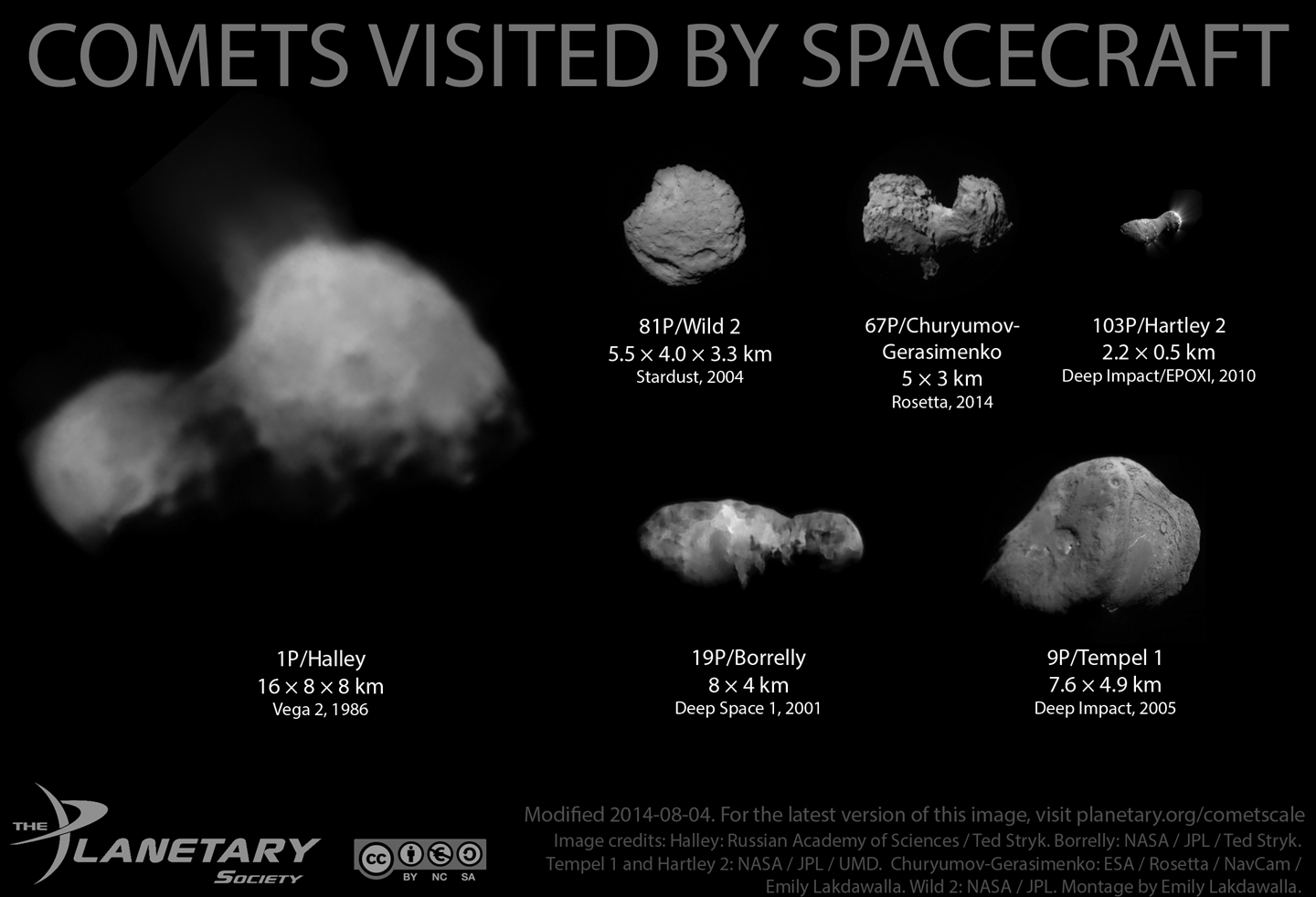
Explanation: Comets can be huge. When far from the Sun, a comet's size usually refers to its hard nucleus of ice and rock, which typically spans a few kilometers -- smaller than even a small moon. When nearing the Sun, however, this nucleus can eject dust and gas and leave a thin tail that can spread to an enormous length -- even greater than the distance between the Earth and the Sun. Pictured, C/2024 G3 (ATLAS) sports a tail of sunlight-reflecting dust and glowing gas that spans several times the apparent size of a full moon, appearing even larger on long duration camera images than to the unaided eye. The featured image shows impressive Comet ATLAS over trees and a grass field in Sierras de MahomaSan JoseUruguay about a week ago. After being prominent in the sunset skies of Earth's southern hemisphere, Comet G3 ATLAS is now fading as it moves away from the Sun, making its impressive tails increasingly hard to see.

27/01/2025

ASTRONOMIE - Galaxie des Antennes en visible


Galaxies des Antennes, vues par le HST en visible.

FuturaSciences

SANTé/MEDECINE - A la découverte de l'oreille - Echelle des niveaux sonores


Un son de 10 dB a 10 fois plus d'énergie qu'un son à 0 dB. Le seuil de la douleur se situe au niveau de 130 dB, une conversation normale aux alentours de 60 dB, tandis qu'un concert rock peut aller jusqu'à 120 dB. Le réflexe stapédien apparaît vers 85 dB ; cette contraction de muscles de l'oreille moyenne permet de protéger la cochlée et de diminuer la fatigue auditive.

© A7N8X, CC by-sa 3.0

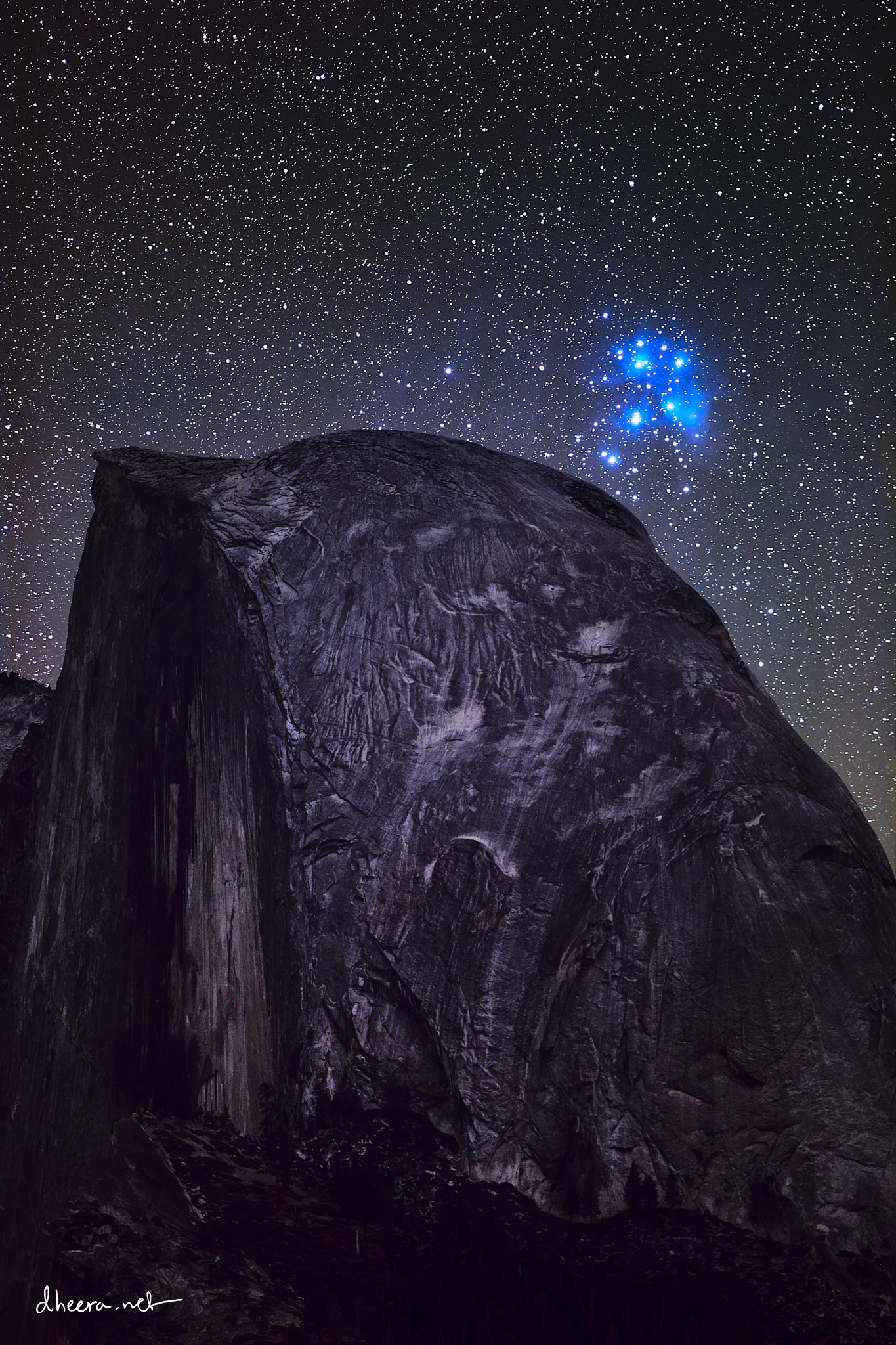
ASTRONOMY - Pleiades over Half Dome

 2025 January 27

A cluster of bright blue stars is seen on the upper right
while an unusual dome-like mountain occupies most of the 
frame.
Please see the explanation for more detailed information.

Pleiades over Half Dome
Image Credit & Copyright: Dheera Venkatraman

Explanation: Stars come in bunches. The most famous bunch of stars on the sky is the Pleiades, a bright cluster that can be easily seen with the unaided eye. The Pleiades lies only about 450 light years away, formed about 100 million years ago, and will likely last about another 250 million years. Our Sun was likely born in a star cluster, but now, being about 4.5 billion years old, its stellar birth companions have long since dispersed. The Pleiades star cluster is pictured over Half Dome, a famous rock structure in Yosemite National Park in CaliforniaUSA. The featured image is a composite of 28 foreground exposures and 174 images of the stellar background, all taken from the same location and by the same camera on the same night in October 2019. After calculating the timing of a future juxtaposition of the Pleiades and Half Dome, the astrophotographer was unexpectedly rewarded by an electrical blackout, making the background sky unusually dark.

26/01/2025

AERONAUTIQUE - La grande épopée des ballons dirigeables - 2016 : la Natac de Voliris ou le drone version triple XL


La Natac est l'acronyme pour Navette aérienne de transport automatique de containers. Elle est développée par l'entreprise française Voliris, basée sur l'aérodrome de Moulins-Montbeugny dans l'Allier. Mi-drone mi-dirigeable, l'aéronef peut transporter à basse altitude, 30 tonnes de charge utile (un conteneur standard) sur une distance de 500 à 1 000 km, le tout à 200 km/h, de manière rapide, économique et automatique. Le vol étant programmé, il nécessite, cependant pour son décollage, une piste de 800 mètres minimum, la navette décolle et atterrit à l'aide d'un seul technicien au sol. Son objectif est de desservir des régions désertiques et reculées du monde afin d'acheminer des marchandises dans des zones dépourvues de réseaux routiers.

L'élément essentiel est le CMLG (Container Mover and Landing Gear) qui est le module assurant les fonctions de manutention afin d'arrimer la charge utile à l'aéronef, de train d'atterrissage et de propulsion.

Sur le principe d'une enveloppe écrasée, la conception particulière en forme d'ailes, lui permet d'entrer dans l'air de façon aérodynamique et de créer une portance supplémentaire à la portabilité de l'hélium. C'est l'aboutissement de plusieurs prototypes, les Voliris 900, 901, 9001 RC, 902 RC, se succédant jusqu'à cette Natac qui est le plus petit dirigeable.

Décollage du NATAC dans le désert.

© Mooceur, CC by-sa 4.0

SANTé*MEDECINE - A la découverte de l'oreille - L’implant cochléaire


L'implant cochléaire est un dispositif électronique qui fournit un certain niveau d'audition à des personnes sourdes. Les sons captés par un microphone sont transformés en signaux électriques. Des électrodes placées dans la cochlée reçoivent des impulsions électriques, ce qui stimule des cellules nerveuses.

© Zipfer, domaine public

ASTRONOMY - The Many Tails of Comet G3 ATLAS

 2025 January 26

A dark sloping hill is seen at the bottom with a 
bright comet with many tails visible above it, taking
up most of the frame. The tails closest to the slope 
are the most dim. 
Please see the explanation for more detailed information.

The Many Tails of Comet G3 ATLAS
Image Credit & Copyright: Martin Mašek (FZU, Czech Academy of Sciences) & Jakub Kuřák

Explanation: Why does this comet have so many tails? C/2024 G3 (ATLAS) has developed several long and intricate tails visible from Earth's southern hemisphere over the past two weeks. Many observers reported seeing the impressive comet without any optical aid above the western horizon just after sunset. At least six different tails appear in the featured image captured five days ago from the dark skies above Paranal Observatory in Chile. One possible cause for the multiple tails is dust and gas being expelled from the comet's rotating nucleus. The outward push of the Sun's complex solar wind may also play a role. The huge iceberg-like nucleus of Comet ATLAS appears to have broken up near its closest approach to the Sun two weeks ago. Unfortunately, Comet ATLAS and its tails are expected to fade significantly over the coming weeks.

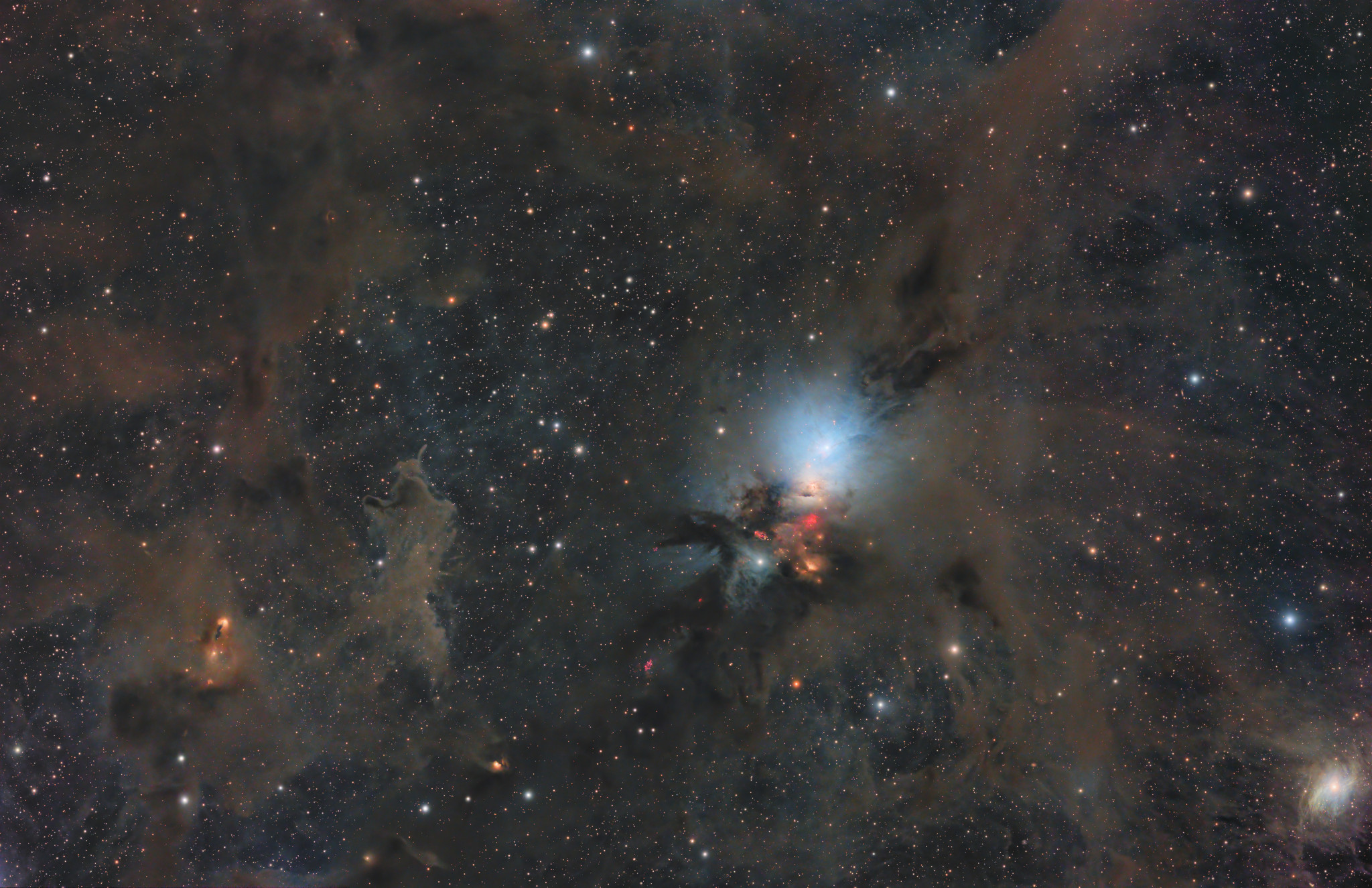
ASTRONOMY - Stardust in the Perseus Molecular Cloud

2025 January 25
See Explanation.  Clicking on the picture will download
the highest resolution version available.

Stardust in the Perseus Molecular Cloud
Image Credit & Copyright: Jeff Schilling

Explanation: Clouds of stardust drift through this deep skyscape, across the Perseus molecular cloud some 850 light-years away. Dusty nebulae reflecting light from embedded young stars stand out in the nearly 4 degree wide field of view. With a characteristic bluish color reflection nebula NGC 1333 is prominent near center. Hints of contrasting red emission from Herbig-Haro objects, the jets and shocked glowing gas emanating from recently formed stars, are scattered across the dusty expanse. While many stars are forming in the molecular cloud, most are obscured at visible wavelengths by the pervasive dust. The chaotic environment surrounding NGC 1333 may be similar to one in which our own Sun formed over 4.5 billion years ago. At the estimated distance of the Perseus molecular cloud, this cosmic scene would span about 80 light-years. 

24/01/2025

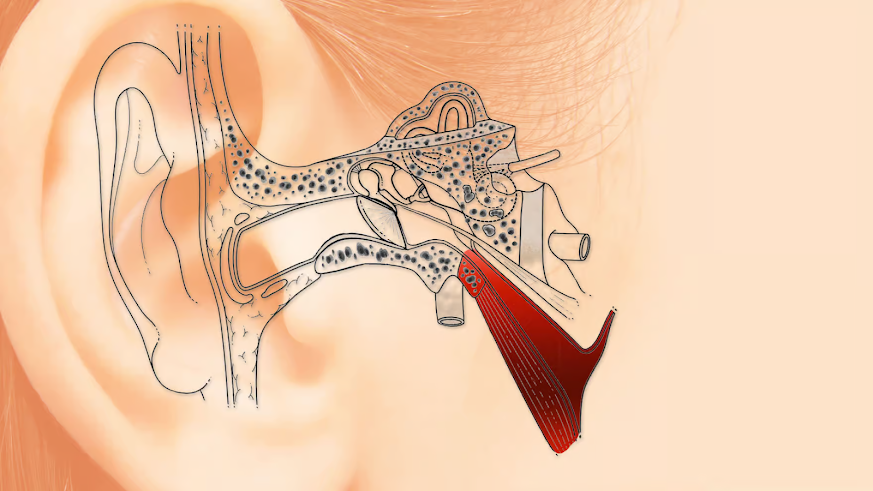
SANTé/MEDECINE - A la découverte de l'oreille - La trompe d'Eustache


La trompe d'Eustache (en rouge) est un conduit oblique qui relie l'oreille moyenne à la partie supérieure de la gorge : la muqueuse de l'oreille moyenne est donc liée à celle du pharynx. Ceci explique que des otites de l'oreille moyenne soient liées à des infections de la gorge. Pendant la déglutition et le bâillement, la trompe d'Eustache s'ouvre pour équilibrer la pression.

© Didier Descouens, CC by-sa 3.0

ASTRONOMY - Comet G3 ATLAS: a Tail and a Telescope

 2025 January 24

See Explanation.  Clicking on the picture will download
the highest resolution version available.

Comet G3 ATLAS: a Tail and a Telescope

Image Credit & Copyright: Yuri Beletsky (Carnegie Las Campanas ObservatoryTWAN)

Explanation: Comet C/2024 G3 ATLAS has made a dramatic appearance in planet Earth's skies. A visitor from the distant Oort Cloud, the comet reached its perihelion on January 13. On January 19, the bright comet was captured here from ESO Paranal Observatory in the Atacama desert in Chile. Sporting spectacular sweeping dust tails, this comet ATLAS is setting in the southern hemisphere twilight and was clearly visible to the unaided eye. In the foreground is the closed shell of one of the observatory's famous auxiliary telescopes. Still wowing southern hemisphere observers, the comet's bright coma has become diffuse, its icy nucleus apparently disintegrating following its close approach to the Sun.

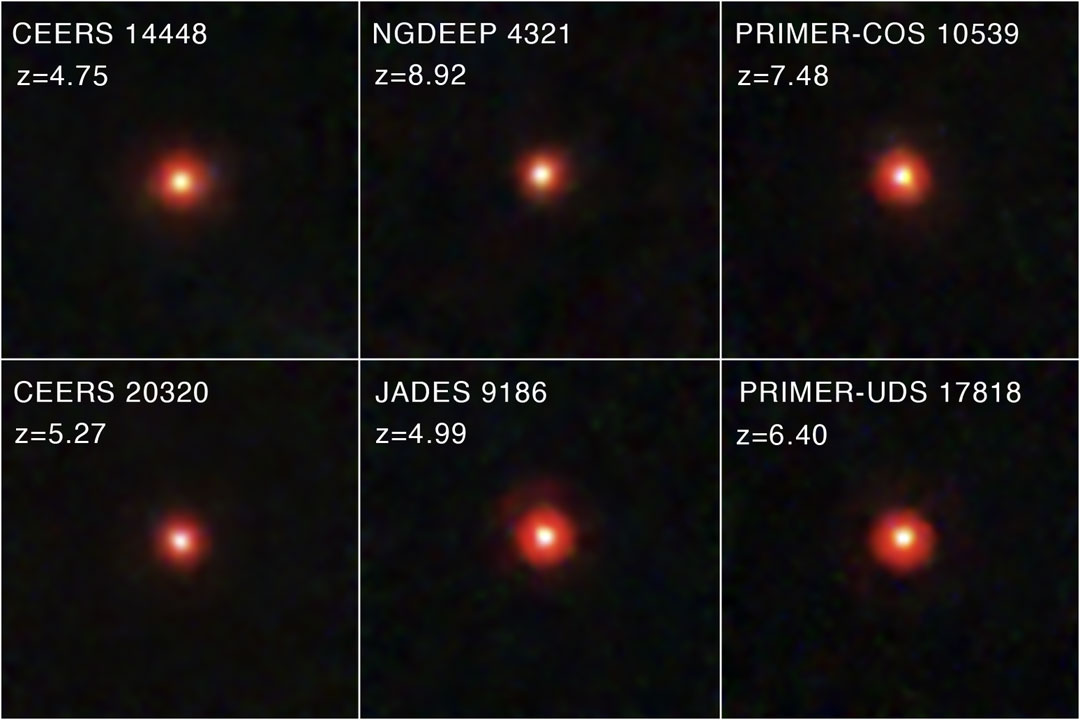
ASTRONOMY - Mystery: Little Red Dots in the Early Universe

 2025 December 24 Mystery: Little Red Dots in the Early Universe Image Credit:  NASA ,  ESA ,  CSA ,  STScI ,  JWST ;  Dale Kocevski  ( Colb...