Nombre total de pages vues
31/01/2025
AERONAUTIQUE - La grande épopée des ballons dirigeables - 2016 : le dirigeable pentalobé ULM de Voliris
ASTRONOMY - The Variable Nebula NGC 2261
2025 January 31
Image Credit & Copyright: Tommy Lease (Denver Astronomical Society)
Explanation: The interstellar cloud of dust and gas captured in this sharp telescopic snapshot is seen to change its appearance noticeably over periods as short as a few weeks. Discovered over 200 years ago and cataloged as NGC 2261, bright star R Monocerotis lies at the tip of the fan-shaped nebula. About one light-year across and 2500 light-years away, NGC 2261 was studied early last century by astronomer Edwin Hubble and the mysterious cosmic cloud is now more famous as Hubble's Variable Nebula. So what makes Hubble's nebula vary? NGC 2261 is composed of a dusty reflection nebula fanning out from the star R Monocerotis. The leading variability explanation holds that dense knots of obscuring dust pass close to R Mon and cast moving shadows across the dust clouds in the rest of Hubble's Variable Nebula.
SANTé/MEDECINE - Alimentation - Il faut absolument éviter les crêpes industrielles - 2/3 -
30/01/2025
SANTé/MEDECINE - Alimentation - Il faut absolument éviter les crêpes industrielles - 1/3 -
AERONAUTIQUE - La grande épopée des ballons dirigeables - 2016 : Airlander 50 en vue
ASTRONOMY - Hydrogen Clouds of M33
2025 January 30
Image Credit & Copyright: Pea Mauro
Explanation: Gorgeous spiral galaxy Messier 33 seems to have more than its fair share of glowing hydrogen gas. A prominent member of the local group of galaxies, M33 is also known as the Triangulum Galaxy and lies a mere 3 million light-years away. The galaxy's central 60,000 light-years or so are shown in this sharp galaxy portrait. The portrait features M33's reddish ionized hydrogen clouds or HII regions. Sprawling along loose spiral arms that wind toward the core, M33's giant HII regions are some of the largest known stellar nurseries, sites of the formation of short-lived but very massive stars. Intense ultraviolet radiation from the luminous, massive stars ionizes the surrounding hydrogen gas and ultimately produces the characteristic red glow. In this image, broadband data were combined with narrowband data recorded through a filter that transmits the light of the strongest visible hydrogen and oxygen emission lines.
29/01/2025
AERONAUTIQUE - La grande épopée des ballons dirigeables - 2016 : Stratobus relance la filière française du dirigeable
ASTRONOMY - Dust Shells around WR 140 from Webb
2025 January 29
Image Credit: NASA, ESA, CSA, STScI, E. Lieb (U. Denver), R. Lau (NSF NOIRLab), J. Hoffman (U. Denver)
Explanation: What are those strange rings? Rich in dust, the rings are likely 3D shells -- but how they were created remains a topic of research. Where they were created is well known: in a binary star system that lies about 6,000 light years away toward the constellation of the Swan (Cygnus) -- a system dominated by the Wolf-Rayet star WR 140. Wolf-Rayet stars are massive, bright, and known for their tumultuous winds. They are also known for creating and dispersing heavy elements such as carbon, which is a building block of interstellar dust. The other star in the binary is also bright and massive -- but not as active. The two great stars joust in an oblong orbit as they approach each other about every eight years. When at closest approach, the X-ray emission from the system increases, as, apparently, does the dust expelled into space -- creating another shell. The featured infrared image by the Webb Space Telescope resolves greater details and more dust shells than ever before. Images taken over consecutive years show the shells moving outward.
28/01/2025
AERONAUTIQUE - La grande épopée des ballons dirigeables - 2012 : Eurêka - le L-ZNT d’Airship Ventures
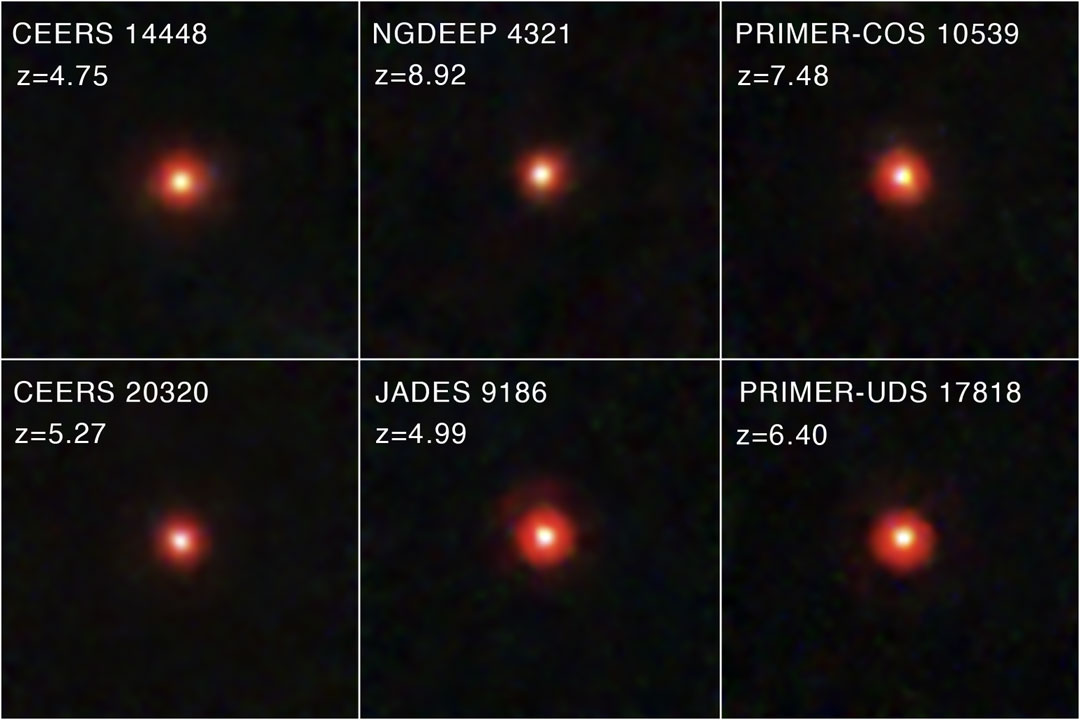
ASTRONOMY - Mystery: Little Red Dots in the Early Universe
2025 December 24 Mystery: Little Red Dots in the Early Universe Image Credit: NASA , ESA , CSA , STScI , JWST ; Dale Kocevski ( Colb...
-
2022 September 26 All the Water on Planet Earth Illustration Credit: Jack Cook, Adam Nieman, Woods Hole Oceanographic Institution ; Data ...
-
2025 May 11 The Surface of Venus from Venera 14 Image Credit: Soviet Planetary Exploration Program , Venera 14 ; Processing & Copyri...