Nombre total de pages vues

23/01/2026

ASTRONOMY - Planetary Nebula Abell 7

 2026 January 23

See Explanation.  Clicking on the picture will download
the highest resolution version available.

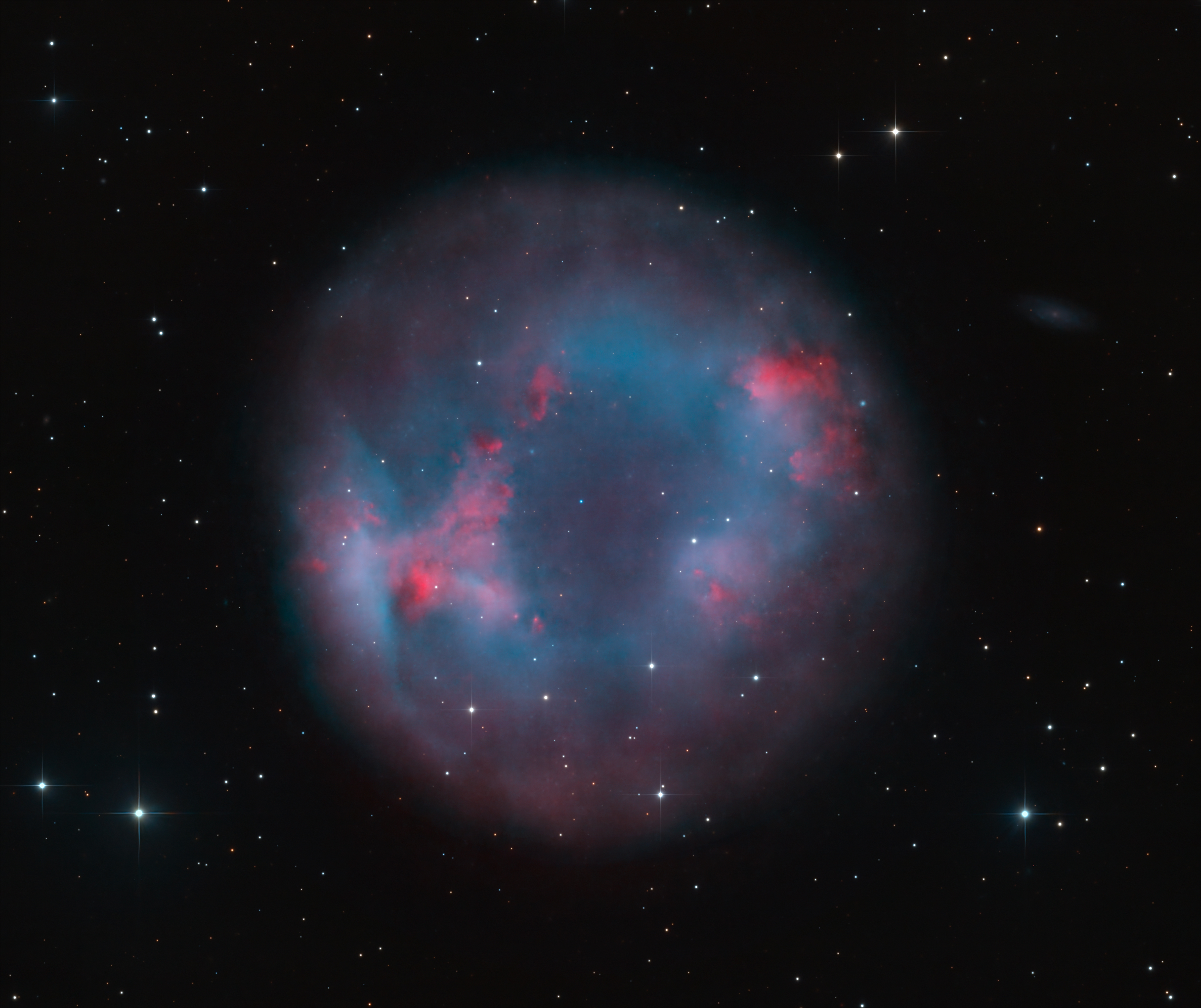
Planetary Nebula Abell 7
Image Credit & Copyright: Martin Pugh

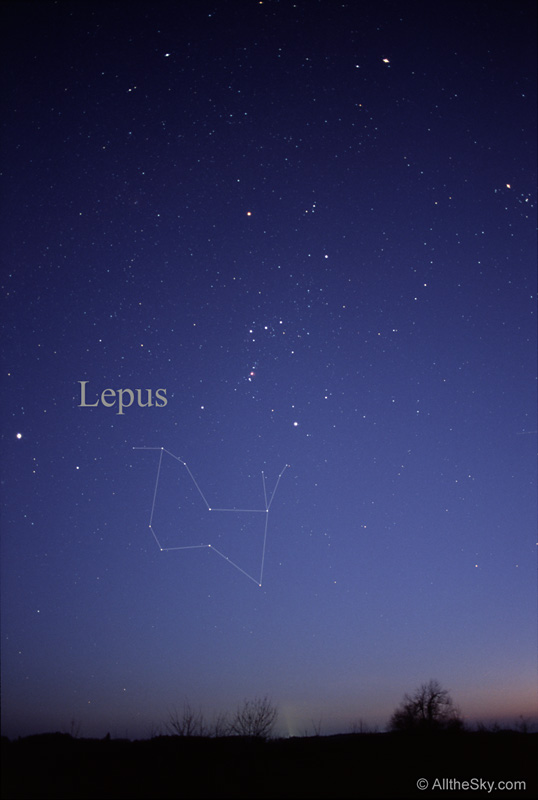
Explanation: Very faint planetary nebula Abell 7 is about 1,800 light-years distant. It lies just south of Orion in planet Earth's skies toward the constellation Lepus, The Hare. Posing with scattered Milky Way stars, its generally simple spherical shape about 8 light-years in diameter is revealed in this deep telescopic image. The beautiful and complex shapes seen within the cosmic cloud are visually enhanced by the use of long exposures and narrowband filters that capture emission from hydrogen and oxygen atoms. Otherwise Abell 7 would be much too faint to be appreciated by eye. A planetary nebula represents a very brief final phase in stellar evolution that our own Sun will experience 5 billion years hence, as the nebula's central, once sun-like star shrugs off its outer layers. Abell 7 itself is estimated to be 20,000 years old. But its central star, seen here as a fading white dwarf, is some 10 billion years old.

22/01/2026

ASTRONOMY - LDN 1622: Dark Nebula in Orion

 2026 January 22

See Explanation.  Clicking on the picture will download
the highest resolution version available.

LDN 1622: Dark Nebula in Orion
Image Credit & Copyright: Chris Fellows

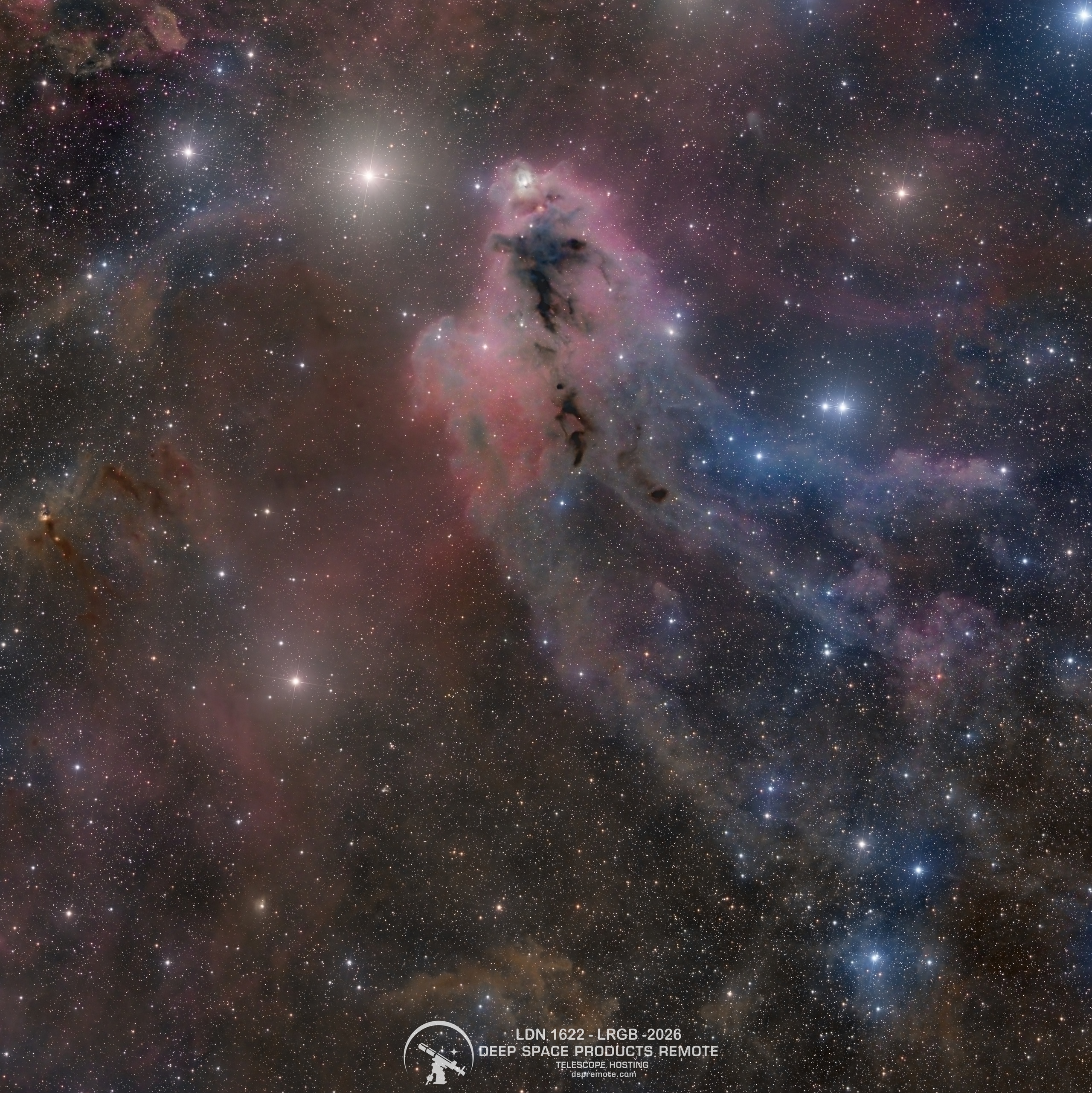
Explanation: The silhouette of an intriguing dark nebula inhabits this cosmic scene. Lynds' Dark Nebula (LDN) 1622 appears against a faint background of glowing hydrogen gas only visible in long telescopic exposures of the region. In contrast, a brighter reflection nebula, vdB 62, is more easily seen just above the dusty dark nebula. LDN 1622 lies near the plane of our Milky Way Galaxy, close on the sky to Barnard's Loop, a large cloud surrounding the rich complex of emission nebulae found in the Belt and Sword of Orion. With swept-back outlines, the obscuring dust of LDN 1622 is thought to lie at a similar distance, perhaps 1,500 light-years away. At that distance, this 3 degree wide field of view would span about 100 light-years. Young stars do lie hidden within the dark expanse and have been revealed in Spitzer Space telescope infrared images. Still, the foreboding visual appearance of LDN 1622 inspires its popular name, the Boogeyman Nebula.

21/01/2026

SANTé/MEDECINE - Tout savoir sur le coeur humain - 1

Dans votre poitrine bat votre cœur, source de vie. Cet organe indispensable au bon fonctionnement de l'organisme symbolise aussi le siège de nos sentiments. D’ailleurs, une forte émotion peut conduire à un emballement du cœur. Du point de vue biologique, le cœur est une pompe qui permet la circulation du sang dans les vaisseaux sanguins. Ceci est possible grâce aux cellules musculaires qui se contractent dans le muscle cardiaque, aussi appelé myocarde. À chaque révolution cardiaque, le cœur envoie dans tous les organes du corps du sang riche en oxygène pour alimenter les cellules. Chez l'Homme, le cœur pèse environ 300 grammes.

Vous découvrirez ici la structure du cœur, composé de deux oreillettes et deux ventricules. Vous visualiserez l’emplacement des valves qui jouent un rôle important dans la circulation à sang. Les conséquences de certaines pathologies seront aussi présentées.

(A suivre)

FuturaSciences

ASTRONOMY - Barred Spiral Galaxy NGC 1365 from Webb

 2026 January 21

See Explanation.  Clicking on the picture will download
the highest resolution version available.

Barred Spiral Galaxy NGC 1365 from Webb
Image Credit: NASAESACSA, Janice Lee (NOIRLab) - Processing: Alyssa Pagan (STScI)

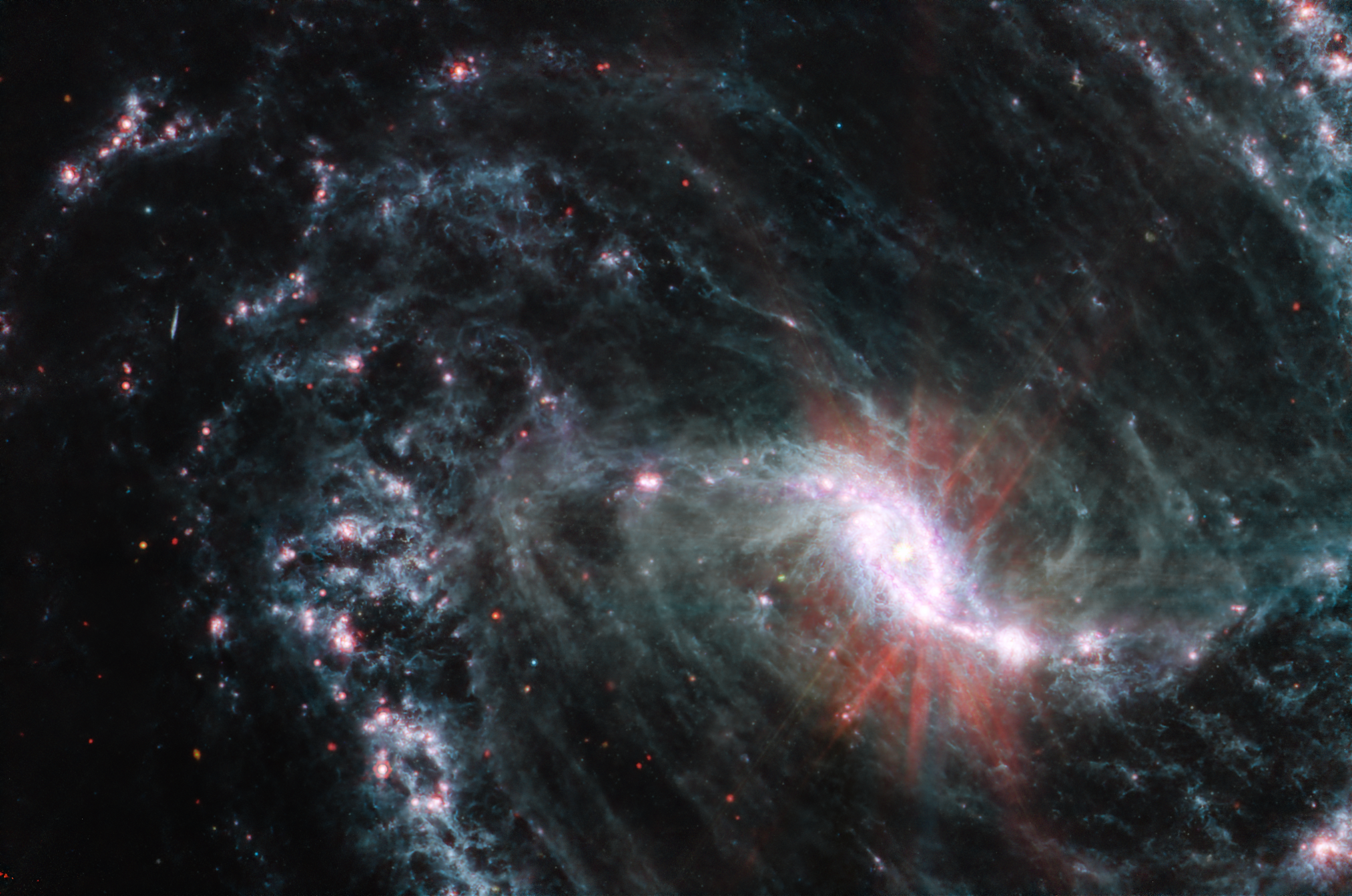
Explanation: A mere 56 million light-years distant toward the southern constellation Fornax, NGC 1365 is an enormous barred spiral galaxy about 200,000 light-years in diameter. That's twice the size of our own barred spiral Milky Way. This sharp image from the James Webb Space Telescope's Mid-Infrared Instrument (MIRI) reveals stunning details of this magnificent spiral in infrared light. Webb's field of view stretches about 60,000 light-years across NGC 1365, exploring the galaxy's core and bright newborn star clusters. The intricate network of dusty filaments and bubbles is created by young stars along spiral arms winding from the galaxy's central bar. Astronomers suspect the gravitational field of NGC 1365's bar plays a crucial role in the galaxy's evolution, funneling gas and dust into a star-forming maelstrom and ultimately feeding material into the active galaxy's central, supermassive black hole.

20/01/2026

ASTRONOMY - Io in True Color

 2026 January 20

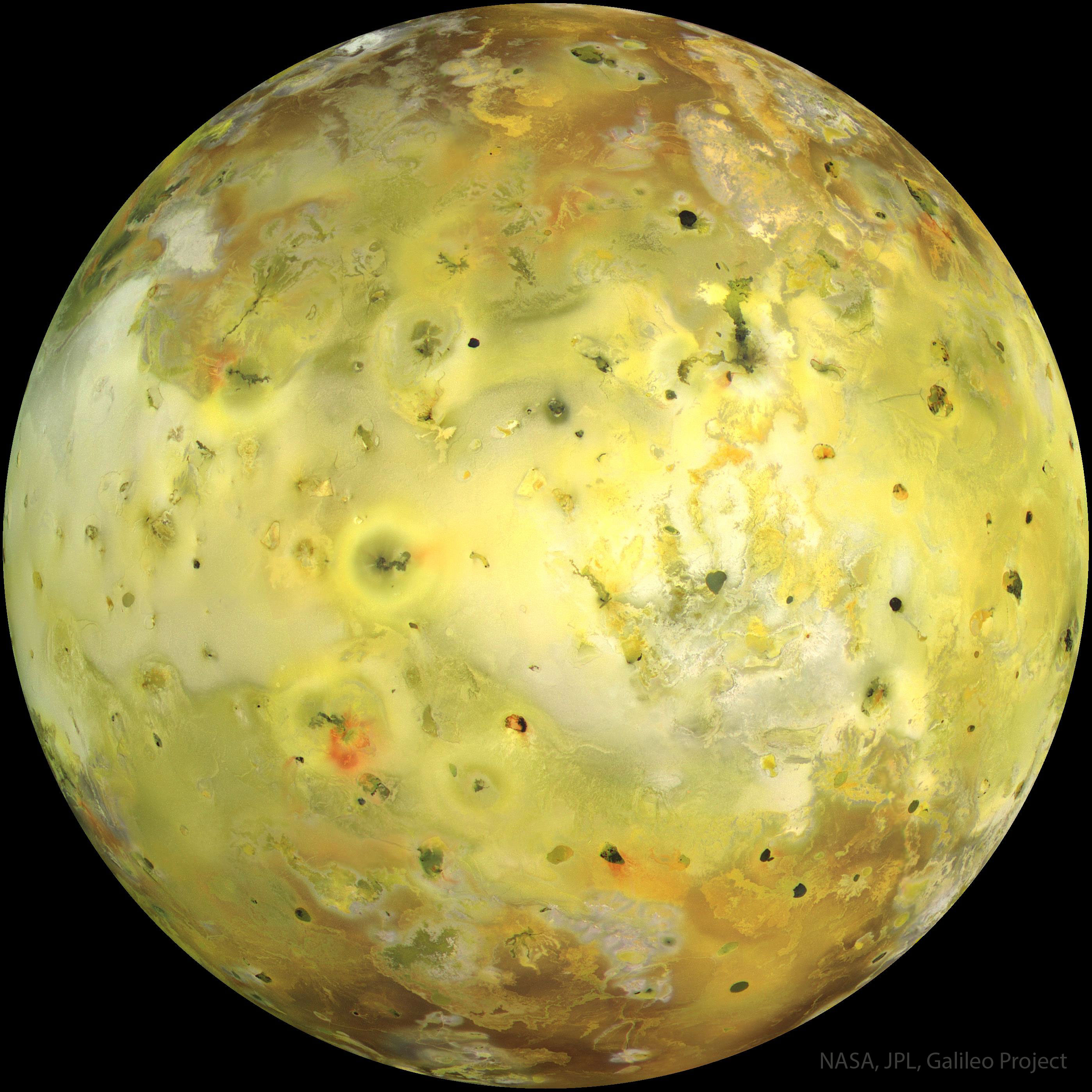
A big ball that is mostly yellow is shown. 
The ball has many circular and irregular regions
that are different colors, typically brown or 
olive green. 
Please see the explanation for more detailed information.

Io in True Color
Image Credit: NASAJPLGalileo Project

Explanation: The strangest moon in the Solar System is bright yellow. The featured picture, an attempt to show how Io would appear in the "true colors" perceptible to the average human eye, was taken in 1999 July by the Galileo spacecraft that orbited Jupiter from 1995 to 2003. Io's colors derive from sulfur and molten silicate rock. The unusual surface of Io is kept very young by its system of active volcanoes. The intense tidal gravity of Jupiter stretches Io and damps wobbles caused by Jupiter's other Galilean moons. The resulting friction greatly heats Io's interior, causing molten rock to explode through the surface. Io's volcanoes are so active that they are effectively turning the whole moon inside out. Some of Io's volcanic lava is so hot it glows in the dark.

19/01/2026

LES BELLES INVENTIONS DE LEONARD DE VINCI - La scie hydraulique et sa roue à godets

Cette machine est une scie hydraulique inspirée par un dessin extrait du Codex Atlanticus, un recueil de dessins et de notes de Léonard de Vinci conservé à la bibliothèque Ambrosienne de Milan. La scie est entraînée par une roue à godets qui tourne grâce à l'eau et dont le mouvement en rotation est transformé en mouvement vertical. Plusieurs machines de Léonard tirent leur énergie des mouvements de l'eau.

© Alessandro Nassiri, CC by-sa 4.0

ASTRONOMY - CTB 1: The Medulla Nebula

 2026 January 19

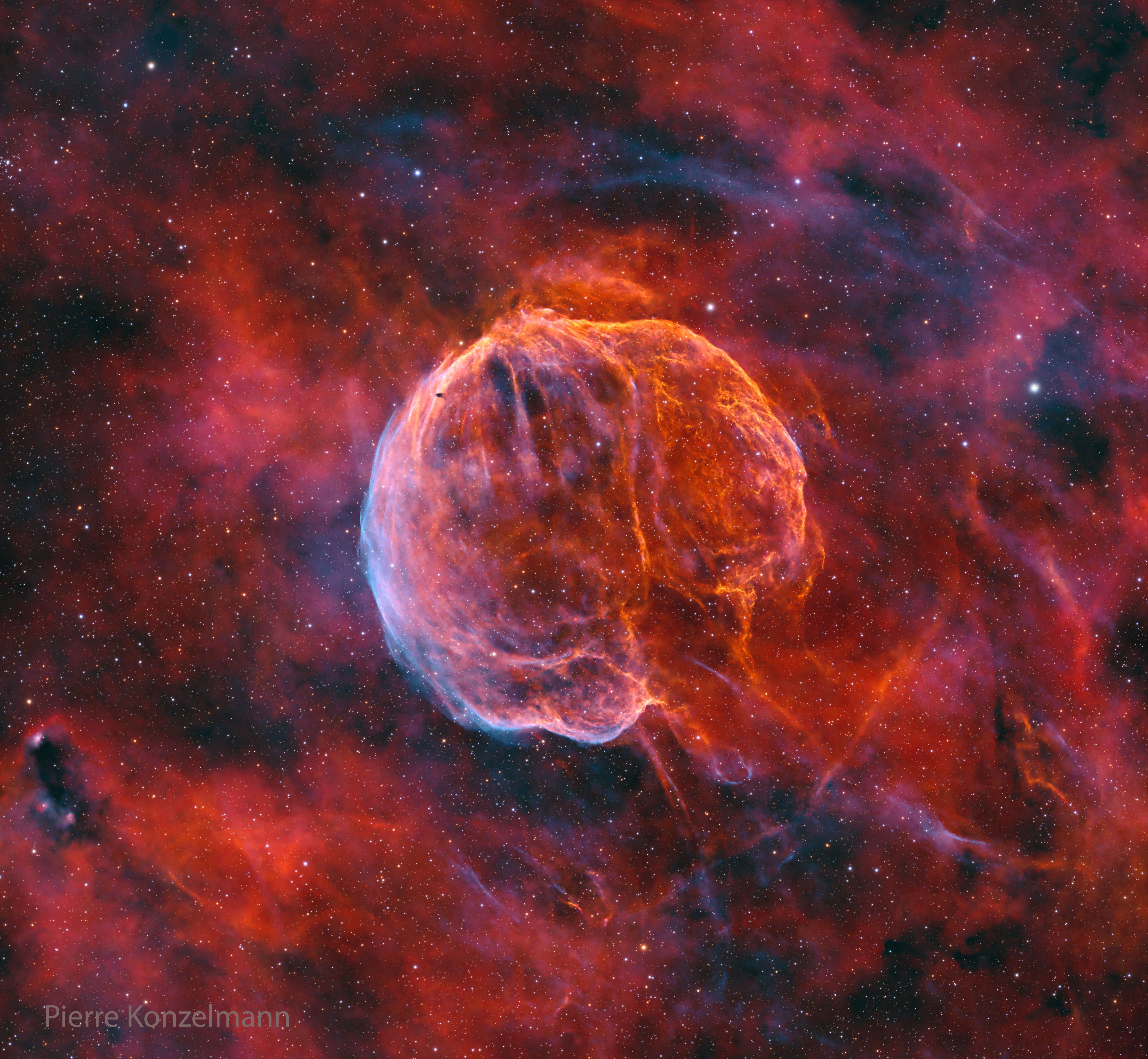
A colorful starfield surrounds a giant nearly-spherical 
nebula that has texture and stripes like watermelon. 
The lower right of the nebula is open making it appear
like a medulla oblongata -- the stem that connects to 
a brain. 
Please see the explanation for more detailed information.

CTB 1: The Medulla Nebula
Image Credit: Pierre Konzelmann

Explanation: What powers this unusual nebula? CTB 1 is the expanding gas shell that was left when a massive star toward the constellation of Cassiopeia exploded about 10,000 years ago. The star likely detonated when it ran out of elements, near its core, that could create stabilizing pressure with nuclear fusion. The resulting supernova remnant, nicknamed the Medulla Nebula for its brain-like shape, still glows in visible light because of the heat generated by its collision with confining interstellar gas. Why the nebula also glows in X-ray light, though, remains a topic of research. One hypothesis holds that an energetic pulsar was created and powers the nebula with a fast outwardly moving wind. Following this lead, a pulsar was found in radio waves that appears to have been expelled by the supernova explosion at over 1000 kilometers per second. Although the Medulla Nebula appears as large as a full moon, it is so faint that it took 84-hours of exposure with a small telescope in TexasUSA, to create the featured image.

18/01/2026

ASTRONOMY - Jupiter from the Webb Space Telescope

 2026 January 18

The featured image shows Jupiter in infrared light as captured
by the James Webb Space Telescope. Visible in unusually dark colors
are Jupiter's clouds including the Great Red Spot, a ring, 
several moons, and bright aurora.
Please see the explanation for more detailed information.

Jupiter from the Webb Space Telescope
Image Credit: NASAESACSAJupiter ERS TeamProcessing: Ricardo Hueso (UPV/EHU) & Judy Schmidt

Explanation: This infrared view of Jupiter by Webb is illuminating. High-resolution infrared images of Jupiter from the James Webb Space Telescope (Webb) reveal, for example, differences between high-floating bright clouds -- including the Great Red Spot -- and low-lying dark clouds. Also clearly visible in the featured Webb image are Jupiter's dust ring, bright auroras at the poles, and Jupiter's moons Amalthea and Adrastea. The footprint of large volcanic moon Io's magnetic funneling of charged particles onto Jupiter is also visible in the southern aurora. Some objects are so bright that light noticeably diffracts around Webb's optics creating streaks. Webb, which orbits the Sun near the Earth, has a mirror over six meters across making it the largest astronomical telescope ever launched -- with over six times more light-collecting area than Hubble.

17/01/2026

MICROPHOTOGRAPHIE - La clé de voûte de la propreté des abeilles

Voici peut-être l'œil fermé d'un curieux animal. Ou celui d'un cyclope extra-terrestre particulièrement velu. Non, rien de tout cela. L'origine de cette photo se situe en un tout autre endroit de l'anatomie d'une banale abeille. Du côté de... son anus !

Et saviez-vous que le rectum d'une abeille peut se dilater pour contenir les déchets de l'organisme pendant tout l'hiver. Au printemps revenu, les abeilles quittent la ruche pour un vol dit de propreté au cours duquel elles se relâchent enfin et font leurs besoins. Le tout au prix de quelques diarrhées déclenchées par les bactéries, levures et autres champignons qui auront fermenté dans le rectum pendant le confinement.

Cette abeille a été balayée par un microscope électronique à balayage à émission de champ Tescan Mira3 et colorisée à la volée avec un système d'imagerie multidétecteur à quatre canaux développé par Point electronic Halle.

Le champ de vision est d'environ 2.526 microns de large.

ASTRONOMY - Apollo 14: A View from Antares

 2026 January 17

See Explanation.  Clicking on the picture will download
the highest resolution version available.

Apollo 14: A View from Antares
Image Credit: Edgar Mitchell, Apollo 14NASAMosaic - Eric M. Jones

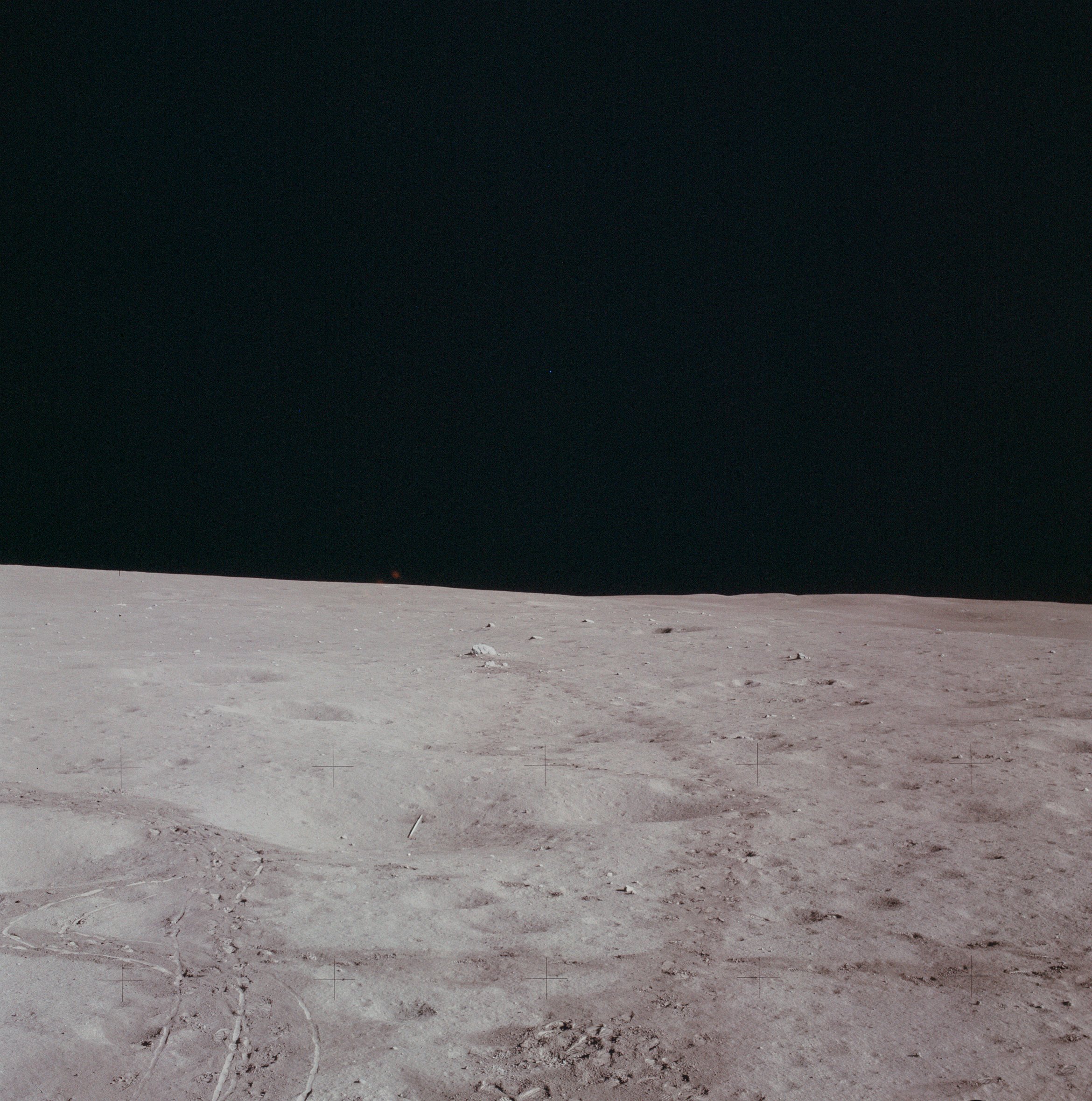
Explanation: Apollo 14's Lunar Module Antares landed on the Moon on February 5, 1971. Toward the end of the stay astronaut Ed Mitchell snapped a series of photos of the lunar surface while looking out a window, assembled into this detailed mosaic by Apollo Lunar Surface Journal editor Eric Jones. The view looks across the Fra Mauro highlands to the northwest of the landing site after the Apollo 14 astronauts had completed their second and final walk on the Moon. Prominent in the foreground is their Modular Equipment Transporter, a two-wheeled, rickshaw-like device used to carry tools and samples. Near the horizon at top center is a 1.5 meter wide boulder dubbed Turtle rock. In the shallow crater below Turtle rock is the long white handle of a sampling instrument, thrown there javelin-style by Mitchell. Mitchell's fellow moonwalker and first American in space, Alan Shepard, also used a makeshift six iron to hit two golf balls. One of Shepard's golf balls is just visible as a white spot below Mitchell's javelin.

SANTé/MEDECINE - Tout savoir sur le coeur humain - 2 - Anatomie du cœur humain

Le cœur comprend quatre cavités : deux oreillettes , situées dans la partie supérieure, et deux ventricules , dans la partie inférieure du c...