Nombre total de pages vues

09/02/2026

SANTé/MEDECINE - Tout savoir sur le coeur humain - 9 - Pseudo-anévrisme du ventricule gauche

Un pseudo-anévrisme, aussi appelé faux anévrisme, est une poche de sang qui se forme près du myocarde. Contrairement aux vrais anévrismes, il ne possède pas d'éléments du myocarde, mais risque de se rompre. Les pseudo-anévrismes du ventricule gauche sont rares, mais il s'agit souvent d'une complication d'un infarctus du myocarde. Ils peuvent aussi survenir après une opération cardiaque ou une infection.

© Patrick J. Lynch, CC by-sa 2.5

08/02/2026

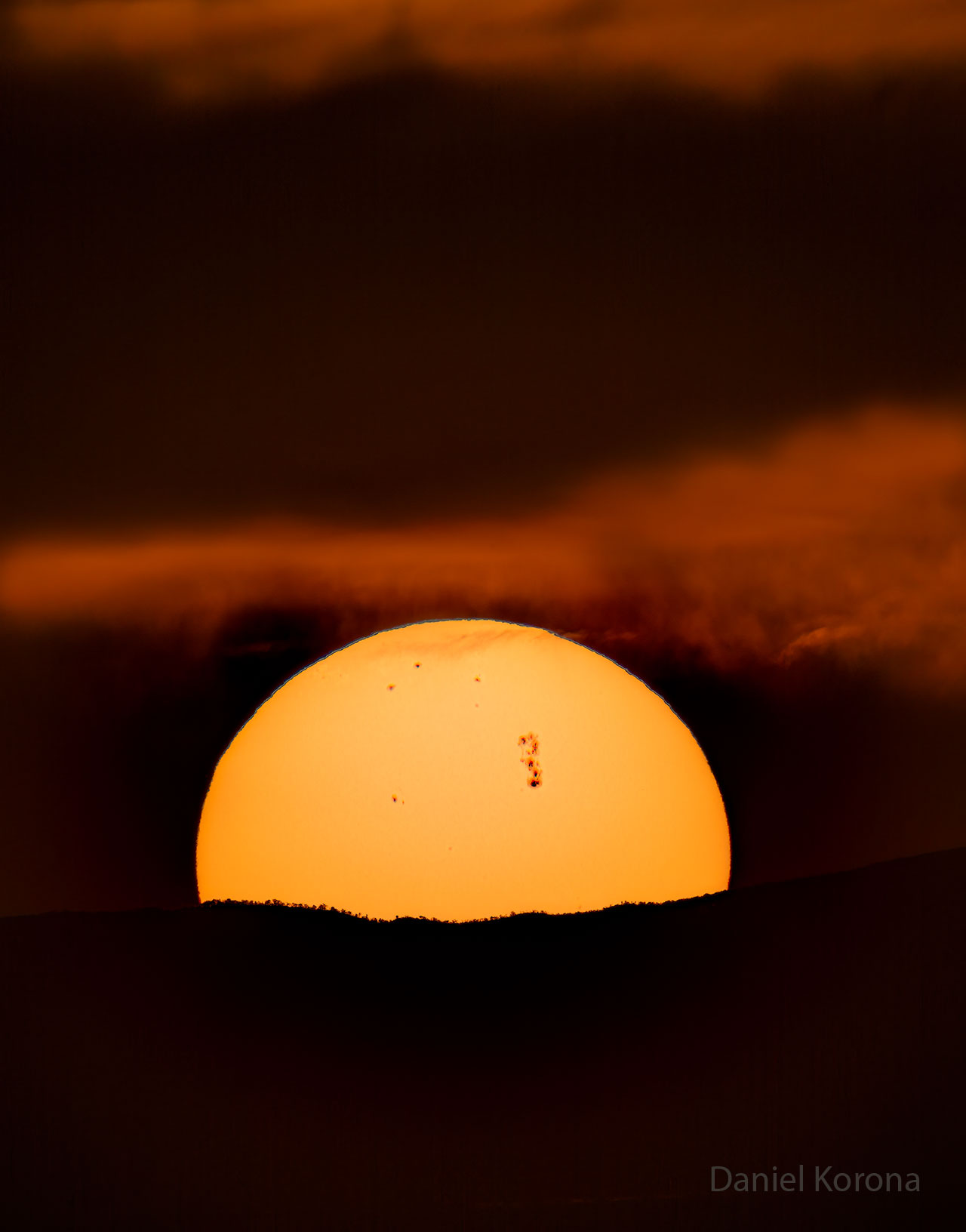
ASTRONOMY - Active Sunspot Region 4366 Crosses the Sun

 2026 February 8

Most of the Sun is pictured peeking over a hill.
On the surface of the Sun are several sunspots including 
a very large sunspot region toward the center-right.
Please see the explanation for more detailed information.

Active Sunspot Region 4366 Crosses the Sun
Image Credit & Copyright: Daniel Korona

Explanation: An unusually active sunspot region is now crossing the Sun. The region, labelled AR 4366, is much larger than the Earth and has produced several powerful solar flares over the past ten days. In the featured image, the region is marked by large and dark sunspots toward the upper right of the Sun's disk. The image captured the Sun over a hill in ZacatecasMexico, 5 days ago. AR 4366 has become a candidate for the most active solar region in this entire 11-year solar cycleActive solar regions are frequently associated with increased auroral activity on the Earth. Now reaching the edge, AR 4366 will begin facing away from the Earth during the coming week. It is not known, though, if the active region will survive long enough to reappear in about two weeks' time, as the Sun rotates.

07/02/2026

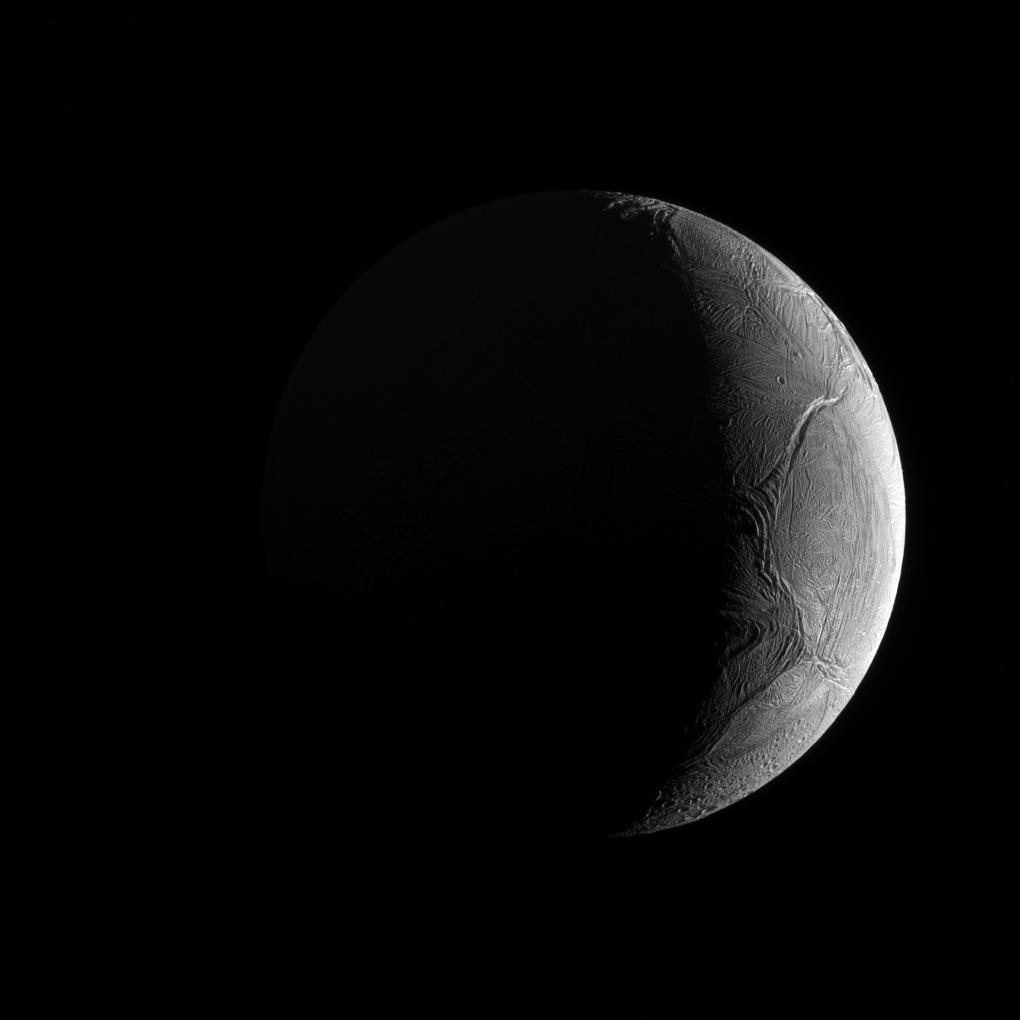
ASTRONOMY - Crescent Enceladus

 2026 February 7

See Explanation.  Clicking on the picture will download
the highest resolution version available.

Crescent Enceladus
Image Credit: Cassini Imaging TeamSSIJPLESANASA

Explanation: Peering from the shadows, the Saturn-facing hemisphere of tantalizing inner moon Enceladus poses in this Cassini spacecraft image. North is up in the dramatic scene captured during November 2016 as Cassini's camera was pointed in a nearly sunward direction about 130,000 kilometers from the moon's bright crescent. In fact, the distant world reflects over 90 percent of the sunlight it receives, giving its surface about the same reflectivity as fresh snow. A mere 500 kilometers in diameter, Enceladus is a surprisingly active moon. Data and images collected during Cassini's flybys have revealed water vapor and ice grains spewing from south polar geysers and evidence of an ocean of liquid water hidden beneath the moon's icy crust.

SANTé/MEDECINE - Tout savoir sur le coeur humain - 8 - Anatomie du cœur droit

Le cœur droit reçoit le sang pauvre en oxygène provenant des veines caves qui entre dans l'oreillette droite (ici sur la gauche de l'illustration). Le sang est mis sous pressiondans le ventricule droit et est expulsé du cœur par les artères pulmonaire, pour rejoindre les poumons. Voyez la valve sigmoïde du tronc pulmonaire, formée de trois valvules en « croissants de lune».

© Patrick J. Lynch, CC by-sa 2.5

06/02/2026

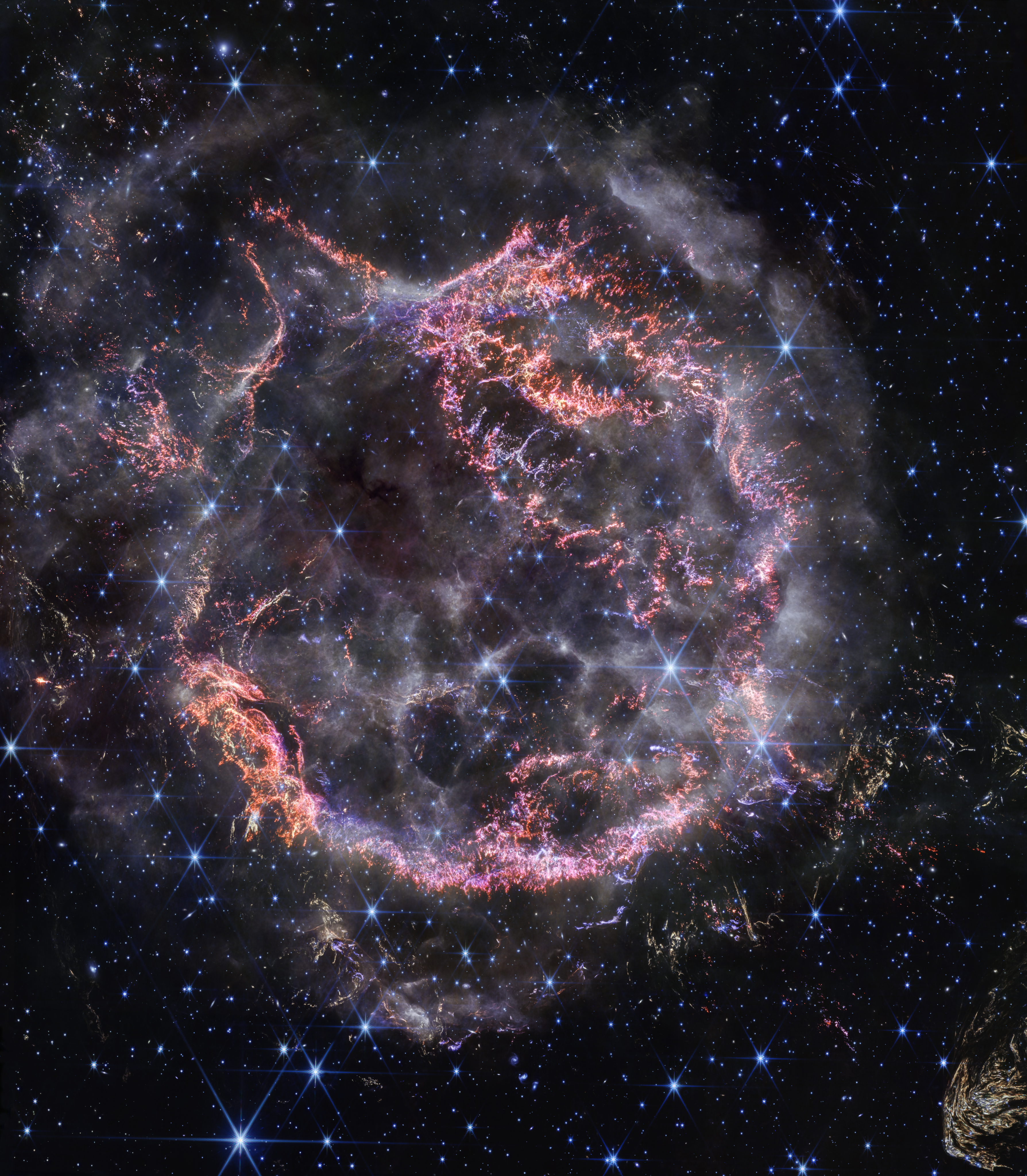
ASTRONOMY - Supernova Remnant Cassiopeia A

 2026 February 6

See Explanation.  Clicking on the picture will download
the highest resolution version available.

Supernova Remnant Cassiopeia A
Image Credit: NASAESACSASTScI; D. Milisavljevic (Purdue University), T. Temim (Princeton University), I. De Looze (University of Gent)

Explanation: Massive stars in our Milky Way Galaxy live spectacular lives. Collapsing from vast cosmic clouds, their nuclear furnaces ignite and create heavy elements in their cores. After only a few million years for the most massive stars, the enriched material is blasted back into interstellar space where star formation can begin anew. The expanding debris cloud known as Cassiopeia A is an example of this final phase of the stellar life cycle. Light from the supernova explosion that created this remnant would have been first seen in planet Earth's sky about 350 years ago, although it took that light 11,000 years to reach us. This sharp NIRCam image from the James Webb Space Telescope shows the still-hot filaments and knots in the supernova remnant. The whitish, smoke-like outer shell of the expanding blast wave is about 20 light-years across. A series of light echoes from the massive star's cataclysmic explosion are also identified in Webb's detailed images of the surrounding interstellar medium.

05/02/2026

SANTé/MEDECINE - Tout savoir sur le coeur humain - 7 - La valve tricuspide


La valve auriculo-ventriculaire droite, aussi appelée valve tricuspide, est une valve cardiaque composée de trois cuspides, qui sont des lames d'endocarde. Cette valve est attachée par des cordons de collagène blanc, qui relient les cuspides à la paroi du ventricule. Quand le cœur est relâché, la valve est ouverte, puis elle se ferme quand les ventricules se contractent.

© Patrick J. Lynch, CC by-sa 2.5
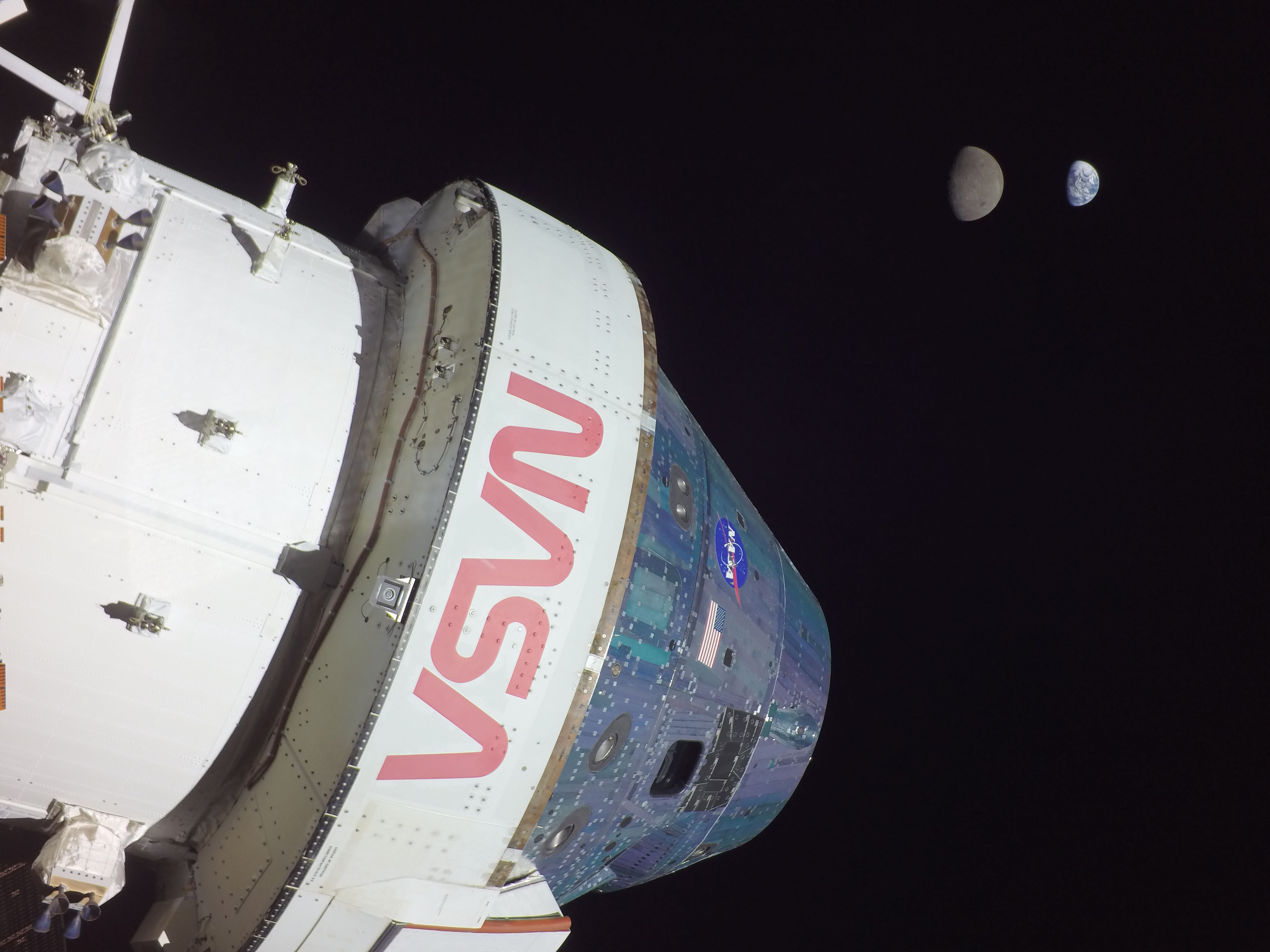
ASTRONOMY - Artemis I: Flight Day 13

 2026 January 31

See Explanation.  Clicking on the picture will download
the highest resolution version available.

Artemis I: Flight Day 13
Image Credit: NASAArtemis I

Explanation: On flight day 13 (November 28, 2022) of the Artemis 1 mission, the Orion spacecraft reached its maximum distance from Earth. At over 430,000 kilometers from Earth, its distant retrograde orbit also puts Orion nearly 70,000 kilometers from the Moon. In the same field of view in this video frame from flight day 13, planet and large natural satellite even appear about the same apparent size from the spacecraft's perspective. On flight day 26 (December 11, 2022), the uncrewed spacecraft splashed down on its home world concluding the historic Artemis I mission. The Artemis II mission, carrying 4 astronauts around the moon and back again, will launch no earlier than February 8.

04/02/2026

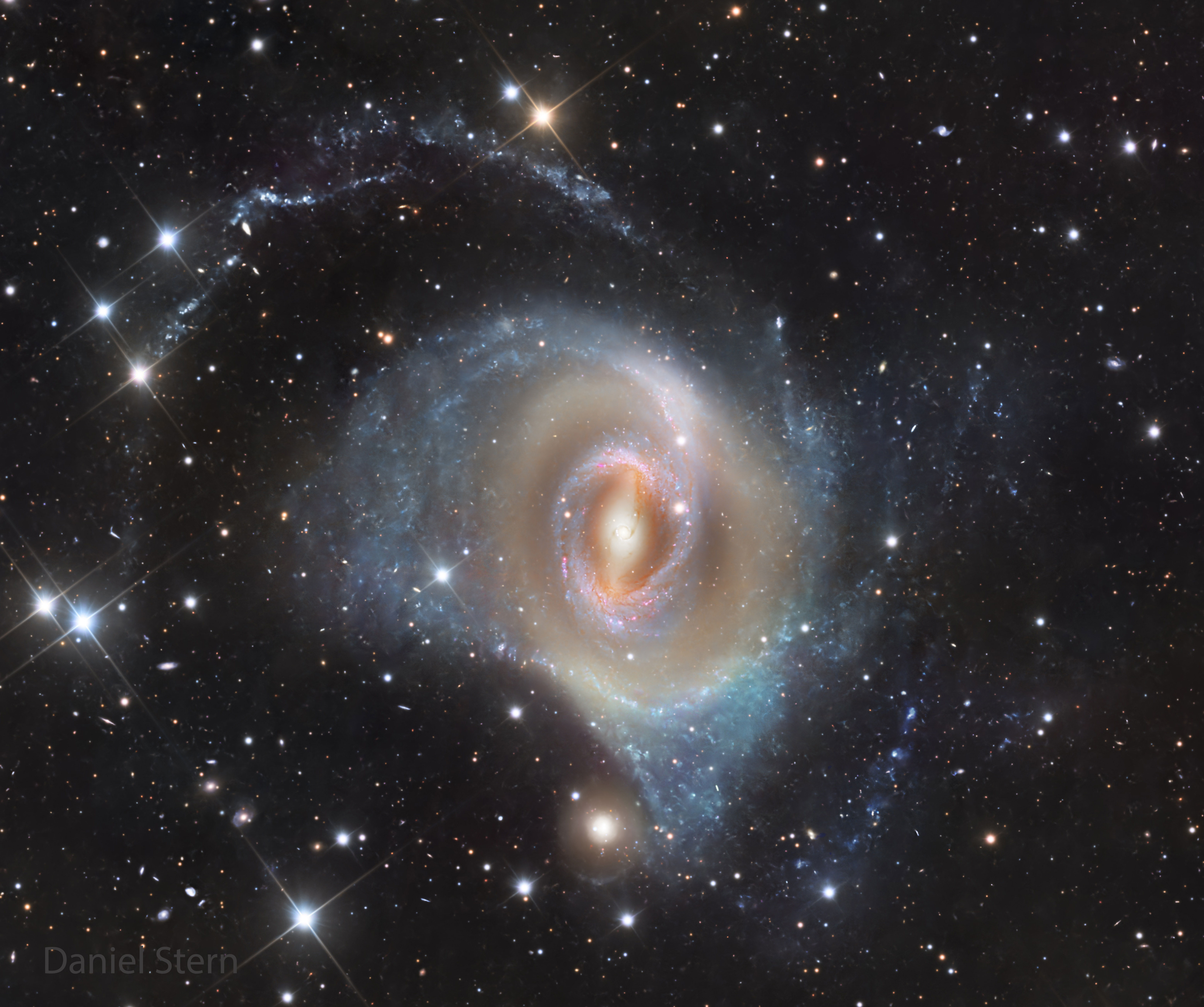
ASTRONOMY - Spiral Galaxy NGC 1512: Wide Field

 2026 February 4

A spiral galaxy is shown that seems to have rings
in place of spiral arms. The outer ring is blue and filled
with stars, while the inner ring is more red. The center
has a vertical bar.
Please see the explanation for more detailed information.

Spiral Galaxy NGC 1512: Wide Field
Image Credit & Copyright: Daniel Stern

Explanation: Most galaxies don't have any rings -- why does this galaxy have three? To begin, a ring that's near NGC 1512's center -- and so hard to see here -- is the nuclear ring which glows brightly with recently formed stars. Next out is a ring of stars and dust appearing both red and blue, called, counter-intuitively, the inner ring. This inner ring connects ends of a diffuse central bar of stars that runs horizontally across the galaxy. Farthest out in this wide field image is a ragged structure that might be considered an outer ring. This outer ring appears spiral-like and is dotted with clusters of bright blue stars. All these ring structures are thought to be affected by NGC 1512's own gravitational asymmetries in a drawn-out process called secular evolution. The featured image was captured last month from a telescope at Deep Sky Chile in Chile.

03/02/2026

SANTé/MEDECINE - Tout savoir sur le coeur humain - 6 - Échocardiographie d’un cœur normal

Au centre, observez la valve de l'aorte qui empêche le sang de refluer dans le ventricule ; cette valve dite sigmoïde est composée de trois valvules en forme de pochettes. Le ventricule gauche est reconnaissable par sa paroi musculaire plus épaisse.

© Patrick J. Lynch, CC by-sa 2.5
02/02/2026

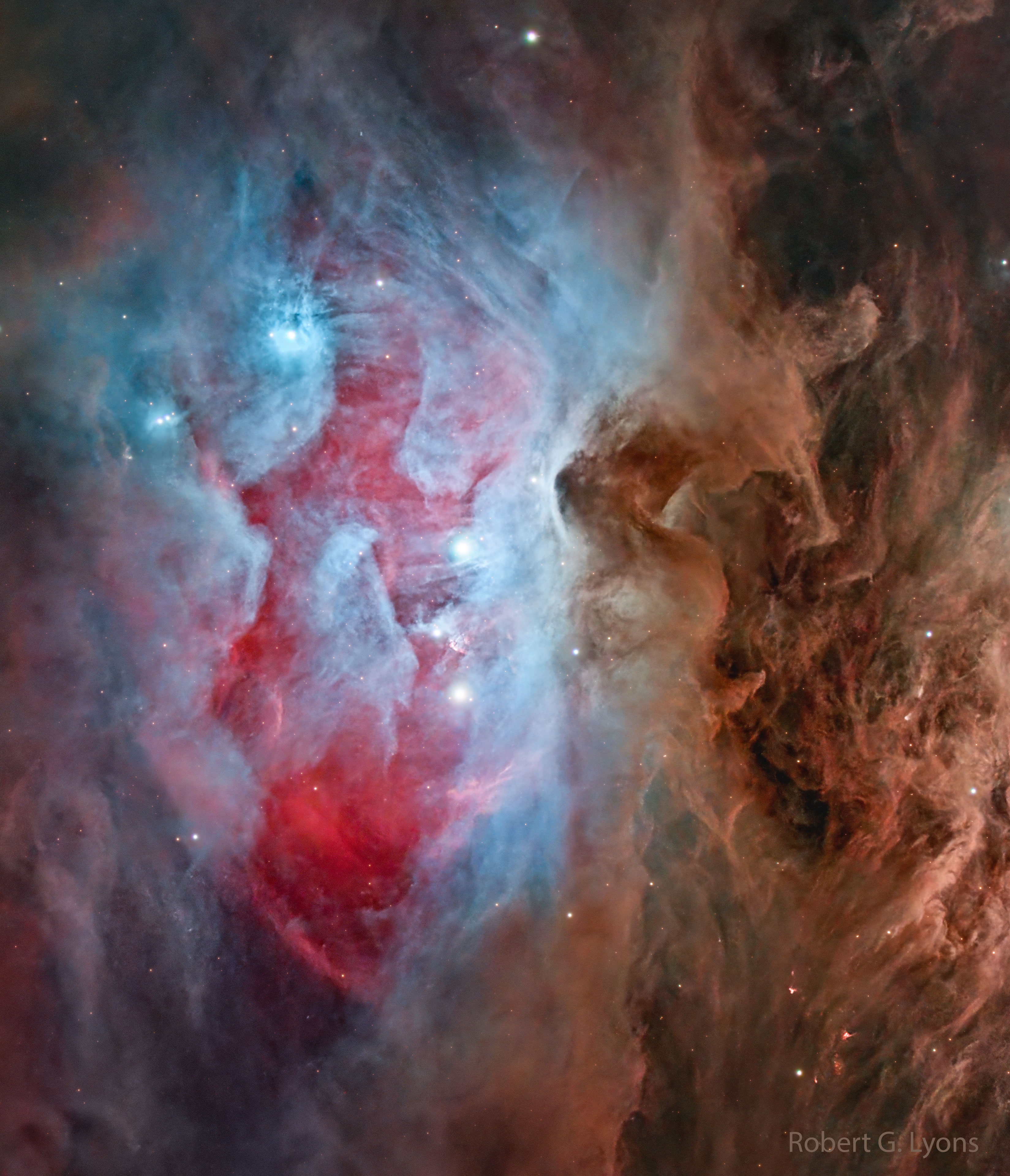
ASTRONOMY - Orion: The Running Man Nebula

2026 February 2
A complex nebula is shown that is mostly blue
and red on the left half and mostly brown on the right. 
Several bright stars are visible, and many filaments
run through, in particular on brown dust filamnents
on the image right. 
Please see the explanation for more detailed information.

Orion: The Running Man Nebula
Image Credit & Copyright: Robert G. Lyons (Robservatory)

Explanation: What part of Orion is this? Just north of the famous Orion Nebula is a picturesque star forming region in Orion's Sword that contains a lot of intricate dust -- some of which appears blue because it reflects the light of bright embedded stars. The region's popular name is the Running Man Nebula because, looked at from the right, part of the brown dust appears to be running legs. Cataloged as Sharpless 279, the reflection nebula is not only part of the constellation of Orion, but part of the greater Orion molecular cloud complex. Light from the Running Man's bright stars, including 42 Orionis, the bright star closest to the featured image center, is slowly destroying and reshaping the surrounding dust, which will likely be completely gone in about 10 million years. The nebula spans about 15 light years and lies about 1,500 light years away. 

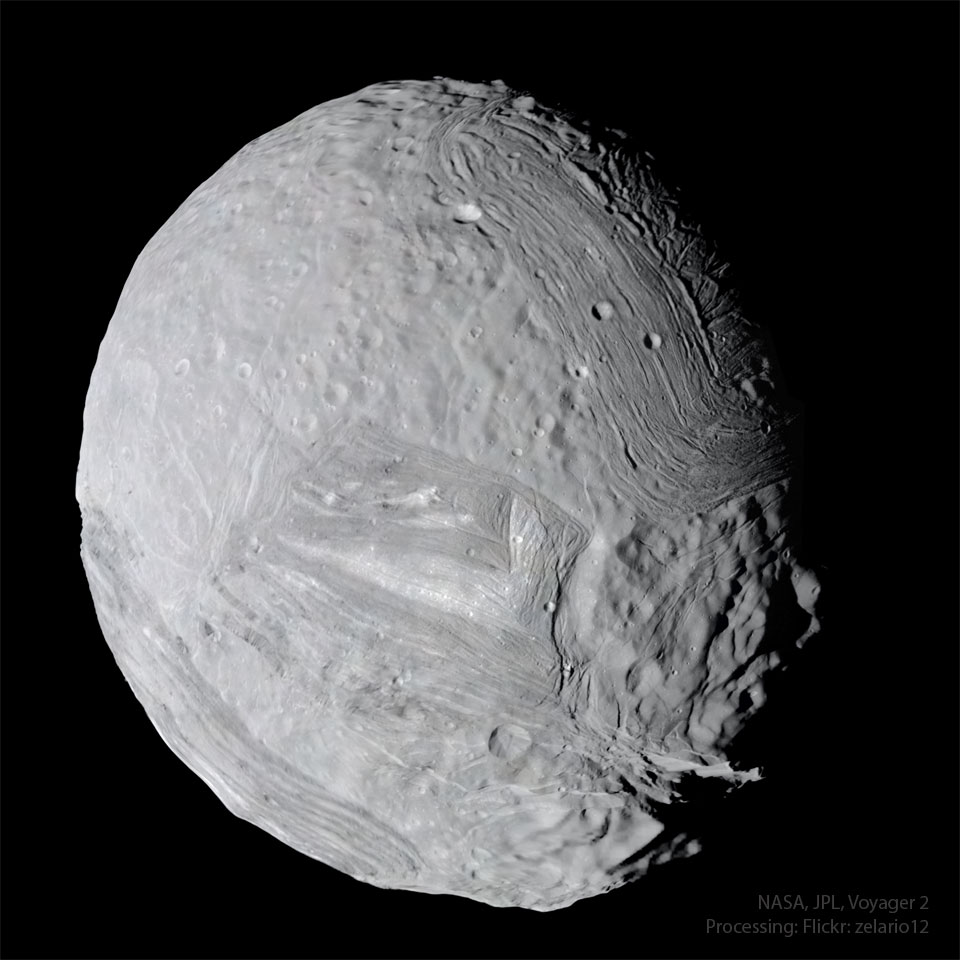
ASTRONOMY - Miranda Revisited

 2026 February 9 Miranda Revisited Image Credit:  NASA ,  JPL ,  Voyager 2 ; Processing & License: Flickr:  zelario12 ; Text:  Keighley ...