Nombre total de pages vues

12/02/2026

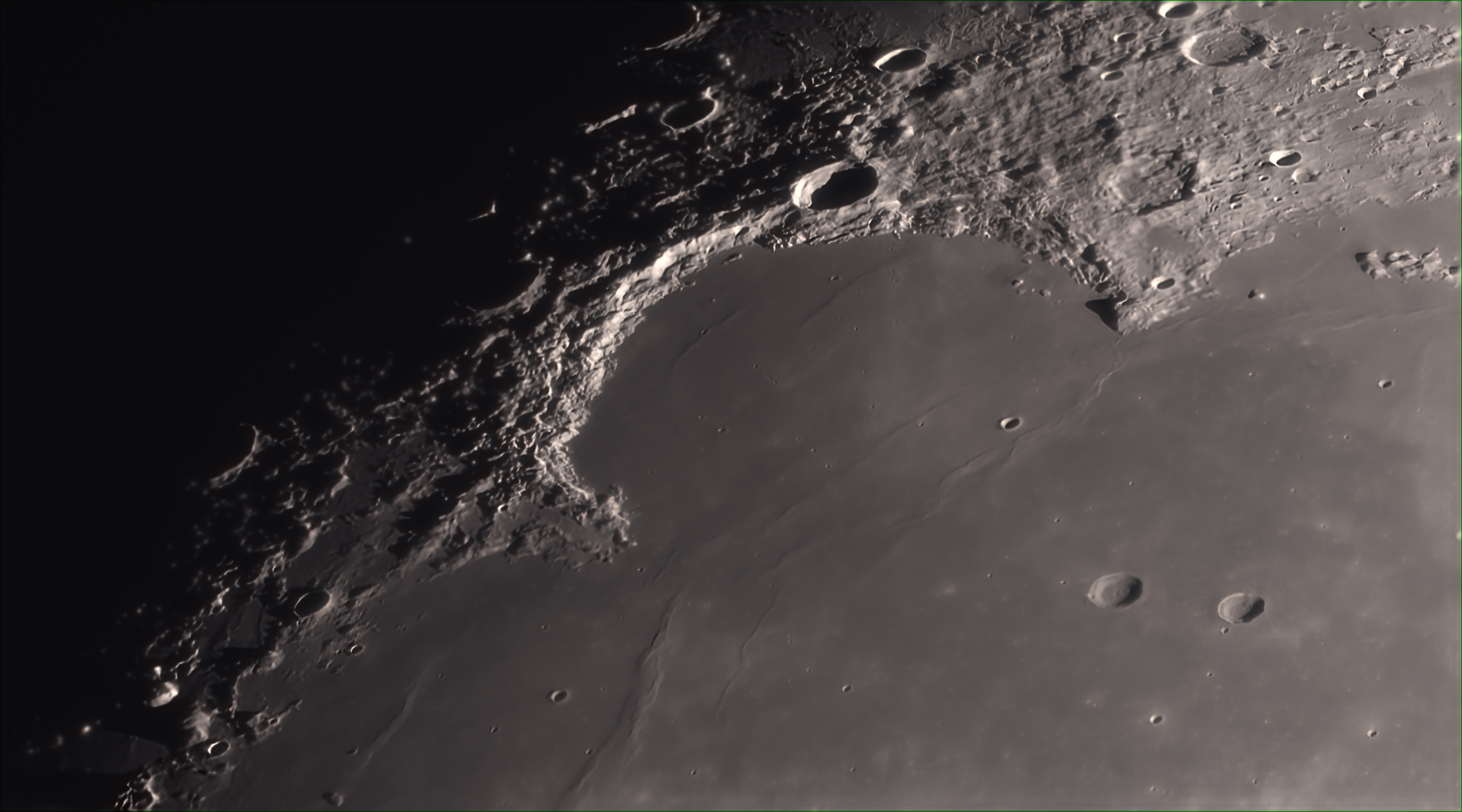
ASTRONOMY -The Bay of Rainbows

 2026 February 12

See Explanation.  Clicking on the picture will download
the highest resolution version available.

The Bay of Rainbows
Image Credit & CopyrightOlaf Filzinger

Explanation: Dark, smooth regions that cover the Moon's familiar face are called by Latin names for oceans and seas. That naming convention is historical, though it may seem a little ironic to denizens of the space age who recognize the Moon as a mostly dry and airless world, and the smooth, dark areas as lava-flooded impact basins. For example, this telescopic lunar vista, looks over the expanse of the northwestern Mare Imbrium, or Sea of Rains and into the Sinus Iridum, the Bay of Rainbows. Ringed by the Jura Mountains (montes), the bay is about 250 kilometers across. Seen after local sunrise, the mountains form part of the Sinus Iridum impact crater wall. Their rugged sunlit arc is bounded at the top by Cape (promontorium) Laplace reaching nearly 3,000 meters above the bay's surface. At the bottom of the arc is Cape Heraclides, depicted by Giovanni Cassini in his 1679 telescope-based drawings mapping the moon, as a moon maiden seen in profile with long, flowing hair.

11/02/2026

SANTé/MEDECINE - Tout savoir sur le coeur humain - 10 - Infarctus dans le ventricule gauche


Si une artère coronaire est obstruée, l'irrigation du myocarde en sang diminue localement. Les cellules musculaires manquent d'oxygène et sont affaiblies. Si la situation se prolonge, elle risque de provoquer un infarctus du myocarde, ou crise cardiaque. Certaines régions du muscle cardiaque sont nécrosées : elles sont colorées en sombre en bas de l'illustration. Plus les lésions sont étendues, plus les chances de survie sont minces.

© Patrick J. Lynch, CC by-sa 2.5

ASTRONOMY - A Year of Sunspots

 2026 February 11

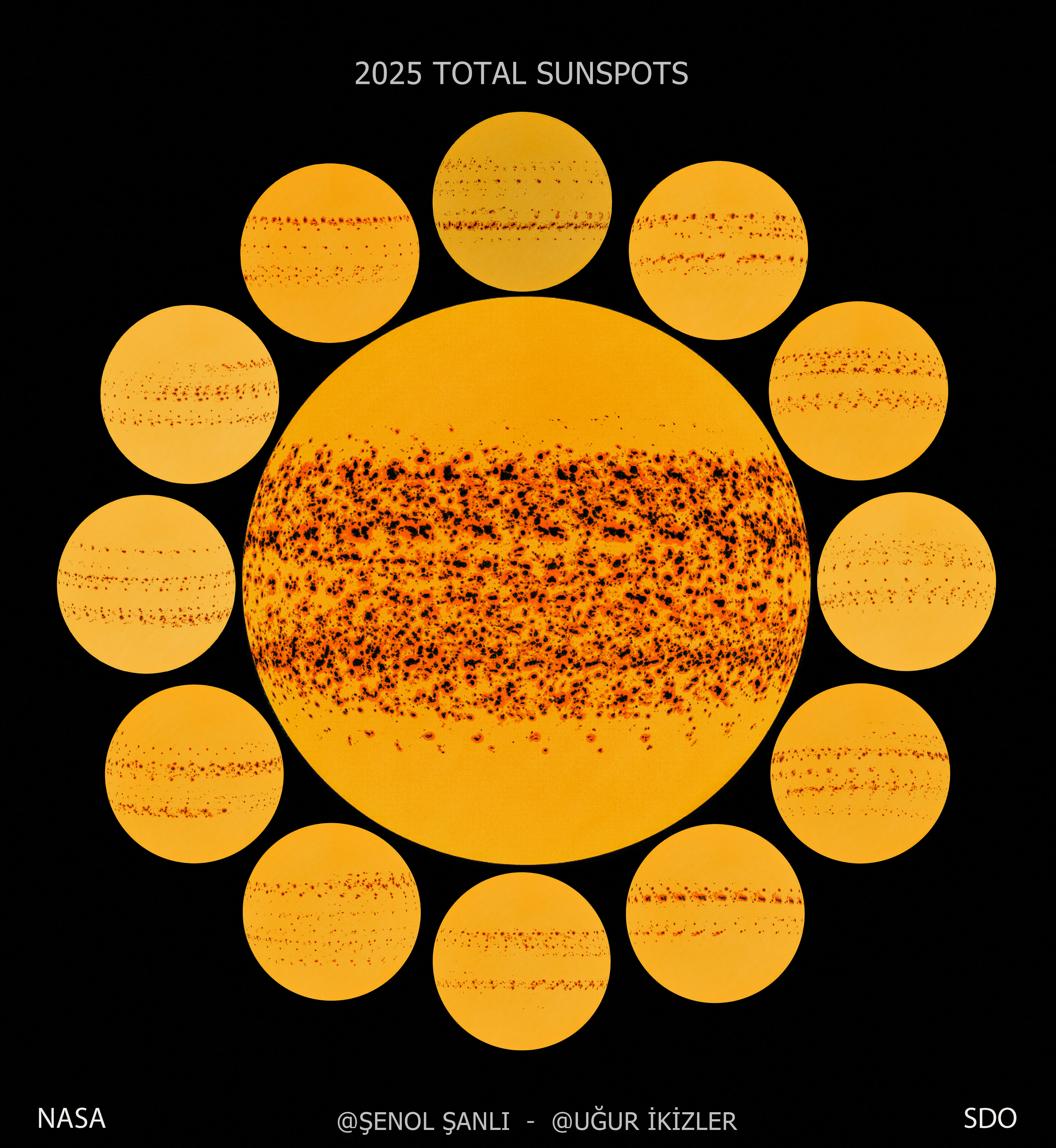
An image of the Sun is surrounded by 12 smaller
Sun images. Each surrounding image has some spots on
it, but the large central image has the most dark spots.
Please see the explanation for more detailed information.

A Year of Sunspots
Image Credit: NASASDO; Processing & Copyright: Şenol Şanli & Uğur İkizler; Text: Cecilia Chirenti (NASA GSFCUMCPCRESST II)

Explanation: How many sunspots can you see? The central image shows the many sunspots that occurred in 2025, month by month around the circle, and all together in the grand central image. Each sunspot is magnetically cooled and so appears dark -- and can last from days to months. Although the featured images originated from NASA's Solar Dynamics Observatory, sunspots can be easily seen with a small telescope or binoculars equipped with a solar filter. Very large sunspot groups like recent AR 4366 can even be seen with eclipse glasses. Sunspots are still counted by eye, but the total number is not considered exact because they frequently change and break up. Last year, 2025, coincided with a solar maximum, the period of most intense magnetic activity during its 11-year solar cycle. Our Sun remains unpredictable in many ways, including when it ejects solar flares that will impact the Earth, and how active the next solar cycle will be.

10/02/2026

ASTRONOMY - In Green Company: Aurora over Norway

 2026 February 10

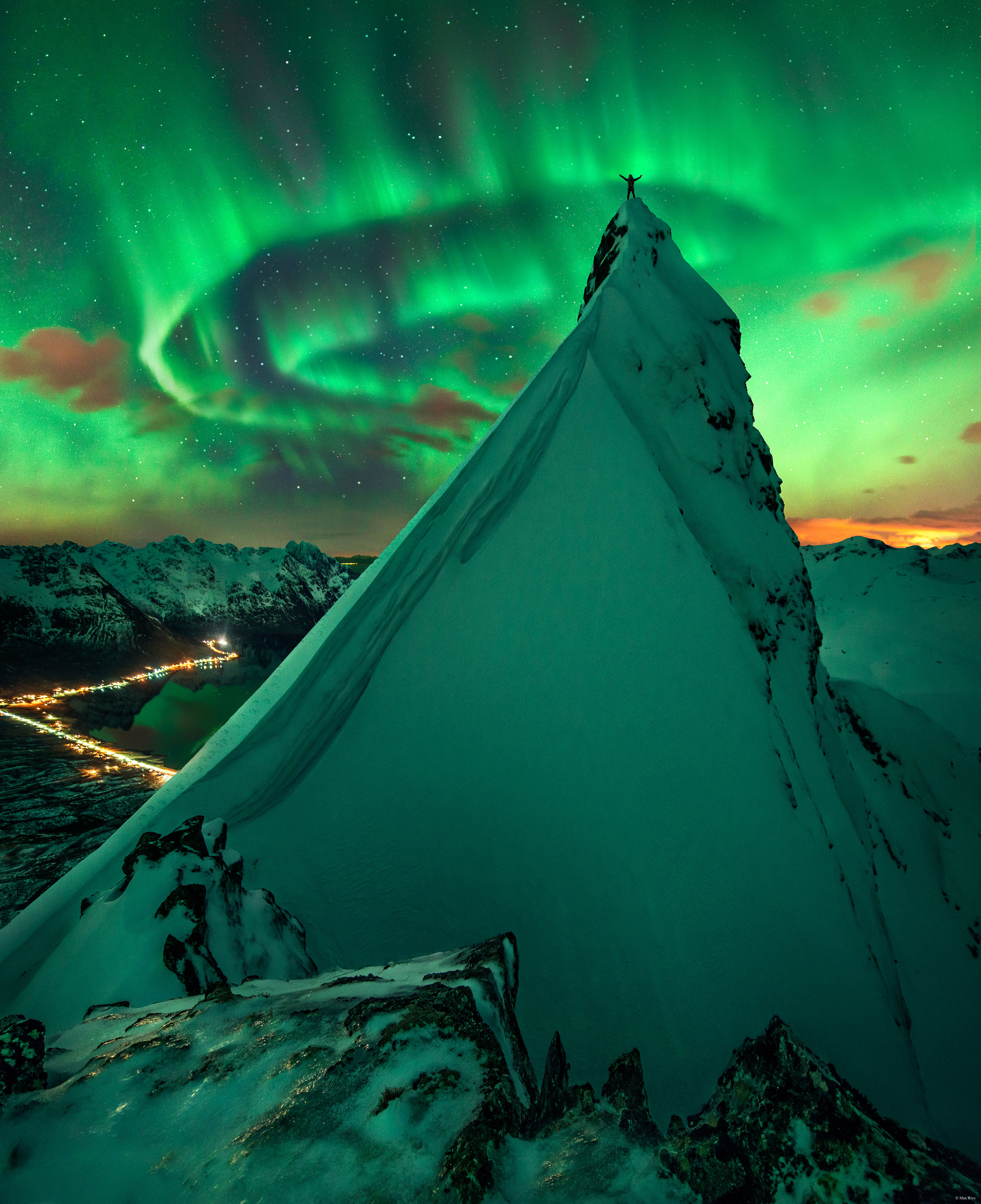
A person with the arms raised stands atop of a
rock peak covered in snow. Snow covered mountains
are all around. Green aurora swirl overhead and 
reflect off the snow. 
Please see the explanation for more detailed information.

In Green Company: Aurora over Norway
Image Credit & Copyright: Max Rive

Explanation: Raise your arms if you see an aurora. With those instructions, two nights went by with, well, clouds -- mostly. On the third night of returning to same peaks, though, the sky not only cleared up but lit up with a spectacular auroral display. Arms went high in the air, patience and experience paid off, and the creative featured image was captured as a composite from three separate exposures. The setting is a summit of the Austnesfjorden (a fjord) close to the town of Svolvear on the Lofoten islands in northern Norway. The year was 2014. This year, our Sun is just passing solar maximum, the peak in its 11-year surface activity cycle. As expected, some spectacular auroras have recently resulted.

09/02/2026

ASTRONOMY - Miranda Revisited

 2026 February 9

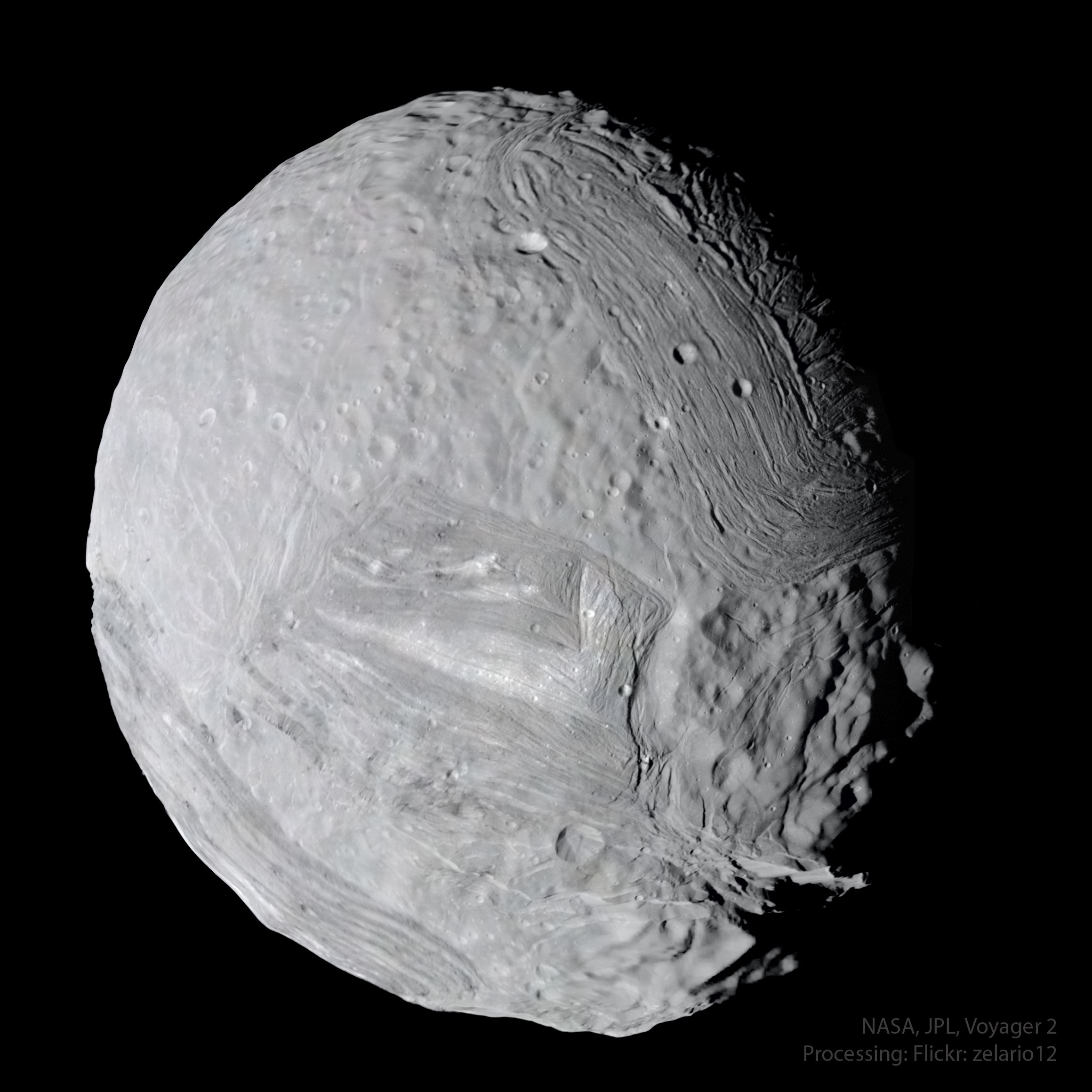
An unusual gray body looks like a more jaggged 
version of the Earth's moon, but close up. Craters 
and stripes run across much of the surface. 
Please see the explanation for more detailed information.

Miranda Revisited
Image Credit: NASAJPLVoyager 2; Processing & License: Flickr: zelario12; Text: Keighley Rockcliffe (NASA GSFCUMBC CSSTCRESST II)

Explanation: What is Miranda really like? Visually, old images from NASA's Voyager 2 have been recently combined and remastered to result in the featured image of Uranus's 500-kilometer-wide moon. In the late 1980s, Voyager 2 flew by Uranus, coming close to the cratered, fractured, and unusually grooved moon -- named after a character from Shakespeare’s The Tempest. Scientifically, planetary scientists are using old data and clear images to theorize anew about what shaped Miranda's severe surface features. A leading hypothesis is that Miranda, beneath its icy surface, may have once hosted an expansive liquid water ocean which may be slowly freezing. Thanks to the legacy of Voyager 2, Miranda has joined the ranks of EuropaTitan, and other icy moons in the search for water, and, possibly, microbial life, in our Solar System.

SANTé/MEDECINE - Tout savoir sur le coeur humain - 9 - Pseudo-anévrisme du ventricule gauche

Un pseudo-anévrisme, aussi appelé faux anévrisme, est une poche de sang qui se forme près du myocarde. Contrairement aux vrais anévrismes, il ne possède pas d'éléments du myocarde, mais risque de se rompre. Les pseudo-anévrismes du ventricule gauche sont rares, mais il s'agit souvent d'une complication d'un infarctus du myocarde. Ils peuvent aussi survenir après une opération cardiaque ou une infection.

© Patrick J. Lynch, CC by-sa 2.5

08/02/2026

ASTRONOMY - Active Sunspot Region 4366 Crosses the Sun

 2026 February 8

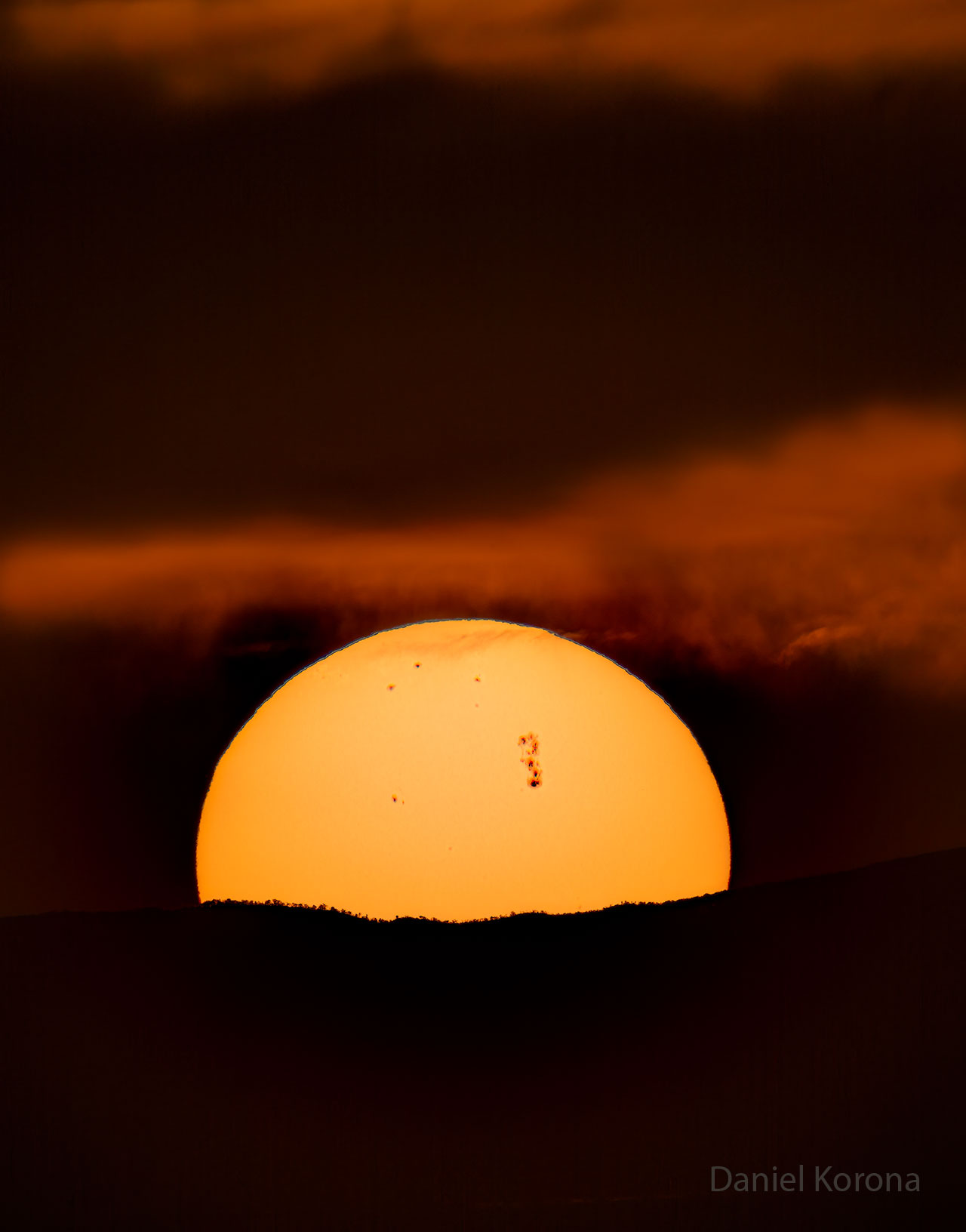
Most of the Sun is pictured peeking over a hill.
On the surface of the Sun are several sunspots including 
a very large sunspot region toward the center-right.
Please see the explanation for more detailed information.

Active Sunspot Region 4366 Crosses the Sun
Image Credit & Copyright: Daniel Korona

Explanation: An unusually active sunspot region is now crossing the Sun. The region, labelled AR 4366, is much larger than the Earth and has produced several powerful solar flares over the past ten days. In the featured image, the region is marked by large and dark sunspots toward the upper right of the Sun's disk. The image captured the Sun over a hill in ZacatecasMexico, 5 days ago. AR 4366 has become a candidate for the most active solar region in this entire 11-year solar cycleActive solar regions are frequently associated with increased auroral activity on the Earth. Now reaching the edge, AR 4366 will begin facing away from the Earth during the coming week. It is not known, though, if the active region will survive long enough to reappear in about two weeks' time, as the Sun rotates.

07/02/2026

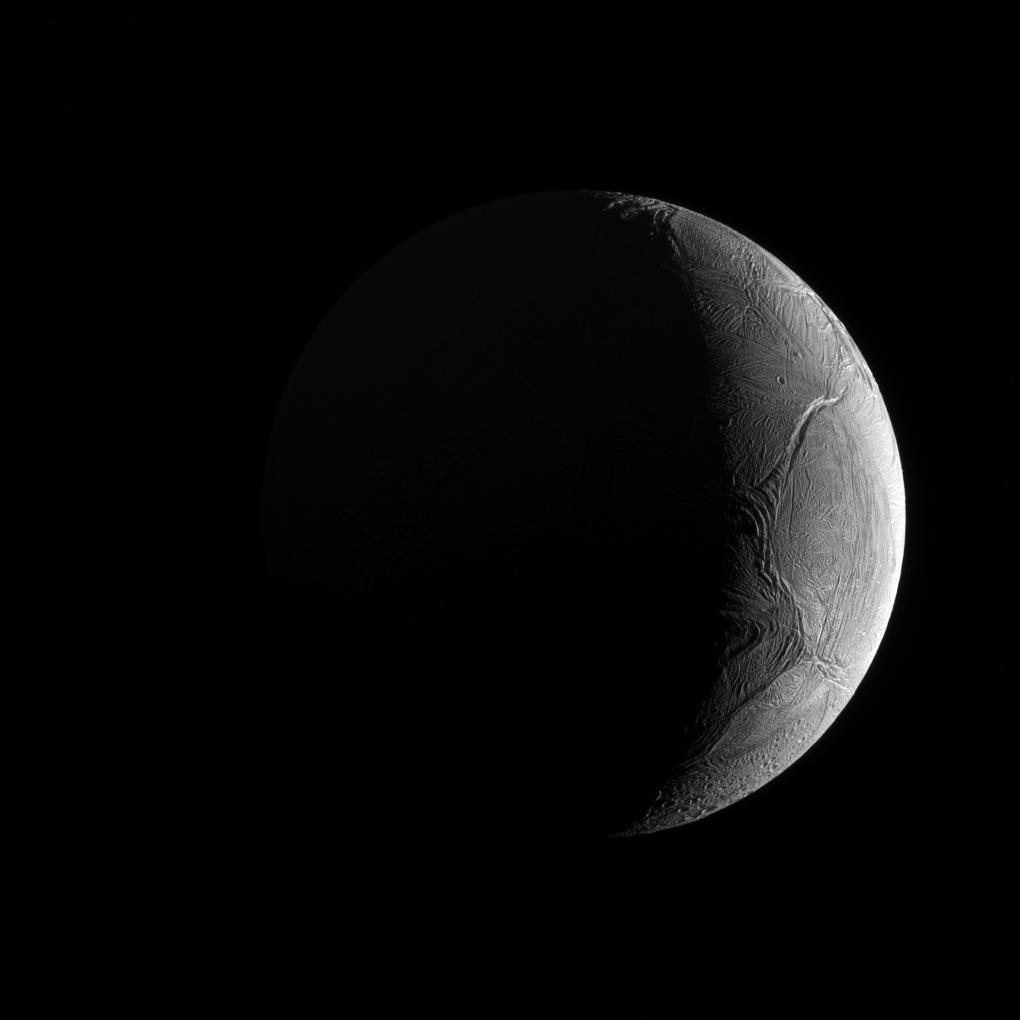
ASTRONOMY - Crescent Enceladus

 2026 February 7

See Explanation.  Clicking on the picture will download
the highest resolution version available.

Crescent Enceladus
Image Credit: Cassini Imaging TeamSSIJPLESANASA

Explanation: Peering from the shadows, the Saturn-facing hemisphere of tantalizing inner moon Enceladus poses in this Cassini spacecraft image. North is up in the dramatic scene captured during November 2016 as Cassini's camera was pointed in a nearly sunward direction about 130,000 kilometers from the moon's bright crescent. In fact, the distant world reflects over 90 percent of the sunlight it receives, giving its surface about the same reflectivity as fresh snow. A mere 500 kilometers in diameter, Enceladus is a surprisingly active moon. Data and images collected during Cassini's flybys have revealed water vapor and ice grains spewing from south polar geysers and evidence of an ocean of liquid water hidden beneath the moon's icy crust.

SANTé/MEDECINE - Tout savoir sur le coeur humain - 8 - Anatomie du cœur droit

Le cœur droit reçoit le sang pauvre en oxygène provenant des veines caves qui entre dans l'oreillette droite (ici sur la gauche de l'illustration). Le sang est mis sous pressiondans le ventricule droit et est expulsé du cœur par les artères pulmonaire, pour rejoindre les poumons. Voyez la valve sigmoïde du tronc pulmonaire, formée de trois valvules en « croissants de lune».

© Patrick J. Lynch, CC by-sa 2.5

06/02/2026

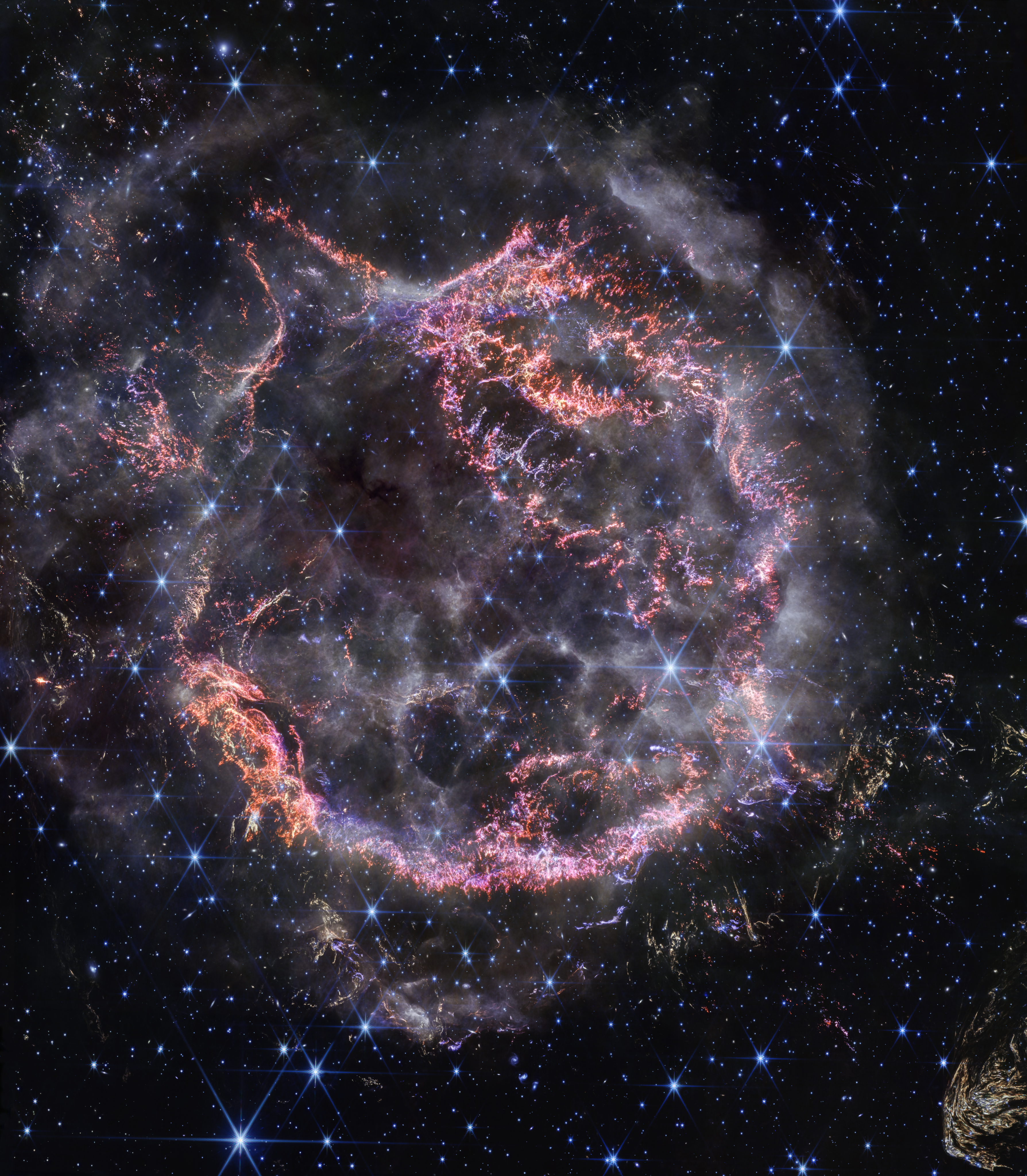
ASTRONOMY - Supernova Remnant Cassiopeia A

 2026 February 6

See Explanation.  Clicking on the picture will download
the highest resolution version available.

Supernova Remnant Cassiopeia A
Image Credit: NASAESACSASTScI; D. Milisavljevic (Purdue University), T. Temim (Princeton University), I. De Looze (University of Gent)

Explanation: Massive stars in our Milky Way Galaxy live spectacular lives. Collapsing from vast cosmic clouds, their nuclear furnaces ignite and create heavy elements in their cores. After only a few million years for the most massive stars, the enriched material is blasted back into interstellar space where star formation can begin anew. The expanding debris cloud known as Cassiopeia A is an example of this final phase of the stellar life cycle. Light from the supernova explosion that created this remnant would have been first seen in planet Earth's sky about 350 years ago, although it took that light 11,000 years to reach us. This sharp NIRCam image from the James Webb Space Telescope shows the still-hot filaments and knots in the supernova remnant. The whitish, smoke-like outer shell of the expanding blast wave is about 20 light-years across. A series of light echoes from the massive star's cataclysmic explosion are also identified in Webb's detailed images of the surrounding interstellar medium.

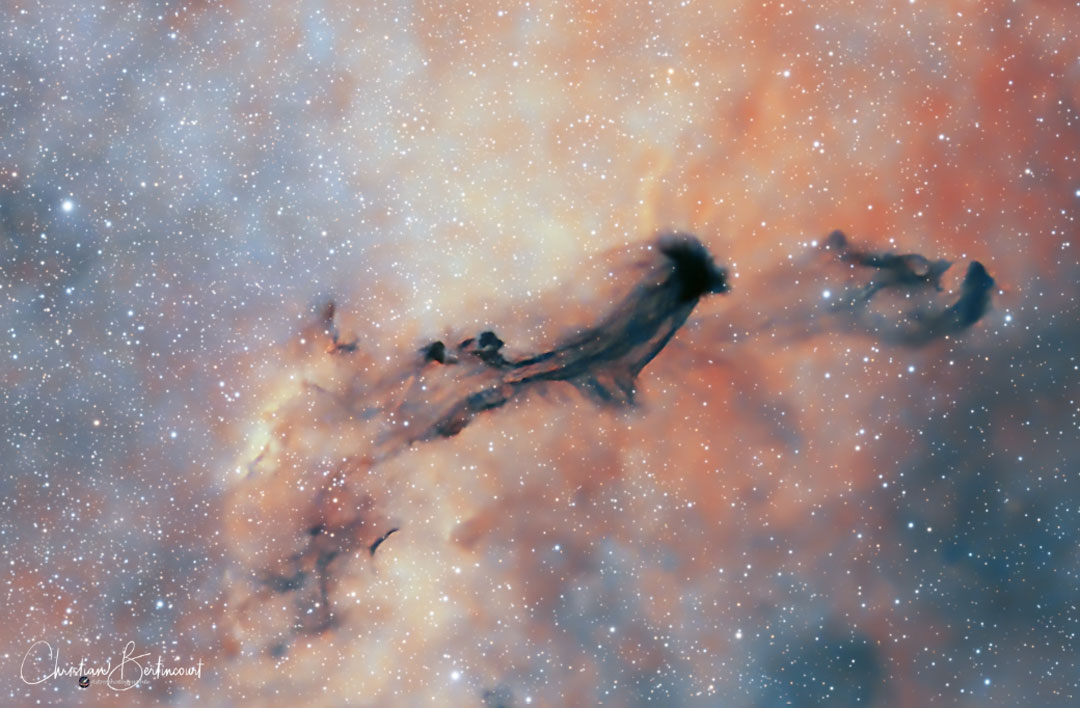
ASTRONOMY - B93: A Dark Interstellar Ghost

2026 February 20 B93: A Dark Interstellar Ghost Image Credit & Copyright:  Christian Bertincourt ; Text:  Keighley Rockcliffe  ( NASA   ...