© Eugen Kamenew, Flickr
2022 June 21
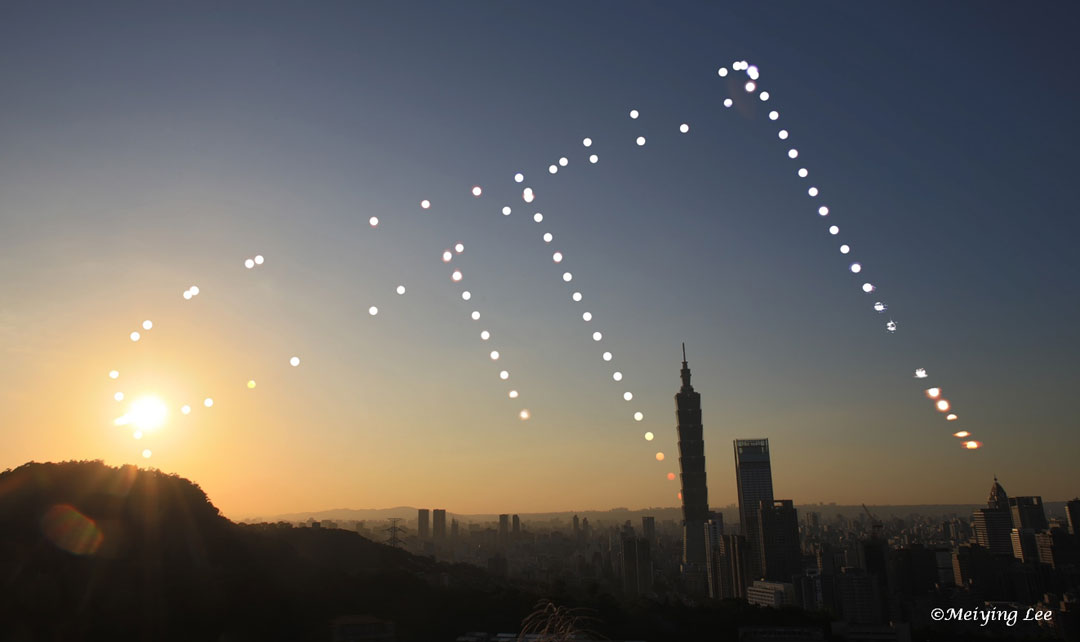
Explanation: Does the Sun return to the same spot on the sky every day? No. A better and more visual answer to that question is an analemma, a composite of images taken at the same time and from the same place over the course of a year. The featured analemma was compiled at 4:30 pm many afternoons from Taiwan during 2021, with the city skyline of Taipei in the foreground, including tall Taipei 101. The Sun's location in December -- at the December solstice -- is shown on the far left, while its location at the June solstice is captured on the far right. Also shown are the positions of the Sun throughout the rest of the day on the solstices and equinoxes. Today is the June solstice of 2022, the day in Earth's northern hemisphere when the Sun spends the longest time in the sky. In many countries, today marks the official beginning of a new season, for example winter in Earth's southern hemisphere.
2022 June 20
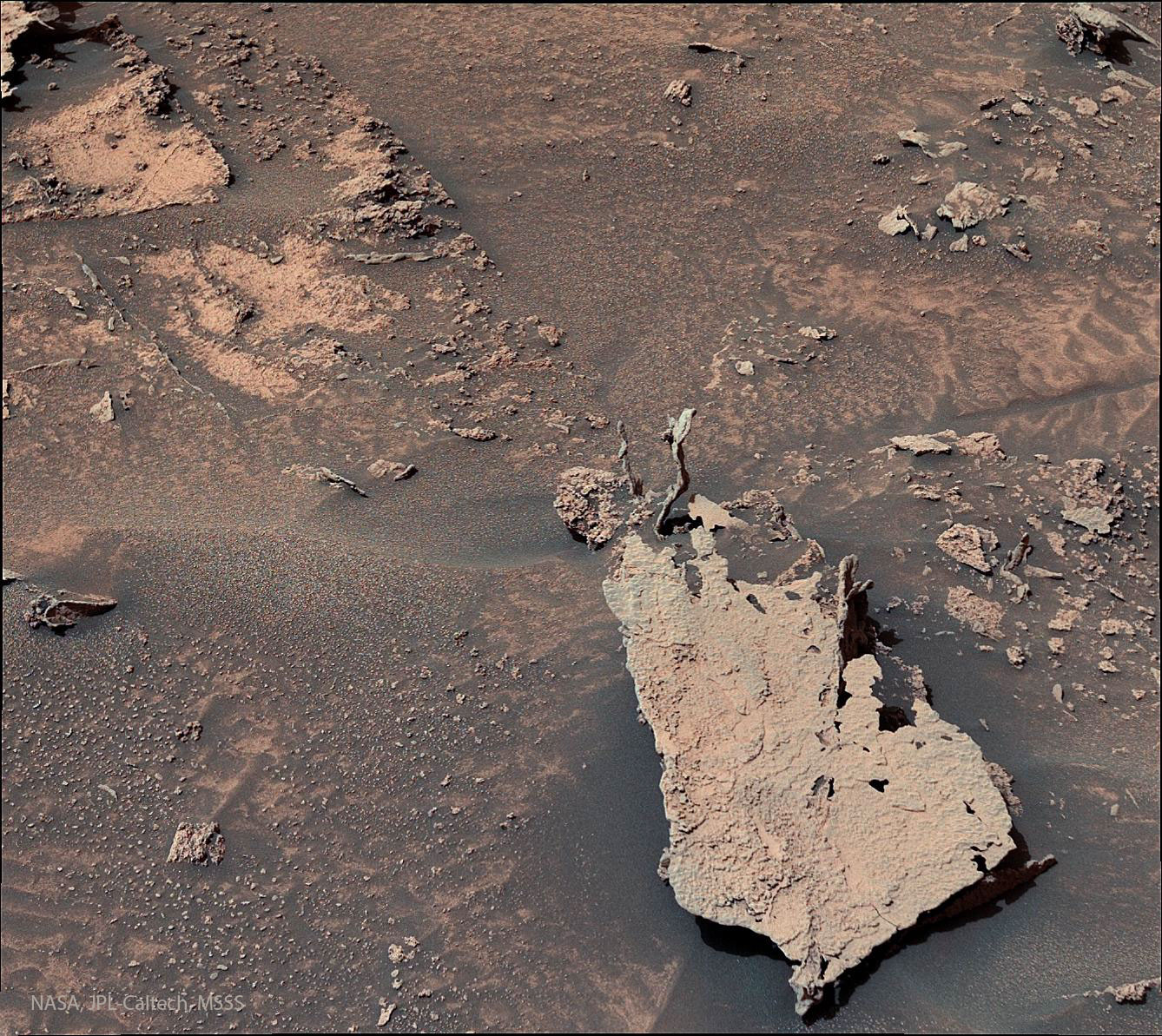
Explanation: There, just right of center, what is that? The surface of Mars keeps revealing new surprises with the recent discovery of finger-like rock spires. The small nearly-vertical rock outcrops were imaged last month by the robotic Curiosity rover on Mars. Although similar in size and shape to small snakes, the leading explanation for their origin is as conglomerations of small minerals left by water flowing through rock crevices. After these relatively dense minerals filled the crevices, they were left behind when the surrounding rock eroded away. Famous rock outcrops on Earth with a similar origin are called hoodoos. NASA's Curiosity Rover continues to search for new signs of ancient water in Gale Crater on Mars, while also providing a geologic background important for future human exploration.
2022 June 18
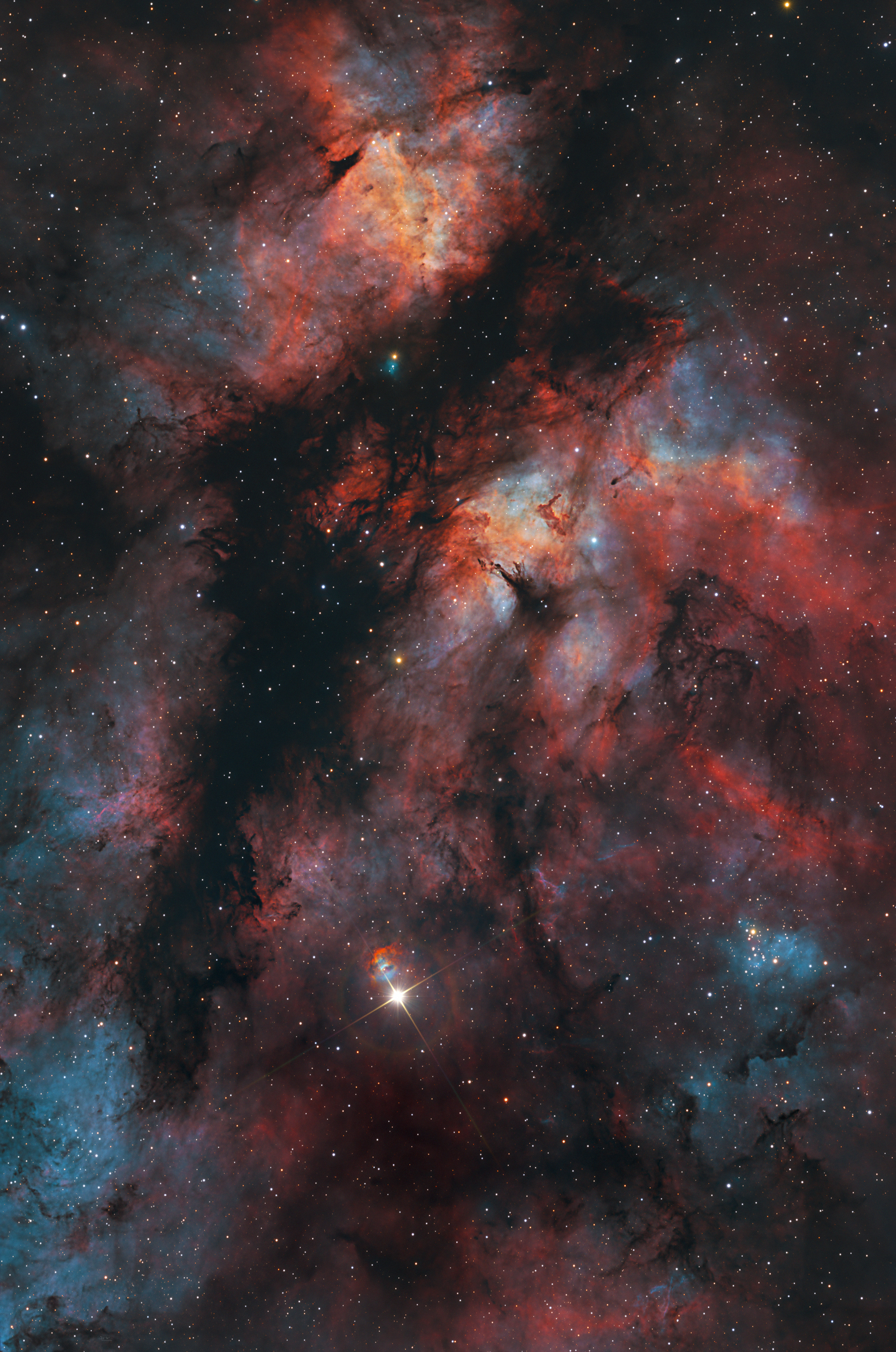
Explanation: Supergiant star Gamma Cygni is at the center of the Northern Cross. Near the plane of our Milky Way galaxy, that famous asterism flies high in northern summer night skies in the constellation Cygnus the Swan. Known by the proper name Sadr, Gamma Cygni also lies just below center in this telescopic skyscape, with colors mapped from both broadband and narrowband image data. The field of view spans about 3 degrees (six Full Moons) on the sky and includes emission nebula IC 1318 and open star cluster NGC 6910. Filling the upper part of the frame and shaped like two glowing cosmic wings divided by a long dark dust lane, IC 1318's popular name is understandably the Butterfly Nebula. Right of Gamma Cygni, are the young, still tightly grouped stars of NGC 6910. The distance to Gamma Cygni is around 560 parsecs or 1,800 light-years. Estimates for IC 1318 and NGC 6910 range from 2,000 to 5,000 light-years.
2022 June 17
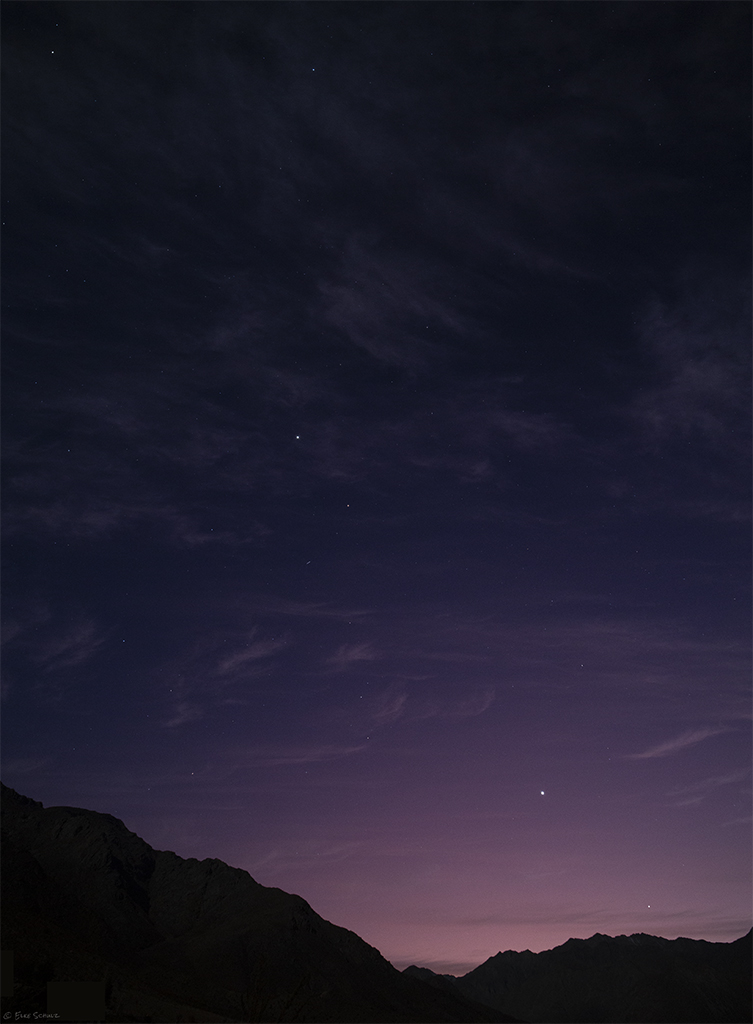
Explanation: On June 15, innermost planet Mercury had wandered about as far from the Sun as it ever gets in planet Earth's sky. Near the eastern horizon just before sunrise it stands over distant Andes mountain peaks in this predawn snapshot from the valley of Rio Hurtado in Chile. June's other morning planets are arrayed above it, as all the naked-eye planets of the Solar System stretch in a line along the ecliptic in the single wide-field view. Tilted toward the north, the Solar System's ecliptic plane arcs steeply through southern hemisphere skies. Northern hemisphere early morning risers will see the lineup of planets along the ecliptic at a shallower angle tilting toward the south. From both hemispheres June's beautiful morning planetary display finds the visible planets in order of their increasing distance from the Sun.
2022 June 16
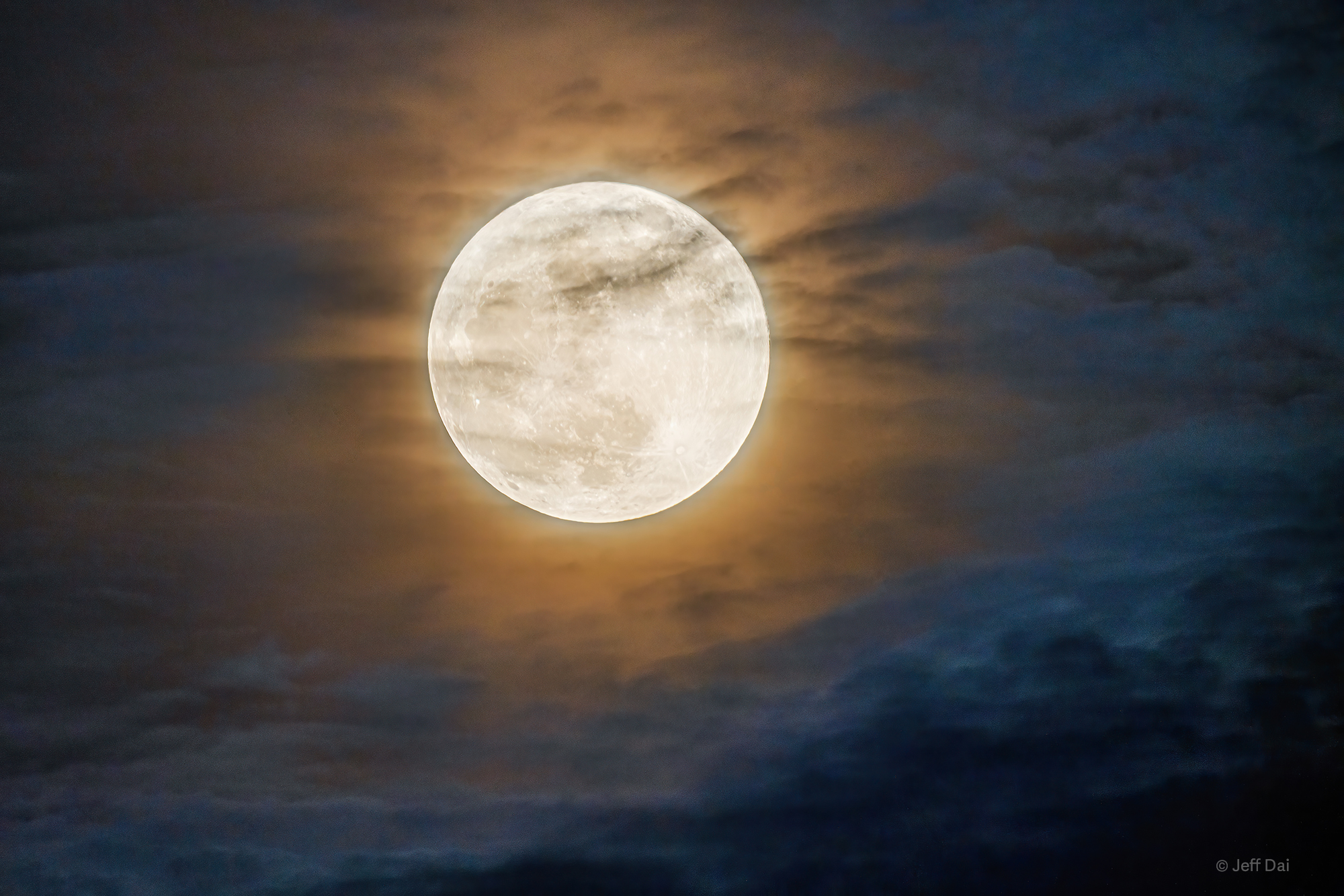
Explanation: There are four Full Supermoons in 2022. Using the definition of a supermoon as a Full Moon near perigee, that is within at least 90% of its closest approach to Earth in a given orbit, the year's Full Supermoon dates are May 16, June 14, July 13, and August 12. Full Moons near perigee really are the brightest and largest in planet Earth's sky. But size and brightness differences between Full Moons are relatively small and an actual comparison with other Full Moons is difficult to make by eye alone. Two exposures are blended in this supermoon and sky view from June 14. That Full Moon was also known to northern hemisphere skygazers as the Strawberry moon. The consecutive short and long exposures allow familiar features on the fully sunlit lunar nearside to be seen in the same image as a faint lunar corona and an atmospheric cloudscape. They were captured in skies over Chongqing, China.
2022 June 15
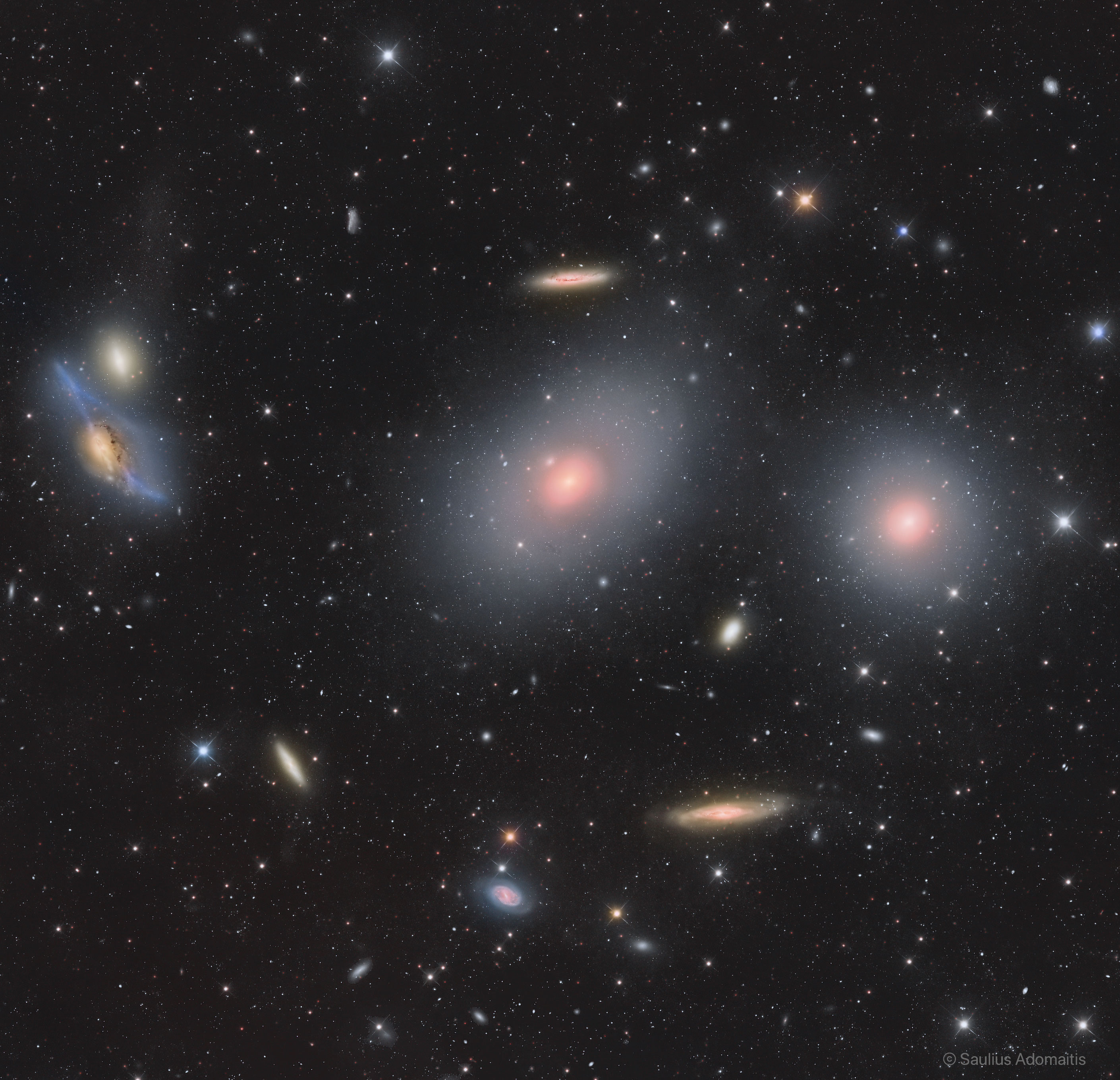
Explanation: The Virgo Cluster of Galaxies is the closest cluster of galaxies to our Milky Way Galaxy. The Virgo Cluster is so close that it spans more than 5 degrees on the sky - about 10 times the angle made by a full Moon. With its heart lying about 70 million light years distant, the Virgo Cluster is the nearest cluster of galaxies, contains over 2,000 galaxies, and has a noticeable gravitational pull on the galaxies of the Local Group of Galaxies surrounding our Milky Way Galaxy. The cluster contains not only galaxies filled with stars but also gas so hot it glows in X-rays. Motions of galaxies in and around clusters indicate that they contain more dark matter than any visible matter we can see. Pictured here, the heart of the Virgo Cluster includes bright Messier galaxies such as Markarian's Eyes on the upper left, M86 just to the upper right of center, M84 on the far right, as well as spiral galaxy NGC 4388 at the bottom right.
2022 June 14
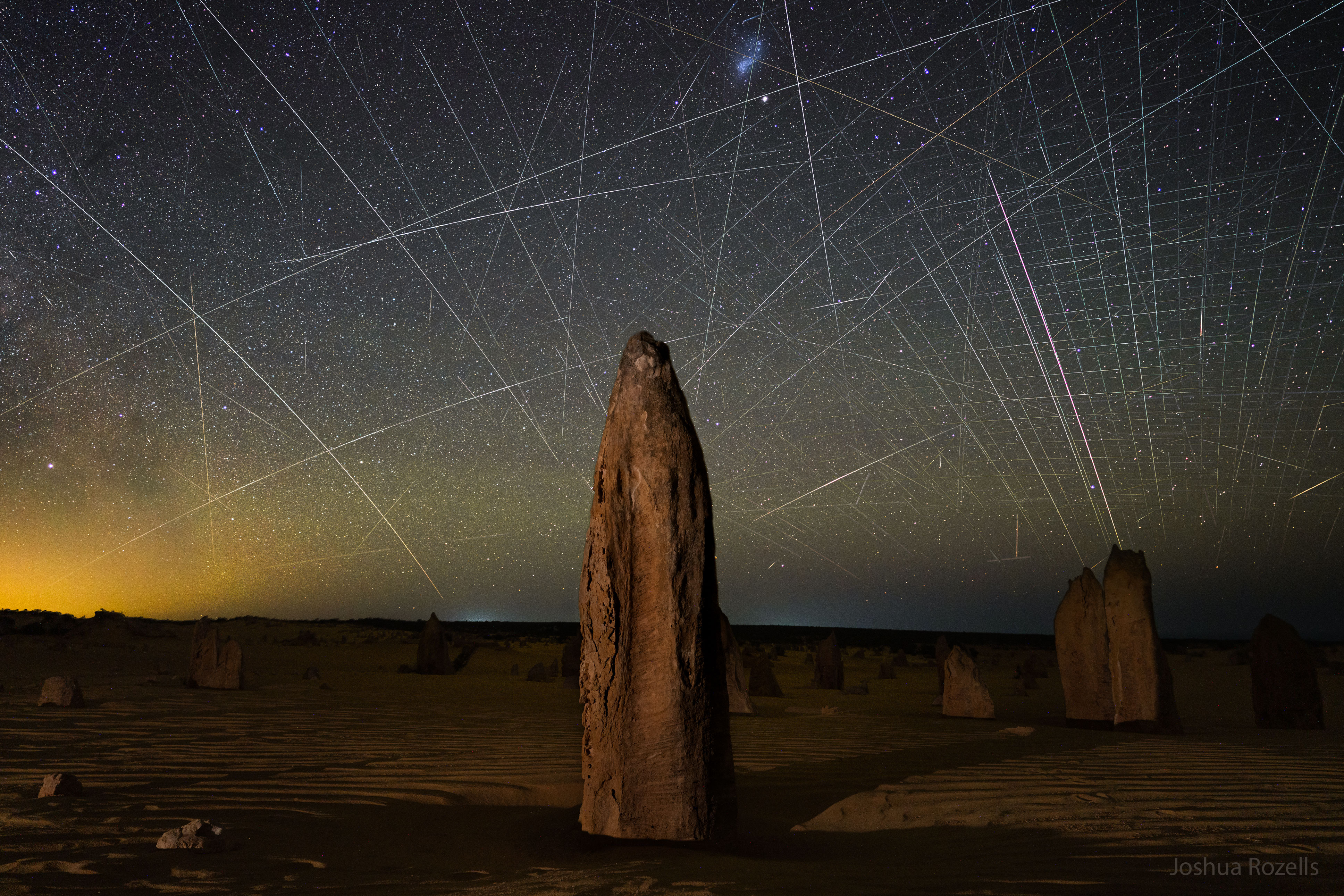
Explanation: What are all those streaks across the background? Satellite trails. First, the foreground features picturesque rock mounds known as Pinnacles. Found in the Nambung National Park in Western Australia, these human-sized spires are made by unknown processes from ancient sea shells (limestone). Perhaps more eye-catching, though, is the sky behind. Created by low-Earth orbit satellites reflecting sunlight, all of these streaks were captured in less than two hours and digitally combined onto the single featured image, with the foreground taken consecutively by the same camera and from the same location. Most of the streaks were made by the developing Starlink constellation of communication satellites, but some are not. In general, the streaks are indicative of an increasing number of satellites nearly continuously visible above the Earth after dusk and before dawn. Understanding and removing the effects of satellite trails on images from Earth's ground-based cameras and telescopes is now important not only for elegant astrophotography, but for humanity's scientific understanding of the distant universe.

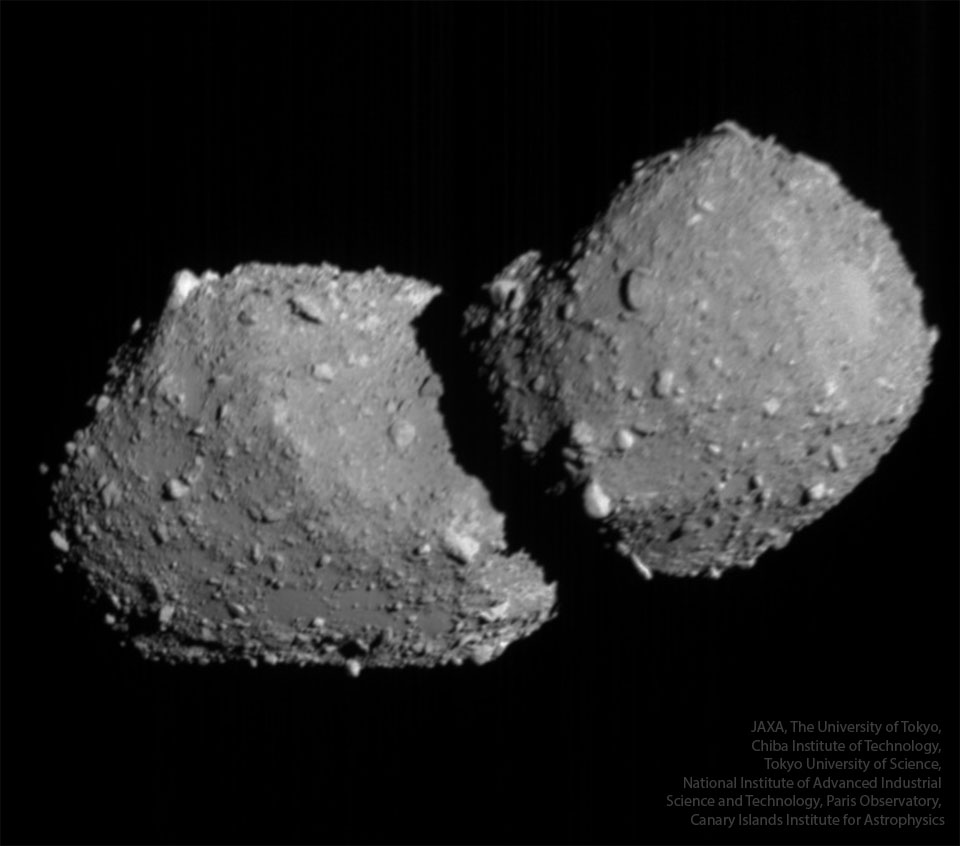
2026 July 14 Double Lobed Asteroid Torifune Image Credit & Copyright: JAXA , U. of Tokyo , Chiba Tech , Tokyo U. of Science , AIST , Pa...