Nombre total de pages vues

19/04/2026

Santé/Médecine - LA FIBROMYALGIE FATIGUE BEAUCOUP ET PROVOQUE DES DOULEURS ARTICULAIRES - (1/12)

La fibromyalgie provoque des douleurs articulaires. Mais pas seulement ! Elle fatigue beaucoup ceux qui en souffrent surtout pendant une crise. Cette maladie, au nom difficile à dire, est un ensemble de symptômes. Et le principal, c’est une douleur chronique et diffuse. Souvent, les personnes qui en souffrent disent avoir "mal partout". Les autres symptômes ? Ils varient énormément d’une personne à l’autre. Ainsi, il peut y avoir des périodes où ils s’améliorent, et d’autres où ils s’aggravent. Si vous pensez souffrir de cette maladie, parlez-en sans attendre à votre médecin. En effet, il existe des traitements pour vous soulager, même si les smptomes ne disparaissent jamais complètement.

CommentEconomiser

Astronomy - EYE ON THE MILKY WAY

 2026 April 19

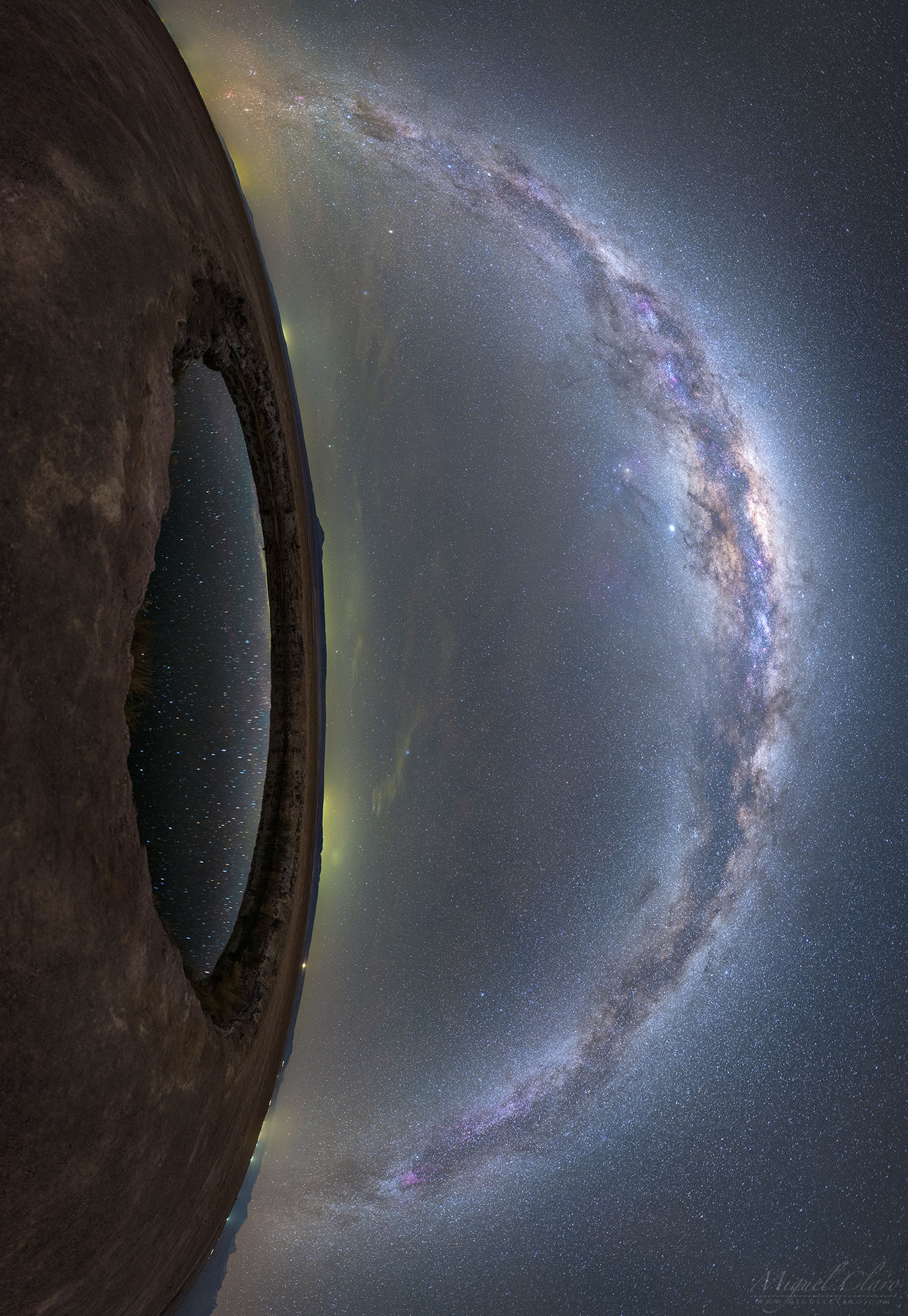
The image shows land on the left and a star filled
sky on the right. Prominent in the sky is the band of our
Milky Way Galaxy. On the left is a small circular lake 
that reflects some of the stars in the sky. Together, 
the land and lake look like an eye lookout out at the 
Milky Way. 
Please see the explanation for more detailed information.

Eye on the Milky Way
Image Credit & Copyright: Miguel Claro (TWANDark Sky Alqueva)

Explanation: Have you ever had stars in your eyes? It appears that the eye on the left does, and moreover, it appears to be gazing at even more stars. The featured 27-frame mosaic was taken in 2019 from Ojas de Salar in the Atacama Desert of Chile. The eye is actually a small lagoon captured reflecting the dark night sky as the Milky Way Galaxy arched overhead. The seemingly smooth band of the Milky Way is really composed of billions of stars, but decorated with filaments of light-absorbing dust and red-glowing nebulas. Additionally, both Jupiter (slightly left the galactic arch) and Saturn (slightly to the right) are visible. The lights of small towns dot the unusual vertical horizon. The rocky terrain around the lagoon appears to some more like the surface of Mars than our Earth.

17/04/2026

Astronomie - ETOILES FILANTES - LE RADIANT DES PERSEIDES

Image composite réunissant 29 météores photographiés au cours de la nuit du 11 au 12 août 2016. Le radiant de l'essaim météoritique est clairement visible au centre, en direction de la constellation de Persée, alors en pleine ascension au-dessus du lac Collins, en Californie.

© Rick Whitacre, Flickr

Astronomy - M82: STARBURST GALAXY WITH A SUPERWIND

 2026 April 17

See Explanation.  Clicking on the picture will download
the highest resolution version available.

M82: Starburst Galaxy with a Superwind
Image Credit & Copyright: Arnaud Malleval

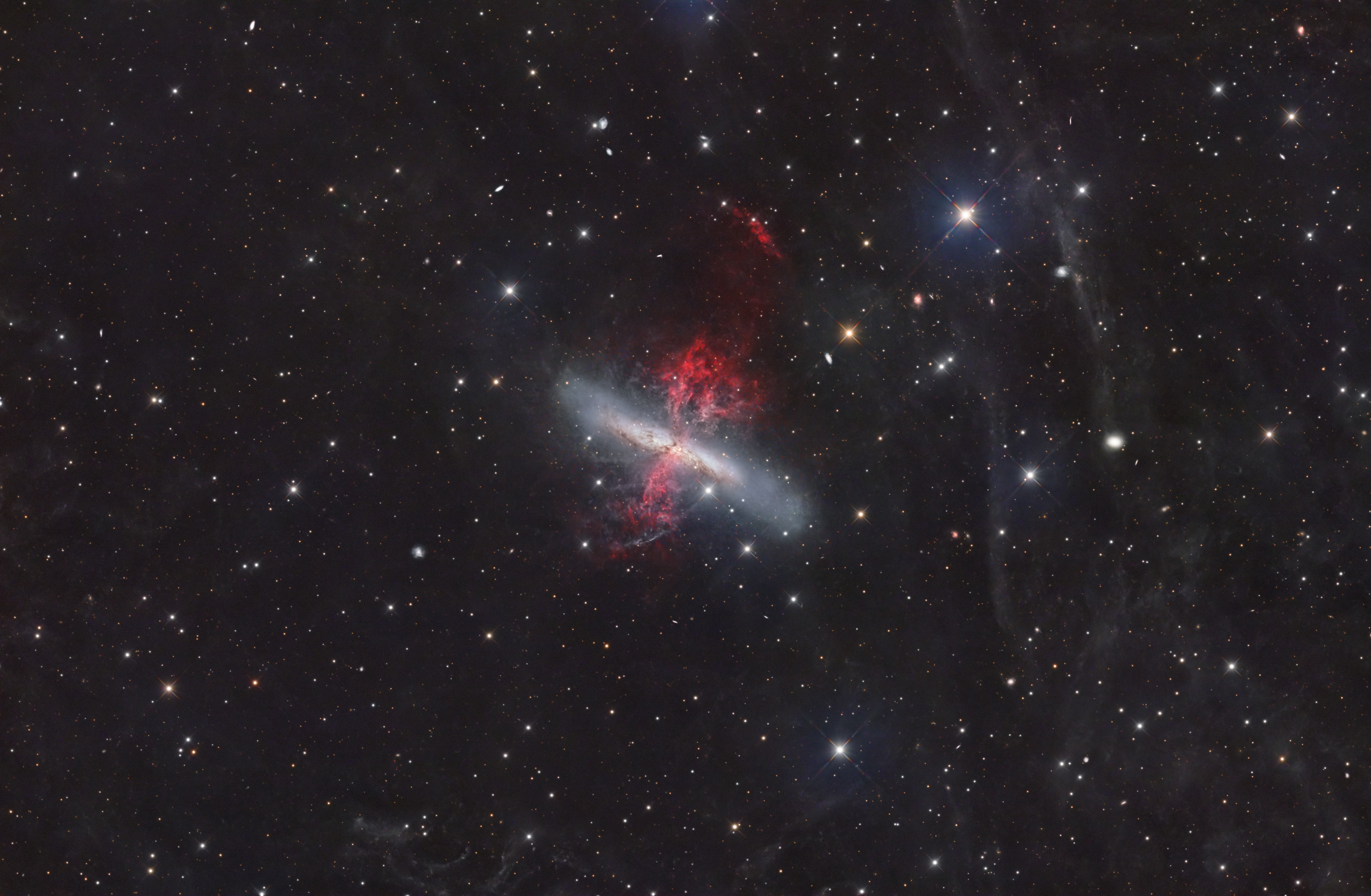
Explanation: Messier 82 is a starburst galaxy with a superwind. In fact, through supernova explosions and powerful winds from massive stars, the burst of star formation in M82 is driving a prodigious outflow. Evidence for the superwind from the galaxy's central regions is clear in the sharp telescopic portrait. The composite image includes 33 hours of narrowband data, highlighting emission from long outflow filaments of atomic hydrogen gas in reddish hues. Some of the gas in the superwind, enriched in heavy elements forged in the massive stars, will eventually escape into intergalactic space. Triggered by a close encounter with nearby large galaxy M81, the furious burst of star formation in M82 should last about 100 million years or so. Also known as the Cigar Galaxy for its elongated visual appearance, M82 is about 30,000 light-years across. It lies 12 million light-years away near the northern boundary of Ursa Major.

16/04/2026

Astronomy - LAUNCH PLUME : SPACE X JELLYFISH

 2026 March 19

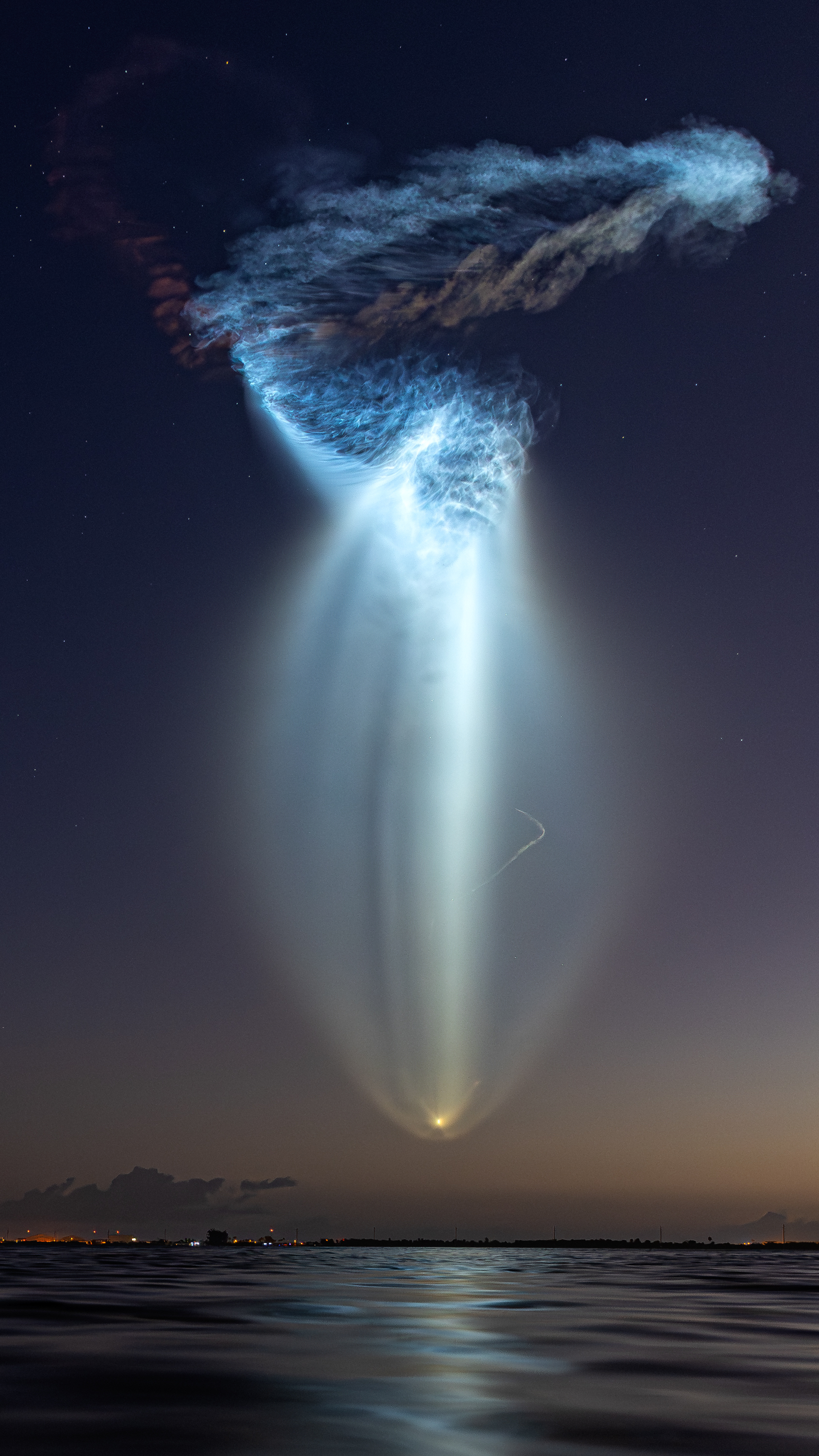
A SpaceX Falcon 9 rocket launch produces a glowing cloud,
	  reminiscent of a jellyfish.
	  Please see the explanation for more detailed information.

Launch Plume: SpaceX Jellyfish
Image Credit & CopyrightMichael Seeley
Text: Cecilia Chirenti (NASA GSFCUMCPCRESST II)

Explanation: Even if you live with your head in the clouds, you won’t find a jellyfish like this one very often. The featured image shows a SpaceX Falcon 9 rocket launch from Cape Canaveral in Florida on March 4. The launch happened 52 minutes before sunrise, and the second stage rocket exhaust plume was high enough in the sky to catch the light of the rising sun, while the photographer was still in the dark. This combination of light and shadow, possible at dawn or dusk, makes the exhaust, mostly water vapor and carbon dioxide, appear as a glowing cloud. It only looks like it's going down, as the rocket follows the curvature of the Earth on its way to space. A related effect is the twilight phenomenon, which causes colorful contrails sometimes mistaken for UFOs. But, in case you are wondering: real jellyfish were sent to space by NASA in the 1990s as part of a science experiment.

15/04/2026

Astronomie -ETOILES FILANTES - DANS LE CIEL JAPONAIS


Magnifique étoile filante associée à l'essaim météoritique des Perséides photographiée dans le ciel de Narusawa-mura, au sud-ouest de Tokyo, le 13 août 2016. Comme on peut le voir, le bolide semble avoir été décoché par Persée (à gauche de la photo). La grappe d'étoiles en dessous de l'horizon est celle des Pléiades (Subaru, en japonais).

© reonides, Flickr

Astronomy - THE ISS TRANSITS THE MOON

 2026 April 15

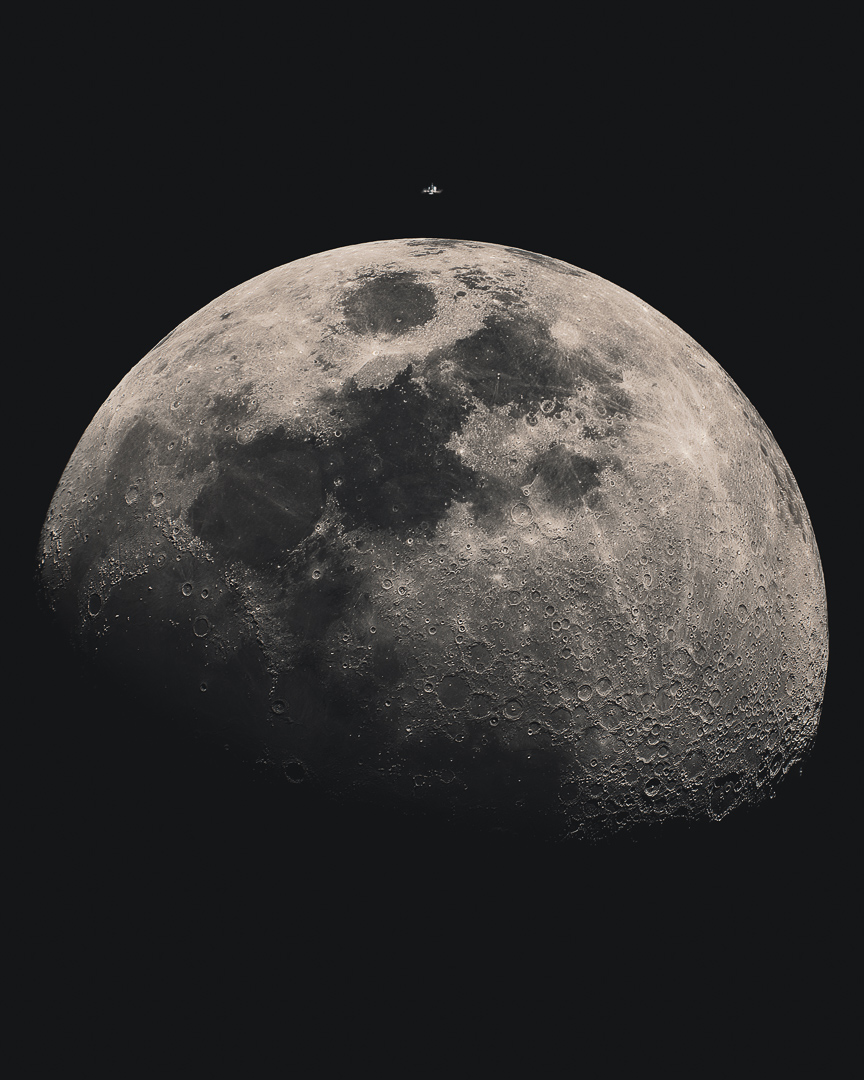
The relatively small International Space Station sits atop the image, about to transit in front of the
illuminated Moon. Please see the explanation for more detailed information.

The ISS Transits the Moon
Image Credit & Copyright: Sébastien Borie
Text: Keighley Rockcliffe (NASA GSFCUMBC CSSTCRESST II)

Explanation: Nope, that is not an alien spaceship landing on the Moon! This is an image of the International Space Station (ISS) as it begins to transit in front of the Moon. The ISS is in low-Earth orbit (LEO) where it wizzes around the Earth every 90 minutes. Orbiting the Earth 16 times per day for 25 years, the ISS has photobombed many familiar celestial objects including VenusMarsSaturn, and the SunThousands of experiments led by researchers from over one hundred countries have been conducted on the ISS. Growing protein crystals in low gravity was one of the first experiments onboard the ISS and continues to contribute to new medical treatments. ISS astronauts study plant growth, water recycling, human health, and more to support the Artemis missions which will take humans farther than they’ve ever gone before. Next time you are out and about at night, try to spot the ISS zooming across the sky!

14/04/2026

Astronomie - ETOILES FILANTES - AVERSE DE PERSEIDES EN UKRAINE

Image composite réunissant deux heures d'exposition de la pluie annuelle d'étoiles filantes, les Perséides, le 12 août 2016 (nuit du maximum d'activité), au-dessus du lac Svityaz, en Ukraine.

© Ihor Khomych, via Spaceweather

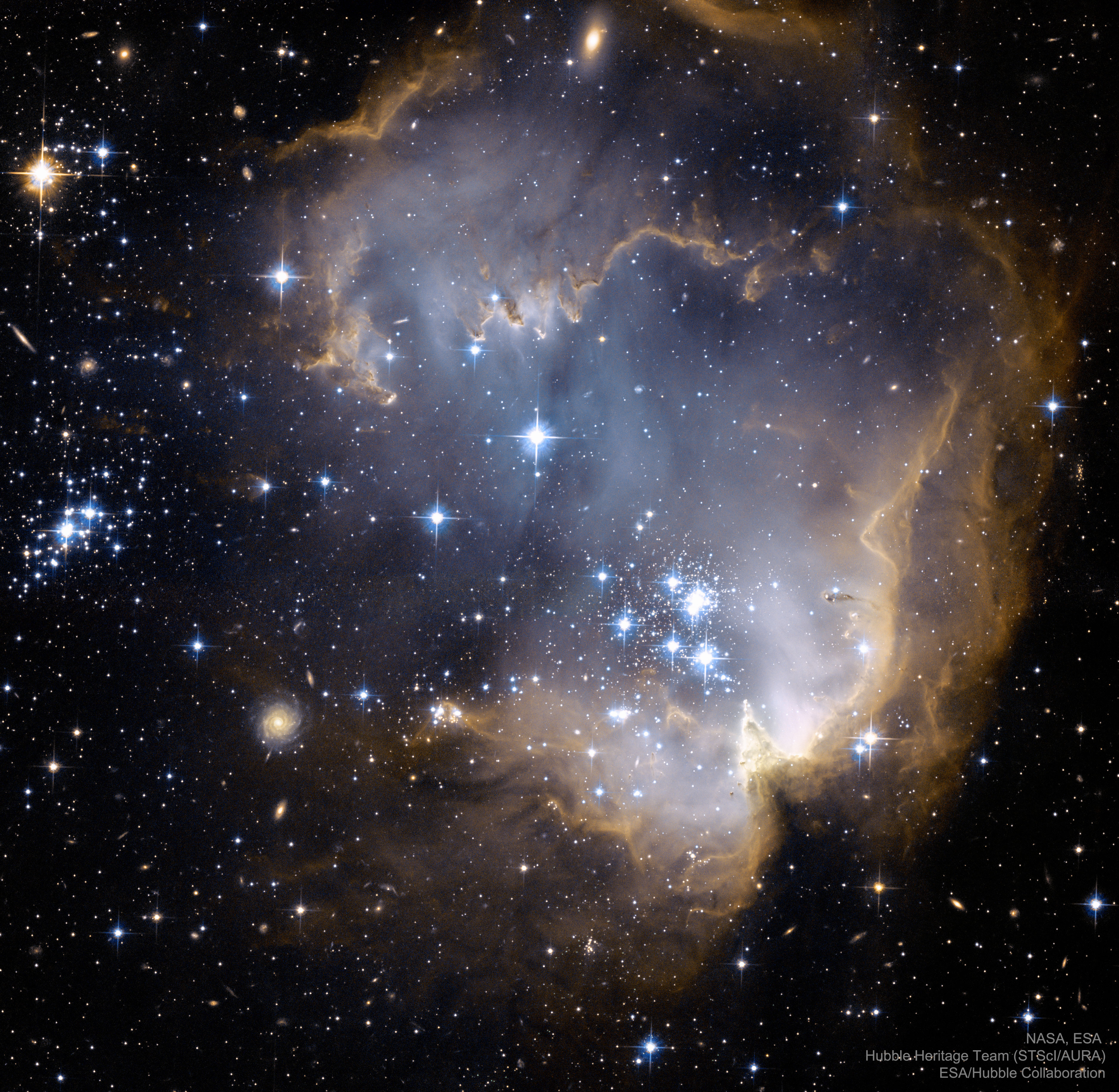
Astronomy - NGC 602 AND BEYOND

 2026 April 13

A starfield surrounds a large light-brown nebula that
has several dust pillars. In the center of the nebula are many
bright blue stars. Some distant galaxies are visible 
through and around the nebula.
Please see the explanation for more detailed information.

NGC 602 and Beyond
Image Credit: NASAESA, and the Hubble Heritage Team (STScI/AURA) - ESA/Hubble Collaboration

Explanation: The clouds may look like an oyster, and the stars like pearls, but look beyond. Near the outskirts of the Small Magellanic Cloud, a satellite galaxy some 200 thousand light-years distant, lies 5 million year young star cluster NGC 602. Surrounded by natal gas and dust, NGC 602 is featured in this stunning Hubble image of the region. Fantastic ridges and swept back shapes strongly suggest that energetic radiation and shock waves from NGC 602's massive young stars have eroded the dusty material and triggered a progression of star formation moving away from the cluster's center. At the estimated distance of the Small Magellanic Cloudthe featured picture spans about 200 light-years, but a tantalizing assortment of background galaxies are also visible in this sharp multi-colored view. The background galaxies are hundreds of millions of light-years or more beyond NGC 602.

11/04/2026

News en Images - ARTEMIS II ET LA FACE CACHéE DE LA LUNE


C’est un profil qu’on ne voit pas souvent. Sur cette image diffusée par la Nasa, notre Lune dévoile son bassin oriental et certaines parties de sa face cachée, non visibles depuis la Terre – notre satellite tourne sur son orbite à la même vitesse que notre planète. C’est notamment en s’éloignant, dans la nuit de lundi à mardi dernier, à plus de 406 000 kilomètres de la Terre (un record !), que les membres de la mission Artemis II ont pu l’observer de très près avec un survol à 6 500 kilomètres. C’est à cette frontière entre la face visible et celle cachée que les astronautes ont découvert un cratère – un point clair observable à certains moments du transit lunaire – qu’ils ont souhaité baptiser Carroll, en hommage à la femme du commandant de la mission, morte d’un cancer en 2020. 

NASA / AFP

Santé/Medecine - LA FIBROMYALGIE (2/12)

Voici les symptômes de la fibromyalgie chez l'homme et la femme : Certaines choses du quotidien peuvent aggraver les symptômes de cette ...