Nombre total de pages vues

31/03/2026

Santé/Médecine - AVANCEES MAJEURES ET ESPOIR - UNE NOUVELLE ARME CONTRE LES CANCERS DU SANG

Reprogrammer la mort cellulaire pour déclencher l’alerte immunitaire

De nouvelles stratégies d'immunothérapie émergent. L'une d'elles exploite un mécanisme de mort cellulaire : la nécroptose. Contrairement à l'apoptose, qui entraine une mort cellulaire silencieuse, la nécroptose libère des signaux d'alerte qui attirent et stimulent les cellules immunitaires. Ces dernières peuvent ainsi tuer les cellules tumorales qui persistent.

Des chercheurs de l'unité Dynamiques des réponses immunes (Unité mixte Inserm-Institut Pasteur) se sont intéressés à cette stratégie d'immunothérapie par nécroptose dans le cas de tumeurs malignes hématologiques. Ils ont tout d'abord observé que la nécroptose ne peut pas être induite facilement dans le cas des cellules B malignes en raison de l'absence de la protéine MLKL.

Pour surmonter ce blocage, les chercheurs ont combiné l'administration de trois molécules déjà utilisées en clinique. Ils confirment alors l'induction de la nécroptose et observent, dans un modèle pré-clinique, l'élimination complète d'une leucémie grâce à la forte réponse immunitaire induite.

« La tri-thérapie que nous avons utilisée force les cellules cancéreuses à mourir d'une manière qui réveille le système immunitaire » explique Philippe Bousso, directeur de recherche Inserm, responsable de l'Unité Dynamiques des réponses immunes à l'Institut Pasteur et dernier auteur de l'article.

Une tri-thérapie innovante testée dans les cancers du sang

Ces résultats ont été observés sur des modèles pré-cliniques grâce notamment à une technique innovante d'imagerie intravitale. Les scientifiques ont pu ainsi suivre en temps réel les interactions entre cellules immunitaires et cellules cancéreuses en fonction des différents types de mort induits.

« Cette nouvelle stratégie d'immunothérapie, testée avec succès dans des modèles précliniques, transforme les cellules cancéreuses en déclencheurs d'alerte pour le système immunitaire, offrant une nouvelle option de traitement pour certains cancers comme les lymphomes ou leucémies touchant les cellules B », explique Philippe Bousso.

« En changeant la façon dont les cellules cancéreuses meurent, il est possible de bénéficier du soutien de notre système immunitaire pour lutter contre la tumeur », conclue-t-il.

FuturaSciences

Astronomy - URANU'S LARGEST MOON :TITANIA

 2026 March 31

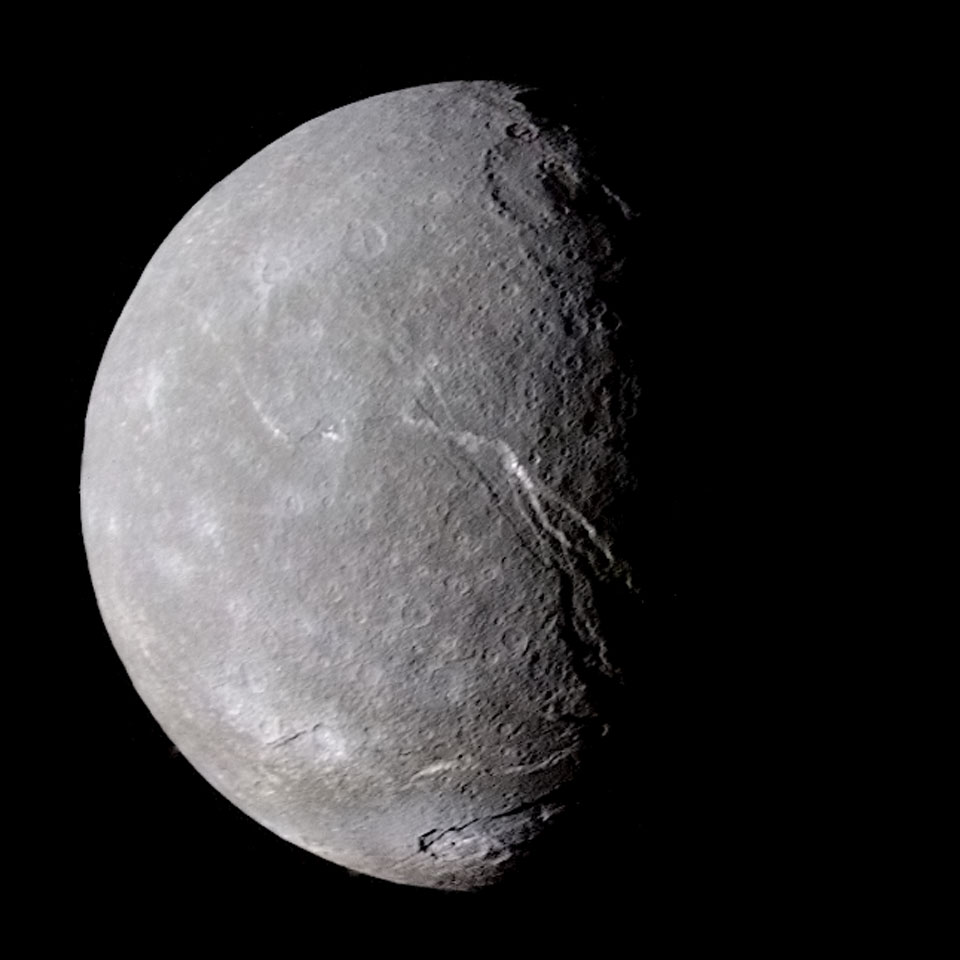
A half-lit moon is shown that is unfamiliar. 
The moon appears mostly gray but with some light 
patches. Two large craters appear near the terminator,
and some large cracks are also evident. 
Please see the explanation for more detailed information.

Uranus's Largest Moon: Titania
Image Credit: NASAVoyager 2Processing & Licensezelario12

Explanation: Titania's tortured terrain is a mix of canyons, cliffs, and craters. NASA's interplanetary robot spacecraft Voyager 2 passed the largest moon of Uranus in 1986 and took the feature picture. That the trenches of Titania resemble those on another moon of Uranus, Ariel, indicate that Titania underwent some violent surface event possibly related to water freezing and expanding in its distant past. Although Titania is Uranus's largest moon, it is only about half the radius of Triton - the largest moon of Uranus's sister planet Neptune, which itself is slightly smaller than Earth's MoonTitania, discovered by William Herschel in 1787, is essentially a large dirty iceball that is composed of about half water-ice and half rock. There is recent speculation that radioactive heating melts some underground ice into oceans.

28/03/2026

Radioactivité - ON NE CESSE DE VOUS MENTIR

En 1987, après plusieurs décennies de preuves accumulées, l’Organisation Mondiale de la Santé reconnaît le radon comme cancérigène certain pour l’homme.

En France, le SCPRI du professeur Pellerin veille. Fin 1988, en réaction à un dossier publié par la CRIIRAD, il rassure : les mineurs respireraient beaucoup moins de radon “que l’homme des cavernes dont nous descendons”, et il faudrait plutôt s’occuper “des autres pollutions bien réelles celles-là”. 

Heureusement la situation a évolué : aujourd’hui la gestion du risque lié au radon est réglementée, même si les textes ne sont pas à la hauteur des enjeux.

Après l’explosion du réacteur n°4 de Tchernobyl, le 26 avril 1986, il aura fallu attendre 10 ans pour que les organismes internationaux finissent par reconnaître la véritable épidémie de cancers de la thyroïde chez les enfants liée à la catastrophe. Il faut dire que les observations des médecins ukrainiens et biélorusses, et ce dès 1989, ne collaient pas avec le modèle épidémiologique officiel.

Ces deux épisodes sont loin d’être les seuls, dans l’histoire des controverses, ou plutôt du déni, autour des effets des faibles doses de radioactivité.

CRIIARAD

Santé/Medecine - AVANCEES MAJEURES ET ESPOIR - CANCER DU SEIN METASTIQUE (2/2)

Comment fonctionne le traitement innovant ?

Le cancer du sein reste la tumeur maligne la plus fréquente chez les femmes, avec 2,3 millions de nouveaux cas et 685 000 morts à l’échelle mondiale en 2020. Des chiffres qui témoignent du besoin urgent de développer de nouveaux traitements dans cette indication.

Les conjugués anticorps-médicaments (ADC) sont une nouvelle classe thérapeutique qui combinent un anticorps, qui va permettre d'identifier les cellules tumorales à détruire, à un agent cytotoxique, bien souvent une molécule de chimiothérapie. L'anticorps rejoint la cellule cancéreuse pour y délivrer sa charge toxique en épargnant le plus possible les tissus sains.

Les ADC ont déjà montré des résultats cliniques très encourageants dans de nombreuses tumeurs solides et hématologiques. Mais si ces traitements innovants offrent de réels espoirs, leur efficacité reste variable selon les patients. À ce jour, les mécanismes biologiques qui expliquent cette variabilité, en particulier les causes de résistance, restent peu compris. L'identification de biomarqueurs prédictifs de réponse demeure un enjeu pour personnaliser au mieux l'utilisation de ces traitements.

Publiée dans Nature Medicine, Icarus-Breast 01 est un essai de phase II promu par Gustave Roussy, qui a évalué l'efficacité et la tolérance du patritumab deruxtecan (HER3-Dxd) chez 99 patientes atteintes d'un cancer du sein métastatique de type HR+/HER2-, en progression après un traitement par inhibiteur de CDK4/6 et une ligne de chimiothérapie. L'essai comprenait également un volet exploratoire visant à identifier des biomarqueurs prédictifs de réponse ou de résistance à ce traitement innovant.

FuturaSciences
Astronomy - ROBERT GODDARD AND NELL

 2026 March 28

See Explanation.  Clicking on the picture will download
the highest resolution version available.

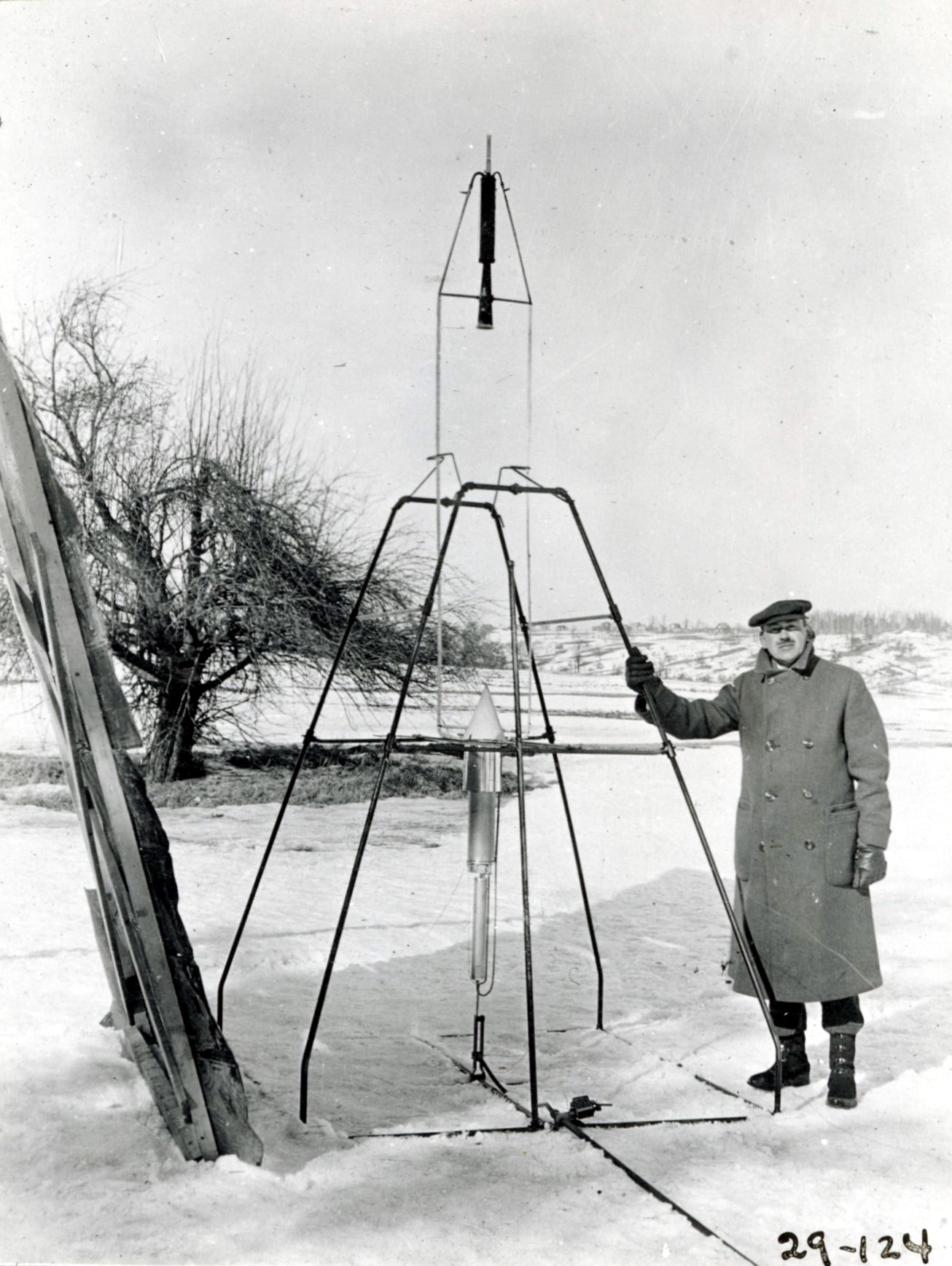
Robert Goddard and Nell
Image Credit: Esther Goddard, from the Clark University archive

Explanation: Robert H. Goddard, considered the father of modern rocketry, was born in Worcester Massachusetts in 1882. As a 16 year old, Goddard read H.G. Wells' science fiction classic "War Of The Worlds" and dreamed of space flight. By 1926 he had designed, built, and flown the world's first liquid fuel rocket. Launched 100 years ago, on March 16, 1926 from his aunt Effie's farm in Auburn Massachusetts, the rocket dubbed "Nell", rose to an altitude of 41 feet in a flight that lasted about 2 1/2 seconds. In this posed photo Goddard stands next to the 10 foot tall rocket, holding the launch stand frame. To achieve a stable flight without the need for fins, the rocket's heavy motor was located at the top, fed by lines from liquid oxygen and gasoline fuel tanks at the bottom. Widely recognized as a gifted experimenter and engineering genius, his rockets were many years ahead of their time. Goddard was awarded over 200 patents in rocket technology, most of them after his death in 1945. A liquid fuel rocket constructed on principles developed by Goddard landed humans on the Moon in 1969.

27/03/2026

Astronomy - HICKSON 44 IN LEO

 2026 March 27

See Explanation.  Clicking on the picture will download
the highest resolution version available.

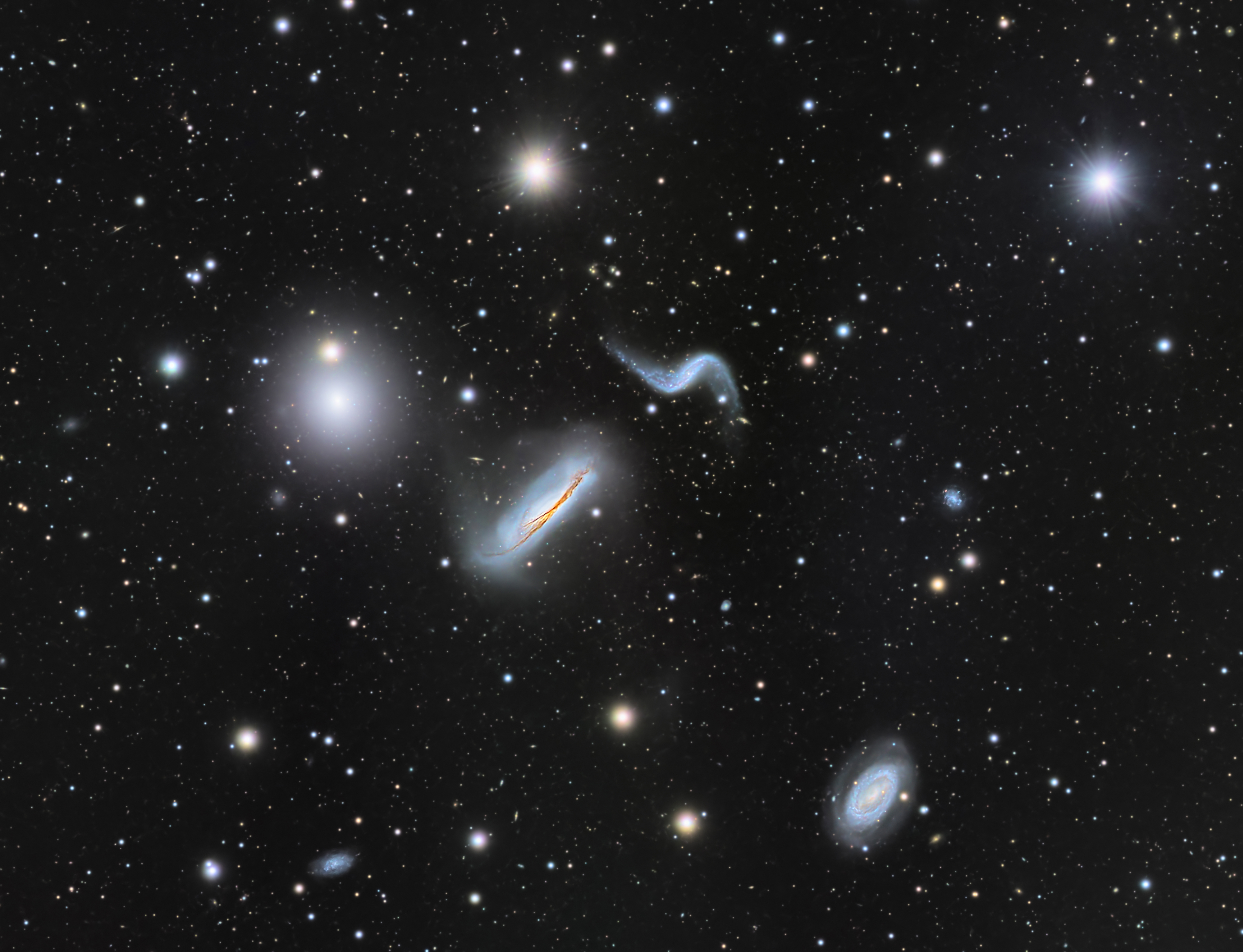
Hickson 44 in Leo
Image Credit & CopyrightPeter Kennett

Explanation: Scanning the skies for galaxies, Canadian astronomer Paul Hickson and colleagues identified some 100 compact groups of galaxies, now appropriately called Hickson Compact Groups. The four prominent galaxies seen in this intriguing telescopic skyscape are one such group, Hickson 44. The Hickson 44 galaxy group is about 100 million light-years distant, far beyond the foreground Milky Way stars, toward the northern springtime constellation Leo. The two spiral galaxies in the center of the image are edge-on NGC 3190 with distinctive, warped dust lanes, and S-shaped NGC 3187. Along with the bright elliptical, NGC 3193 (left) they are also known as Arp 316. The spiral toward the lower right corner is NGC 3185, the 4th member of the Hickson group. Like other galaxies in Hickson groups, these show signs of distortion and enhanced star formation, evidence of a gravitational tug of war that will eventually result in galaxy mergers on a cosmic timescale. The merger process is now understood to be a normal part of the evolution of galaxies, including our own Milky Way. For scale, NGC 3190 is about 75,000 light-years across at the estimated distance of Hickson 44.

Santé/Medecine - AVANCEES MAJEURES ET ESPOIR - CANCER DU SEIN METASTIQUE (1/2)

Dans le cadre de l'étude Icarus-Breast 01, plus de la moitié des patientes atteintes d'un cancer du sein métastatique ont vu leur maladie diminuer ou disparaître complètement grâce au traitement, et chez certaines patientes, cette réponse dure maintenant depuis plus de deux ans.

La Dr Barbara Pistilli, cheffe du comité de pathologie mammaire à Gustave Roussy, et Guillaume Montagnac, chercheur Inserm au sein de l'unité Dynamique des cellules tumorales qu'il dirige à Gustave Roussy, ont coordonné cette étude dont les résultats viennent d'être publiés dans la revue Nature Medicine. Ils mettent en avant l'efficacité du patritumab deruxtecan (HER3-DXd), un conjugué anticorps HER3-médicament, chez des patientes atteintes d'un cancer du sein métastatique hormonodépendant, ayant déjà reçu plusieurs traitements, dont une hormonothérapie, une chimiothérapie et un traitement ciblé spécifique.

L'étude livre aussi des premières pistes pour comprendre pourquoi certaines patientes répondent mieux que d'autres à cette thérapie ciblée. Ces travaux de recherche se sont déroulés dans le cadre du programme Unlock au sein de l'IHU Prism, en partenariat avec Daiichi Sankyo.

FuturaSciences
25/03/2026

Astronomy - THE GUARDIANS OF RAPA NUI BENEATH THE MILKY WAY

 2026 March 25

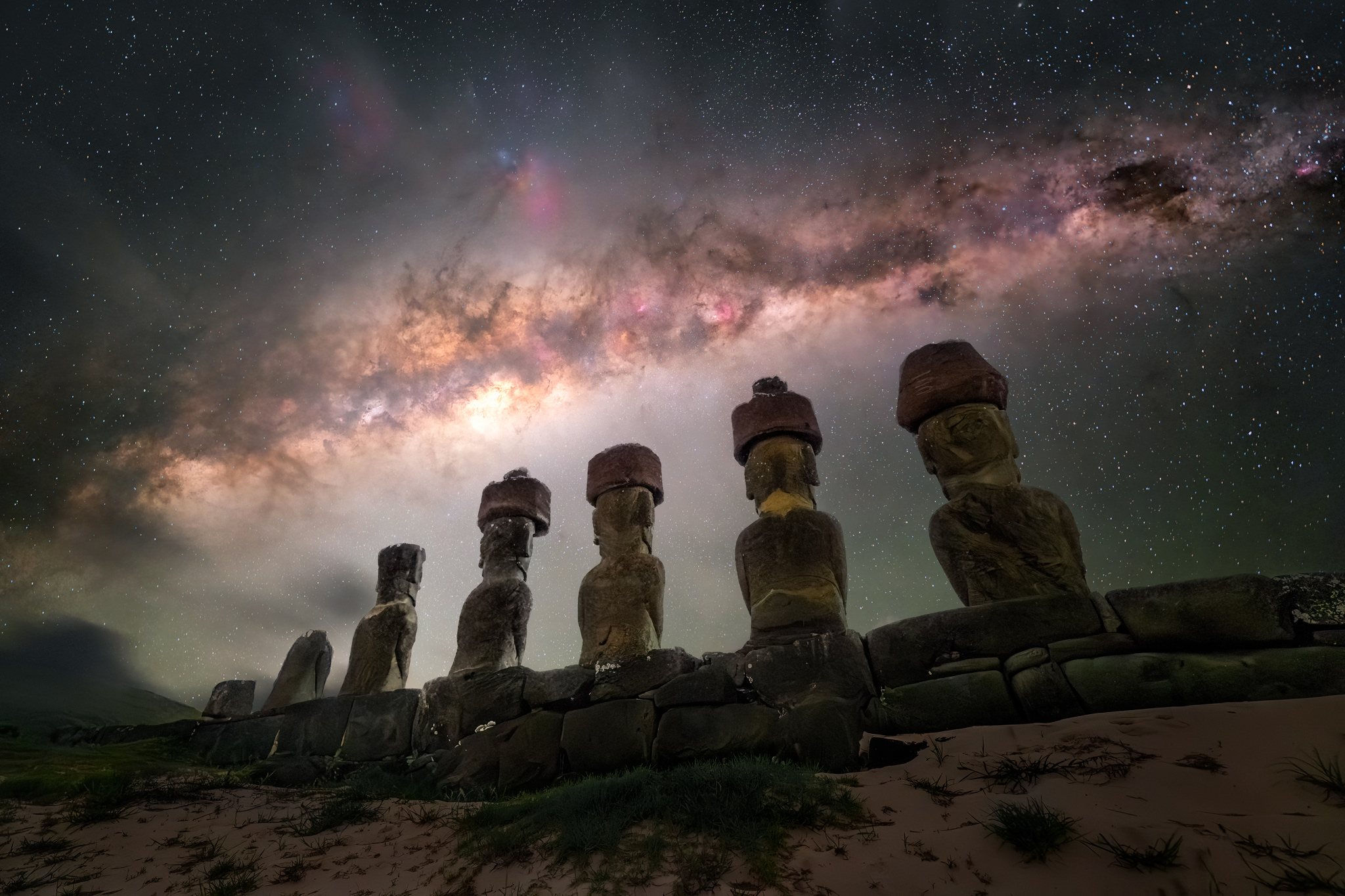
The plane of the Milky Way shines across the night sky above several 
large human statues that face away from the camera.

The Guardians of Rapa Nui beneath the Milky Way
Image Credit and Copyright: Rositsa Dimitrova
Text: Keighley Rockcliffe (NASA GSFCUMBC CSSTCRESST II)

Explanation: In the words of today's astrophotographer, Rositsa Dimitrova, "What have these silent sentinels watched pass across the sky?" The volcanic mo'ai (meaning statue) of Ahu Tongariki stand guard over Rapa Nui (Isla de Pascua, Easter Island), a Polynesian island (annexed by Chile in 1888) located thousands of kilometers off the coast of South America in the Pacific Ocean. Due to the island's remoteness, the mo'ai, with their backs to the dark ocean, are able to gaze upon a clear and vibrant night sky. Pictured, these larger-than-life statues stare at the bright band of the Milky Way, partly obscured by interstellar dust and blurred by Earth's clouds. Under such clear night skies, the Rapa Nui created observatories and used astronomical observations for navigation, calendar calibration, celebrations, and more. Images like this one remind us of the importance of dark skies, protecting the land underneath them, and preserving the culture that they inspire.

24/03/2026

Astronomy - A GRAVITY MAP OF EARTH

 2026 March 24

A Gravity Map of Earth

Video Credit: NASAGSFCGRACESVS

Explanation: Is gravity the same over the surface of the Earth? No -- in some places you will feel slightly heavier than others. The featured Earth map video shows in colors and exaggerated highs and lows where the gravitational field of Earth is relatively strong and weak. A low spot, where you would feel slightly lighter, can be seen just off the coast of India, in blue, while a relative high occurs in the mountains of Chile in South America. The cause of these irregularities does not always follow present surface features. Scientists hypothesize that other important factors lie in deep underground structures in Earth's mantle and may be related to the Earth's appearance in the distant past. The featured map was composed from data taken by NASA's twin GRACE satellites that orbited the Earth from 2002 to 2017. GRACE mapped Earth's gravity by carefully tracking tiny changes in the distance between the two satellites.

23/03/2026

Microphotographie - DES GLOBULES BLANCS GENETIQUEMENT MODIFIES


Derrière l'idée de la thérapie génique, il y a celle d'introduire un matériel génétique dans des cellules pour soigner une maladie. Ici, des cellules que les chercheurs surnomment les CAR-T, fixées à des billes de fer. CAR, pour Chimeric Antigen Recepto (récepteur antigénique chimérique) et T car ce sont des lymphocytes T -- autrement dit, des globules blancs spécialisés dans la reconnaissance et la destruction de cellules pathogènes -- qui ont été génétiquement modifiés pour exprimer un récepteur -- le fameux CAR -- capable de traquer les cellules cancéreuses dans le sang. Un espoir de guérir enfin les leucémies de l'enfant et les lymphomes de l'adulte.

Les cellules ont été balayées par un microscope électronique à balayage à émission de champ Tescan Mira3 et colorisées à la volée avec un système d'imagerie multidétecteur à quatre canaux développé par Point electronic Halle.

Le champ de vision est de 17 microns de large. 

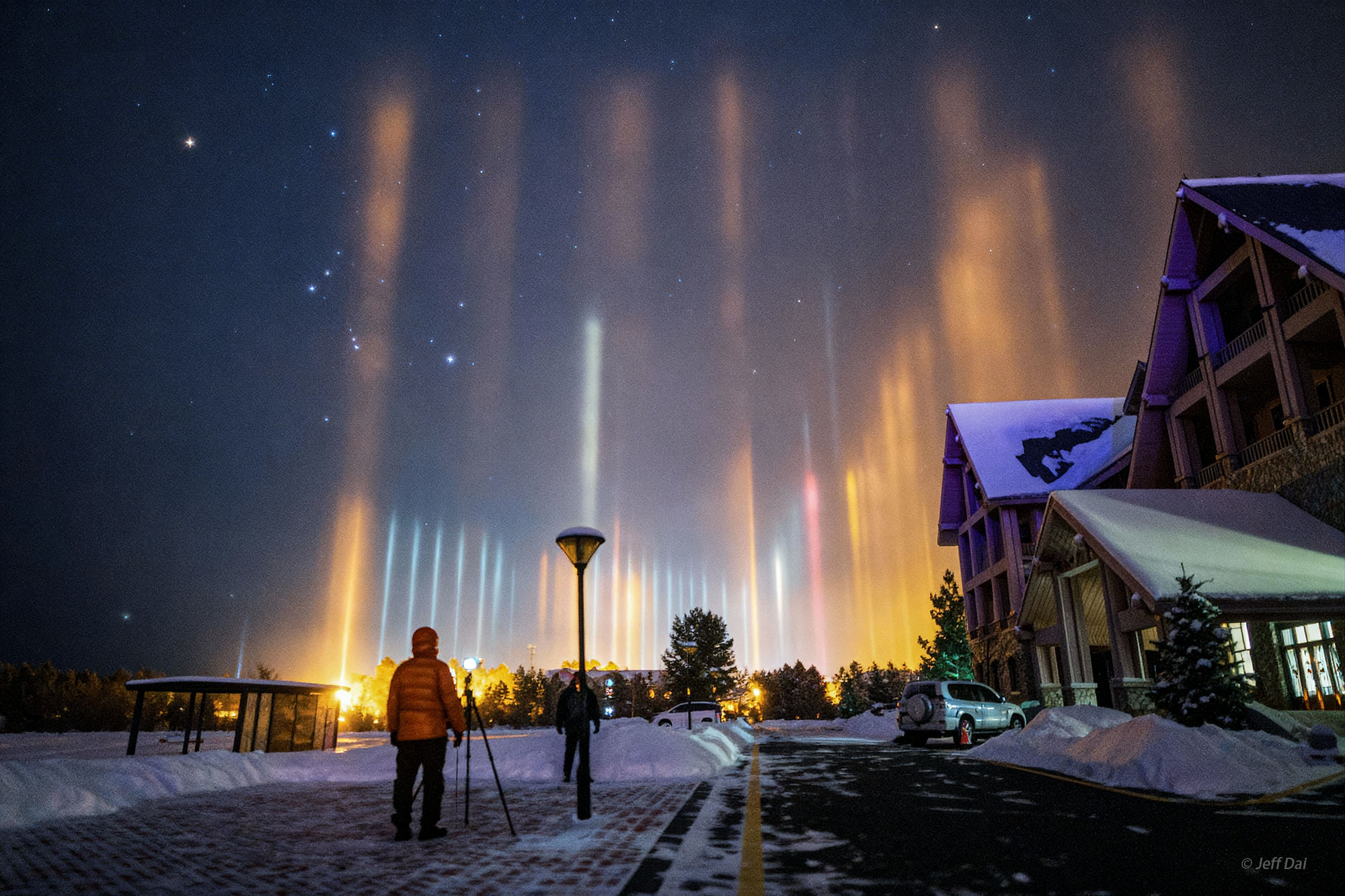
Astronomy - LIGHT PILLARS AND ORION OVER MOHE

2026 March 23
A starry sky appears above a snowy street with a 
house on the right. The constellation of Orion is 
visible on the left. Up from the ground many pillars
of light are seen. Two people stand watching the pillars
on the street in the foreground. 
Please see the explanation for more detailed information.

Light Pillars and Orion over Mohe
Image Credit & Copyright: Jeff Dai (TWAN)

Explanation: What's happening at the end of that street? Pictured here are not auroras but light pillars, a phenomenon typically much closer. In most places on Earth, a lucky viewer can see a Sun pillar, a column of light appearing to extend up from the Sun caused by flat fluttering ice-crystals reflecting sunlight from the upper atmosphere. Usually, these ice crystals evaporate before reaching the ground. During freezing temperatures, however, flat fluttering ice crystals may form near the ground and are sometimes known as a crystal fog. These small ice crystals may then reflect not the Sun but ground lights. The featured image captured not only numerous light pillars but also the iconic constellation of Orion, and was taken in Mohe, the northernmost city in China

22/03/2026

Microphotographie - CHANGER SON REGARD SUR LE PAIN MOISI

L'Aspergillus niger est un champignon filamenteux extrêmement commun. C'est lui qui constitue la moisissure noire que l'on peut trouver sur les substrats riches en glucides comme le pain, mais aussi les fruits et les légumes. L'Aspergillus niger est rarement toxique. Mais il revêt une importance économique, car il est souvent à l'origine de gâchis alimentaires. Et cette microphotographie nous le présente sous un jour fort peu ragoûtant, malgré les effets de flou artistique.

Il faut savoir que cette moisissure se développe en collant des stolons -- des hyphes spécialisés dans une forme de multiplication asexuée -- à travers la surface de la nourriture. Là où les stolons touchent la surface, les rhizoïdes se développent dans la nourriture et fixent la moisissure. Chacun forme alors un sporange noir.

Ici, l'Aspergillus niger est scanné par un microscope électronique à balayage à émission de champ Tescan Mira3 et colorisé à la volée avec un système d'imagerie multidétecteur à quatre canaux développé par Point electronic Halle. Le champ de vision est de 262 microns de large.

Astronomy - LEAVING EARTH

 2026 March 22

Leaving Earth
Video Credit: NASAJHU Applied Physics LabCarnegie Inst. WashingtonMESSENGER

Explanation: What would it look like to leave planet Earth? Such an event was recorded visually in great detail by the MESSENGER spacecraft as it swung back past the Earth in 2005 on its way in toward the planet Mercury. Earth can be seen rotating in this time-lapse video, as it recedes into the distance. The sunlit half of Earth is so bright that background stars are not visible. The robotic MESSENGER spacecraft orbit around Mercury from 2011 to 2015 has conducted the first complete map of the surface. On occasion, MESSENGER peered back at its home world. MESSENGER is one of the few things created on the Earth that will never return. At the end of its mission, MESSENGER was purposefully crashed into Mercury's surface.

21/03/2026

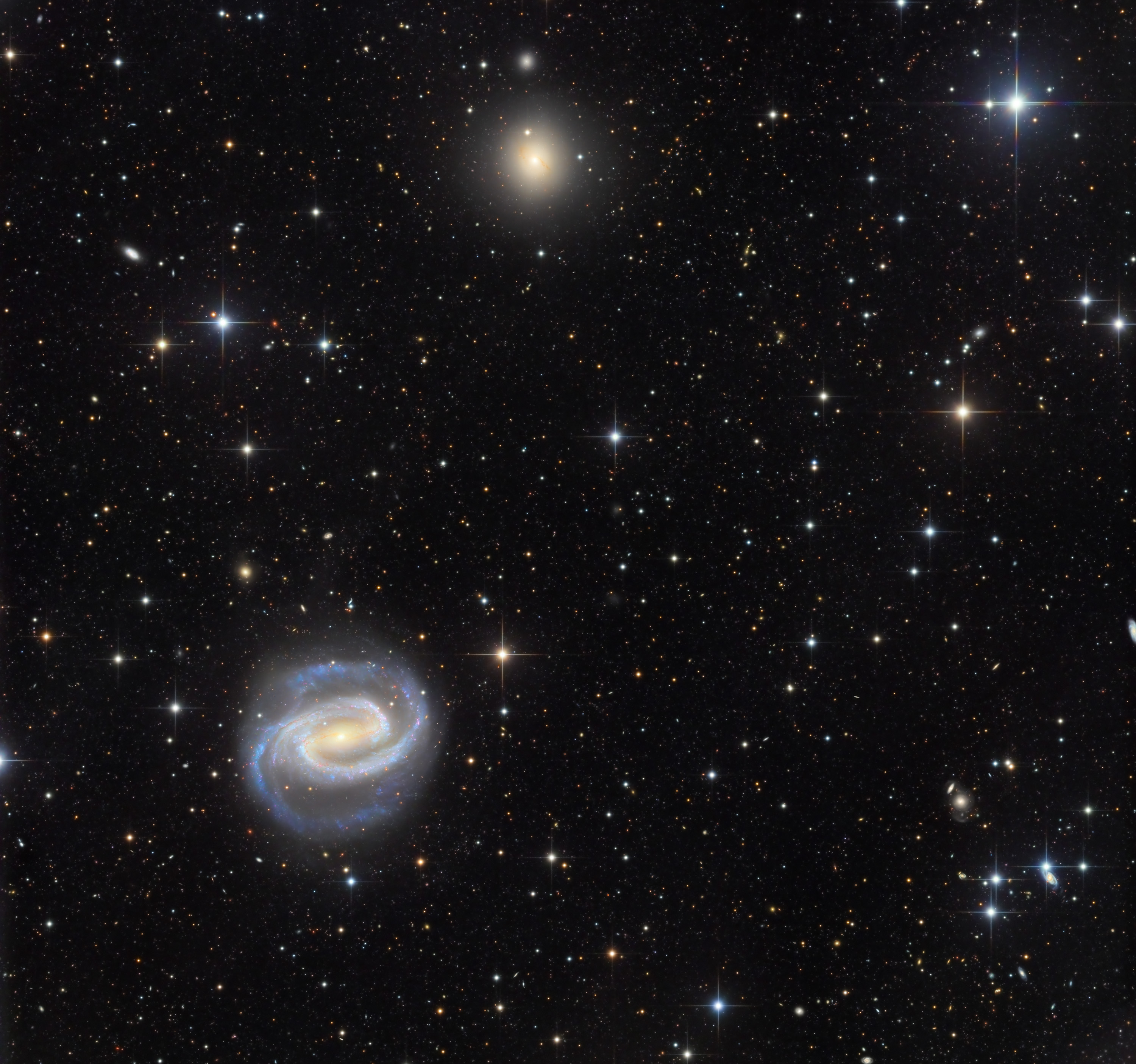
Astronomy - GALAXIES IN THE RIVER : NGC 1300 AND NGC 1297

 2026 March 21

See Explanation.  Clicking on the picture will download
the highest resolution version available.

Galaxies in the River: NGC 1300 and NGC 1297
Image Credit & CopyrightDietmar Hager and Eric Benson

Explanation: Spiral NGC 1300 and elliptical NGC 1297 are galaxies that lie on the banks of the southern constellation Eridanus (The River). At 70 million light-years distant or more, both are members of the Eridanus Galaxy Cluster. About 100,000 light-years across, at lower left in this sharp, galaxy group photo NGC 1300 is seen face-on with a prominent central bar and grand, sweeping spiral arms. Like other spiral galaxies, including our own barred spiral Milky Way Galaxy, NGC 1300 is thought to have a supermassive central black hole. A contrast in appearance and slightly more distant, NGC 1297 is the roughly spherical large elliptical galaxy near the top of the frame. With little active star formation, elliptical galaxies are composed of older populations of stars and are likely he result of multiple collisions and mergers with spirals.

20/03/2026

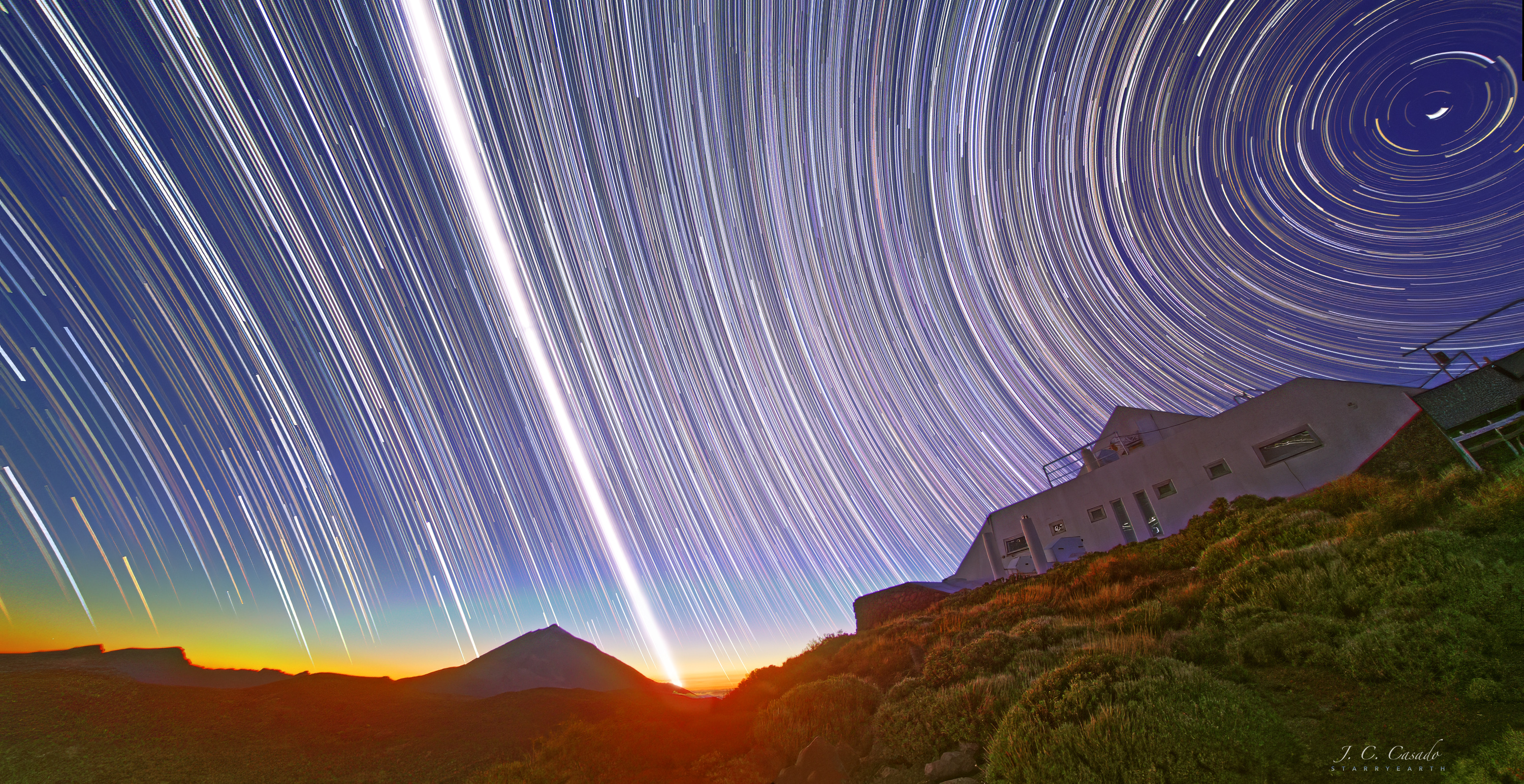
Astronomy - SPRING EQUINOX AT TEIDE OBSERVATORY

 2026 March 20

See Explanation.  Clicking on the picture will download
the highest resolution version available.

Spring Equinox at Teide Observatory
Image Credit & CopyrightJuan Carlos Casado (Starry EarthTWAN)

Explanation: The defining astronomical moment of the equinox today is at 14:46 UTC (March 20). That's when the Sun crosses the celestial equator moving north in its yearly journey through planet Earth's sky, marking the beginning of spring for our fair planet in the northern hemisphere and fall in the southern hemisphere. Then, day and night are nearly equal around the globe. In fact, both day and nighttime exposures from a spring equinox at the Observatorio del Teide in Tenerife, Canary Islands, Spain, are used in this composited skyscape. Over 1,000 images were taken with a fisheye lens and merged in the ambitious equinox project. The apparent motion of the Sun setting along the celestial equator on the equinox date follows the bright linear, diagonal track from the sequence of daytime exposures taken over 6 hours. After sunset, nighttime exposures recorded startrails, with the celestial equator as a linear track and concentric arcs circling the north celestial pole near Polaris at upper right and the south celestial pole beyond the lower left edge (and below the Teide horizon). The foreground includes the distant Teide volcano peak and the observatory's pyramid-shaped solar laboratory building.

19/03/2026

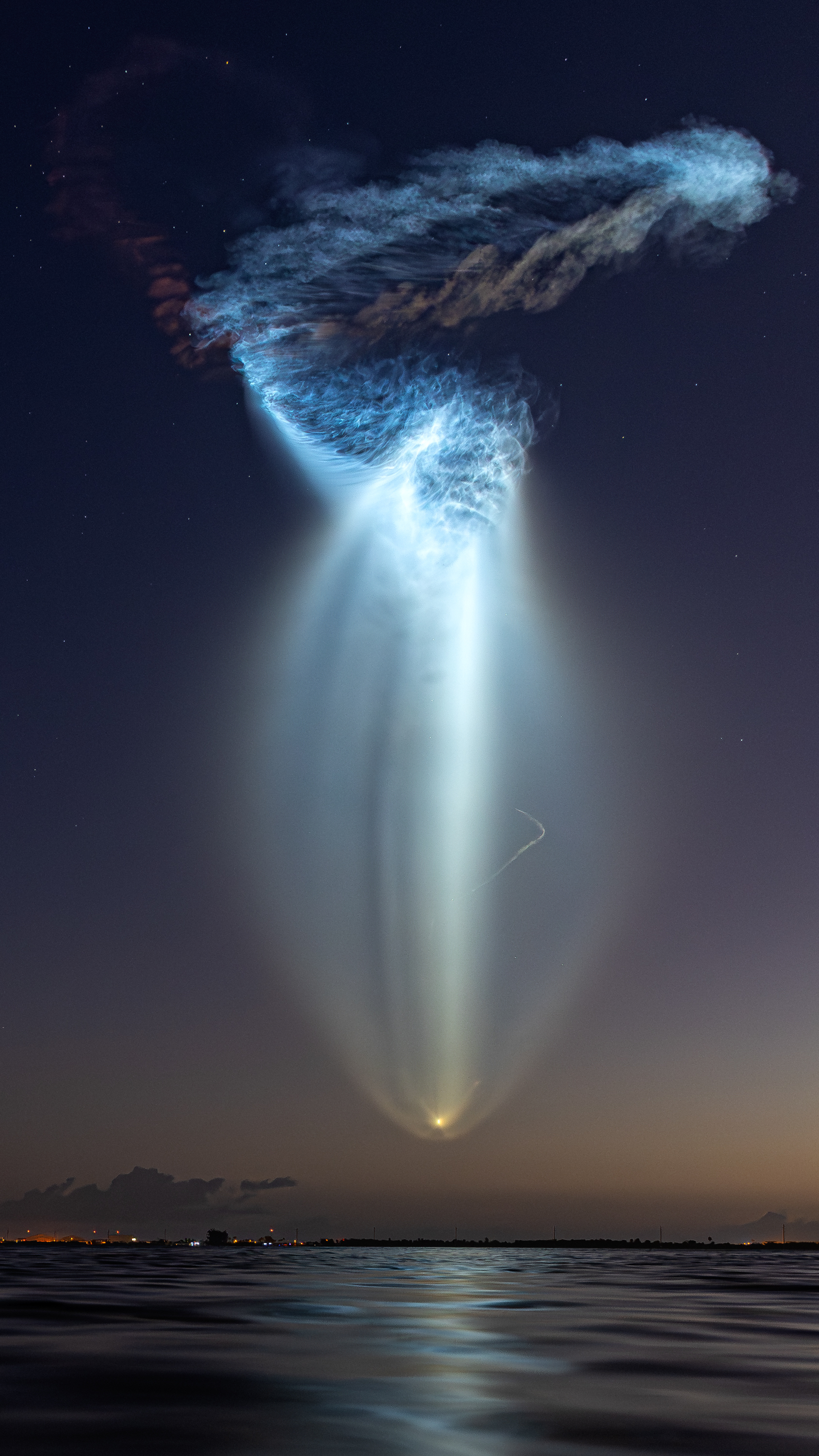
Astronomy - LAUNCH PLUME : SPACEX JELLY FISH

 2026 March 19

A SpaceX Falcon 9 rocket launch produces a glowing cloud,
	  reminiscent of a jellyfish.
	  Please see the explanation for more detailed information.

Launch Plume: SpaceX Jellyfish
Image Credit & CopyrightMichael Seeley
Text: Cecilia Chirenti (NASA GSFCUMCPCRESST II)

Explanation: Even if you live with your head in the clouds, you won’t find a jellyfish like this one very often. The featured image shows a SpaceX Falcon 9 rocket launch from Cape Canaveral in Florida on March 4. The launch happened 52 minutes before sunrise, and the second stage rocket exhaust plume was high enough in the sky to catch the light of the rising sun, while the photographer was still in the dark. This combination of light and shadow, possible at dawn or dusk, makes the exhaust, mostly water vapor and carbon dioxide, appear as a glowing cloud. It only looks like it's going down, as the rocket follows the curvature of the Earth on its way to space. A related effect is the twilight phenomenon, which causes colorful contrails sometimes mistaken for UFOs. But, in case you are wondering: real jellyfish were sent to space by NASA in the 1990s as part of a science experiment.

18/03/2026

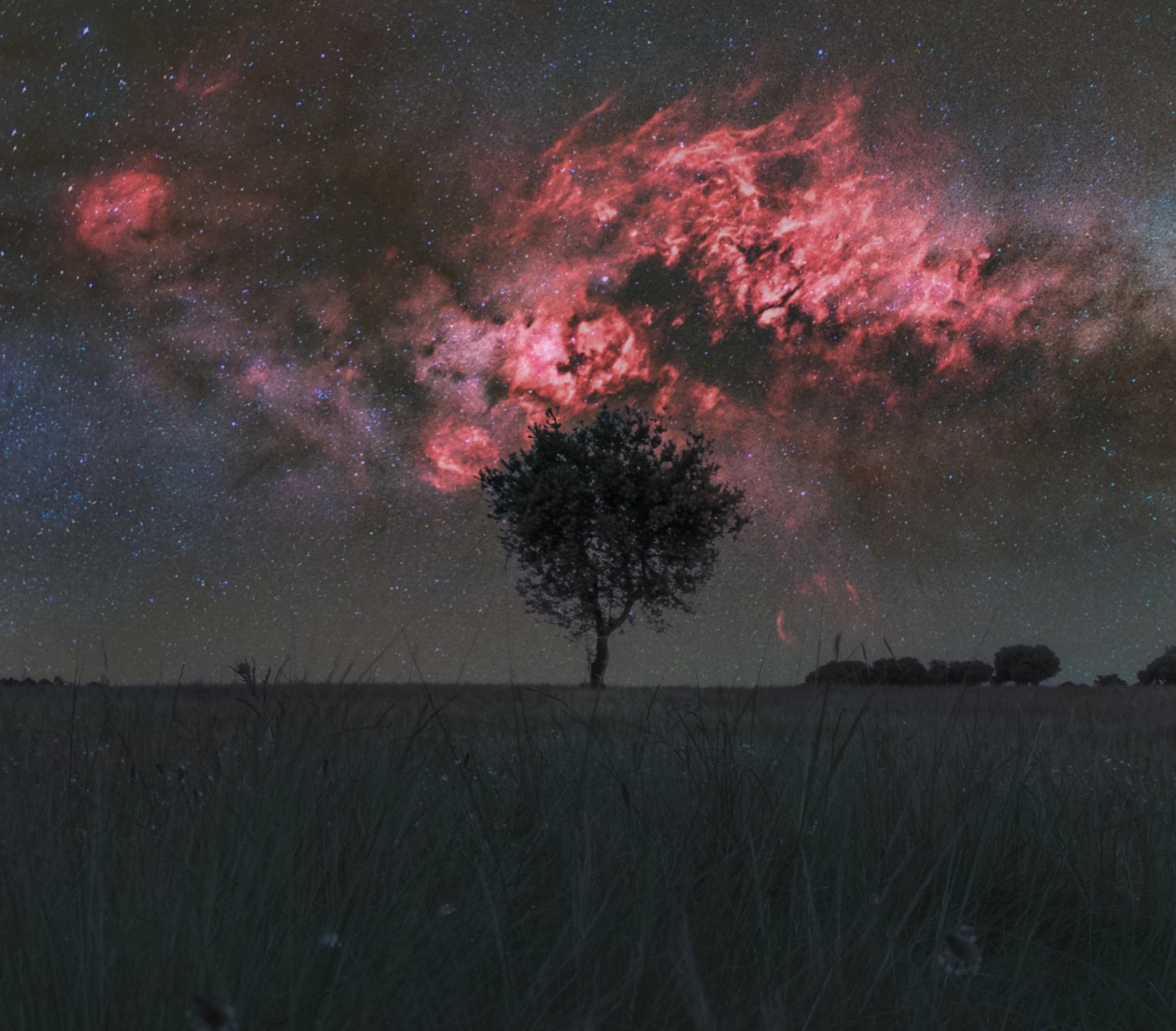
Astronomy - CYGNUS AND THE SOLITARY TREE

 2026 March 18

Clouds of gas glow red in the night sky above a dark tree on the horizon that stands in a meadow. 
Please see the explanation for more detailed information.

Cygnus and the Solitary Tree
Image Credit & Copyright: 2025 Horacio Lander / AstroHoracio
Text: Keighley Rockcliffe (NASA GSFCUMBC CSSTCRESST II)

Explanation: A lone tree stands in a quiet meadow in Guadalajara, Spain, silhouetted against the Cygnus region rising above like flames in the night sky. This deep night skyscape is a composite of exposures that reveals a range of brightness and color human eyes can't quite see on their own. Spanning over a thousand times the angular size of the full moon, Cygnus sets the sky afire with active star formation where clouds of gas and dust collapse under gravity until nuclear fusion ignites and new stars are born. These stars ionize the surrounding hydrogen gas, causing it to glow crimson, while tendrils of interstellar dust absorb some of that light and cast dark shadows across the sky. Cygnus is a trove of celestial treasures, notably the VeilCrescent, and Pelican nebulae, as well as Cygnus X-1, the first confirmed black hole. Cygnus continues to yield fresh science, including a new three-dimensional model of the Cygnus Loop made possible by the Chandra X-ray Observatory.

17/03/2026


Astronomie - UNE ECLIPSE SPECTACULAIRE VA PLONGER L'EUROPE DANS L'OMBRE


Le 12 août prochain, un phénomène céleste spectaculaire pourrait transformer la fin de journée en un moment hors du temps. Une éclipse solaire majeure va traverser une partie du ciel européen et offrir un spectacle rare : pendant quelques minutes, la Lune viendra masquer presque totalement le Soleil, créant une obscurité surprenante en plein été.

Ce type d’événement fascine depuis toujours les observateurs du ciel. Lorsque l’alignement entre la Terre, la Lune et le Soleil est parfait, la lumière disparaît soudainement et laisse apparaître la couronne lumineuse de l’astre solaire. Même lorsque l’éclipse n’est que partielle, l’effet visuel reste impressionnant et attire toujours des milliers de curieux.

Bonne nouvelle pour certains Français : plusieurs régions de l’Hexagone bénéficieront d’un point d’observation particulièrement favorable. Dans les Pyrénées-Atlantiques, notamment à Bayonne et Biarritz, la Lune pourrait cacher environ 99 % du Soleil. Autrement dit, la lumière du jour pourrait s’assombrir de manière spectaculaire, offrant une expérience très proche d’une éclipse totale.

Dans les Landes, la ville de Mont-de-Marsan devrait également être très bien placée. Vers 20h27, près de 98 % du disque solaire devrait être masqué par la Lune. Ce niveau d’occultation est suffisamment important pour provoquer un changement très perceptible de la luminosité du ciel. Plus au nord, les habitants de Bordeaux pourront observer environ 97,6 % du Soleil caché, tandis que Montpellier devrait atteindre une couverture proche de 90 %. Même si l’éclipse ne sera pas totale dans ces régions, l’expérience promet d’être spectaculaire.

Pour beaucoup d’observateurs, le 12 août pourrait devenir l’un des moments astronomiques les plus marquants de la décennie en Europe. Lorsque le Soleil disparaîtra derrière la Lune et que la lumière du jour s’atténuera brusquement, ceux qui auront levé les yeux vers le ciel pourraient vivre une expérience qu’ils n’oublieront jamais.

SoBusyGirls

Astronomy - THE TADPOLES OF IC 410

 2026 March 17

See Explanation.  Clicking on the picture will download
the highest resolution version available.

The Tadpoles of IC 410
Image Credit & CopyrightNico Carver

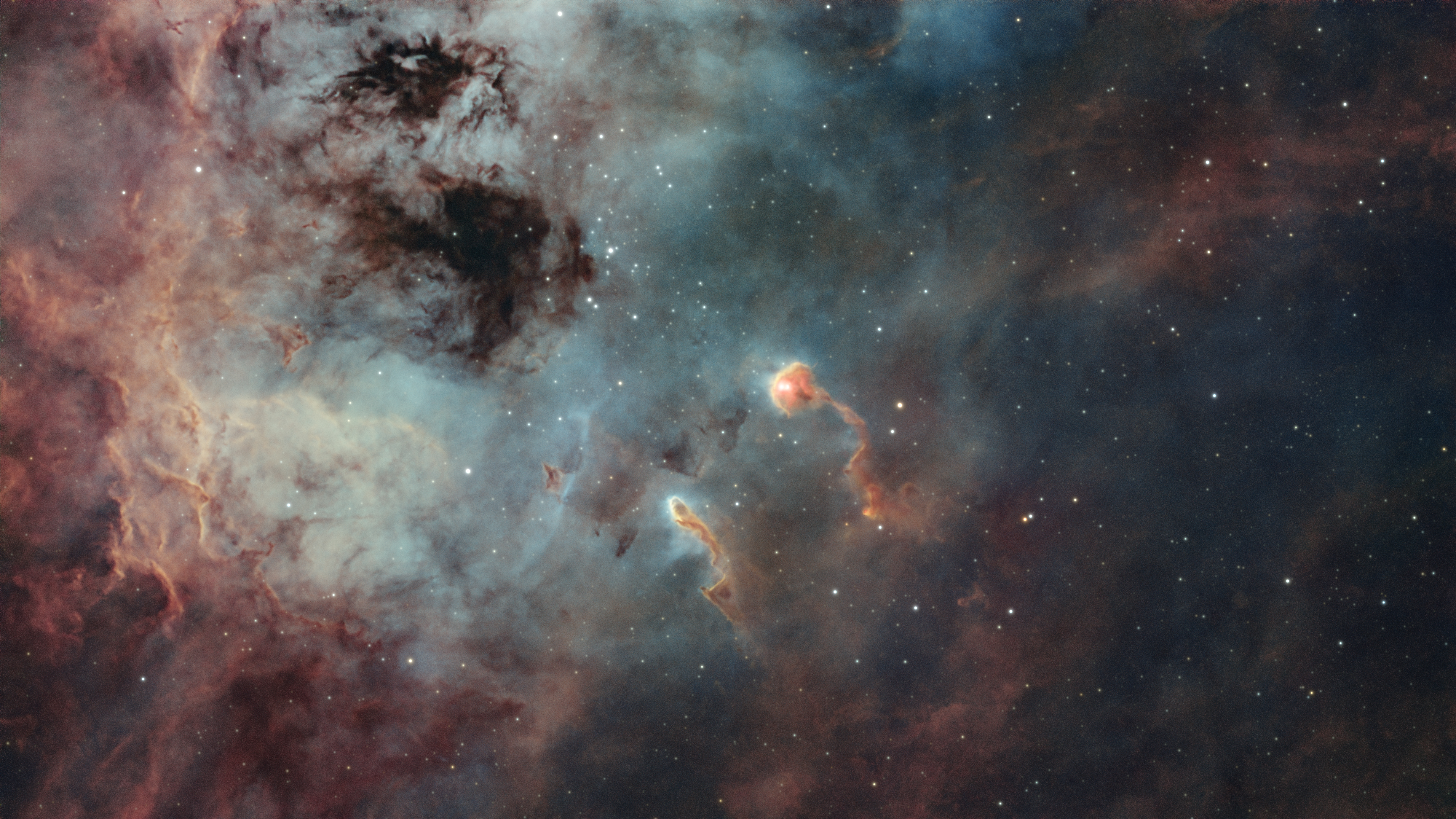
Explanation: This telescopic close-up shows off the central regions of otherwise faint emission nebula IC 410, captured under backyard skies. Presented in a Hubble color palette, the image combines visible broadband and narrowband data with data from the near-infrared. Below and right of center are two remarkable inhabitants of the interstellar pond of gas and dust. the Tadpoles of IC 410. Partly obscured by foreground dust, the nebula itself surrounds NGC 1893, a young galactic cluster of stars. Formed in the interstellar cloud a mere 4 million years ago, the intensely hot, bright cluster stars energize the glowing gas. But the cosmic tadpoles themselves are composed of denser cooler gas and dust. Around 10 light-years long they are likely sites of ongoing star formation. Sculpted by stellar winds and radiation their heads are outlined by bright ridges of ionized gas while their tails trail away from the cluster's central young stars. IC 410 lies some 10,000 light-years away, toward the nebula-rich constellation Auriga.

15/03/2026

Astronomy - EQUINOX AT THE PYRAMID OF THE FEATHERED SERPENT

 2026 March 15

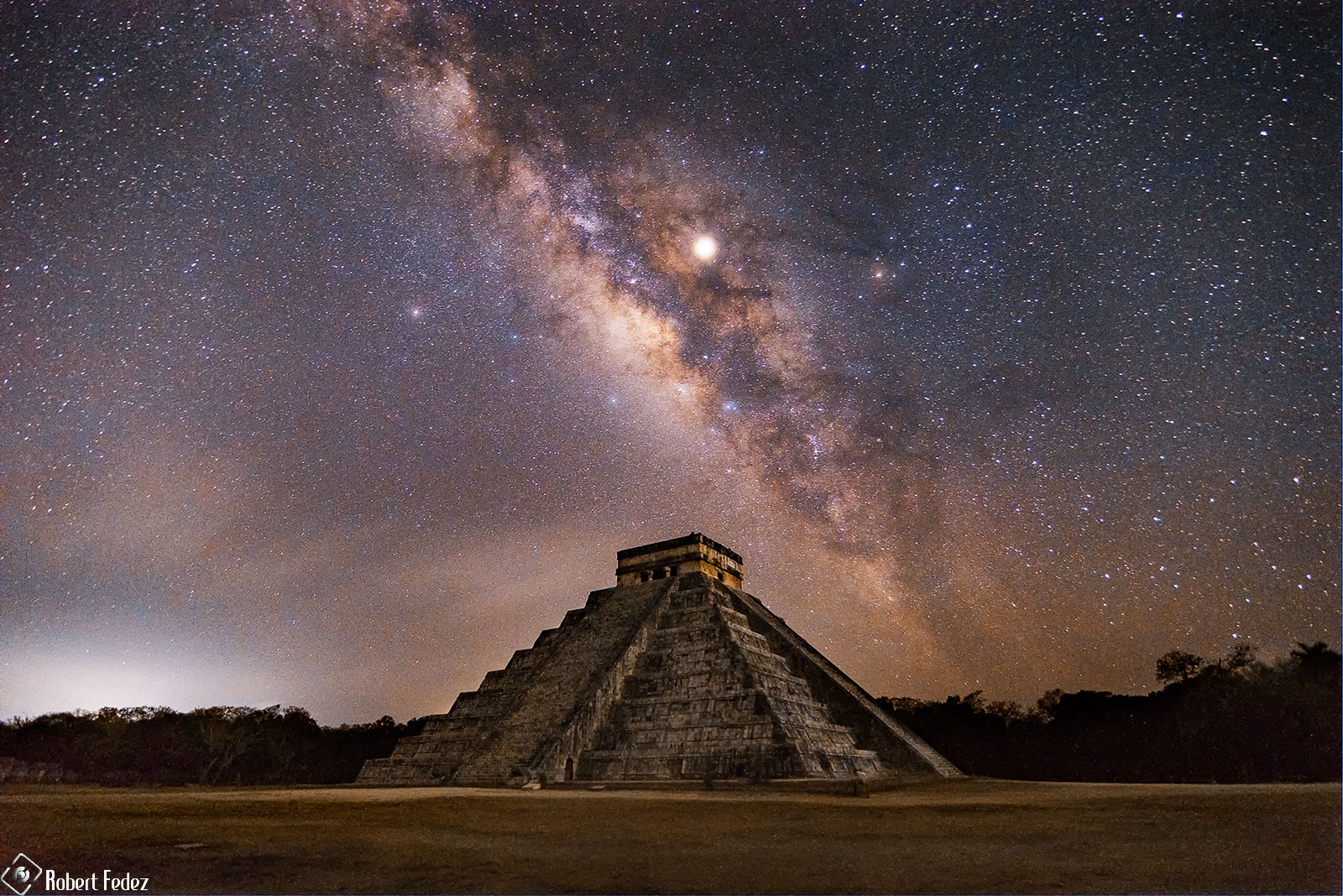
A grand Mayan Pyramids is shown below a starry sky highlighted
by the band of the Milky Way and the planets Saturn and Jupiter.
Please see the explanation for more detailed information.

Equinox at the Pyramid of the Feathered Serpent
Image Credit & Copyright: Robert Fedez

Explanation: To see the feathered serpent descend the Mayan pyramid requires exquisite timing. You must visit El Castillo -- in Mexico's Yucatán Peninsula -- near an equinox. Then, during the late afternoon if the sky is clear, the pyramid's own shadows create triangles that merge into the famous illusion of a slithering viper. Also known as the Temple of Kukulkan, the impressive step-pyramid stands 30 meters tall and 55 meters wide at the base. Built up as a series of square terraces by the pre-Columbian civilization between the 9th and 12th century, the structure can be used as a calendar and is noted for astronomical alignments. The featured composite image was captured in 2019 with Jupiter and Saturn straddling the diagonal central band of our Milky Way galaxy. In a few days another equinox will occur -- not only at Temple of Kukulcán, but all over planet Earth.

13/03/2026

Microphotographie - UN PETIT GOÛT DE FEUILLES D'HERBE

Lorsqu'on leur parle de feuilles d'herbe, les amoureux de poésie pensent immédiatement à l'Américain Walt Whitman et à son chef d'œuvre, Feuilles d'herbe, justement. Alors à contempler ces brins cornus, laissons-nous aller un instant à la rêverie. Celle d'un homme qui flâne sans jamais s'arrêter. Tournant son regard au hasard. Puis, le détournant à nouveau de ces beautés de la nature que seul, l'œil observateur d'un photographe attentif peut capturer et offrir en cadeau à l'avenir.

Les échantillons ont été empilés en Z et scannés par un microscope électronique à balayage à émission de champ Tescan Mira3 et colorisés à la volée avec un système d'imagerie multidétecteur à quatre canaux développé par Point electronic Halle.

Le champ de vision est de 189 microns de large.

Astronomy - TOOLONDO TOTALITY TRAILS

 2026 March 13

See Explanation.  Clicking on the picture will download
the highest resolution version available.

Toolondo Totality Trails
Image Credit & CopyrightJason Perry

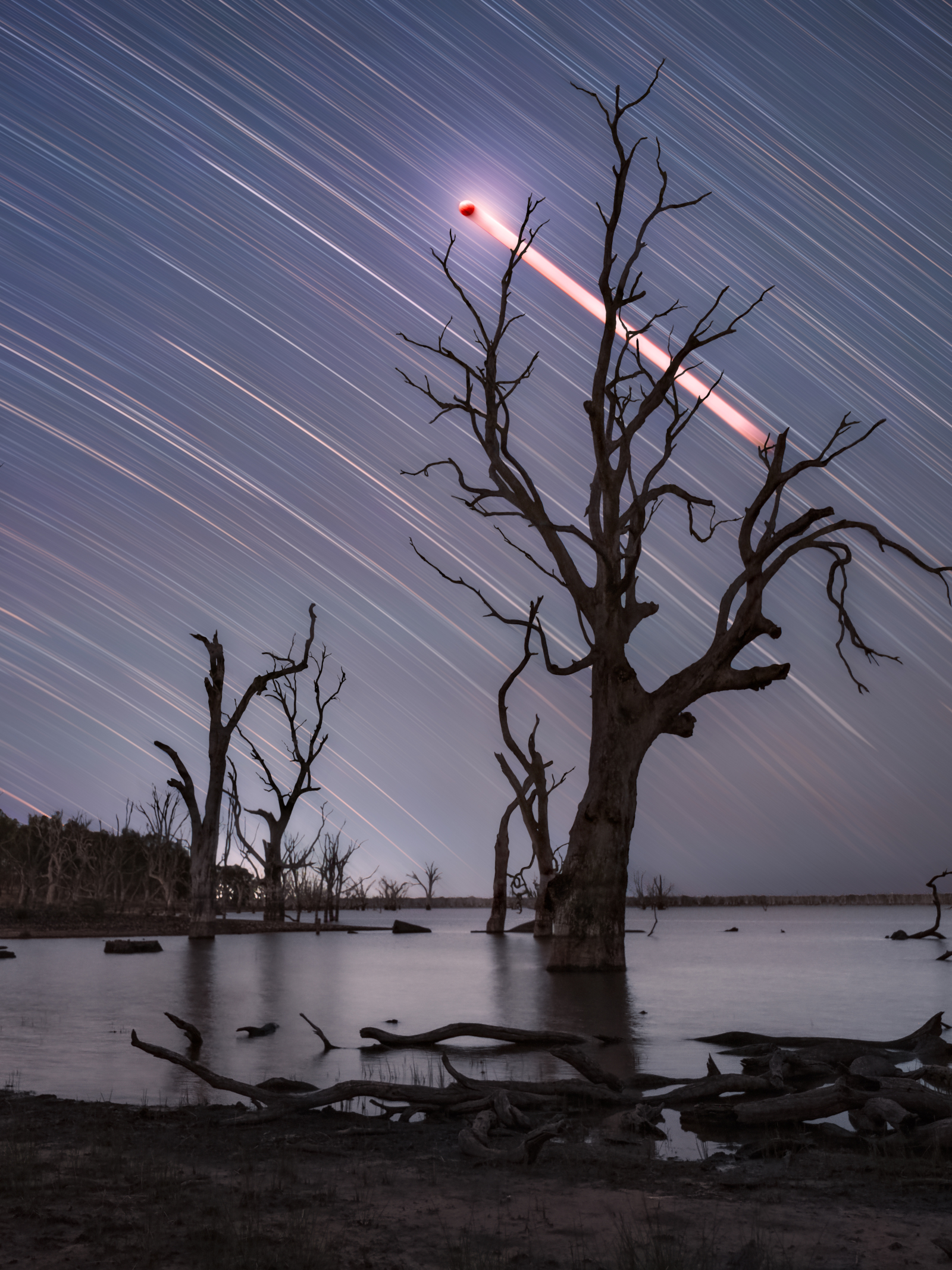
Explanation: In this composited night skyscape, stacked exposures trace graceful star trails above Lake Toolondo, Victoria, Australia, planet Earth. Captured while the lunar eclipse of March 3 was in progress, the exposures used were made during the hour-long total eclipse phase. So faint star trails are easily visible along with the trail of the reddened Moon in the eclipse-darkened skies above the lake and trees. Of course, the apparent motion of Moon and stars revealed in the timelapse composite reflect the Earth's daily rotation around its axis. Dramatically punctuating the Moon's trail as totality ended, a single, separate telephoto image of the totally eclipsed Moon was scaled and blended into the scene.

11/03/2026

Etoiles filantes - AVERSE DE PERSEIDES EN UKRAINE


Image composite réunissant deux heures d'exposition de la pluie annuelle d'étoiles filantes, les Perséides, le 12 août 2016 (nuit du maximum d'activité), au-dessus du lac Svityaz, en Ukraine.

© Ihor Khomych, via Spaceweather

09/03/2026

Astronomy - THE CRANIUM NEBULA FROM THE WEBB TELESCOPE

 2026 March 9

The featured image shows a starfield surrounding a 
nebula that resembles the human brain. A blue outer oval
has a bright nebulosity inside. 
Please see the explanation for more detailed information.

The Cranium Nebula from the Webb Telescope
Image Credit: NASAESACSASTScI; Processing: J. DePasquale (STScI)

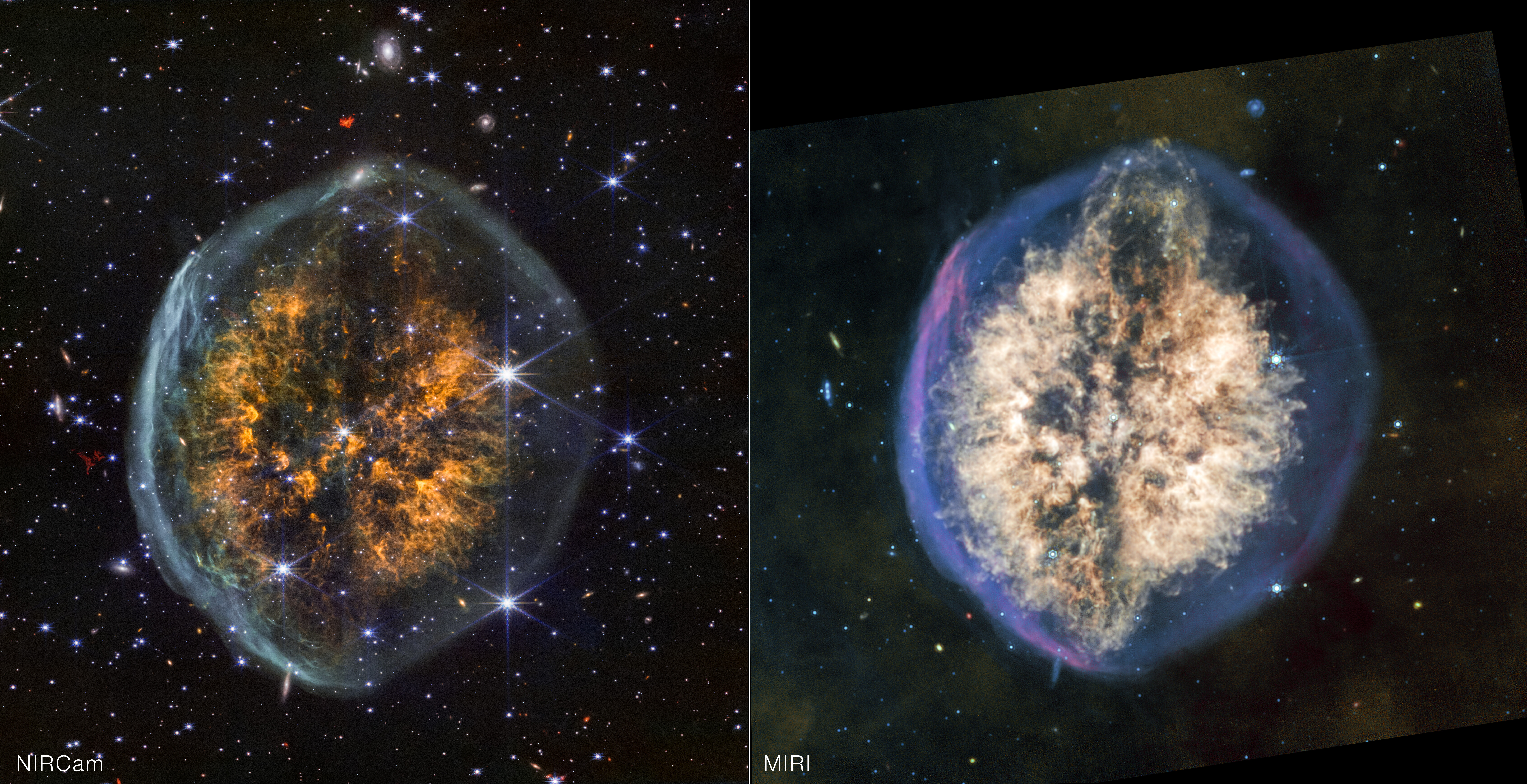
Explanation: What's going on inside the head of this nebula? Dubbed the Exposed Cranium Nebula for its similarity to the human brain, what created the nebula remains a mystery. One thought is that the Cranium Nebula, also known as PMR 1, is a planetary nebula surrounding a white dwarf star. In this mode, the outer atmosphere was expelled when the original Sun-like star ran out of central nuclear fuel and contracted. A competing thought is that the central star is much more massive, possibly a Wolf-Rayet star, that is ejecting gas and dust via turbulent stellar winds. Adding to the intrigue is the dark vertical central division and the thin outer gaseous shell. The featured image was taken by the Webb Space Telescope in midinfrared light, while a second image, included as a rollover, is in near-infrared. Future observations may reveal if this brainy system will quietly just fade from view or, many years from now, suddenly erupt in a powerful supernova.

05/03/2026

Les belles inventions de Leonard de Vinci - LE BATEAU A AUBES


Léonard de Vinci n'est pas l'inventeur du concept du bateau à aubes : on le trouve déjà dans les œuvres de l'ingénieur et architecte romain Vitruve, mais aussi dans des traités datant du Moyen Âge et même chez les Chinois, il y a plus de 1 000 ans. Toutefois, comme toujours, Léonard en fait des illustrations esthétiques inimitables.

© Crochet.david, CC by-sa 3.0

Astronomy - TOTAL LUNAR ECLIPSE OVER TSE BIT'A'I

 2026 March 5

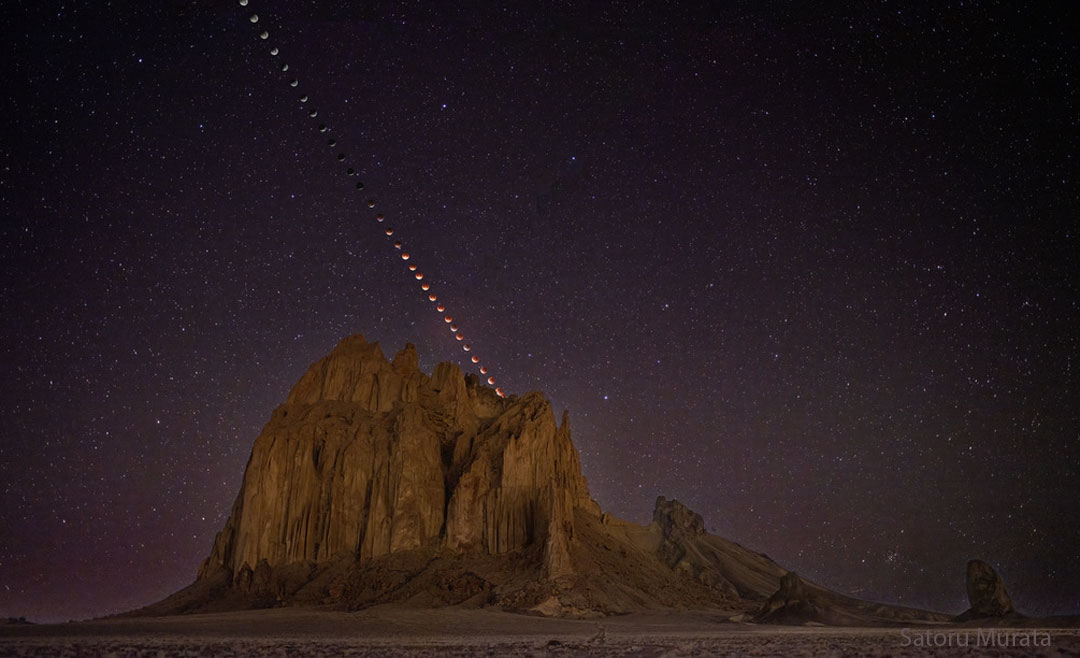
A desert landscape with a large volcanic land feature jutting out in the center. Above is a series of eclipse phases of the moon traveling from the top left downward
toward the peak of the central volcanic landmark. The phases show the moon transitioning from a white full moon to a dark moon and into a red moon once it connects with
the landmark in the image.  Clicking on the picture will download
the highest resolution version available.

Total Lunar Eclipse over Tsé Bit'a'í
Image Credit & Copyright: Satoru MurataText: Keighley Rockcliffe (NASA GSFCUMCPCRESST II)

Explanation: Earlier this week, Earth’s shadow swept across the full Moon in the year’s only total lunar eclipse. This stunning sequence combines images showing the Moon’s path across the night sky. Each lunar image captures our planet’s shadow gradually engulfing the Moon, culminating in its red glow. Sunlight scatters and refracts as it passes through Earth’s atmosphere toward the Moon. Shorter wavelength light (blue and green) scatters more efficiently, leaving red, orange, and yellow hues to paint the lunar surface. Tsé Bit'a'í (”rock with wings”, also known as Shiprock), located in Navajo Nation, provides a powerful volcanic foreground central to this photo and to stories of Navajo origin, adventure, and heroism. As the first full moon of the lunar new year, this eclipse held significance across cultures. Visible from East Asia to North America, this eclipse united observers across great distances, a cosmic reminder that we share the same sky.

04/03/2026

Astronomy - SHAPLEY 1 : AN ANNULAR PLANETARY NEBULA

 2026 March 4

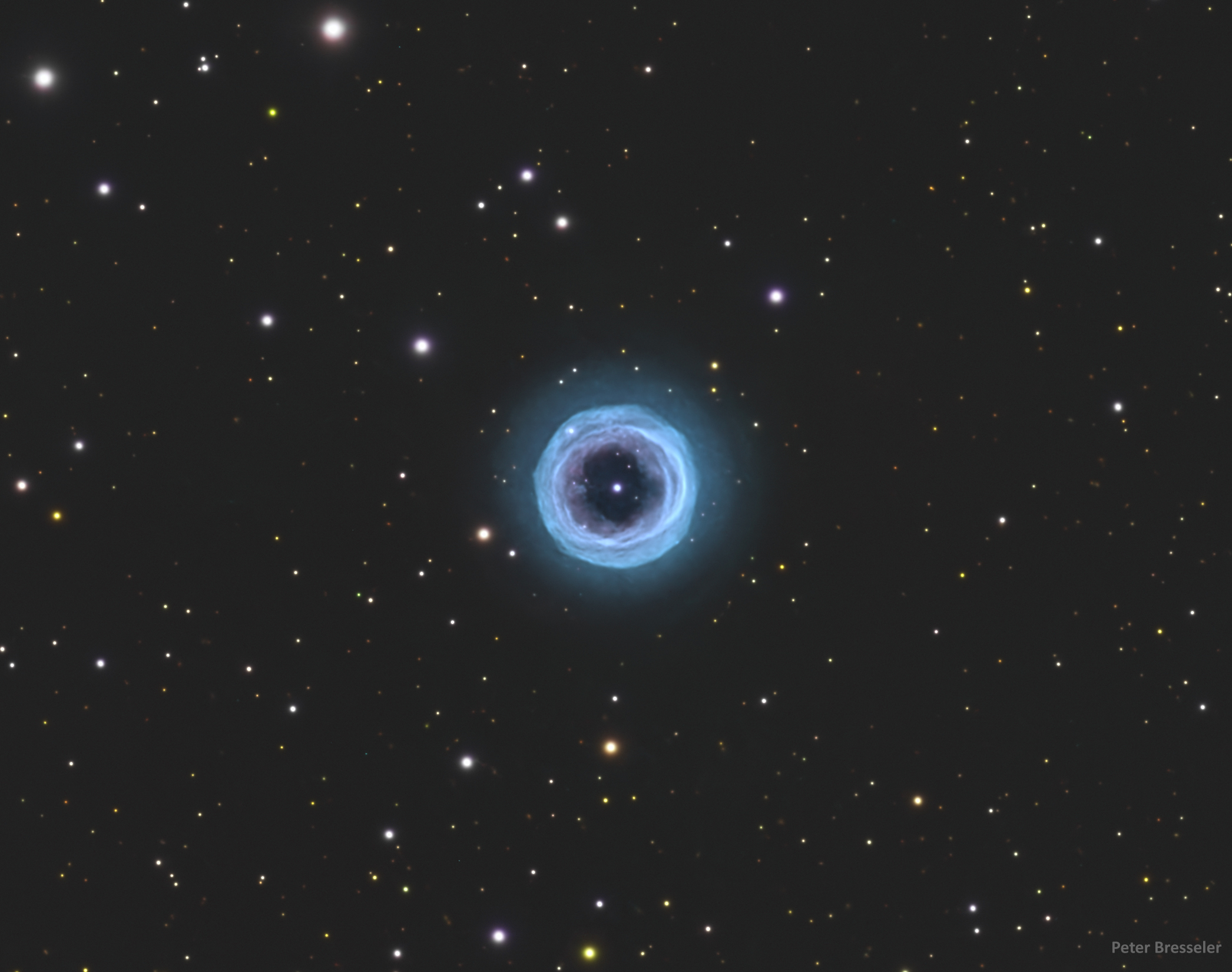
A starfield is shown with a large circular blue
ring in the center. In the ring's center is a bright
blue spot. 
Please see the explanation for more detailed information.

Shapley 1: An Annular Planetary Nebula
Image Credit & Copyright: Peter Bresseler; Text: Keighley Rockcliffe (NASA GSFCUMBC CSSTCRESST II)

Explanation: What’s looking back at you isn’t a cosmic eye, but Shapley 1, a beautifully symmetric planetary nebula. Shapley 1, also known as the Fine Ring Nebula or PLN 329+2.1, bejewels the southern sky constellation of the Carpenter's Square (Norma). The nebula is the result of a star near the mass of our Sun running out of fuel and shedding its outer layers. Glowing oxygen from those expelled layers makes up the circular halo. The bright central point is actually a binary: a white dwarf, the remaining stellar core after the outer layers are expelled into space, and another star, orbiting each other every 2.9 days. Shapley 1’s annular shape is due to our top-down view of the system and provides insight into the influence of central stars on planetary nebula structures.

03/03/2026

Microphotographie - COMME UNE BOULE DE CORAIL

Pollution, changement climatique, surpêche. Les récifs coralliens apparaissent aujourd'hui en danger. Et quoi de mieux qu'une belle photo pour sensibiliser le public à la nécessité d'agir en urgence pour leur venir en aide ?

Un seul souci ici : cette micrographie ne présente pas des coraux, mais des microstructures de carbonate-silice cultivées dans un système dynamique de réaction-diffusion. De quoi sculpter avec précision une grande variété de formes élémentaires par diffusion de dioxyde de carbone dans une solution de chlorure de baryum et de métasilicate de sodium.

Les échantillons ont été préparés à l'Institut Amolf, Amsterdam, Pays-Bas par Lukas Helmbrecht avec Wim L. Noorduin. Ils ont été scannés dans un microscope électronique à balayage à émission de champ Tescan Mira3 et colorés à la volée avec un système d'imagerie multidétecteur à quatre canaux développé par Point electronic Halle.

Le champ de vision est de 28 microns de large.


Astronomy - FLYING OVER NORTH POLE OF MARCH

Flying over the North Pole of Mars
Video Credit: ESAMars ExpressVMC; Processing & LicenseSimeon Schmauß

Explanation: If you could fly over the North Pole of Mars, what would you see?  Images from ESA’s Mars Express mission in 2019 were compiled into the featured video which shows just such a trip. First you see below you a landscape tinted orange by rusted iron in the fine soil, with some land appearing darker due to exposed rock. Soon the northern polar cap comes into view, mostly white because of its reflective frozen water. Surrounding the polar cap is the North Polar Basin, a layered depression covered with dust and sand. The frames in the featured video were captured during northern Martian Spring when the carbon-dioxide ice is evaporating, leaving the underlying water-ice in the cap. Mars Express continues to study the Martian surface and look for clues about the Red Planet's ancient climate and potential for life.

02/03/2026

Astronomy - THE DUSTY SURROUNDINGS OF ORION AND THE PLEIADES


 The Dusty Surroundings of Orion and the Pleiades

Image Credit & Copyright: Ignacio Fernández

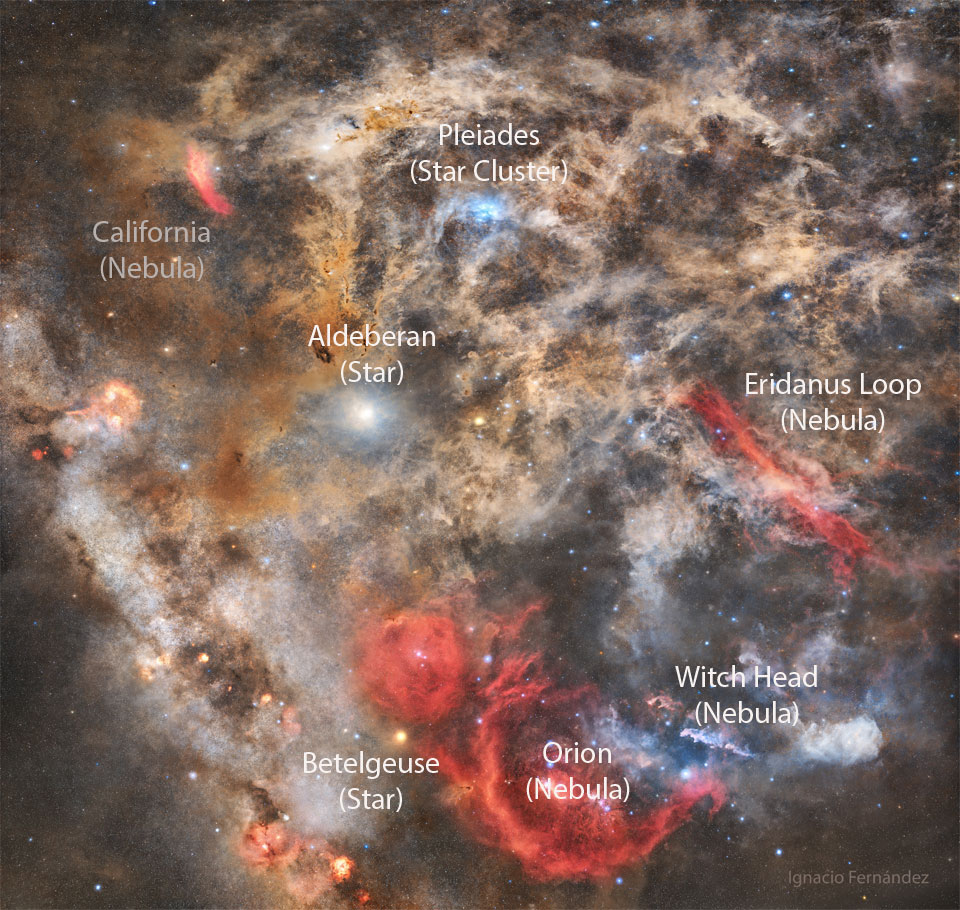
Explanation: How well do you know the night sky? OK, but how well can you identify famous sky objects in a very deep image? Either way, here is a test: see if you can find some well-known night-sky icons in a deep image filled with filaments of normally faint dust and gas. This image contains the Pleiades star clusterBarnard's LoopOrion NebulaAldebaranBetelgeuseWitch Head NebulaEridanus Loop, and the California Nebula. To find their real locations, here is an annotated image version. The reason this task might be difficult is similar to the reason it is initially hard to identify familiar constellations in a very dark sky: the tapestry of our night sky has an extremely deep hidden complexity. The featured composite reveals some of this complexity in a 16 hours of sky exposure in dark skies over GranadaSpain.

News en Images - ARTEMIS II ET LA FACE CACHéE DE LA LUNE

C’est un profil qu’on ne voit pas souvent. Sur cette image diffusée par la Nasa, notre Lune dévoile son bassin oriental et certaines parties...