Nombre total de pages vues

10/03/2021

ASTRONOMY - NGC 1499: The California Nebula

 2021 March 10

See Explanation.  Clicking on the picture will download
the highest resolution version available.

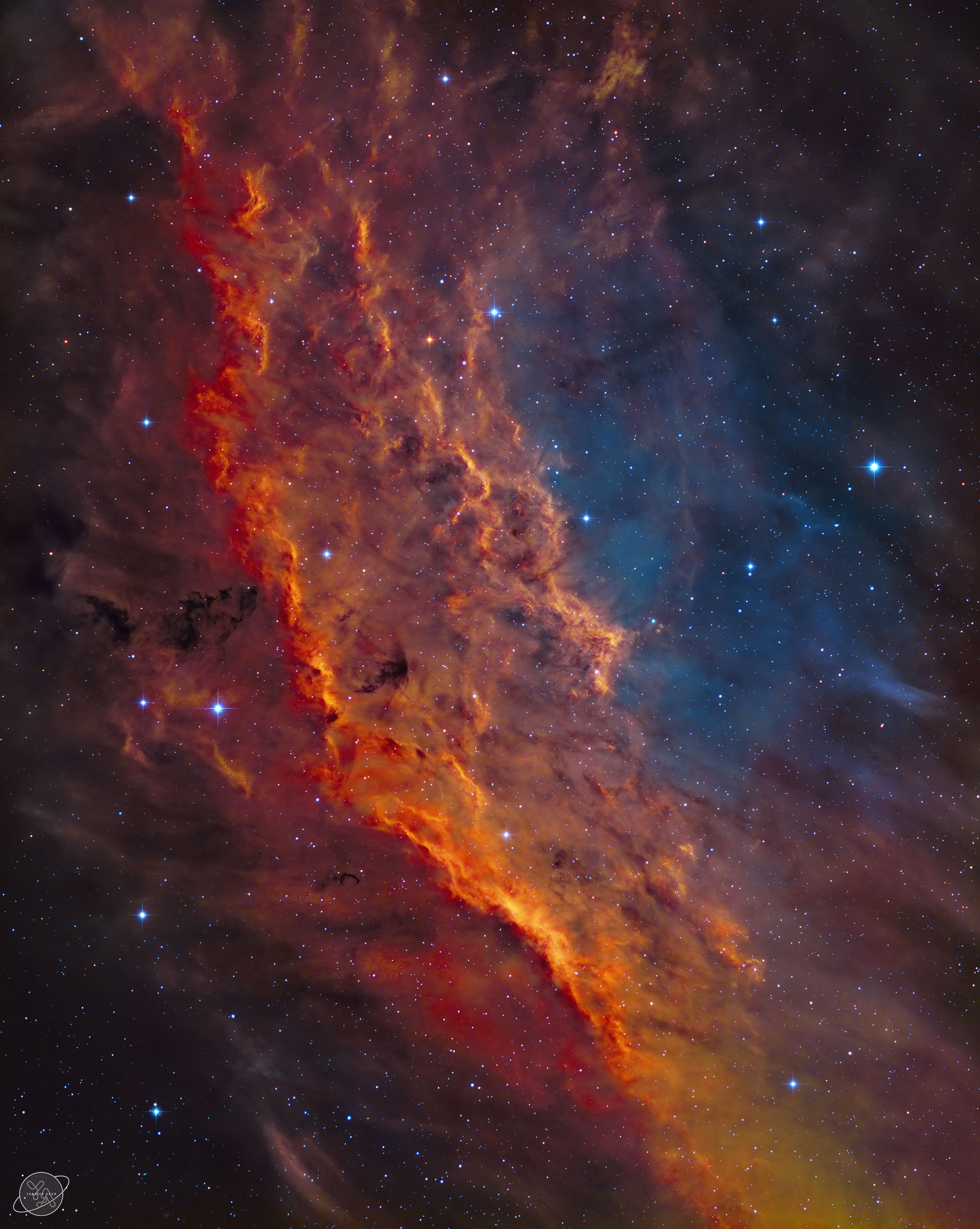
NGC 1499: The California Nebula
Image Credit & Copyright: Yannick Akar

Explanation: Could Queen Calafia's mythical island exist in space? Perhaps not, but by chance the outline of this molecular space cloud echoes the outline of the state of California, USA. Our Sun has its home within the Milky Way's Orion Arm, only about 1,000 light-years from the California Nebula. Also known as NGC 1499, the classic emission nebula is around 100 light-years long. On the featured image, the most prominent glow of the California Nebula is the red light characteristic of hydrogen atoms recombining with long lost electrons, stripped away (ionized) by energetic starlight. The star most likely providing the energetic starlight that ionizes much of the nebular gas is the bright, hot, bluish Xi Persei just to the right of the nebula. A regular target for astrophotographers, the California Nebula can be spotted with a wide-field telescope under a dark sky toward the constellation of Perseus, not far from the Pleiades.

09/03/2021

PRATIQUE - Comment ouvrir une bouteille sans tire-bouchon

Il fait soif... et pas de tire-bouchon

ASTRONOMY - Stereo Eros

 2021 Mars 09

See Explanation.  Clicking on the picture will download
the highest resolution version available.

Stereo Eros
Image Credit: NEAR ProjectJHU APLNASA

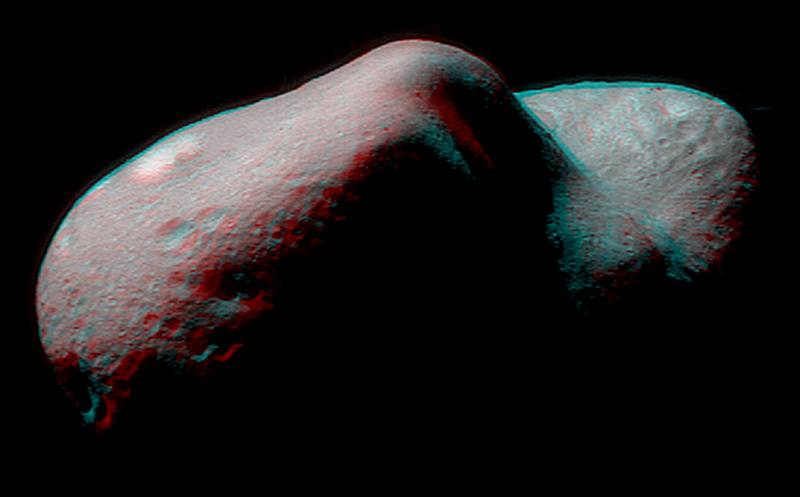
Explanation: Get out your red/blue glasses and float next to asteroid 433 Eros. Orbiting the Sun once every 1.8 years, the near-Earth asteroid is named for the Greek god of love. Still, its shape more closely resembles a lumpy potato than a heart. Eros is a diminutive 40 x 14 x 14 kilometer world of undulating horizons, craters, boulders and valleys. Its unsettling scale and unromantic shape are emphasized in this mosaic of images from the NEAR Shoemaker spacecraft processed to yield a stereo anaglyphic view. Along with dramatic chiaroscuro, NEAR Shoemaker's 3-D imaging provided important measurements of the asteroid's landforms and structures, and clues to the origin of this city-sized chunk of Solar System. The smallest features visible here are about 30 meters across. Beginning on February 14, 2000, historic NEAR Shoemaker spent a year in orbit around Eros, the first spacecraft to orbit an asteroid. Twenty years ago, on February 12 2001, it landed on Eros, the first ever landing on an asteroid's surface. NEAR Shoemaker's final transmission from the surface of Eros was on February 28, 2001.

08/03/2021

ASTRONOMY - Three Tails of Comet NEOWISE

 2021 March 8

See Explanation.
Moving the cursor over the image will bring up an annotated version.
Clicking on the picture will download
the highest resolution version available.

Three Tails of Comet NEOWISE
Image Credit & Copyright: Nicolas Lefaudeux

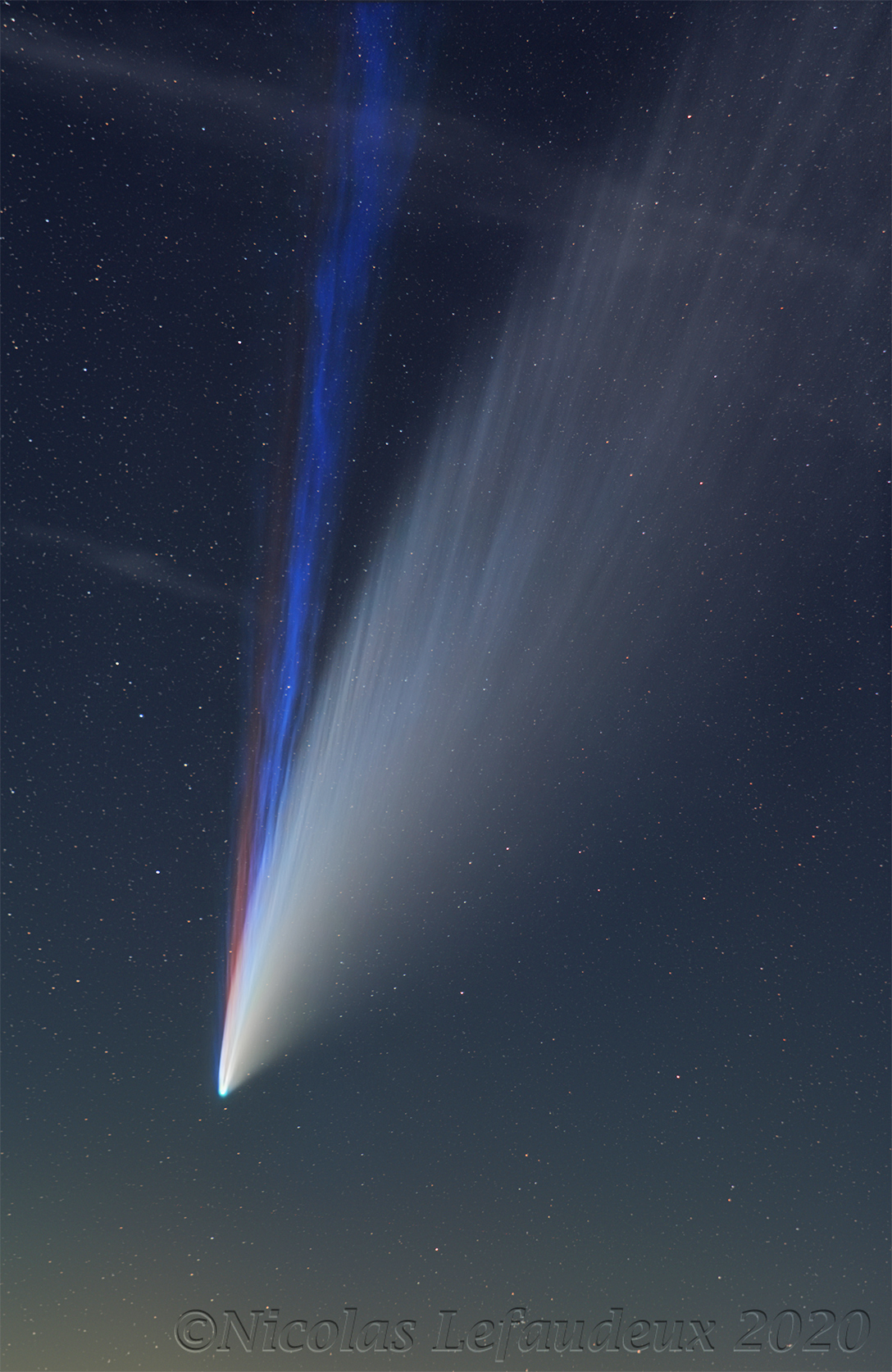
Explanation: What created the unusual red tail in Comet NEOWISE? Sodium. A spectacular sight back in the summer of 2020, Comet NEOWISE, at times, displayed something more than just a surprisingly striated white dust tail and a pleasingly patchy blue ion tail. Some color sensitive images showed an unusual red tail, and analysis showed much of this third tail's color was emitted by sodium. Gas rich in sodium atoms might have been liberated from Comet NEOWISE's warming nucleus in early July by bright sunlight, electrically charged by ultraviolet sunlight, and then pushed out by the solar wind. The featured image was captured in mid-July from BrittanyFrance and shows the real colors. Sodium comet tails have been seen before but are rare -- this one disappeared by late July. Comet C/2020 F3 (NEOWISE) has since faded, lost all of its bright tails, and now approaches the orbit of Jupiter as it heads back to the outer Solar System, to return only in about 7,000 years.

07/03/2021

PRATIQUE - Repasser facilement une chemise


PEINTURE SPACE ART - Tempête martienne


Tempête martienne 

Crédit : Luděk Pešek

ASTRONOMY - Pillars of the Eagle Nebula in Infrared

 2021 March 7

See Explanation.  Clicking on the picture will download
the highest resolution version available.

Pillars of the Eagle Nebula in Infrared
Image Credit: NASAESAHubbleHLAProcessing: Luis Romero

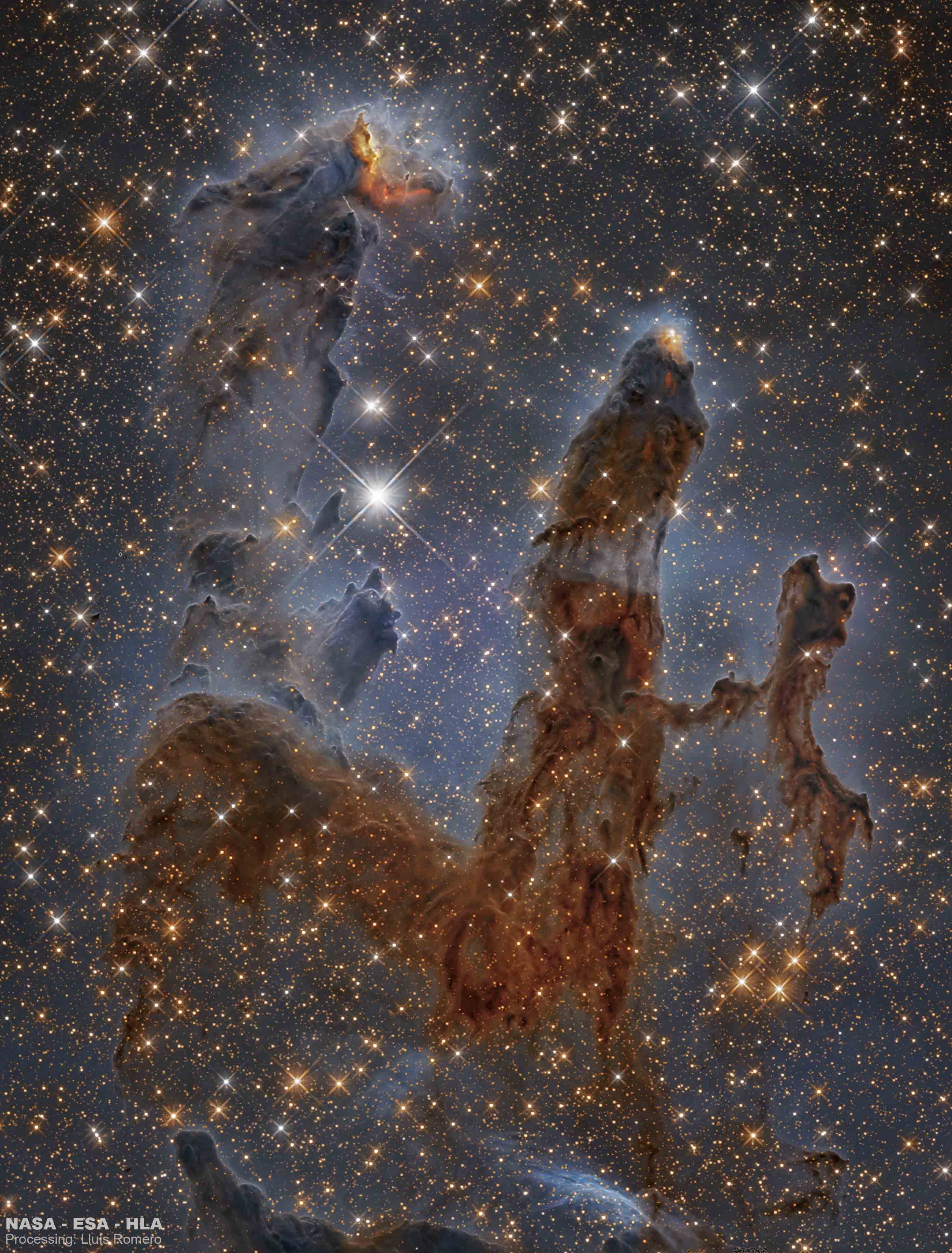
Explanation: Newborn stars are forming in the Eagle Nebula. Gravitationally contracting in pillars of dense gas and dust, the intense radiation of these newly-formed bright stars is causing surrounding material to boil away. This image, taken with the Hubble Space Telescope in near infrared light, allows the viewer to see through much of the thick dust that makes the pillars opaque in visible light. The giant structures are light years in length and dubbed informally the Pillars of Creation. Associated with the open star cluster M16, the Eagle Nebula lies about 6,500 light years away. The Eagle Nebula is an easy target for small telescopes in a nebula-rich part of the sky toward the split constellation Serpens Cauda (the tail of the snake).

05/03/2021

ASTRONOMY - A Little Like Mars

 2021 March 5

See Explanation.
Moving the cursor over the image will bring up an annotated version.
Clicking on the picture will download
the highest resolution version available.

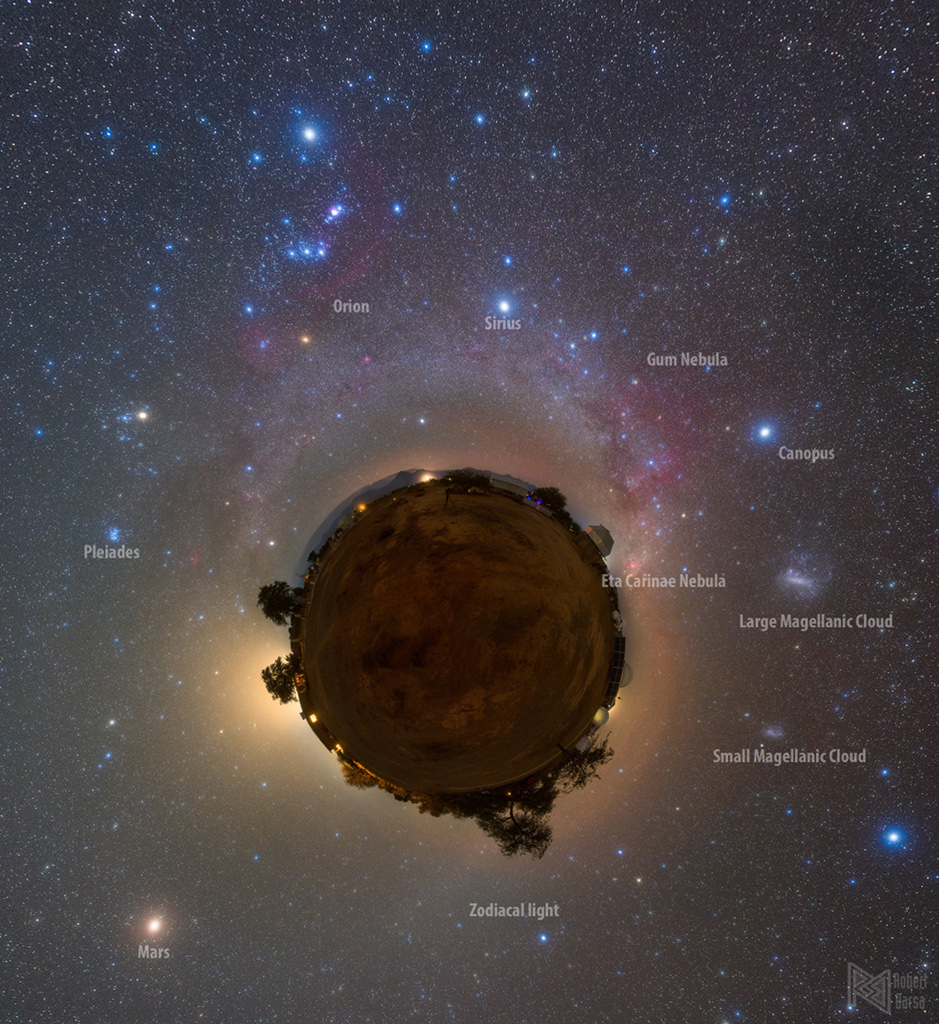
A Little Like Mars
Image Credit & Copyright: Robert Barsa

Explanation: The surface of this planet looks a little like Mars. It's really planet Earth though. In a digitally stitched little planet projection, the 360 degree mosaic was captured near San Pedro in the Chilean Atacama desert. Telescopes in domes on the horizon are taking advantage of the region's famously dark, clear nights. Taken in early December, a magnificent Milky Way arcs above the horizon for almost 180 degrees around the little planet with Orion prominent in the southern sky. A familiar constellation upside down for northern hemisphere skygazers, Orion shares that southern December night almost opposite the Large and Small Magellanic clouds. But the Red Planet itself is the brightest yellowish celestial beacon in this little planet sky.

04/03/2021

PRATIQUE - Comment faire les symboles sur un clavier


ASTRONOMY - Mars in Taurus

 2021 March 4

See Explanation.  Clicking on the picture will download
the highest resolution version available.

Mars in Taurus
Image Credit & Copyright: Petr Horalek / Institute of Physics in Opava

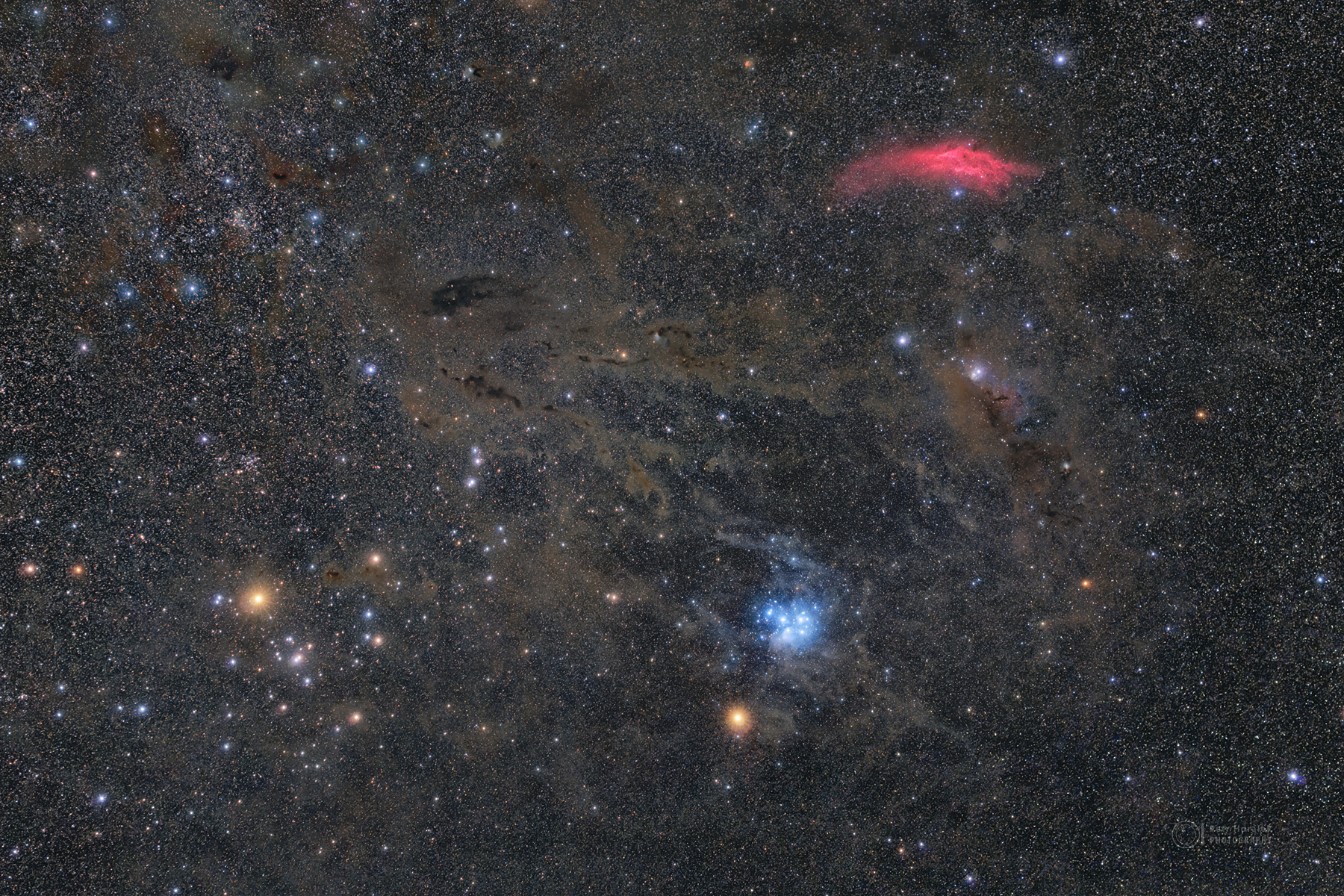
Explanation: You can spot Mars in the evening sky tonight. Now home to the Perseverance rover, the Red Planet is presently wandering through the constellation Taurus, close on the sky to the Seven Sisters or Pleiades star cluster. In fact this deep, widefield view of the region captures Mars near its closest conjunction to the Pleiades on March 3. Below center, Mars is the bright yellowish celestial beacon only about 3 degrees from the pretty blue star cluster. Competing with Mars in color and brightness, Aldebaran is the alpha star of Taurus. The red giant star is toward the lower left edge of the frame, a foreground star along the line-of-sight to the more distant Hyades star cluster. Otherwise too faint for your eye to see, the dark, dusty nebulae lie along the edge of the massive Perseus molecular cloud, with the striking reddish glow of NGC 1499, the California Nebula, at the upper right.

SANTé/MEDECINE - Tout savoir sur le coeur humain - 7 - La valve tricuspide

La valve auriculo-ventriculaire droite, aussi appelée valve tricuspide, est une valve cardiaque composée de trois cuspides, qui sont des lam...