Nombre total de pages vues

22/05/2026

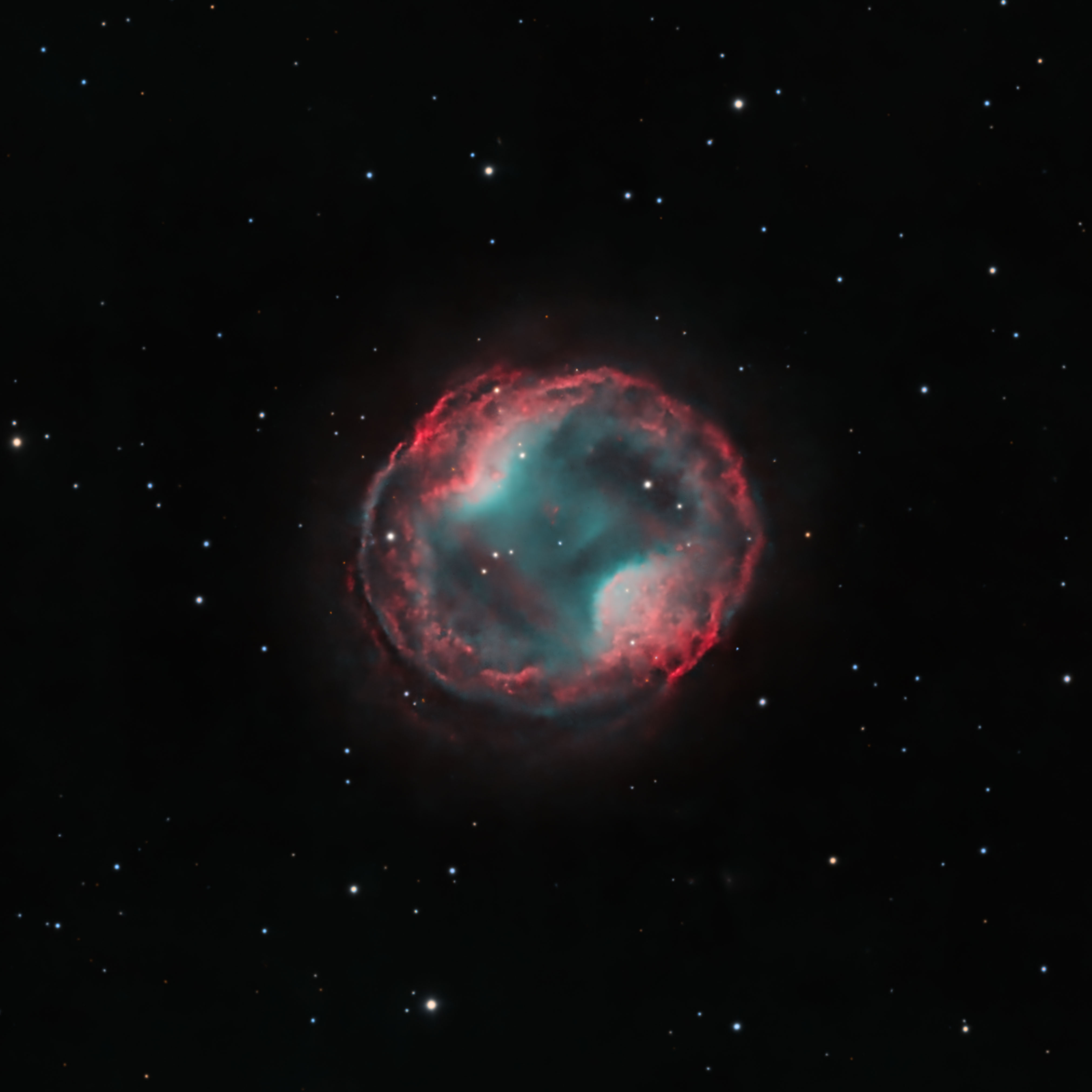
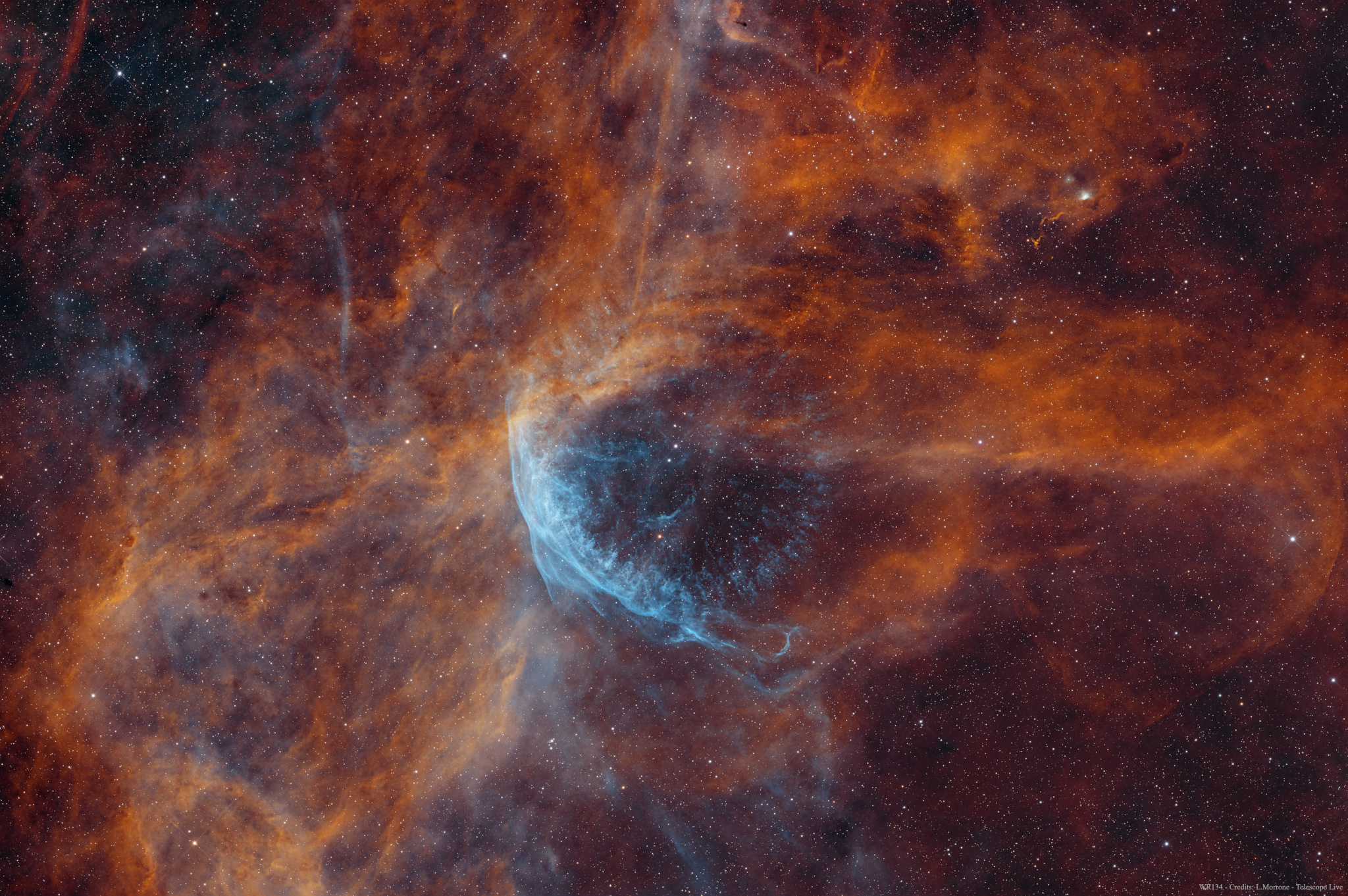
Astronomy - THE NEBULOUS REALM OF WR 134

 2026 May 22

See Explanation.  Clicking on the picture will download
the highest resolution version available.

The Nebulous Realm of WR 134
Image Credit & Copyright: Luigi Morrone and Telescope Live

Explanation: This cosmic snapshot covers a field of view over twice as wide as the full Moon within the boundaries of the high-flying constellation Cygnus. Made using astronomical narrowband filters, the image highlights the bright edge of a ring-like nebula traced by the glow of ionized hydrogen and oxygen gas. Embedded in the region's expanse of interstellar clouds, the complex, glowing arcs are sections of shells of material swept up by the wind from Wolf-Rayet star WR 134, the brightest star near image center. Distance estimates put WR 134 about 6,000 light-years away, making this telescopic frame over 100 light-years across. Shedding their outer envelopes in powerful stellar winds, massive Wolf-Rayet stars have burned through their nuclear fuel at a prodigious rate and end their final phase of massive star evolution in a spectacular supernova. Their stellar winds and final supernova explosion enrich the interstellar material with heavy elements to be incorporated in future generations of stars.

21/05/2026

Vulcanologie - PACAYA - GUATEMALA

Le Pacaya très beau volcan à 50km au sud de la capitale du Guatemala.

©Shutterstock

Astronomy - A COLLISION OF GALAXY CLUSTERS

 2026 May 21

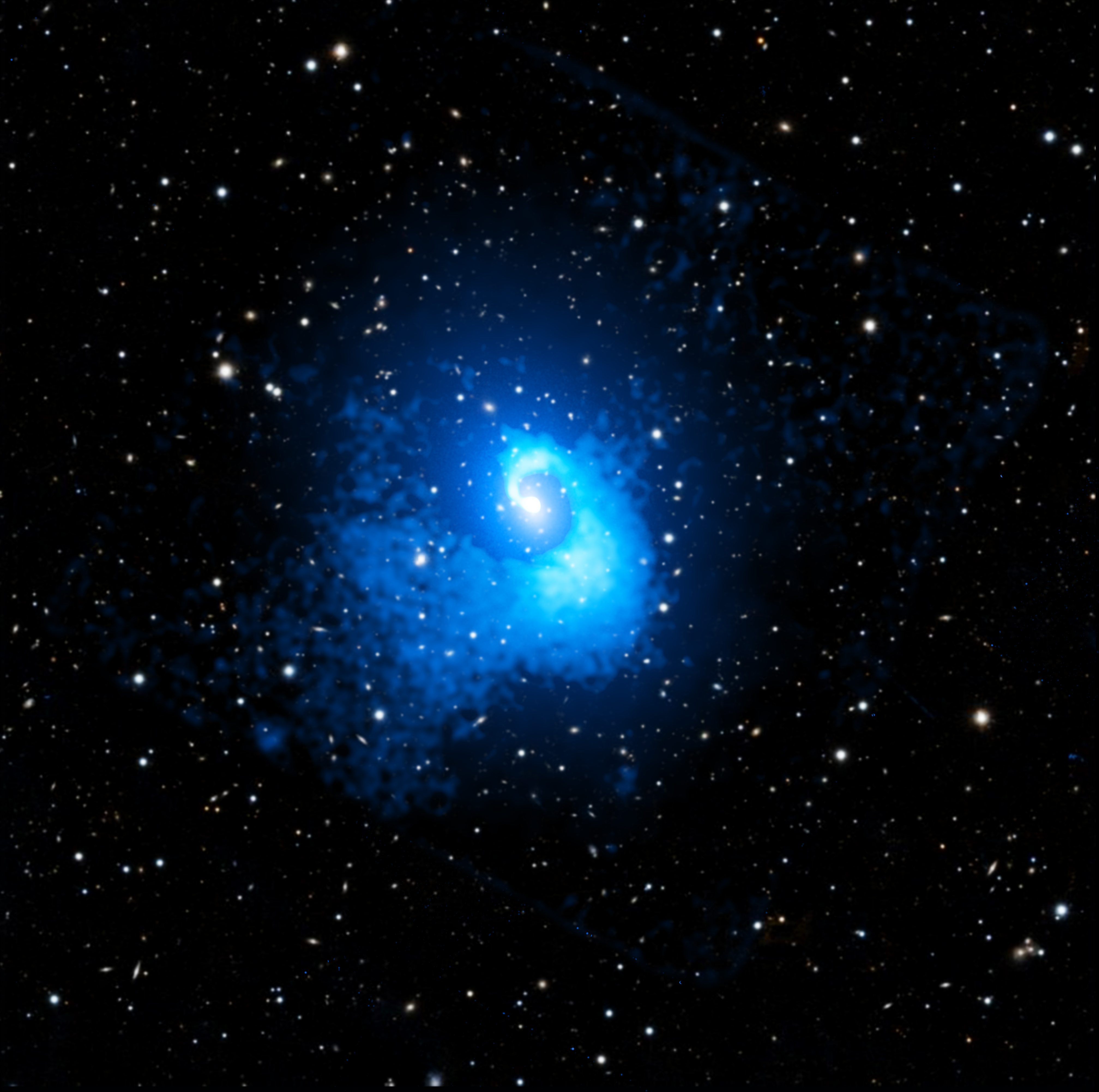
On a dark background, galaxies are shown as fuzzy white dots.
	  A bright blue spiral expands from the center.
	  Clicking on the picture will download the highest resolution
	  version available.

A Collision of Galaxy Clusters
Image Credit: X-ray: NASA/CXC/CfA/C. Watson et al.; Optical: PanSTARRS; Image Processing: NASA/CXC/SAO/N. Wolk and P. Edmonds
Text: Cecilia Chirenti (NASA GSFCUMCPCRESST II)

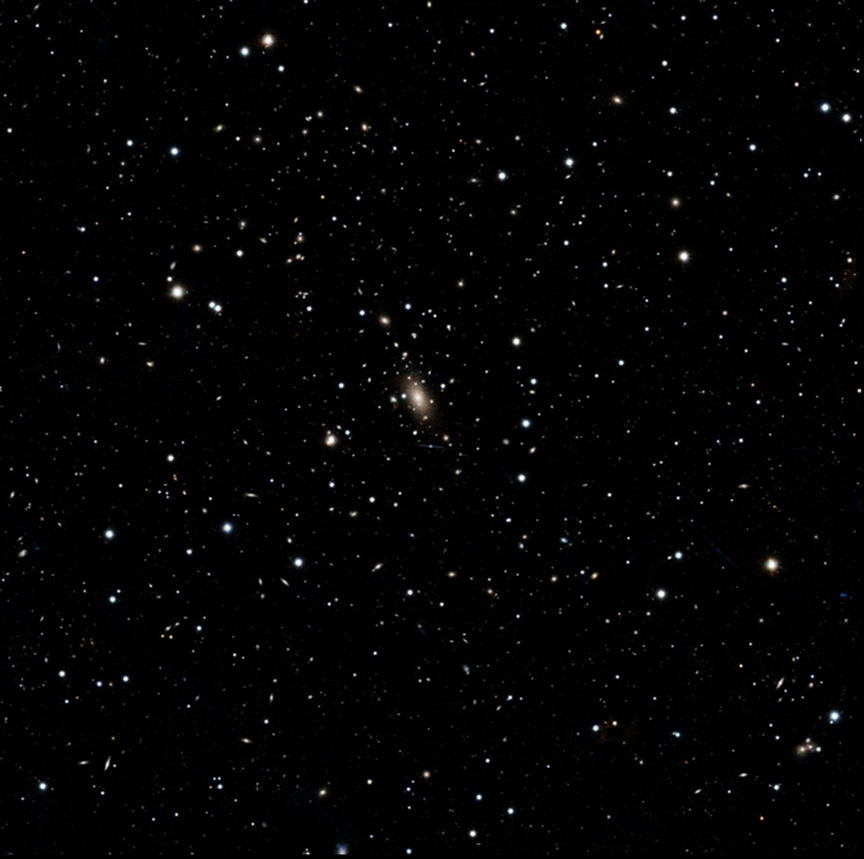
Explanation: This big beautiful spiral shines in X-ray light. It is about 20 times larger than our Galaxy. It belongs to Abell 2029, a galaxy cluster one billion light-years away. (To see only the galaxies, hover your cursor over the image, or follow this link.) Galaxy clusters are the largest structures in the universe that are supported by gravity. Abell 2029 is formed by thousands of galaxies, surrounded by a huge cloud of hot gas and the equivalent of hundreds of trillions times the mass of the Sun in dark matter. The spiral is made of gas, mostly hydrogen and helium, heated to tens of millions of degrees. It was found in a recent study that used data from NASA's Chandra X-ray Observatory to show that Abell 2029 had a collision with a smaller cluster four billion years ago. The collision affected the gravitational field and caused the intracluster gas to slosh, like wine moving in a wine glass, shaping the spiral.

20/05/2026

Astronomie - ETOILES FILANTES : PERSEIDE ACCOMPAGNEE D'AURORE BOREALE ET NUAGES NOCTULESCENTS

Perséide surprise dans le ciel de Suède, dans la nuit du 12 au 13 août 2016. Au même moment, à d'autres niveaux dans l'atmosphère terrestre, une aurore verdâtre dansait au-dessus d'une bande de nuages noctulescents (nuages glacés de haute altitude).

© Göran Strand

19/05/2026

Astronomy - AURORA SLATHERS UP THE SKY

 2026 May 16

See Explanation.  Clicking on the picture will download
the highest resolution version available.

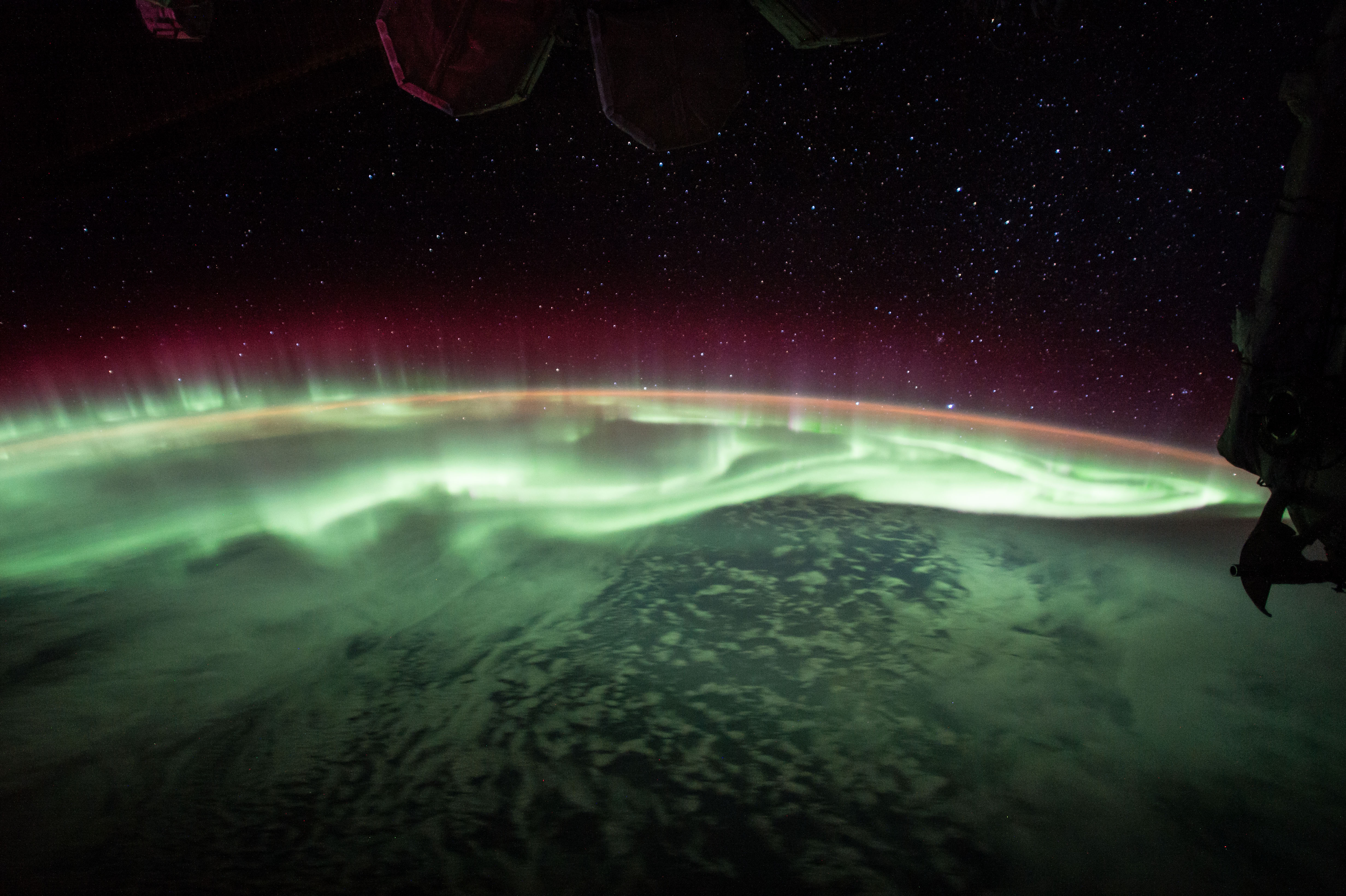
Aurora Slathers Up the Sky
Image Credit: Jack FischerExpedition 52NASA

Explanation: Like salsa verde on your favorite burrito, a green aurora slathers up the sky in this 2017 June 25 snapshot from the International Space Station. About 400 kilometers (250 miles) above Earth, the orbiting station is itself within the upper realm of the auroral displays. Aurorae have the signature colors of excited molecules and atoms at the low densities found at extreme altitudes. Emission from atomic oxygen dominates this view. The tantalizing glow is green at lower altitudes, but rarer reddish bands extend above the space station's horizon. The orbital scene was captured while passing over a point south and east of Australia, with stars above the horizon at the right belonging to the constellation Canis Major, Orion's big dog. Sirius, alpha star of Canis Major, is the brightest star near the Earth's limb.

15/05/2026

Astronomy - R3PanSTARRS : AN ORION COMET

 2026 May 15

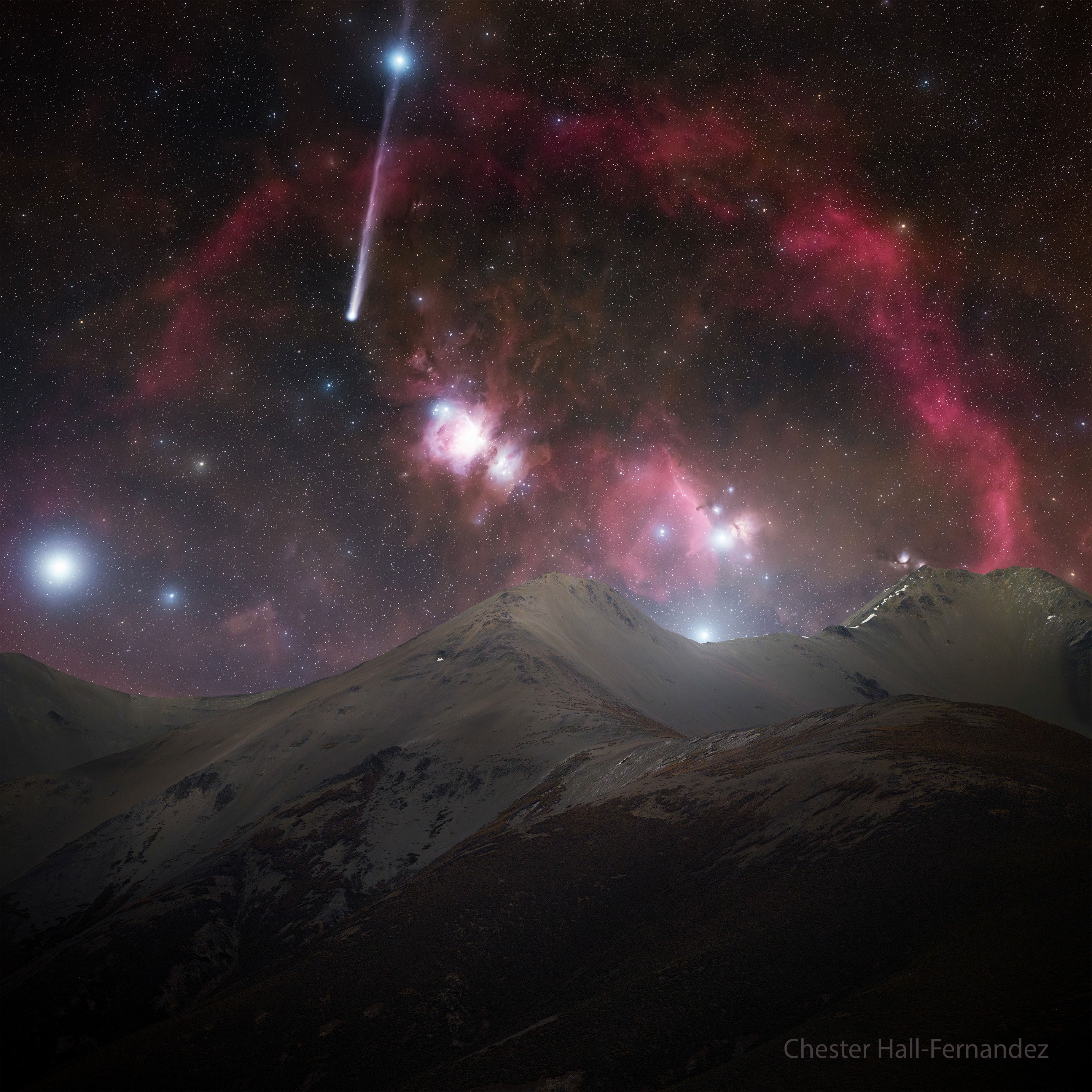
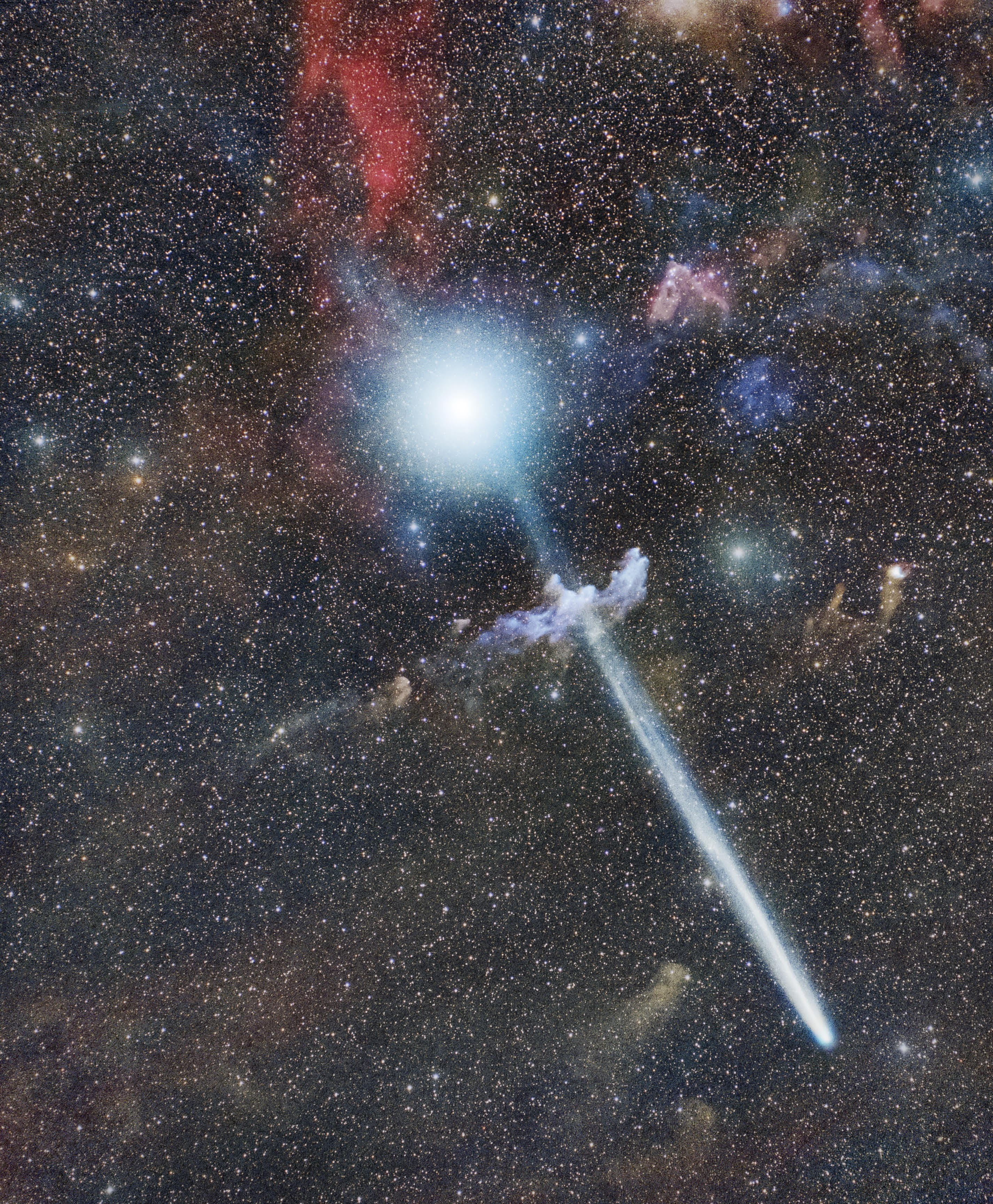
A starfield appears featuring many bright stars, red 
nebula, and a comet. Snow covered mountains cover the foreground.
The comet appears on the upper left with a tail the goes
upward and right through a bright star. 
Please see the explanation for more detailed information.

R3 PanSTARRS: An Orion Comet
Image Credit & Copyright: Chester Hall-Fernandez

Explanation: Comet R3 PanSTARRS might be best remembered as an Orion comet. A key reason is because Comet C/2025 R3 (PanSTARRS) was near its most spectacular -- in terms of tail visibility -- when passing in front of the iconic constellation. Although rare, other bright comets, too, have ventured across Orion, including Lovejoy in 2015Hale-Bopp in 1997, and the Great Comet of 1264. Best visible in long duration exposures, the featured image was captured last week from the Craigieburn Mountain Range in New Zealand. Visible in the deep background image are the Orion NebulaBarnard's Loop, and through R3's tail, the bright star Saiph, the sixth brightest star in the constellation of Orion. Comet R3 PanSTARRS continues to fade as it moves further south, passing into the constellation of the Unicorn (Monoceros) in the next few days.

14/05/2026

Astronomy - MESSIER CATALOG AT UNIFORM SCALE

 2026 May 14

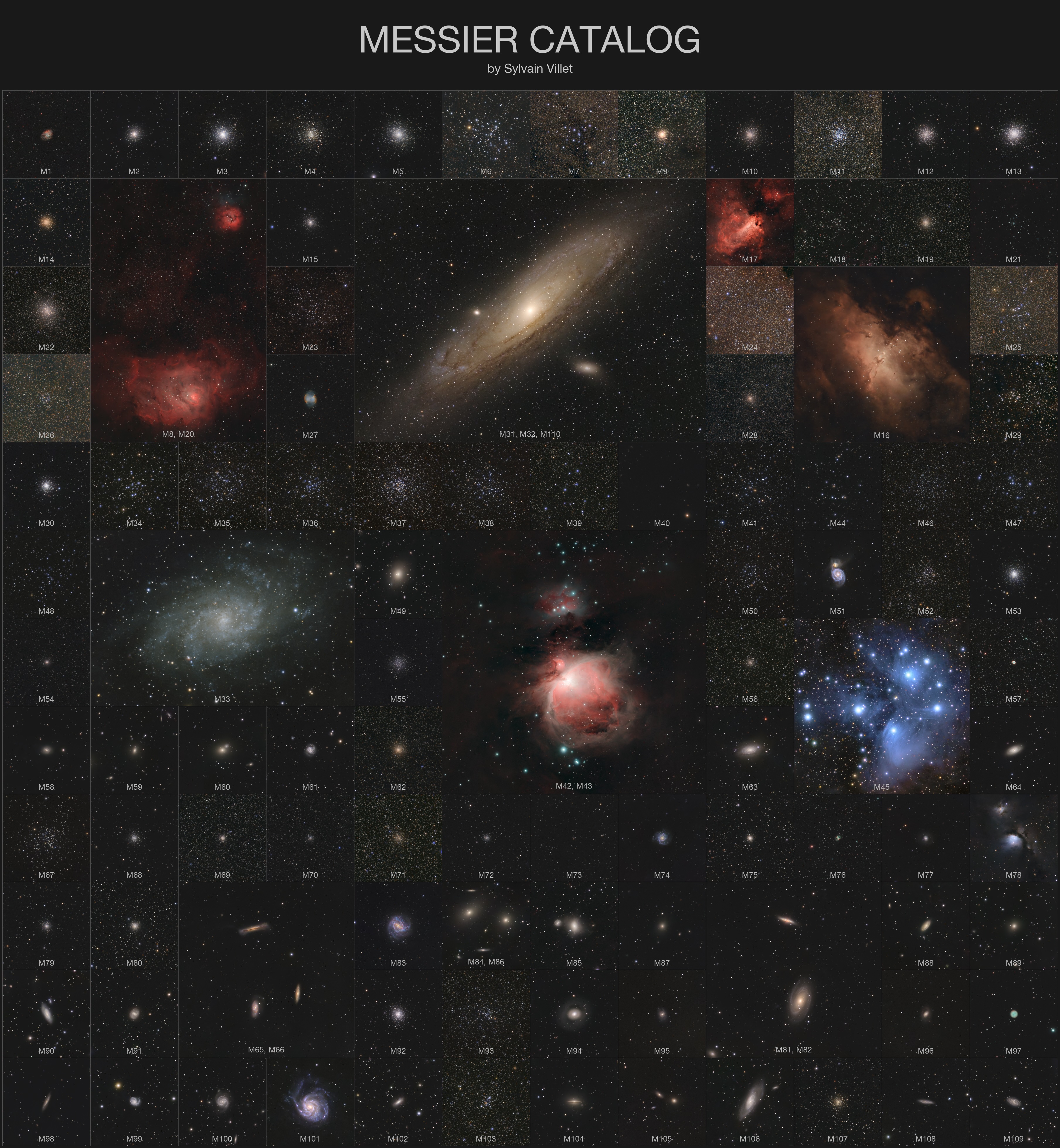
A grid over a black background shows
	  astronomical objects with different sizes,
	  labeled from M1 to M110.

Messier Catalog at Uniform Scale
Image Credit: Sylvain Villet
Text: Cecilia Chirenti (NASA GSFCUMCPCRESST II)

Explanation: What are some of the most interesting astronomical objects you can see in the night sky? Armed with a good pair of binoculars or a small telescope, if you live in the Northern Hemisphere, you can look for the very popular objects in the Messier Catalog. Most of them, but not all, are also visible from the southern half of the Earth. The featured image shows all 110 objects in the catalog at uniform scale -- the same magnification. Charles Messier created the catalog in the 18th century. He was interested in comets, and his catalog was a list of known comet-like "objects to avoid" in the sky when observing or hunting for comets. The deep sky objects in the catalog include a supernova remnant (the Crab Nebula, M1), other galaxies (such as Andromeda, M31), nebulae (e.g. the Orion Nebula, M42, a star-forming region) and stellar clusters (such as the Pleiades, M45, a bright young open cluster).
13/05/2026

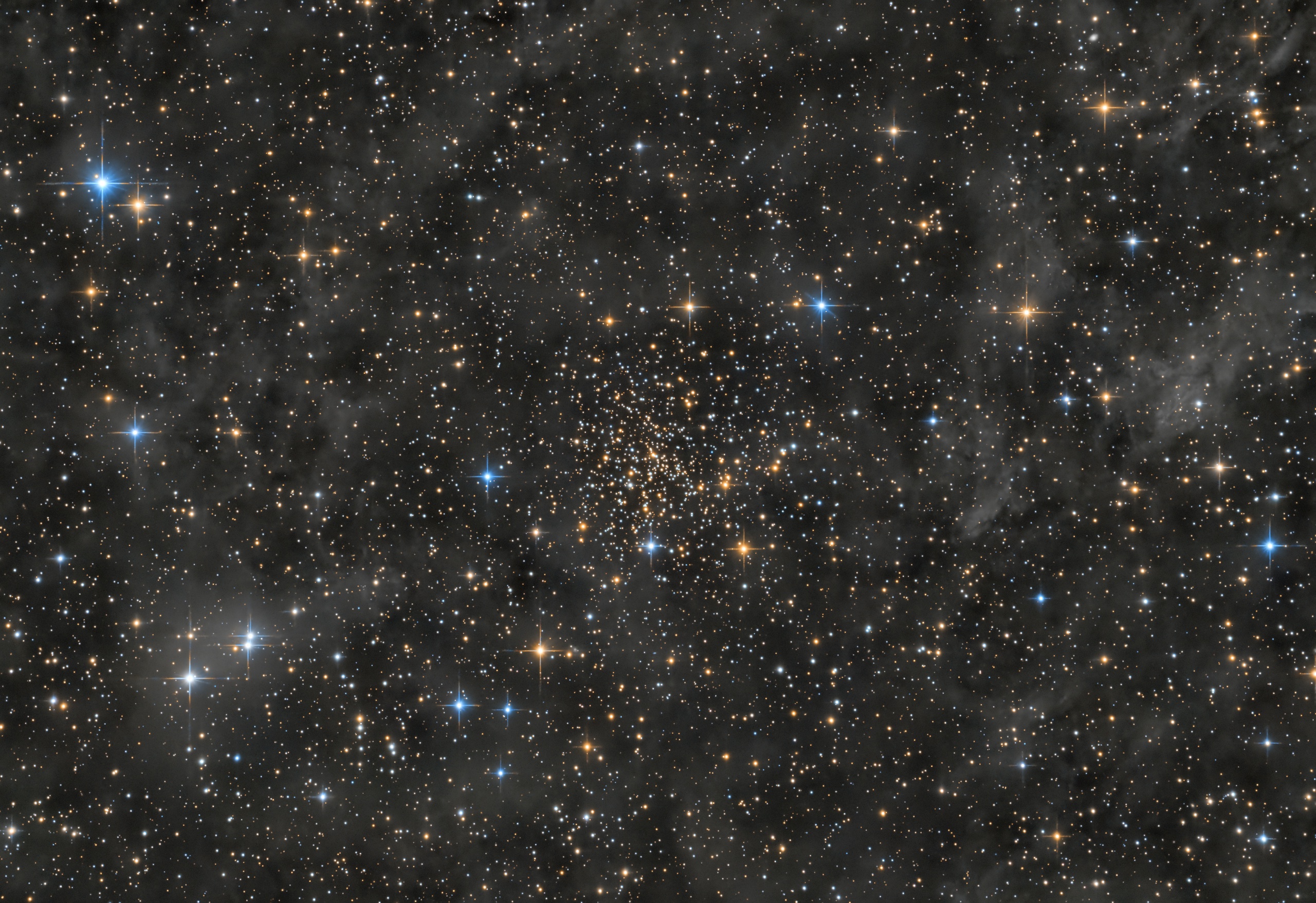
Astronomy - NGC188: OLD CLUSTER IN THE NEW GENERAL CATALOG

 2026 May 13

See Explanation.  Clicking on the picture will download
the highest resolution version available.

NGC 188: Old Cluster in the New General Catalog
Image Credit & Copyright: Neven Krcmarek

Explanation: The New General Catalog of star clusters and nebulae really isn't so new. In fact, it was published in 1888 - an effort by J. L. E. Dreyer to consolidate the work of astronomers WilliamCaroline, and John Herschel along with others into a useful single, complete catalog of astronomical discoveries and measurements. Dreyer's work was largely successful and is still important today, as this famous catalog continues to lend its "NGC" to bright clusters, galaxies, and nebulae. Take for example the star cluster known as NGC 188 (item number 188 in the NGC compilation). It lies about 6,000 light-years distant in the northern constellation Cepheus and represents a galactic or open star cluster. With an age of about 7 billion years, NGC 188 is old for an open cluster. Its old, evolved red giant stars have yellowish hues in this colorful, deep sky view. NGC 188 also enjoys the designation Caldwell 1 in a modern compilation of deep sky objects. Located well above the plane of the Milky Way and seen in the direction of planet Earth's north celestial pole, the ancient stellar group is known to some as the Polarissima Cluster.

12/05/2026

Astronomie - SPLENDIDES RAPPROCHEMENTS LUNE-VENUS-JUPITER


Du 18 au 20 mai, un beau croissant de lune s'approche de Vénus puis de Jupiter dans le ciel du soir. Un très beau spectacle à admirer à l'œil nu, tout simplement.

Stelvision

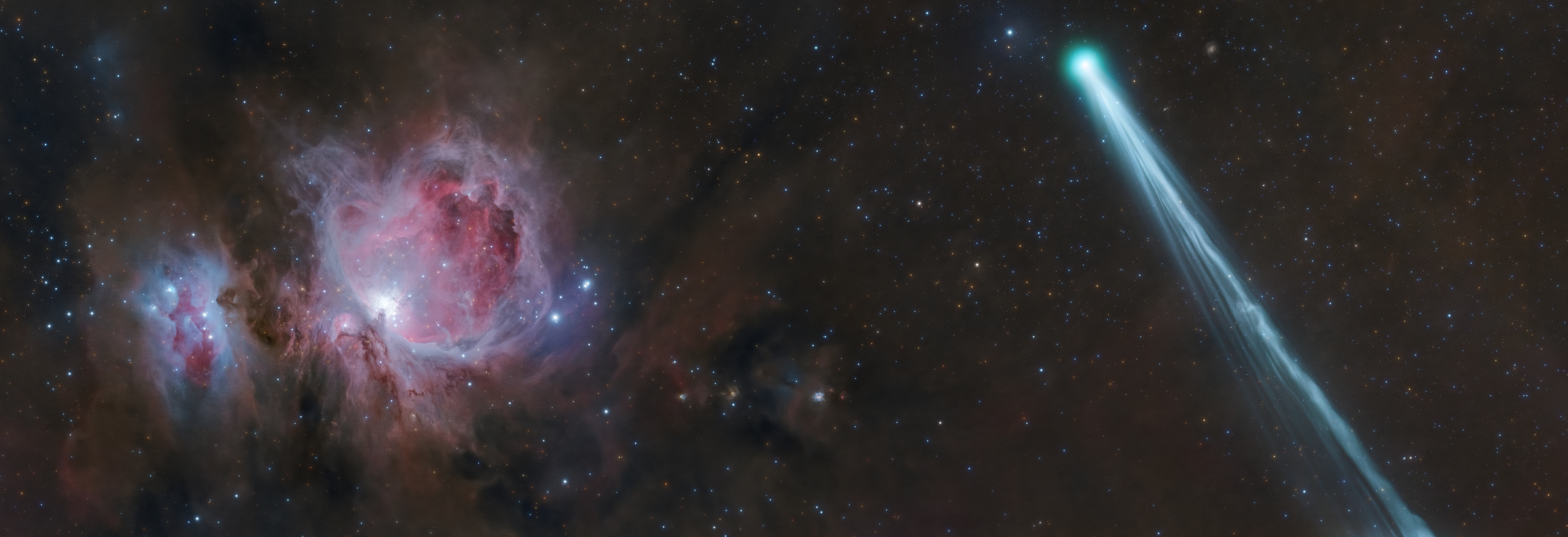
Astronomy - THE CUNJUNCTION OF COMET R3 PauSTARRS AND THE ORION NEBULA

 2026 May 12

The bright blue Comet R3 PanSTARRS streaks across the right side of the image with the red cloud of the Orion Nebula in the background on the left.

The Conjunction of Comet R3 PanSTARRS and the Orion Nebula
Image Credit & Copyright: Julien De WinterSascha Ebeler
Text: Keighley Rockcliffe (NASA GSFCUMBC CSSTCRESST II)

Explanation: Today’s composite image features something old, something new, something borrowed, and something blue! Comet R3 PanSTARRS, streaking across the right of the image, likely originated from the Oort Cloud, meaning it is an old Solar System relic from billions of years ago. It’s bright extended ion tail glows blue as the gas escaping the comet’s core is ionized by sunlight. Astronomers are fascinated by comets for all sorts of reasons: comet compositions are untouched time capsules containing the building blocks of Solar System planets; comets may have delivered water to the young Earth; the behavior of cometary tails shed light on solar wind and radiation interactions. The background mosaic, featuring the Orion Nebula (M42), was taken over two nights of observation with the comet captured on the third night. The Orion Nebula is our nearest stellar nursery and, at about 2 million years old, is our something (relatively) new! Now at around 127.5 million kilometers from Earth, we wave goodbye to the borrowed Comet R3 PanSTARRS as it leaves the Solar System.

11/05/2026

Vulcanologie - NGAURUHOE (NOUVELLE ZELANDE)

Avec 2,291 mètres d'altitude, sa dernière éruption a eu lieu en 1977. Ce paysage est de toute beauté.

©Getty Images

Astronomy - MOON SETTING BEHIND TEIDE VOLCANO

 2026 May 11

Moon Setting Behind Teide Volcano
Video Credit & CopyrightDaniel López (El Cielo de Canarias); Music: Piano della Moon (Dan Silva)

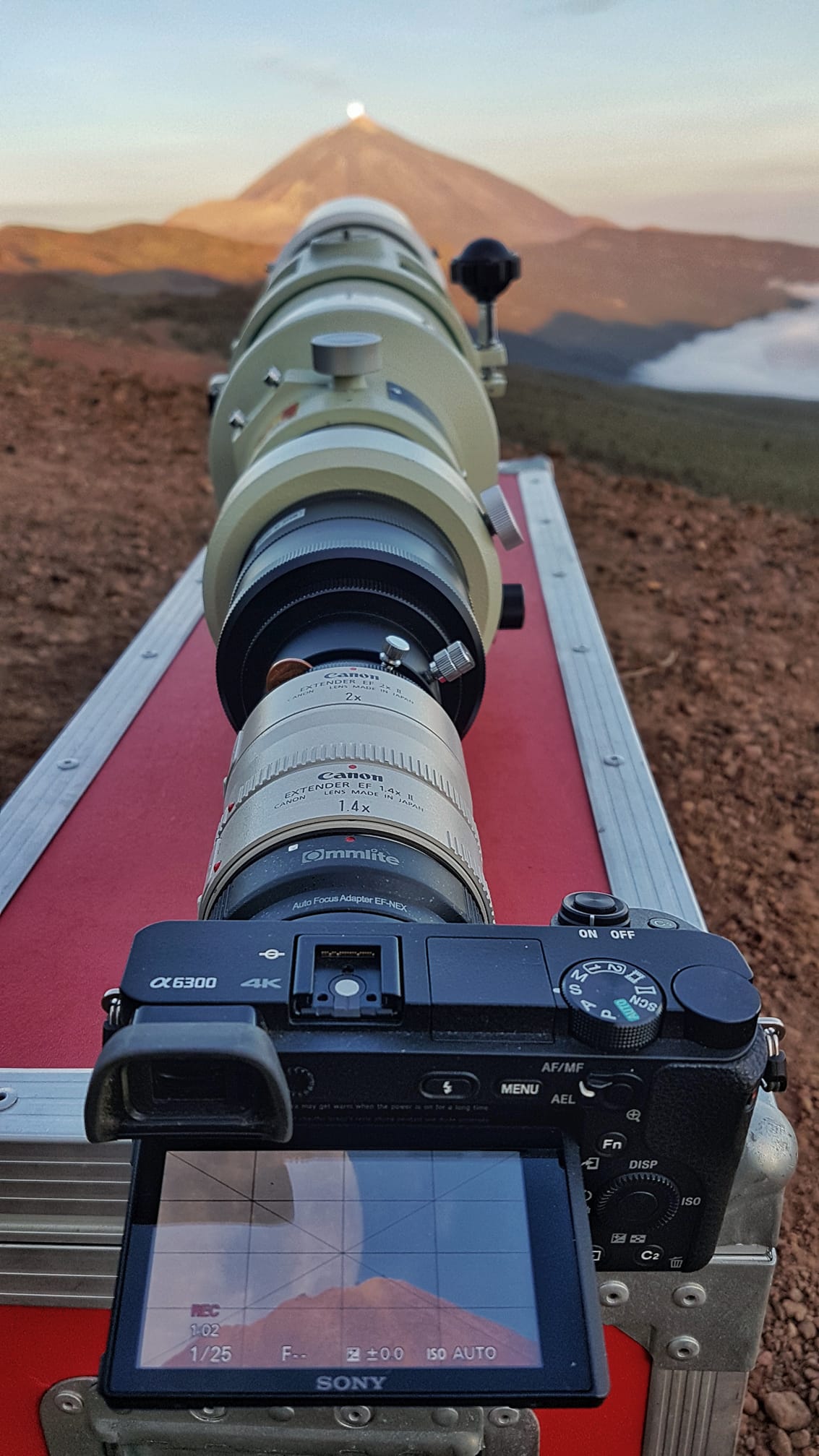
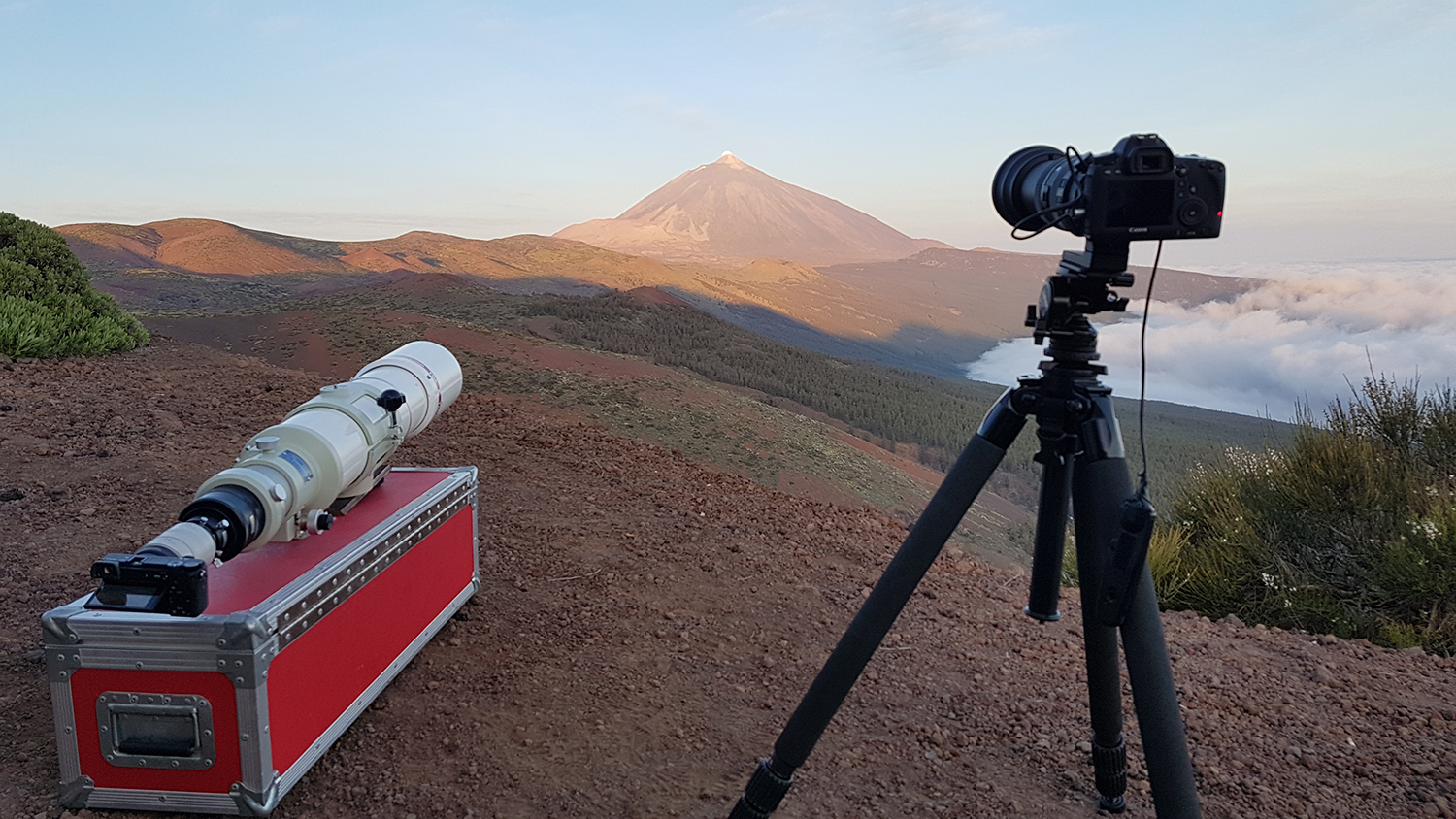
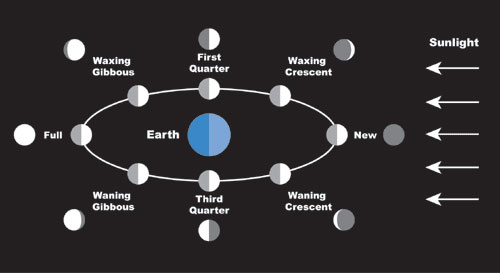
Explanation: These people are not in danger. What is coming down from the left is just the Moon, far in the distance. Luna appears so large here because she is being photographed through a telescopic lens. What is moving is mostly the Earth, whose spin causes the Moon to slowly disappear behind Mount Teide, a volcano in the Canary Islands of Spain off the northwest coast of Africa. The people pictured are 16 kilometers away and many are facing the camera because they are watching the Sun rise behind the photographer. It is not a coincidence that a full moon sets just when the Sun rises because the Sun is always on the opposite side of the sky from a full moon. The featured video was made in 2018 during a full Milk Moon. The video is not time-lapse -- this was really how fast the Moon was setting.

10/05/2026

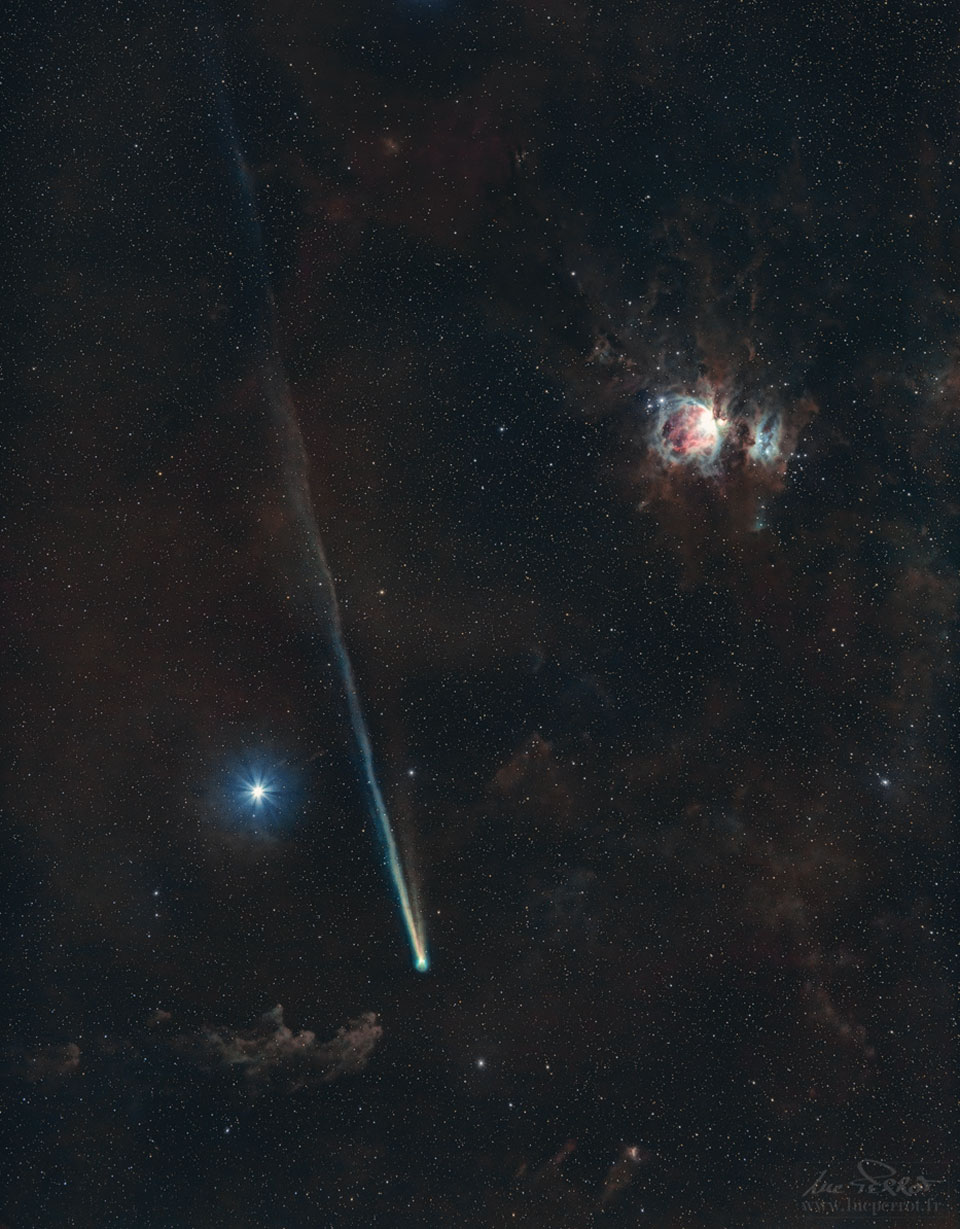
Astronomy - COMET R3 PanSTARRS AND ORION

 2026 May 10

A starfield appears featuring a comet with a long tail
that extends from the lower right to the upper left. To the 
left of the comet is a bright star, and above the comet and
to the right is a red and white nebula. 
Please see the explanation for more detailed information.

Comet R3 PanSTARRS and Orion
Image Credit & Copyright: Luc Perrot (TWAN)

Explanation: Orion never had a sword like this. As Comet C/2025 R3 (PanSTARRS) heads out of the inner Solar System, it is putting on quite a show for long exposure cameras. Currently seen toward the constellation of Orion the Hunter, the distant Orion Nebula is visible on the upper right. Comet R3 PanSTARRS is now showing two distinct tails: a short dust tail pointing toward the top of the image and a long and wavy ion tail trailing off toward the upper left. The ion tail points away from the Sun and glows blue from excited carbon monoxide. Large particles in the dust tail somewhat resist the radiation pressure that push them away from the Sun and so retain a bit of the comet's orbit. The dust tail shines by reflected sunlight. The featured image was taken a few days ago from France's Reunion Island in the southern Indian Ocean.

09/05/2026

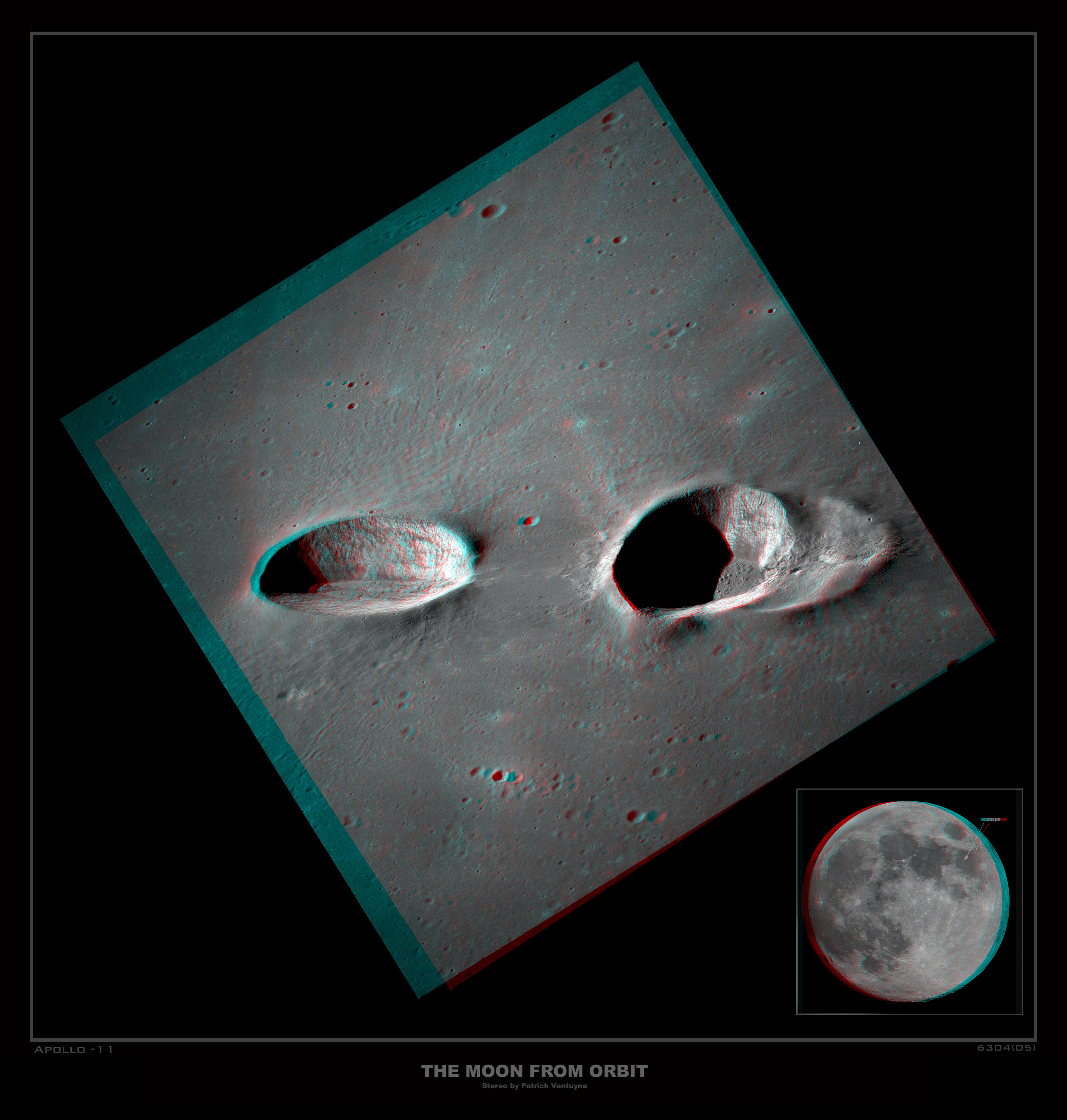
Astronomy - MESSIER CRATERS IN STEREO

 2026 May 9

See Explanation.  Clicking on the picture will download
the highest resolution version available.

Messier Craters in Stereo
Image Credit: Apollo 11NASA; Stereo Image Copyright Patrick Vantuyne

Explanation: Many bright nebulae and star clusters in planet Earth's sky are associated with the name of astronomer Charles Messier from his famous 18th century catalog. His name is also given to these two large and remarkable craters on the Moon. Standouts in the dark, smooth lunar Sea of Fertility or Mare Fecunditatis, Messier (left) and Messier A have dimensions of 15 by 8 and 16 by 11 kilometers respectively. Their elongated shapes are explained by the extremely shallow-angle trajectory followed by an impactor, moving left to right, that gouged out the craters. The shallow impact also resulted in two bright rays of material extending along the surface to the right, beyond the picture. Intended to be viewed with red/blue glasses (red for the left eye), this striking stereo picture of the crater pair was recently created from high resolution scans of two images (AS11-42-6304AS11-42-6305) taken during the Apollo 11 mission to the Moon.

08/05/2026

Santé/Médecine - LES SYMPTOMES DE LA FIBROMYALGIE: 10. AUTRES SYMPTOMES - (12/12)


Quels sont les autres symptômes de la fibromyalgie ?

À ces principaux symptômes s’ajoutent aussi des symptômes moins caractéristiques, mais tout aussi pénibles :
 
- vertiges et maladresse 
- sensation de chaud ou froid, qui est due au fait que l’organisme n’arrive pas à correctement régler la température corporelle
- impatiences, ou syndrome des jambes sans repos (SJSR), une envie irrésistible de bouger les jambes lorsqu’elles sont au repos 
- sensations de picotements et d’engourdissement au niveau des pieds et des mains (aussi appelée paresthésie) 
- un besoin fréquent d’uriner, souvent associé à des douleurs lorsque l’on fait pipi 
- chez les femmes, des règles beaucoup plus douloureuses qu’à la normale 
- anxiété, souvent liée à la crainte de souffrir d’une maladie grave.

CommentEconomiser

Astronomy - COMET R3 PanSTARRS BEFORE RIGEL

 2026 May 8

A starfield appears with three large objects. Near the top is a 
bright star. Near the middle is a small light blue nebula. And 
near the bottom is a comet with its long tail extending to the 
upper left and passing in front of both the star and the blue 
nebula. 
Please see the explanation for more detailed information.

Comet R3 PanSTARRS Before Rigel
Image Credit & Copyright: Jakub Kuřák & Martin Mašek (FZU of the Czech Academy of Sciences)

Explanation: Which way is Comet R3 PanSTARRS going? Not towards the star at the top of the image, because that is Rigel, which, being far in the background, is unrelated to the comet. Not through the nebula in the image middle, because that is the Witch Head Nebula and it, too, is far in the distance -- but not far from Rigel.  Not into northern skies because over the past week Comet C/2025 R3 (PanSTARRS) has moved into southern skies and is now best visible in Earth's Southern Hemisphere toward the west after sunset.  Angularly, Comet R3 PanSTARRS is slowly moving toward the upper right, night by night, and will soon be in the constellation Orion. Spatially, the comet is now headed out of our Solar System but should remain visible to cameras in southern skies for about a week. The featured image was captured last week near Cerro Paranal in Chile.

Santé/Médecine - LES SYMPTOMES DE LA FIBROMYALGIE: 9. Un état dépressif - (11/12)

Parce que la fibromyalgie est une maladie invalidante, la dépression apparaît parfois chez ceux qui en souffrent. Lorsque c’est le cas, la dépression entraîne à son tour d’autres symptômes, y compris :
 
- un état dépressif constant, 
- un sentiment de découragement et d’impuissance, 
- une perte d’intérêt pour le monde extérieur. 

Si vous pensez souffrir de dépression, parlez-en à votre médecin. Ou encore, si vous en avez déjà consulté, à un professionnel de santé spécialisé dans la fibromyalgie.

CommentEconomiser

07/05/2026

Astronomie - ÉTOILE FILANTE DANS LE CIEL JAPONAIS


Magnifique étoile filante associée à l'essaim météoritique des Perséides photographiée dans le ciel de Narusawa-mura, au sud-ouest de Tokyo, le 13 août 2016. Comme on peut le voir, le bolide semble avoir été décoché par Persée (à gauche de la photo). La grappe d'étoiles en dessous de l'horizon est celle des Pléiades (Subaru, en japonais).

© reonides, Flickr

Santé/Médecine - LES SYMPTOMES DE LA FIBROMYALGIE: 8. LE SYNDROME DE L'INTESTIN IRRITABLE (SII ) - (10/12)


Beaucoup de personnes qui luttent contre la maladie souffrent aussi du syndrome de l’intestin irritable (SII). Le SII est plus rare chez ceux qui luttent contre la fibromyalgie, mais aussi gênant que les autres symptômes de cette liste. En effet, le SII provoque de nombreux troubles digestifs, y compris : 

- diarrhées, 
- ballonnements, 
- constipation et 
- douleurs abdominales.
CommentEconomiser

06/05/2026

Astronomy - THE RETROGRADE DANCE OF SATURN AND NEPTUNE

 2026 May 6

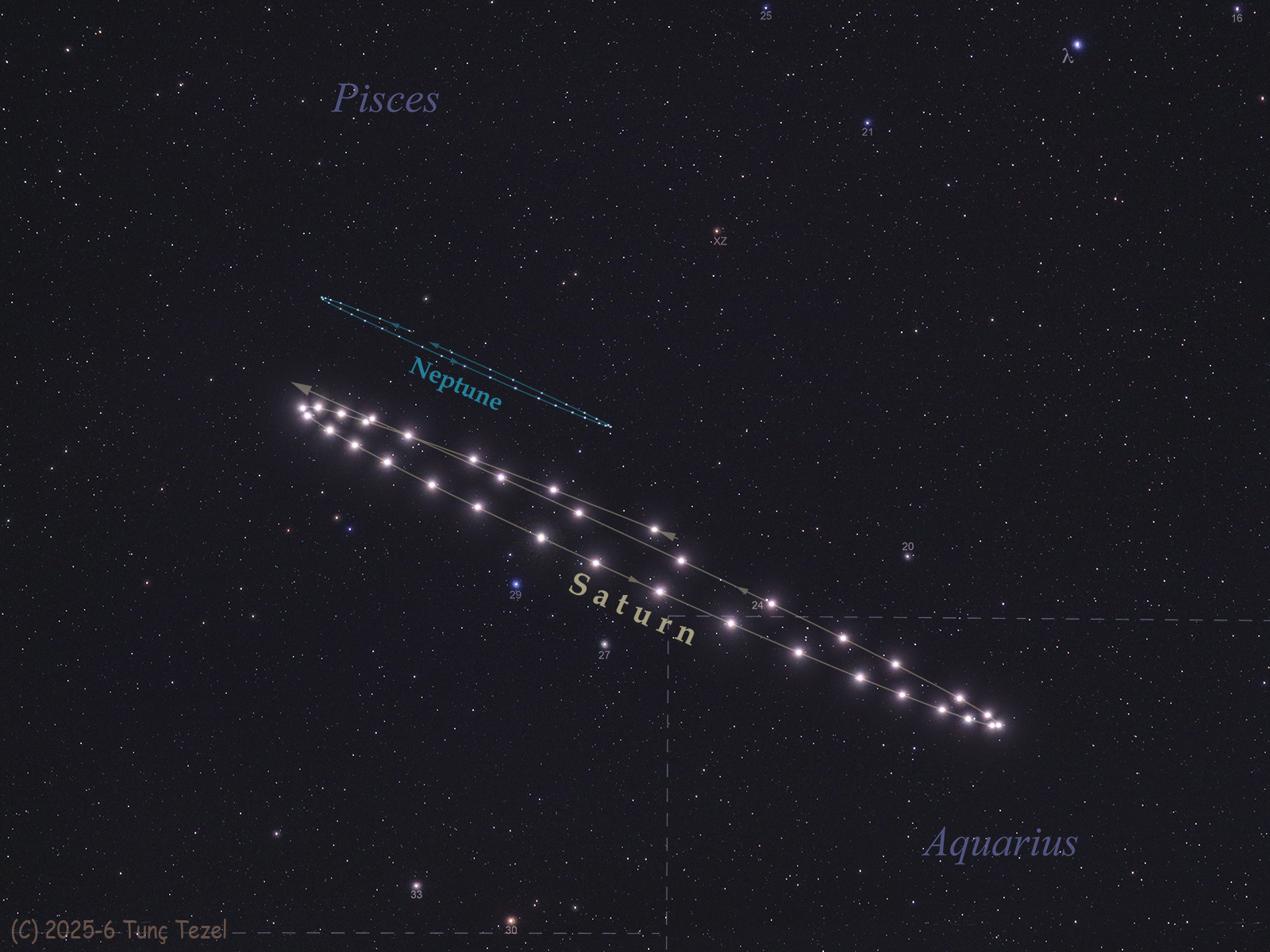
The image shows two parellel rings of bright dots in the night sky. This is a composite image of the positions Saturn and Neptune traced in the sky from May 2025 to January 2026. The brighter ring in the foreground is Saturn, while the dimmer ring in the background is Neptune. Please see the explanation for more detailed information.

The Retrograde Dance of Saturn and Neptune
Image Credit & Copyright: Tunç Tezel (TWAN)
Text: Keighley Rockcliffe (NASA GSFCUMBC CSSTCRESST II)

Explanation: What does it mean for Saturn and Neptune to be in retrograde? Featured is a composite of images taken over 34 nights from May 2025 to February 2026 tracing Saturn (brighter, foreground) and Neptune (dimmer, background). Over that time, the two planets exhibited retrograde motion, meaning they appeared to move backward in the sky. This apparent backwards motion occurs when Earth overtakes the slower outer planets as they orbit the Sun. Imagine the Solar System is a running track. Earth "runs" faster along the inside of the track compared to the outer planets. As Earth approaches, aligns, and then "laps" the outer planets, they change position from ahead to behind from the Earth's perspective. This perspective shift is what causes the outer planets to change position in the night sky. An animation corresponding to today’s image shows Saturn and Neptune’s months-long dance across the northern night sky. Saturn stepped from the Pisces constellation into Aquarius and back again while Neptune remained in Pisces. This is the closest Saturn and Neptune have been in the sky since their last conjunction in 1989.

05/05/2026

Astronomy - ORION OVER MOUNT TEIDE

 2026 May 5

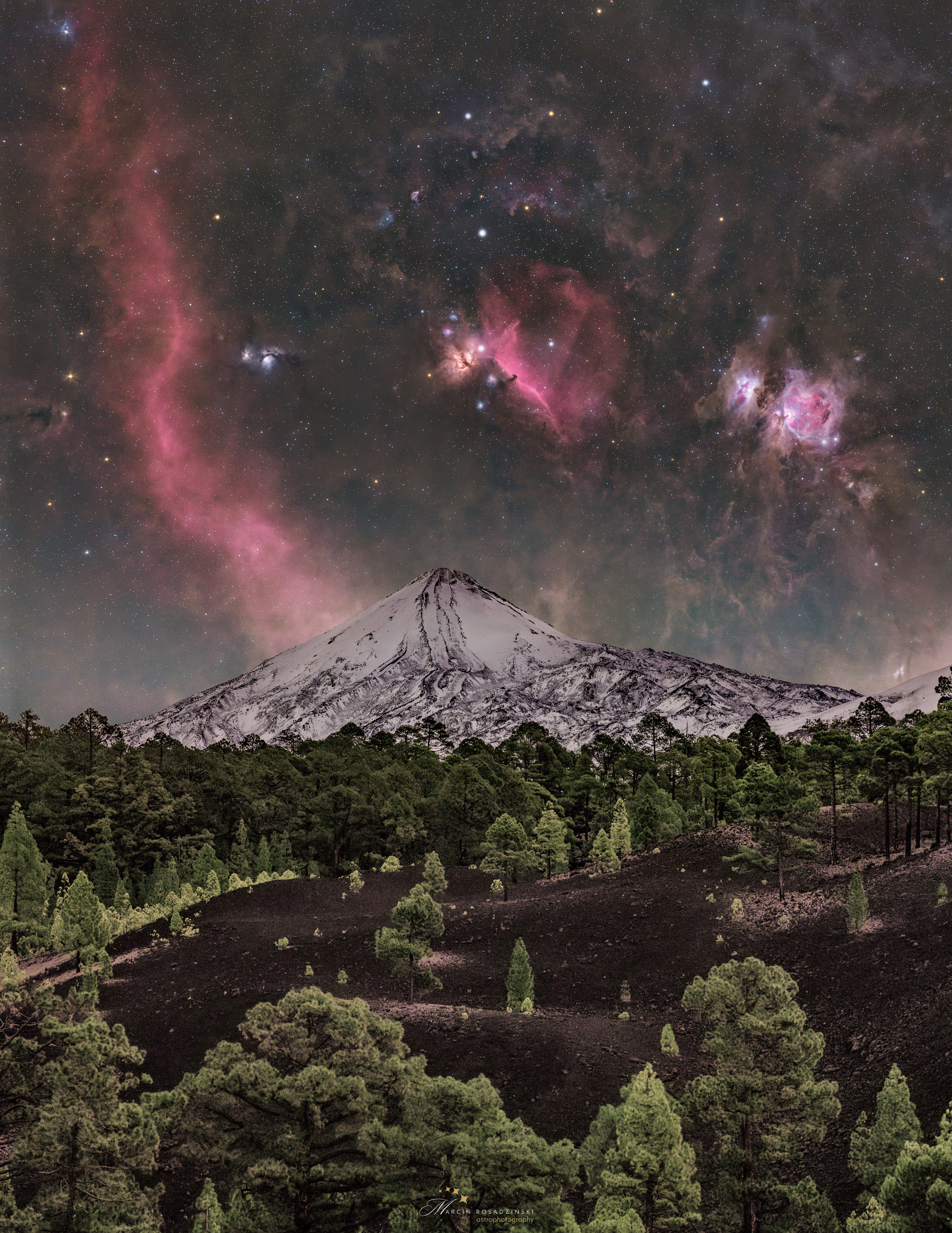
A starry sky is seen above a snowy volcano peak. The sky is
bright with many stars and red nebula. In the foreground is dark
soil and green evergreen trees. 
Please see the explanation for more detailed information.

Orion over Mount Teide
Image Credit & Copyright: Marcin Rosadziński

Explanation: Orion is rarely seen like this. To achieve this majestic vista, you need a camera capable of taking such long duration exposures that faint features in the night sky become revealed. Iconic nebulas that appear include the Orion Nebula, the Flame Nebula, and Barnard's Loop. For contrast, it also helps to have a volcano on the foreground, in this case the Teide volcano on Tenerife on the Canary Islands of Spain. But if you want your Teide volcano snow-covered, you also need good timing -- because that only happens, typically, for a few days each year. Good timing also includes waiting for Orion to appear just behind Teide, which occurred late last year after sunset. The featured image is the result of a series of images taken consecutively with the same camera from the same location.

Santé/Médecine - LES SYMPTOMES DE LA FIBROMYALGIE: 7. DES MAUX DE TÊTE (9/12)

La fibromyalgie a tendance à causer des maux de tête récurrents. Ceux-ci varient en intensité, et dans les cas les plus sévères apparaissent sous forme de fortes migraines. Parfois, ces maux de tête sont associés à d’autres symptômes, comme une sensation de vertige.

On pense que c’est dû aux tensions musculaires au cou et épaules. Et aussi à cause des perturbations à la sensation de douleur lorsque l’on souffre de cette maladie.

CommentEconomiser

04/05/2026

Astronomy - SUPERPLUMES INSIDE EARTH

2026 May 4

Superplumes Inside Earth
Image Credit & LicenseSanne Cottaar via Wikimedia Commons

Explanation: Why are there huge, unusual masses inside the Earth? No one is sure. By noting how earthquakes rumble through our planet's interior, humanity has discovered two deep structures that appear to have unusual temperatures and/or chemical compositions. One hypothesis holds that the superplumes are sunken debris left over from the Earth-shattering collision that created Earth's Moon about 4.5 billion years ago. A competing hypothesis is that they are graveyards for old tectonic plates that slowly slid under each other over the past few billion years. No matter their origin, the superplumes are thought to affect Earth’s surface volcanism, possibly creating, for example, island chains such as Hawaii. Also known as large low-shear-velocity provinces (LLSVPs), Earth's superplumes are visualized in the featured animation.

03/05/2026

Astronomy - TRIFID PILLARS AND JETS

 2026 May 3

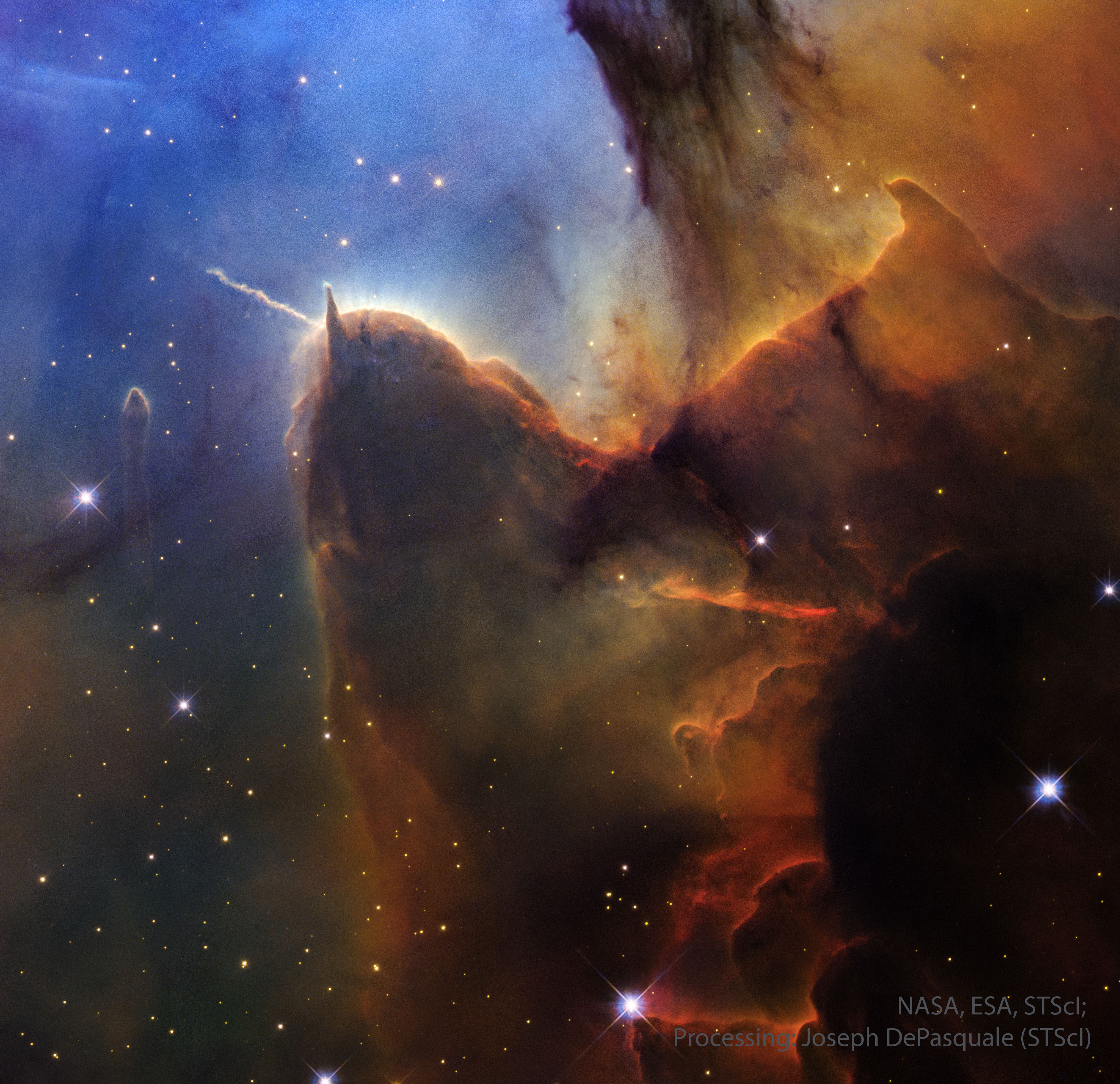
A field of stars on the left is mirred by a wall of
opaque brown dust on the right. Jutting out from the wall is
a long pillar with a rounded end that has a prominent light-
colored jet emanating toward the upper left. The stellar 
background toward the upper left is dark blue.
Please see the explanation for more detailed information.

Trifid Pillars and Jets
Image Credit: NASAESASTScI; Processing: J. DePasquale (STScI)

Explanation: Dust pillars are like interstellar mountains. They survive because they are more dense than their surroundings, but they are slowly being eroded away by a hostile environment. Visible in the featured picture by the Hubble Space Telescope is the end of a huge gas and dust pillar in the Trifid Nebula (M20), punctuated by a smaller pillar pointing up and an unusual jet pointing to the upper left. Many of the bright dots are newly formed stars. A star near the small pillar's end is slowly being stripped of its accreting gas by radiation from a tremendously brighter star situated off the top of the image. The jet extends nearly a light-year and would not be visible without external illumination. As gas and dust evaporate from the pillars, the hidden stellar source of this jet will likely be uncovered, possibly over the next 20,000 years.

Santé/Médecine - LES SYMPTOMES DE LA FIBROMYALGIE: 6. DES TROUBLES DE LA MEMOIRE ET DE L'ATTENTION (8/12)

La maladie est aussi associée à des problèmes de fonctionnement cognitifs. Fréquemment, les personnes qui souffrent de fibromyalgie se plaignent de difficultés psychologiques, y compris : 

- problèmes de mémoire (surtout de difficultés à retenir des faits récents), 

- difficultés d’apprentissage, - baisse de l’attention, 

- difficulté à se concentrer et 

- difficultés d’expression, avec une élocution très lente, voire incompréhensible.

CommentEconomiser

02/05/2026

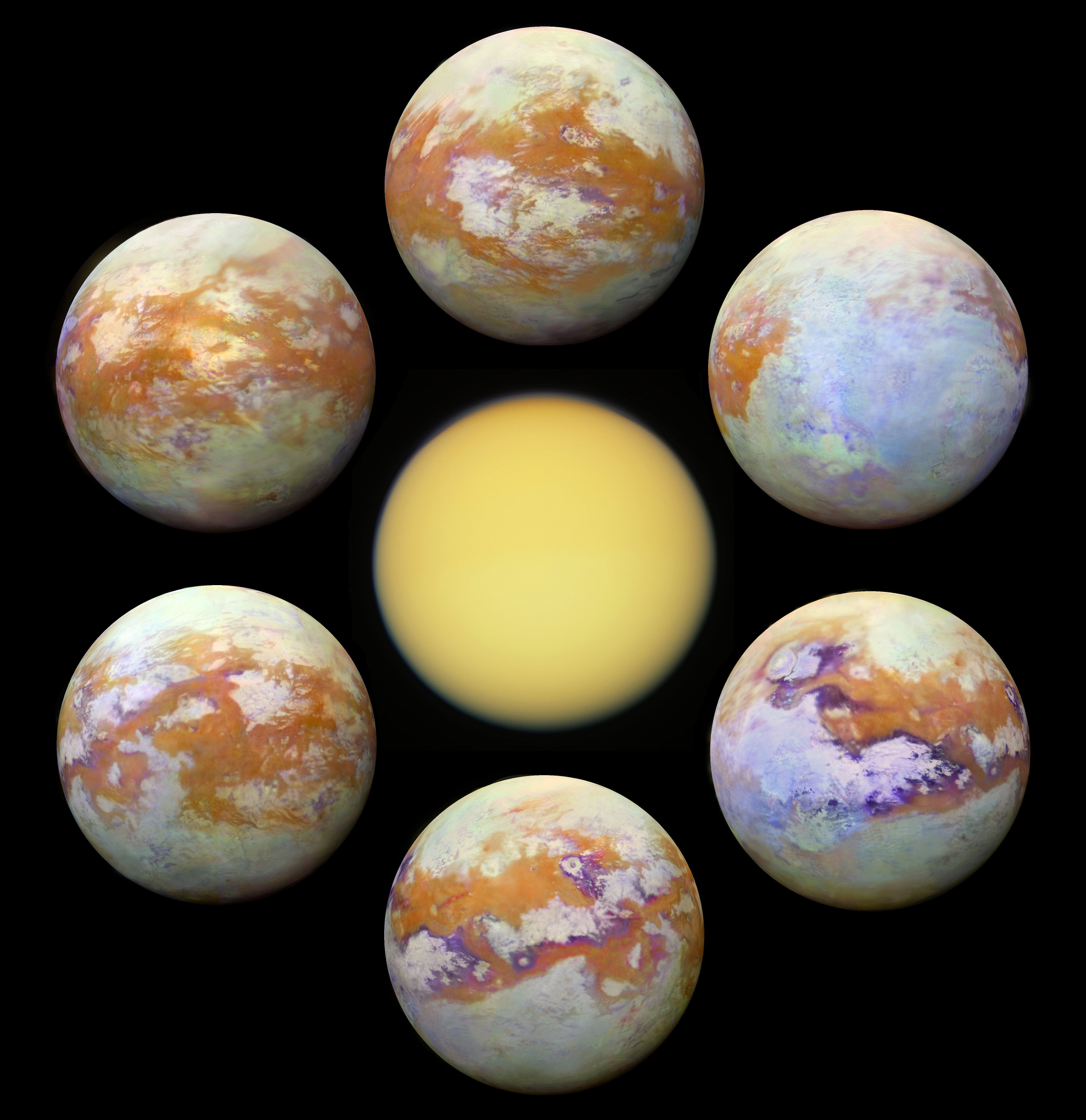
Astronomy - SEEING TITAN

 2026 May 2

See Explanation.  Clicking on the picture will download
the highest resolution version available.

Seeing Titan
Image Credit: VIMS Team, Univ. ArizonaU. NantesESANASA

Explanation: Shrouded in a thick atmosphere, the surface of Saturn's largest moon, Titan, is really hard to see. Small particles suspended in Titan's upper atmosphere cause an almost impenetrable haze, strongly scattering light at visible wavelengths and hiding surface features from prying eyes. Still, Titan's surface is better imaged at infrared wavelengths, where scattering is weaker and atmospheric absorption is reduced. Arrayed around this visible light image (center) of Titan are some of the clearest global infrared views of the tantalizing moon so far. In false color, the six panels present a consistent processing of 13 years of infrared image data from the Visual and Infrared Mapping Spectrometer (VIMS) on board the Cassini spacecraft orbiting Saturn from 2004 to 2017. They offer a stunning comparison with Cassini's visible light view. NASA's revolutionary rotorcraft mission to Titan's surface is due to launch no earlier than July, 2028.

01/05/2026

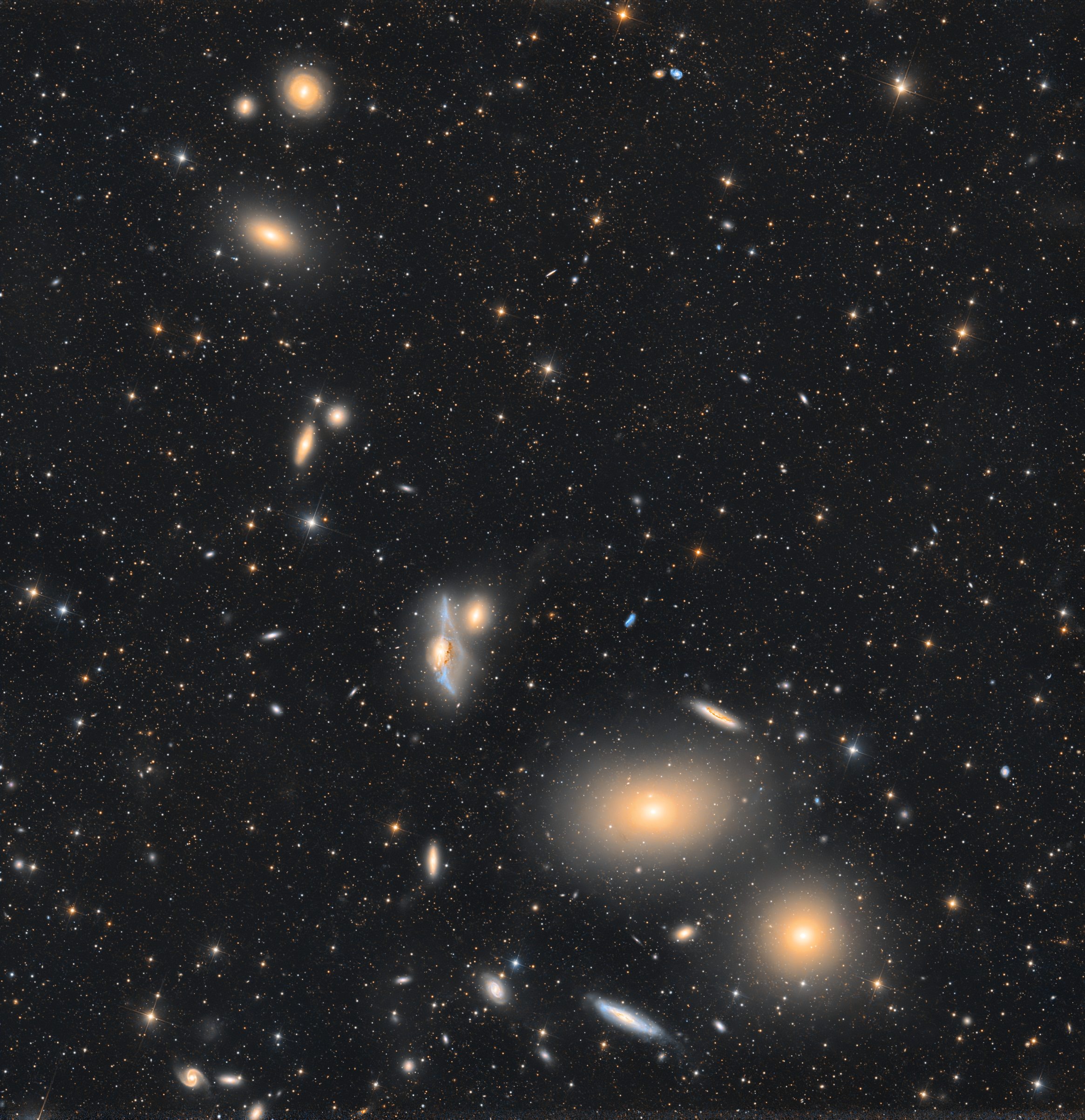
Astronomy - MARKARIAN'S CHAIN

 2026 May 1

See Explanation.  Clicking on the picture will download
the highest resolution version available.

Markarian's Chain
Image Credit & CopyrightChuck Ayoub

Explanation: Near the heart of the Virgo Galaxy Cluster, a string of galaxies known as Markarian's Chain stretches across this telescopic field of view. Anchored in the frame at bottom right by prominent lenticular galaxies, M84 (bottom) and M86, you can follow the chain's gentle arc up and toward the left. Near center you'll spot the pair of interacting galaxies NGC 4438 and NGC 4435, known to some as Markarian's Eyes. An estimated 50 million light-years distant, the Virgo Cluster itself is the nearest galaxy cluster. With up to about 2,000 member galaxies, it has a noticeable gravitational influence on our own Local Group of Galaxies. Within the Virgo Cluster at least seven galaxies in Markarian's Chain appear to move coherently, while others may appear to be part of the chain by chance.

Santé/Médecine - CANCER : DES CHERCHEURS ONT MIS AU POINT UN PIEGE DE LA TUMEUR

Dans la lutte contre le cancer, la résistance aux médicaments pose problème depuis toujours car les tumeurs ne sont pas des blocs homogènes. Elles sont composées de cellules différentes, dont certaines possèdent déjà, ou acquièrent rapidement, des mécanismes de défense, ce qui fait qu'elles parviennent à neutraliser le traitement ou à modifier leur fonctionnement interne pour continuer à se multiplier.

C’est précisément cette faculté d’adaptation qu'une équipe de scientifiques de l’Université d’État de Pennsylvanie a choisi d’exploiter. Publiée dans la revue Nature Biotechnology, l'étude montre comment il est possible d'orienter l’évolution des cellules tumorales pour mieux les éliminer ensuite.

Un système à double switch génétique

Concrètement, les chercheurs ont imaginé une méthode de « double commutation de sélection génétique » qui consiste à introduire dans les cellules cancéreuses deux dispositifs génétiques capables, à terme, de conduire à leur destruction.

Dans un premier temps, certaines cellules sont rendues résistantes à un médicament déjà utilisé contre le cancer du poumon, l’Erlotinib, un puissant inhibiteur de la phosphorylation intracellulaire de l'EGPR, le gène à l'origine du récepteur qui donne l'ordre à la cellule de se multiplier.

Sous la pression du traitement, ces cellules modifiées prennent alors l’avantage sur les autres et deviennent majoritaires dans la tumeur. Autrement dit, les chercheurs orientent volontairement la sélection des cellules qui survivent.

Cancer : une nouvelle approche génétique cible les cellules malades sans toucher aux autres

Dans un second temps, un autre gène est activé, cette fois à l’aide d’une molécule considérée comme inoffensive, le 5-FC. Ce gène produit une enzyme qui transforme cette substance en une toxine, la molécule 5-FU, qui constitue la chimiothérapie la plus prescrite car elle est chimiquement proche de celles qui constituent notre ADN et peut donc en perturber la duplication.

De la sorte, cette toxine va tuer non seulement les cellules modifiées, mais aussi celles qui se trouvent autour d’elles. Le piège se referme donc sur la tumeur au moment même où elle pensait avoir trouvé une issue.

La technique du piège

Cette stratégie est innovante. Au lieu de subir l’évolution du cancer, l'objectif est désormais de la diriger, la résistance des cellules tumorales devenant une étape préparatoire avant l’attaque finale qui provoquera leur élimination.


Pour autant, il ne s’agit encore que d’un traitement expérimental qui n'a pas été testé sur des patients. Il n'y a pas eu d'essai clinique. Par ailleurs, il faudra trouver le moyen d’introduire ces gènes thérapeutiques dans les tumeurs. Nonobstant, si cette méthode était validée, elle pourrait permettre de concevoir des thérapies plus intelligentes, capables non seulement de détruire la tumeur, mais également de prévenir les rechutes et les récidives.

FuturaSciences

Astronomy - THE NEBULOUS REALM OF WR 134

 2026 May 22 The Nebulous Realm of WR 134 Image Credit &  Copyright :   Luigi Morrone  and Telescope Live Explanation:  This cosmic snap...