"Concerto n° 21"
31/07/2026

Astronomy - NGC 4372 AND THE DARK DOODAD
2026 July 31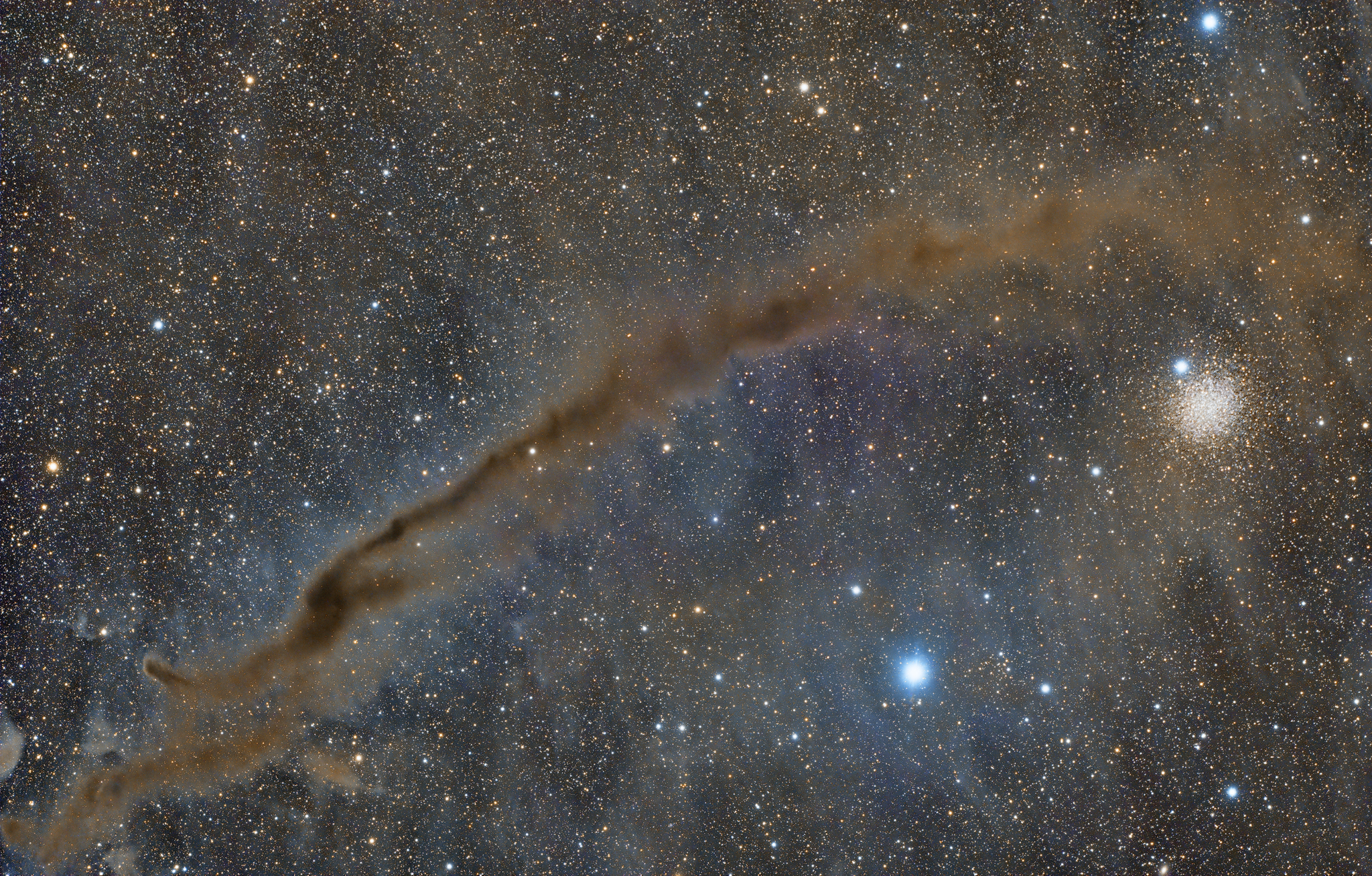
Image Credit & Copyright: Alessandro Cipolat Bares
Explanation: The Dark Doodad Nebula drifts through southern skies, a tantalizing target for binoculars toward the small constellation Musca, The Fly. A dusty interstellar cloud, it's seen against rich starfields just south of the Coalsack Nebula and the Southern Cross. Stretching for about 3 degrees across this telescopic field of view, the Dark Doodad is punctuated near its southern tip (upper right) by yellowish globular star cluster NGC 4372. Of course NGC 4372 roams the halo of our Milky Way galaxy, a background object some 20,000 light-years away and only by chance along our line-of-sight to the Dark Doodad. About 700 light-years distant and over 30 light-years long, the Dark Doodad's well defined silhouette belongs to the potentially star-forming Musca molecular cloud. The dusty Dark Doodad's delightfully alliterative moniker was first coined by astro-imager and writer Dennis di Cicco in 1986 while observing Comet Halley from the Australian outback.
Santé/Médecine - LUTTE CONTRE LE CANCER - UN SERIEUX ESPOIR (5/6)

Réarmer les leucocytes du patient pour les transformer en cellules tueuses de tumeurs.Naeblys / iStock / Getty Images Plus / via Getty Images
Vers des applications pour prendre en charge les tumeurs solides
Les scientifiques travaillent aujourd'hui à comprendre comment les cellules CAR-T pourraient être utilisées pour prendre en charge les tumeurs dites « solides » (cancer du sein, de la prostate, du cerveau, etc.), mais le chemin est plus ardu que pour les cancers du sang. Pourquoi ?
D'abord, parce qu'à la différence des cellules cancéreuses du sang, les cellules des tumeurs solides ne sont pas uniformes et n'expriment pas toutes les mêmes cibles à leur surface.
Ensuite, les tumeurs solides possèdent leur propre système de défense (signaux immunosuppresseurs, recrutement de cellules freinant l'activité immunitaire, création de barrières physiques empêchant les lymphocytes de circuler dans la masse tumorale...) qui rend difficile l'accès des cellules CAR-T aux cellules cancéreuses.
Enfin, les protéines cibles intéressantes sont aussi exprimées, au moins en partie, dans certains tissus sains, ce qui expose les patients à un risque de toxicité.
Véronique Molénat
FuturaSciences
.../>
30/07/2026
Astronomy - RED SUN THROUGH WILDFIRE SMOKE
2026 July 30
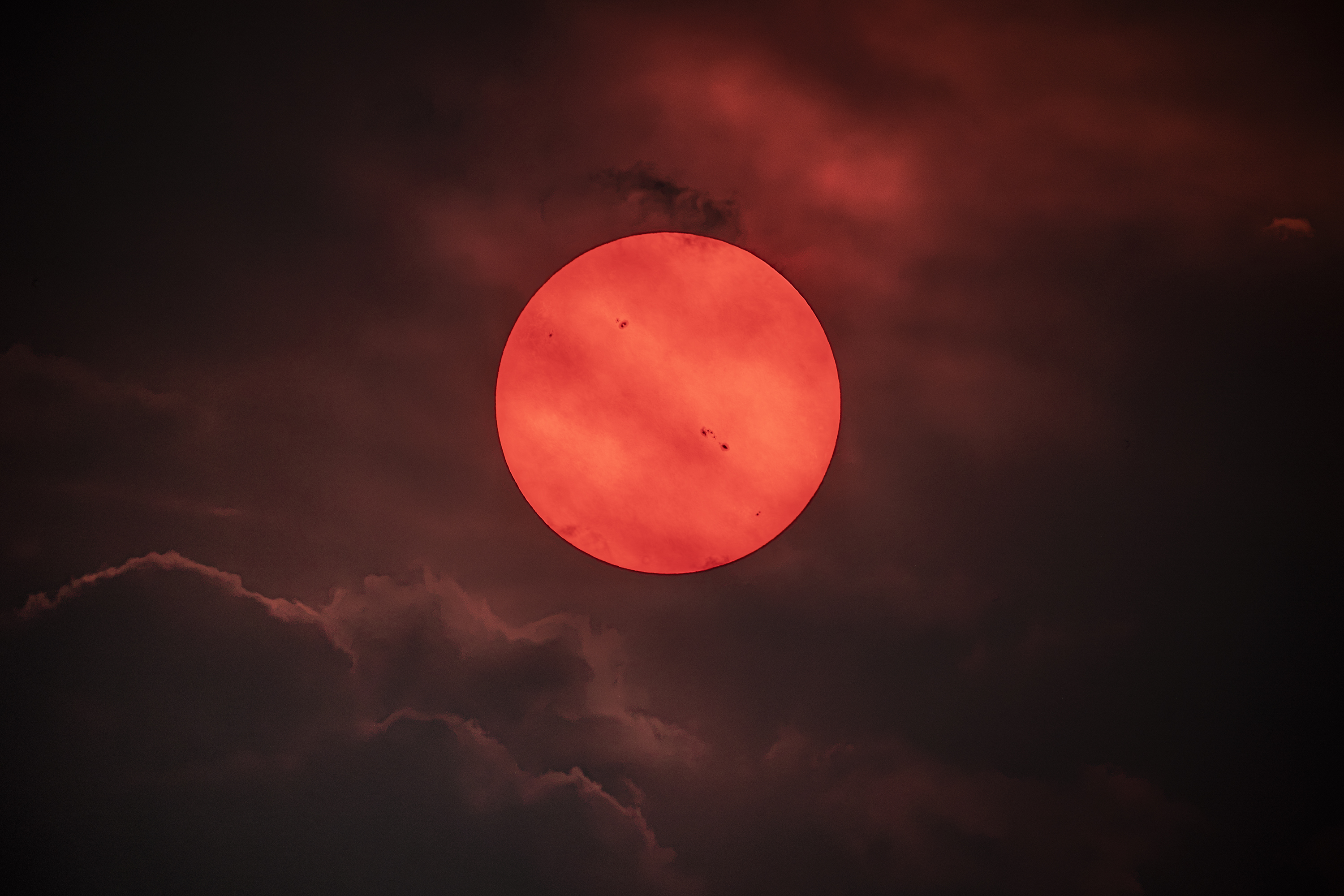
Image Credit & Copyright: Debra Ceravolo
Text: Cecilia Chirenti (NASA GSFC, UMCP, CRESST II)
Explanation: This could be the view from an exoplanet orbiting around a red dwarf star, but it is our own Sun. This image was taken on July 22, 2026, in the Okanagan region in the Canadian province of British Columbia. Wildfire smoke from the Pacific Northwest acted as a solar filter, allowing the photographer to take this photo of the Sun directly. Several sunspots are also visible in this eerie image; just below and right of the center is AR 4493, a fast evolving, giant active solar region and sunspot group. The smoke is made of tiny particles that help block and scatter light with bluer colors, so the light we see coming from the Sun is dimmer and redder than usual (but it is never safe to stare directly at the Sun). Sunsets and sunrises are also more colorful because of the smoke. Some 6 billion years from now, the Sun will actually start to turn redder as it approaches its red giant phase.
29/07/2026
Santé/Médecine - LUTTE CONTRE LE CANCER - UN SERIEUX ESPOIR (4/6)

Des effets bluffants sur les cancers du sang
En 2010, les premiers essais cliniques chez l'Homme sont lancés et montrent des rémissions spectaculaires chez des patients atteints de leucémies et de lymphomes réfractaires : les cellules CAR-T se multiplient massivement après leur injection et parviennent à persister plusieurs mois, voire plusieurs années.
Aujourd'hui, cette stratégie d'immunothérapie a radicalement transformé la prise en charge de plusieurs cancers du sang. Dans plusieurs cas de leucémies aiguës lymphoblastiques, pour certains lymphomes B et pour le myélome multiple, l'approche avec les cellules CAR-T produit aujourd'hui des réponses impressionnantes, y compris chez des patients qui ont déjà bénéficié de traitements lourds. On assiste ainsi à des rémissions prolongées, et même des guérisons de patients qui étaient condamnés à court terme.
Deux bémols cependant : d'abord, ces thérapies coûtent encore très cher, autour de 300 000 euros en Europe et de 450 000 dollars aux États-Unis. Ensuite, il existe des effets indésirables parfois graves. C'est le cas du « syndrome de relargage de cytokines», une inflammation systémique qui peut interférer avec certaines fonctions corporelles de l'organisme, mais que les médecins connaissent et savent désormais prévenir.
Véronique Molénat
FuturaSciences
28/07/2026
Astronomy - BERNARD'S LOOP OVER TWIN VOLCANOES
2026 July 28

Image Credit & Copyright: Gonzalo Laserna Vargas
Explanation: What's connecting these two volcanoes? In ancient folklore, the two volcanoes, Parinacota (left) and Pomerape (right), are connected by representing a mythical prince and princess who engaged in a forbidden romance. Beneath the ground, the two peaks are not known to be connected by a common pool of hot magma, and neither volcano has erupted in the past 1000 years. Above the ground, there is usually nothing in the sky that connects them -- except if you use careful timing and look from a specific location. The featured well-planned image was captured from Bolivia in mid-April with a series of camera exposures taken on the same day and from the same location. Then, Barnard's Loop appeared to connect the volcanic peaks. Also visible in the image is the Orion Nebula in the center, the star Betelgeuse on the right, and the Rosette Nebula on the upper right.
26/07/2026
Astronomy - SIMULATION TNG50: A GALAXY CLUSTER FORMS
Video Credit: IllustrisTNG Project; Visualization: Dylan Nelson (Max Planck Institute for Astrophysics) et al.
Music: Symphony No. 5 (Ludwig van Beethoven), via YouTube Audio Library
Explanation: How do clusters of galaxies form? Since our universe moves too slowly to watch, faster-moving computer simulations are created to help find out. One famous effort is TNG50 from IllustrisTNG, an upgrade of the famous Illustris Simulation. The first part of the featured video tracks cosmic gas (mostly hydrogen) as it evolves into galaxies and galaxy clusters from the early universe to today, with brighter colors marking faster moving gas. As the universe matures, gas falls into gravitational wells, galaxies forms, galaxies spin, galaxies collide and merge, all while black holes form in galaxy centers and expel surrounding gas at high speeds. The second half of the video switches to tracking stars, showing a galaxy cluster coming together, complete with stellar streams. The outflow from black holes in TNG50 is surprisingly complex and details are being compared with our real universe. Studying how gas coalesced in the early universe helps humanity better understand how our Earth, Sun, and Solar System originally formed.
Géoglyphes - LE SINGE DE NAZCA

Les géoglyphes de Nazca, encore appelés lignes de Nazca, sont de grandes figures tracées dans le désert de Nazca, dans le sud du Pérou. Réalisés pour la plupart entre -200 et 600 ap. J.-C., ils sont le fait de la civilisation Nazca, une culture pré-inca qui se développa entre 300 av. J.-C. et 800 de notre ère. On se perd en conjectures et spéculations parfois douteuses quant à la signification que ces figures avaient pour les Nazcas.
Le sol sur lequel se dessinent ces géoglyphes est couvert de cailloux que l'oxyde de fer colore en rouge. Et c'est en les ôtant, parfois sur des kilomètres, que les Nazcas ont révélé un sol gypseux grisâtre, faisant apparaître des figures réparties le long d'une ligne de 50 km reliant les villes de Nazca et de Palpa, dans la région d'Ica.
On voit ici le géoglyphe dit du singe (93 mètres de long sur 55 mètres de large).
© Diego Delso, CC by-sa 4.0
25/07/2026
Santé/Médecine - LUTTE CONTRE LE CANCER : UN SERIEUX ESPOIR (3/6)

À la recherche du meilleur « booster »
L'équipe de l'immunologiste Zelig Eshhar, de l'Institut Weizmann des sciences en Israël, va imaginer, en 2001, la première des deux pièces de la queue, appelée CD3ζ qui a un rôle de co-stimulation. Elle va permettre aux cellules CAR-T, une fois qu'elles ont touché les cellules cancéreuses, de s'activer pour les détruire.
Pour que les cellules CAR-T ne meurent pas et soient moins fragiles, Michel Sadelain et son équipe du Memorial Sloan Kettering Cancer Center (MSKCC) à New York ajoutent, en 2002, un deuxième élément de co-stimulation appelé CD28. En 2004, c'est au tour de Dario Campana de l'hôpital St Jude de Memphis d'en mettre au point un autre qu'il nomme 4-1BB et qui permet une persistance encore plus longue des cellules CAR-T. Quand une de ces deux dernières pièces est greffée sur le récepteur chimérique, les cellules CAR-T peuvent se multiplier et persister suffisamment longtemps pour éliminer les tumeurs.
La mise au point des facteurs de co-stimulation permet un tournant décisif. En effet, les récepteurs de deuxième génération offrent aux cellules CAR-T les signaux nécessaires pour survivre, se multiplier et maintenir leur activité antitumorale chez les patients.
Véronique Molénat
FuturaSciences
.../>
24/07/2026
Astronomy - GIGANTIC JET OVER THE TATACOA DESERT
2026 July 15
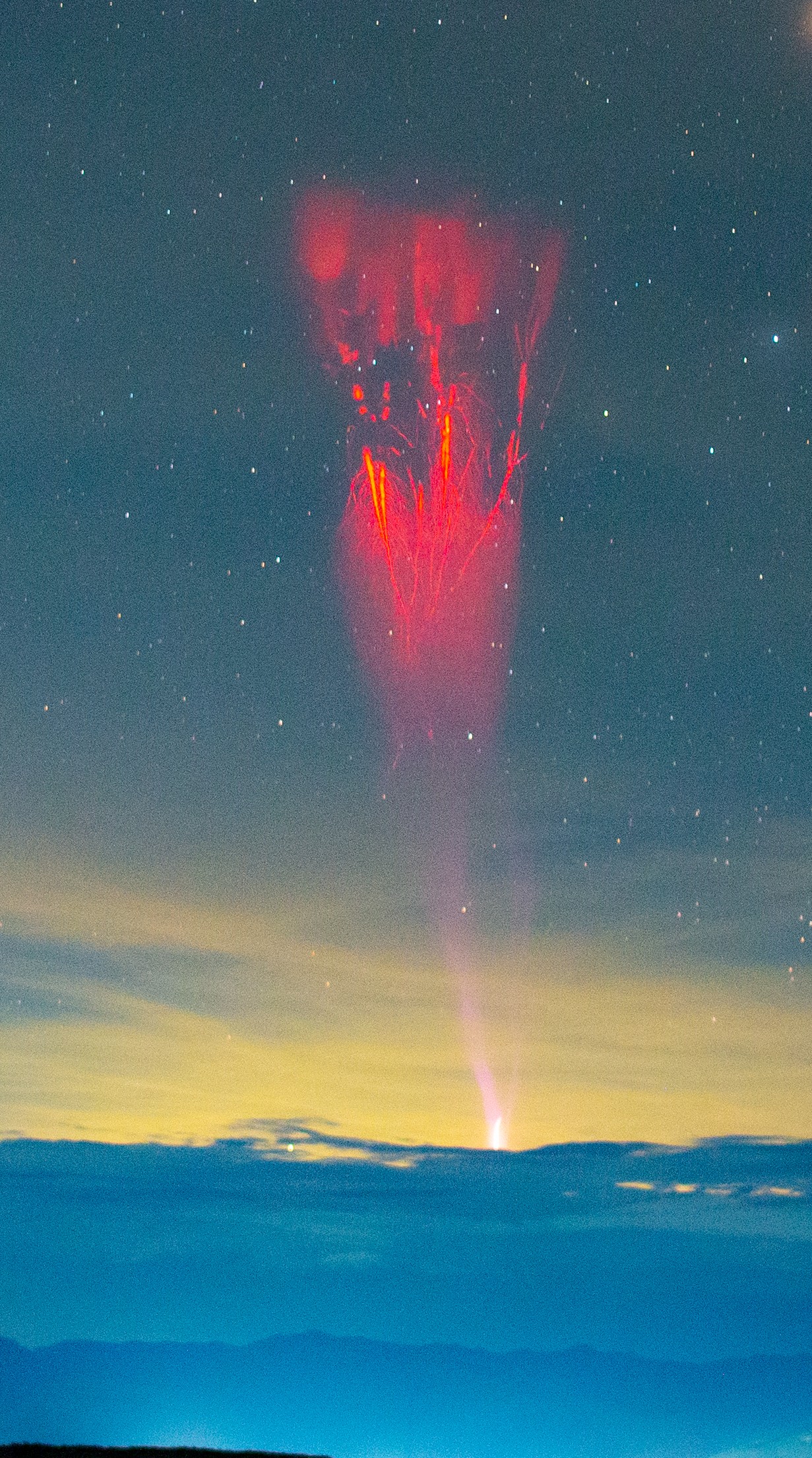
Image Credit & Copyright: Mario Vargas
Text: Keighley Rockcliffe (NASA GSFC, UMBC CSST, CRESST II)
Explanation: Is there an angry Sith using force lightning in the Tatacoa Desert? This is not science fiction, but a gigantic jet with multiple red streamers! Ordinary lightning occurs when thundercloud particles collide, lose their electrons, and build up negative charge at the cloud bottom. The cloud’s negative charge repels negative charge deeper into the Earth, leaving Earth’s surface positively charged. The opposite charges attract, reaching towards each other and superheating the air into a white strike of plasma. A gigantic jet occurs when internal cloud discharge escapes upward through a weak positive shielding layer, and shoots up from the cloud in less than a second. They extend up into the mesosphere where the air is too thin for thunder. The streamers at the top may resemble red sprites and get their color from heated molecular nitrogen.
23/07/2026
Santé/Médecine - LUTTE CONTRE LE CANCER : UN SERIEUX ESPOIR - 2/6 -

Les cellules CAR-T sont des lymphocytes T modifiés génétiquement pour être capables de repérer les cellules cancéreuses et les détruire. © Natallia, Adobe Stock (image générée à l’aide de l’IA)
Doter les lymphocytes de capacités de détection et de destruction « high-tech »
Habituellement, les lymphocytes T sont des cellules capables de reconnaître et de neutraliser les bactéries et les virus. Ils peuvent aussi détecter des cellules humaines dysfonctionnelles, notamment les cellules cancéreuses. Malheureusement, la plupart du temps, ces dernières possèdent une arme redoutable pour échapper aux lymphocytes : un système qui, en brouillant le radar des lymphocytes, leur permet de devenir invisibles au système immunitaire.
À partir des années 1980, plusieurs équipes de chercheurs vont travailler à l'introduction, à la surface des lymphocytes T, de structures moléculaires dites « chimères » capables à la fois de reconnaître spécifiquement les antigènes des cellules cancéreuses et d'activer les lymphocytes T. Ce sont ces structures moléculaires hybrides associant des éléments d'un anticorps à ceux du récepteur des lymphocytes T qui sont nommées Chimeric Antigenic Receptor (CAR).
Elles sont composées :
d'une « tête » située à l'extérieur du lymphocyte, composée d'un fragment d'anticorps ciblant spécifiquement un antigène de cellule tumorale ;
d'un « ventre » (la partie enchâssée dans la membrane des lymphocytes) ;
d'une « queue » nichée à l'intérieur des cellules ayant pour rôle d'activer les capacités destructrices des lymphocytes.
C'est la structure de cette queue qui va occuper les chercheurs à partir du début des années 2000. Car si les premiers essais chez la souris montrent que ces premières cellules CAR-T peuvent reconnaître et détruire des cellules cancéreuses chez la souris, les essais chez l'Homme sont en revanche décevants : les lymphocytes disparaissent quelques semaines après l'injection, sans faire régresser significativement les tumeurs
Véronique Molénat
FuturaSciences
.../>
Astronomy - TURTLE ROCK ON MARS
2026 July 21
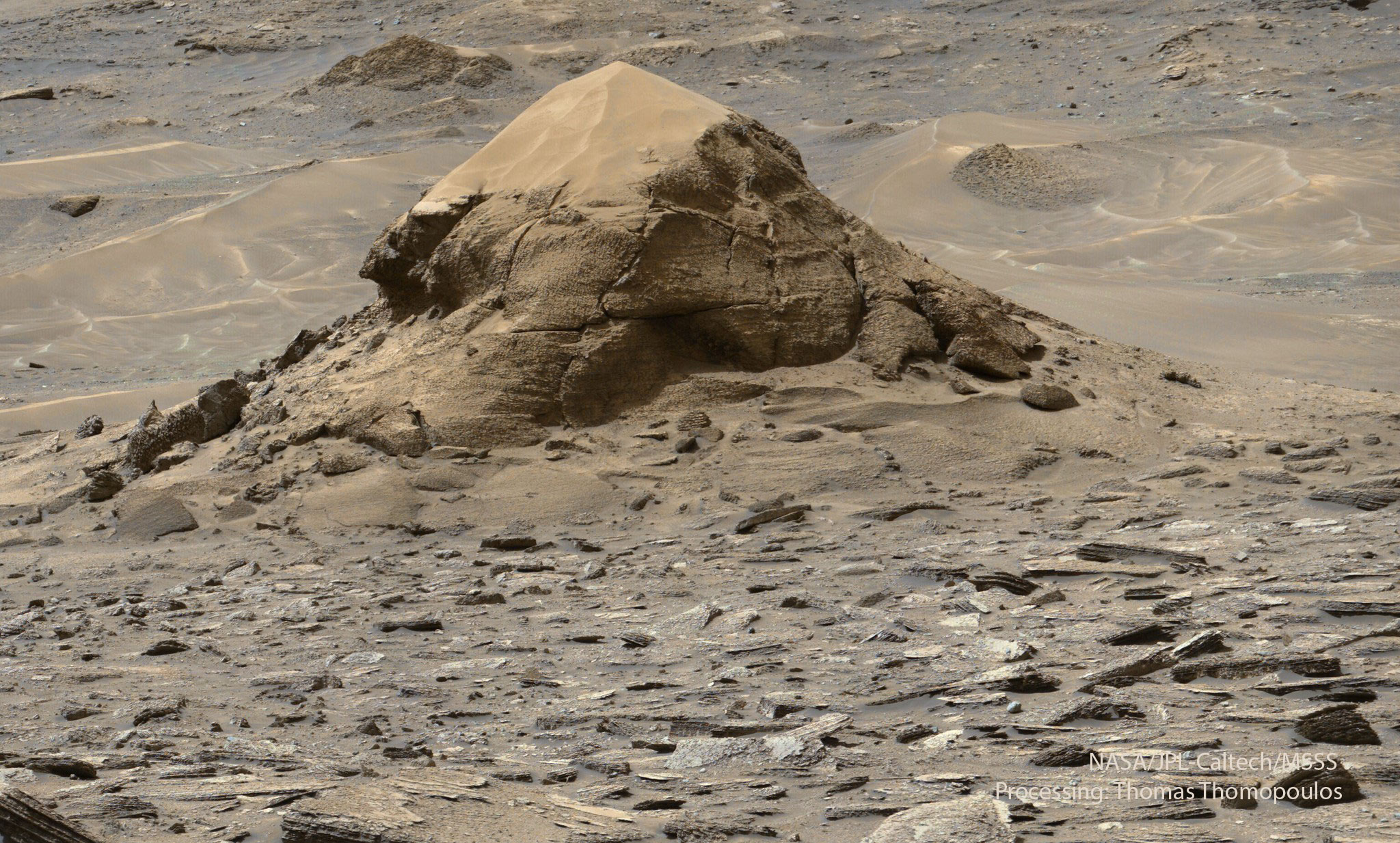
Image Credit: NASA/JPL-Caltech/MSSS; Processing & License: Thomas Thomopoulos
Explanation: Is this a fossilized turtle on Mars? No. Although resembling a large Earth tortoise, this is a layered rock outcrop on Mars that is estimated to span about 15 meters, making it much larger than turtles on Earth. NASA’s robotic Curiosity rover came across this unusual mound, dubbed Miraflores, last month during its 4922nd Martian day exploring Mars. The small butte may survive because it was somehow more resistant to erosion than surrounding rock. More recent wind has now covered its top with orange Martian sand. Below the top shell, many layers of stratified rock are visible, possibly indicating a long history of intermittent wind-blown sand being deposited and then hardened by ground water. Similar wind-eroded layered landforms, such as yardangs in the Qaidam Desert of China, exist here on Earth. Curiosity and its companion rover Perseverance continue to investigate the ancient history of Mars as well as searching for signs of primeval life.
22/07/2026
Santé/Médecine - LUTTE CONTRE LE CANCER : UN SERIEUX ESPOIR - 1/6 -

Et si l’on ne combattait plus le cancer directement, mais en transformant nos propres cellules immunitaires en chasseurs de tumeurs ? Les thérapies CAR-T ont déjà permis des rémissions spectaculaires chez des patients condamnés à court terme et ouvrent aujourd’hui la voie à une nouvelle génération de traitements contre les cancers du sang… et peut-être demain contre les tumeurs solides. Une révolution médicale qui pourrait changer durablement l’histoire de la cancérologie.
C'est une découverte majeure qui ouvre un nouveau chapitre de la cancérologie ; un moyen complètement nouveau de traiter le cancer. L'idée est très simple : transformer certaines cellules de notre système immunitaire - les lymphocytes T - en véritables killers de cellules cancéreuses. Le nom de ces cellules guerrières : CAR-T, pour Chimeric Antigenic Receptor-T.
Avec ce traitement révolutionnaire, il ne s'agit plus de cibler les cellules cancéreuses - comme le font la chimiothérapie, la radiothérapie et la chirurgie -, mais les cellules immunitaires pour les activer afin qu'elles détruisent naturellement les cellules cancéreuses. Une excellente nouvelle pour la lutte contre une maladie qui concerne aujourd'hui près de 4 millions de Français et plus de 430 000 nouvelles personnes chaque année...
Véronique Molénat
FuturaSciences
.../>
21/07/2026
Géoglyphes - CERROS PINTADOS AU CHILI

Les Cerros Pintados, ou « collines peintes », sont un site chilien extraordinaire avec plus de 350 géoglyphes. Réalisés entre les années 500 et 1450 de notre ère, ils ont servi de points de repère aux caravanes traversant le désert d'Atacama, des Andes à l'océan Pacifique.
© Diego Delso, CC by-sa 4.0
20/07/2026
Astronomy - NGC: THE STATUE OF LIBERTY NEBULA
2026 July 20
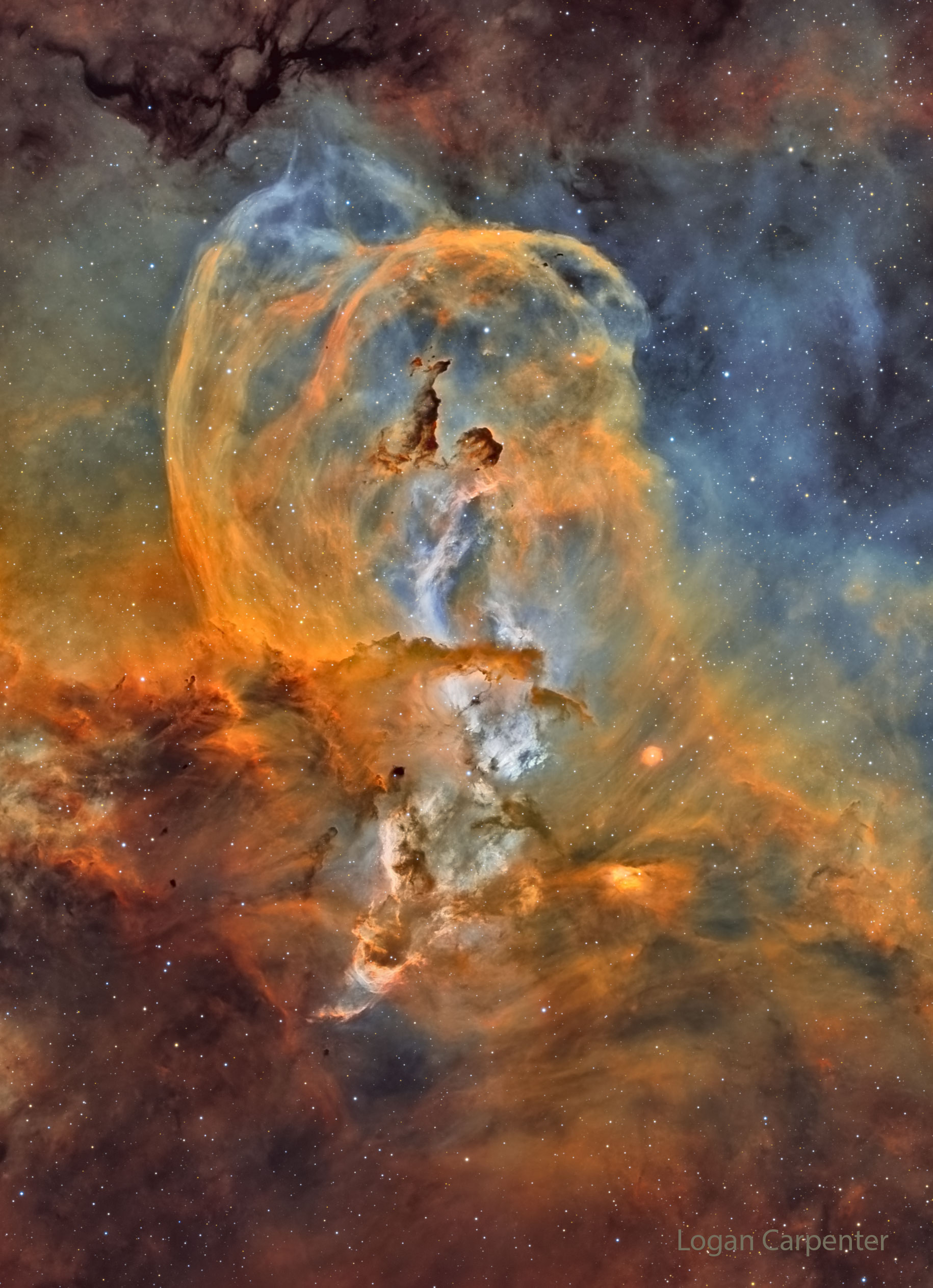
Image Credit & Copyright: Logan Carpenter
Explanation: What's happening in the Statue of Liberty nebula? Bright stars and interesting molecules are forming and being liberated. The complex nebula resides in the star forming region called RCW 57, and besides the iconic monument, to some looks like a flying superhero or a weeping angel. This re-assigned color image showcases dense knots of dark interstellar dust, fields of glowing hydrogen gas ionized by these stars, and great loops of gas expelled by dying stars. A detailed study of NGC 3576, also known as NGC 3582 and NGC 3584, uncovered at least 33 massive stars in the end stages of formation, and the clear presence of the complex carbon molecules known as polycyclic aromatic hydrocarbons (PAHs). PAHs are thought to be created in the cooling gas of star forming regions, and their development in the Sun's formation nebula five billion years ago may have been an important step in the development of life on Earth.
18/07/2026
Astronomy - SHADOW AND RAINBOW
2026 July 18
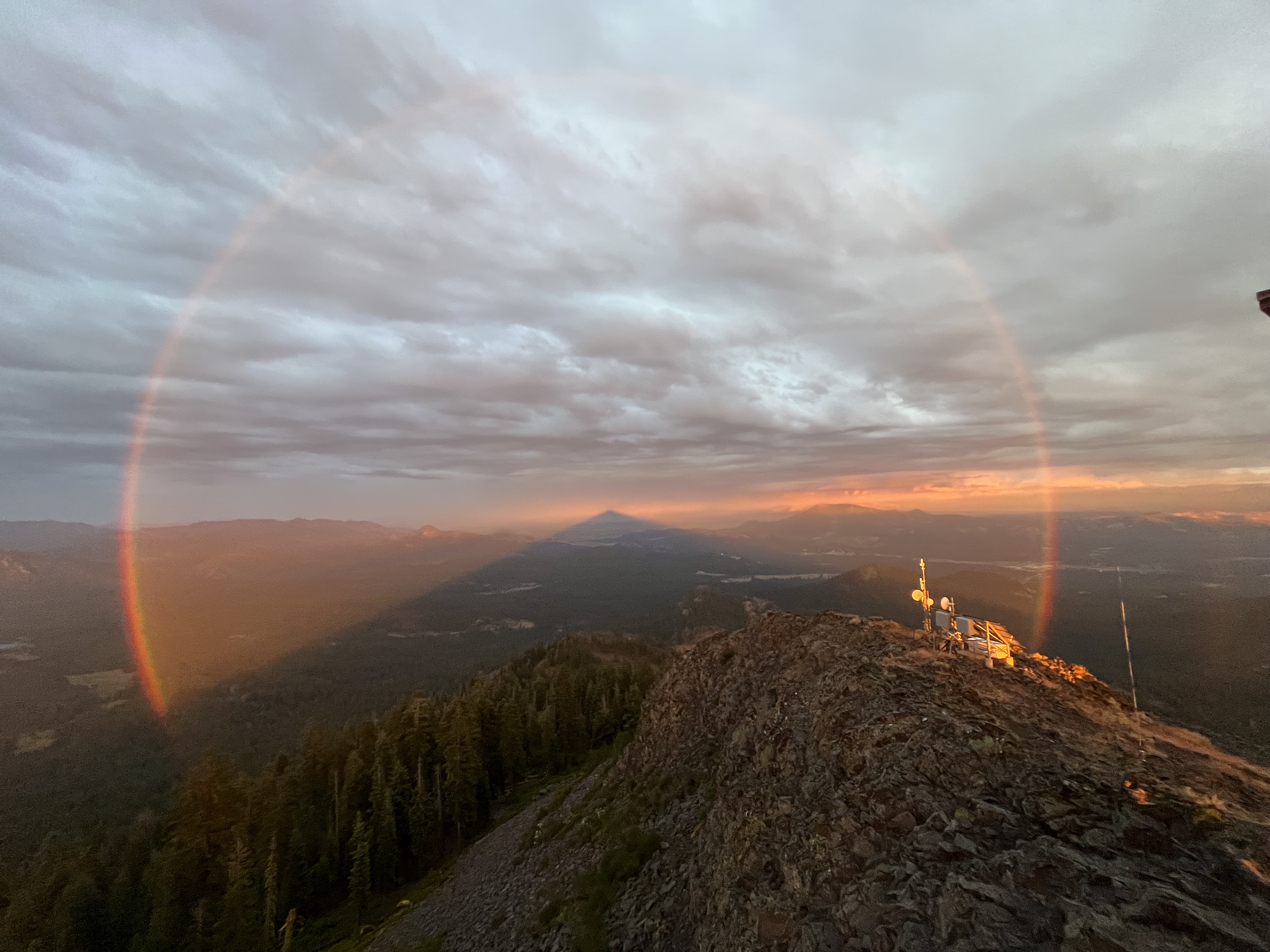
Image Credit & License: Dave Loschiavo
Explanation: At sunset, an alignment of rainbow and mountain shadow was captured in this remarkable snapshot. The stunning view was recorded from a fire lookout on Smith Peak in the Plumas National Forest near Portola, California on July 13. Still, near sunset it's no accident that the majestic mountain shadow seems to point to the center of the graceful rainbow arc. Due to perspective and the long line of sight the mountain shadow naturally forms a tapering triangular shape, its apex positioned at the point opposite the Sun on the horizon. Following thunderstorms across the region, the rainbow arcs across the early evening sky, with its colorful and characteristic 42 degree arc formed as sunlight is refracted and reflected by the atmospheric water droplets. The geometric center of a rainbow arc lies at the antisolar point. And in this scene from the golden hour on planet Earth, that's also oposite the setting Sun along the distant horizon.
16/07/2026
Géoglyphes - LE COLIBRI DE NAZCA

Les géoglyphes de Nazca, encore appelés lignes de Nazca, sont de grandes figures tracées dans le désert de Nazca, dans le sud du Pérou. Réalisés pour la plupart entre -200 et 600 ap. J.-C., ils sont le fait de la civilisation Nazca, une culture pré-inca qui se développa entre 300 av. J.-C. et 800 de notre ère. On se perd en conjectures et spéculations parfois douteuses quant à la signification que ces figures avaient pour les Nazcas.
Le sol sur lequel se dessinent ces géoglyphes est couvert de cailloux que l'oxyde de fer colore en rouge. Et c'est en les ôtant, parfois sur des kilomètres, que les Nazcas ont révélé un sol gypseux grisâtre, faisant apparaître des figures réparties le long d'une ligne de 50 km reliant les villes de Nazca et de Palpa, dans la région d'Ica.
On voit ici le géoglyphe dit du colibri (50 mètres de long).
© François Bianco, CC by-sa 2.0
Astronomy - NGC 300 : A COSMIC GEMSTONE WITH STARS AND GAS CLOUDS
2026 July 16
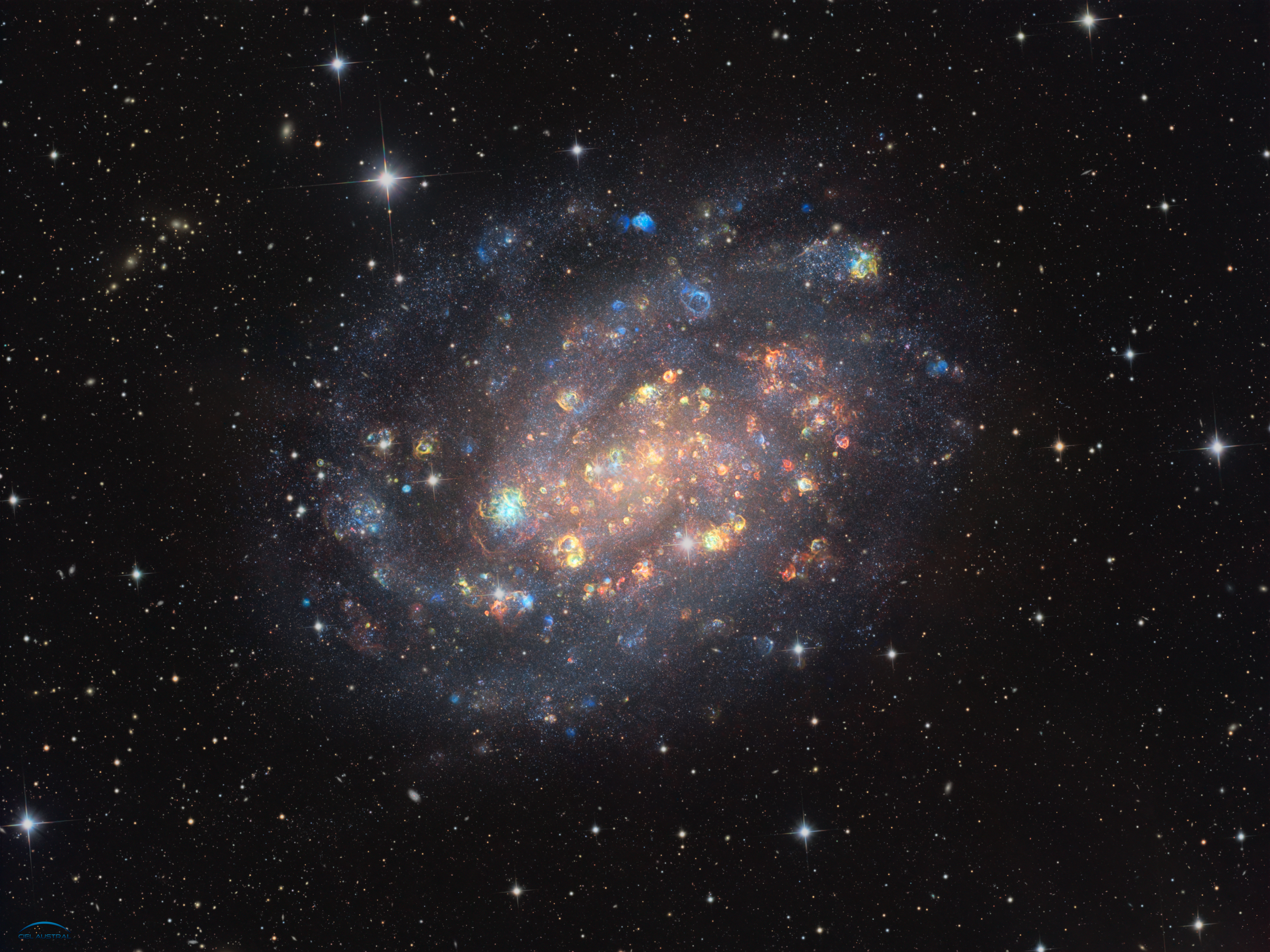
Image Credit & Copyright: Team Ciel Austral
Text: Cecilia Chirenti (NASA GSFC, UMCP, CRESST II)
Explanation: This sparkling, colorful gemstone is a spiral galaxy, NGC 300. It is one of the closest spiral galaxies to Earth, only about 6 million light-years away. But does it really look like this? Here is a more standard portrait of it. This unusual image combines the light from the stars and dust within the galaxy with the light from ionized clouds of interstellar gas shown in red (Sulphur), green (Hydrogen) and blue (Oxygen). Combining red and green light in different proportions makes yellow or orange light, most visible in the image. Light from other ionized gases is also at work in neon signs, fluorescent tubes and street lights. These massive clouds of ionized gas are typically created by young, massive stars that produce high-energy ultraviolet radiation capable of ionizing the gas. Massive stars are short-lived, compared with lighter stars like our sun, and explode as supernovas at the end of their lives. Some of the colorful clouds in the image could be hiding supernova remnants.
14/07/2026
Astronomy - DOUBLE LOBED ASTEROID TORIFUNE
2026 July 14
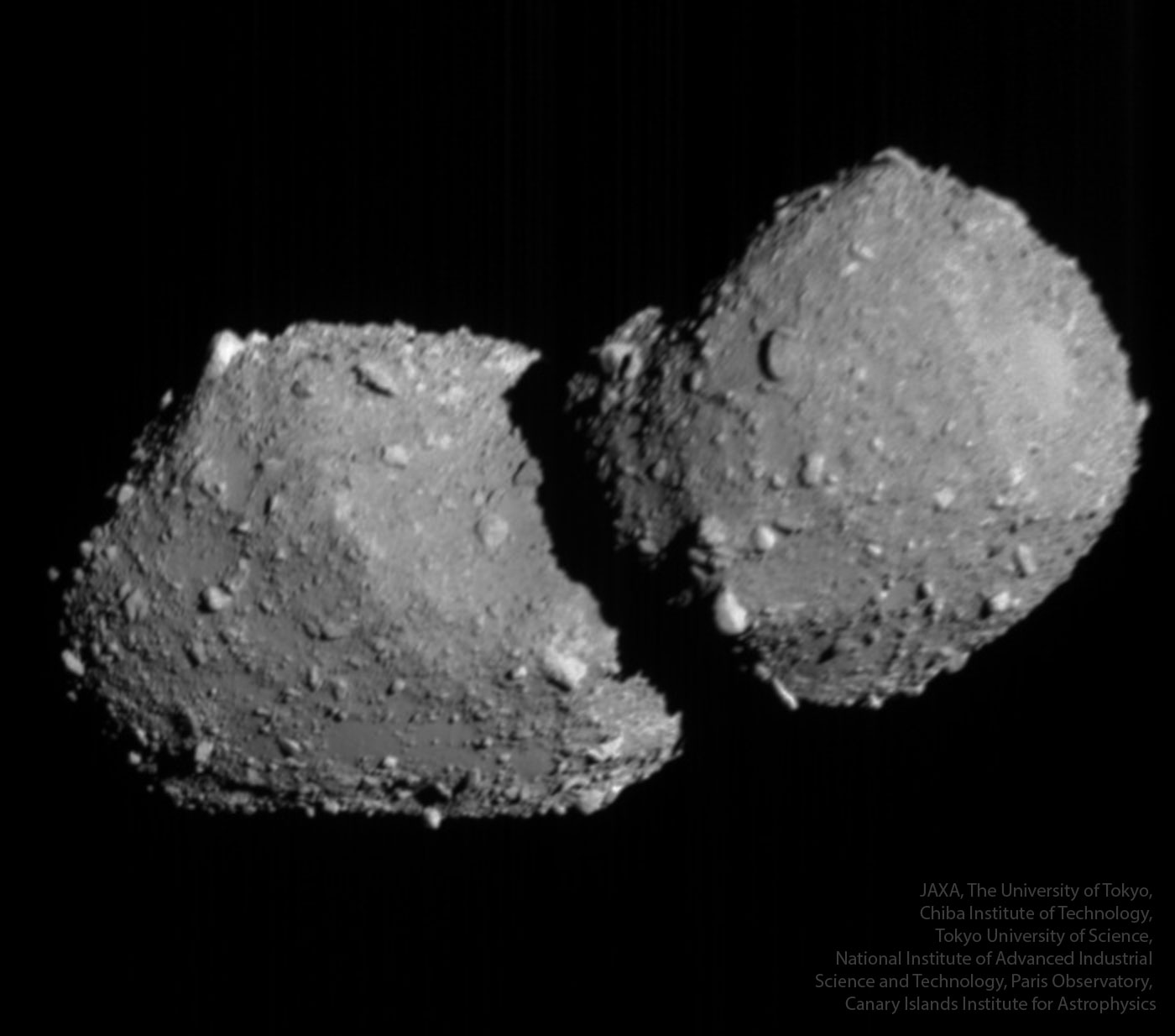
Image Credit & Copyright: JAXA, U. of Tokyo, Chiba Tech, Tokyo U. of Science, AIST, Paris Obs., IAC
Explanation: Why is this asteroid a double? Earlier this month the Japanese robotic spacecraft Hayabusa2 shot past asteroid 98943 Torifune and captured pictures. Although previous observations from distant Earth indicated that Torifune was oblong, Hayabusa2 found that Torifune actually has two joined lobes. With a length of about four soccer fields, this space rock frequently comes near the Earth as it orbits the Sun, although it is not a threat. Besides the two lobes, Torifune shows many large boulders, but, surprisingly, no obvious craters, likely because its surface is a pile of rubble. Like asteroid Arrokoth, it appears that each lobe formed separately before colliding and becoming stuck together. Hayabusa2 famously encountered asteroid Ryugu in 2018, and now heads for an encounter in 2031 with 1998 KY26, a smaller asteroid that rotates unusually fast and might have reservoirs of ice.
13/07/2026
Astronomie - ECLIPSE DU SOLEIL : 12 AOÛT 2026

Souvenez-vous : 1999
Il faut remonter 26 ans en arrière pour trouver une situation comparable : le 11 août 1999, une éclipse totale de Soleil était visible en Europe. En France, il fallait se rendre dans une zone bien précise qui s’étalait de la Normandie à la Champagne pour voir le Soleil totalement éclipsé, le fameux « Soleil noir » (du moins dans les endroits ayant pu bénéficier d’une météo favorable). Dans les autres régions de l’hexagone, le Soleil restait éblouissant – mais beaucoup se souviennent de l’étrange baisse de luminosité et de température. Avec des lunettes de protection, on pouvait voir le disque solaire presque totalement occulté par la Lune !
Voici donc enfin une nouvelle éclipse totale de Soleil visible en Europe ! Le 12 août prochain, le « Soleil noir » sera visible en en Espagne et en Islande. Les chasseurs d’éclipse n’auront pas besoin d’aller au bout du monde pour assouvir leur soif de grandiose. Et pour celles et ceux qui resteront en France ou dans les pays voisins, une partie non négligeable du spectacle cosmique leur sera servie puisque l’astre du jour sera fortement occulté par la Lune !
Quelles sont les lieux où l’éclipse solaire sera totale ?

Sur cette carte, la zone de totalité de l’éclipse du 12 août 2026 est indiquée en gris foncé. En dehors, l’éclipse sera vue partielle en tout lieu légèrement grisé. La ligne rouge de gauche indique les lieux où elle se termine juste au coucher du Soleil. Celle de droite, la limite au-delà de laquelle l’éclipse ne peut plus être vue, le Soleil étant couché. Carte extraite du livre Les Soleils noirs de 2026 et 2027 de Jean-Marc Lecleire.
La bande de totalité traverse le Groënland, l’Islande, l’Espagne. Elle s’arrête au niveau des îles Baléares, où le Soleil sera en train de se coucher au moment de l’éclipse totale.
Sur cette carte, la zone de totalité de l’éclipse du 12 août 2026 est indiquée en gris foncé. En dehors, l’éclipse sera vue partielle en tout lieu légèrement grisé. La ligne rouge de gauche indique les lieux où elle se termine juste au coucher du Soleil. Celle de droite, la limite au-delà de laquelle l’éclipse ne peut plus être vue, le Soleil étant couché. Carte extraite du livre Les Soleils noirs de 2026 et 2027 de Jean-Marc Lecleire.
Quels sont les horaires de l’éclipse de Soleil du 12 août 2026 ?
L’éclipse a lieu en fin de journée. À Paris par exemple, le phénomène commencera à 19h22, sera à son maximum à 20h17, et se terminera à 21h09, peu avant le coucher du Soleil.
Qu’est-ce qu’une éclipse totale de Soleil ?

Rappelons qu’une éclipse de Soleil a lieu lorsque la Lune passe entre la Terre et le Soleil. Si l’alignement est parfait, l’éclipse est totale (ou annulaire lorsque la Lune est un peu trop éloignée de la Terre). Sinon, lorsque la Lune passe un peu au-dessus ou au-dessous de l’alignement Terre-Soleil, on assiste à une éclipse partielle de Soleil. L’éclipse du 12 août 2026 est dite totale, mais attention, elle ne sera pas vue totale partout ! Seulement dans un zone limitée appelée bande de totalité. En dehors de cette zone, le Soleil ne sera pas totalement masqué : l’éclipse sera vue comme une éclipse partielle.
Stelvision
11/07/2026
Géoglyphes - LE CHEVAL BLANC DE KILBURN EN ANGLETERRE

Le Cheval blanc de Kilburn est la représentation d'une silhouette de la forme d'un cheval de très grande taille, 97 mètres de long pour 67 mètres de haut, creusée dans une colline de craie près du village de Kilburn, dans le Yorkshire du Nord en Angleterre. Il a été réalisé au XIXe siècle, en 1857 plus précisément.
© Afterbrunel, DP
Astronomy - STARRY NIGHT II
2026 June 19
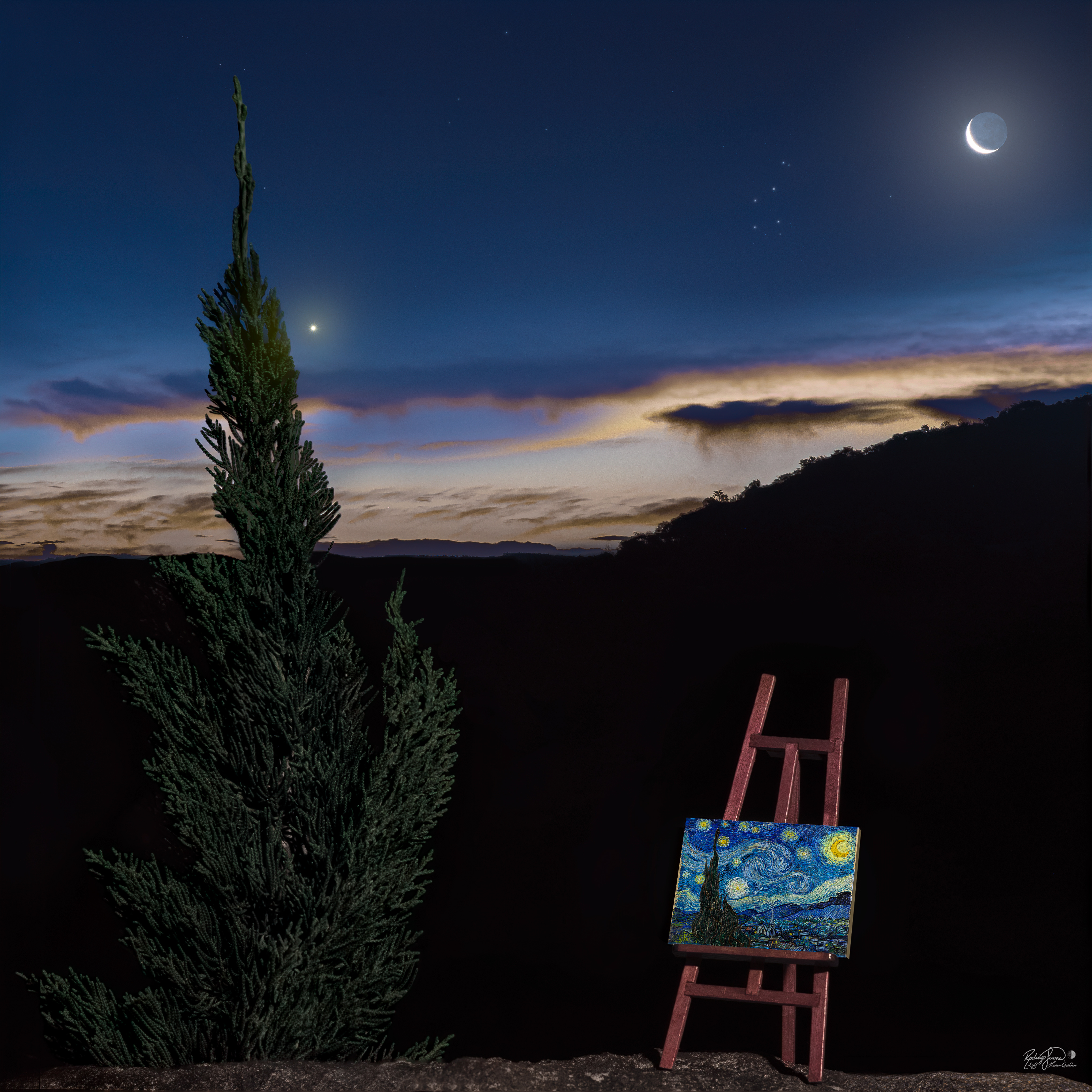
Image Credit & Copyright: Rodrigo Guerra, Original Painting: Vincent van Gogh
Explanation: Does this scene look familiar? It is a modern recreation of the famous painting Starry Night by Vincent van Gogh. Both the image and the painting depict a tall tree on the left, a crescent moon on the upper right, the planet Venus just to the right of the tree, a foreground horizon rising from left to right, and clouds above the horizon. Differences include that the photograph was taken in mid-April earlier this year in Cascavel, Brazil, while the painting was composed in Saint-Rémy-de-Provence, France, in 1889. The original Starry Night is considered by many to be one of the three most famous paintings in the world today and a statement about the wonders of the night sky. Today is (roughly) the anniversary of the morning that van Gogh saw the sky that he later painted in his version of Starry Night.
09/07/2026
Astronomy - THE RED GLOW OF THE COSMIC BAT NEBULA
2026 July 9
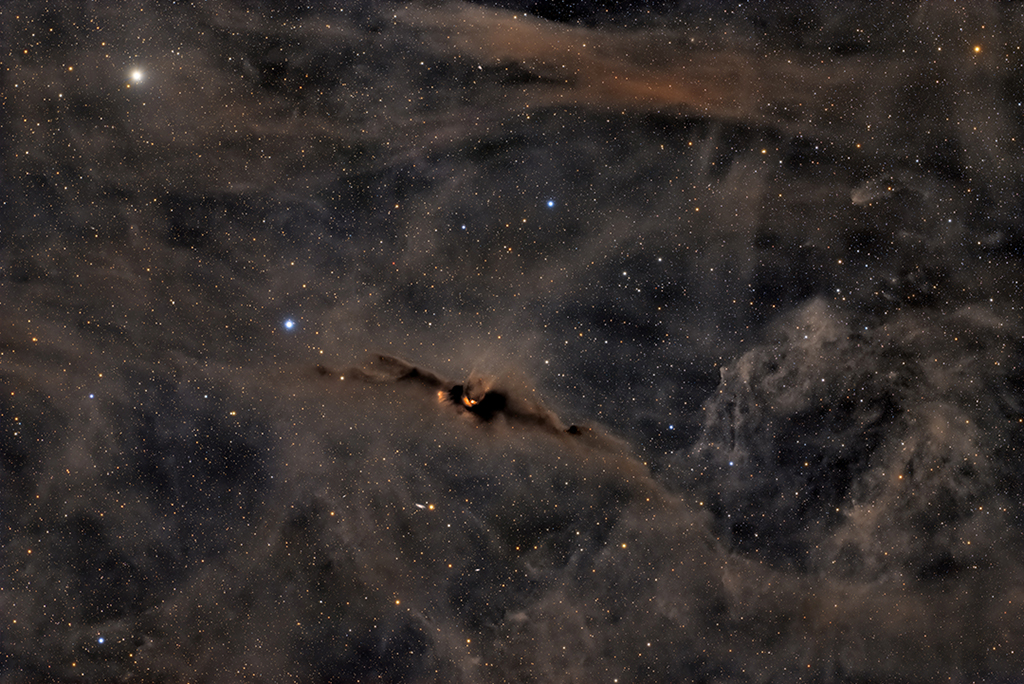
Image Credit & Copyright: Humbert Cédric
Text: Keighley Rockcliffe (NASA GSFC, UMBC CSST, CRESST II)
Explanation: This Cosmic Bat wishes you a happy Summerween! This mid-year celebration of Halloween transcends hemispheres, even though summer in the Northern hemisphere is winter in the South. Contrary to its eery aura, the Cosmic Bat Nebula (LDN 43), not to be confused with the Bat Nebula (NGC 6995), is a vibrant birthplace for stars. A bit of young starlight peeks through the dense clouds of gas and dust that make up the Cosmic Bat’s 12 lightyear wingspan. The ultraviolet light from the young stars energizes the nebula’s hydrogen gas, causing it to glow an ominous red. The jet of glowing hydrogen gas emerging from the bat’s head hints at the star formation hidden within.
07/07/2026
Géoglyphes - LES LIGNES DE NAZCA AU PEROU

Les géoglyphes de Nazca, encore appelés lignes de Nazca, sont de grandes figures tracées dans le désert de Nazca, dans le sud du Pérou. Réalisés pour la plupart entre -200 et 600 ap. J.-C., ils sont le fait de la civilisation Nazca, une culture pré-inca qui se développa entre 300 av. J.-C. et 800 de notre ère. On se perd en conjectures et spéculations parfois douteuses quant à la signification que ces figures avaient pour les Nazcas.
Le sol sur lequel se dessinent ces géoglyphes est couvert de cailloux que l'oxyde de fer colore en rouge. Et c'est en les ôtant, parfois sur des kilomètres, que les Nazcas ont révélé un sol gypseux grisâtre, faisant apparaître des figures réparties le long d'une ligne de 50 km reliant les villes de Nazca et de Palpa, dans la région d'Ica.
Les géoglyphes de Nazca, représentant souvent des animaux stylisés, sont parfois de simples lignes longues de plusieurs kilomètres.
© Diego Delso, CC by-sa 4.0
06/07/2026
Astronomy - DUELING BANDS OVER THE ATACAMA DESERT
2026 July 6
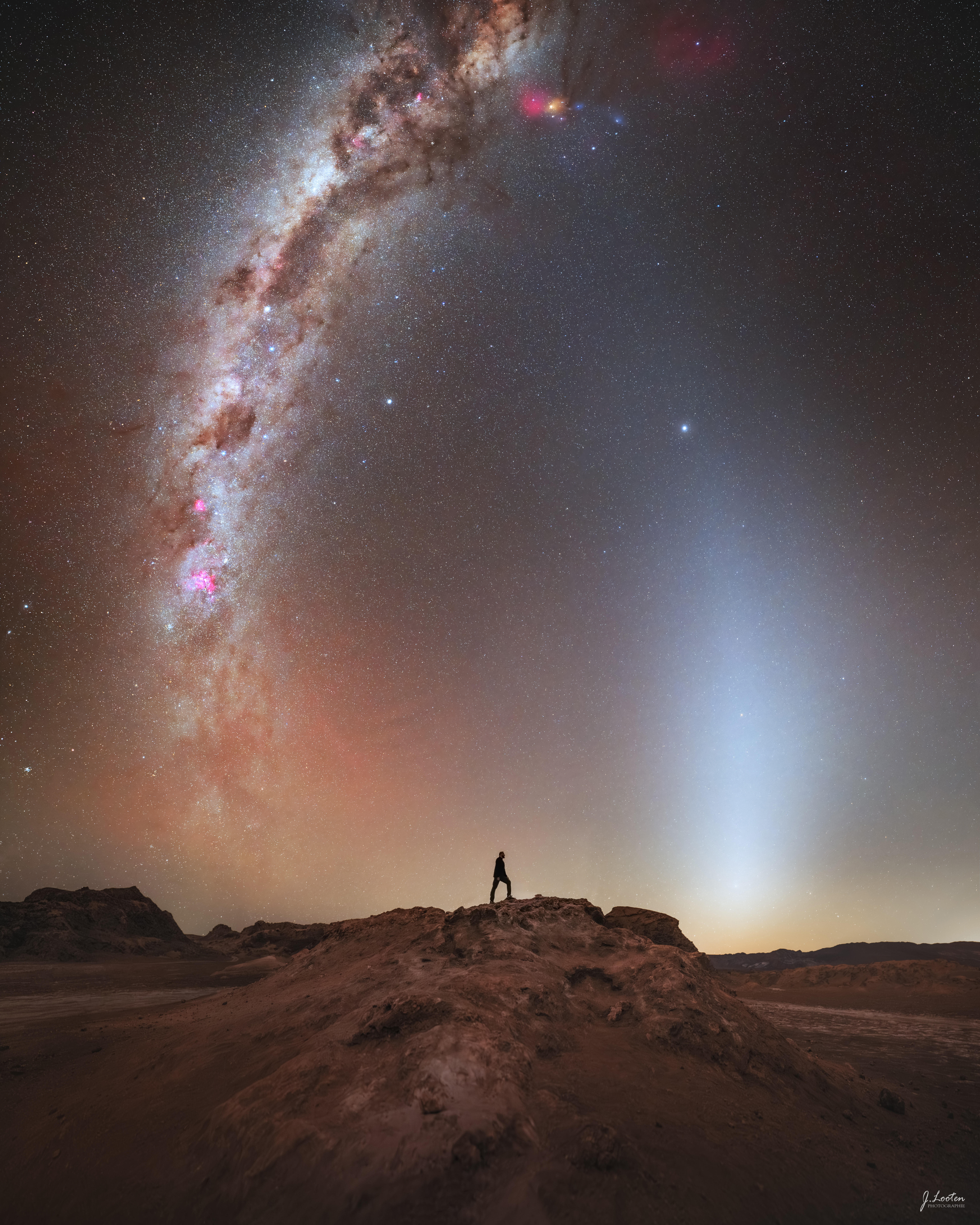
Image Credit & Copyright: Julien Looten
Explanation: What are these two bands in the sky? The more commonly seen band is on the left and is the central band of our Milky Way galaxy. Our Sun orbits in the disk of this spiral galaxy so that from inside, it appears as a band of comparable brightness all the way around the sky. The less commonly seen band, on the right, is zodiacal light -- sunlight reflected from dust orbiting the Sun in our Solar System. Zodiacal light is brightest near the Sun and so is best seen just before sunrise or just after sunset. On some evenings, this ribbon of zodiacal light can appear quite prominent. It was discovered only in this century that zodiacal dust was mostly expelled by comets that have passed near Jupiter. The featured image was captured about a year ago from the Atacama Desert in Chile.
05/07/2026
Astronomy - AR 4478 : GIANT SUNSPOT GROUP
2026 June 28
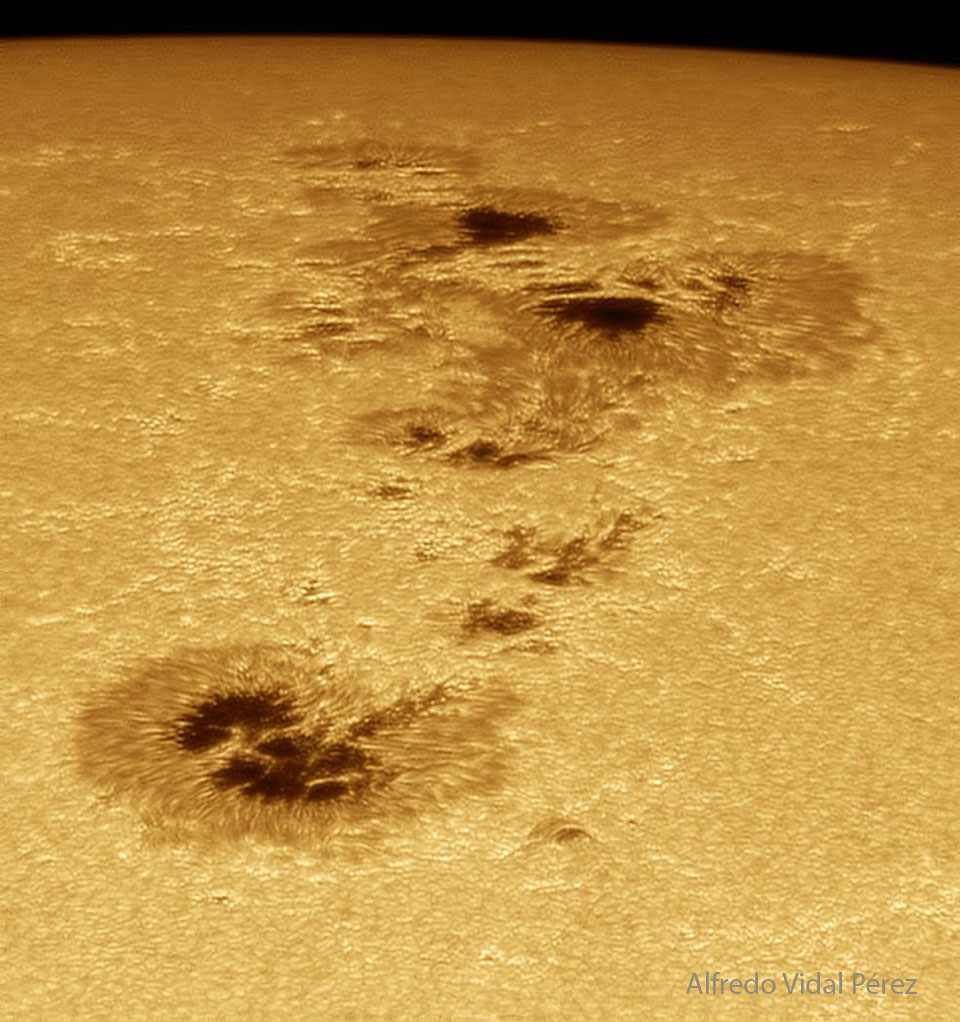
Image Credit & Copyright: Alfredo Vidal Pérez
Explanation: Right now, one of the largest sunspot groups in recent history is crossing the Sun. Active Region 4478 is not only big -- it's violent, showing tangled magnetic fields capable of throwing off huge clouds of particles into the Solar System. Some of these CMEs might impact the Earth. At the extreme, these solar storms could cause some Earth-orbiting satellites to malfunction, the Earth's atmosphere to slightly distort, and electrical power grids to surge. When impacting Earth's upper atmosphere, these particles can produce beautiful auroras. Pictured here, AR 4478 and its dark sunspots were captured in visible light a few days ago from Barcelona, Spain. Almost as large as AR 3664 was in 2024, the AR 4478 sunspot group is so big that it is visible just with glasses specially designed to view solar eclipses. This week, skygazing enthusiasts all over the globe will not only be tracking AR 4478 during the day -- but keenly watching night skies for its corresponding bright auroras.
02/07/2026
Astronomy - M82: GALAXY WITH A SUPERGALACTIC WIND
2026 June 29
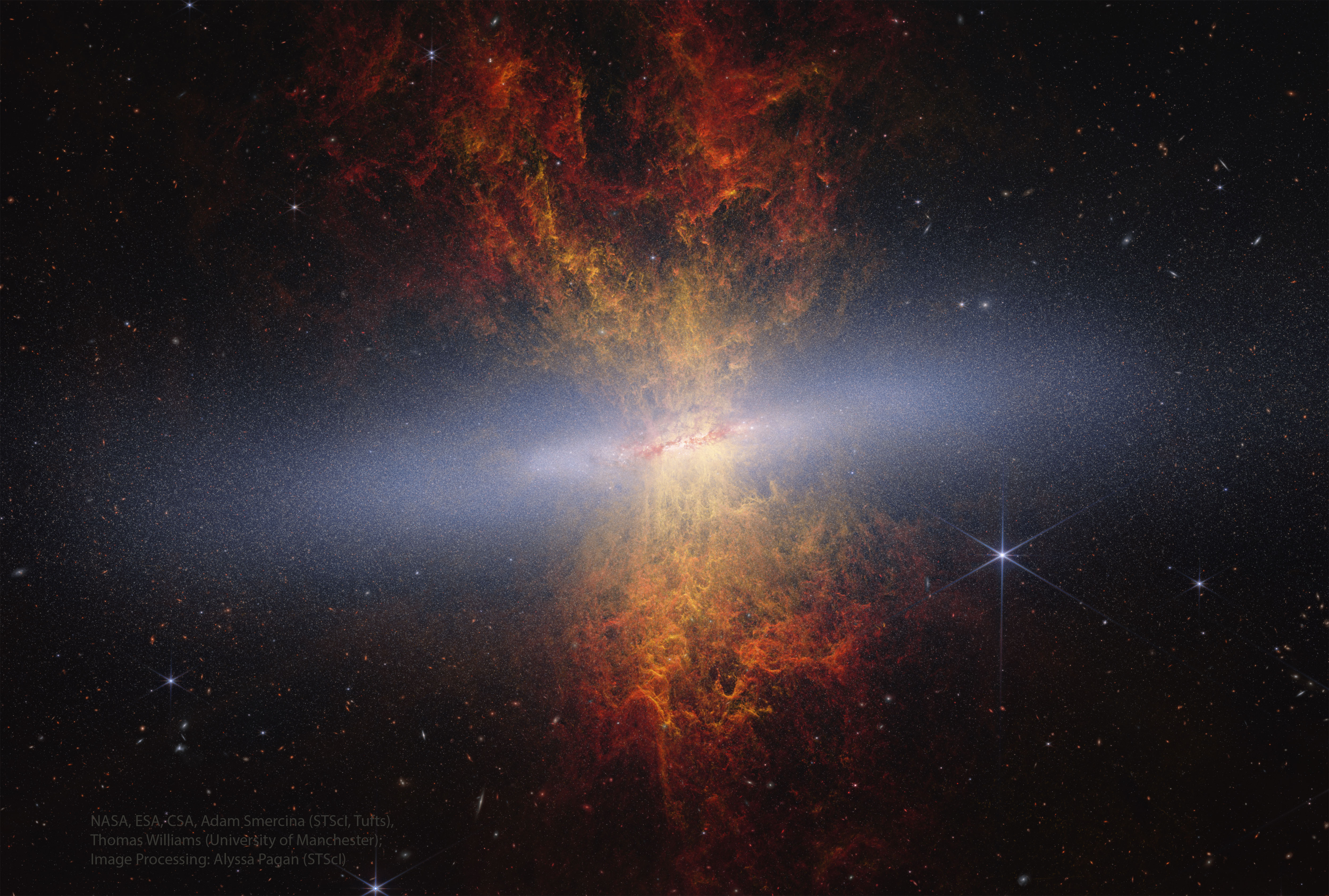
Image Credit: NASA, ESA, CSA, A. Smercina (STScI, Tufts), T. Williams (U. Manchester); Image Processing: A. Pagan (STScI)
Explanation: Why is the Cigar Galaxy billowing red smoke? M82, as this starburst galaxy is also known, was stirred up by a recent pass near large spiral galaxy M81. This doesn't fully explain the source of the red-glowing outwardly expanding gas and dust, however. Evidence indicates that this gas and dust is being driven out by the combined emerging particle winds of many stars, together creating a galactic superwind. The dust particles are thought to originate in M82's interstellar medium and are actually similar in size to particles in cigar smoke. The featured photographic mosaic combines images taken in visible light from the Hubble Space Telescope and images taken in infrared light from James Webb Space Telescope. It shows the light-colored central galaxy nearly edge on across the image center with tremendous orange and red colored filaments of gas and dust extending both up and down. The filaments extend for over 10,000 light years. The 12-million light-year distant Cigar Galaxy is the brightest galaxy in the sky in infrared light and can be seen in visible light with a small telescope towards the constellation of the Great Bear (Ursa Major).
01/07/2026
Astronomy - UNUSUALLY SMOOTH SECTIONS OF ASTEROID ITOKAWA
2026 June 30
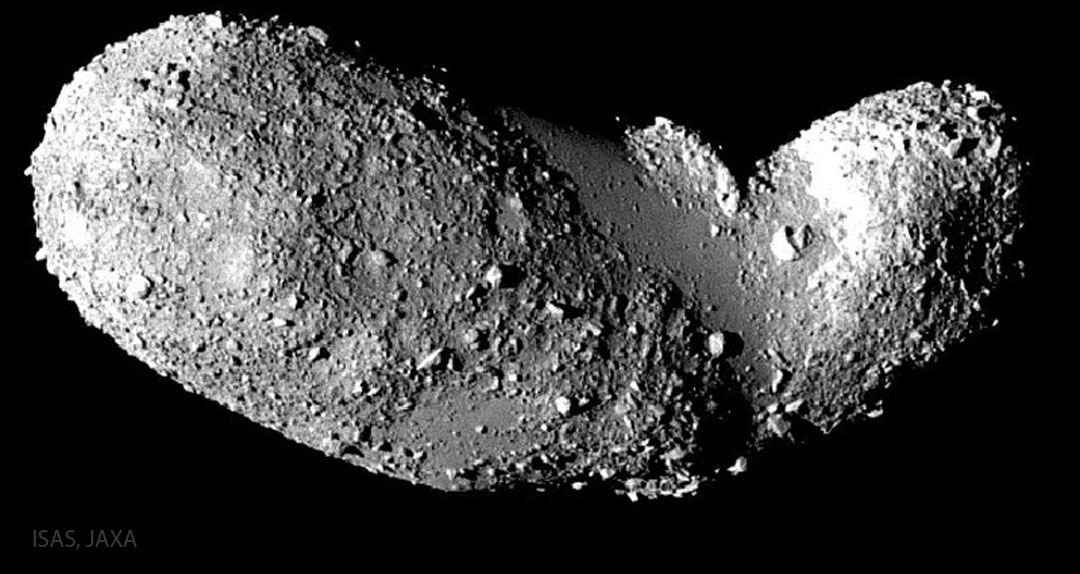
Image Credit: JAXA, ISAS
Explanation: Why are parts of this asteroid's surface so smooth? The answer seems likely to do with the dynamics of an asteroid that is a loose pile of rubble rather than a solid rock. The unusual asteroid Itokawa was visited by the Japanese spacecraft Hayabusa in 2005 which imaged and documented its unusual structure and mysterious lack of craters. Analyses of the border regions between smooth and rugged sections indicate that jostling of the asteroid might be creating segregation between large and small rocks near the surface, like the Brazil nut effect. The robotic Hayabusa actually touched down on one of the smooth patches, dubbed the MUSES Sea, and collected soil samples. These samples were returned to Earth and are not only giving clues to the ancient history of this unusual asteroid, but also about the early years of our entire Solar System. Computer simulations show that 500-meter asteroid Itokawa may impact the Earth within the next few million years.
Inscription à :
Articles (Atom)
Astronomy - NEW GHOSTS REVEALED CASSIOPEIA
Explanation: Jinkies, look at all those ghosts! It took 100 hours of observation and a special oxygen filter for today’s image to captur...

-
2026 January 2 NanoSail-D2 Image Credit & Copyright : Ralf Vandebergh Explanation: In 2011, on January 20, NASA's NanoSail-D2 ...
-
2026 January 1 Auroral Corona Image Credit & Copyright : Roi Levi Explanation: Cycle 25 solar maximum made 2025 a great year for ...


:max_bytes(150000):strip_icc():focal(999x0:1001x2):format(webp)/dog-eclipse-2000-ef0176770ff64e6b913f2af6e8273a24.jpg)

