Nombre total de pages vues

17/06/2026

La vie et la mort - Y-A-T-IL UNE VIE APRèS LA MORT ? (3/5)

Sept jours de coma… et une expérience consciente

Durant sept jours, le neurochirurgien reste plongé dans un état végétatif. Les examens neurologiques indiquent une activité cérébrale minimale, incompatible avec la formation de souvenirs complexes ou d’expériences conscientes élaborées.

Durant sept jours, le neurochirurgien reste plongé dans un état végétatif. Les examens neurologiques indiquent une activité cérébrale minimale, incompatible avec la formation de souvenirs complexes ou d’expériences conscientes élaborées.

Pourtant, à son réveil, Eben Alexander décrit un vécu détaillé et structuré. Il affirme avoir eu la sensation de quitter son corps et d’évoluer dans un univers lumineux, paisible, dominé par un sentiment d’amour profond et inconditionnel. Selon lui, cette expérience était d’une clarté et d’une intensité supérieures à celles de la réalité ordinaire. Ce qui interpelle particulièrement la communauté scientifique est la cohérence de son récit, rapporté dès son réveil, avant toute exposition à des récits similaires ou à des interprétations spirituelles.

CommentEconomiser

.../>

15/06/2026

Astronomy - TRIPLE SHOCKWAVE FROM SUN CROSSING ROCKET

 2026 June 15

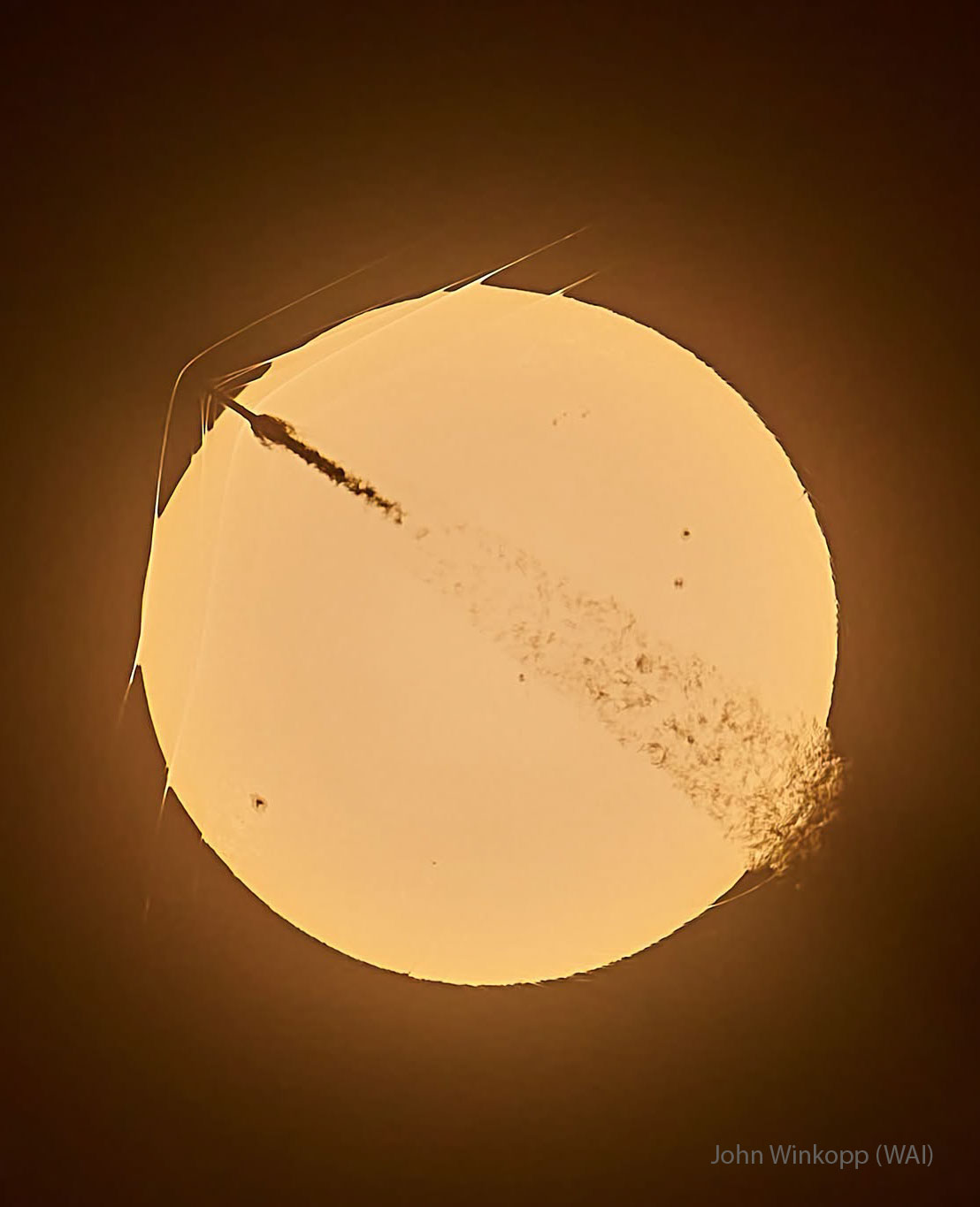
The disk of the Sun is shown with a rocket launching
through it. The rising rocket shows a plume behind it and
three unusual waves curve around its top tip.
Please see the explanation for more detailed information.

Triple Shockwave from Sun Crossing Rocket
Image Credit & Copyright: John Winkopp (WAI Media)

Explanation: What's happening to this Sun-crossing rocket? The SpaceX Falcon 9 rocket, visible on the upper left, launched only about one minute before this amazing image was captured. As it rose to low Earth orbit from Cape Canaveral, Florida, USA, in late May, the rocket became supersonic before it crossed the disk of the distant Sun -- from the perspective of the well-placed photographer. The spacecraft's high speed caused bow-shaped compressed-air shockwaves to form across leading surfaces, with at least three visible even outside the Sun's disk because they refract sunlight. The trailing exhaust caused turbulence visible on the lower right. None of this was damaging to the robotic Starlink 10-53 mission, which delivered 29 communications satellites to low Earth orbit as planned. And if that isn't amazing enough - the Sun had spots!

14/06/2026

La vie et la mort - Y-A-T-IL UNE VIE APRES LA MORT ? (2/5)

 Un scientifique profondément sceptique

Avant cet événement, Eben Alexander ne laissait aucune place au doute. Pour lui, les expériences de mort imminente relevaient soit d’hallucinations, soit de reconstructions mentales provoquées par un cerveau en détresse. Comme beaucoup de ses confrères, il considérait ces récits comme incompatibles avec les connaissances neuroscientifiques. Tout bascule le 10 novembre 2008. Victime de violents maux de tête, il est hospitalisé d’urgence à Lynchburg, en Virginie. Le diagnostic est grave : une méningite bactérienne rare causée par une souche d’Escherichia coli. L’infection détruit rapidement son néocortex, la zone du cerveau associée à la pensée consciente, au raisonnement et à la perception sensorielle.

Son état se dégrade en quelques heures. Eben Alexander tombe dans un coma profond. Les médecins évoquent un pronostic extrêmement sombre : peu de chances de survie, et presque aucune d’un retour à une vie normale.

CommentEconomiser

.../>

13/06/2026

La vie et la mort - Y-A-T-IL UNE VIE APRES LA MORT ? (1/5)

Un neurochirurgien de renom : « Il y a une vie après la mort et j'en ai la preuve. »

Et si tout ce que vous pensiez savoir sur la mort était… incomplet ? Pendant des décennies, la science a soutenu une idée largement admise : la conscience humaine serait entièrement produite par l’activité du cerveau. La conscience n’existe que grâce au cerveau. Pas de cerveau actif ? Pas de pensée. Pas d’émotion. Pas d’âme. 

Pourtant, le témoignage d’un neurochirurgien américain respecté est venu ébranler cette certitude. Et s'il existait en réalité une continuité, une forme de conscience qui refuse de s’éteindre ? Et si la mort n'était pas un point final ? C’est la question vertigineuse qu’a soulevée un homme que rien ne prédestinait à tenir un tel discours. Un homme de science, de rigueur, de certitudes médicales. Jusqu’au jour où sa propre vie a basculé. 

En 2008, Eben Alexander, spécialiste du cerveau formé à Harvard, affirme avoir vécu une expérience consciente alors que son cerveau était, selon les médecins, quasiment hors d’état de fonctionner. Depuis, il soutient publiquement l’idée qu’il pourrait exister une forme de vie ou de conscience après la mort.

CommentEconomiser
.../>

Géoglyphes - LE CHIEN DE NAZCA


Les géoglyphes de Nazca, encore appelés lignes de Nazca, sont de grandes figures tracées dans le désert de Nazca, dans le sud du Pérou. Réalisés pour la plupart entre -200 et 600 ap. J.-C., ils sont le fait de la civilisation Nazca, une culture pré-inca qui se développa entre 300 av. J.-C. et 800 de notre ère. On se perd en conjectures et spéculations parfois douteuses quant à la signification que ces figures avaient pour les Nazcas.

Le sol sur lequel se dessinent ces géoglyphes est couvert de cailloux que l'oxyde de fer colore en rouge. Et c'est en les ôtant, parfois sur des kilomètres, que les Nazcas ont révélé un sol gypseux grisâtre, faisant apparaître des figures réparties le long d'une ligne de 50 km reliant les villes de Nazca et de Palpa, dans la région d'Ica.

On voit ici le géoglyphe dit du chien (en fait un jaguar).

© Creative Commons Attribution-Share Alike 2.5 Spain

Astronomy - VENUS AND JUPITER: CONJUNCTION FROM AVEBURY

 2026 June 12

See Explanation.  Clicking on the picture will download
the highest resolution version available.

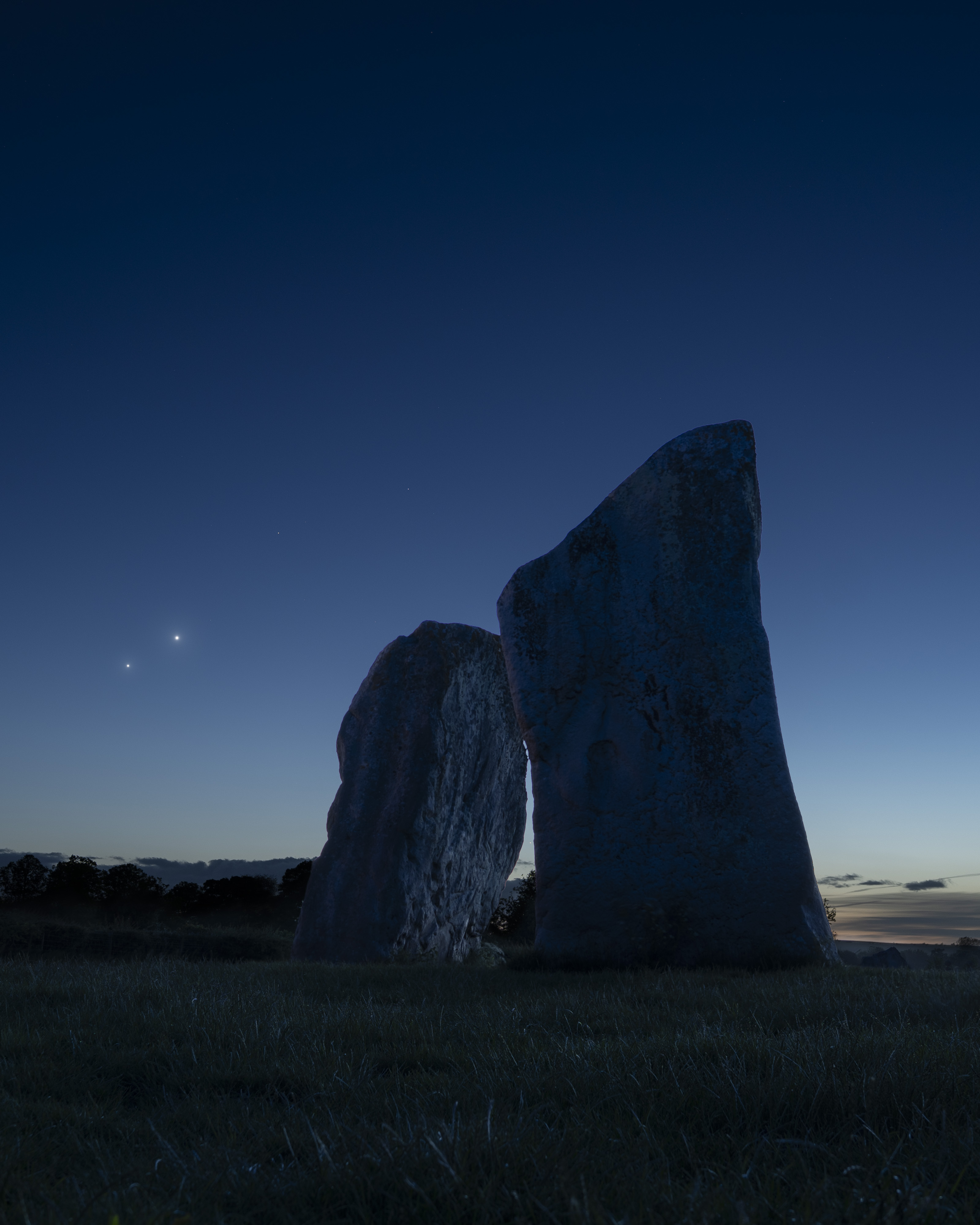
Venus and Jupiter: Conjunction from Avebury
Image Credit & Copyright: Josh Dury

Explanation: To see Venus and Jupiter together this month, you won't need binoculars or even a telescope. Just look up after sunset and you'll find them emerging as the sky grows dark near the western horizon. In fact, on June 9 the two brightest planets were in close conjunction, separated on the sky by less than 2 degrees from our perspective. Since (brighter) inner planet Venus orbits the Sun faster than outer planet Jupiter, it catches up with and passes the outer planet along the ecliptic roughly every 13 months. But every three years or so their resulting conjunction can be viewed far enough from the Sun to be easily seen in Earth's twilight skies. On June 9, the two celestial beacon's close "cosmic kiss" was captured here next to two large standing stones, the remains of a cove near the center of a 4,000 year old stone circle at Avebury, UK. Larger than Stonehenge, the Avebury henge and stone circle complex is also recognized as one of the most significant neolithic ceremonial sites on planet Earth.

11/06/2026

Astronomy - THE MARMAID NEBULA SUPERNOVA REMNANT

 2026 June 11

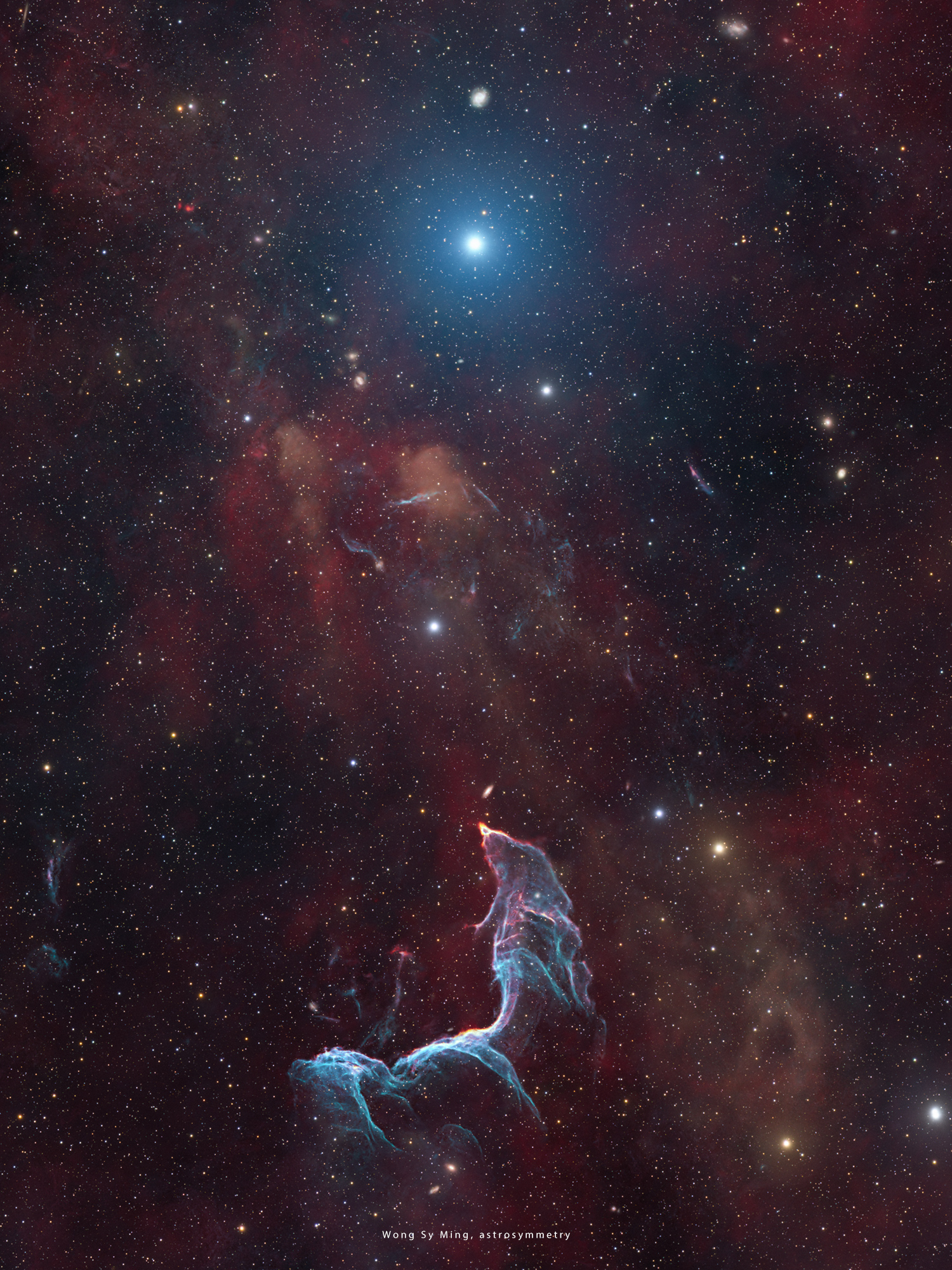
A delicate nebula in shades of blue and purple
	  shines in front of a dark field of stars.
	  The shape of the nebula resembles a mermaid.

The Mermaid Nebula Supernova Remnant
Image Credit & Copyright: Data acquisition: Sy Ming Wong; Processing: Guangyan Gao
Text: Cecilia Chirenti (NASA GSFC, UMCP, CRESST II)

Explanation: Could the Little Mermaid turn into stardust instead of seafoam? It would seem so in this beautiful nebula. The featured image shows the Mermaid Nebula, also known as the Betta Fish Nebula, which is part of the G296.5+10.0 Supernova Remnant. The blue color visible here originates from doubly ionized oxygen (OIII), while the deep red is emitted by hydrogen gas. Estimated to be located a few thousand light-years away and about 10,000 years old, this nebula was formed when a massive star exploded as a supernova. It left behind a peculiar pulsar, a young radio-quiet neutron star that spins around about twice every second. The bright stars shown in the image are unassociated with the nebula. The pulsar can be detected in the X-rays but it does not have a confirmed detection in the optical (visible light) so far. As a result, the pulsar itself is not visible in this image.

10/06/2026

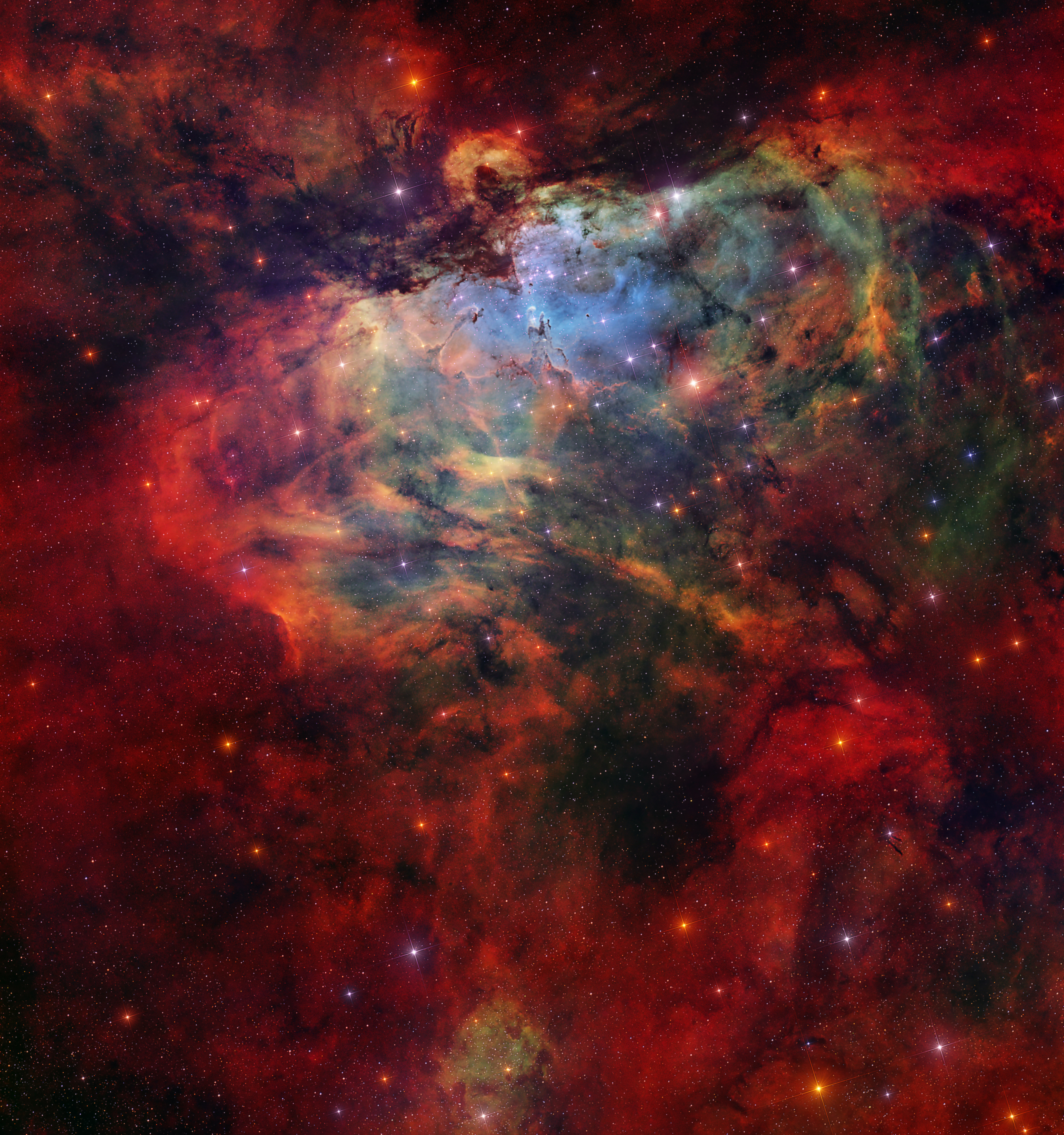
Astronomy - THE EAGLE NEBULA AND FRIENDS

 2026 June 10

Gas, dust, and stars are scattered across the image. A dark silhouette that looks like an eagle swoops downward towards three small pillars 
of gas. Other gas and dust pillar-like features reach out of the surrounding nebula. A central cluster of stars sits beneath the eagle silhouette.

The Eagle Nebula and Friends
Image Credit & Copyright: Emmanuel Delgadillo
Text: Keighley Rockcliffe (NASA GSFC, UMBC CSST, CRESST II)

Explanation: What looks as if it is going to swallow the great Pillars of Creation? The Eagle Nebula (M16) is not a bird, a plane, or Superman. M16 is actually a combination of several celestial objects. NGC 6611 is the young star cluster that appears to peak out beneath the Eagle’s “wings”. The ultraviolet light from these stars ionizes the surrounding gas, creating the emission nebula IC 4703. The Stellar Spire is seen reaching towards the Pillars of Creation from the left. Both are structures of cold gas and dust that are optimal for star formation. Some astronomers previously thought the Pillars of Creation had been evaporated away by a supernova. Because M16 is 6,000 light years away, we would not be able to see the Pillars’ destruction for thousands more years. However, there is no conclusive evidence of the theorized supernova, so the Pillars of Creation will likely continue to create stars for millions of years.

09/06/2026

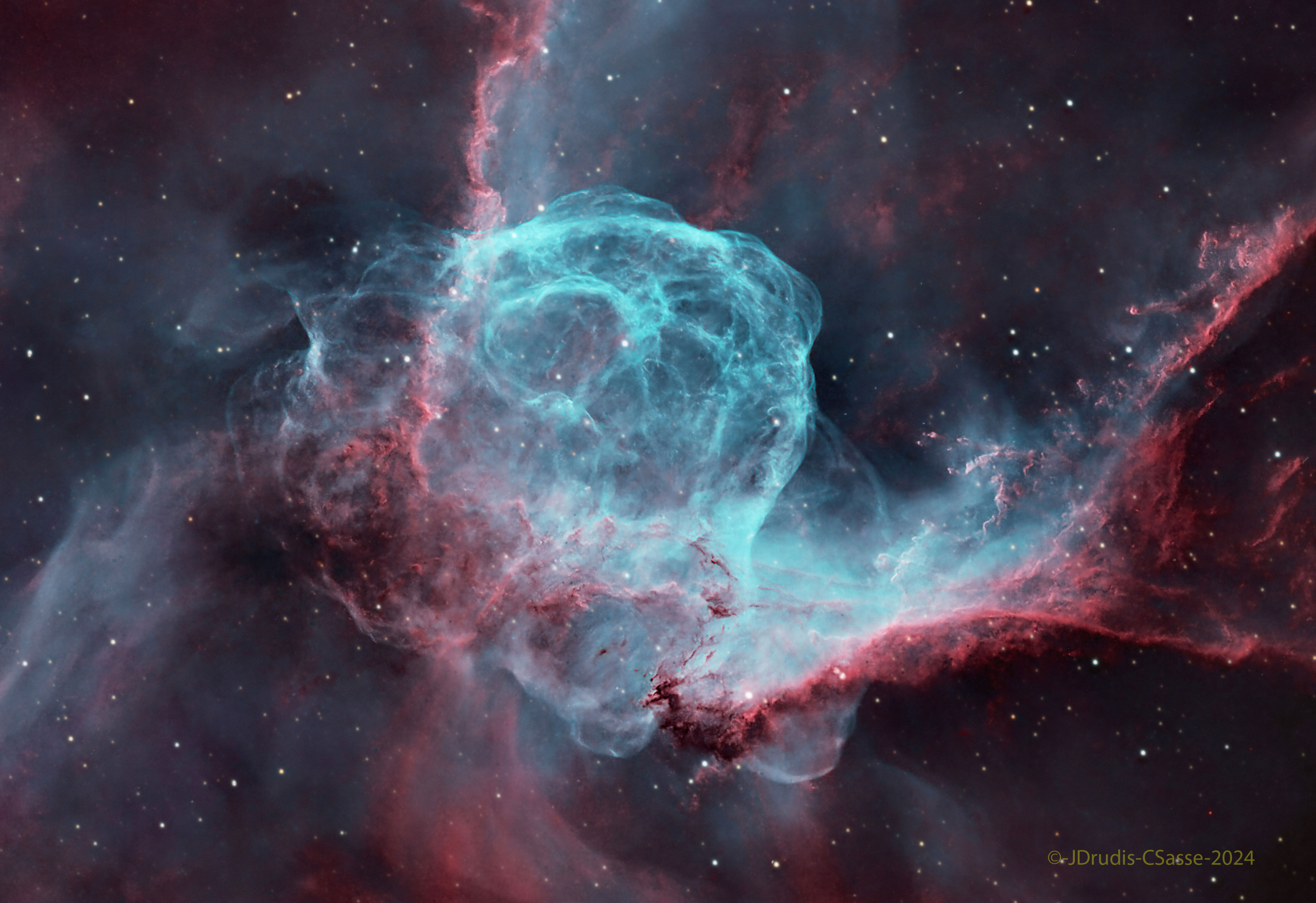
Astronomy - THOR'S HELMET

 2026 June 9

A starfield surrounds a complex nebula with many red
and blue filaments. Dark streams of dust also populate 
the nebula. 
Please see the explanation for more detailed information.

Thor's Helmet
Image Credit & Copyright: Josep Drudis, Christian Sasse

Explanation: Thor not only has his own day (Thursday), but a helmet in the heavens. Popularly called Thor's Helmet, NGC 2359 is a hat-shaped cosmic cloud with wing-like appendages. Heroically sized even for a Norse god, Thor's Helmet is about 30 light-years across. In fact, the cosmic head-covering is more like an interstellar bubble, blown by a fast wind from the bright, massive star near the bubble's center. Known as a Wolf-Rayet star, the central star is an extremely hot giant thought to be in a brief, pre-supernova stage of evolution. NGC 2359 is located about 15,000 light-years away toward the constellation of the Great Overdog. This sharp image is a combination of deep images taken in light emitted by hydrogen (red) and oxygen (blue). The star in the center of Thor's Helmet is expected to explode in a spectacular supernova sometime within the next few thousand years.

08/06/2026

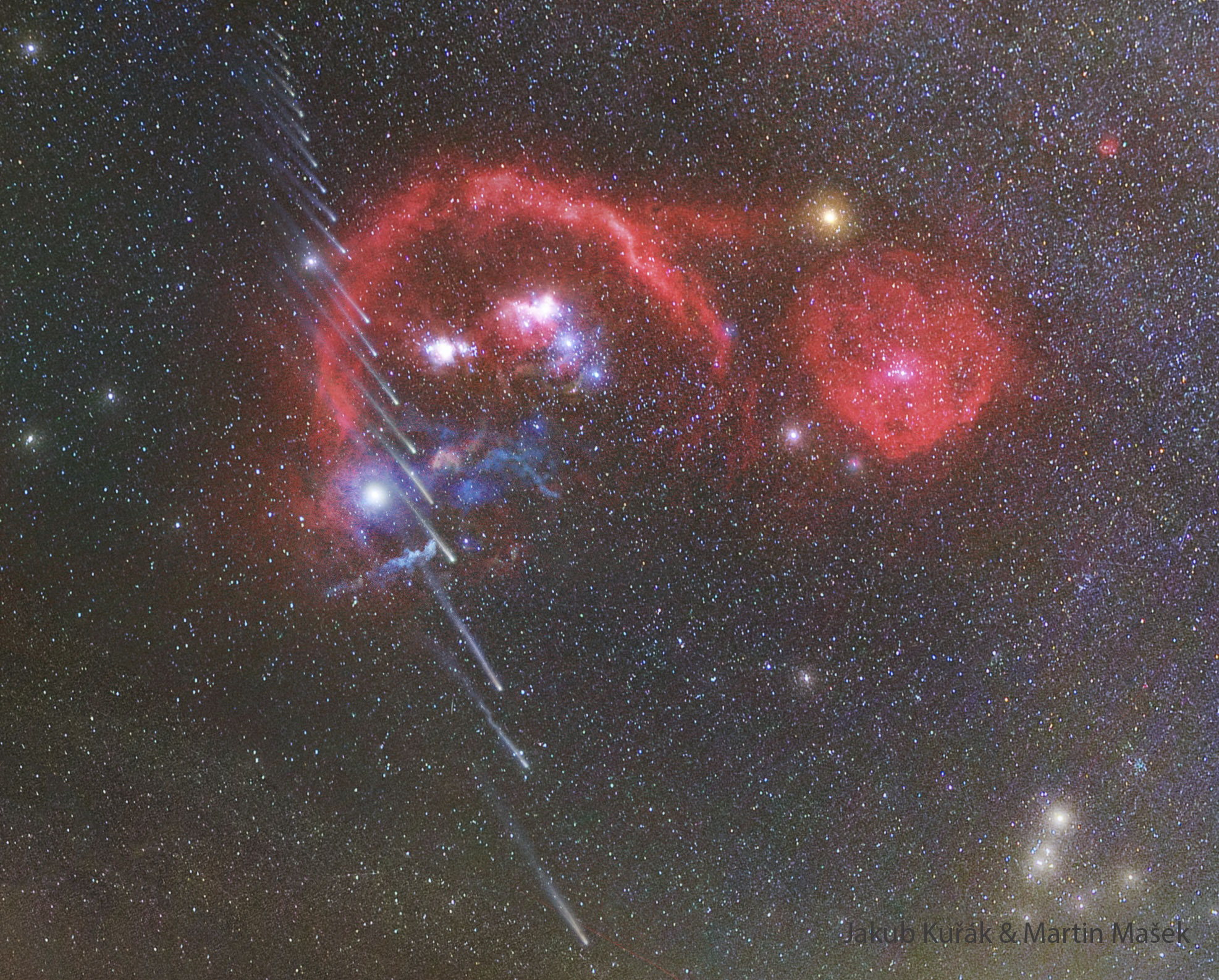
Astronomy - COMET R3 PauSTARRS TROUGH TIME

 2026 June 8

A starfield shows many red nebulas near the center. 
Running vertically up the left side are about 20 images of a
comet, with the head towards the image bottom.  Successively
higher images of the comet show successively shorter
tails. 
Please see the explanation for more detailed information.

Comet R3 PanSTARRS Through Time
Image Credit & Copyright: Jakub Kuřák & Martin Mašek (FZU of the Czech Academy of Sciences)

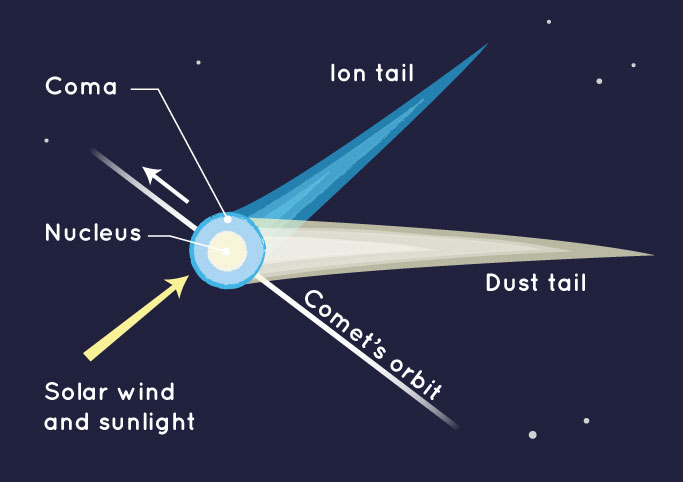
Explanation: What happens to a comet as it leaves our inner Solar System? Now, the arrival of a comet into the inner Solar System is typically heralded with great fanfare and high hopes that the comet will become bright and photogenic. But on the way out, the comet's nucleus is less warmed by the Sun, less gas and dust are expelled, the bright coma around the nucleus shrinks and fades, and the tail length drops off. Many comets will then return to the outer Solar System and only return in hundreds or thousands of years. In contrast, some comets -- like Comet C/2025 R3 (PanSTARRS) -- receive a gravitational kick from the planets and so will never return. Pictured, Comet R3 PanSTARRs was imaged deeply many nights in early to mid-May near Cerro Paranal in Chile. Later images appear closer to the top and clearly show the shrinking ion tail.

Vulcanologie - CHIVELOUTCH (RUSSIE)


Avec 2800 mètres d'altitude , c'est un des deux volcans les plus actifs au monde.

©Shutterstock

06/06/2026

Santé/Médecine - CANCER : UN MEDICAMENT COURANT POURRAIT CONSTITUER UN ESPOIR


Un médicament contre l'hypertension artérielle couramment utilisé pourrait avoir une deuxième fonction inattendue : aider à lutter contre le cancer. Une nouvelle étude menée par Tyler J. Curiel, du Dartmouth College, a révélé que le telmisartan pouvait renforcer l'efficacité de l'olaparib, un traitement utilisé dans certains types de cancer. L'olaparib cible les tumeurs présentant des déficiences dans la réparation de l'ADN, en particulier celles comportant des mutations du gène BRCA. Cependant, de nombreux types de cancer répondent mal au traitement, et c'est là que le telmisartan pourrait intervenir. Lors d'études en laboratoire et sur des souris, l'association de ces médicaments s'est révélée efficace même sur des tumeurs généralement résistantes au traitement. Au lieu d'altérer la réparation de l'ADN, le telmisartan semblait activer le système d'« alerte » immunitaire de l'organisme, l'aidant ainsi à reconnaître et à attaquer le cancer. Les chercheurs ont découvert que cette association déclenchait des signaux immunitaires plus intenses et ralentissait la croissance tumorale. De plus, elle ne fonctionnait que lorsque le système immunitaire était actif, ce qui démontre que l'organisme joue un rôle clé. Le telmisartan est déjà approuvé par la FDA et largement utilisé, ce qui pourrait accélérer les essais futurs. Des essais sur l'homme restent nécessaires. Mais ces résultats suggèrent qu'un simple comprimé pourrait élargir les options thérapeutiques contre le cancer et renforcer considérablement l'efficacité des médicaments existants.

MSN

05/06/2026

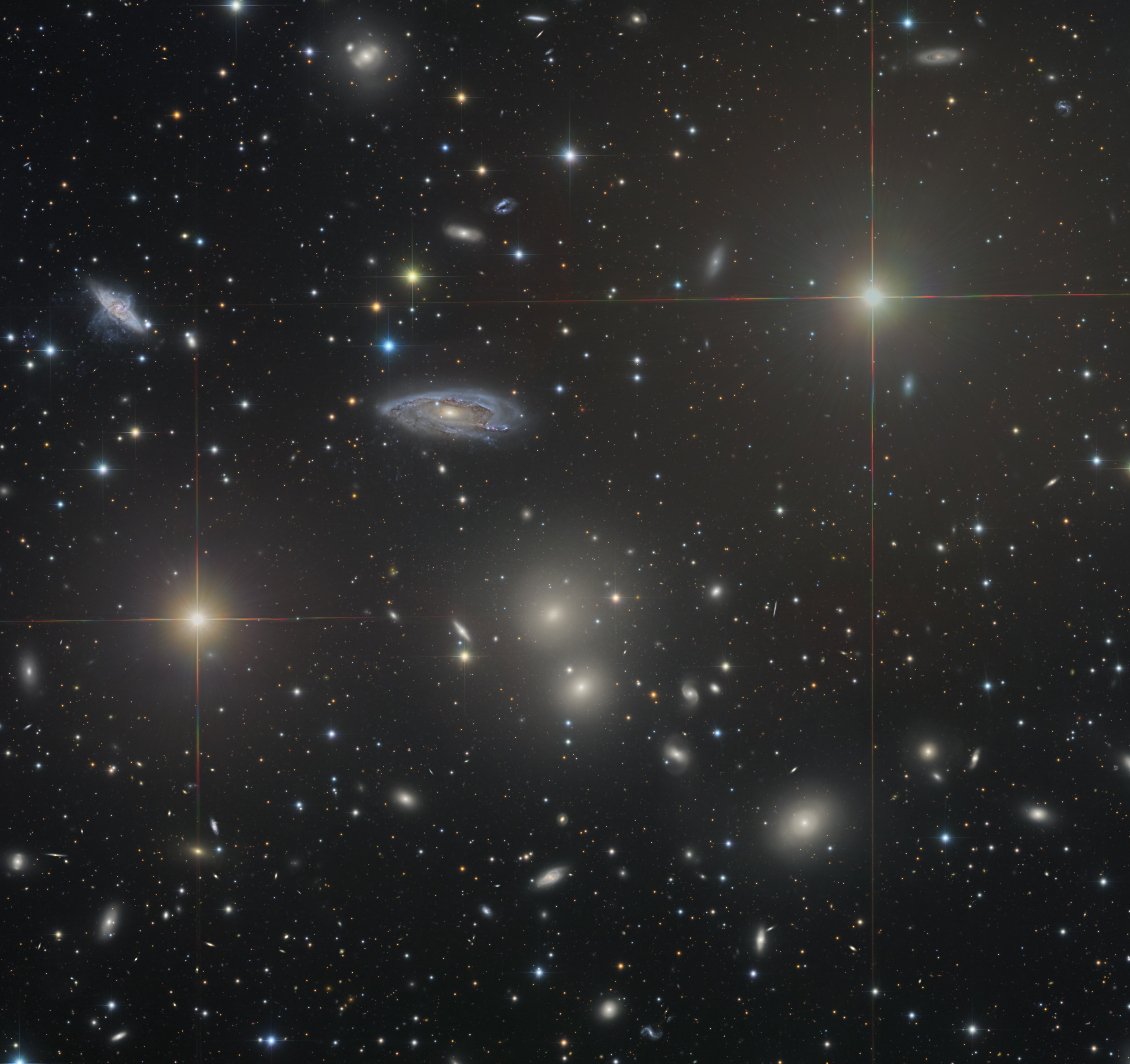
Astronomy - THE HYDRA CLUSTER OF GALAXIES

 2026 June 5

See Explanation.  Clicking on the picture will download
the highest resolution version available.

The Hydra Cluster of Galaxies
Image Credit & Copyright: Rafael Sampaio

Explanation: Within our own Milky Way galaxy, two bright, spiky stars stand like sentinels in the foreground of this cosmic snapshot. Far beyond them are the galaxies of the Hydra Cluster. In fact, while the spiky foreground stars are hundreds of light-years distant, the Hydra Cluster galaxies are well over 100 million light-years away. Three large galaxies near the cluster center, two yellow ellipticals (NGC 3311, NGC 3309) and one prominent blue spiral (NGC 3312), are the dominant galaxies, each about 150,000 light-years in diameter. An intriguing overlapping galaxy pair cataloged as NGC 3314 lies above and left of NGC 3312. Also known as Abell 1060, the Hydra galaxy cluster is one of three large galaxy clusters within 200 million light-years of the Milky Way. In the nearby universe, galaxies are gravitationally bound into clusters which themselves are loosely bound into superclusters. Superclusters in turn are seen to align over even larger scales.

Géoglyphes - L'ARAIGNEE DE NAZCA


Les géoglyphes de Nazca, encore appelés lignes de Nazca, sont de grandes figures tracées dans le désert de Nazca, dans le sud du Pérou. Réalisés pour la plupart entre -200 et 600 ap. J.-C., ils sont le fait de la civilisation Nazca, une culture pré-inca qui se développa entre 300 av. J.-C. et 800 de notre ère. On se perd en conjectures et spéculations parfois douteuses quant à la signification que ces figures avaient pour les Nazcas.

Le sol sur lequel se dessinent ces géoglyphes est couvert de cailloux que l'oxyde de fer colore en rouge. Et c'est en les ôtant, parfois sur des kilomètres, que les Nazcas ont révélé un sol gypseux grisâtre, faisant apparaître des figures réparties le long d'une ligne de 50 km reliant les villes de Nazca et de Palpa, dans la région d'Ica.

On voit ici le géoglyphes dit de l'araignée (47 mètres de long).

© Diego Delso, CC by-sa 2.5

04/06/2026

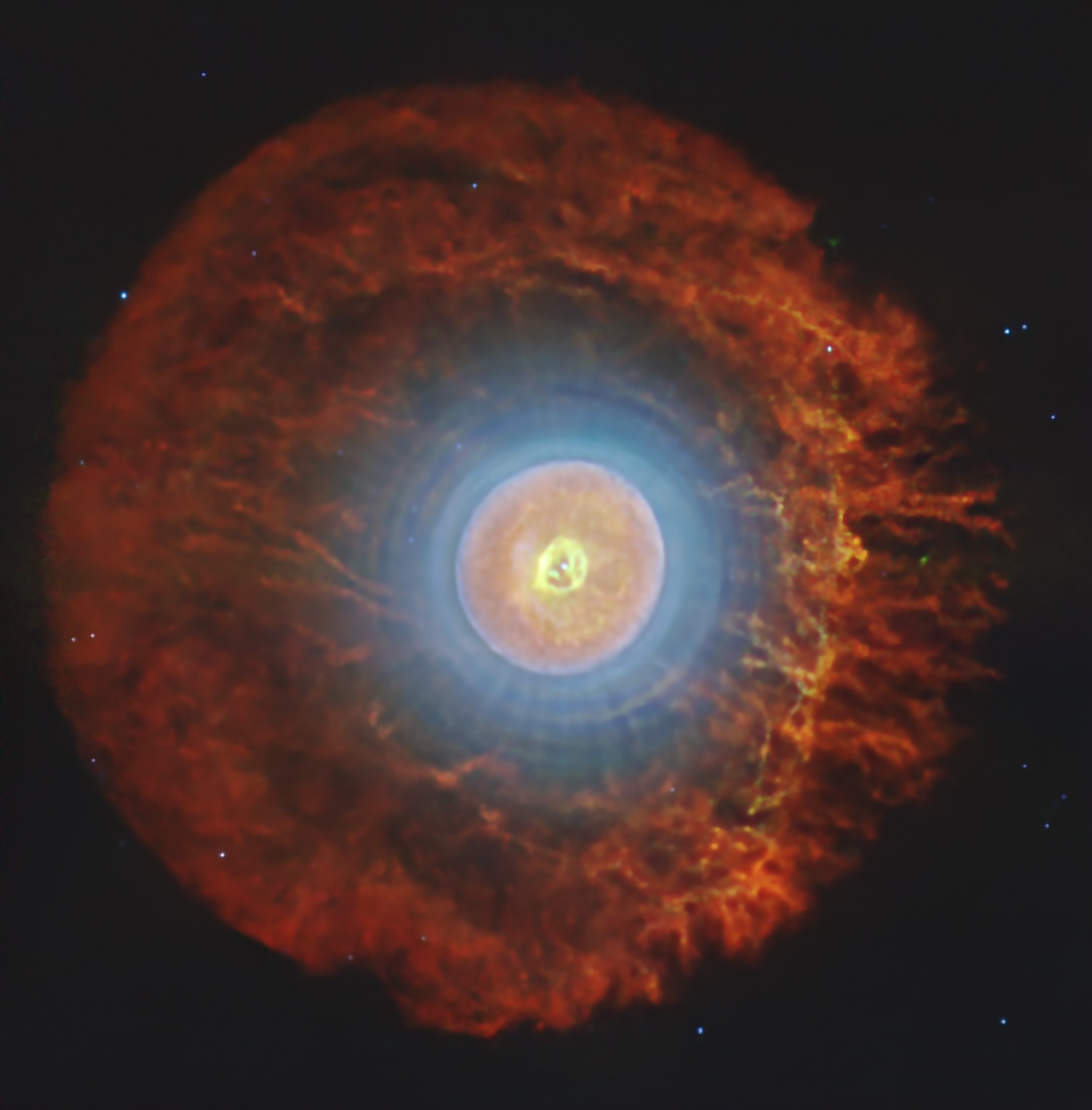
Astronomy - A PLANETARY NEBULA WITH COSMIC BUCKYBALLS

 2026 June 4

A spherical nebula shows concentric
	  rings of different colors over a dark
	  background with a few stars.

A Planetary Nebula with Cosmic Buckyballs
Image Credit: NASA/ESA/CSA/J. Cami (Western University); Image Processing: K. Beecroft
Text: Jan Cami (Western University) & Cecilia Chirenti (NASA GSFC, UMCP, CRESST II)

Explanation: What is happening inside this unusual nebula? Planetary nebula Tc 1, captured here in exquisite detail by the James Webb Space Telescope, is the celestial site where buckyballs were first identified in 2010. Buckminsterfullerene — as buckyballs are officially called — is a molecule with 60 carbon atoms (C60) arranged in the shape of a soccer ball. The molecule is named for architect Buckminster Fuller because of its resemblance to the geodesic dome he helped popularize. Webb’s new data reveal where the C60 molecules live in this nebula, and the geometry is striking: they populate a thin spherical shell around the central star, visible here as the bright edge of the nebula’s glowing orange central region. Look closely near the nebula’s heart and a more perplexing feature emerges: a delicate structure shaped uncannily like an upside-down question mark, fitting punctuation for the many questions this nebula still poses.

03/06/2026

Astronomy - ANDROMEDA THROUGH GAS AND DUST

 2026 June 3

Andromeda Through Gas and Dust
Image Credit & Copyright: Nick Fritz
Text: Keighley Rockcliffe (NASA GSFC, UMBC CSST, CRESST II)

Explanation: Over 1000 years ago, Persian astronomer Abd al-Rahman al-Sufi published humanity’s oldest known record of the Andromeda Galaxy in "The Book of Fixed Stars" (Bodleian Library MS. Marsh 144 p. 167). 800 years later, Andromeda became the 31st entry in Charles Messier’s "Catalogue of Nebulae and Star Clusters". From “a small cloud” to “nebula” and now known to be our nearest major galaxy, Andromeda has remained a fundamental astronomical object. Today’s image, taken over 202 hours, shows how far we have come in our ability to observe our neighbor. The diffuse red and blue clouds are mostly foreground ionized hydrogen and oxygen well within our Milky Way. Pink-red clouds of hydrogen ionized by the energetic light of young stars trace the galaxy’s dusty spiral arms. M32 and M110 are satellite galaxies pictured orbiting the larger Andromeda. Despite its long history of observation through ancient unaided eyes to modern telescopes, Andromeda still holds countless secrets that astronomers will continue to search for, including how galaxies merge and evolve, as well as the nature of the dark matter that galaxies reside in.

Santé/Médecine - CHOLESTEROL : UN TRAITEMENT TESTE A LONDRES POURRAIT TOUT CHANGER - 2/2

L'excès de cholestérol dans le sang peut boucher les artères, augmentant le risque d'accident cardiovasculaire (AVC, infarctus...). © peterschreiber.media, Adobe Stock

Injectée à la dose la plus élevée, le traitement a permis de réduire le taux de cholestérol LDL jusqu'à 62 %. Certains des patients inclus dans l'essai ont été suivis jusqu'à 18 mois et l'effet positif de la thérapie s'est maintenu durant toute cette période. Les scientifiques soulignent par ailleurs qu'aucun effet indésirable grave n'a été associé à cette dose maximale. Les seuls effets indésirables rapportés étaient des réactions légères à la perfusion et de légères modifications des résultats aux tests hépatiques. Mais celles-ci ont été transitoires.

Ces résultats montrent que cette thérapie pourrait être envisagée comme traitement unique de l'hypercholestérolémie et ainsi éviter la prise de médicaments à vie pour réduire le risque de maladies cardiovasculaires. Pour rappel, l'excès de cholestérol dans le sang est l'un des principaux facteurs de risque contrôlables de maladie cardiaque, d'infarctus et d'accident vasculaire cérébral.

« Il est encore trop tôt pour tirer des conclusions définitives, mais il s'agit d'une étape extrêmement prometteuse. Ces résultats démontrent l'efficacité et l'innocuité de cette technologie, qui contribue à abaisser le cholestérol à des niveaux comparables à ceux obtenus avec les médicaments actuellement disponibles », a déclaré le Pr Riyaz Patel, clinicien-chercheur à l'UCL et responsable de l'essai clinique. Selon lui, ce traitement « pourrait offrir une solution unique et définitive à une affection très courante, ce qui révolutionnerait la prévention des infarctus et des AVC à long terme ».

L'essai va se poursuivre avec la réalisation d'études de plus grande envergure pour évaluer ce traitement prometteur.

En France, plus de 5 millions de personnes prennent un traitement par statine quotidiennement, médicament prescrit pour réguler le cholestérol et diminuer le risque cardiovasculaire. Problème, le défaut d'observance de ce traitement est un problème fréquent et donc potentiellement grave.

FuturaSciences

Santé/Médecine - CHOLESTEROL : UN TRAITEMENT TESTE A LONDRES POURRAIT TOUT CHANGER - 1/2

Des chercheurs ont mis au point un médicament injecté en une seule fois et capable de faire baisser le taux de mauvais cholestérol jusqu’à 62 % ! Ce traitement pourrait permettre d'éviter la prise régulière de médicaments pour traiter l’hypercholestérolémie.

À Londres, des patients ont testé une nouvelle thérapie génique novatrice qui réduit le taux de « mauvais cholestérol » (cholestérol LDL) après une seule perfusion. Les résultats de cette étude menée par des scientifiques de l'University College London (UCL) ont été publiés dans la revue The New England Journal of Medicine.
Un traitement qui utilise la modification génétique

Il s'agit là de résultats d'un essai de phase précoce. Mais ils sont très prometteurs. La thérapie, baptisée VERVE-102, a été administrée en une seule fois par voie intraveineuse.

Concrètement, le traitement utilise la modification génétique pour désactiver le gène qui commande au foie la production d'une protéine appelée PCSK9. Cette protéine empêche normalement l'organisme d'éliminer le cholestérol LDL circulant dans le sang. En inhibant la protéine PCSK9, la thérapie VERVE-102 permet au corps d'éliminer le mauvais cholestérol.

Elle reproduit tout simplement la protection naturelle dont bénéficient les gens qui ne souffrent pas d'hypercholestérolémie. En effet, les personnes nées avec une version naturellement inactive de ce gène présentent un taux de cholestérol très bas tout au long de leur vie et un risque considérablement réduit de maladies cardiovasculaires.

Les auteurs de cette étude expliquent avoir administré ce nouveau médicament à 35 adultes atteints d'une forme héréditaire d'hypercholestérolémie très élevée (hypercholestérolémie familiale hétérozygote) ou d'une maladie coronarienne diagnostiquée à un plus jeune âge que la normale (maladie coronarienne précoce). Le but de cet essai clinique était d'évaluer la sécurité du médicament chez un petit groupe de patients.

FuturaSciences

.../>

02/06/2026

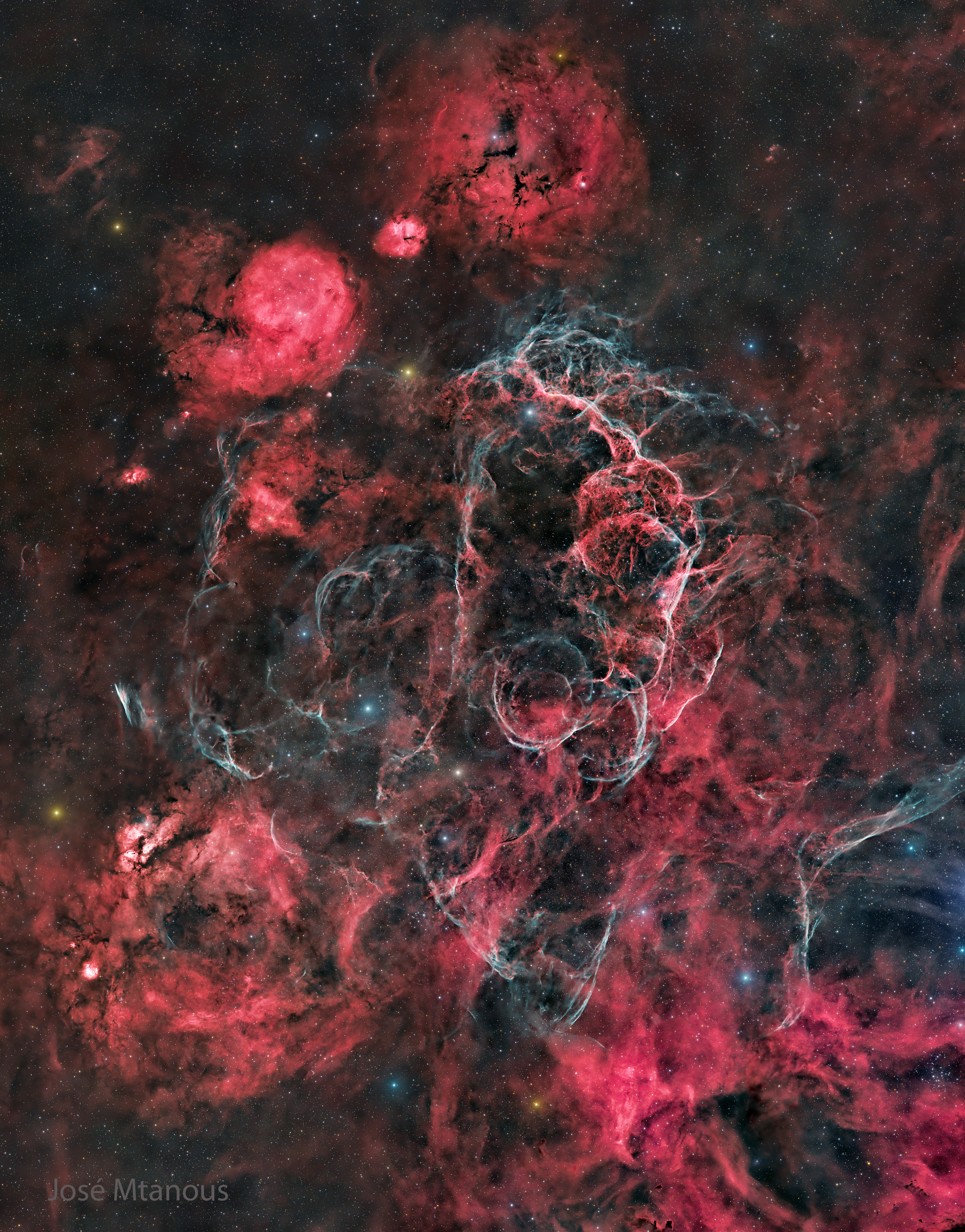
Astronomy - THE VELA SUPERNOVA REMNANT

 2026 June 2

The starfield is filled with many red nebulas, areas
of dark dust, and light blue filaments. 
Please see the explanation for more detailed information.

The Vela Supernova Remnant
Image Credit & Copyright: José Mtanous

Explanation: The explosion is over, but the consequences continue. About twelve thousand years ago, a relatively normal star in the constellation Vela suddenly exploded, creating a strange point of light briefly visible to humans living near the beginning of recorded history. The outer layers of the star crashed into the interstellar medium, driving a shock wave that is still visible today. The featured image, taken piecemeal over 60 hours from the Khomas Region of Namibia, captures some of that filamentary and gigantic shock in visible light, with details highlighted by hydrogen (red) and oxygen (blue) emissions. As gas flies away from the detonated star, it decays and reacts with the interstellar medium, producing light in many different colors and energy bands. Remaining at the center of the Vela Supernova Remnant is a pulsar, a star as dense as nuclear matter that spins around more than ten times in a single second.

01/06/2026

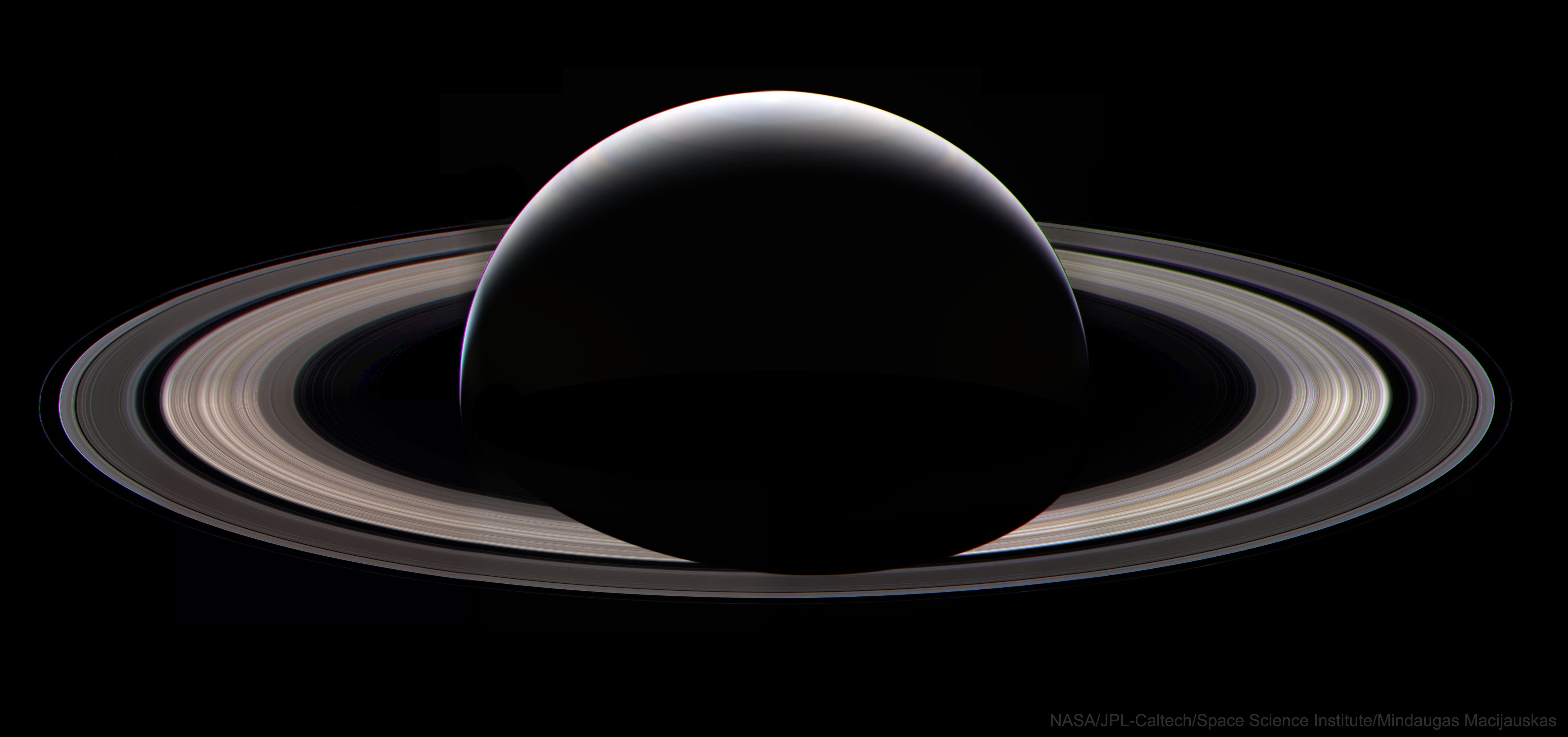
Astronomy - SATURN AT NIGHT

 2026 June 1

See Explanation.  Clicking on the picture will download
the highest resolution version available.

Saturn at Night
Image Credit: NASA, JPL-Caltech, Space Science Institute, Mindaugas Macijauskas

Explanation: Telescopic views of Saturn and its beautiful rings often make it the star of star parties. But this stunning view of the outer gas gaint planet's rings and night side just isn't possible from telescopes in the vicinity of planet Earth. Peering out from the inner Solar System they can only bring Saturn's day side into view. In fact, this image of Saturn's slender sunlit crescent with the planet's night shadow cast across its broad and complex ring system was captured by the robot spacecraft Cassini. After a seven year long journey from planet Earth, Cassini called Saturn orbit home for 13 years (from 2004 - 2017) before it was directed to dive into the atmosphere of the gas giant on September 15, 2017. This magnificent mosaic is composed of frames recorded by Cassini's wide-angle camera only two days before its grand final plunge. And Saturn's night will not be seen again until another spaceship from Earth calls.

Vulcanologie - SAKURAJIMA - JAPON -

Sakurajima, un des volcans les plus actifs au monde, se situe au Japon. Malgré ses éruptions terrifiantes, il offre toujours un beau paysage.

©Getty Images

La vie et la mort - Y-A-T-IL UNE VIE APRèS LA MORT ? (3/5)

Sept jours de coma… et une expérience consciente Durant sept jours, le neurochirurgien reste plongé dans un état végétatif. Les examens neur...