"The big blue"

05/07/2025
LA TERRE VUE DU CIEL - Endeavour quelques minutes avant son amarrage à l'ISS

Cette image a cela d'intéressant qu'elle permet de distinguer trois des couches qui composent l'atmosphère.
La troposphère apparait en orange. C'est dans la partie supérieure de cette couche que naissent la majorité des phénomènes météo. Juste au-dessus, la stratosphère, de couleur blanchâtre, puis la mésosphère.
Nasa
ASTRONOMY - Ou4: The Giant Squid Nebula
2025 July 5
Image Credit & Copyright: Massimo Di Fusco
Explanation: Difficult to capture, this mysterious, squid-shaped interstellar cloud spans nearly three full moons in planet Earth's sky. Discovered in 2011 by French astro-imager Nicolas Outters, the Squid Nebula's bipolar shape is distinguished here by the telltale blue emission from doubly ionized oxygen atoms. Though apparently surrounded by the reddish hydrogen emission region Sh2-129, the true distance and nature of the Squid Nebula have been difficult to determine. Still, one investigation suggests Ou4 really does lie within Sh2-129 some 2,300 light-years away. Consistent with that scenario, the cosmic squid would represent a spectacular outflow of material driven by a triple system of hot, massive stars, cataloged as HR8119, seen near the center of the nebula. If so, this truly giant squid nebula would physically be over 50 light-years across.
04/07/2025
LA TERRE VUE DU CIEL - Houston ; siège du Centre spatial Johnson de la Nasa

Houston n'est pas seulement la ville qui abrite le siège des vols habités de la Nasa. Elle est également connue pour être la capitale mondiale de l'énergie.
Si l'on peut facilement distinguer la ville de Houston et son agglomération, les raffineries de pétrole sont également visibles. Ce sont les zones dont la lumière est la plus ....dorée.
Nasa
ASTRONOMY - NGC 6946 and NGC 6939
2025 July 4

Image Credit & Copyright: Alberto Pisabarro
Explanation: Face-on spiral galaxy NGC 6946 and open star cluster NGC 6939 share this cosmic snapshot, composed with over 68 hours of image data captured with a small telescope on planet Earth. The field of view spans spans about 1 degree or 2 full moons on the sky toward the northern constellation Cepheus. Seen through faint interstellar dust couds near the plane of our Milky Way galaxy, the stars of open cluster NGC 6939 are 5,600 light-years in the distance, near bottom right in the frame. Face-on spiral galaxy NGC 6946 is at top left, but lies some 22 million light-years away. In the last 100 years, 10 supernovae have been discovered in NGC 6946, the latest one seen in 2017. By comparison, the average rate of supernovae in our Milky Way is about 1 every 100 years or so. Of course, NGC 6946 is also known as The Fireworks Galaxy.
SANTé/MEDECINE - Une nouvelle arme contre le cancer - (8/8) - Conclusion : une révolution potentielle en oncologie

Même si cette approche n’en est qu’à ses débuts, les résultats observés en laboratoire et chez les animaux sont très encourageants. La combinaison de molécules vibrantes et de lumière infrarouge pourrait devenir une nouvelle méthode efficace pour traiter le cancer, sans médicament, sans chaleur et sans effets secondaires importants. Les prochaines étapes incluent des tests approfondis sur des animaux plus grands et, plus tard, des essais cliniques sur des humains. Cette technologie ouvre une voie nouvelle et pleine d’espoir pour les générations futures.
©freepik
03/07/2025
SANTé/MEDECINE - Une nouvelle arme contre le cancer - (7/8) - Un traitement sans résistance ni toxicité

Un autre grand avantage de cette technologie est qu’elle ne repose sur aucun médicament. Les cellules cancéreuses ne peuvent donc pas développer de résistance, comme c’est souvent le cas avec les chimiothérapies. De plus, comme l’action mécanique est très localisée (là où la lumière est appliquée), les effets secondaires sont réduits. Le professeur Jorge Seminario explique que le risque que les cellules cancéreuses deviennent résistantes à cette force mécanique est extrêmement faible.
©freepik
LA TERRE VUE DU CIEL - L'Italie vue de l'Espace

Toute l'Italie, dont la Sicile et la Sardaigne, est visible sur cette vue acquise depuis la Station spatiale internationale (ISS) qui voyage à plus de 7 kilomètres par seconde au-dessus de la Terre (environ 400 km). On distingue aussi partiellement la Tunisie. Ces pays bordent les mers Méditerranée, Adriatique et Tyrrhénienne.
@Nasa
ASTRONOMY - Nova V462 Lupi Now Visible
2025 july 3

Nova V462 Lupi Now Visible
Explanation: If you know where to look, you can see a thermonuclear explosion from a white dwarf star. Possibly two. Such explosions are known as novas and the detonations are currently faintly visible with the unaided eye in Earth's southern hemisphere -- but are more easily seen with binoculars. Pictured, Nova Lupi 2025 (V462 Lupi) was captured toward the southern constellation of the Wolf (Lupus) last week near the central plane of our Milky Way galaxy. Nova Lupi 2025 was originally discovered on June 12 and peaked in brightness about a week later. Similarly, Nova Velorum 2025, toward the southern constellation of the Ship Sails (Vela), was discovered on June 25 and peaked a few days later. A nova somewhere in our Galaxy becomes briefly visible to the unaided eye only every year or two, so it is quite unusual to have two novas visible simultaneously. Meanwhile, humanity awaits even a different nova: T Coronae Borealis, which should become visible in northern skies and is expected to become even brighter.
02/07/2025
RADIOACTIVITé - Le mensonge exemplaire !

L’accident du réacteur nucléaire de Tchernobyl, survenu le 26 avril 1986 en Ukraine (alors partie de l’URSS), a entraîné une émission massive de substances radioactives dans l’atmosphère.
Un nuage radioactif s’est déplacé à travers l’Europe dans les jours qui ont suivi, notamment à cause des vents et des conditions météorologiques.
En France :
Le nuage a survolé une grande partie du territoire français entre le 30 avril et le 5 mai 1986.
Certaines zones du sud-est de la France, notamment la Corse, les Alpes, et la vallée du Rhône, ont été plus exposées que d’autres, avec des retombées mesurables de césium-137 et d’iode-131, deux éléments radioactifs.
À l’époque, les autorités françaises (notamment le SCPRI dirigé par Pierre Pellerin) ont déclaré que le nuage s’était arrêté aux frontières de la France, ce qui pourrait ressembler à du comique de très mauvais goût...
Cette déclaration a été considérée comme mensongère ou du moins trompeuse, notamment après la publication de données scientifiques montrant une contamination réelle, bien que variable selon les régions.
Des procès ont été intentés, notamment par des associations de victimes ou de malades (comme la thyroïdite ou certains cancers), mais aucun lien direct et systématique n’a été juridiquement établi entre Tchernobyl et des pathologies spécifiques en France.
En résumé :
Oui, il y a eu une contamination radioactive en France.
Non, le nuage ne s’est pas arrêté aux frontières, contrairement à ce qu’ont affirmé certaines autorités à l’époque.
Le niveau de contamination était modéré comparé à l’Ukraine, la Biélorussie ou certaines zones d’Europe de l’Est, mais non négligeable.
02-07-2025
JoanMira
Inscription à :
Articles (Atom)
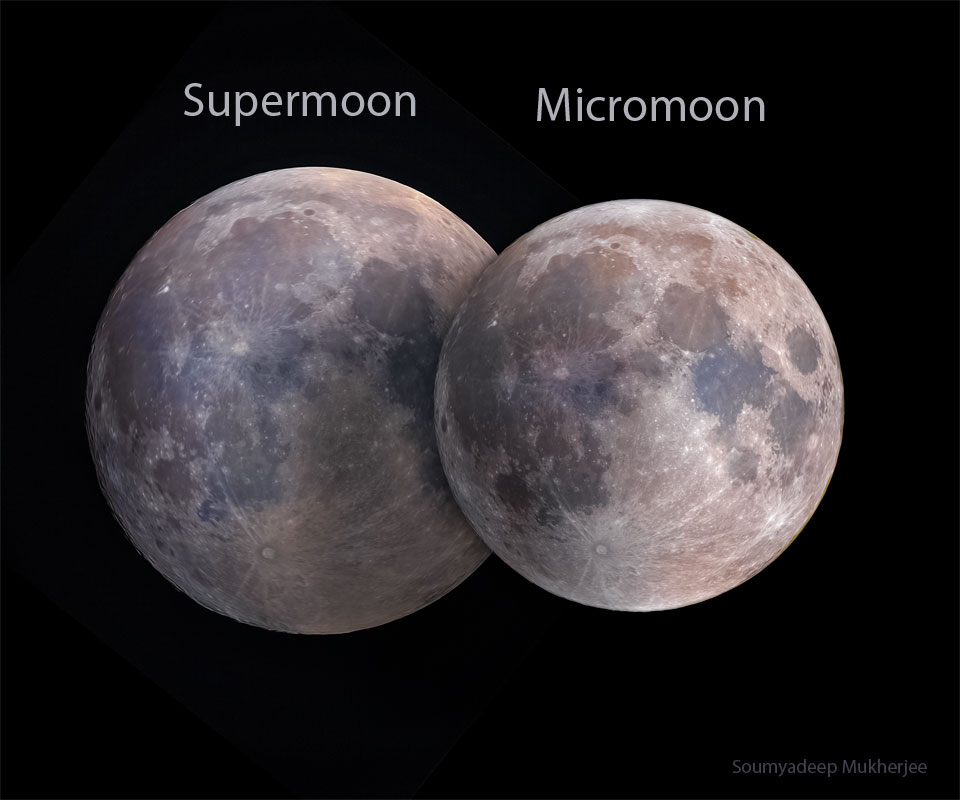
Astronomy - SUPERMOON VERSUS MICROMOON
2026 May 30 Supermoon Versus Micromoon Image Credit: Soumyadeep Mukherjee Explanation: What is so micro about tonight's blue micromoon? ...
-
2026 January 1 Auroral Corona Image Credit & Copyright : Roi Levi Explanation: Cycle 25 solar maximum made 2025 a great year for ...
-
Imaginez un monde où le cancer n’est plus une sentence, mais une simple étape à franchir. Grâce à une découverte révolutionnaire, ce rêve es...


