Nombre total de pages vues
10/10/2025
SANTé/MEDECINE - La grossesse mois par mois - 5ème mois
09/10/2025
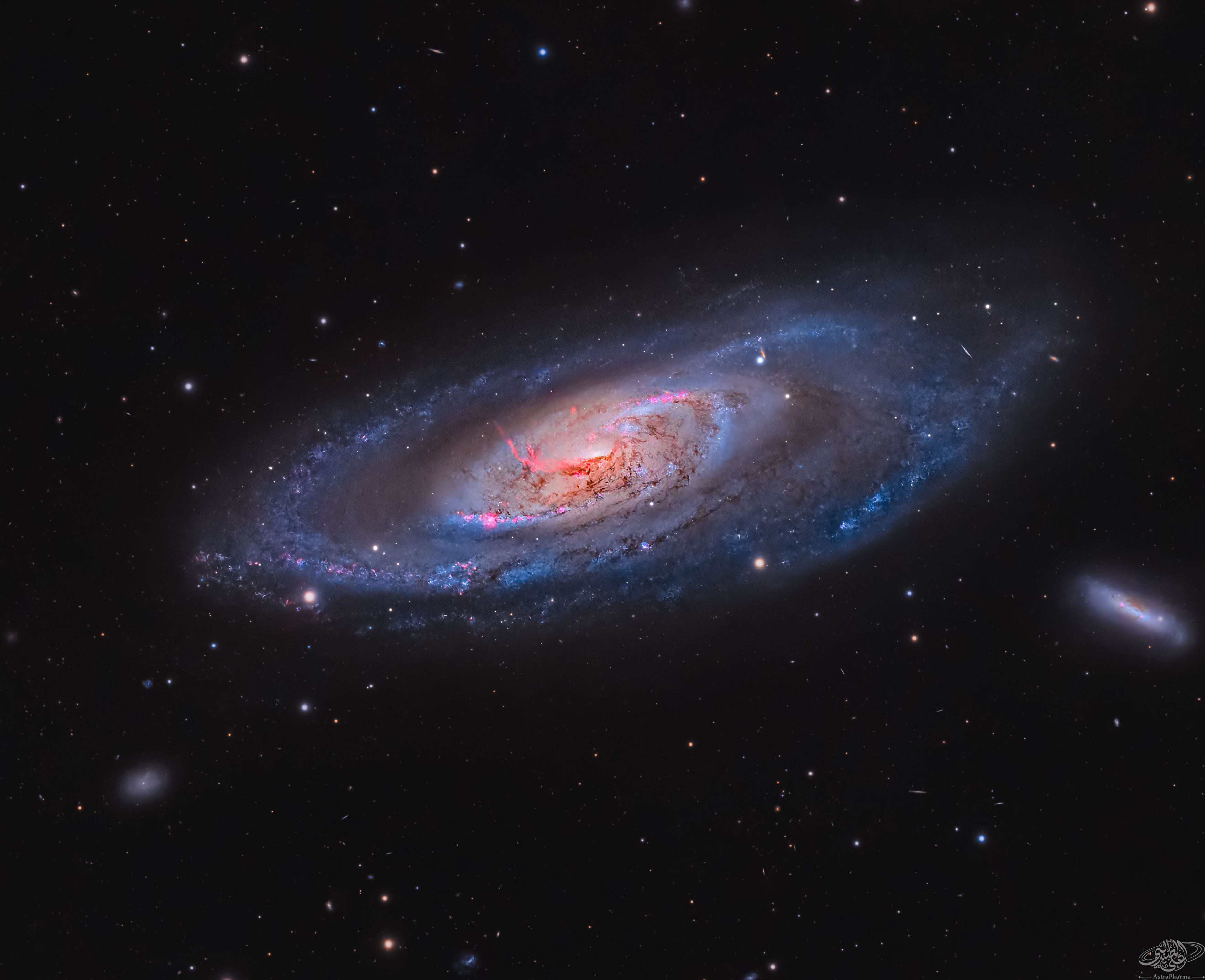
ASTRONOMY - M106: A Spiral Galaxy with a Strange Center
2024 October 9
Image Credit & Copyright: Ali Al Obaidly
Explanation: What's happening at the center of spiral galaxy M106? A swirling disk of stars and gas, M106's appearance is dominated by blue spiral arms and red dust lanes near the nucleus, as shown in the featured image taken from the Kuwaiti desert. The core of M106 glows brightly in radio waves and X-rays where twin jets have been found running the length of the galaxy. An unusual central glow makes M106 one of the closest examples of the Seyfert class of galaxies, where vast amounts of glowing gas are thought to be falling into a central massive black hole. M106, also designated NGC 4258, is a relatively close 23.5 million light years away, spans 60 thousand light years across, and can be seen with a small telescope towards the constellation of the Hunting Dogs (Canes Venatici).
08/10/2025
LES BELLES INVENTIONS DE LEONARD DE VINCI - A-t-il inventé la bicyclette ?
SANTé/MEDECINE - La grossesse mois par mois - 4ème mois
07/10/2025
ASTRONOMY - The Long Tails Comet Tsuchinshan-ATLAS
2024 October 7
Image Credit & Copyright: Jose Santivañez Mueras
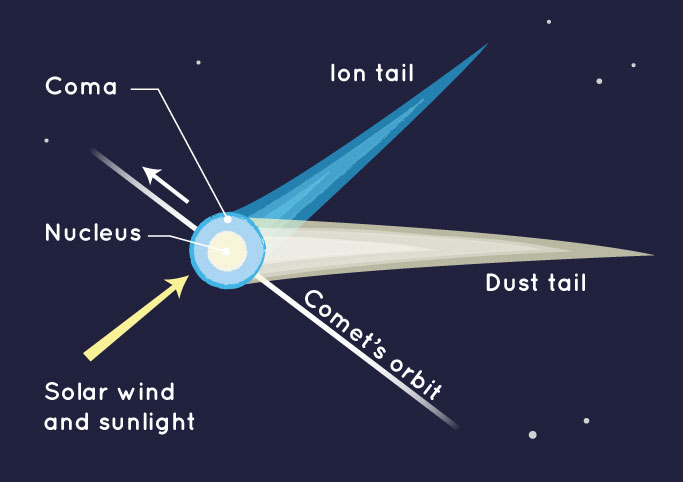
Explanation: A bright comet is moving into the evening skies. C/2023 A3 (Tsuchinshan–ATLAS) has brightened and even though it is now easily visible to the unaided eye, it is so near to the Sun that it is still difficult to see. Pictured, Comet Tsuchinshan–ATLAS was captured just before sunrise from an Andes Mountain in Peru. Braving cold weather, this unusually high perch gave the astrophotographer such a low eastern horizon that the comet was obvious in the pre-dawn sky. Visible in the featured image is not only an impressively long dust tail extending over many degrees, but an impressively long and blue ion tail, too. This month, as the comet moves out from the Sun and passes the Earth, evening observers should be able to see the huge dirty ice ball toward the west just after sunset.
06/10/2025
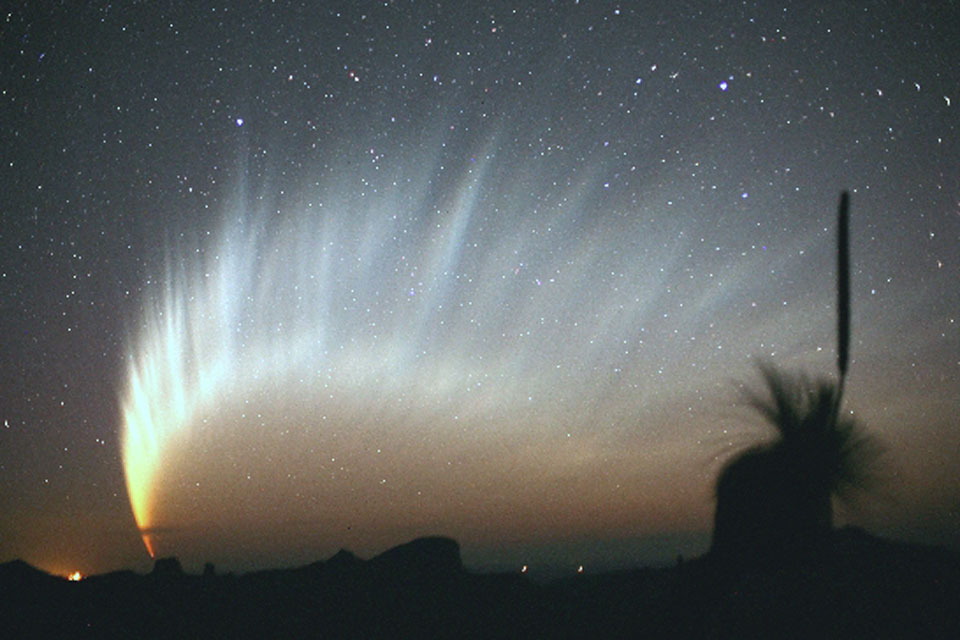
ASTRONOMY - The Magnificent Tail of Comet McNaught
2024 October 6
Image Credit & Copyright: Robert H. McNaught
Explanation: Comet McNaught, the Great Comet of 2007, grew a spectacularly long and filamentary tail. The magnificent tail spread across the sky and was visible for several days to Southern Hemisphere observers just after sunset. The amazing ion tail showed its greatest extent on long-duration, wide-angle camera exposures. During some times, just the tail itself was visible just above the horizon for many northern observers as well. Comet C/2006 P1 (McNaught), estimated to have attained a peak brightness of magnitude -5 (minus five), was caught by the comet's discoverer in the featured image just after sunset in January 2007 from Siding Spring Observatory in Australia. Comet McNaught, the brightest comet in decades, then faded as it moved further into southern skies and away from the Sun and Earth. Over the next month, Comet Tsuchinshan–ATLAS, a candidate for the Great Comet of 2024, should display its most spectacular tails visible from the Earth.
05/10/2025
SANTé/MEDECINE - La grossesse mois par mois - 3ème mois
ASTRONOMY - M27: Not a Comet
2024 October 5
Image Credit & Copyright: Francesco Sferlazza, Franco Sgueglia
Explanation: While hunting for comets in the skies above 18th century France, astronomer Charles Messier diligently kept a list of the things encountered during his telescopic expeditions that were definitely not comets. This is number 27 on his now famous not-a-comet list. In fact, 21st century astronomers would identify it as a planetary nebula, but it's not a planet either, even though it may appear round and planet-like in a small telescope. Messier 27 (M27) is an excellent example of a gaseous emission nebula created as a sun-like star runs out of nuclear fuel in its core. The nebula forms as the star's outer layers are expelled into space, with a visible glow generated by atoms excited by the dying star's intense but invisible ultraviolet light. Known by the popular name of the Dumbbell Nebula, the beautifully symmetric interstellar gas cloud is over 2.5 light-years across and about 1,200 light-years away in the constellation Vulpecula. This impressive color image highlights details within the well-studied central region and fainter, seldom imaged features in the nebula's outer halo.
04/10/2025
ASTRONOMY - Sardinia Sunset
2025 September 6
Image Credit & Copyright: Lorenzo Busilacchi
Explanation: When the sun sets on September 7, the Full Moon will rise. And on that date denizens around much of our fair planet, including parts of Antarctica, Australia, Asia, Europe, and Africa can witness a total lunar eclipse, with the Moon completely immersed in Earth's shadow. As the bright Full Moon first enters Earth's shadow it will darken, finally taking on a reddish hue during the total eclipse phase. In fact, the color of the Moon during a total lunar eclipse is due to reddened light from sunrises and sunsets around planet Earth. The reddened sunlight is scattered by a dense atmosphere into the planet's otherwise dark central shadow. When the sun set on August 22, this telephoto snapshot of red skies, blue sea, and the Mangiabarche Lighthouse was captured from Sant'Antioco, Sardinia, Italy.
02/10/2025
ASTRONOMIE - Iréelle
ASTRONOMY - Earthset from Orion
2026 January 24 Earthset from Orion Image Credit: NASA , Artemis 1 Explanation: Eight billion people are about to disappear in this sn...
-
2022 September 26 All the Water on Planet Earth Illustration Credit: Jack Cook, Adam Nieman, Woods Hole Oceanographic Institution ; Data ...
-
2025 May 11 The Surface of Venus from Venera 14 Image Credit: Soviet Planetary Exploration Program , Venera 14 ; Processing & Copyri...