Nombre total de pages vues
23/01/2026
SANTé/MEDECINE - Tout savoir sur le coeur humain - 2 - Anatomie du cœur humain
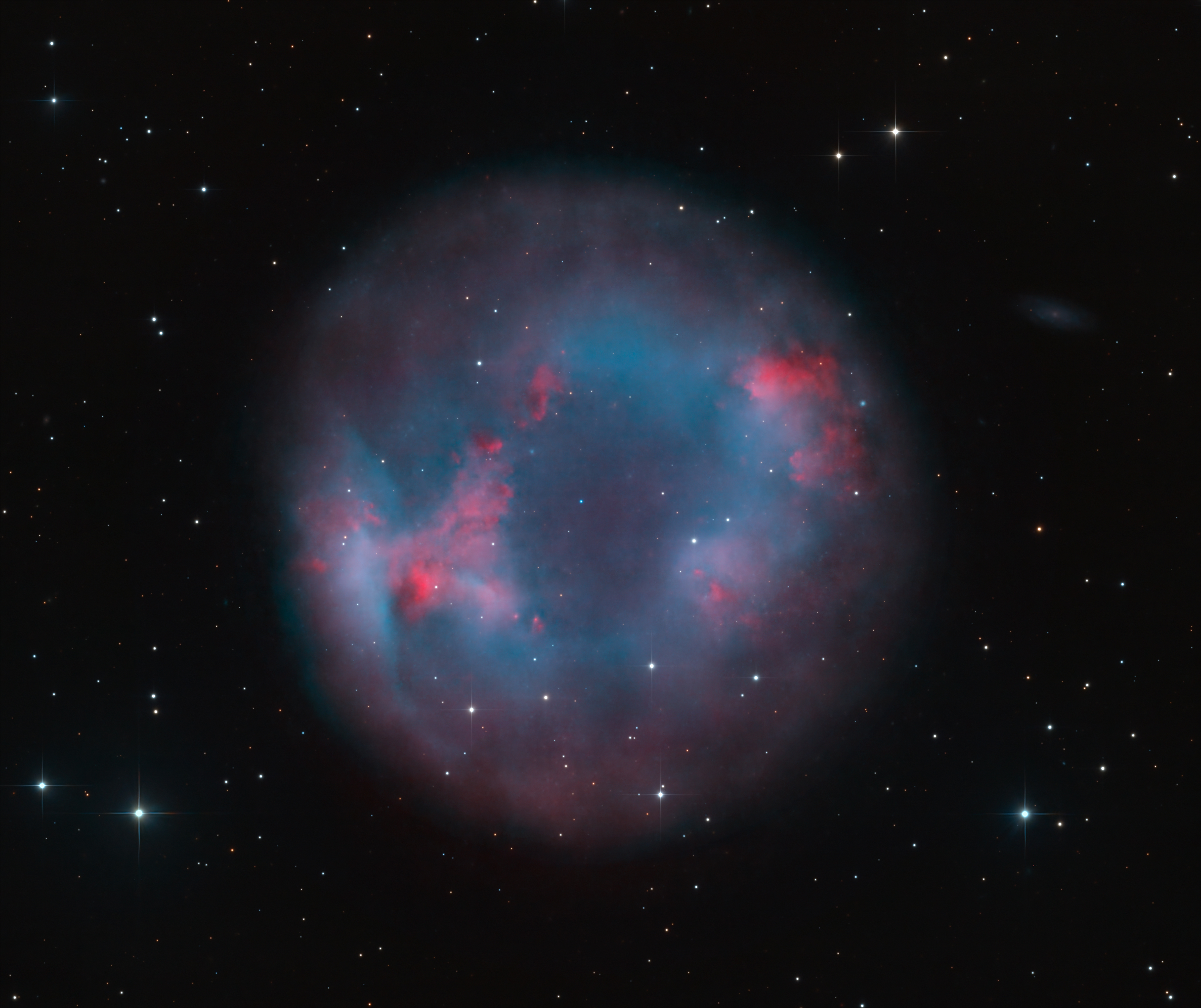
ASTRONOMY - Planetary Nebula Abell 7
2026 January 23
Image Credit & Copyright: Martin Pugh
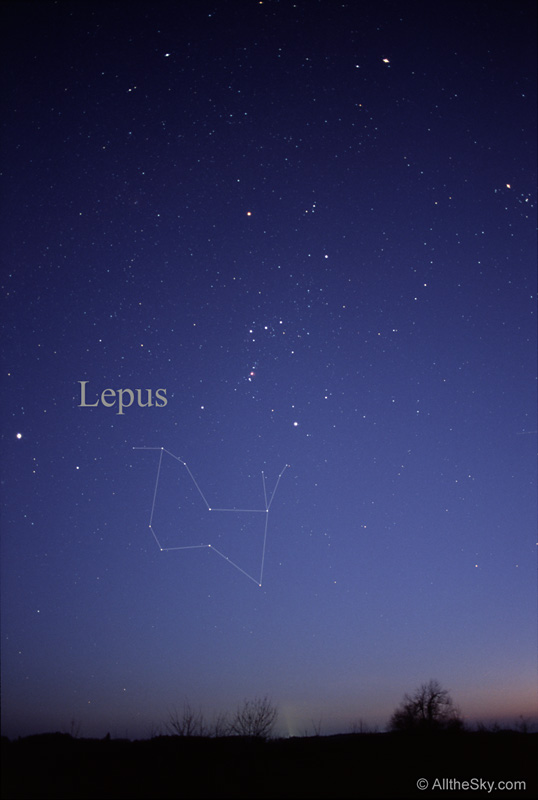
Explanation: Very faint planetary nebula Abell 7 is about 1,800 light-years distant. It lies just south of Orion in planet Earth's skies toward the constellation Lepus, The Hare. Posing with scattered Milky Way stars, its generally simple spherical shape about 8 light-years in diameter is revealed in this deep telescopic image. The beautiful and complex shapes seen within the cosmic cloud are visually enhanced by the use of long exposures and narrowband filters that capture emission from hydrogen and oxygen atoms. Otherwise Abell 7 would be much too faint to be appreciated by eye. A planetary nebula represents a very brief final phase in stellar evolution that our own Sun will experience 5 billion years hence, as the nebula's central, once sun-like star shrugs off its outer layers. Abell 7 itself is estimated to be 20,000 years old. But its central star, seen here as a fading white dwarf, is some 10 billion years old.
22/01/2026
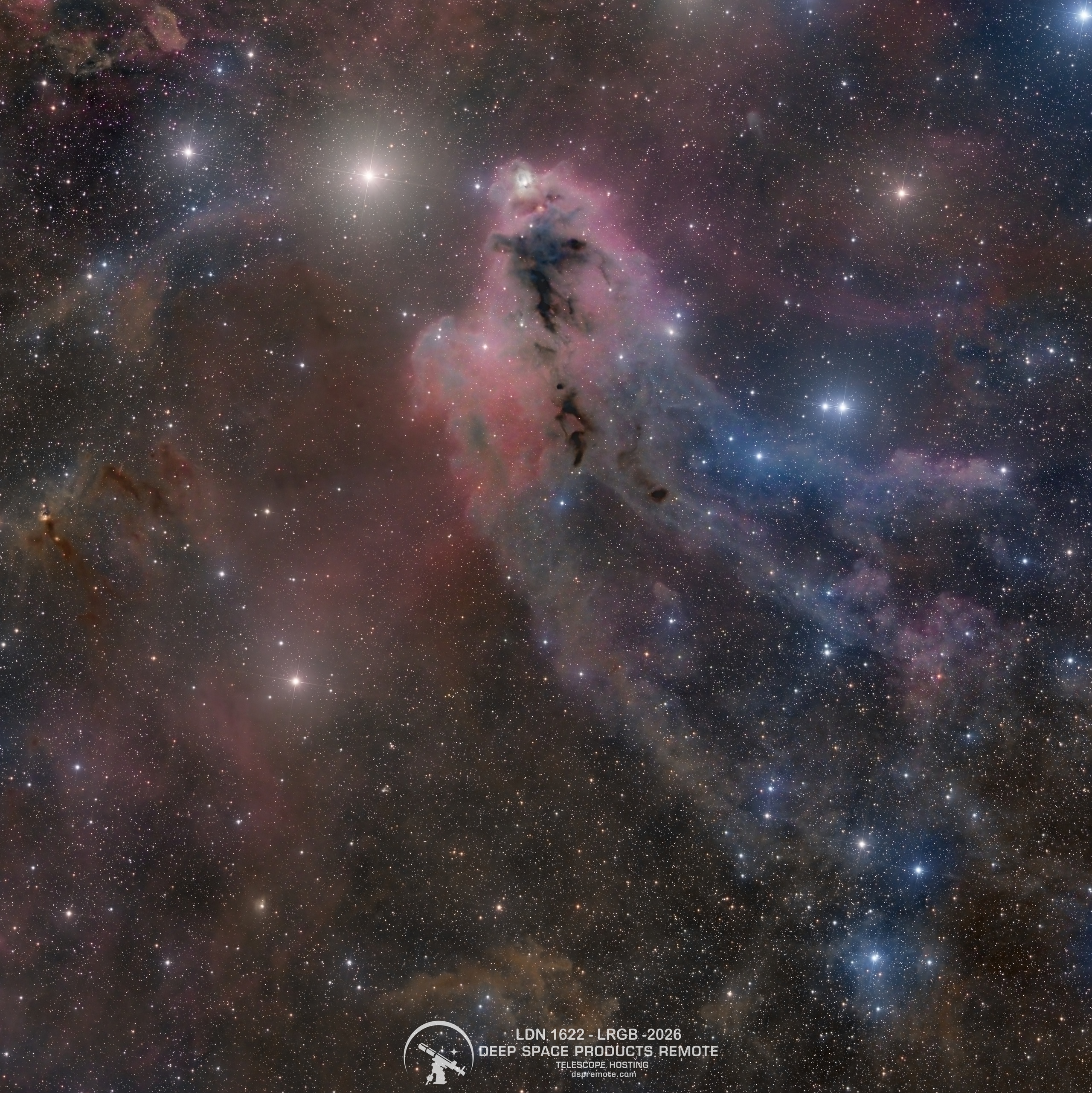
ASTRONOMY - LDN 1622: Dark Nebula in Orion
2026 January 22
Image Credit & Copyright: Chris Fellows
Explanation: The silhouette of an intriguing dark nebula inhabits this cosmic scene. Lynds' Dark Nebula (LDN) 1622 appears against a faint background of glowing hydrogen gas only visible in long telescopic exposures of the region. In contrast, a brighter reflection nebula, vdB 62, is more easily seen just above the dusty dark nebula. LDN 1622 lies near the plane of our Milky Way Galaxy, close on the sky to Barnard's Loop, a large cloud surrounding the rich complex of emission nebulae found in the Belt and Sword of Orion. With swept-back outlines, the obscuring dust of LDN 1622 is thought to lie at a similar distance, perhaps 1,500 light-years away. At that distance, this 3 degree wide field of view would span about 100 light-years. Young stars do lie hidden within the dark expanse and have been revealed in Spitzer Space telescope infrared images. Still, the foreboding visual appearance of LDN 1622 inspires its popular name, the Boogeyman Nebula.
21/01/2026
SANTé/MEDECINE - Tout savoir sur le coeur humain - 1
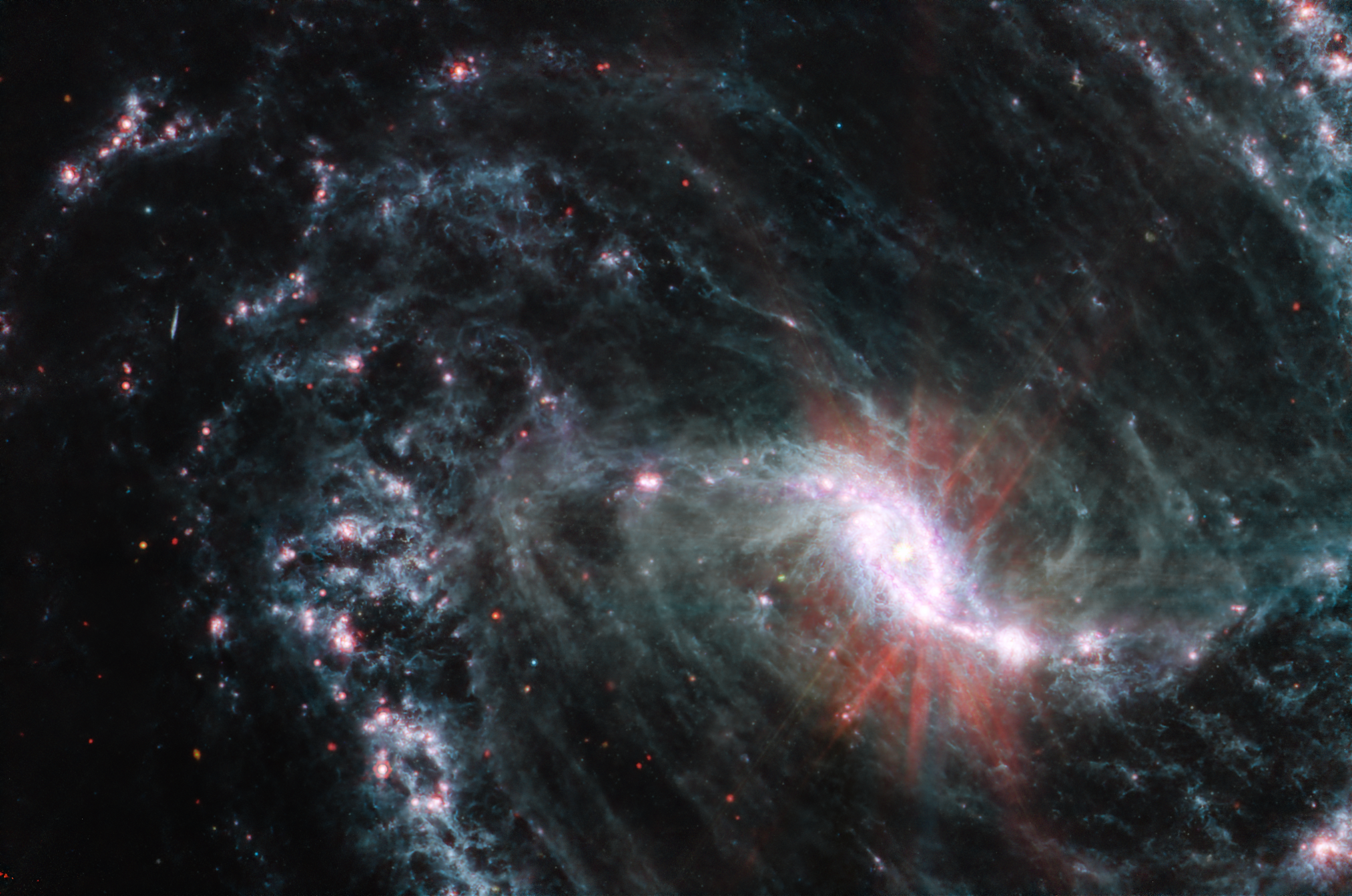
ASTRONOMY - Barred Spiral Galaxy NGC 1365 from Webb
2026 January 21
Image Credit: NASA, ESA, CSA, Janice Lee (NOIRLab) - Processing: Alyssa Pagan (STScI)
Explanation: A mere 56 million light-years distant toward the southern constellation Fornax, NGC 1365 is an enormous barred spiral galaxy about 200,000 light-years in diameter. That's twice the size of our own barred spiral Milky Way. This sharp image from the James Webb Space Telescope's Mid-Infrared Instrument (MIRI) reveals stunning details of this magnificent spiral in infrared light. Webb's field of view stretches about 60,000 light-years across NGC 1365, exploring the galaxy's core and bright newborn star clusters. The intricate network of dusty filaments and bubbles is created by young stars along spiral arms winding from the galaxy's central bar. Astronomers suspect the gravitational field of NGC 1365's bar plays a crucial role in the galaxy's evolution, funneling gas and dust into a star-forming maelstrom and ultimately feeding material into the active galaxy's central, supermassive black hole.
20/01/2026
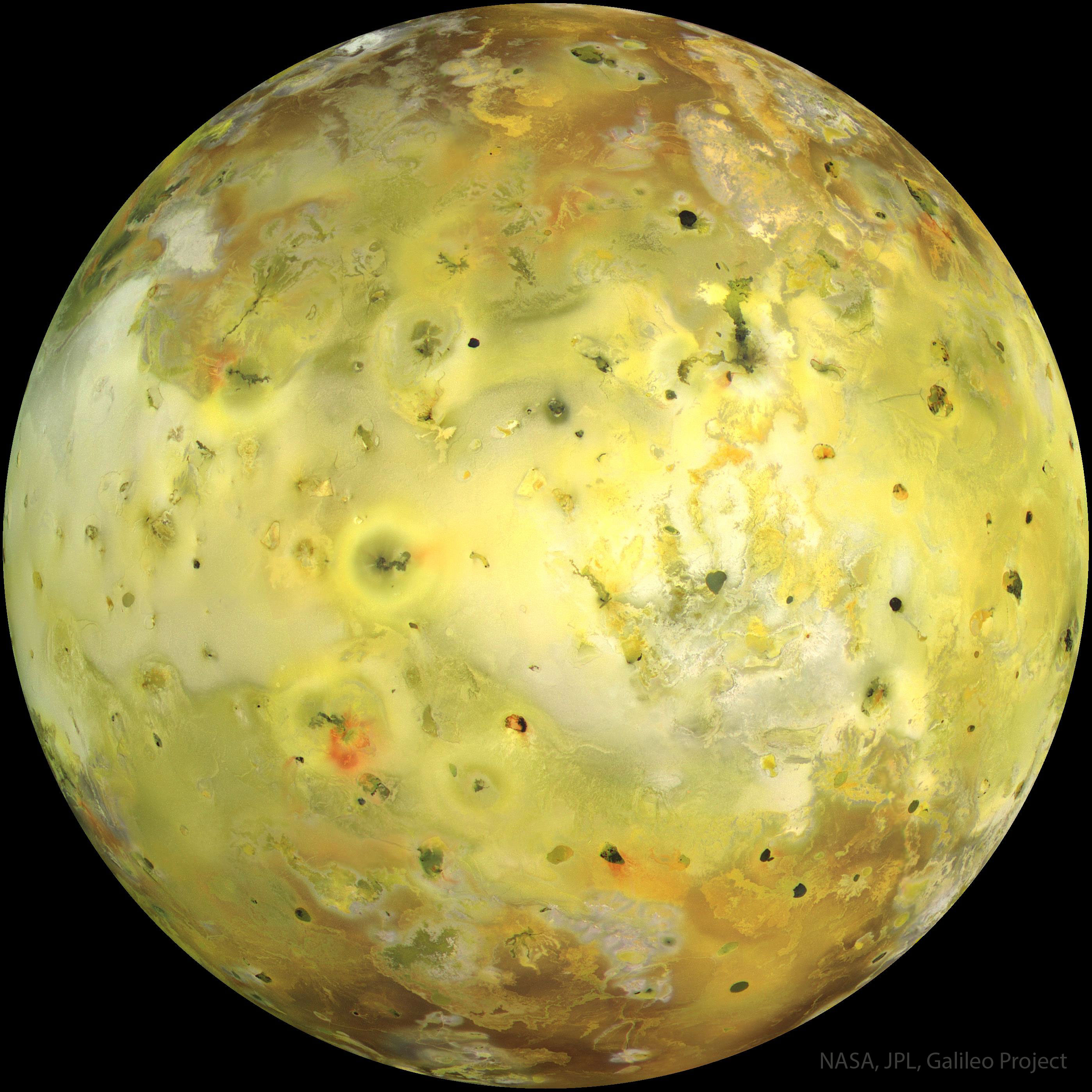
ASTRONOMY - Io in True Color
2026 January 20
Image Credit: NASA, JPL, Galileo Project
Explanation: The strangest moon in the Solar System is bright yellow. The featured picture, an attempt to show how Io would appear in the "true colors" perceptible to the average human eye, was taken in 1999 July by the Galileo spacecraft that orbited Jupiter from 1995 to 2003. Io's colors derive from sulfur and molten silicate rock. The unusual surface of Io is kept very young by its system of active volcanoes. The intense tidal gravity of Jupiter stretches Io and damps wobbles caused by Jupiter's other Galilean moons. The resulting friction greatly heats Io's interior, causing molten rock to explode through the surface. Io's volcanoes are so active that they are effectively turning the whole moon inside out. Some of Io's volcanic lava is so hot it glows in the dark.
19/01/2026
LES BELLES INVENTIONS DE LEONARD DE VINCI - La scie hydraulique et sa roue à godets
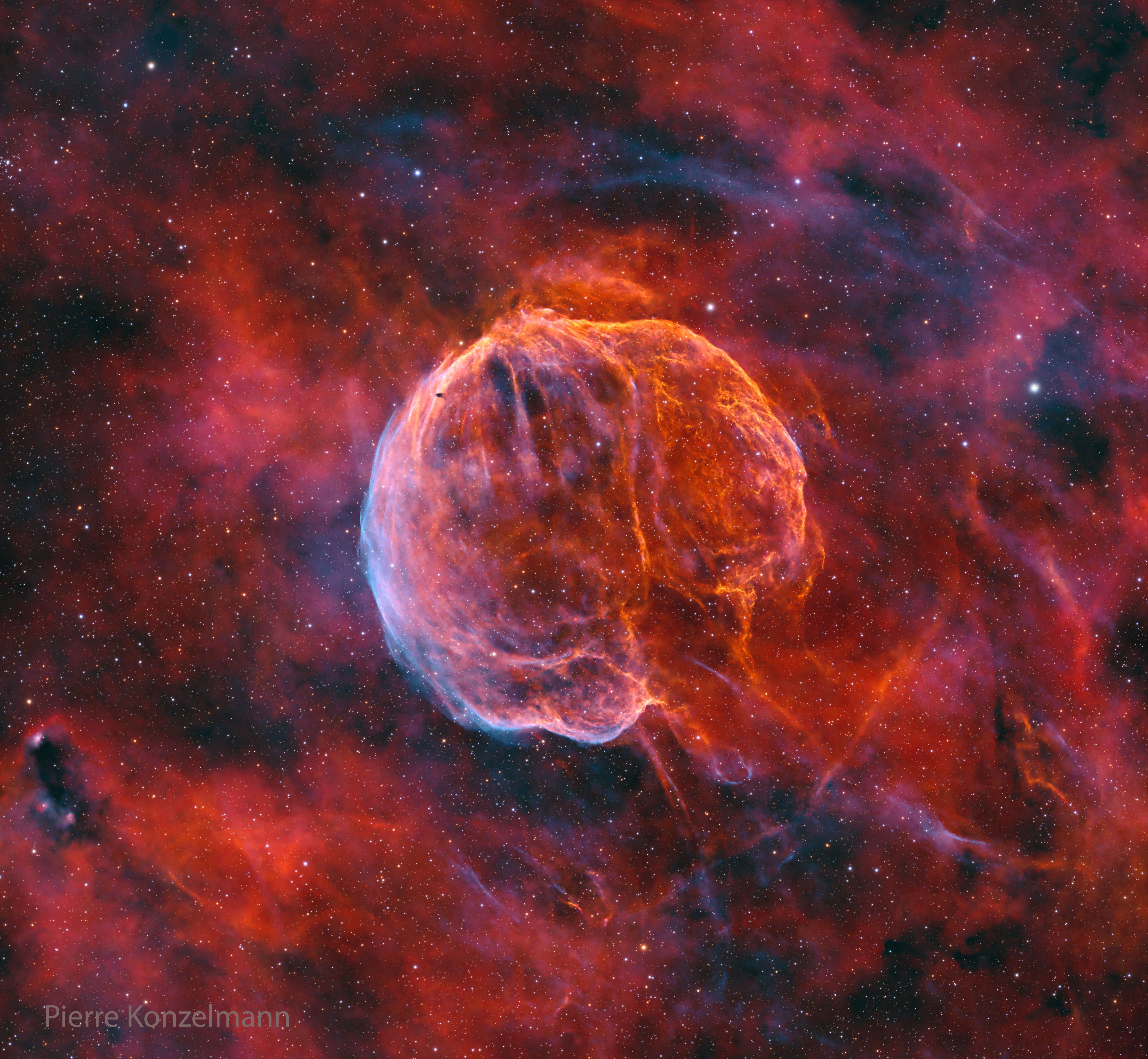
ASTRONOMY - CTB 1: The Medulla Nebula
2026 January 19
Image Credit: Pierre Konzelmann
Explanation: What powers this unusual nebula? CTB 1 is the expanding gas shell that was left when a massive star toward the constellation of Cassiopeia exploded about 10,000 years ago. The star likely detonated when it ran out of elements, near its core, that could create stabilizing pressure with nuclear fusion. The resulting supernova remnant, nicknamed the Medulla Nebula for its brain-like shape, still glows in visible light because of the heat generated by its collision with confining interstellar gas. Why the nebula also glows in X-ray light, though, remains a topic of research. One hypothesis holds that an energetic pulsar was created and powers the nebula with a fast outwardly moving wind. Following this lead, a pulsar was found in radio waves that appears to have been expelled by the supernova explosion at over 1000 kilometers per second. Although the Medulla Nebula appears as large as a full moon, it is so faint that it took 84-hours of exposure with a small telescope in Texas, USA, to create the featured image.
18/01/2026
ASTRONOMY - Jupiter from the Webb Space Telescope
2026 January 18
Image Credit: NASA, ESA, CSA, Jupiter ERS Team; Processing: Ricardo Hueso (UPV/EHU) & Judy Schmidt
Explanation: This infrared view of Jupiter by Webb is illuminating. High-resolution infrared images of Jupiter from the James Webb Space Telescope (Webb) reveal, for example, differences between high-floating bright clouds -- including the Great Red Spot -- and low-lying dark clouds. Also clearly visible in the featured Webb image are Jupiter's dust ring, bright auroras at the poles, and Jupiter's moons Amalthea and Adrastea. The footprint of large volcanic moon Io's magnetic funneling of charged particles onto Jupiter is also visible in the southern aurora. Some objects are so bright that light noticeably diffracts around Webb's optics creating streaks. Webb, which orbits the Sun near the Earth, has a mirror over six meters across making it the largest astronomical telescope ever launched -- with over six times more light-collecting area than Hubble.
17/01/2026
MICROPHOTOGRAPHIE - La clé de voûte de la propreté des abeilles
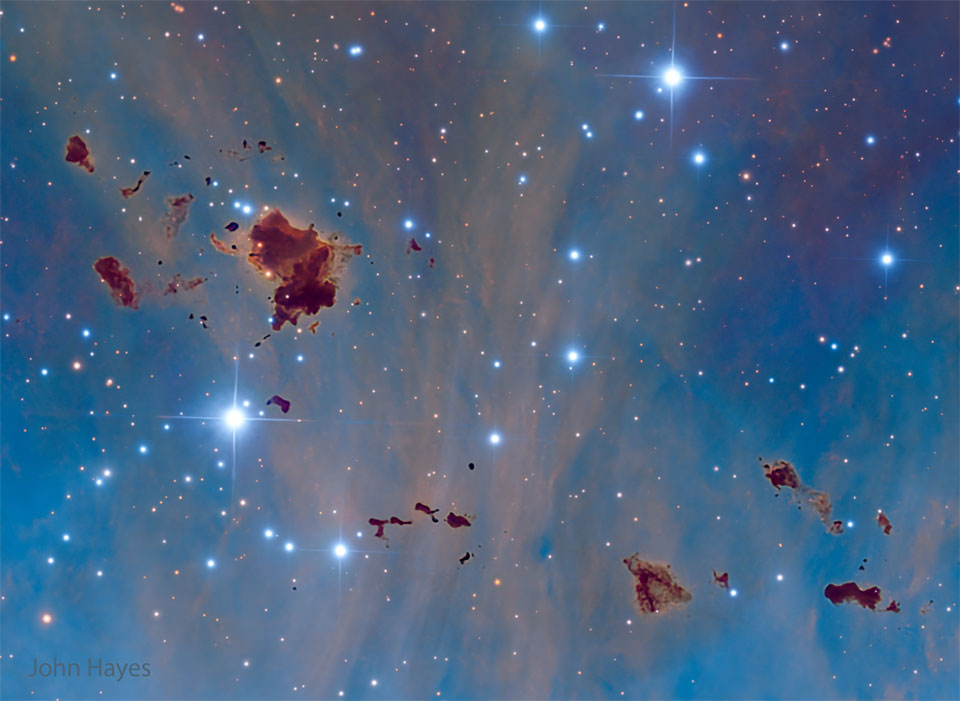
Astronomy - THACKERAY'S GLOBULES
2026 May 25 Thackeray's Globules Image Credit & Copyright: John Hayes Explanation: What are these strange space globs? Situated in ...
-
Imaginez un monde où le cancer n’est plus une sentence, mais une simple étape à franchir. Grâce à une découverte révolutionnaire, ce rêve es...
-
2026 January 1 Auroral Corona Image Credit & Copyright : Roi Levi Explanation: Cycle 25 solar maximum made 2025 a great year for ...