"Benedictus"
23/03/2019
20/03/2019
Science & Technology - Astronomy picture of the day : Equinox on Planet Earth
Image Credit: NASA, Meteosat, Robert Simmon
Explanation: Welcome to an equinox on planet Earth. Today is the first day of spring in our fair planet's northern hemisphere, fall in the southern hemisphere, with day and night nearly equal around the globe. At an equinox Earth's terminator, the dividing line between day and night, connects the planet's north and south poles as seen at the start of this remarkable time-lapse video compressing an entire year into twelve seconds. To make it, the Meteosat satellite recorded these infrared images every day at the same local time from a geosynchronous orbit. The video actually starts at the September 2010 equinox with the terminator aligned vertically. As the Earth revolves around the Sun, theterminator tilts to provide less daily sunlight to the northern hemisphere, reaching the solstice and northern hemisphere winter at the maximum tilt. As the year continues, the terminator tilts back again and March 2011 equinox arrives halfway through the video. Then the terminator swings past vertical the other way, reaching the the June 2011 solstice and the beginning of northern summer. The video ends as the September equinox returns.

Science & Technologie - Le monde mineral et ses trésors cachés : "Paesine ou calcaire de Florence"

"Paesine ou calcaire de Florence"
Originaire de la région de Florence, la paesine est une variété de calcaire marneux. Elle est souvent qualifiée de « pierre paysage », « pierre imagée », « calcaire de Florence » ou « calcaire ruiniforme ». La paesine est le résultat de la combinaison de la sédimentation puis des mouvementsde tectonique, de l'apport d'oxydes par infiltration dans ces calcaires faiblement hygrophiles puis à la cicatrisation des failles par la cristallisation de calcite.
Bruno Cupillard
Ciência & Tecnologia - Noticias : Última Super Lua de 2019 chega em “cima” do equinócio de março
Esta terceira Super Lua do dia 21 de março ocorre a menos de quatro horas depois da chegada do equinócio, e ganha um especial realce porque a última vez que ambos coincidiram foi em 2000, portanto, há 19 anos. O equinócio é a época do ano quando o centro do Sol está alinhado com a linha do Equador, e por isso o dia e a noite têm igualmente 12 horas de duração.
Para observar o momento exato da Super Lua, terá de olhar para o céu noturno na noite de 20 para 21 de março. A Lua começa a surgir nos céus às 18:17 da tarde do dia 20, até às 7:11 da manhã de 21. Mas se quer apanhar a Lua Cheia, aponte o alarme do relógio para as 1:43 da manhã, quando ocorre o momento exato do fenómeno.
Relativamente ao equinócio, este ano o momento exato em que o Sol cruza a linha do Equador decorre às 21:58 (hora de Lisboa) no dia 20 de março.
SapoTek - Portugal
17/03/2019
Science & Technology - Astronomy picture of the day : M106: A Spiral Galaxy with a Strange Center
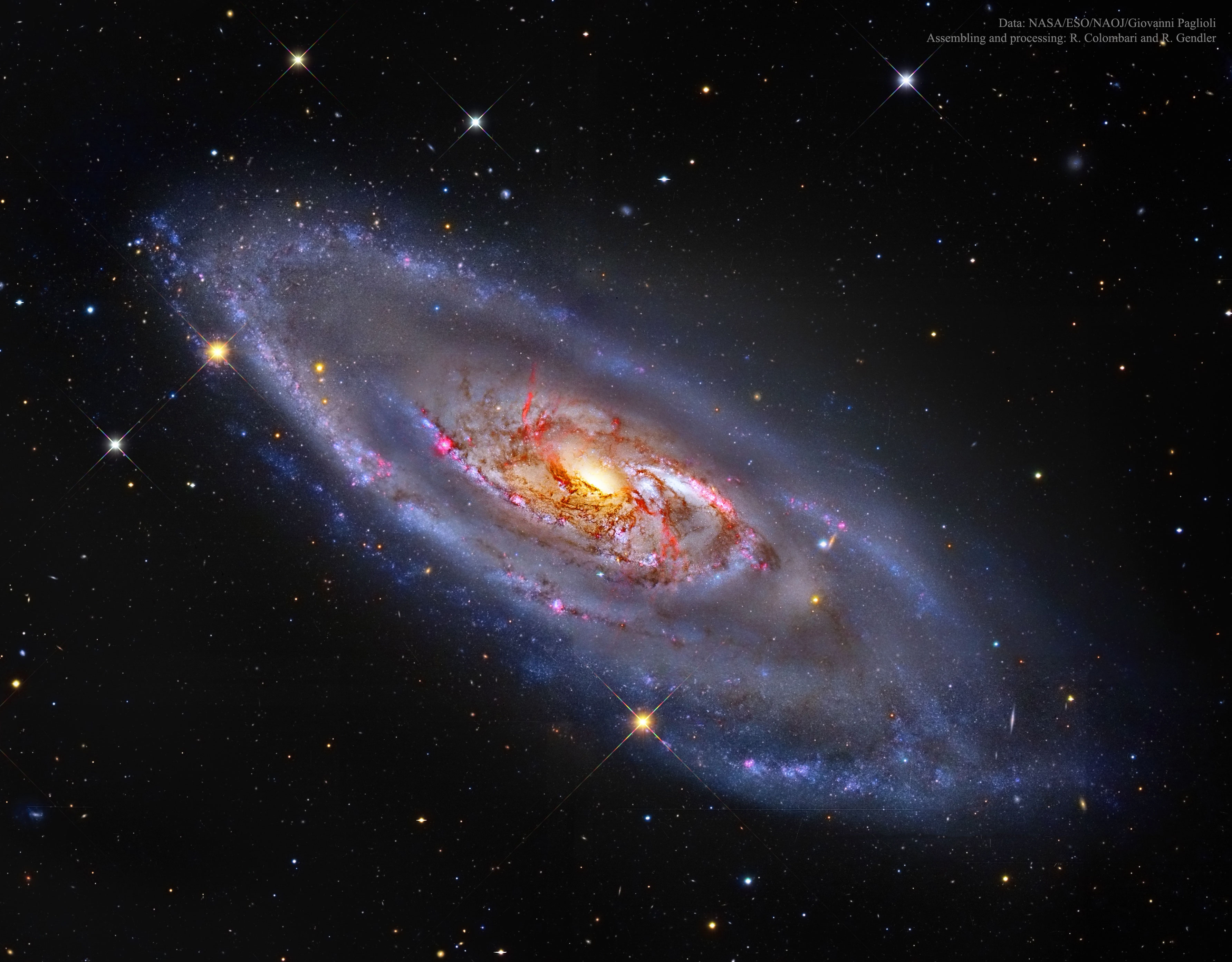
Image Credit: NASA, ESO , NAOJ, Giovanni Paglioli; Assembling and Processing: R. Colombari and R. Gendler
Explanation: What's happening at the center of spiral galaxy M106? A swirling disk of stars and gas, M106's appearance is dominated by blue spiral arms and red dust lanes near the nucleus, as shown in the featured image. The core of M106 glows brightly in radio waves and X-rays where twin jets have been found running the length of the galaxy. An unusual central glow makes M106 one of the closest examples of the Seyfert class of galaxies, where vast amounts of glowing gas are thought to be falling into a central massive black hole. M106, also designated NGC 4258, is a relatively close 23.5 million light years away, spans 60 thousand light years across, and can be seen with a small telescope towards the constellation of the Hunting Dogs (Canes Venatici).
Science et Technologie - Le monde minéral et ses trésors cachés : Paesine aux dendrites noires

Paesine aux dendrites noires
Dans certaines paesines, les oxydes de manganèse ont créé des dendrites noires telles des arborescences de part et d'autre des fissures. Les couches ou strates se sont en effet fractionnées sous les mouvements du sol lors de la création des Apennins. Les failles se sont alors re-soudées par la cristallisation de calcite. Une fois tranchées et polies, ces roches présentent des dessins tels celui présenté sur cette photo. Le calcaire marneux recouvre une large partie de la province de Florence, en Italie. Les affleurements découvrent des strates de quelques centimètres à deux mètres.
© Bruno Cupillard
14/03/2019
Science & Technology - Astronomy picture of the day : 2019 March 14 : Perseverance Valley Panorama
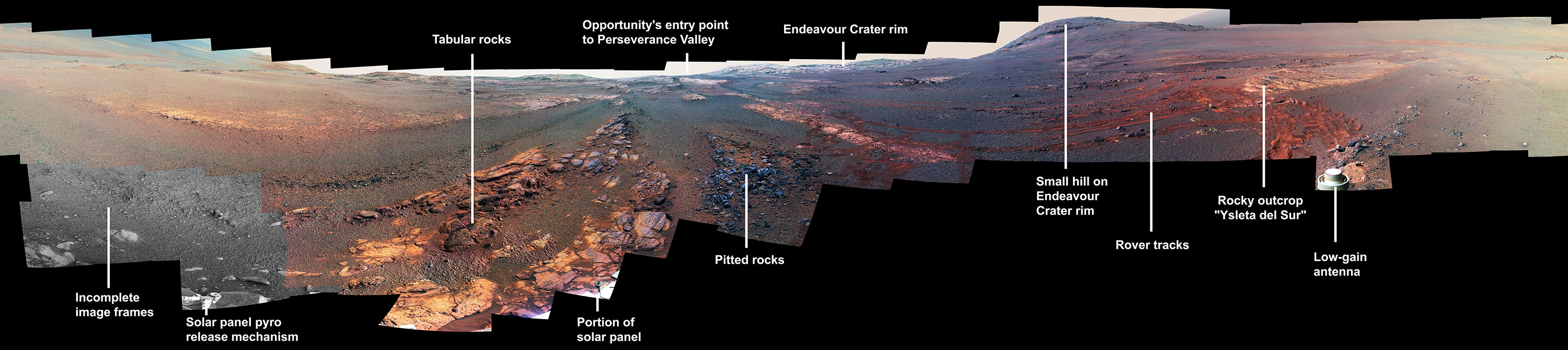
Image Credit: NASA JPL-Caltech Cornell ASU
Explanation: Mars exploration rover Opportunity's parting panorama from Perseverance Valley spans 360 degrees in this false color mosaic. The scene is composed of 354 individual images recorded through 3 different color filters by the rover's panoramic camera from May 13 through June 10, 2018. A few frames remain in black and white at the lower left though. Those were obtained through only one filter just before a dust storm engulfed Mars in June 2018, ultimately ending the solar-powered rover's trailblazing 15 year mission. Just right of center, the annotation identifies Opportunity's entry point to Perseverance Valley along the Endeavor crater's western rim. The rover's tracks begin there, extending from over the horizon toward the far right and its final resting spot on the Red Planet.
Science et Technologie - Le monde mineral et ses trésors cachés : Paesine d'Italie aux couleurs éclatantes

Paesine d'Italie aux couleurs éclatantes
La paesine est une variété de calcaire marneux datant de l'Éocène (début du Tertiaire) que l'on trouve dans la région de Florence, en Italie. La couleur de fond est ivoire, beige ou grise. Les bords ou croûtes de certains nodules sont colorés par la pénétration d'oxydes ferriques en brun, ocre etrouille.
Sur cette image, les couches ou strates ont fractionné. Certaines failles se sont remplies decalcites. Les tranches polies présentent naturellement un dessin évoquant des paysages ou des formes symboliques.
Bruno Cupillard
Ciência e Tecnologia - Saude e Medecina : Café contra o cancro da prostata
Cerca de 25% dos novos cancros detetados no homem têm origem neste órgão. Um quarto deles são, em média, fatais. Vários estudos internacionais garantem, no entanto, que a cafeína ajuda a preveni-los
Apesar da sua ingestão não ter só vantagens, são cada vez mais os estudos que enaltecem os benefícios da cafeína. Beber quatro chávenas de café por dia reduz em 59 por cento o risco de recorrência e progressão do cancro da próstata em homens já diagnosticados com a doença. Isto em comparação com outros cujo o consumo de café é igual ou inferior a uma chávena por semana. A garantia é dos autores de uma investigação publicada na revista Cancer Causes & Control e no site Medical News Today.
Apesar da sua ingestão não ter só vantagens, são cada vez mais os estudos que enaltecem os benefícios da cafeína. Beber quatro chávenas de café por dia reduz em 59 por cento o risco de recorrência e progressão do cancro da próstata em homens já diagnosticados com a doença. Isto em comparação com outros cujo o consumo de café é igual ou inferior a uma chávena por semana. A garantia é dos autores de uma investigação publicada na revista Cancer Causes & Control e no site Medical News Today.
O estudo levado a cabo pelos investigadores do centro de pesquisas sobre o cancro norte-americano Fred Hutchinson Cancer Research Center, em Seattle, nos EUA, analisou apenas a ingestão de café e não de chá. Em 2008, as conclusões do estudo «Health Professionals Follow-up Study» mostraram que os homens que bebiam, em média, 1,9 chávenas de café por dia tinham 18% menos de hipóteses de contrair a doença.
13/03/2019
Science & Technology - Astronomy picture of the day : Highlights of the North Spring Sky
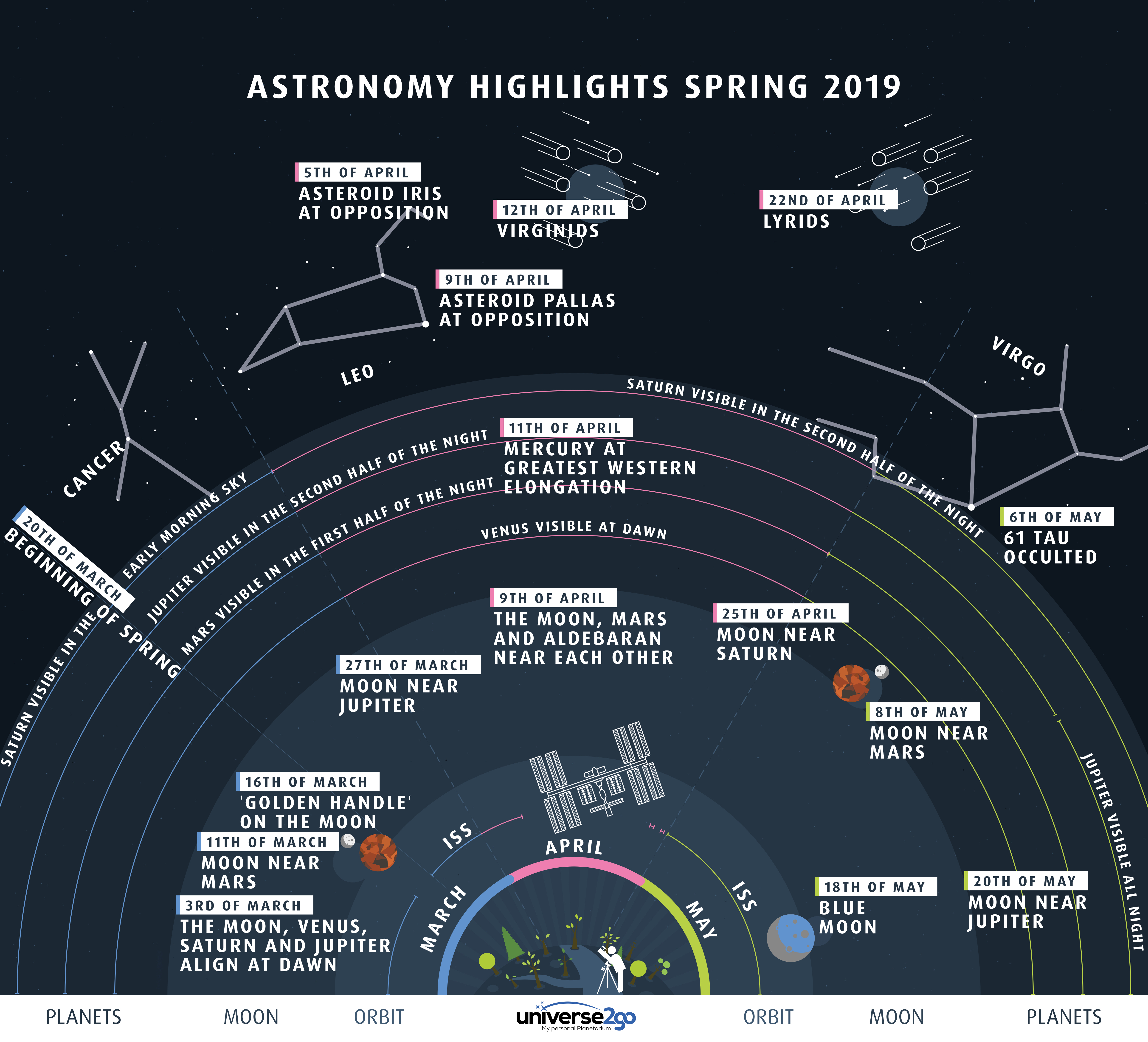
Image Credit & Copyright: Universe2go.com
Explanation: What can you see in the night sky this season? The featured graphic gives a few highlights for Earth's northern hemisphere. Viewed as a clock face centered at the bottom, early (northern) spring sky events fan out toward the left, while late spring events are projected toward the right. Objects relatively close to Earth are illustrated, in general, as nearer to the cartoon figure with the telescope at the bottom center -- although almost everything pictured can be seen without a telescope. As happens during any season, constellations appear the same year to year, and, as usual, the Lyrids meteor shower will peak in mid-April. Also as usual, the International Space Station (ISS) can be seen, at times, as a bright spot drifting across the sky after sunset. After the Vernal Equinox next week, the length of daytime will be greater than the length of nighttime in Earth's northern hemisphere, an inequality that will escalate as thespring season develops. Also as spring ages, Jupiter becomes visible increasingly earlier in the night. As spring draws to a close, the month of May will feature two full moons, the second of which is called a Blue Moon.
Inscription à :
Articles (Atom)
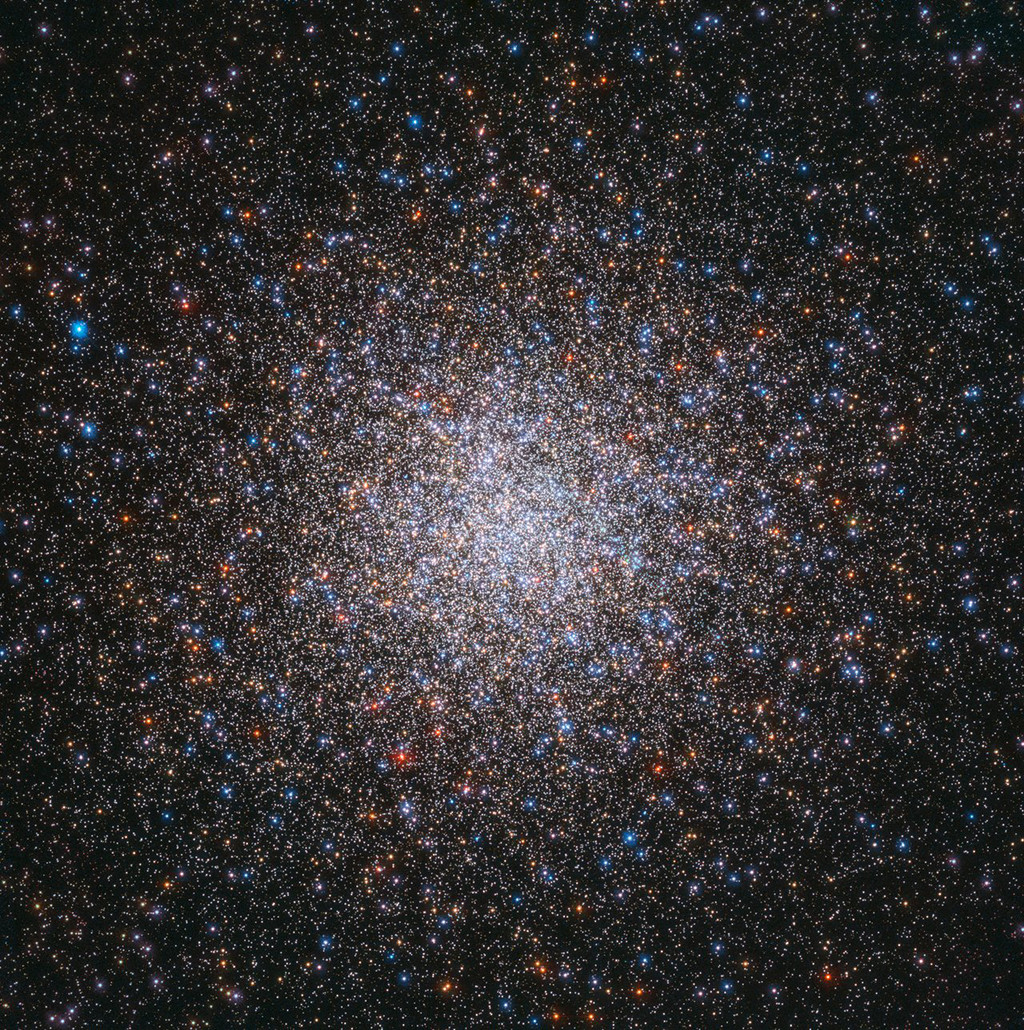
Astronomy - MESSIER 2
2026 May 23 Messier 2 Image Credit: ESA/Hubble & NASA , G. Piotto et al. Explanation: After the Crab Nebula , this giant star clu...
-
Imaginez un monde où le cancer n’est plus une sentence, mais une simple étape à franchir. Grâce à une découverte révolutionnaire, ce rêve es...
-
2026 January 1 Auroral Corona Image Credit & Copyright : Roi Levi Explanation: Cycle 25 solar maximum made 2025 a great year for ...