Nombre total de pages vues

27/05/2021

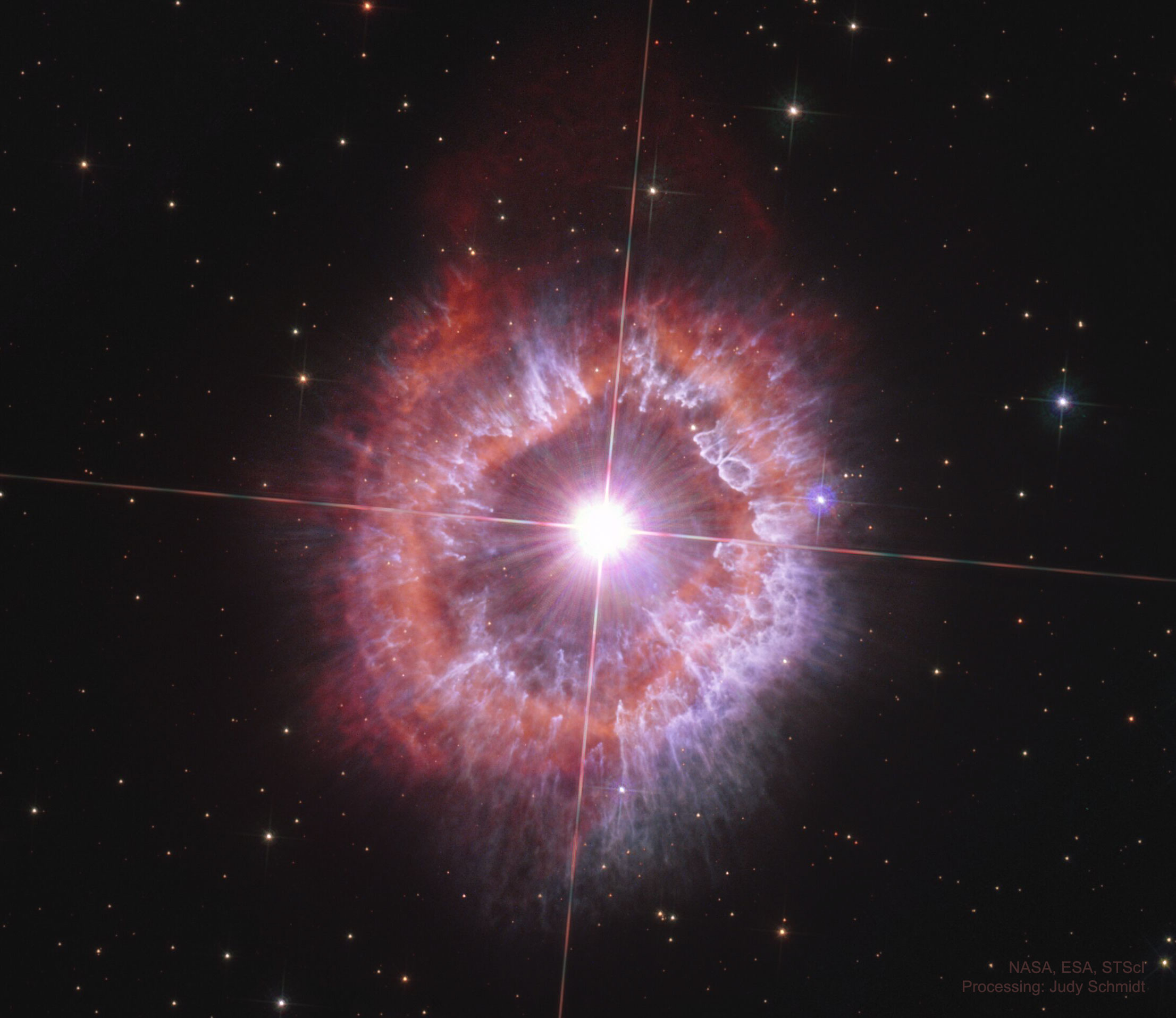
ASTRONOMY - The Outburst Clouds of Star AG Car

 2021 May 26

A picture of the clouds expelled by the supergiant star AG Carina as taken by the Hubble Space Telescope. 
Please see the explanation for more detailed information.

The Outburst Clouds of Star AG Car
Image Credit: NASAESASTScI; Processing: Judy Schmidt; Text: Anders Nyholm

Explanation: What created these unusual clouds? At the center of this 2021 Hubble image, processed by Judy Schmidt, sits AG Carinae, a supergiant star located about 20,000 light-years away in the southern constellation Carina. The star's emitted power is over a million times that of the Sun, making AG Carinae one of the most luminous stars in our Milky Way galaxy. AG Carinae and its neighbor Eta Carinae belong to the scarce Luminous Blue Variable (LBV) class of stars, known for their rare but violent eruptions. The nebula that surrounds AG Car is interpreted as a remnant of one or more such outbursts. This nebula measures 5 light-years across, is estimated to contain about 10 solar masses of gas, and to be at least 10,000 years old. This Hubble image, taken to commemorate Hubble's 31st launch anniversary, is the first to capture the whole nebula, offering a new perspective on its structure and dust content. The LBVs represent a late and short stage in the lives of some supergiant stars, but explaining their restlessness remains a challenge to humanity's understanding of how massive stars work.

25/05/2021

ASTRONOMY - The Moon During a Total Lunar Eclipse

 2021 May 25

The Moon During a Total Lunar Eclipse
Video Credit: Wang Letian & Zhang Jiajie

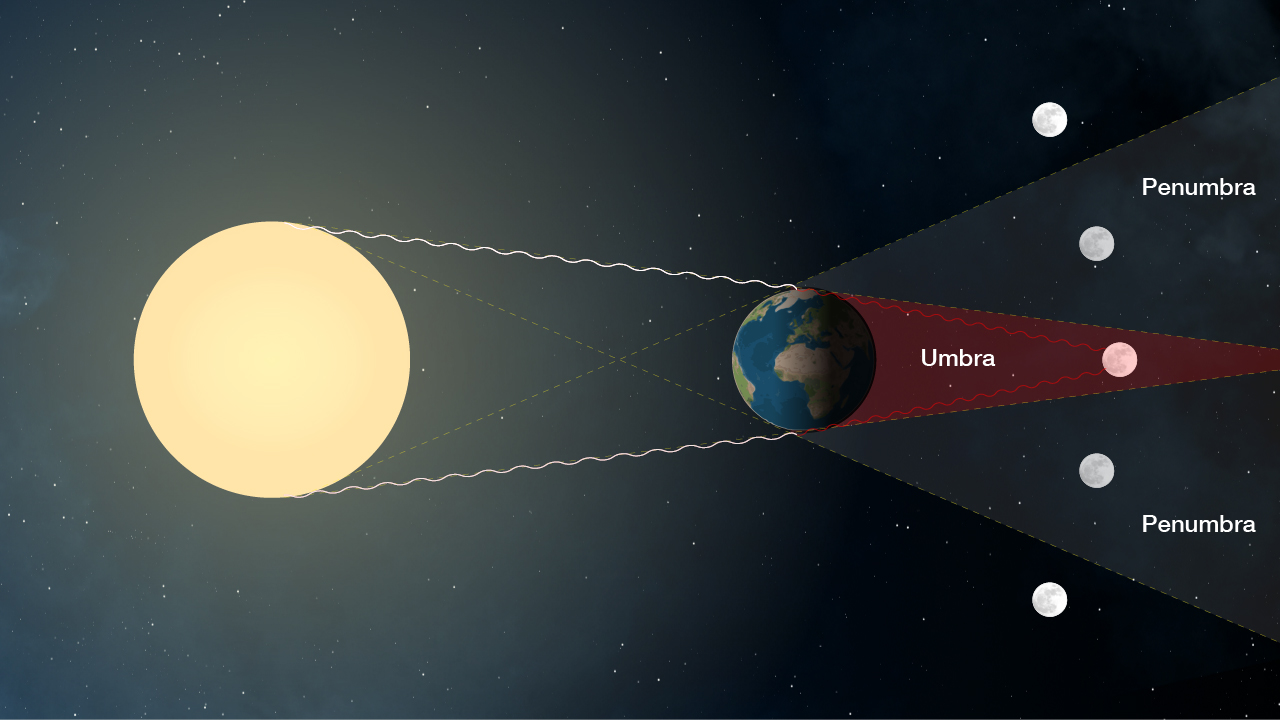
Explanation: How does the Moon's appearance change during a total lunar eclipse? The featured time-lapse video was digitally processed to keep the Moon bright and centered during the 5-hour eclipse of 2018 January 31. At first the full moon is visible because only a full moon can undergo a lunar eclipse. Stars move by in the background because the Moon orbits the Earth during the eclipse. The circular shadow of the Earth is then seen moving across the Moon. The light blue hue of the shadow's edge is related to why Earth's sky is blue, while the deep red hue of the shadow's center is related to why the Sun appears red when near the horizon. Tomorrow, people living from southeast Asia, across the Pacific, to the southwest Americas may get to see a Blood Supermoon Total Lunar Eclipse. Here the term blood refers to the (likely) red color of the fully eclipsed Moon, while the term supermoon indicates the Moon's slightly high angular size -- due to being relatively close to the Earth in its slightly elliptical orbit.

PRATIQUE - Ouvrir une boîte de conserve sans ouvre-boîte

Une boîte de conserve sans ouvre-boîte, c'est frustrant ! On a tous vécu ce genre de situation... Surtout si on n'a plus rien à manger dans les placards et qu'il ne reste plus qu'une boîte de conserve. Heureusement, il existe un truc pour ouvrir cette conserve sans ouvre-boîte. L'astuce est de frotter la boîte de conserve sur une surface en béton. Regardez :


Comment faire ? 
1. Retournez la boîte de conserve à l'envers.
2. Placez-la sur une surface en béton comme un trottoir.
3. Frottez la conserve pendant 2 min jusqu'à ce que le bord soit usé. 4. Appuyez sur les bords pour que le couvercle s'ouvre.

24/05/2021

ASTRONOMY - Lightning Eclipse from the Planet of the Goats

 2021 May 24

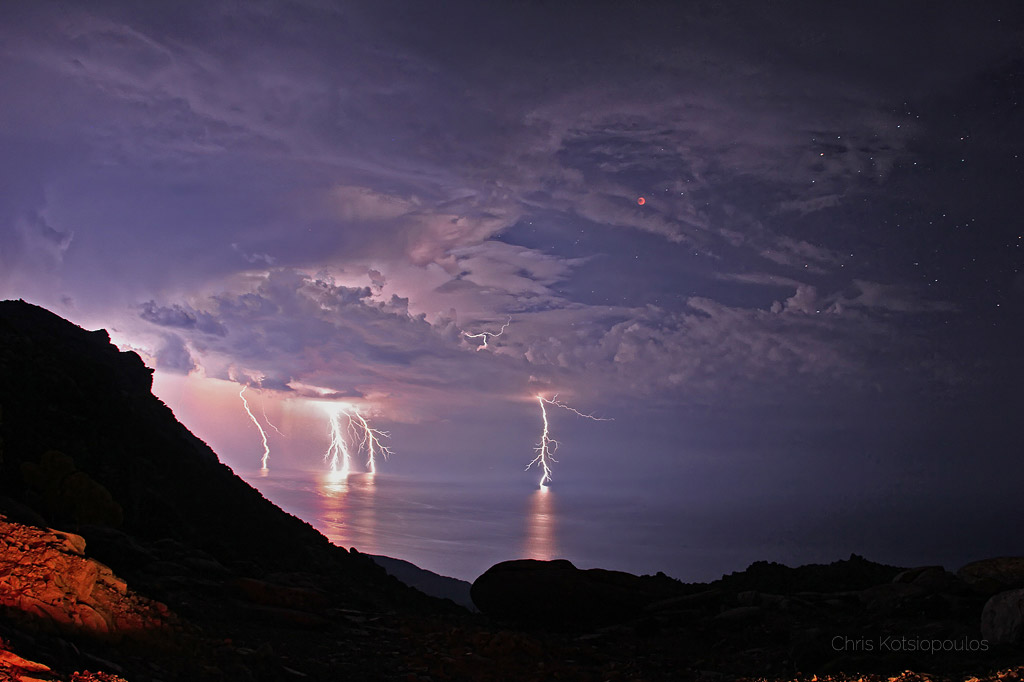
A total lunar eclipse with lightning in the foreground as seen from Greece.
Please see the explanation for more detailed information.

Lightning Eclipse from the Planet of the Goats
Image Credit & Copyright: Chris Kotsiopoulos (GreekSky)

Explanation: Thunderstorms almost spoiled this view of the spectacular 2011 June 15 total lunar eclipse. Instead, storm clouds parted for 10 minutes during the total eclipse phase and lightning bolts contributed to the dramatic sky. Captured with a 30-second exposure the scene also inspired one of the more memorable titles (thanks to the astrophotographer) in APOD's now 25-year history. Of course, the lightning reference clearly makes sense, and the shadow play of the dark lunar eclipse was widely viewed across planet Earth in Europe, Africa, Asia, and Australia. The picture itself, however, was shot from the Greek island of Ikaria at Pezi. That area is known as "the planet of the goats" because of the rough terrain and strange looking rocks. The next total lunar eclipse will occur on Wednesday.

22/05/2021

ASTRONOMY - Markarian's Chain

 2021 May 22

See Explanation.  Clicking on the picture will download
the highest resolution version available.

Markarian's Chain
Image Credit & CopyrightGinge Anvik

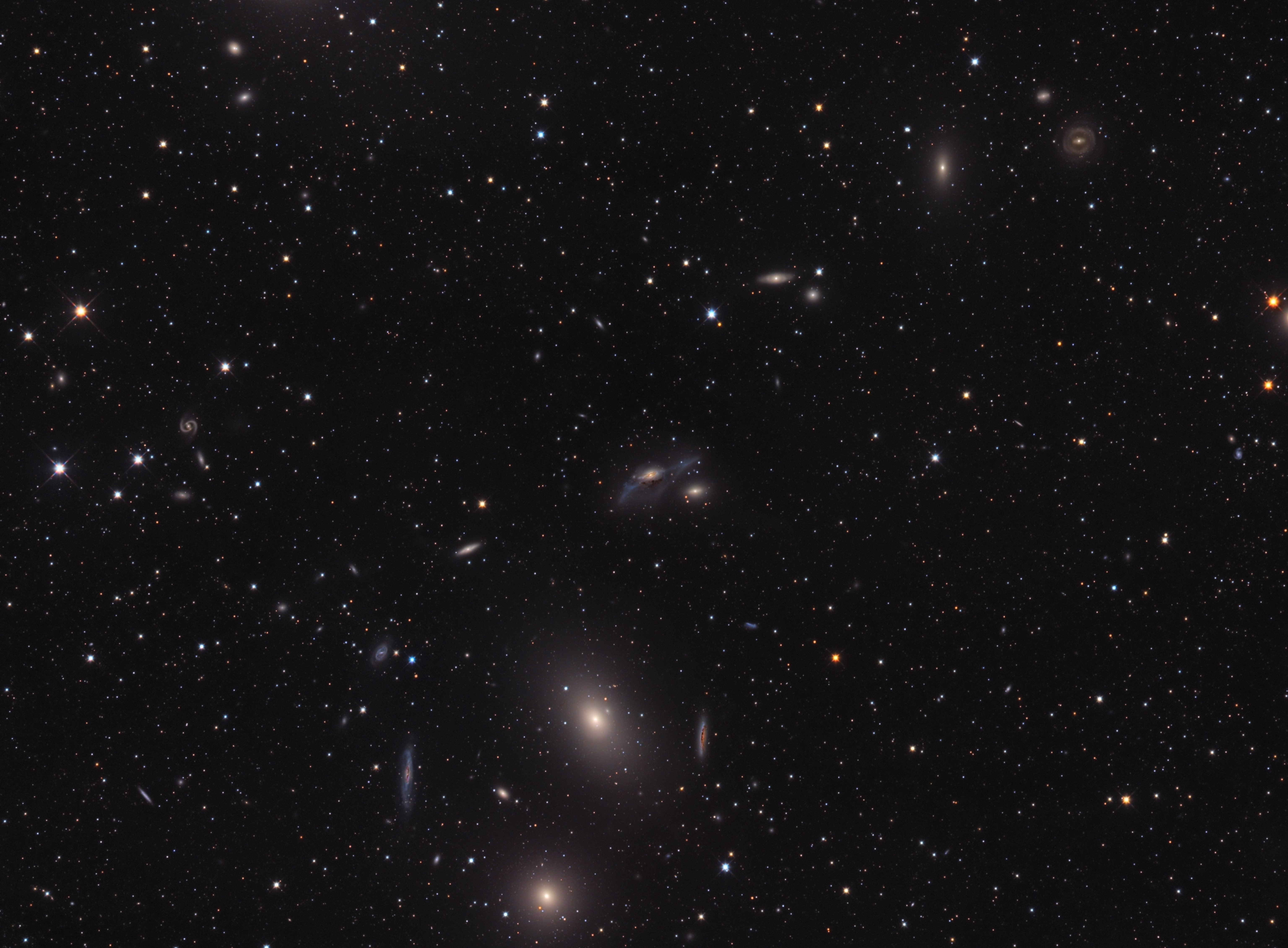
Explanation: Near the heart of the Virgo Galaxy Cluster the string of galaxies known as Markarian's Chain stretches across this deep telescopic field of view. Anchored in the frame at bottom center by prominent lenticular galaxies, M84 (bottom) and M86, you can follow the chain up and to the right. Near center you'll spot the pair of interacting galaxies NGC 4438 and NGC 4435, known to some as Markarian's Eyes. Its center an estimated 50 million light-years distant, the Virgo Cluster itself is the nearest galaxy cluster. With up to about 2,000 member galaxies, it has a noticeable gravitational influence on our own Local Group of Galaxies. Within the Virgo Cluster at least seven galaxies in Markarian's Chain appear to move coherently, although others may appear to be part of the chain by chance.

21/05/2021

PRATIQUE/POURQUOI - Pourquoi n'avons-nous pas tous la même couleur de peau ?

Vous vous êtes déjà posé la question au moins une fois ! Sachez tout simplement que cela est dû à des substances chimiques produites par notre peau, qu’on appelle mélanocytes, et se chargent de produire des pigments bien spécifiques.

Ces pigments encore appelés mélanine sont responsables de la coloration de notre peau. Ces pigments, nous les avons tous, car ils nous sont transmis à travers les gènes par nos parents. C’est la raison pour laquelle, nous sommes susceptibles d’avoir la même couleur de peau que nos parents. Mais ce n’est pas toujours le cas.

En effet, nous n’avons pas tous la même concentration, ou le même taux de mélanine dans nos gènes. C’est également le cas entre frère et sœur. Ainsi, plus le taux de mélanine est important dans les gènes, plus la couleur de votre peau tendra vers une couleur foncée. Également, moins le taux de mélanine dans les gènes est important, plus la couleur de votre peau sera claire.

Il arrive aussi que notre corps diminue la production de mélanine dans notre corps. C’est souvent le cas, pour des raisons d’adaptation. Si vous avez déjà fait attention, vous remarquerez que la peau des personnes de couleur foncée a tendance à s’éclaircir en période de froid. C’est parce qu’à ce moment, la production de mélanine a baissé.

20/05/2021

ASTRONOMY - M13: The Great Globular Cluster in Hercules

 2021 May 20

See Explanation.  Clicking on the picture will download
the highest resolution version available.

M13: The Great Globular Cluster in Hercules
Image Credit & Copyright: Martin Dufour

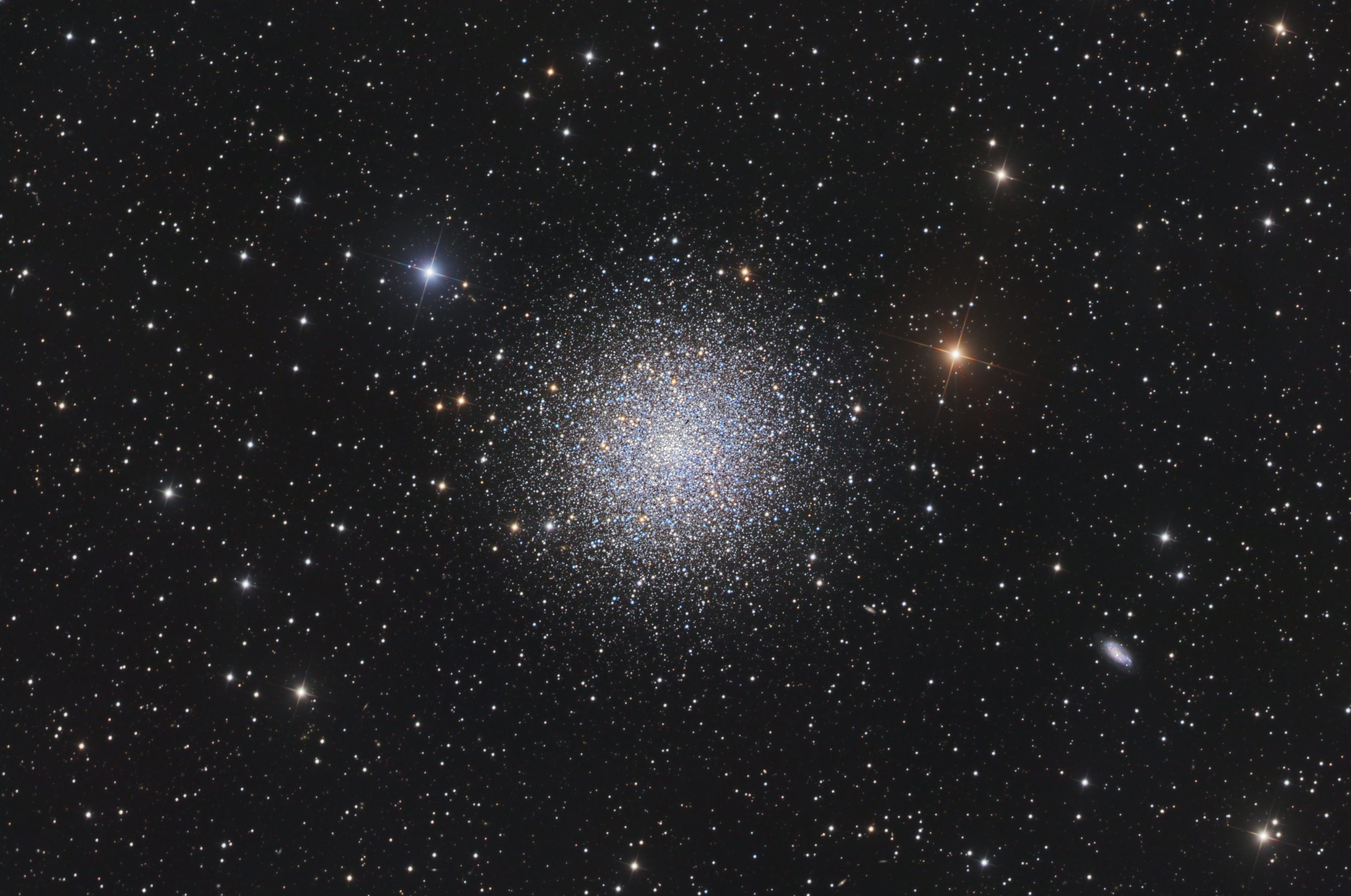
Explanation: In 1716, English astronomer Edmond Halley noted, "This is but a little Patch, but it shews itself to the naked Eye, when the Sky is serene and the Moon absent." Of course, M13 is now less modestly recognized as the Great Globular Cluster in Hercules, one of the brightest globular star clusters in the northern sky. Sharp telescopic views like this one reveal the spectacular cluster's hundreds of thousands of stars. At a distance of 25,000 light-years, the cluster stars crowd into a region 150 light-years in diameter. Approaching the cluster core upwards of 100 stars could be contained in a cube just 3 light-years on a side. For comparison, the closest star to the Sun is over 4 light-years away. The remarkable range of brightness recorded in this image follows stars into the dense cluster core. Distant background galaxies in the medium-wide field of view include NGC 6207 at the lower right.

19/05/2021

NUCLEAIRE - Si toutes les bombes atomiques explosaient en même temps...


I-PHONE ASTUCES - Selfie facile


Utiliser les écouteurs Apple pour prendre une photo Pour faire un selfie facilement, appuyez simplement sur le bouton + de la télécommande des écouteurs. Vous pouvez aussi poser l'iPhone et prendre une photo de plus loin sans devoir appuyer sur le bouton avec votre doigt. Ça marche aussi pour prendre une vidéo.

ASTRONOMY - The Jellyfish and Mars

 2021 May 19

See Explanation.  Clicking on the picture will download
the highest resolution version available.

The Jellyfish and Mars
Image Credit & Copyright: Jason Guenzel

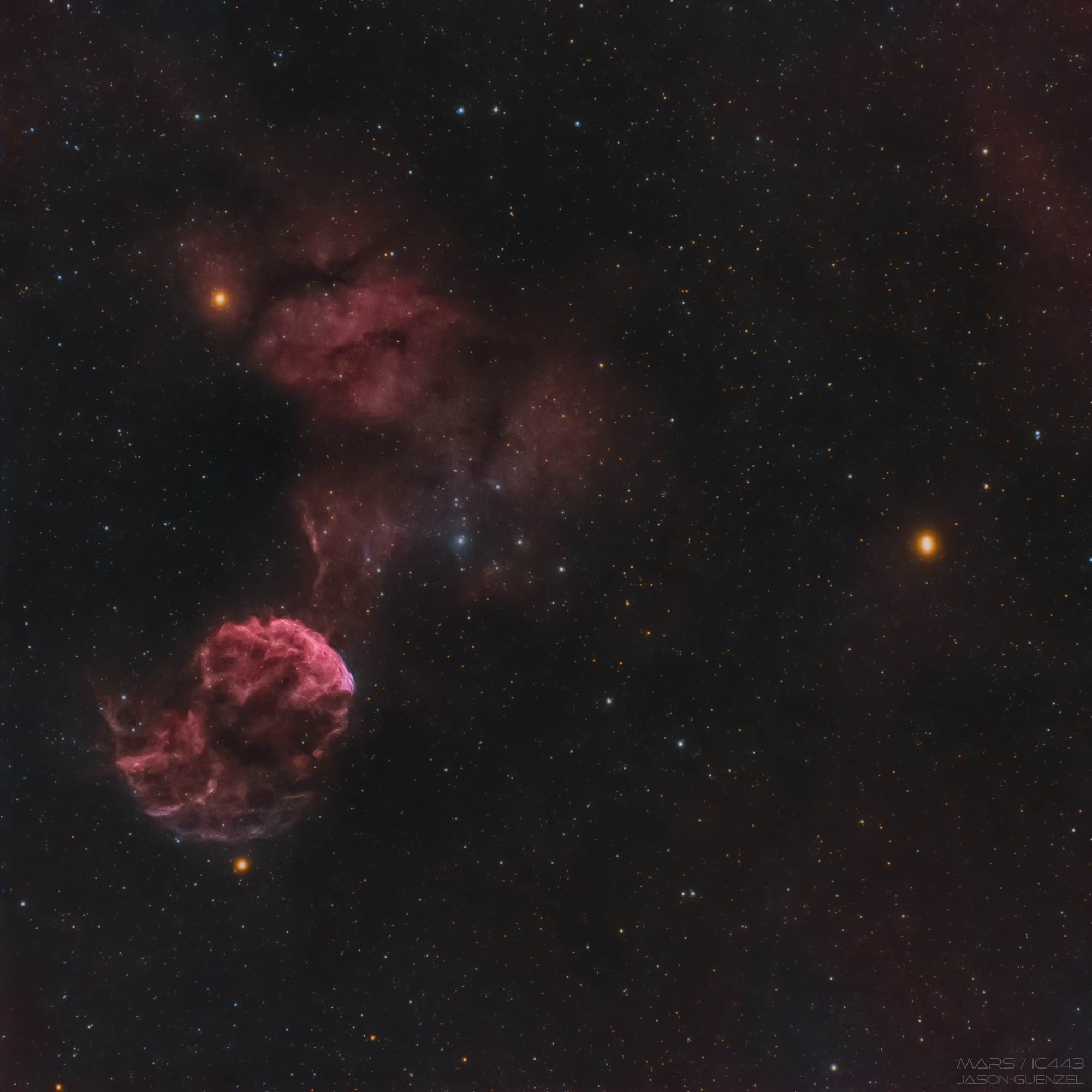
Explanation: Normally faint and elusive, the Jellyfish Nebula is caught in this alluring scene. In the telescopic field of view two bright yellowish stars, Mu and Eta Geminorum, stand just below and above the Jellyfish Nebula at the left. Cool red giants, they lie at the foot of the celestial twin. The Jellyfish Nebula itself floats below and left of center, a bright arcing ridge of emission with dangling tentacles. In fact, the cosmic jellyfish is part of bubble-shaped supernova remnant IC 443, the expanding debris cloud from a massive star that exploded. Light from that explosion first reached planet Earth over 30,000 years ago. Like its cousin in astrophysical waters the Crab Nebula supernova remnant, the Jellyfish Nebula is known to harbor a neutron star, the remnant of the collapsed stellar core. Composed on April 30, this telescopic snapshot also captures Mars. Now wandering through early evening skies, the Red Planet also shines with a yellowish glow on the right hand side of the field of view. Of course, the Jellyfish Nebula is about 5,000 light-years away, while Mars is currently almost 18 light-minutes from Earth.

ASTRONOMY - To Fly Free in Space

 2026 February 15 To Fly Free in Space Image Credit:  NASA ,  STS-41B Explanation:  What would it be like to fly free in space? About 100 me...