Méditerranée - France - Archipel des Iles d'Hyères - Ile du Levant.
Ponte de gorgone rouge (Paramuricea clavata - Purple gorgonian).
© Alexis Rosenfeld
2022 August 12
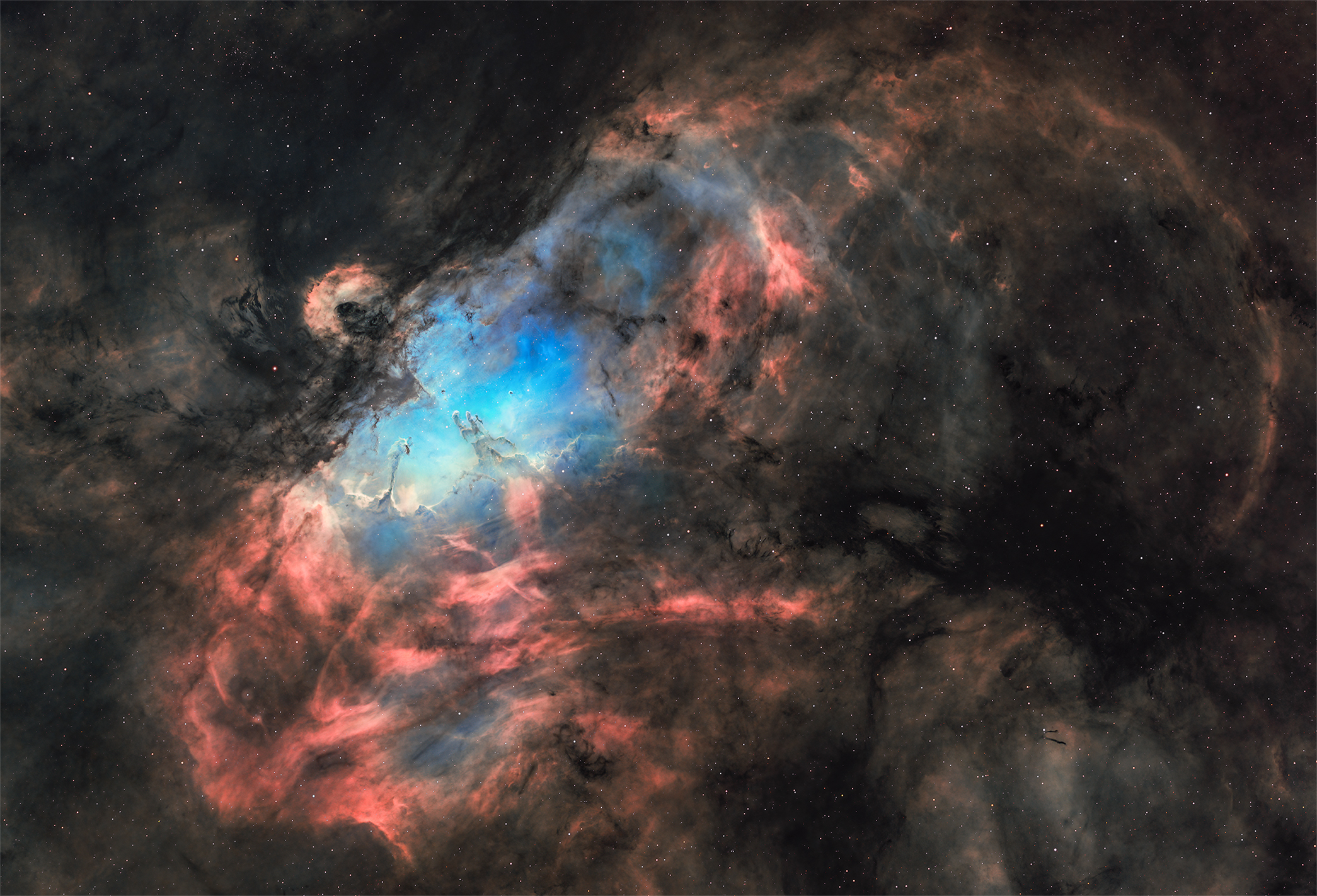
Explanation: A star cluster around 2 million years young surrounded by natal clouds of dust and glowing gas, Messier 16 (M16) is also known as The Eagle Nebula. This beautifully detailed image of the region adopts the colorful Hubble palette and includes cosmic sculptures made famous in Hubble Space Telescope close-ups of the starforming complex. Described as elephant trunks or Pillars of Creation, dense, dusty columns rising near the center are light-years in length but are gravitationally contracting to form stars. Energetic radiation from the cluster stars erodes material near the tips, eventually exposing the embedded new stars. Extending from the ridge of bright emission left of center is another dusty starforming column known as the Fairy of Eagle Nebula. M16 lies about 7,000 light-years away, an easy target for binoculars or small telescopes in a nebula rich part of the sky toward the split constellation Serpens Cauda (the tail of the snake). As framed, this telescopic portrait of the Eagle Nebula is about 70 light-years across.
2022 August 11
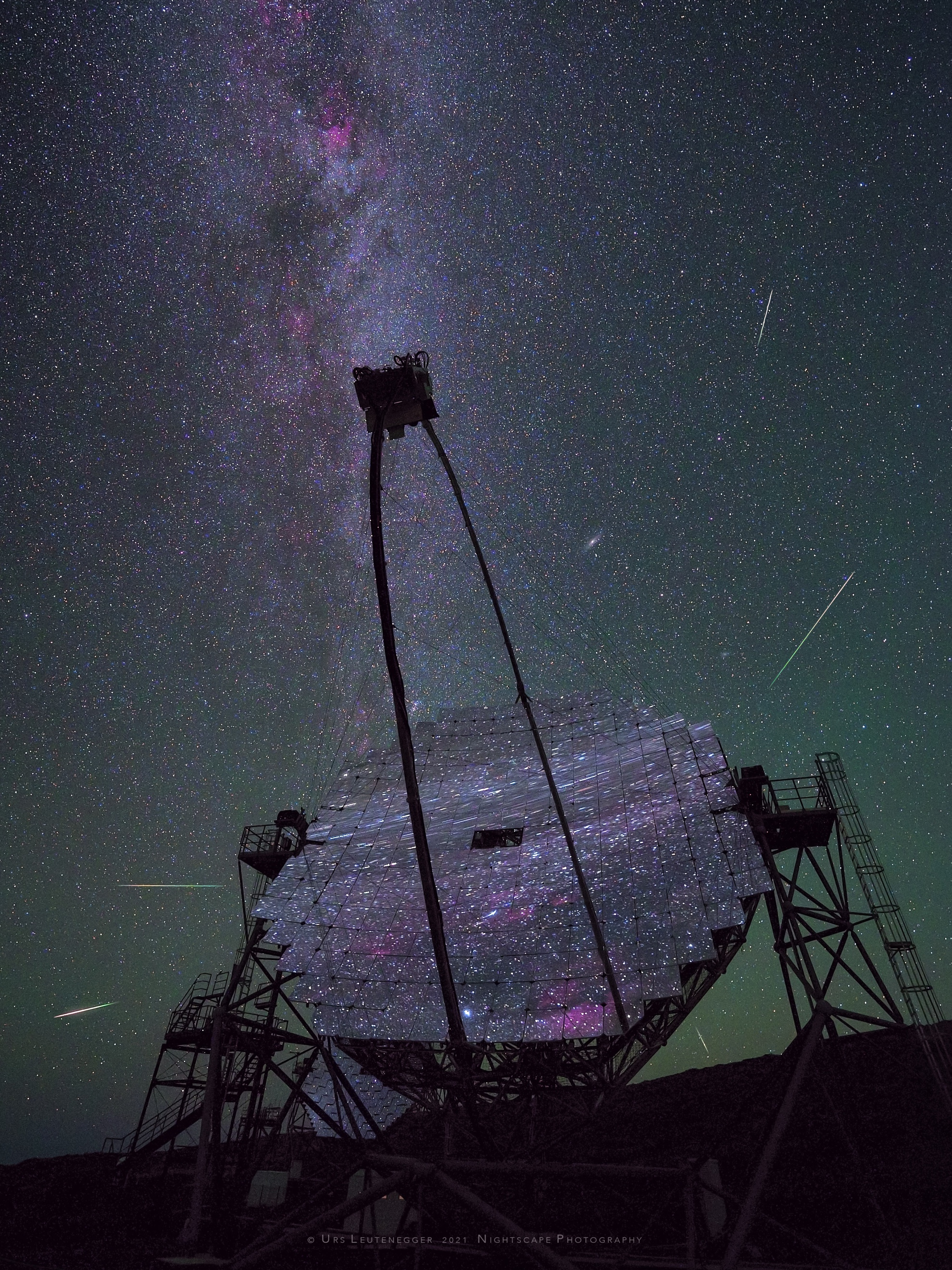
Explanation: On August 11, 2021 a multi-mirror, 17 meter-diameter MAGIC telescope reflected this starry night sky from the Roque de los Muchachos European Northern Observatory on the Canary Island of La Palma. MAGIC stands for Major Atmospheric Gamma Imaging Cherenkov. The telescopes can see the brief flashes of optical light produced in particle air showers as high-energy gamma rays impact the Earth's upper atmosphere. To the dark-adapted eye the mirror segments offer a tantalizing reflection of stars and nebulae along the plane of our Milky Way galaxy. But directly behind the segmented mirror telescope, low on the horizon, lies the constellation Perseus. And on that date the dramatic composite nightscape also captured meteors streaming from the radiant of the annual Perseid meteor shower. This year the Perseid shower activity will again peak around August 13 but perseid meteors will have to compete with the bright light of a Full Moon.
2022 August 10
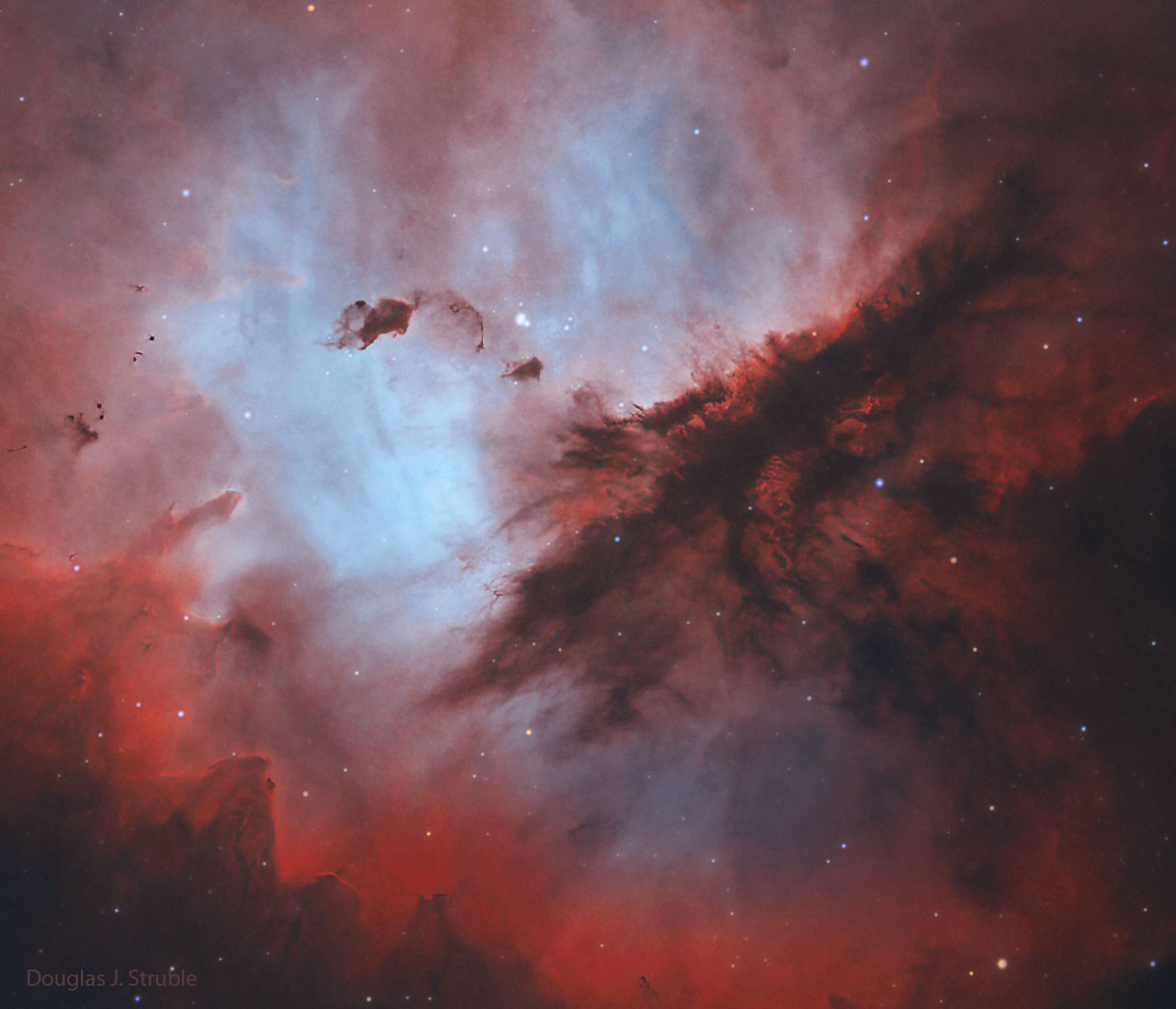
Explanation: Stars can create huge and intricate dust sculptures from the dense and dark molecular clouds from which they are born. The tools the stars use to carve their detailed works are high energy light and fast stellar winds. The heat they generate evaporates the dark molecular dust as well as causing ambient hydrogen gas to disperse and glow red. Pictured here, a new open cluster of stars designated IC 1590 is nearing completion around the intricate interstellar dust structures in the emission nebula NGC 281, dubbed the Pac-man Nebula because of its overall shape. The dust cloud on the upper left is classified as a Bok Globule as it may gravitationally collapse and form a star -- or stars. The Pacman Nebula lies about 10,000 light years away toward the constellation of Cassiopeia.


022 August 9
Explanation: What it would look like to leave planet Earth? Such an event was recorded visually in great detail by the MESSENGER spacecraft as it swung back past the Earth in 2005 on its way in toward the planet Mercury. Earth can be seen rotating in this time-lapse video, as it recedes into the distance. The sunlit half of Earth is so bright that background stars are not visible. The robotic MESSENGER spacecraft is now in orbit around Mercury and has recently concluded the first complete map of the surface. On occasion, MESSENGER has continued to peer back at its home world. MESSENGER is one of the few things created on the Earth that will never return. At the end of its mission MESSENGER crashed into Mercury's surface.
2022 August 8
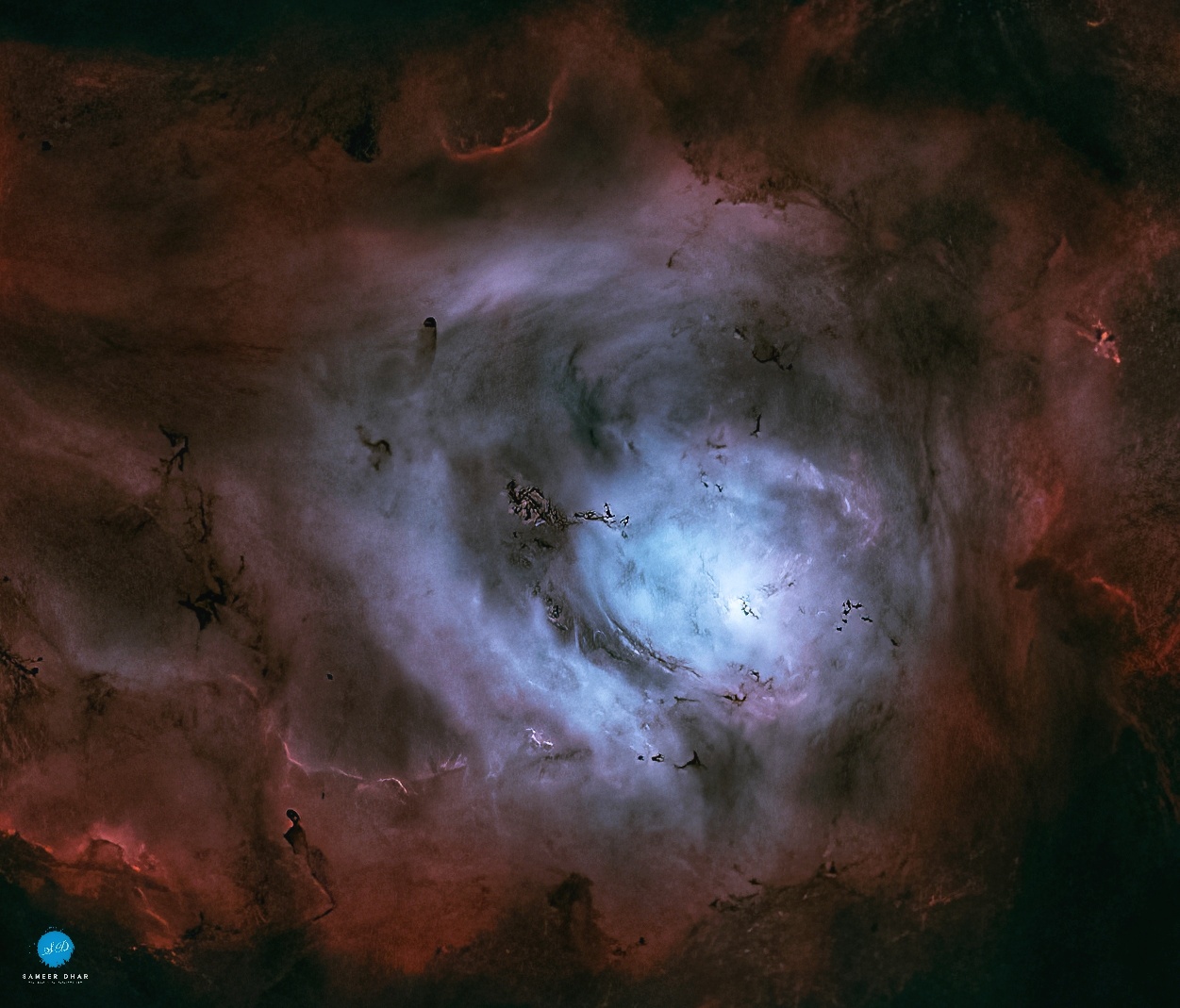
Explanation: Ridges of glowing interstellar gas and dark dust clouds inhabit the turbulent, cosmic depths of the Lagoon Nebula. Also known as M8, the bright star forming region is about 5,000 light-years distant. But it still makes for a popular stop on telescopic tours of the constellation Sagittarius, toward the center of our Milky Way Galaxy. Dominated by the telltale red emission of ionized hydrogen atoms recombining with stripped electrons, this stunning, deep view of the Lagoon is nearly 100 light-years across. Right of center, the bright, compact, hourglass shape is gas ionized and sculpted by energetic radiation and extreme stellar winds from a massive young star. In fact, although digitally removed from the featured image, the many bright stars of open cluster NGC 6530 drift within the nebula, just formed in the Lagoon several million years ago.
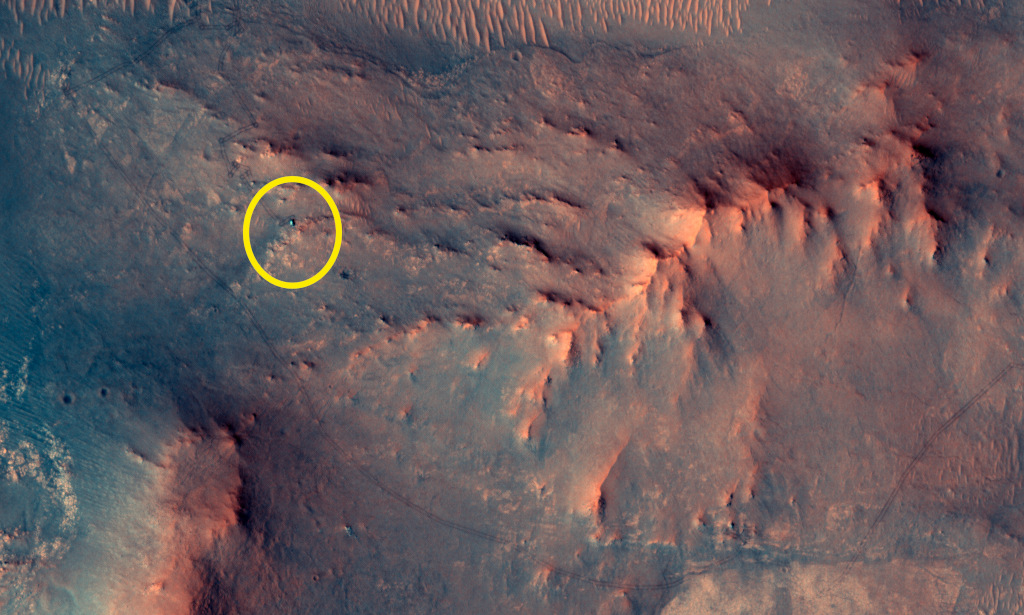
2026 June 27 Mars Marathon by Perseverance Image Credit: NASA , LPL (U. Arizona) , MRO , HiRISE Explanation: In this recent HiRISE view fro...