Nombre total de pages vues
26/09/2022
MACROPHOTOGRAPHIE - Miki Asai - Soudain... la Nature se fait abstraite
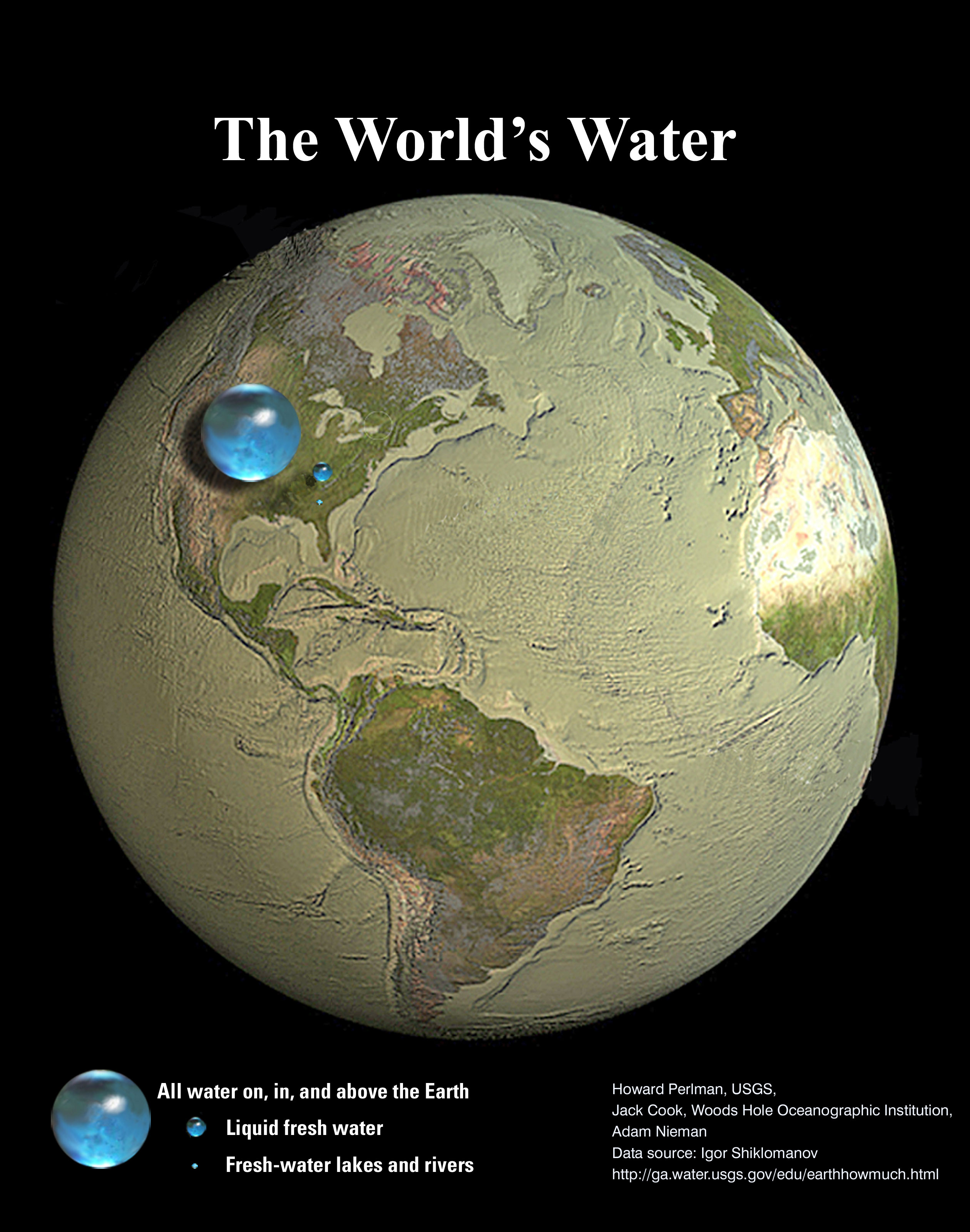
ASTRONOMY - All the Water on Planet Earth
2022 September 26
Illustration Credit: Jack Cook, Adam Nieman, Woods Hole Oceanographic Institution; Data source: Igor Shiklomanov
Explanation: How much of planet Earth is made of water? Very little, actually. Although oceans of water cover about 70 percent of Earth's surface, these oceans are shallow compared to the Earth's radius. The featured illustration shows what would happen if all of the water on or near the surface of the Earth were bunched up into a ball. The radius of this ball would be only about 700 kilometers, less than half the radius of the Earth's Moon, but slightly larger than Saturn's moon Rhea which, like many moons in our outer Solar System, is mostly water ice. The next smallest ball depicts all of Earth's liquid fresh water, while the tiniest ball shows the volume of all of Earth's fresh-water lakes and rivers. How any of this water came to be on the Earth and whether any significant amount is trapped far beneath Earth's surface remain topics of research.
25/09/2022
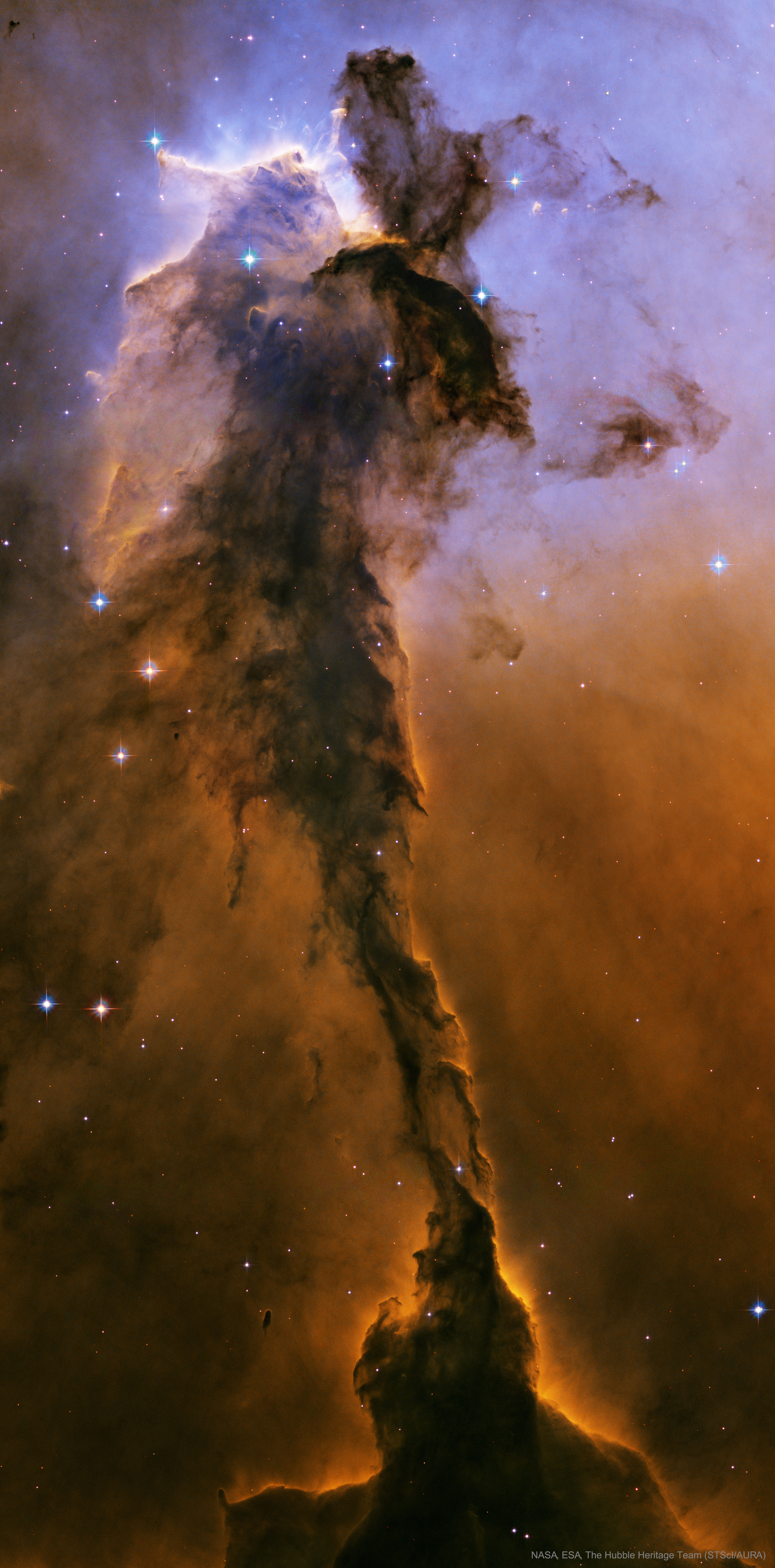
ASTRONOMY - The Fairy of Eagle Nebula
Image Credit: Image Credit: NASA, ESA, The Hubble Heritage Team (STScI/AURA)
Explanation: The dust sculptures of the Eagle Nebula are evaporating. As powerful starlight whittles away these cool cosmic mountains, the statuesque pillars that remain might be imagined as mythical beasts. Featured here is one of several striking dust pillars of the Eagle Nebula that might be described as a gigantic alien fairy. This fairy, however, is ten light years tall and spews radiation much hotter than common fire. The greater Eagle Nebula, M16, is actually a giant evaporating shell of gas and dust inside of which is a growing cavity filled with a spectacular stellar nursery currently forming an open cluster of stars. This great pillar, which is about 7,000 light years away, will likely evaporate away in about 100,000 years. The featured image is in scientifically re-assigned colors and was taken by the Earth-orbiting Hubble Space Telescope.
24/09/2022
ASTRONOMY - September Sunrise Shadows
2022 September 24
Image Credit & Copyright: Donato Lioce
Explanation: The defining astronomical moment for this September's equinox was on Friday, September 23, 2022 at 01:03 UTC, when the Sun crossed the celestial equator moving south in its yearly journey through planet Earth's sky. That marked the beginning of fall for our fair planet in the northern hemisphere and spring in the southern hemisphere, when day and night are nearly equal around the globe. Of course, if you celebrate the astronomical change of seasons by watching a sunrise you can also look for crepuscular rays. The shadows cast by clouds can have a dramatic appearance in the twilight sky during any sunrise or sunset. Due to perspective, the parallel shadows will seem to point back to the rising Sun and a place due east on your horizon near the equinox date. Taken on September 15, this sunrise sea and skyscape captured crepuscular rays in the sky and watery specular reflections from the Mediterranean coast near the village of Petacciato, Italy.
23/09/2022
ASTRONOMIA - Júpiter está no ponto mais próximo da Terra em 59 anos
Astrónomos calculam que Júpiter vai estar em oposição no final do mês de setembro, um movimento em que está no ponto completamente oposto ao Sol, quando visto da Terra. É a 26 de setembro que o maior planeta do Sistema vai estar também mais próximo do nosso, nos últimos 59 anos.
O fenómeno da oposição acontece em relação a Júpiter a cada 13 meses e as aproximações entre Terra e Júpiter acontecem sensivelmente uma vez por ano. A coincidência temporal destes dois movimentos é, assim, rara, mas irá verificar-se este ano dentro de uma semana, noticia o Space.com.
Com esta coincidência, vai ser possível ver a partir da Terra, com binóculos ou telescópios pequenos e idealmente num local alto, céu escuro e com tempo limpo o gigante gasoso de uma forma brilhante e iluminada. Adam Kobelski, astrofísico da NASA, afirma que “a vista vai ser espetacular durante alguns dias antes e depois do 26 de setembro. Tirem partido de boas condições meteorológicas em qualquer um destes dias para fazer a visualização. Sem ser a Lua, deve ser um dos maiores (se não o maior) objeto brilhante no céu noturno”.
Júpiter demora 4333 dias terrestres a completar uma volta ao Sol, mas as órbitas entre os dois planetas cruzam-se em várias distâncias, em diferentes momentos. Nesta aproximação de agora, o gigante vai estar a 590 milhões de quilómetros da Terra, o ponto mais próximo em 59 anos, em outubro de 1963. No seu ponto mais longínquo, Júpiter chega a distar 960 milhões de quilómetros.
Kobelski lembra que Galileu conseguiu ver Júpiter e as suas luas com instrumentos do século XVII, pelo que a observação a partir da Terra agora será possível mesmo com aparelhos mais modestos.
Visão
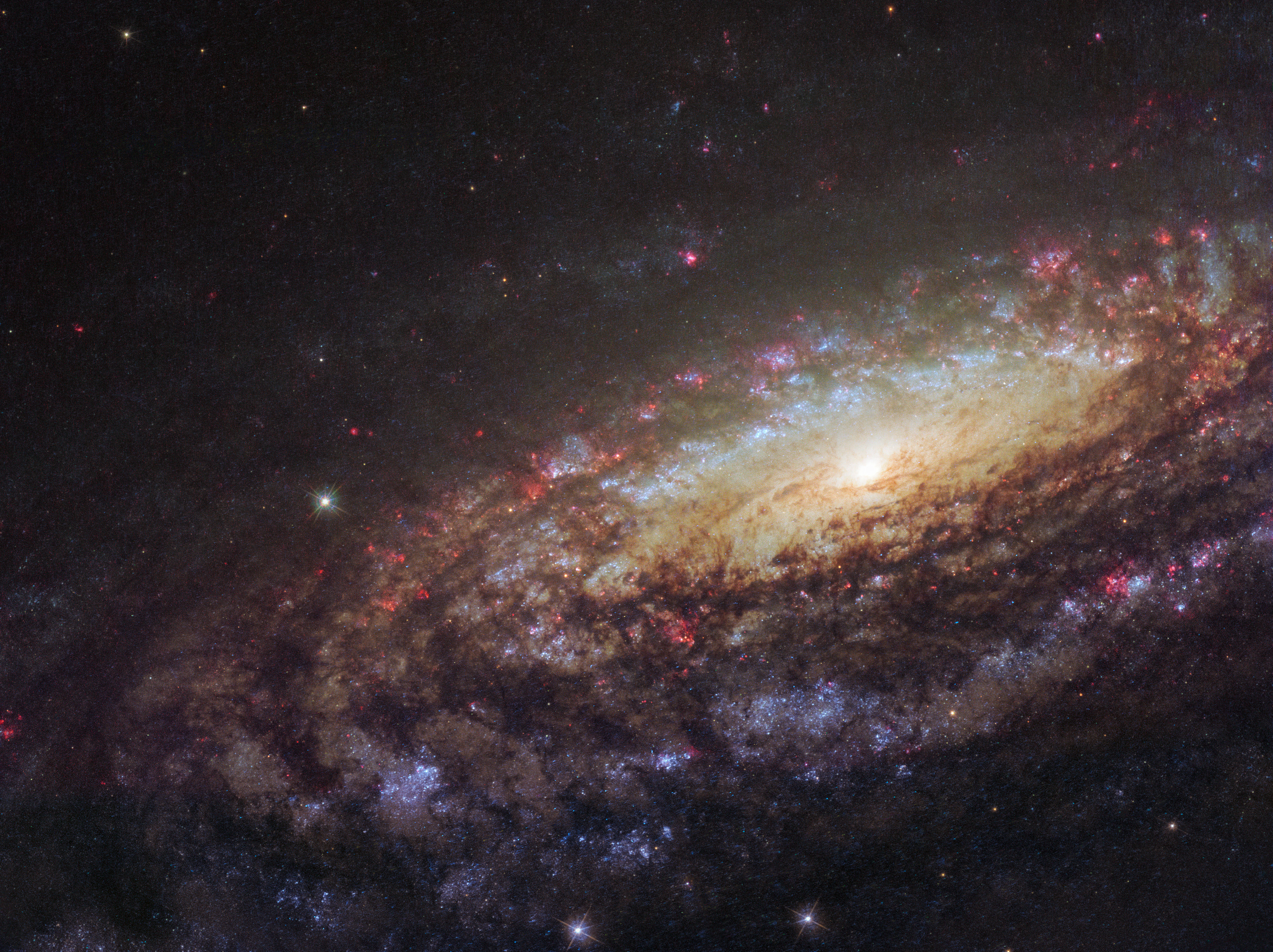
ASTRONOMY - NGC 7331 Close Up
2022 September 22
Image Credit & License: ESA/Hubble & NASA/D. Milisavljevic (Purdue University)
Explanation: Big, beautiful spiral galaxy NGC 7331 is often touted as an analog to our own Milky Way. About 50 million light-years distant in the northern constellation Pegasus, NGC 7331 was recognized early on as a spiral nebula and is actually one of the brighter galaxies not included in Charles Messier's famous 18th century catalog. Since the galaxy's disk is inclined to our line-of-sight, long telescopic exposures often result in an image that evokes a strong sense of depth. This Hubble Space Telescope close-up spans some 40,000 light-years. The galaxy's magnificent spiral arms feature dark obscuring dust lanes, bright bluish clusters of massive young stars, and the telltale reddish glow of active star forming regions. The bright yellowish central regions harbor populations of older, cooler stars. Like the Milky Way, a supermassive black hole lies at the core of spiral galaxy NGC 7331.
21/09/2022
MACROPHOTOGRAPHIE - La rose et les gouttelettes
© Miki Asai
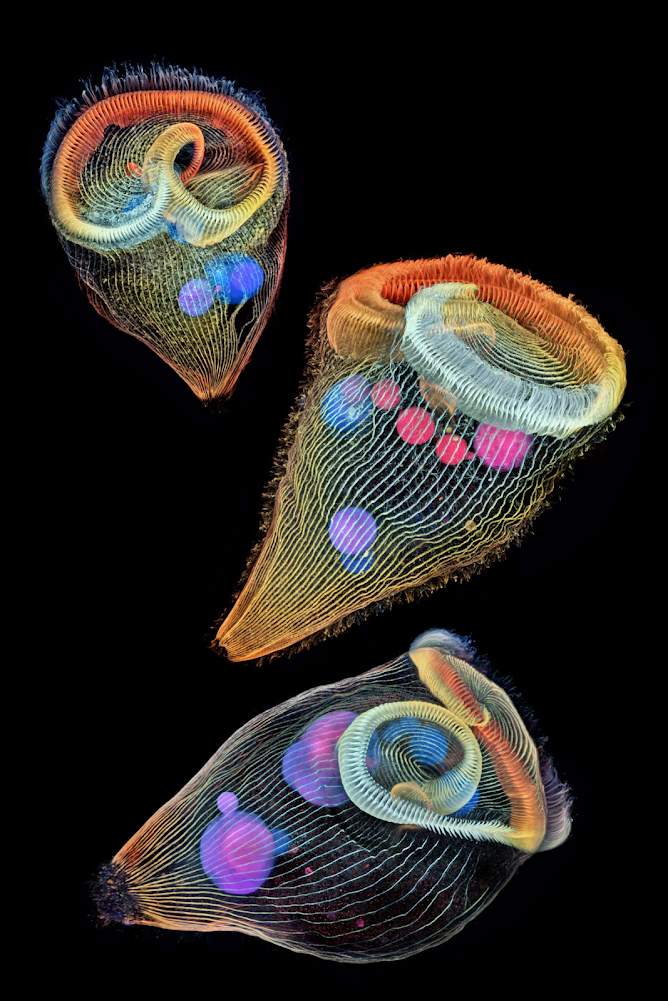
PHOTOMICROGRAPHY - Depth-color coded projections of three stentors (single-cell freshwater protozoans)
ASTRONOMY - The Horsehead Nebula in Infrared from Hubble
2022 September 21
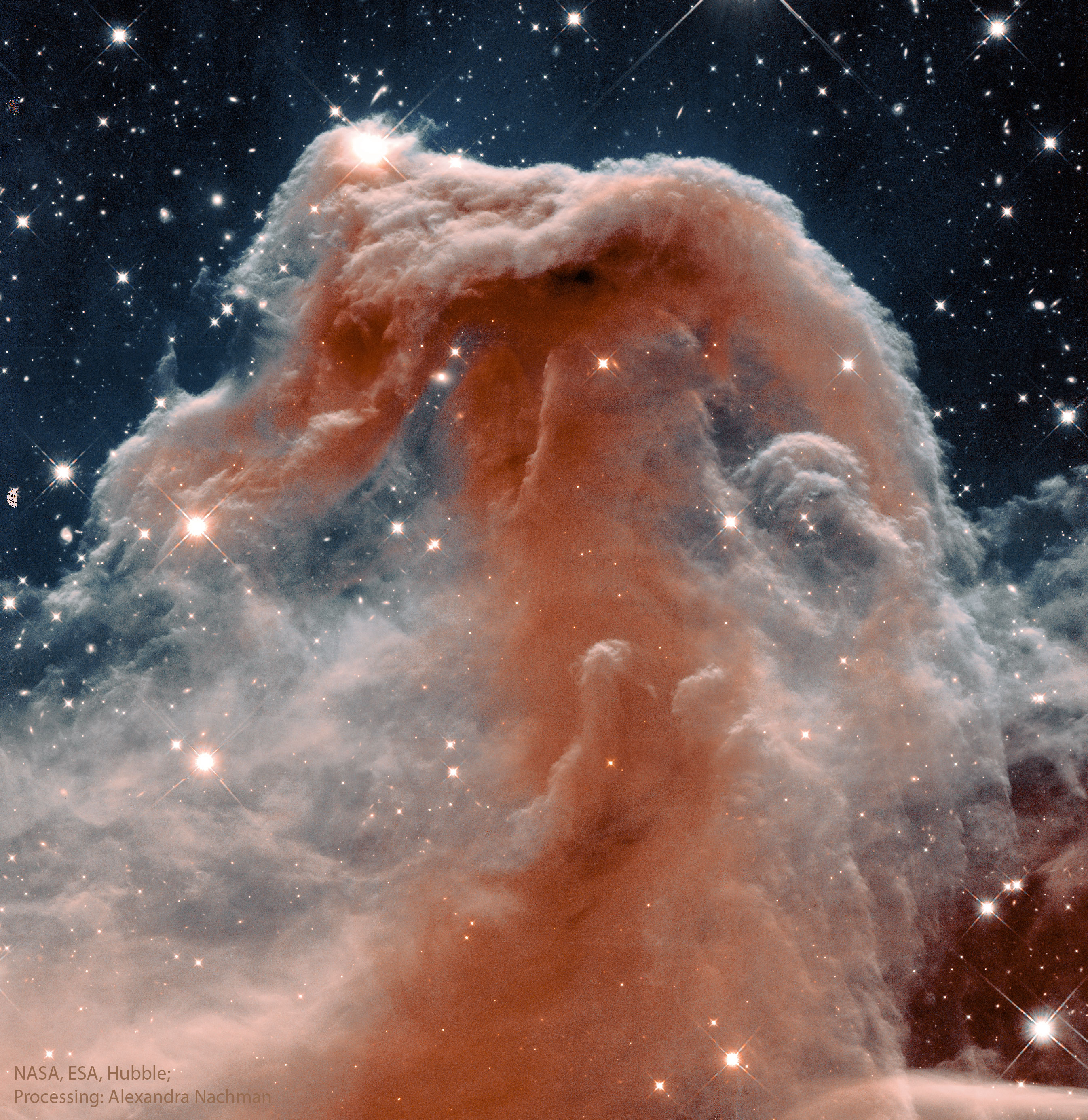
Image Credit: NASA, ESA, Hubble; Processing: Alexandra Nachman
Explanation: While drifting through the cosmos, a magnificent interstellar dust cloud became sculpted by stellar winds and radiation to assume a recognizable shape. Fittingly named the Horsehead Nebula, it is embedded in the vast and complex Orion Nebula (M42). A potentially rewarding but difficult object to view personally with a small telescope, the featured gorgeously detailed image was taken in infrared light by the orbiting Hubble Space Telescope. The dark molecular cloud, roughly 1,500 light years distant, is cataloged as Barnard 33 and is seen above primarily because it is backlit by the nearby massive star Sigma Orionis. The Horsehead Nebula will slowly shift its apparent shape over the next few million years and will eventually be destroyed by high energy starlight.
20/09/2022
ASTRONOMY - Star Forming Region NGC 3582 without Stars
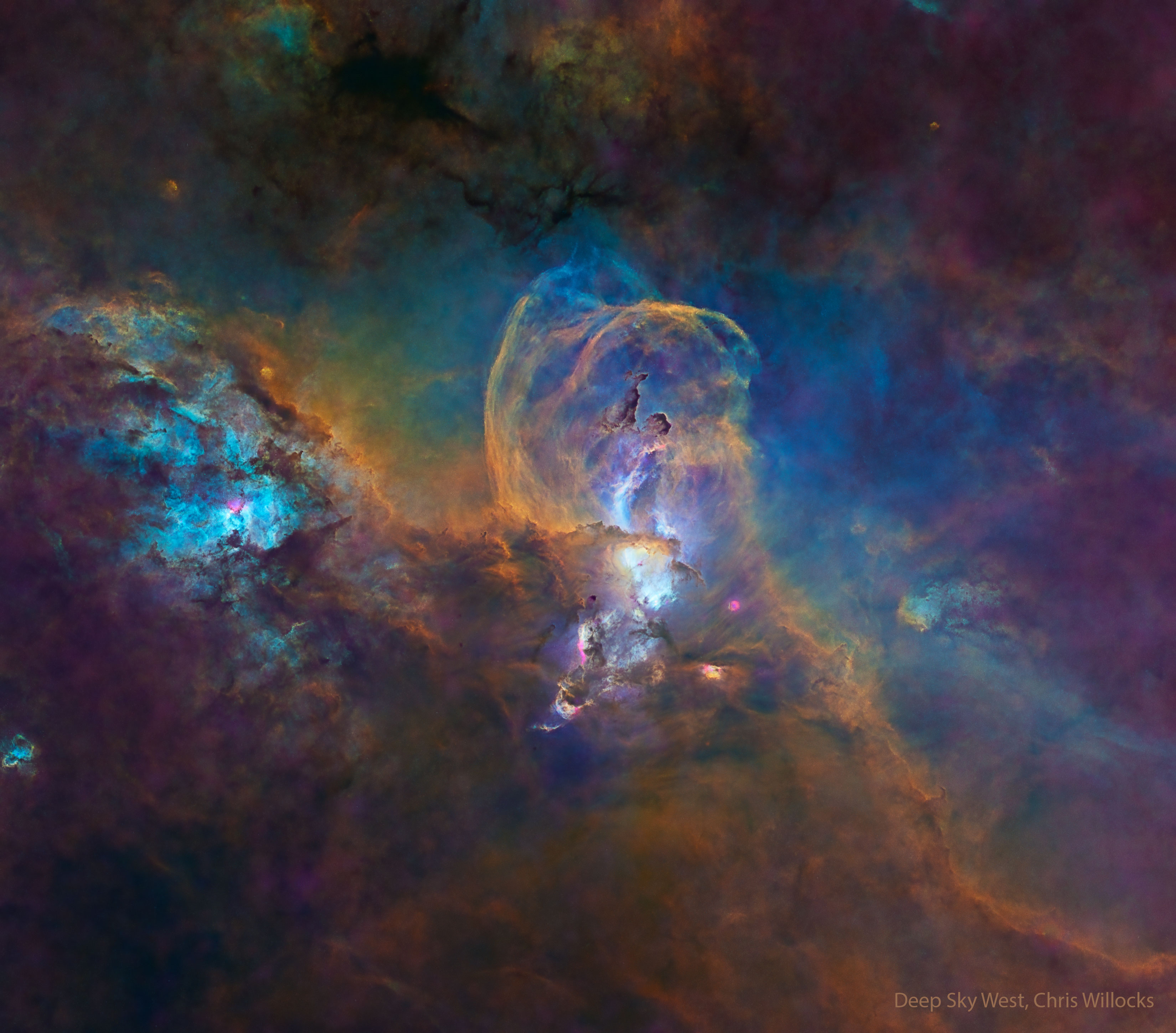
Image Credit & Copyright: Chris Willocks
Explanation: What's happening in the Statue of Liberty nebula? Bright stars and interesting molecules are forming and being liberated. The complex nebula resides in the star forming region called RCW 57, and besides the iconic monument, to some looks like a flying superhero or a weeping angel. By digitally removing the stars, this re-assigned color image showcases dense knots of dark interstellar dust, fields of glowing hydrogen gas ionized by these stars, and great loops of gas expelled by dying stars. A detailed study of NGC 3576, also known as NGC 3582 and NGC 3584, uncovered at least 33 massive stars in the end stages of formation, and the clear presence of the complex carbon molecules known as polycyclic aromatic hydrocarbons (PAHs). PAHs are thought to be created in the cooling gas of star forming regions, and their development in the Sun's formation nebula five billion years ago may have been an important step in the development of life on Earth.
ASTRONOMY - Orion and the Ocean of Storms
2025 December 13 Orion and the Ocean of Storms Image Credit: NASA , Artemis 1 Explanation: On December 5, 2022, a camera on board the u...
-
2022 September 26 All the Water on Planet Earth Illustration Credit: Jack Cook, Adam Nieman, Woods Hole Oceanographic Institution ; Data ...
-
2025 May 11 The Surface of Venus from Venera 14 Image Credit: Soviet Planetary Exploration Program , Venera 14 ; Processing & Copyri...