Nombre total de pages vues
13/04/2023
AERONAUTIQUE - Avions de légende - Messerschmitt Me 262
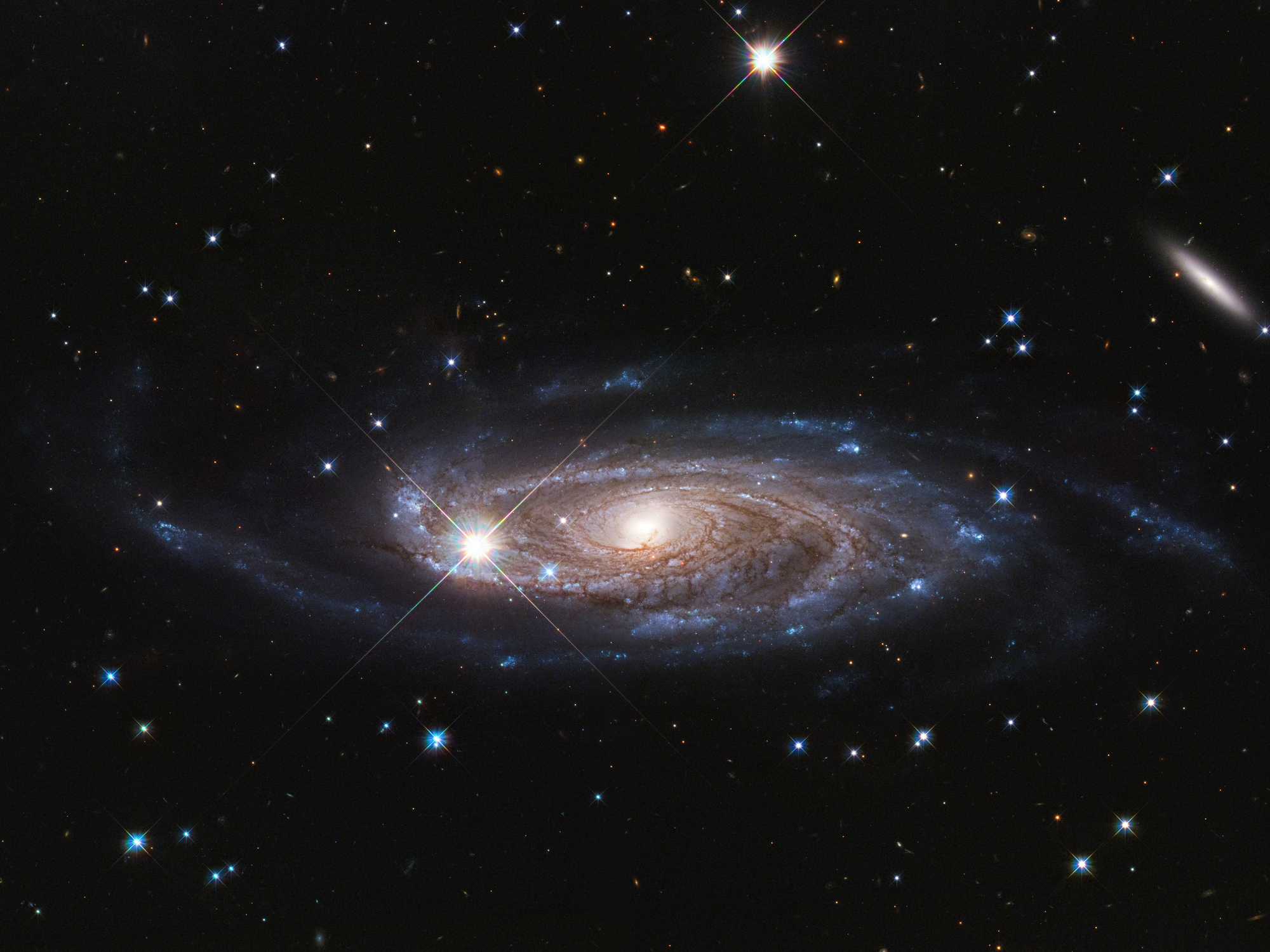
ASTRONOMY - Rubin's Galaxy
2023 April 5
Image Credit: NASA, ESA, B. Holwerda (University of Louisville)
Explanation: In this Hubble Space Telescope image the bright, spiky stars lie in the foreground toward the heroic northern constellation Perseus and well within our own Milky Way galaxy. In sharp focus beyond is UGC 2885, a giant spiral galaxy about 232 million light-years distant. Some 800,000 light-years across compared to the Milky Way's diameter of 100,000 light-years or so, it has around 1 trillion stars. That's about 10 times as many stars as the Milky Way. Part of an investigation to understand how galaxies can grow to such enormous sizes, UGC 2885 was also part of An Interesting Voyage and astronomer Vera Rubin's pioneering study of the rotation of spiral galaxies. Her work was the first to convincingly demonstrate the dominating presence of dark matter in our universe.
12/04/2023
11/04/2023
BEAUTé DES ASTRES DE LA VOIE LACTéE - L'exoplanète GJ 436b
AERONAUTIQUE - Avions de légende : Chance Vought F4U Corsair
Ce chasseur-bombardier monoplace de l'armée américaine de près de quatre tonnes à vide a été conçu autour d'un puissant moteur Pratt & Whitney, de 2.000 chevaux. Construit à partir de 1942, il a d'abord été engagé dans la guerre du Pacifique, durant la seconde guerre mondiale.
Reconnaissable à son aile en W (qui permettait de raccourcir les jambes du train d'atterrissage), il était très rapide pour l'époque (plus de 600 km/h) et conçu pour se poser sur les porte-avions. L'avion a été ensuite utilisé par l'armée française en Indochine, à partir de 1952.
Le « Corsair » doit aussi sa célébrité à une série télévisée, Les têtes brûlées en français, diffusée dans les années 1970. Le comédien Robert Conrad y jouait le rôle de Gregory « Pappy » Boyington, qui a réellement existé.
© Gerry Metzler, Flickr, CC by-sa 2.0
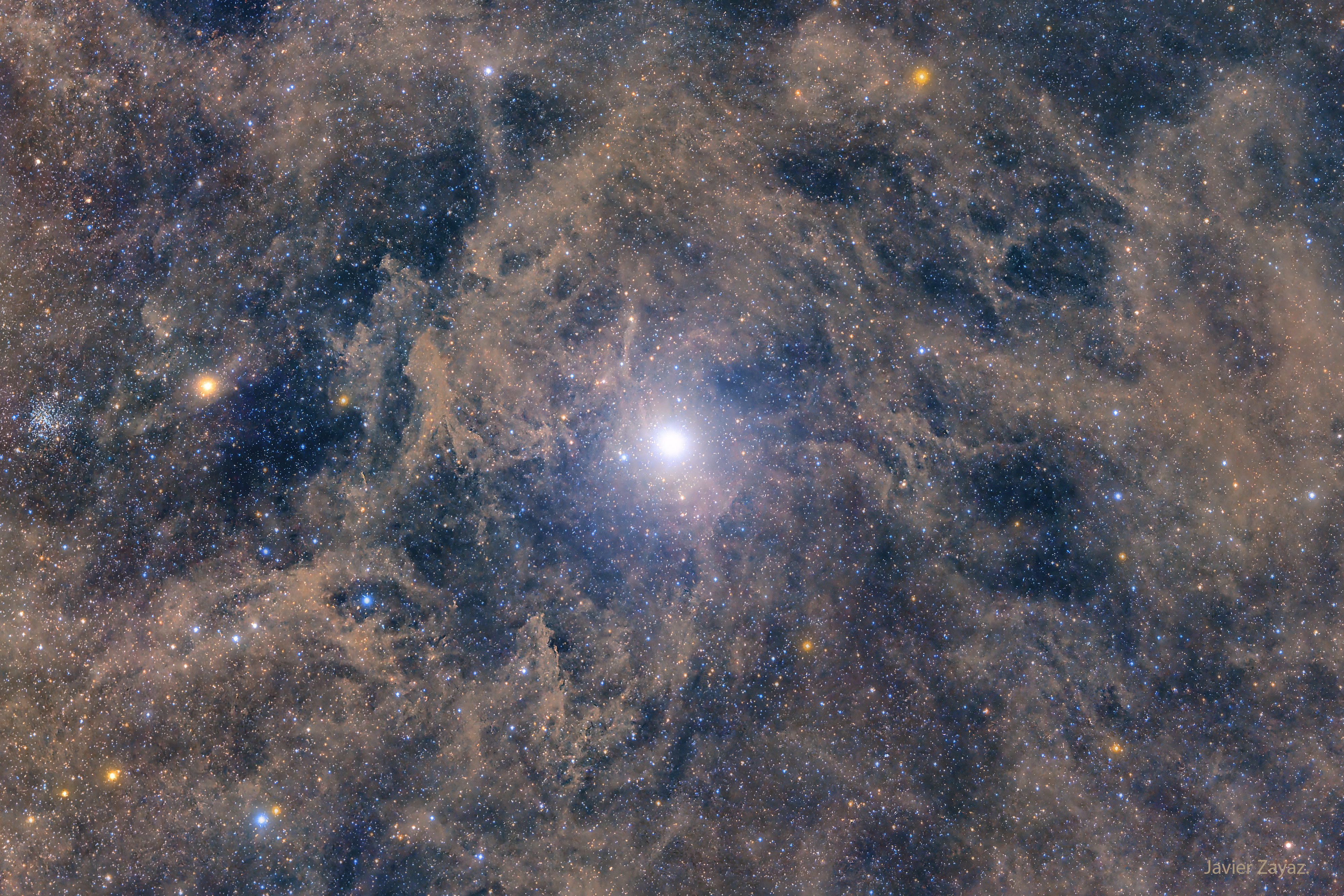
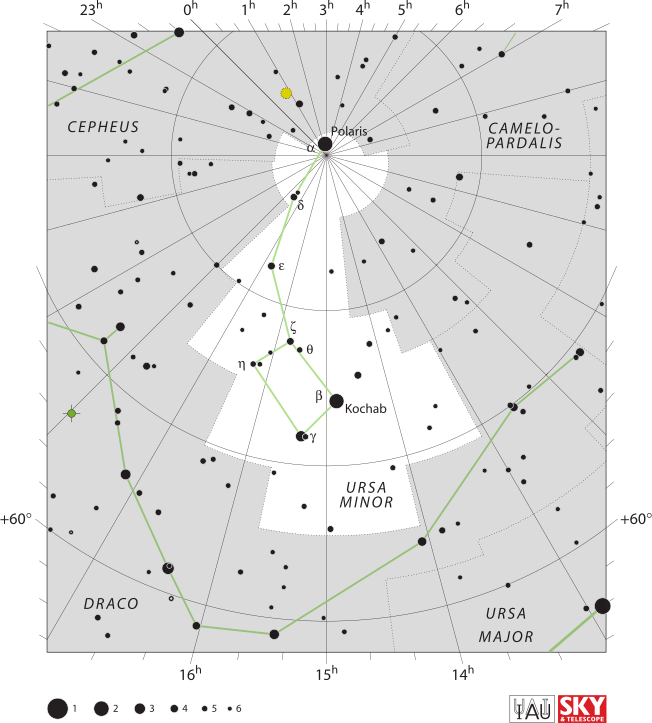
ASTRONOMY - North Star: Polaris and Surrounding Dust
2023 April 11
Image Credit & Copyright: Javier Zayaz
Explanation: Why is Polaris called the North Star? First, Polaris is the nearest bright star toward the north spin axis of the Earth. Therefore, as the Earth turns, stars appear to revolve around Polaris, but Polaris itself always stays in the same northerly direction -- making it the North Star. Since no bright star is near the south spin axis of the Earth, there is currently no bright South Star. Thousands of years ago, Earth's spin axis pointed in a slightly different direction so that Vega was the North Star. Although Polaris is not the brightest star on the sky, it is easily located because it is nearly aligned with two stars in the cup of the Big Dipper. Polaris is near the center of the eight-degree wide featured image, a digital composite of hundreds of exposures that brings out faint gas and dust of the Integrated Flux Nebula (IFN) all over the frame as well as the globular star cluster NGC 188 on the far left. The surface of Cepheid Polaris slowly pulsates, causing the famous star to change its brightness by a few percent over the course of a few days.
10/04/2023
ART FRACTAL - Fractale géométrique scintillante

ASTRONOMY - IC 2944: The Running Chicken Nebula
2023 April 10
Image Credit & Copyright: Daniel Stern
Explanation: To some, it looks like a giant chicken running across the sky. To others, it looks like a gaseous nebula where star formation takes place. Cataloged as IC 2944, the Running Chicken Nebula spans about 100 light years and lies about 6,000 light years away toward the constellation of the Centaur (Centaurus). The featured image, shown in scientifically assigned colors, was captured recently in a 16-hour exposure over three nights. The star cluster Collinder 249 is visible embedded in the nebula's glowing gas. Although difficult to discern here, several dark molecular clouds with distinct shapes can be found inside the nebula.
09/04/2023
ASTRONOMY - M100: A Grand Design Spiral Galaxy
2023 April 8
Image Credit: NASA, ESA, Hubble; Processing: Judy Schmidt
Explanation: Majestic on a truly cosmic scale, M100 is appropriately known as a grand design spiral galaxy. It is a large galaxy of over 100 billion stars with well-defined spiral arms that is similar to our own Milky Way Galaxy. One of the brightest members of the Virgo Cluster of galaxies, M100 (alias NGC 4321) is 56 million light-years distant toward the constellation of Berenice's Hair (Coma Berenices). This Hubble Space Telescope image of M100 was taken with the Wide Field Camera 3 and accentuates bright blue star clusters and intricate winding dust lanes which are hallmarks of this class of galaxies. Studies of variable stars in M100 have played an important role in determining the size and age of the Universe.
ANIMAUX NUISIBLES UTILES - L'araignée

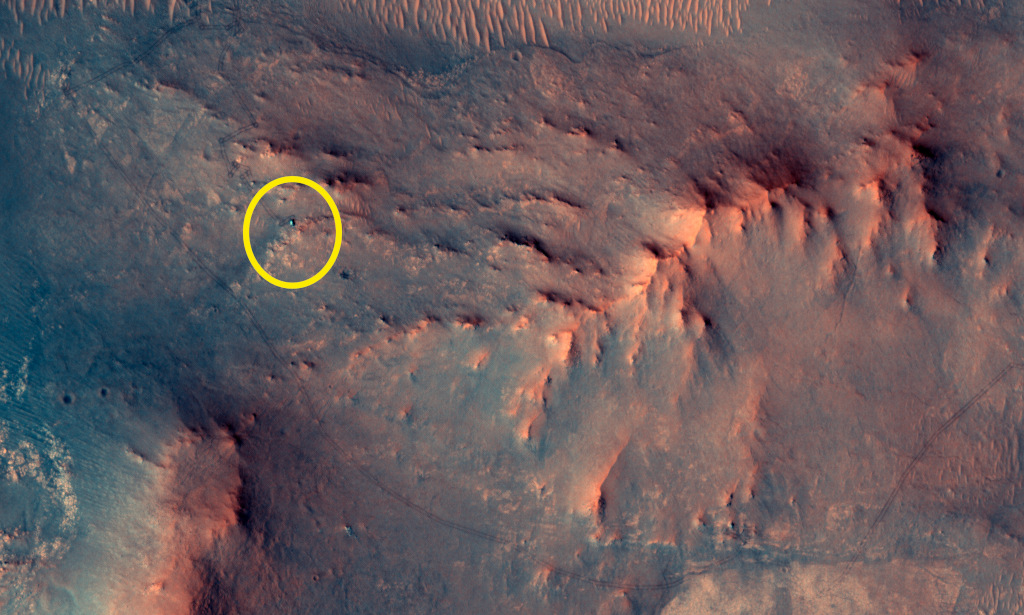
Astronomy - MARS MARATHON BY PERSEVERANCE
2026 June 27 Mars Marathon by Perseverance Image Credit: NASA , LPL (U. Arizona) , MRO , HiRISE Explanation: In this recent HiRISE view fro...
-
2026 January 1 Auroral Corona Image Credit & Copyright : Roi Levi Explanation: Cycle 25 solar maximum made 2025 a great year for ...
-
Imaginez un monde où le cancer n’est plus une sentence, mais une simple étape à franchir. Grâce à une découverte révolutionnaire, ce rêve es...