Nombre total de pages vues

13/07/2025

LA TERRE VUE DU CIEL - Brasilia - Capitale du Brésil


Brasilia, la capitale du Brésil, fut construite en seulement 1.000 jours et fut inaugurée en 1960. Image prise en 2010 depuis la Station spatiale internationale au cours de l'Expédition 24.

© Fyodor Yurchikhin/Russian Space Agency Press Services

SANTé/MEDECINE - Comment soulager une piqûre de moustique en 1 minute

Un moustique vient de vous dévorer ? Votre peau est criblée de boutons qui grattent et qui gonflent ? Et quand on commence à gratter, ça devient vite l'enfer. En plus, c'est douloureux.

Heureusement, il existe un remède de grand-mère qui soulage les piqûres de moustiques en 1 min chrono. L'astuce naturelle est d'appliquer une pâte de bicarbonate directement sur la piqûre.

Ce dont vous avez besoin - 1 cuillère à soupe de bicarbonate - un peu d'eau - une coupelle 

Comment faire ?

1. Mettez le bicarbonate dans la coupelle.
2. Ajoutez un peu d'eau de manière à former une pâte épaisse.
3. Étalez cette pâte directement sur les boutons.
4. Laissez agir jusqu'à ce que ce soit sec.
5. Enlevez la pâte et rincez si besoin.

Grâce au bicarbonate, la piqûre de moustique ne gratte plus du tout en seulement 1 min chrono :-) Facile, rapide et efficace, n'est-ce pas ? La zone qui démange est totalement apaisée ! En plus, cette solution est sans danger pour votre santé... ...contrairement aux crèmes du commerce, comme l'Apaisyl, qui contiennent des ingrédients pas toujours très sains. Cela fonctionne sur les piqûres de moustiques, d'abeilles, de guêpes, de puces ou de puces de canard. Pourquoi ça marche ? La pâte de bicarbonate apaise les démangeaisons grâce à sa texture fraîche. Elle dépose une protection sur la peau qui calme l'envie de se gratter.

Le bicarbonate diminue l'inflammation et la propagation du "venin". Ainsi la sensation de démangeaison est limitée, voire carrément annulée.

CommentEconomiser

ASTRONOMY - Planetary Nebula Mz3: The Ant Nebula

 2025 July 13

A dark starfield appears around an unusually shaped nebula.
The nebula has two main lobes on the left and the right and may 
seem to resemble an ant. 
Please see the explanation for more detailed information.

Planetary Nebula Mz3: The Ant Nebula
Image Credit: NASAESAR. Sahai (JPL) et al., Hubble Heritage Team

Explanation: Why isn't this ant a big sphere? Planetary nebula Mz3 is being cast off by a star similar to our Sun that is, surely, round. Why then would the gas that is streaming away create an ant-shaped nebula that is distinctly not round? Clues might include the high 1000-kilometer per second speed of the expelled gas, the light-year long length of the structure, and the magnetism of the star featured here at the nebula's center. One possible answer is that Mz3 is hiding a second, dimmer star that orbits close in to the bright star. A competing hypothesis holds that the central star's own spin and magnetic field are channeling the gas. Since the central star appears to be so similar to our own Sun, astronomers hope that increased understanding of the history of this giant space ant can provide useful insight into the likely future of our own Sun and Earth.

12/07/2025

ASTRONOMY - Clouds and the Golden Moon

2025 July 12
See Explanation.  Clicking on the picture will download
the highest resolution version available.

Clouds and the Golden Moon
Image Credit & CopyrightAlexsandro Mota

Explanation: As the Sun set, a bright Full Moon rose on July 10. Its golden light illuminates clouds drifting through southern hemisphere skies in this well-composed telephoto image from Conceição do Coité, Bahia, Brazil. The brightest lunar phase is captured here with both a short and long exposure. The two exposures were combined to reveal details of the lunar surface in bright moonlight and a subtle iridescence along the dramatically backlit cloudscape. Of course, July's Full Moon is a winter moon in the southern hemisphere. But in the north it's known to some as the Thunder Moon, likely a nod to the sounds of this northern summer month's typically stormy weather. 

11/07/2025

SANTé/MEDECINE - Détecter le cancer dans les analyses de sang - (4) - Des bénéfices extraordinaires pour la santé publique

Un espoir pour des millions de personnes. Cette découverte représente une lueur d’espoir pour tous ceux qui redoutent le cancer. En détectant la maladie à un stade ultra-précoce, il devient possible de la traiter avant qu’elle ne cause des dégâts irréparables. Les chances de guérison explosent, et le fardeau émotionnel et financier lié à la maladie s’allège considérablement. Un bouleversement pour le système de santé La détection précoce du cancer pourrait également transformer le fonctionnement des systèmes de santé. Moins de traitements lourds, moins d’hospitalisations, moins de séquelles à long terme : les économies potentielles sont immenses. Mais surtout, c’est la qualité de vie des patients qui s’en trouve améliorée, avec moins de souffrances et plus d’espoir.

©Adobe Stock

LA TERRE VUE DU CIEL - Glaciers de Patagonie


Ces glaciers font partie du Parc national des glaciers qui se trouve en Patagonie, au sud de l'Argentine. Image réalisée en 2010 depuis la Station spatiale internationale au cours de l'Expédition 24.

© Fyodor Yurchikhin/Russian Space Agency Press Services

ASTRONOMY - The Veins of Heaven

2025 July 11
See Explanation.  Clicking on the picture will download
the highest resolution version available.

The Veins of Heaven
Image Credit & CopyrightP-M Hedén (Clear SkiesTWAN)

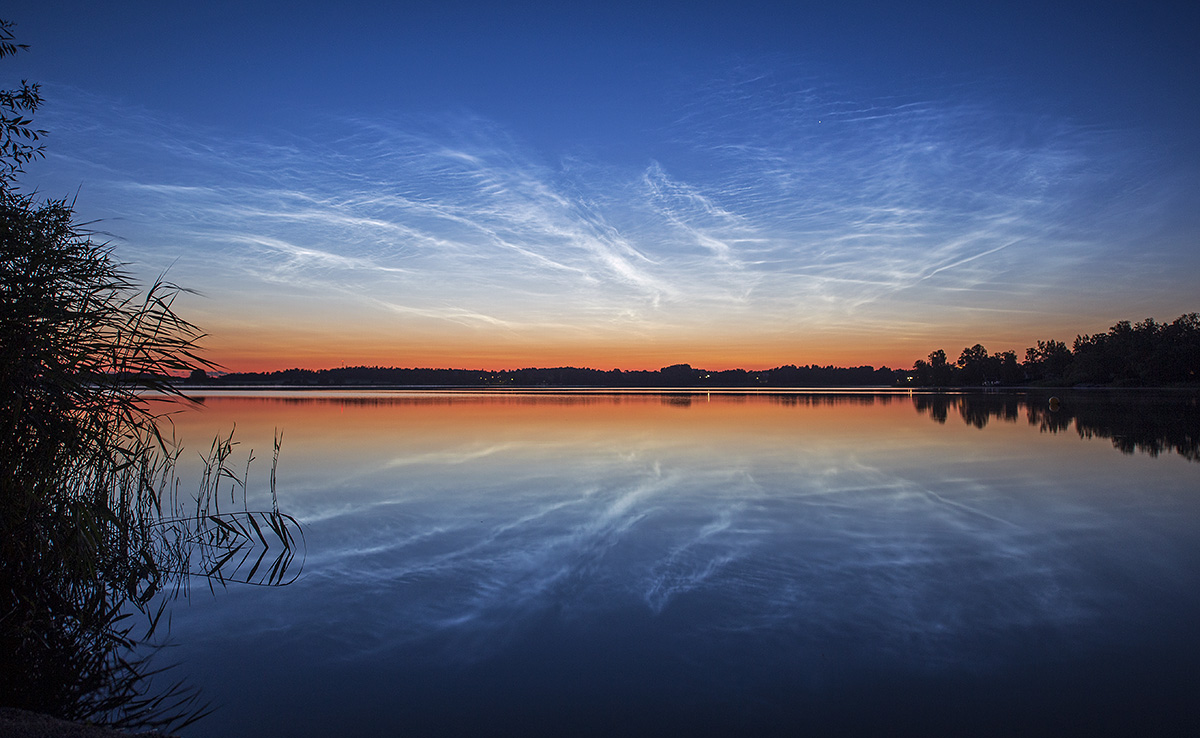
Explanation: Transfusing sunlight as the sky grew darker, this exceptional display of noctilucent clouds was captured on July 10, reflected in the calm waters of Vallentuna Lake near Stockholm, Sweden. From the edge of space, about 80 kilometers above Earth's surface, the icy clouds themselves still reflect sunlight, even though the Sun is below the horizon as seen from the ground. Usually spotted at high latitudes in summer months, the night shining clouds have made a strong showing so far during the short northern summer nights. Also known as polar mesopheric clouds they are understood to form as water vapor driven into the cold upper atmosphere condenses on the fine dust particles supplied by disintegrating meteors or volcanic ash. 

10/07/2025

SANTé/MEDECINE - Détecter le cancer dans les analyses de sang - (3) - Comment fonctionne la détection précoce ?

Les secrets des biomarqueurs. Les biomarqueurs sont de minuscules fragments d’ADN ou de protéines libérés par les cellules cancéreuses dans le sang. Grâce à des techniques de séquençage et d’analyse de pointe, les médecins sont capables de repérer ces signaux d’alerte, même lorsqu’ils sont présents en quantité infime. Cette prouesse technologique repose sur des années de recherche et sur la collaboration entre biologistes, informaticiens et médecins. Une prise de sang, un avenir transformé Le test est d’une simplicité déconcertante : une simple prise de sang, réalisée lors d’un examen de routine, suffit pour lancer l’analyse. Les résultats sont ensuite interprétés par des algorithmes sophistiqués capables de détecter les moindres anomalies. En quelques jours, le patient peut savoir s’il présente un risque accru de développer un cancer, et bénéficier d’un suivi personnalisé.

©Adobe Stock

LA TERRE VUE DU CIEL - Londres vue de l'ISS


Image réalisée en 2010 depuis la Station spatiale internationale au cours de l'Expédition 24.

© Fyodor Yurchikhin/Russian Space Agency Press Services

ASTRONOMY - Lynds Dark Nebula 1251

2025 July 10
See Explanation.  Clicking on the picture will download
the highest resolution version available.

Lynds Dark Nebula 1251
Image Credit & CopyrightCristiano Gualco

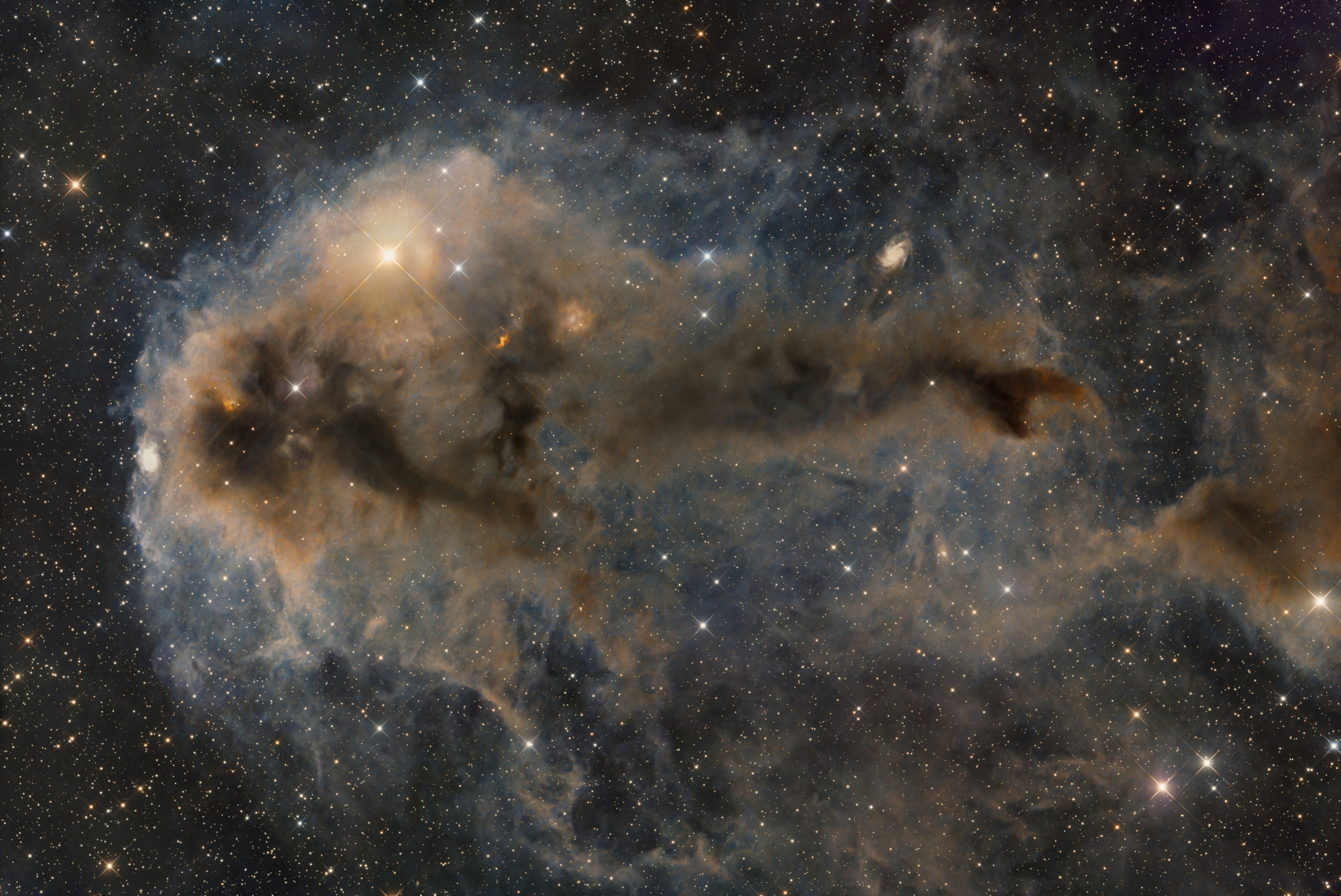
Explanation: Stars are forming in Lynds Dark Nebula (LDN) 1251. About 1,000 light-years away and drifting above the plane of our Milky Way galaxy, LDN 1251 is also less appetizingly known as "The Rotten Fish Nebula." The dusty molecular cloud is part of a complex of dark nebulae mapped toward the Cepheus flare region. Across the spectrum, astronomical explorations of the obscuring interstellar clouds reveal energetic shocks and outflows associated with newborn stars, including the telltale reddish glow from scattered Herbig-Haro objects hiding in the image. Distant background galaxies also lurk in the scene, almost buried behind the dusty expanse. This alluring telescopic frame spans almost three full moons on the sky. That corresponds to over 25 light-years at the estimated distance of LDN 1251. 

SANTé/MEDECINE - Tout savoir sur le coeur humain - 2 - Anatomie du cœur humain

Le cœur comprend quatre cavités : deux oreillettes , situées dans la partie supérieure, et deux ventricules , dans la partie inférieure du c...