Nombre total de pages vues
16/02/2026
MICROPHOTOGRAPHIE - Écailles de serpent ou dendrites métalliques ?
15/02/2026
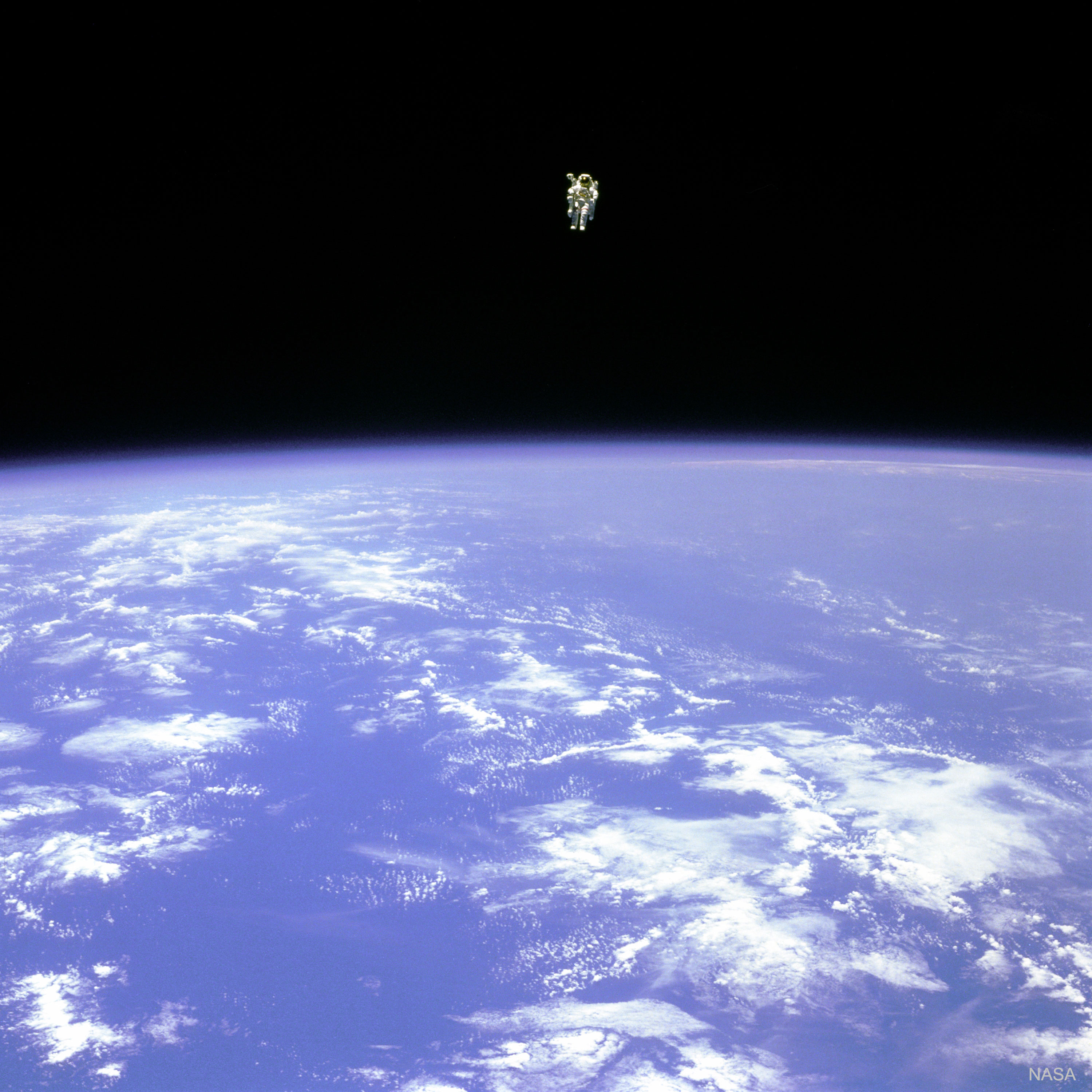
ASTRONOMY - To Fly Free in Space
2026 February 15
Image Credit: NASA, STS-41B
Explanation: What would it be like to fly free in space? About 100 meters from the cargo bay of a space shuttle, Bruce McCandless II was living the dream -- floating farther out than anyone had ever been before. Guided by a Manned Maneuvering Unit (MMU), astronaut McCandless, pictured, was floating free in space. During Space Shuttle mission 41-B in 1984, McCandless and fellow NASA astronaut Robert Stewart were the first to experience such an "untethered space walk". The MMU worked by shooting jets of nitrogen and was used to help deploy and retrieve satellites. With a mass over 140 kilograms, an MMU is heavy on Earth, but, like everything, is weightless when drifting in orbit. The MMU was later replaced with the SAFER backpack propulsion unit.
13/02/2026
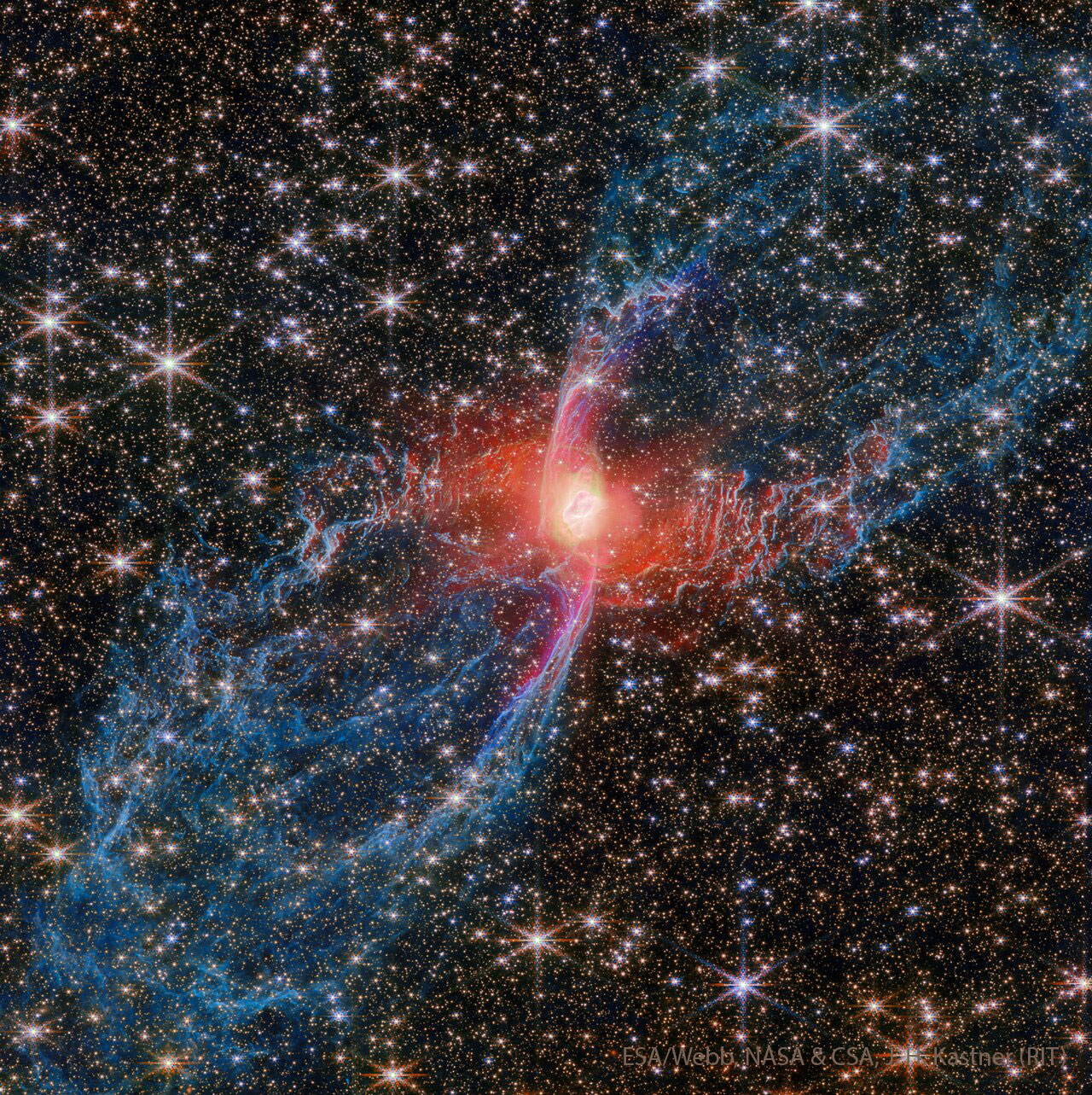
ASTRONOMY - Red Spider Planetary Nebula from Webb
2026 February 3
Image Credit: ESA/Webb, NASA & CSA, J. H. Kastner (RIT)
Explanation: Oh what a tangled web a planetary nebula can weave. The Red Spider Planetary Nebula shows the complex structure that can result when a normal star ejects its outer gases and becomes a white dwarf star. Officially tagged NGC 6537, this two-lobed symmetric planetary nebula houses one of the hottest white dwarfs ever observed, probably as part of a binary star system. Internal winds flowing out from the central stars, have been measured in excess of 1,000 kilometers per second. These winds expand the nebula, flow along the nebula's walls, and cause waves of hot gas and dust to collide. Atoms caught in these colliding shocks radiate light shown in the featured false-color infrared picture by the James Webb Space Telescope. The Red Spider Nebula lies toward the constellation of the Archer (Sagittarius). Its distance is not well known but has been estimated by some to be about 4,000 light-years.
SANTé/MEDECINE - Tout savoir sur le coeur - 11 - Opérations du cœur
12/02/2026
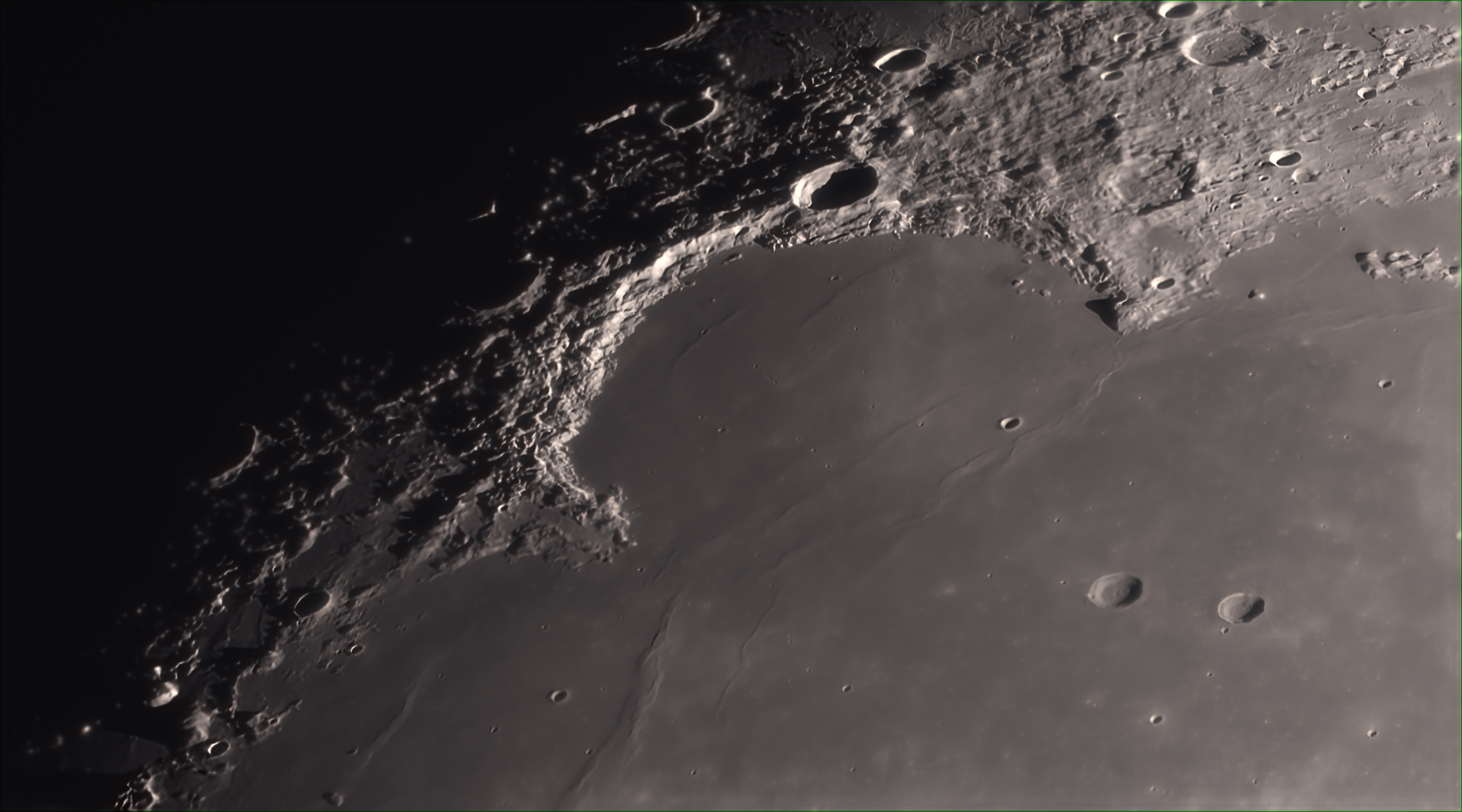
ASTRONOMY -The Bay of Rainbows
2026 February 12
Image Credit & Copyright: Olaf Filzinger
Explanation: Dark, smooth regions that cover the Moon's familiar face are called by Latin names for oceans and seas. That naming convention is historical, though it may seem a little ironic to denizens of the space age who recognize the Moon as a mostly dry and airless world, and the smooth, dark areas as lava-flooded impact basins. For example, this telescopic lunar vista, looks over the expanse of the northwestern Mare Imbrium, or Sea of Rains and into the Sinus Iridum, the Bay of Rainbows. Ringed by the Jura Mountains (montes), the bay is about 250 kilometers across. Seen after local sunrise, the mountains form part of the Sinus Iridum impact crater wall. Their rugged sunlit arc is bounded at the top by Cape (promontorium) Laplace reaching nearly 3,000 meters above the bay's surface. At the bottom of the arc is Cape Heraclides, depicted by Giovanni Cassini in his 1679 telescope-based drawings mapping the moon, as a moon maiden seen in profile with long, flowing hair.
11/02/2026
SANTé/MEDECINE - Tout savoir sur le coeur humain - 10 - Infarctus dans le ventricule gauche
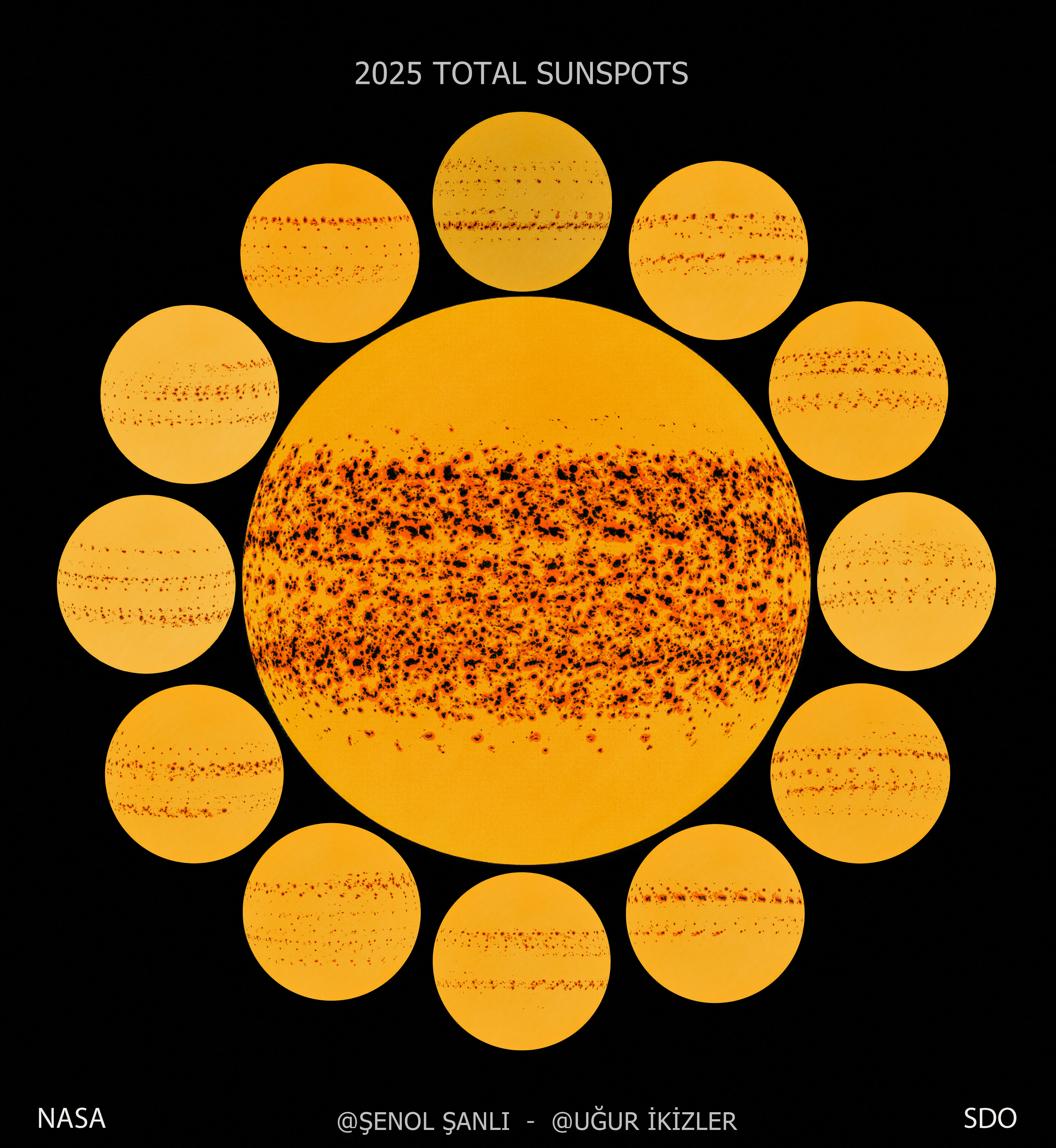
ASTRONOMY - A Year of Sunspots
2026 February 11
Image Credit: NASA, SDO; Processing & Copyright: Şenol Şanli & Uğur İkizler; Text: Cecilia Chirenti (NASA GSFC, UMCP, CRESST II)
Explanation: How many sunspots can you see? The central image shows the many sunspots that occurred in 2025, month by month around the circle, and all together in the grand central image. Each sunspot is magnetically cooled and so appears dark -- and can last from days to months. Although the featured images originated from NASA's Solar Dynamics Observatory, sunspots can be easily seen with a small telescope or binoculars equipped with a solar filter. Very large sunspot groups like recent AR 4366 can even be seen with eclipse glasses. Sunspots are still counted by eye, but the total number is not considered exact because they frequently change and break up. Last year, 2025, coincided with a solar maximum, the period of most intense magnetic activity during its 11-year solar cycle. Our Sun remains unpredictable in many ways, including when it ejects solar flares that will impact the Earth, and how active the next solar cycle will be.
10/02/2026
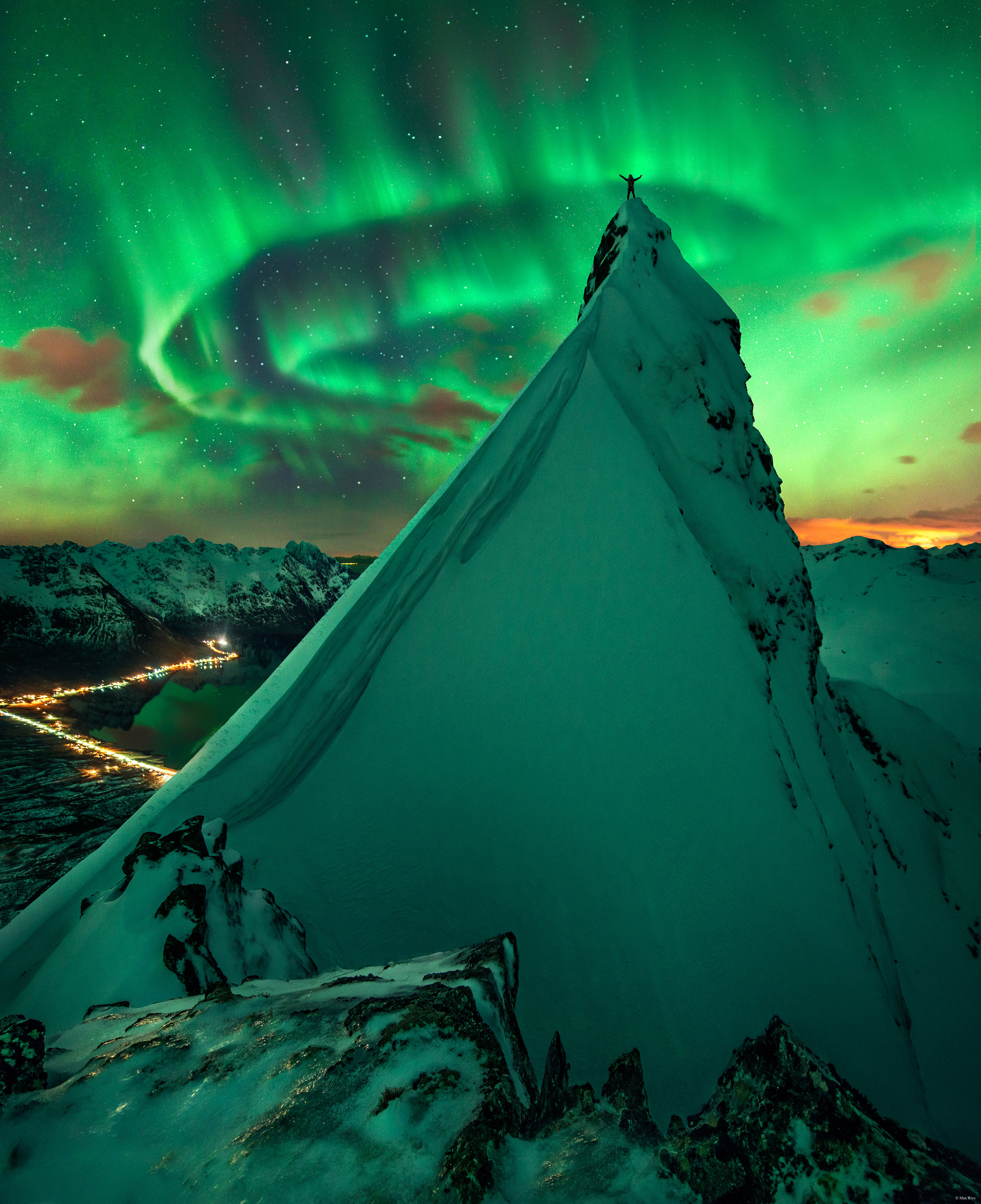
ASTRONOMY - In Green Company: Aurora over Norway
2026 February 10
Image Credit & Copyright: Max Rive
Explanation: Raise your arms if you see an aurora. With those instructions, two nights went by with, well, clouds -- mostly. On the third night of returning to same peaks, though, the sky not only cleared up but lit up with a spectacular auroral display. Arms went high in the air, patience and experience paid off, and the creative featured image was captured as a composite from three separate exposures. The setting is a summit of the Austnesfjorden (a fjord) close to the town of Svolvear on the Lofoten islands in northern Norway. The year was 2014. This year, our Sun is just passing solar maximum, the peak in its 11-year surface activity cycle. As expected, some spectacular auroras have recently resulted.
09/02/2026
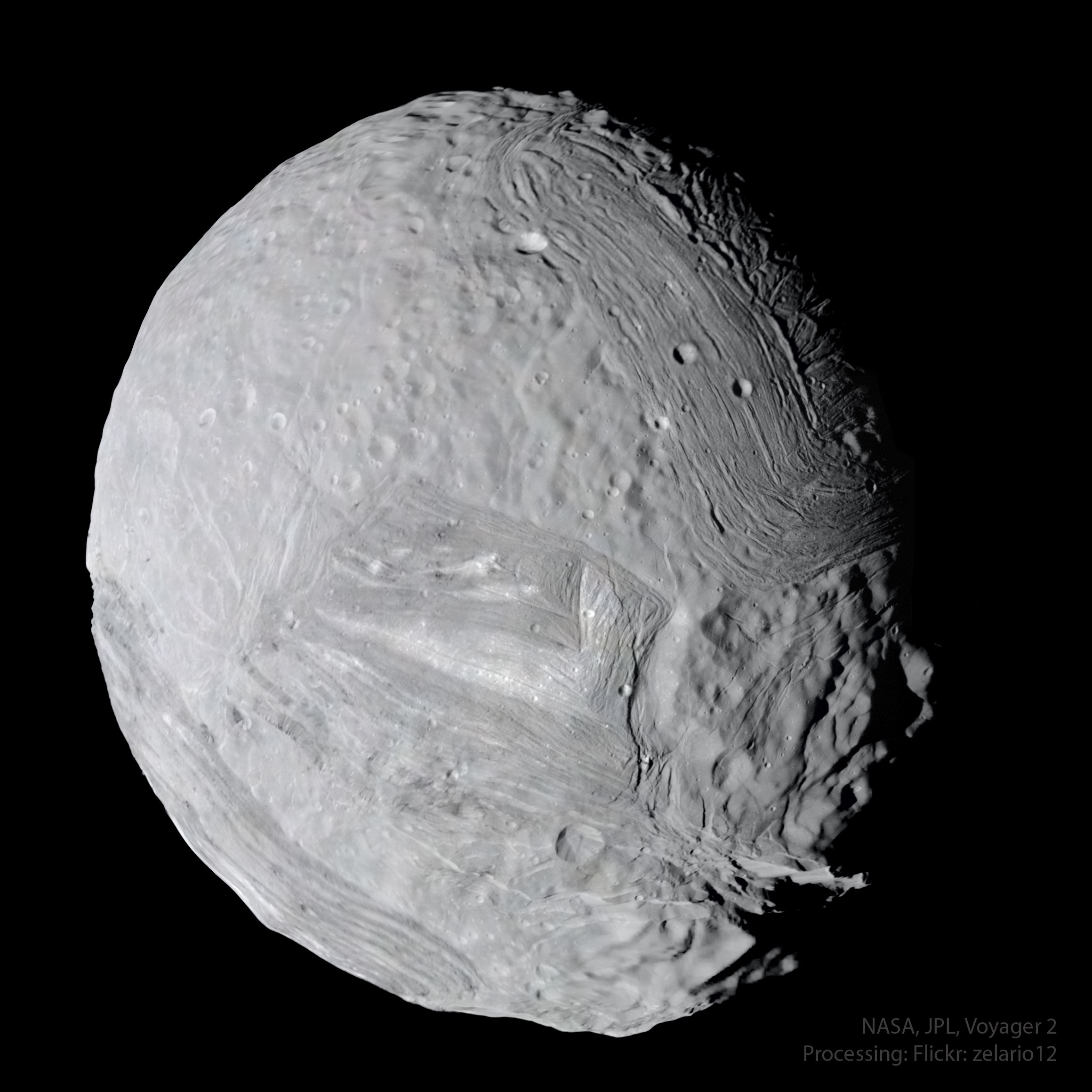
ASTRONOMY - Miranda Revisited
2026 February 9
Image Credit: NASA, JPL, Voyager 2; Processing & License: Flickr: zelario12; Text: Keighley Rockcliffe (NASA GSFC, UMBC CSST, CRESST II)
Explanation: What is Miranda really like? Visually, old images from NASA's Voyager 2 have been recently combined and remastered to result in the featured image of Uranus's 500-kilometer-wide moon. In the late 1980s, Voyager 2 flew by Uranus, coming close to the cratered, fractured, and unusually grooved moon -- named after a character from Shakespeare’s The Tempest. Scientifically, planetary scientists are using old data and clear images to theorize anew about what shaped Miranda's severe surface features. A leading hypothesis is that Miranda, beneath its icy surface, may have once hosted an expansive liquid water ocean which may be slowly freezing. Thanks to the legacy of Voyager 2, Miranda has joined the ranks of Europa, Titan, and other icy moons in the search for water, and, possibly, microbial life, in our Solar System.
SANTé/MEDECINE - Tout savoir sur le coeur humain - 9 - Pseudo-anévrisme du ventricule gauche
Astronomy - EARTHSET
2026 April 8 Earthset Image Credit: NASA Text: Keighley Rockcliffe ( NASA GSFC , UMBC CSST , CRESST II ) Explanation: And to all o...
-
2025 May 11 The Surface of Venus from Venera 14 Image Credit: Soviet Planetary Exploration Program , Venera 14 ; Processing & Copyri...
-
2026 January 1 Auroral Corona Image Credit & Copyright : Roi Levi Explanation: Cycle 25 solar maximum made 2025 a great year for ...