Nombre total de pages vues

23/02/2026

LINGUISTIQUE - Les origines de la langue basque - (2/2)

Photographie aérienne du site de l'Irulegi. En B, la zone de fouilles avec l'emplacement de la main d'Irulegi dans le bâtiment 6 000. © Cambridge University Press

Les origines du basque enfin éclaircies ? 

Reprenons : les Vascons formaient un peuple de l'âge du fer dans la région des Pyrénées occidentales, où est situé le site d'Irulegi. Les origines de leur dialecte sont encore obscures.

Mais il est un autre groupe ethnolinguistique aux origines inconnues, que l'on rapproche souvent des Vascons : le peuple Basque, dont la langue est un cas unique, un « isolat », c'est-à-dire qu'on ne peut pas démontrer sa filiation avec d'autres langues parlées aujourd'hui.

Or, si les inscriptions sur la main d'Irulegi sont, sans nul doute, d'origine vascone, elles présentent également de grandes similitudes avec le basque moderne, ce qui pourrait indiquer une continuité ou une influence linguistique entre Vascons et Basques !

Pour preuve : le mot « sorioneku », proche du terme basque « zorioneko » qui signifie « bonne fortune ». Une signification cohérente avec l'emplacement de la main - dans l'entrée de la maison - et sa forme, qui suggèrent qu'il aurait pu s'agir d'un porte-bonheur accroché au-dessus de la porte afin de préserver la bonne fortune de ses occupants.

Une découverte exceptionnelle qui n'a pas fini de livrer tous ses secrets, mais qui pourrait bouleverser ce que l'on sait du peuple basque et de son dialecte, dernier vestige des langues préhistoriques et parlée dans la région bien avant l'arrivée des langues indo-européennes dont sont issus, par exemple, le grec ancien et le latin.

FuturaSciences

ASTRONOMY - Pleiades: The Seven Sisters Star Cluster

 2026 February 23

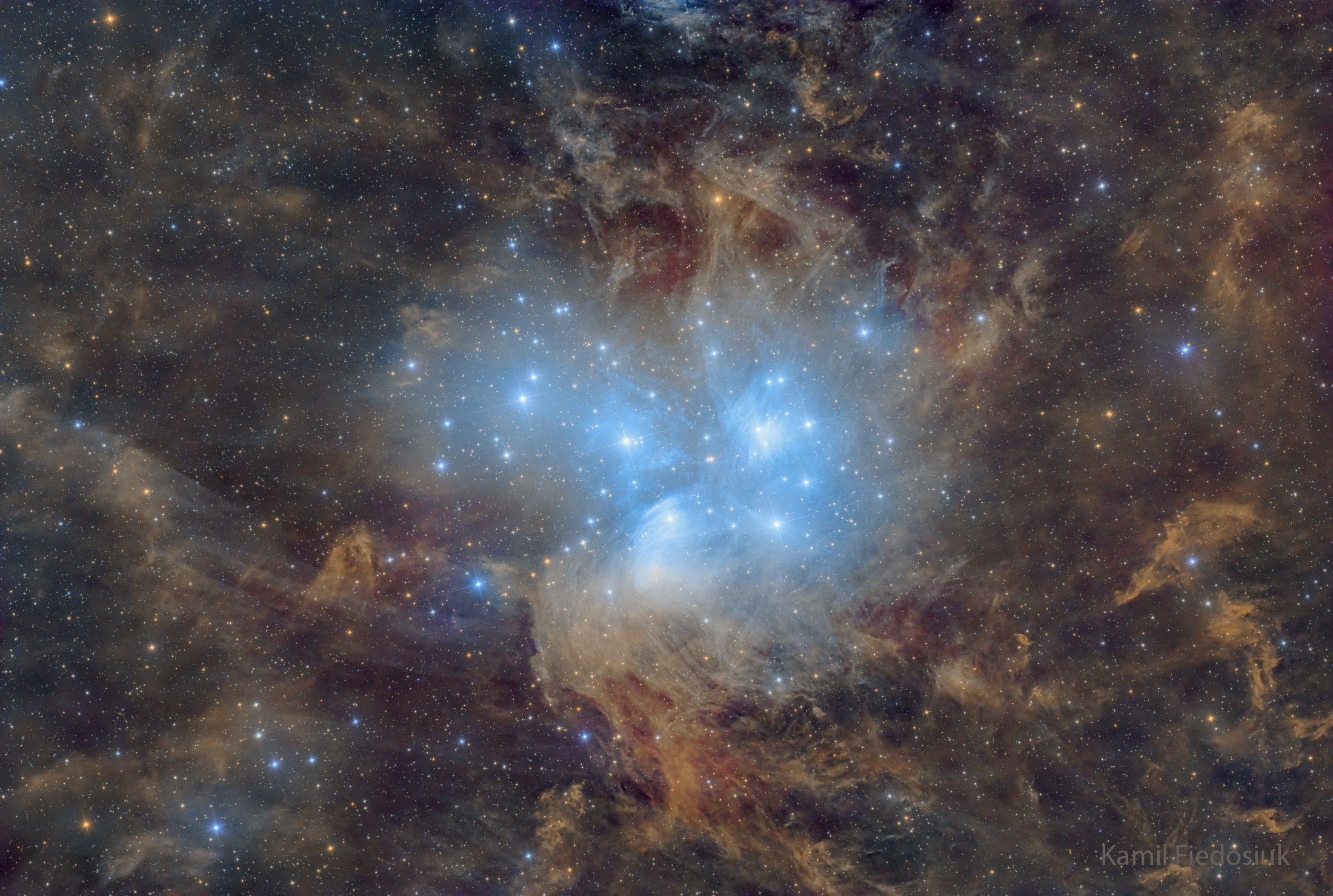
A cluster of blue stars is seen against a starfield
of brown and clumpy dust. The stars illuminate some of 
the nearby dust which causes the dust to glow blue.
Please see the explanation for more detailed information.

Pleiades: The Seven Sisters Star Cluster
Image Credit & Copyright: Kamil Fiedosiuk

Explanation: Have you ever seen the Pleiades star cluster? Even if you have, you probably have never seen it as large and clear as this. Perhaps the most famous star cluster on the sky, the bright stars of the Pleiades can be seen with the unaided eye even from the depths of a light-polluted city. With a long exposure from a dark location, though, the dust cloud surrounding the Pleiades star cluster becomes very evident. The featured 18-hour exposure, taken from Bory TucholskiePoland covers a sky area several times the size of the full moon. Also known as the Seven Sisters and M45the Pleiades lies about 400 light years away toward the constellation of the Bull (Taurus). A common legend with a modern twist is that one of the brighter stars faded since the cluster was named, leaving only six of the sister stars visible to the unaided eye. The actual number of Pleiades stars visible, however, may be more or less than seven, depending on the darkness of the surrounding sky and the clarity of the observer's eyesight.
20/02/2026

ASTRONOMY - B93: A Dark Interstellar Ghost

2026 February 20
A starfield with a light, orange-tinged background 
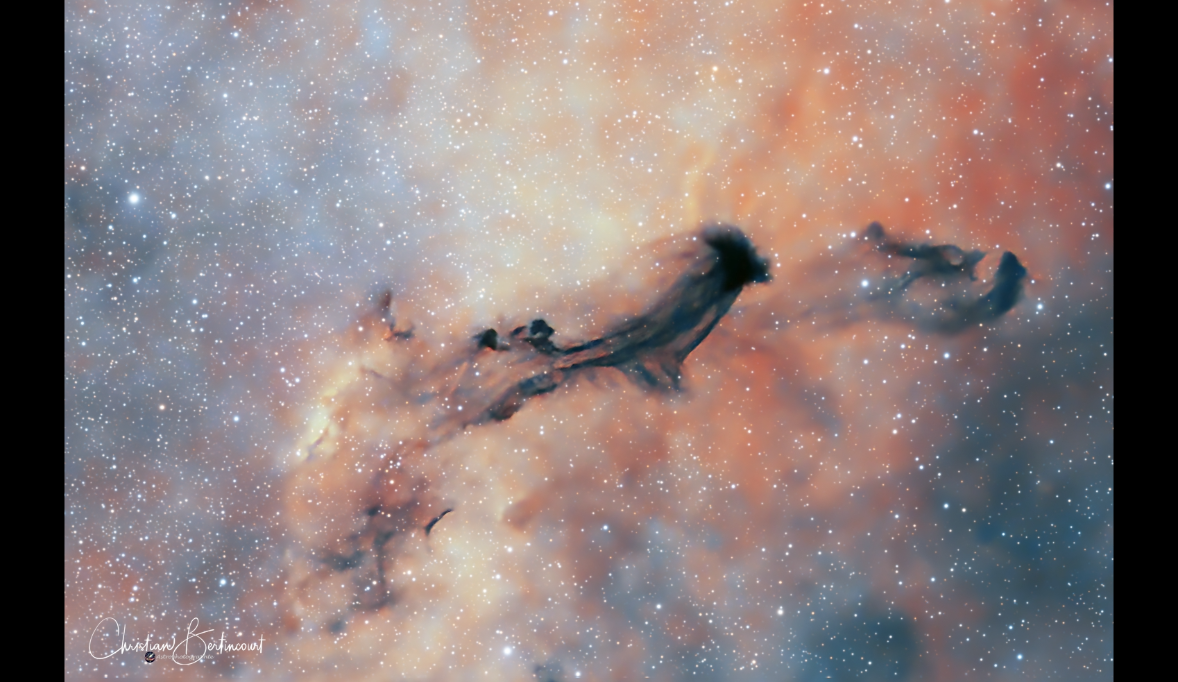
has a dark nebula that looks like a flying ghost visible
near the middle. 
Please see the explanation for more detailed information.

B93: A Dark Interstellar Ghost
Image Credit & Copyright: Christian Bertincourt; Text: Keighley Rockcliffe (NASA GSFCUMBC CSSTCRESST II)

Explanation: "A ghost in the Milky Way…” says Christian Bertincourt, the astrophotographer behind this striking image of Barnard 93 (B93). The 93rd entry in Barnard’s Catalogue of Dark Nebulae, B93 lies within the Small Sagittarius Star Cloud (Messier 24), where its darkness stands in stark contrast to bright stars and gas in the background. In some ways, B93 is really like a ghost, because it contains gas and dust that was dispersed by the deaths of stars, like supernovas. B93 appears as a dark void not because it is empty, but because its dust blocks the light emitted by more distant stars and glowing gas. Like other dark nebulas, some gas from B93, if dense and massive enough, will eventually gravitationally condense to form new stars. If so, then once these stars ignite, B93 will transform from a dark ghost into a brilliant cradle of newborn stars. 

19/02/2026

ASTRONOMY - IC 2574: Coddington's Nebula

 2026 February 19

See Explanation.  Clicking on the picture will download
the highest resolution version available.

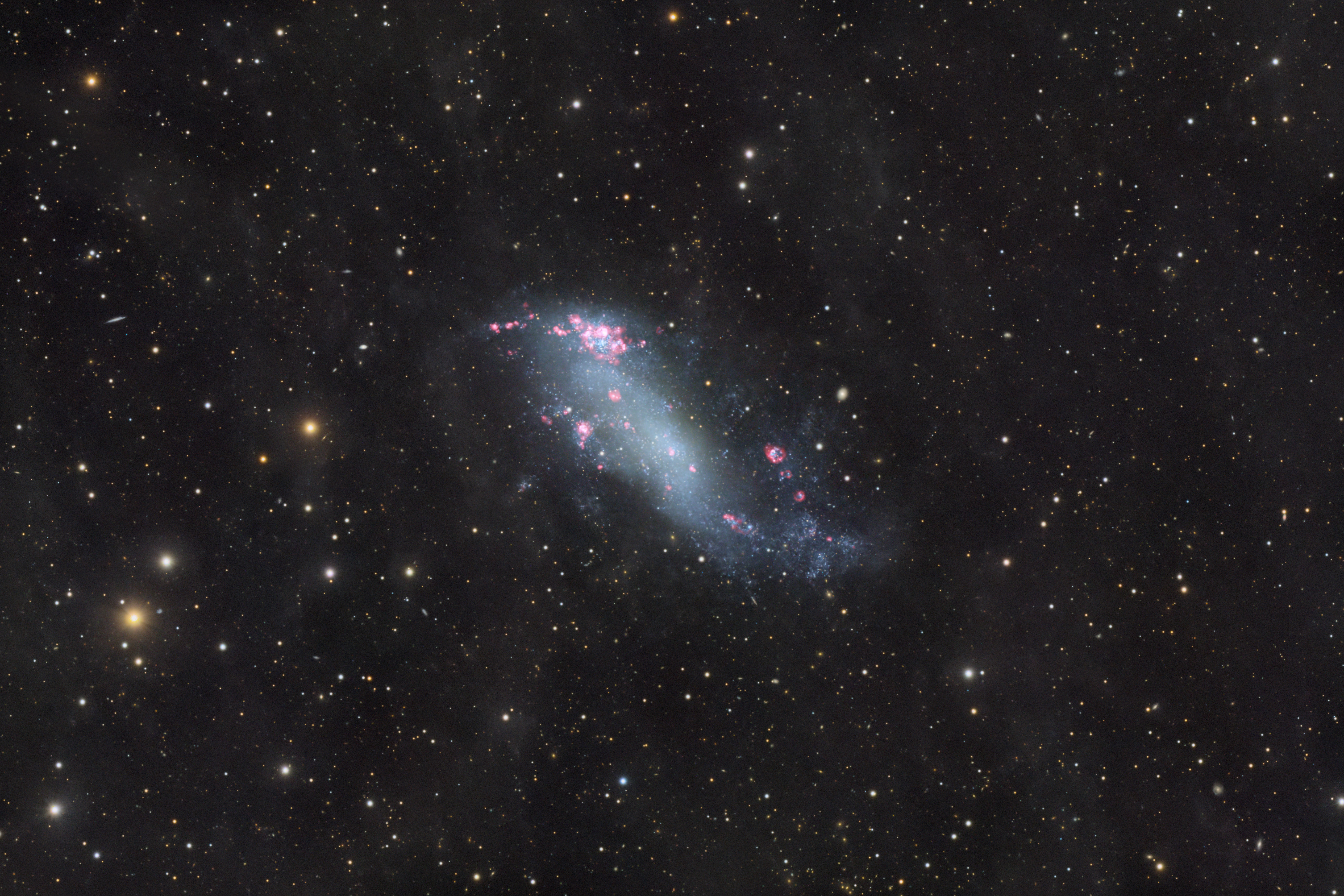
IC 2574: Coddington's Nebula
Image Credit & CopyrightDane Vetter

Explanation: Grand spiral galaxies often seem to get all the glory, flaunting their young, bright, blue star clusters in beautiful, symmetric spiral arms. But small, irregular galaxies form stars too. In fact, dwarf galaxy IC 2574 shows clear evidence of intense star forming activity in its telltale reddish regions of glowing hydrogen gas. Just as in spiral galaxies, the turbulent star-forming regions in IC 2574 are churned by stellar winds and supernova explosions spewing material into the galaxy's interstellar medium and triggering further star formation. A mere 12 million light-years distant, IC 2574 is part of the M81 group of galaxies, seen toward the northern constellation Ursa Major. Also known as Coddington's Nebula, the faint but intriguing island universe is about 50,000 light-years across, discovered by American astronomer Edwin Coddington in 1898.

18/02/2026

ASTRONOMY - Orion's Cradle

 2026 February 18

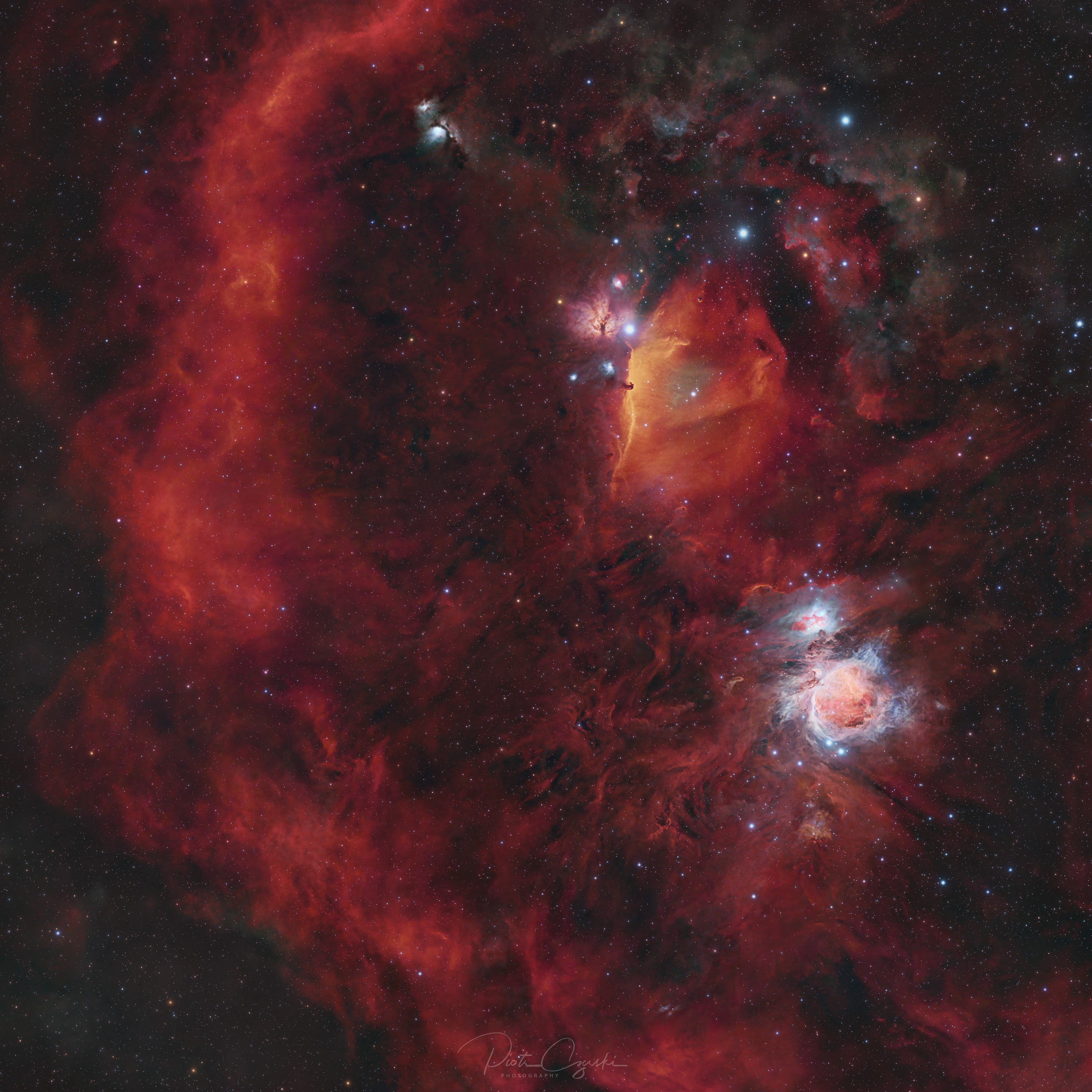
A starfield is shown filled with red glowing gas. On
the right is a blue-glowing complex nebula, while on the left
there is a long encircling arc of red gas. 
Please see the explanation for more detailed information.

Orion's Cradle
Image Credit & Copyright: Piotr Czerski

Explanation: Cradled in red-glowing hydrogen gas, stars are being born in Orion. These stellar nurseries lie at the edge of the giant Orion molecular cloud complex, some 1,500 light-years away. This detailed view spans about 12 degrees across the center of the well-known constellation, with the Great Orion Nebula, the closest large star-forming region, visible toward the lower right. The deep mosaic also includes, near the top center, the Flame Nebula and the Horsehead Nebula. Image data acquired with a hydrogen-alpha filter adds other remarkable features to this wide-angle cosmic vista: pervasive tendrils of energized atomic hydrogen gas and portions of the surrounding Barnard's Loop. While the Orion Nebula and many stars in Orion are easy to see with the unaided eye, emission from the extensive interstellar gas is faint and much harder to record, even in telescopic views of the nebula-rich complex.

17/02/2026

LINGUISTIQUE - Les origines de la langue basque - (1/2)


Un peu plus d'un an après l'annonce de la découverte d'un mystérieux artefact vascon daté du Ier siècle av. J.C., un article publié dans la prestigieuse revue Antiquity de l'université de Cambridge apporte de nouvelles révélations sur cette main en bronze, qui pourrait renfermer les secrets des origines de la langue basque.

Retournons d'abord en arrière. Nous voici en 2021, sur le site d'Irulegi, un oppidum situé dans la vallée d'Aranguren, en Navarre (actuel Pays basque), au nord de l'Espagne. Les archéologues n'en reviennent pas. Juste-là, dans l'entrée du bâtiment 6000 daté de l'Âge de fer, dort une main en bronze. Découverte dans une couche stratigraphique, elle n'est jamais sortie de cet endroit, manifestement détruit par le feu. Une découverte aux caractéristiques hors-du-commun


Baptisée « la main d'Irulegi », la trouvaille porte quatre lignes d'inscriptions sur son dos, faisant d'elle la plus ancienne trace écrite dans la langue des Vascons. La découverte est si inhabituelle qu'il faudra attendre un an avant qu'elle ne soit annoncée. Et pour cause, l'artefact se distingue par les caractéristiques de ses inscriptions, qui combinent deux techniques :

le sgraffito : une technique qui consiste à appliquer une couche de matériau - ici, du bronze - puis une seconde que l'on vient ensuite gratter pour révéler la couche inférieure, créant ainsi un motif ou un dessin.

L'utilisation de points poinçonnés autour des signes gravés afin de les mettre en évidence, une méthode inhabituelle et complexe, jusqu'alors non documentée dans les inscriptions paléohispaniques.

Mais le plus extraordinaire reste encore la nature linguistique des inscriptions, confirmée par ce nouvel article et suggérant une connexion linguistique entre le vasconique et le basque.

.../

FuturaSciences

ASTRONOMY - Tails of Comet Wierzchoś

 2026 February 17

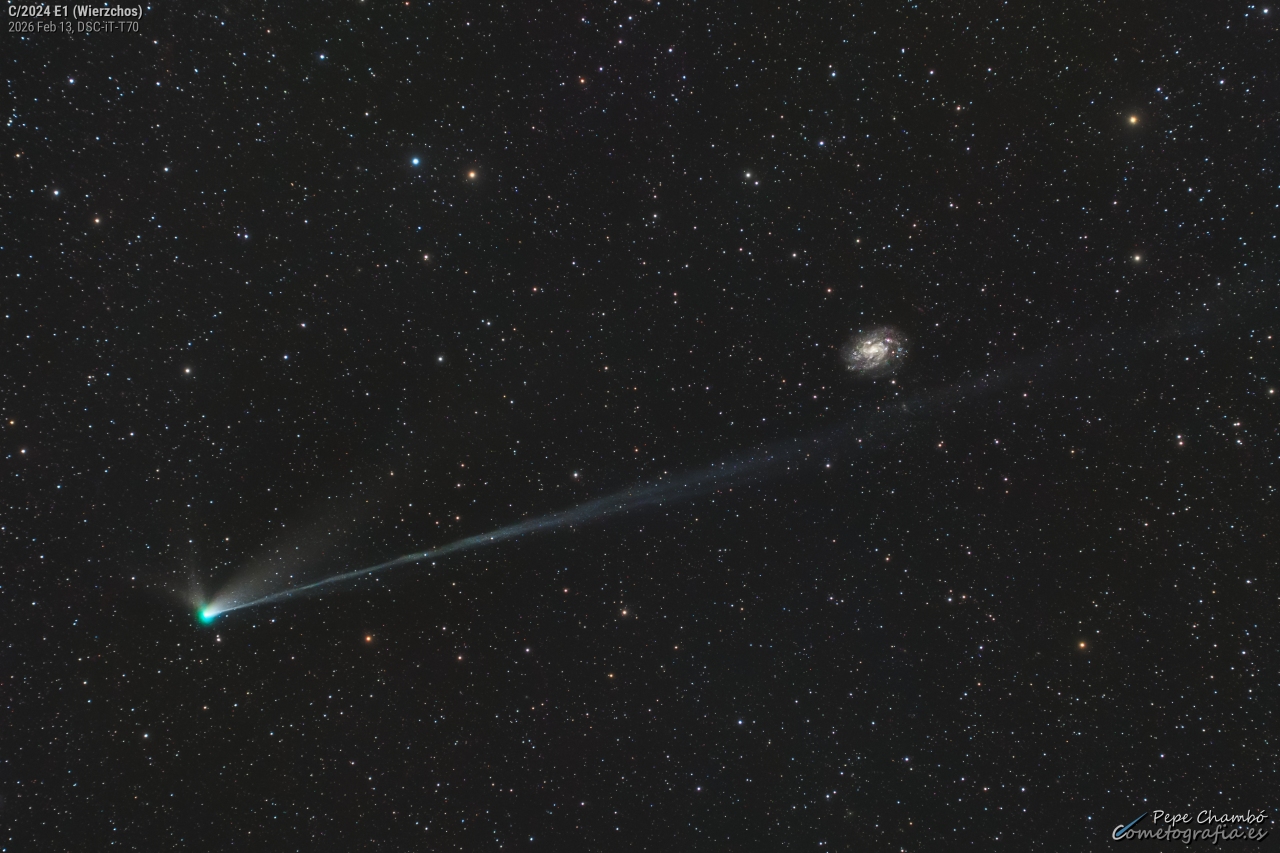
A star field shows a bright comet with its head
on the lower left and tails extending toward the upper
right. A background galaxy is visible on the far right.
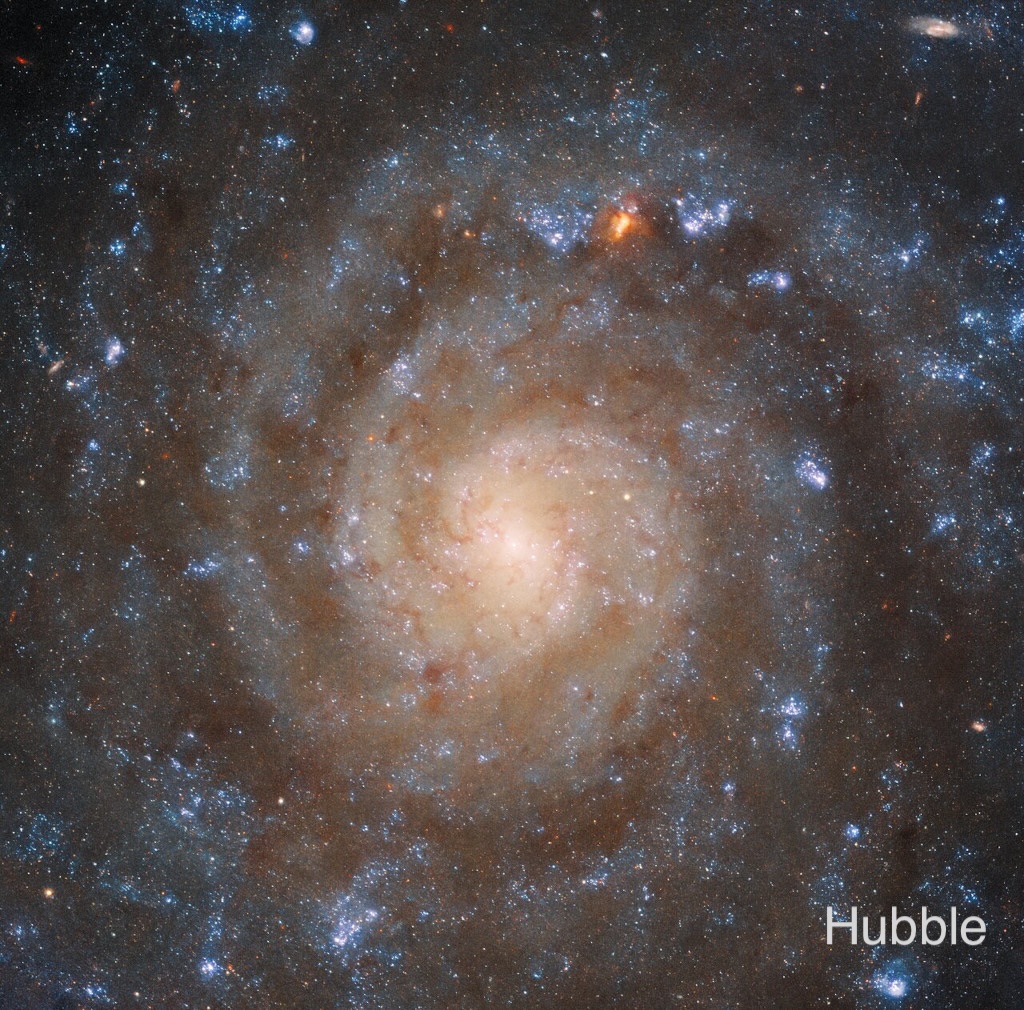
Please see the explanation for more detailed information.
Tails of Comet Wierzchoś
Image Credit & Copyright: José J. Chambó;
Text: Cecilia Chirenti (NASA GSFCUMCPCRESST II)

Explanation: Some comets are regular guests of our solar neighborhood; others come by only once, never to return. We won’t have another chance to see Comet C/2024 E1 (Wierzchoś), which is currently making its way through the inner Solar System. The hyperbolic orbit of this comet indicates that it will likely become an interstellar traveler. Comet Wierzchoś is today near its closest approach to the Earth, passing roughly the same distance from the Earth as is the Sun. The featured 30-minute exposure was taken last week in Chile and shows a 5-degree long ion tail as well as three shorter dust tails. The green hue of the coma comes from the breakdown of dicarbon molecules by sunlight, but that process does not last long enough to also tinge the tails. On the far right lies a spiral galaxy far in the distance: NGC 300.

16/02/2026

ASTRONOMY - Unexplained Shocks Around a White Dwarf Star

 2026 February 16

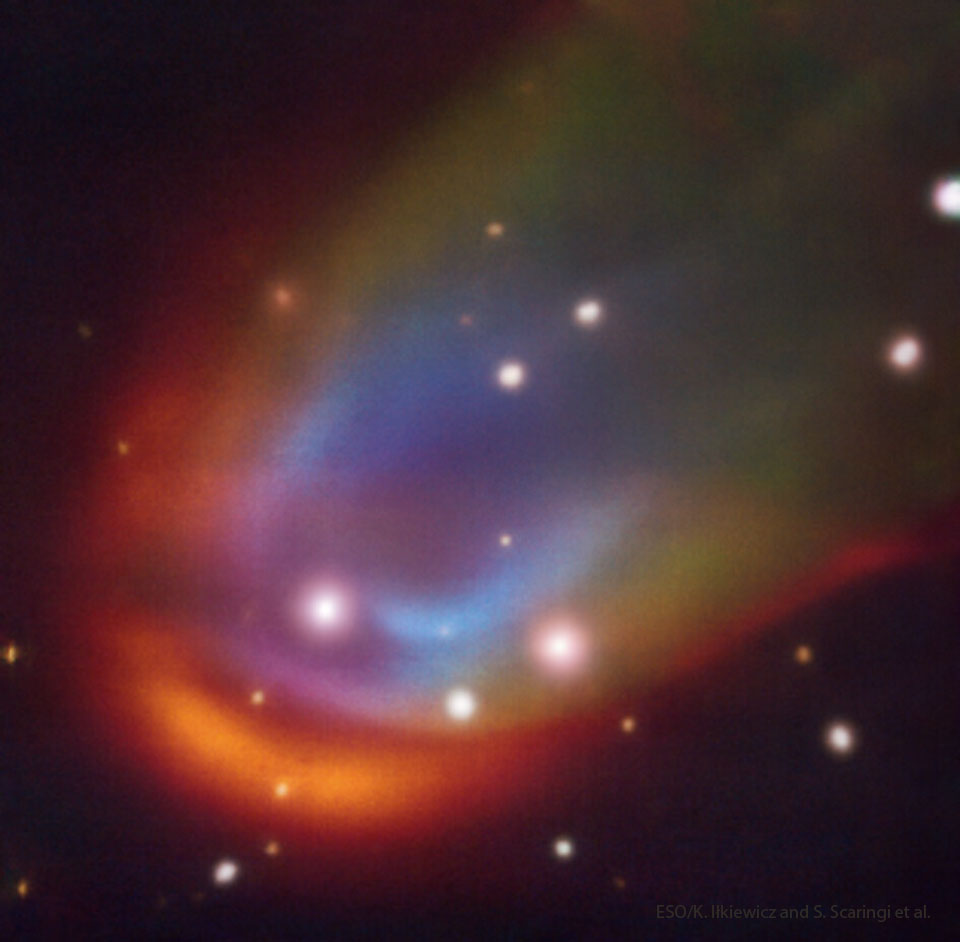
A star field shows colorful pill-shaped nebula 
extending from the bottom left toward the upper right.
Colors include, from the outside in, red, green, and
blue. 
Please see the explanation for more detailed information.

Unexplained Shocks Around a White Dwarf Star
Image Credit: ESOK. Iłkiewicz & S. Scaringi et al.;
Text: Cecilia Chirenti (NASA GSFCUMCPCRESST II)

Explanation: How is RXJ0528+2838 creating such shock waves? A recently discovered white dwarf star, the farther left of the two largest white spots, RXJ0528+2838, was found 730 light-years away from Earth. Most stars, when done fusing nuclei in their cores for energy, become red giant stars, the cores of which live on as faint dense white dwarfs that slowly cool down for the rest of time. White dwarfs are so dense that the only thing that stops them from collapsing further is quantum mechanics. In about 5 billion years, our Sun will become a white dwarf, too. The featured image, obtained with the European Southern Observatory’s Very Large Telescope, shows unexplained bow shocks around RXJ0528+2838, similar to the bow wave of water around a fast-moving ship. Astronomers don’t yet know what is powering these shocks, which have existed for at least 1,000 years. The red, green and blue colors represent trace amounts of glowing hydrogennitrogen and oxygen gas.

MICROPHOTOGRAPHIE - Écailles de serpent ou dendrites métalliques ?


Gros plan ici sur quelques écailles de serpents, pourrait-on penser. Ou sur l'écorce rugueuse d'un morceau de bois. Mais une fois encore, nous aurions tout faux.

Cette microphotographie révèle la surface d'une ouverture de faisceau d'ions gravée par des ions d'argon à incidence oblique dans un système d'amincissement par faisceau d'ions. Dans de tels systèmes, des échantillons de matériaux très minces sont générés. Ils sont transparents aux électrons à haute vitesse dans les microscopes électroniques à transmission modernes.

Les images connues de structures à résolution atomique proviennent généralement d'une telle préparation d'échantillon et sont principalement des piles d'atomes individuels orientées verticalement.

FuturaSciences

15/02/2026

ASTRONOMY - To Fly Free in Space

 2026 February 15

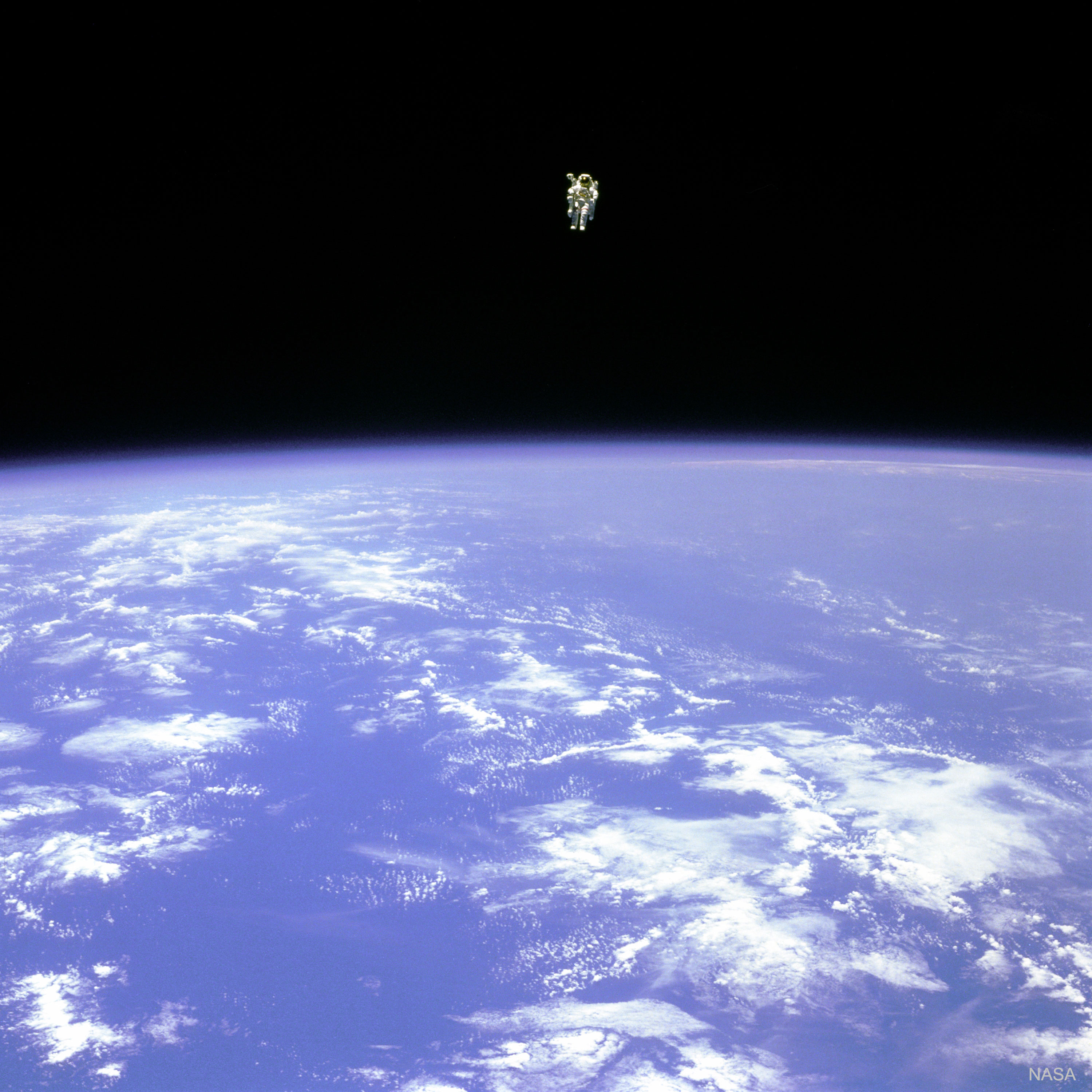
An astronaut is seen hovering over the Earth. In the 
top part of the image, the astronaut is seen against the 
darkness of space. In the lower part of the image, the
Earth is bright blue with white clouds.
Please see the explanation for more detailed information.

To Fly Free in Space
Image Credit: NASASTS-41B

Explanation: What would it be like to fly free in space? About 100 meters from the cargo bay of a space shuttle, Bruce McCandless II was living the dream -- floating farther out than anyone had ever been before. Guided by a Manned Maneuvering Unit (MMU), astronaut McCandless, pictured, was floating free in space. During Space Shuttle mission 41-B in 1984, McCandless and fellow NASA astronaut Robert Stewart were the first to experience such an "untethered space walk". The MMU worked by shooting jets of nitrogen and was used to help deploy and retrieve satellites. With a mass over 140 kilograms, an MMU is heavy on Earth, but, like everything, is weightless when drifting in orbit. The MMU was later replaced with the SAFER backpack propulsion unit.

13/02/2026

ASTRONOMY - Red Spider Planetary Nebula from Webb

 2026 February 3

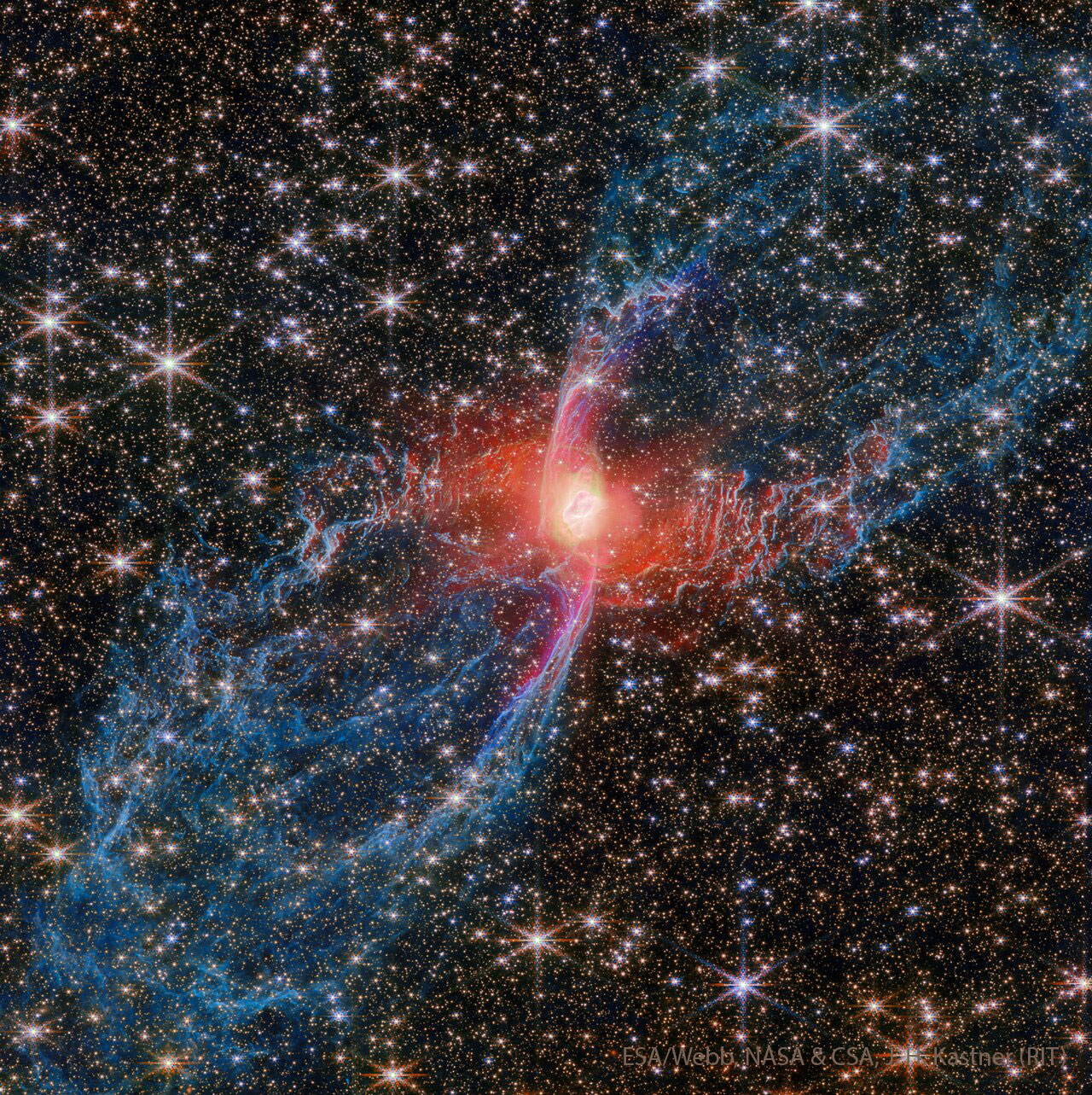
A dense starfield surrounds a blue and red nebula
that stretches from the lower left to the upper right.
The outer parts of the nebula are blue and filamentary,
while the innermost part is red and bright. 
Please see the explanation for more detailed information.

Red Spider Planetary Nebula from Webb
Image Credit: ESA/WebbNASA & CSAJ. H. Kastner (RIT)

Explanation: Oh what a tangled web a planetary nebula can weave. The Red Spider Planetary Nebula shows the complex structure that can result when a normal star ejects its outer gases and becomes a white dwarf star. Officially tagged NGC 6537, this two-lobed symmetric planetary nebula houses one of the hottest white dwarfs ever observed, probably as part of a binary star system. Internal winds flowing out from the central stars, have been measured in excess of 1,000 kilometers per second. These winds expand the nebula, flow along the nebula's walls, and cause waves of hot gas and dust to collide. Atoms caught in these colliding shocks radiate light shown in the featured false-color infrared picture by the James Webb Space Telescope. The Red Spider Nebula lies toward the constellation of the Archer (Sagittarius). Its distance is not well known but has been estimated by some to be about 4,000 light-years.

SANTé/MEDECINE - Tout savoir sur le coeur - 11 - Opérations du cœur


À gauche, la valve mitrale a été remplacée par une valve artificielle. Cette opération est souvent nécessaire en cas de malformation de la valve auriculo-ventriculaire ou suite à une insuffisance valvulaire (défaut de fermeture de la valve). À droite, un pontage coronarien permet de contourner une artère coronaire bouchée et d'apporter du sang riche en oxygène au muscle cardiaque, grâce à un vaisseau greffé. Ce vaisseau greffé provient souvent de la jambe.

© 2018 Patrick Lynch

12/02/2026

ASTRONOMY -The Bay of Rainbows

 2026 February 12

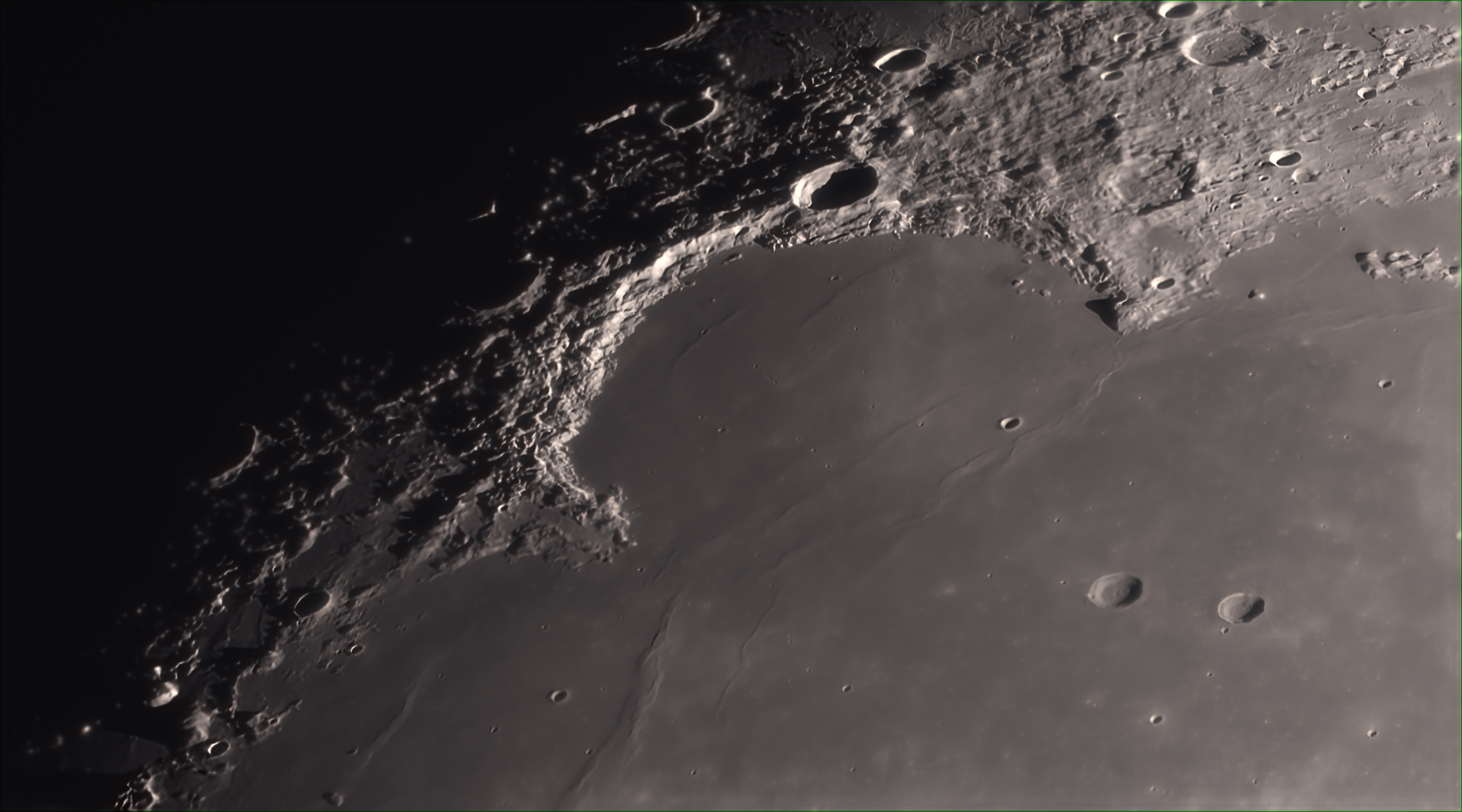
See Explanation.  Clicking on the picture will download
the highest resolution version available.

The Bay of Rainbows
Image Credit & CopyrightOlaf Filzinger

Explanation: Dark, smooth regions that cover the Moon's familiar face are called by Latin names for oceans and seas. That naming convention is historical, though it may seem a little ironic to denizens of the space age who recognize the Moon as a mostly dry and airless world, and the smooth, dark areas as lava-flooded impact basins. For example, this telescopic lunar vista, looks over the expanse of the northwestern Mare Imbrium, or Sea of Rains and into the Sinus Iridum, the Bay of Rainbows. Ringed by the Jura Mountains (montes), the bay is about 250 kilometers across. Seen after local sunrise, the mountains form part of the Sinus Iridum impact crater wall. Their rugged sunlit arc is bounded at the top by Cape (promontorium) Laplace reaching nearly 3,000 meters above the bay's surface. At the bottom of the arc is Cape Heraclides, depicted by Giovanni Cassini in his 1679 telescope-based drawings mapping the moon, as a moon maiden seen in profile with long, flowing hair.

11/02/2026

SANTé/MEDECINE - Tout savoir sur le coeur humain - 10 - Infarctus dans le ventricule gauche


Si une artère coronaire est obstruée, l'irrigation du myocarde en sang diminue localement. Les cellules musculaires manquent d'oxygène et sont affaiblies. Si la situation se prolonge, elle risque de provoquer un infarctus du myocarde, ou crise cardiaque. Certaines régions du muscle cardiaque sont nécrosées : elles sont colorées en sombre en bas de l'illustration. Plus les lésions sont étendues, plus les chances de survie sont minces.

© Patrick J. Lynch, CC by-sa 2.5

ASTRONOMY - A Year of Sunspots

 2026 February 11

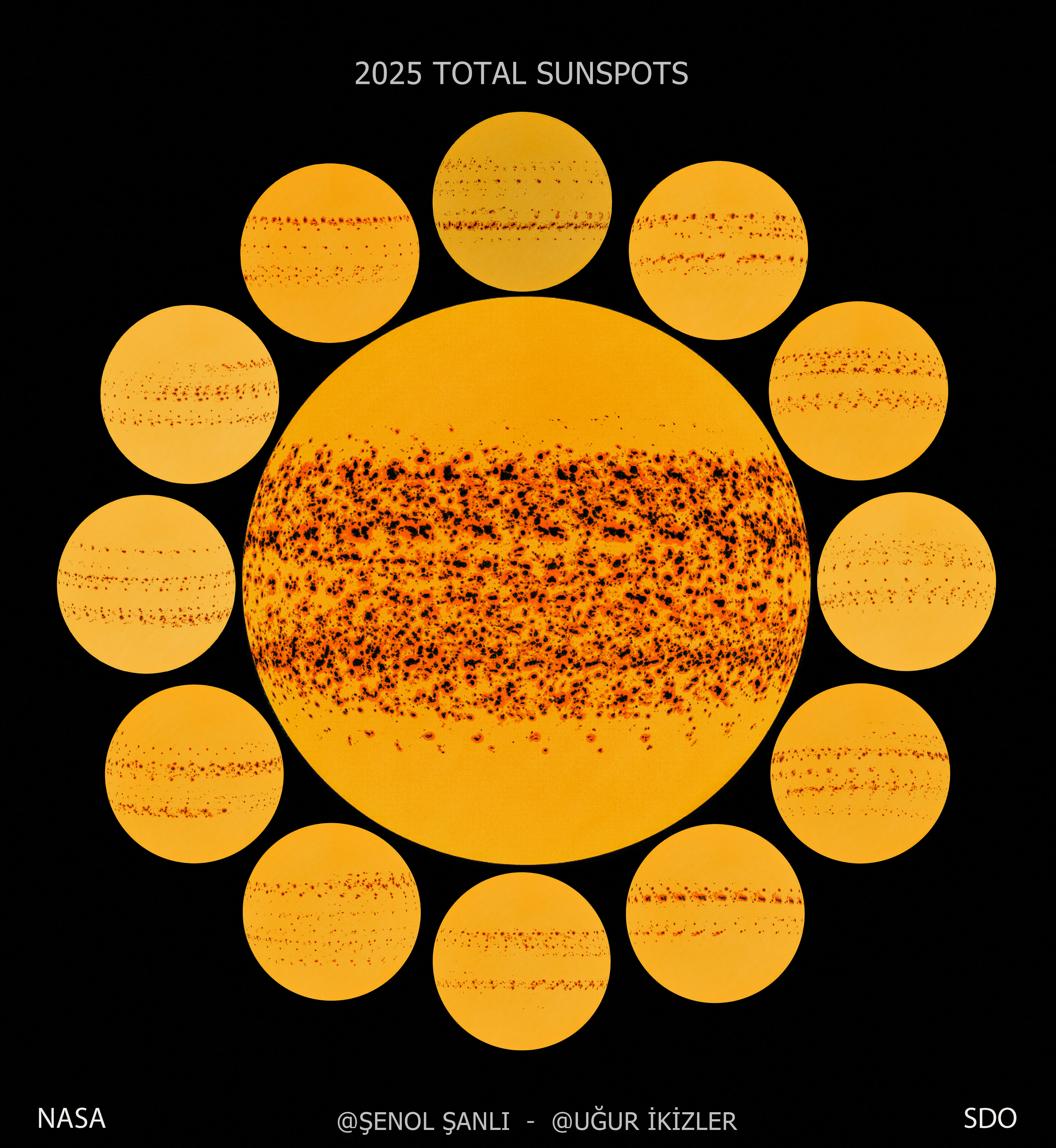
An image of the Sun is surrounded by 12 smaller
Sun images. Each surrounding image has some spots on
it, but the large central image has the most dark spots.
Please see the explanation for more detailed information.

A Year of Sunspots
Image Credit: NASASDO; Processing & Copyright: Şenol Şanli & Uğur İkizler; Text: Cecilia Chirenti (NASA GSFCUMCPCRESST II)

Explanation: How many sunspots can you see? The central image shows the many sunspots that occurred in 2025, month by month around the circle, and all together in the grand central image. Each sunspot is magnetically cooled and so appears dark -- and can last from days to months. Although the featured images originated from NASA's Solar Dynamics Observatory, sunspots can be easily seen with a small telescope or binoculars equipped with a solar filter. Very large sunspot groups like recent AR 4366 can even be seen with eclipse glasses. Sunspots are still counted by eye, but the total number is not considered exact because they frequently change and break up. Last year, 2025, coincided with a solar maximum, the period of most intense magnetic activity during its 11-year solar cycle. Our Sun remains unpredictable in many ways, including when it ejects solar flares that will impact the Earth, and how active the next solar cycle will be.

10/02/2026

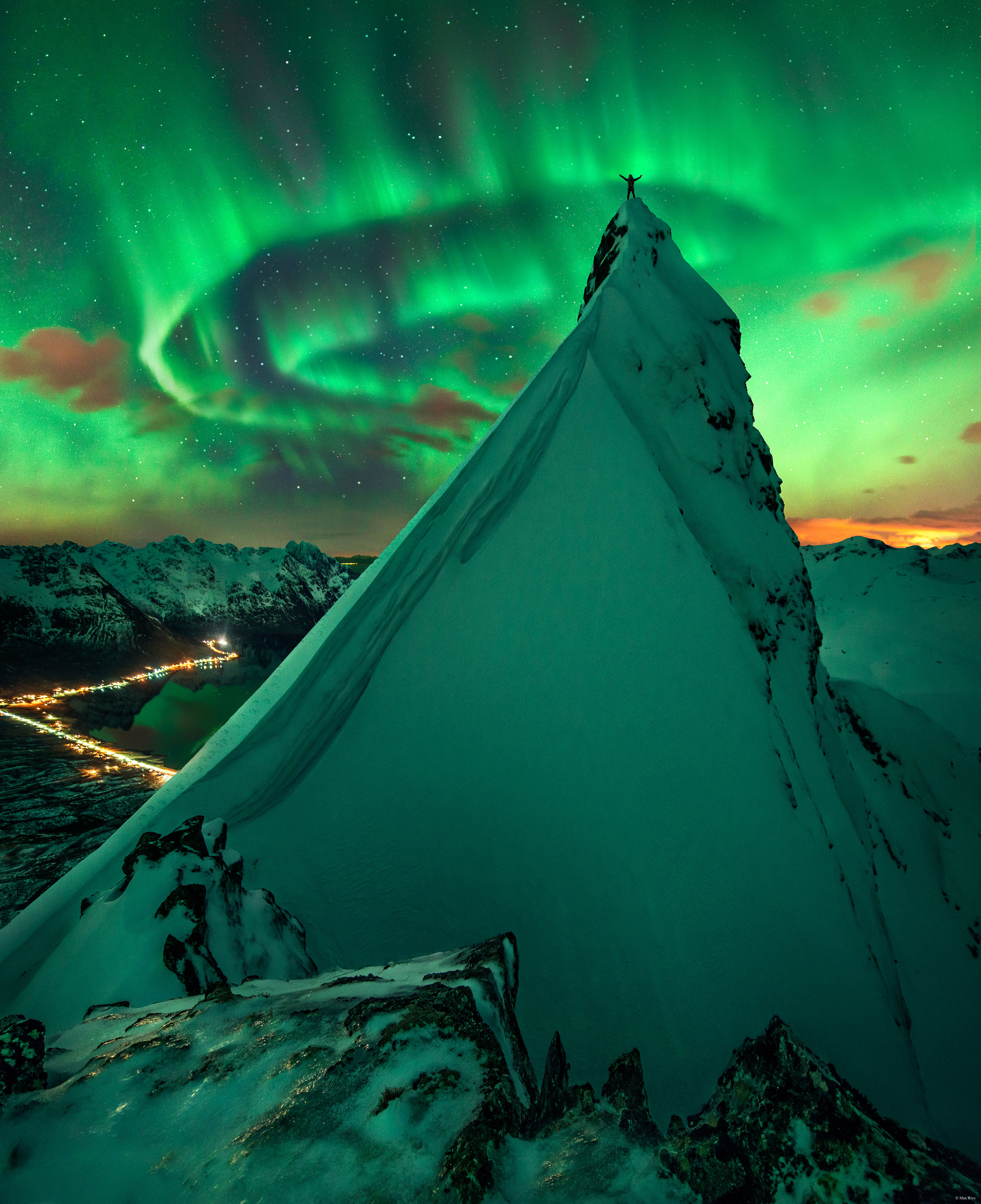
ASTRONOMY - In Green Company: Aurora over Norway

 2026 February 10

A person with the arms raised stands atop of a
rock peak covered in snow. Snow covered mountains
are all around. Green aurora swirl overhead and 
reflect off the snow. 
Please see the explanation for more detailed information.

In Green Company: Aurora over Norway
Image Credit & Copyright: Max Rive

Explanation: Raise your arms if you see an aurora. With those instructions, two nights went by with, well, clouds -- mostly. On the third night of returning to same peaks, though, the sky not only cleared up but lit up with a spectacular auroral display. Arms went high in the air, patience and experience paid off, and the creative featured image was captured as a composite from three separate exposures. The setting is a summit of the Austnesfjorden (a fjord) close to the town of Svolvear on the Lofoten islands in northern Norway. The year was 2014. This year, our Sun is just passing solar maximum, the peak in its 11-year surface activity cycle. As expected, some spectacular auroras have recently resulted.

09/02/2026

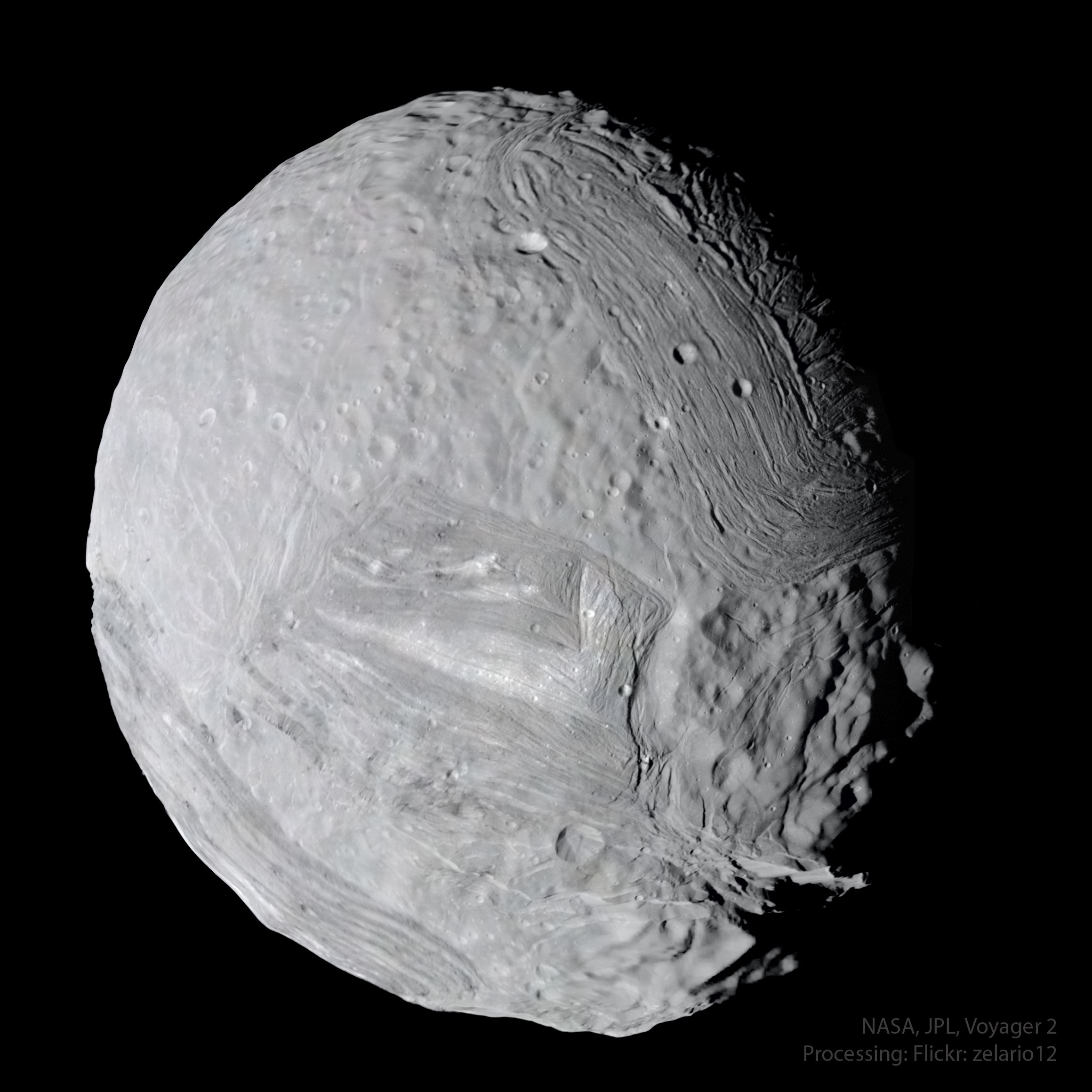
ASTRONOMY - Miranda Revisited

 2026 February 9

An unusual gray body looks like a more jaggged 
version of the Earth's moon, but close up. Craters 
and stripes run across much of the surface. 
Please see the explanation for more detailed information.

Miranda Revisited
Image Credit: NASAJPLVoyager 2; Processing & License: Flickr: zelario12; Text: Keighley Rockcliffe (NASA GSFCUMBC CSSTCRESST II)

Explanation: What is Miranda really like? Visually, old images from NASA's Voyager 2 have been recently combined and remastered to result in the featured image of Uranus's 500-kilometer-wide moon. In the late 1980s, Voyager 2 flew by Uranus, coming close to the cratered, fractured, and unusually grooved moon -- named after a character from Shakespeare’s The Tempest. Scientifically, planetary scientists are using old data and clear images to theorize anew about what shaped Miranda's severe surface features. A leading hypothesis is that Miranda, beneath its icy surface, may have once hosted an expansive liquid water ocean which may be slowly freezing. Thanks to the legacy of Voyager 2, Miranda has joined the ranks of EuropaTitan, and other icy moons in the search for water, and, possibly, microbial life, in our Solar System.

SANTé/MEDECINE - Tout savoir sur le coeur humain - 9 - Pseudo-anévrisme du ventricule gauche

Un pseudo-anévrisme, aussi appelé faux anévrisme, est une poche de sang qui se forme près du myocarde. Contrairement aux vrais anévrismes, il ne possède pas d'éléments du myocarde, mais risque de se rompre. Les pseudo-anévrismes du ventricule gauche sont rares, mais il s'agit souvent d'une complication d'un infarctus du myocarde. Ils peuvent aussi survenir après une opération cardiaque ou une infection.

© Patrick J. Lynch, CC by-sa 2.5

08/02/2026

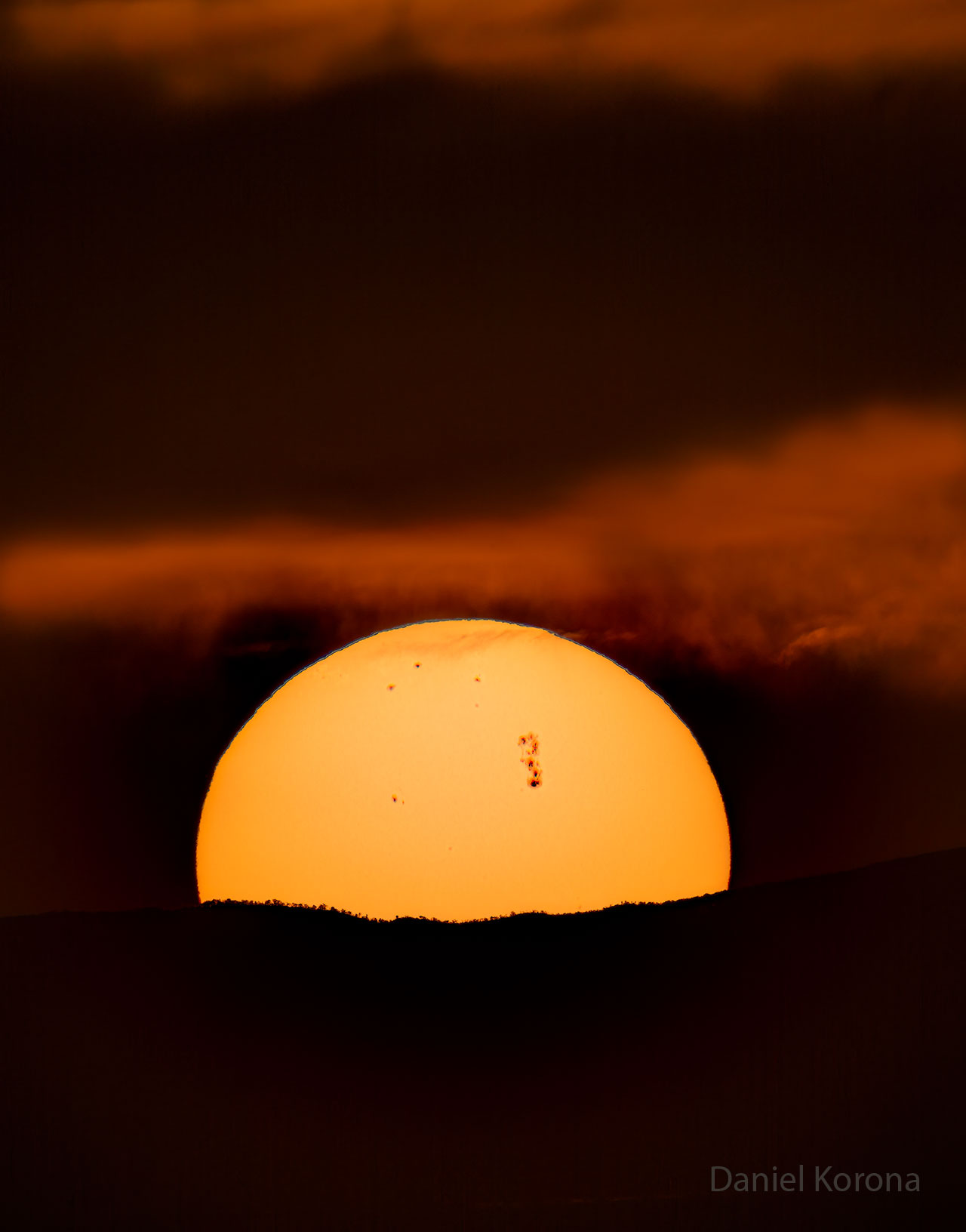
ASTRONOMY - Active Sunspot Region 4366 Crosses the Sun

 2026 February 8

Most of the Sun is pictured peeking over a hill.
On the surface of the Sun are several sunspots including 
a very large sunspot region toward the center-right.
Please see the explanation for more detailed information.

Active Sunspot Region 4366 Crosses the Sun
Image Credit & Copyright: Daniel Korona

Explanation: An unusually active sunspot region is now crossing the Sun. The region, labelled AR 4366, is much larger than the Earth and has produced several powerful solar flares over the past ten days. In the featured image, the region is marked by large and dark sunspots toward the upper right of the Sun's disk. The image captured the Sun over a hill in ZacatecasMexico, 5 days ago. AR 4366 has become a candidate for the most active solar region in this entire 11-year solar cycleActive solar regions are frequently associated with increased auroral activity on the Earth. Now reaching the edge, AR 4366 will begin facing away from the Earth during the coming week. It is not known, though, if the active region will survive long enough to reappear in about two weeks' time, as the Sun rotates.

07/02/2026

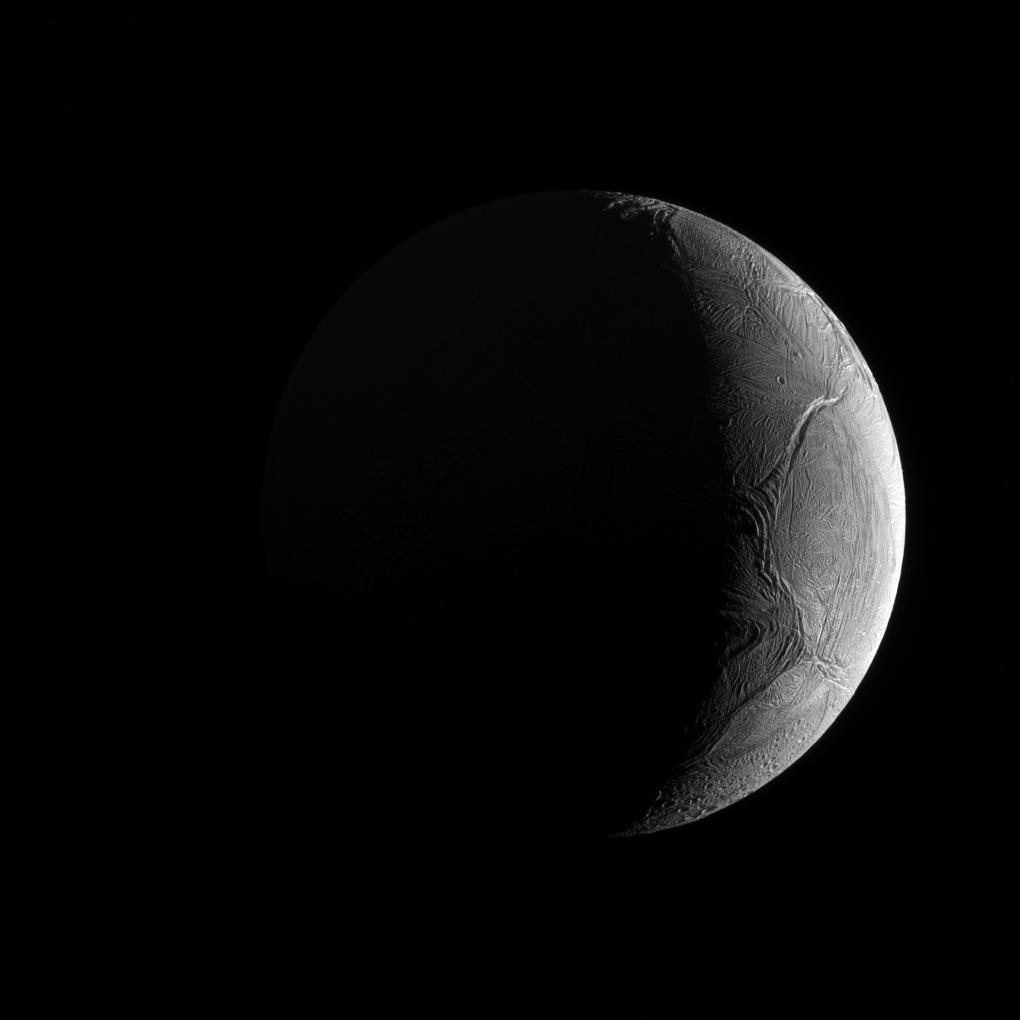
ASTRONOMY - Crescent Enceladus

 2026 February 7

See Explanation.  Clicking on the picture will download
the highest resolution version available.

Crescent Enceladus
Image Credit: Cassini Imaging TeamSSIJPLESANASA

Explanation: Peering from the shadows, the Saturn-facing hemisphere of tantalizing inner moon Enceladus poses in this Cassini spacecraft image. North is up in the dramatic scene captured during November 2016 as Cassini's camera was pointed in a nearly sunward direction about 130,000 kilometers from the moon's bright crescent. In fact, the distant world reflects over 90 percent of the sunlight it receives, giving its surface about the same reflectivity as fresh snow. A mere 500 kilometers in diameter, Enceladus is a surprisingly active moon. Data and images collected during Cassini's flybys have revealed water vapor and ice grains spewing from south polar geysers and evidence of an ocean of liquid water hidden beneath the moon's icy crust.

SANTé/MEDECINE - Tout savoir sur le coeur humain - 8 - Anatomie du cœur droit

Le cœur droit reçoit le sang pauvre en oxygène provenant des veines caves qui entre dans l'oreillette droite (ici sur la gauche de l'illustration). Le sang est mis sous pressiondans le ventricule droit et est expulsé du cœur par les artères pulmonaire, pour rejoindre les poumons. Voyez la valve sigmoïde du tronc pulmonaire, formée de trois valvules en « croissants de lune».

© Patrick J. Lynch, CC by-sa 2.5

06/02/2026

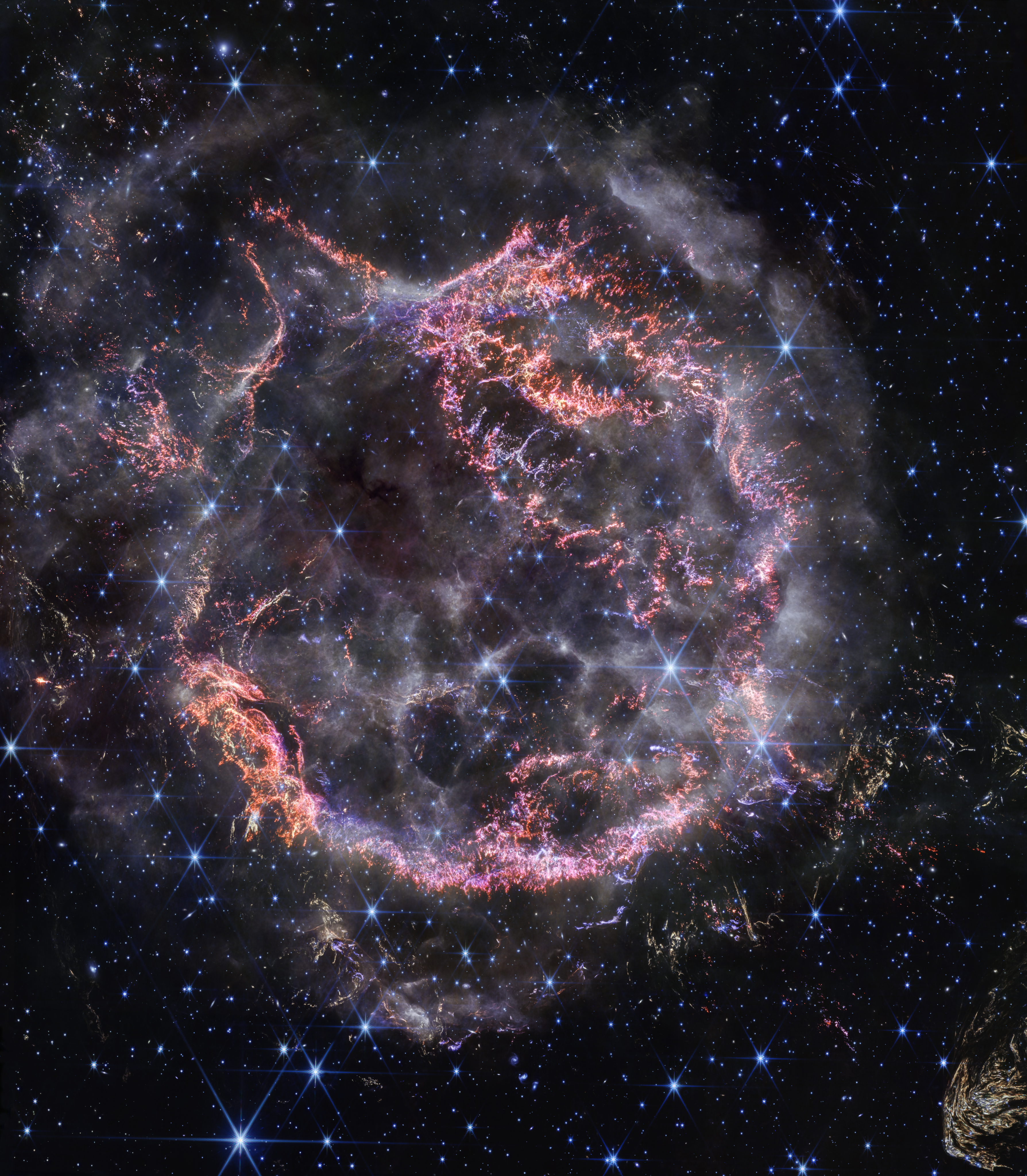
ASTRONOMY - Supernova Remnant Cassiopeia A

 2026 February 6

See Explanation.  Clicking on the picture will download
the highest resolution version available.

Supernova Remnant Cassiopeia A
Image Credit: NASAESACSASTScI; D. Milisavljevic (Purdue University), T. Temim (Princeton University), I. De Looze (University of Gent)

Explanation: Massive stars in our Milky Way Galaxy live spectacular lives. Collapsing from vast cosmic clouds, their nuclear furnaces ignite and create heavy elements in their cores. After only a few million years for the most massive stars, the enriched material is blasted back into interstellar space where star formation can begin anew. The expanding debris cloud known as Cassiopeia A is an example of this final phase of the stellar life cycle. Light from the supernova explosion that created this remnant would have been first seen in planet Earth's sky about 350 years ago, although it took that light 11,000 years to reach us. This sharp NIRCam image from the James Webb Space Telescope shows the still-hot filaments and knots in the supernova remnant. The whitish, smoke-like outer shell of the expanding blast wave is about 20 light-years across. A series of light echoes from the massive star's cataclysmic explosion are also identified in Webb's detailed images of the surrounding interstellar medium.

05/02/2026

SANTé/MEDECINE - Tout savoir sur le coeur humain - 7 - La valve tricuspide


La valve auriculo-ventriculaire droite, aussi appelée valve tricuspide, est une valve cardiaque composée de trois cuspides, qui sont des lames d'endocarde. Cette valve est attachée par des cordons de collagène blanc, qui relient les cuspides à la paroi du ventricule. Quand le cœur est relâché, la valve est ouverte, puis elle se ferme quand les ventricules se contractent.

© Patrick J. Lynch, CC by-sa 2.5

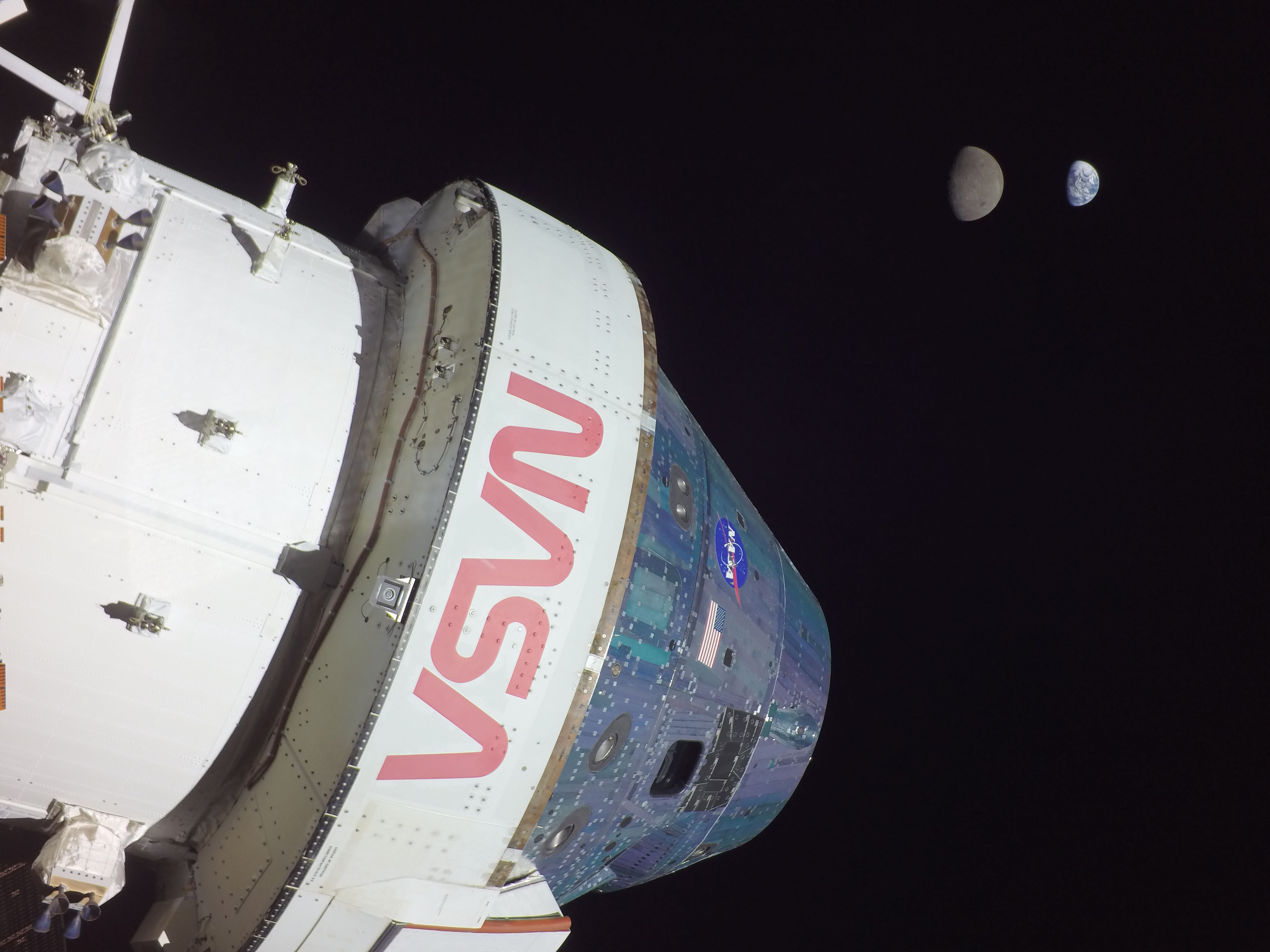
ASTRONOMY - Artemis I: Flight Day 13

 2026 January 31

See Explanation.  Clicking on the picture will download
the highest resolution version available.

Artemis I: Flight Day 13
Image Credit: NASAArtemis I

Explanation: On flight day 13 (November 28, 2022) of the Artemis 1 mission, the Orion spacecraft reached its maximum distance from Earth. At over 430,000 kilometers from Earth, its distant retrograde orbit also puts Orion nearly 70,000 kilometers from the Moon. In the same field of view in this video frame from flight day 13, planet and large natural satellite even appear about the same apparent size from the spacecraft's perspective. On flight day 26 (December 11, 2022), the uncrewed spacecraft splashed down on its home world concluding the historic Artemis I mission. The Artemis II mission, carrying 4 astronauts around the moon and back again, will launch no earlier than February 8.

04/02/2026

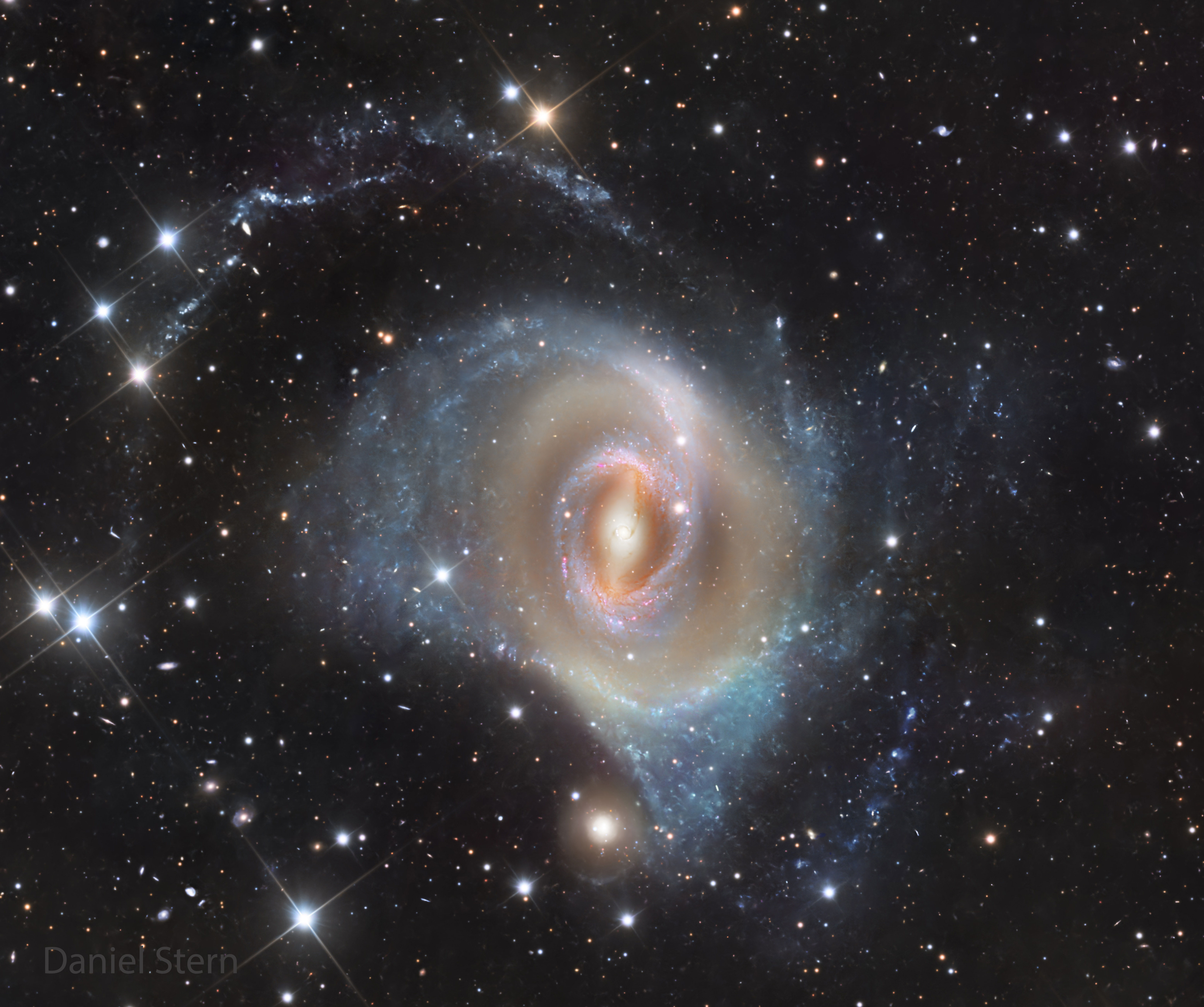
ASTRONOMY - Spiral Galaxy NGC 1512: Wide Field

 2026 February 4

A spiral galaxy is shown that seems to have rings
in place of spiral arms. The outer ring is blue and filled
with stars, while the inner ring is more red. The center
has a vertical bar.
Please see the explanation for more detailed information.

Spiral Galaxy NGC 1512: Wide Field
Image Credit & Copyright: Daniel Stern

Explanation: Most galaxies don't have any rings -- why does this galaxy have three? To begin, a ring that's near NGC 1512's center -- and so hard to see here -- is the nuclear ring which glows brightly with recently formed stars. Next out is a ring of stars and dust appearing both red and blue, called, counter-intuitively, the inner ring. This inner ring connects ends of a diffuse central bar of stars that runs horizontally across the galaxy. Farthest out in this wide field image is a ragged structure that might be considered an outer ring. This outer ring appears spiral-like and is dotted with clusters of bright blue stars. All these ring structures are thought to be affected by NGC 1512's own gravitational asymmetries in a drawn-out process called secular evolution. The featured image was captured last month from a telescope at Deep Sky Chile in Chile.

03/02/2026

SANTé/MEDECINE - Tout savoir sur le coeur humain - 6 - Échocardiographie d’un cœur normal

Au centre, observez la valve de l'aorte qui empêche le sang de refluer dans le ventricule ; cette valve dite sigmoïde est composée de trois valvules en forme de pochettes. Le ventricule gauche est reconnaissable par sa paroi musculaire plus épaisse.

© Patrick J. Lynch, CC by-sa 2.5

02/02/2026

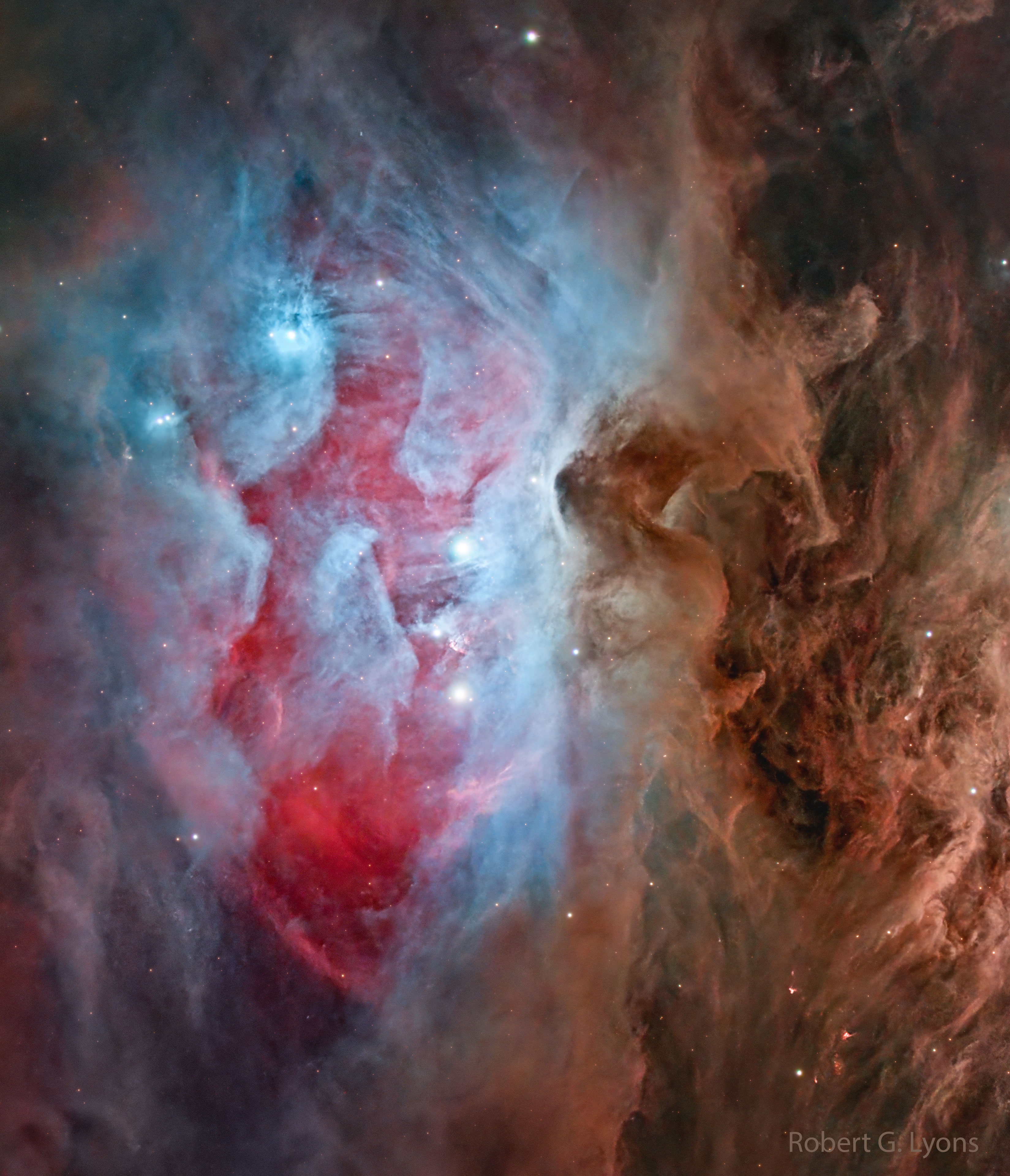
ASTRONOMY - Orion: The Running Man Nebula

2026 February 2
A complex nebula is shown that is mostly blue
and red on the left half and mostly brown on the right. 
Several bright stars are visible, and many filaments
run through, in particular on brown dust filamnents
on the image right. 
Please see the explanation for more detailed information.

Orion: The Running Man Nebula
Image Credit & Copyright: Robert G. Lyons (Robservatory)

Explanation: What part of Orion is this? Just north of the famous Orion Nebula is a picturesque star forming region in Orion's Sword that contains a lot of intricate dust -- some of which appears blue because it reflects the light of bright embedded stars. The region's popular name is the Running Man Nebula because, looked at from the right, part of the brown dust appears to be running legs. Cataloged as Sharpless 279, the reflection nebula is not only part of the constellation of Orion, but part of the greater Orion molecular cloud complex. Light from the Running Man's bright stars, including 42 Orionis, the bright star closest to the featured image center, is slowly destroying and reshaping the surrounding dust, which will likely be completely gone in about 10 million years. The nebula spans about 15 light years and lies about 1,500 light years away. 

01/02/2026

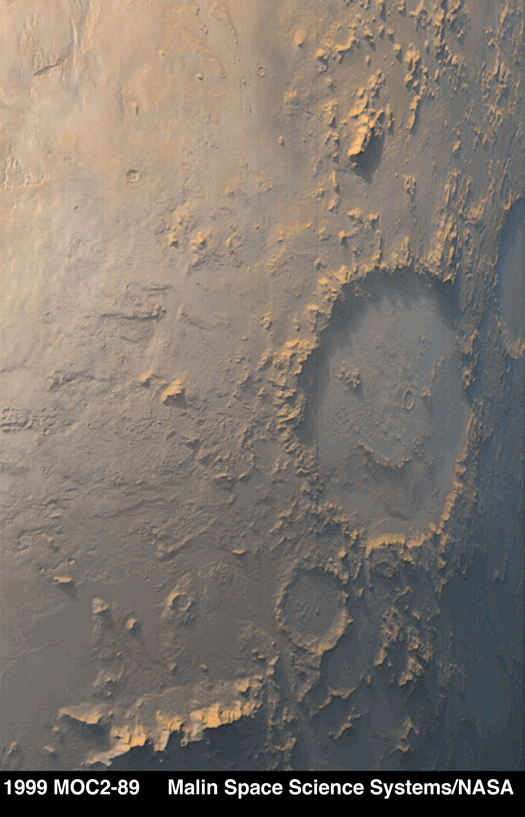
ASTRONOMY - Galle: Happy Face Crater on Mars

2026 February 1
Several craters are visible on a tan surface. 
The largest crater, on the right, has internal 
markings that make it look like a winking face
with a smile. 
Please see the explanation for more detailed information.

Galle: Happy Face Crater on Mars
Image Credit: NASAMGSMSSS

Explanation: Mars has put on a happy face. The Martian crater Galle is famous because it has internal markings that make it look like a face that is both smiling and winking. These markings were originally discovered in the 1970s in pictures taken by the Viking Orbiter. The Mars Global Surveyor (MGS) spacecraft that orbited Mars from 1996 to 2006 captured the featured picture. Happy Face Crater and its iconic features were formed by chance billions of years ago when a city-sized asteroid slammed into the Martian surface. All rocky planets and moons in our Solar System show impact craters, with the highest number of craters found on Earth's Moon and the planet MercuryEarth and Venus would show the most, though, were it not for weather and erosion

LINGUISTIQUE - Les origines de la langue basque - (2/2)

Photographie aérienne du site de l'Irulegi. En B, la zone de fouilles avec l'emplacement de la main d'Irulegi dans le bâtiment 6...