Nombre total de pages vues
01/10/2022
MACROPHOTOGRAPHIE - Une fleur qui laisse son empreinte
PHOTOGRAPHIE SOUS-MARINE - Nurserie de requins-citron
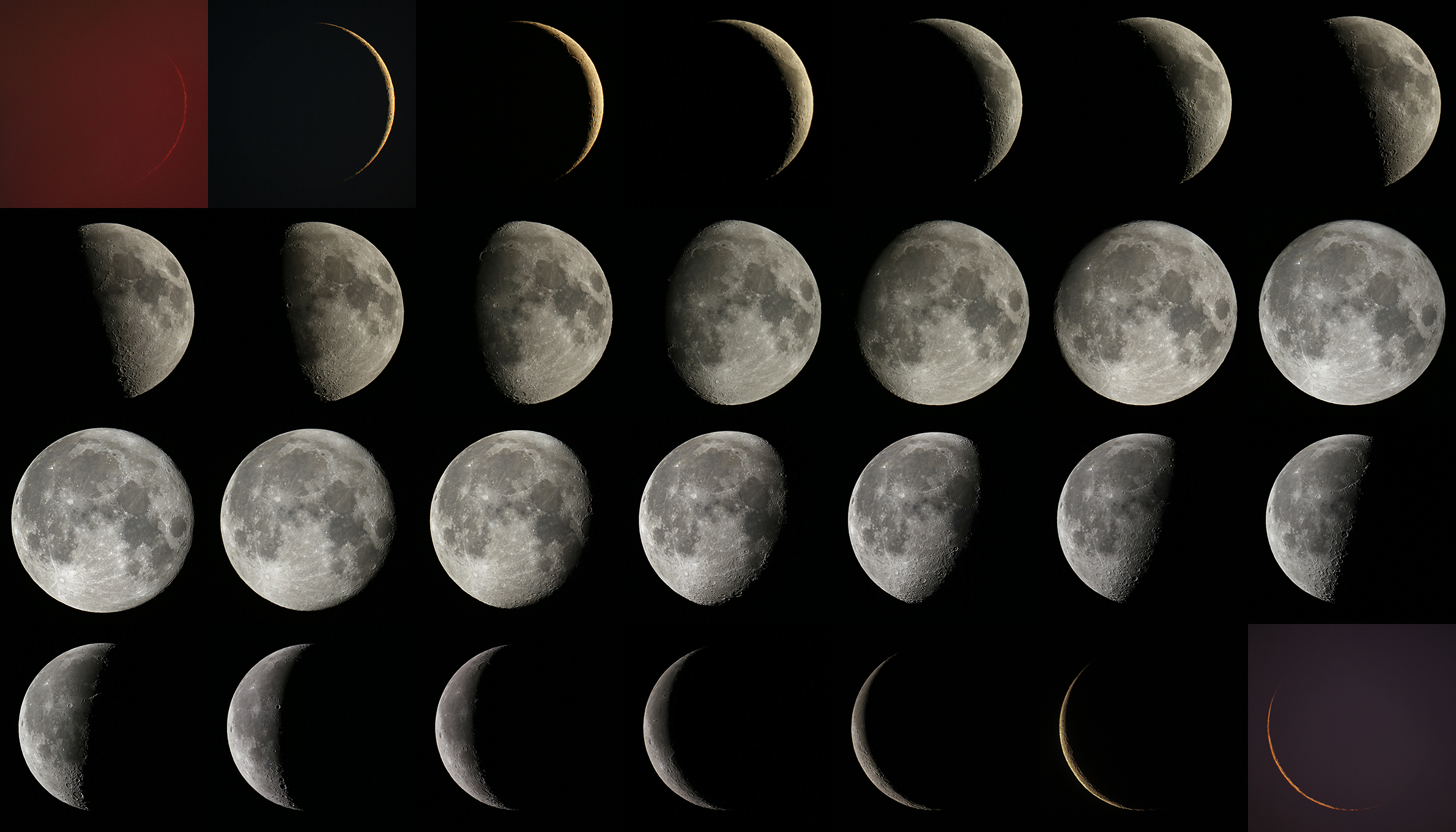
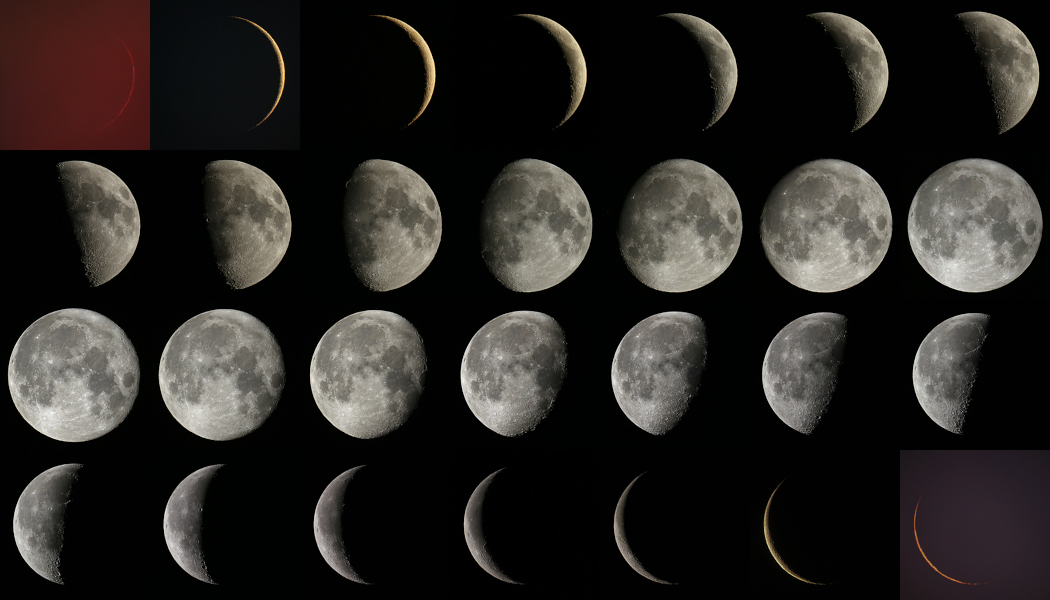
ASTRONOMY - Lunation Matrix
2022 October 1
Image Credit & Copyright: Tunc Tezel (TWAN)
Explanation: Observe the Moon every night and you'll see its visible sunlit portion gradually change. In phases progressing from New Moon to Full Moon to New Moon again, a lunar cycle or lunation is completed in about 29.5 days. Top left to bottom right, this 7x4 matrix of telescopic images captures the range of lunar phases for 28 consecutive nights, from the evening of July 29 to the morning of August 26, following an almost complete lunation. No image was taken 24 hours or so just after and just before New Moon, when the lunar phase is at best a narrow crescent, close to the Sun and really hard to see. Finding mostly clear Mediterranean skies required an occasional road trip to complete this lunar cycle project, imaging in early evening for the first half and late evening and early morning for the second half of the lunation. Since all the images are registered at the same scale you can use this matrix to track the change in the Moon's apparent size during the single lunation. For extra credit, find the lunar phase that occurred closest to perigee.
30/09/2022
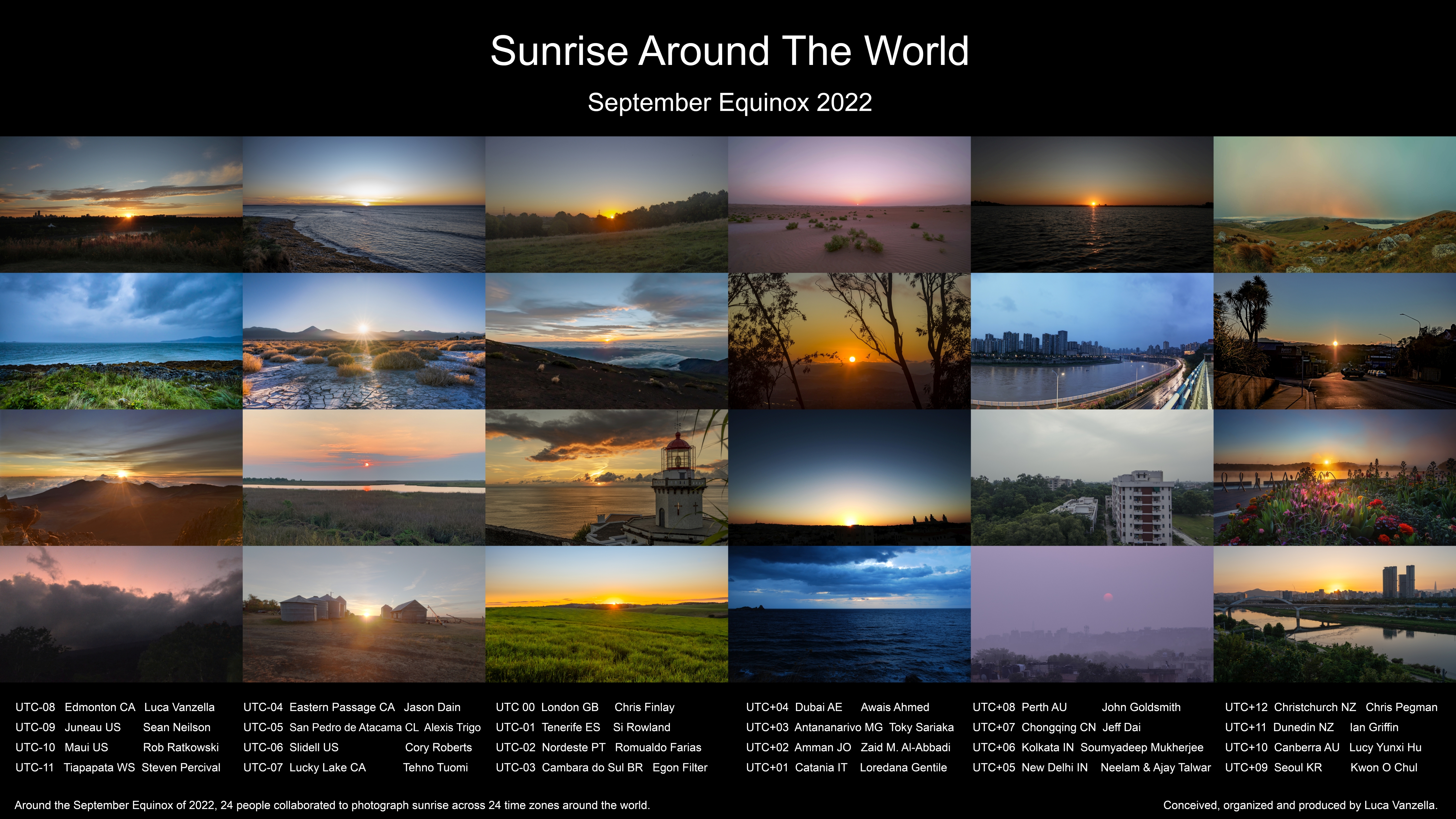
ASTRONOMY - Equinox Sunrise Around the World
2022 September 30
Collage Image Copyright: Luca Vanzella
Explanation: A planet-wide collaboration resulted in this remarkable array of sunrise photographs taken around the September 2022 equinox. The images were contributed by 24 photographers, one in each of 24 nautical time zones around the world. Unlike more complicated civil time zone boundaries, the 24 nautical time zones are simply 15 degree longitude bands corresponding to 1 hour steps that span the globe. Start at the upper right for the first to experience a sunrise in the nautical time zone corresponding to Coordinated Universal Time (UTC) + 12 hours. In that time zone, the photographer was located in Christchurch, New Zealand. Travel to the west by looking down the column and then moving to the column toward the left for later sunrises as the time zone offset in hours from UTC decreases. Or, you can watch a video of September 2022 equinox sunrises around planet Earth.
29/09/2022
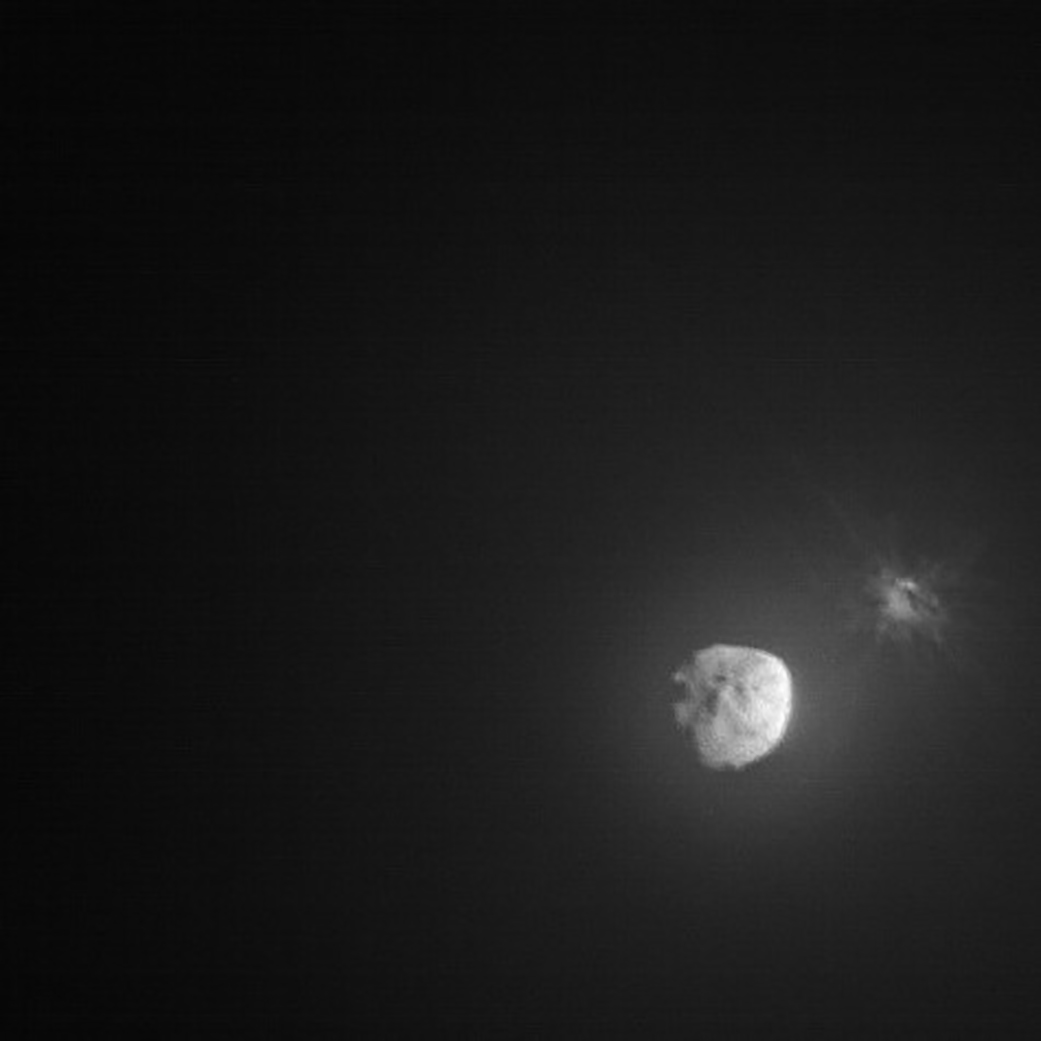
ASTRONOMY - DART Asteroid Impact from Space
Image Credit: ASI / NASA
Explanation: Fifteen days before impact, the DART spacecraft deployed a small companion satellite to document its historic planetary defense technology demonstration. Provided by the Italian Space Agency, the Light Italian CubeSat for Imaging Asteroids, aka LICIACube, recorded this image of the event's aftermath. A cloud of ejecta is seen near the right edge of the frame captured only minutes following DART's impact with target asteroid Dimorphos while LICIACube was about 80 kilometers away. Presently about 11 million kilometers from Earth, 160 meter diameter Dimorphos is a moonlet orbiting 780 meter diameter asteroid Didymos. Didymos is seen off center in the LICIACube image. Over the coming weeks, ground-based telescopic observations will look for a small change in Dimorphos' orbit around Didymos to evaluate how effectively the DART impact deflected its target.
28/09/2022
PHOTOGRAPHIE SOUS-MARINE - Maison de glace
FuturaSciences
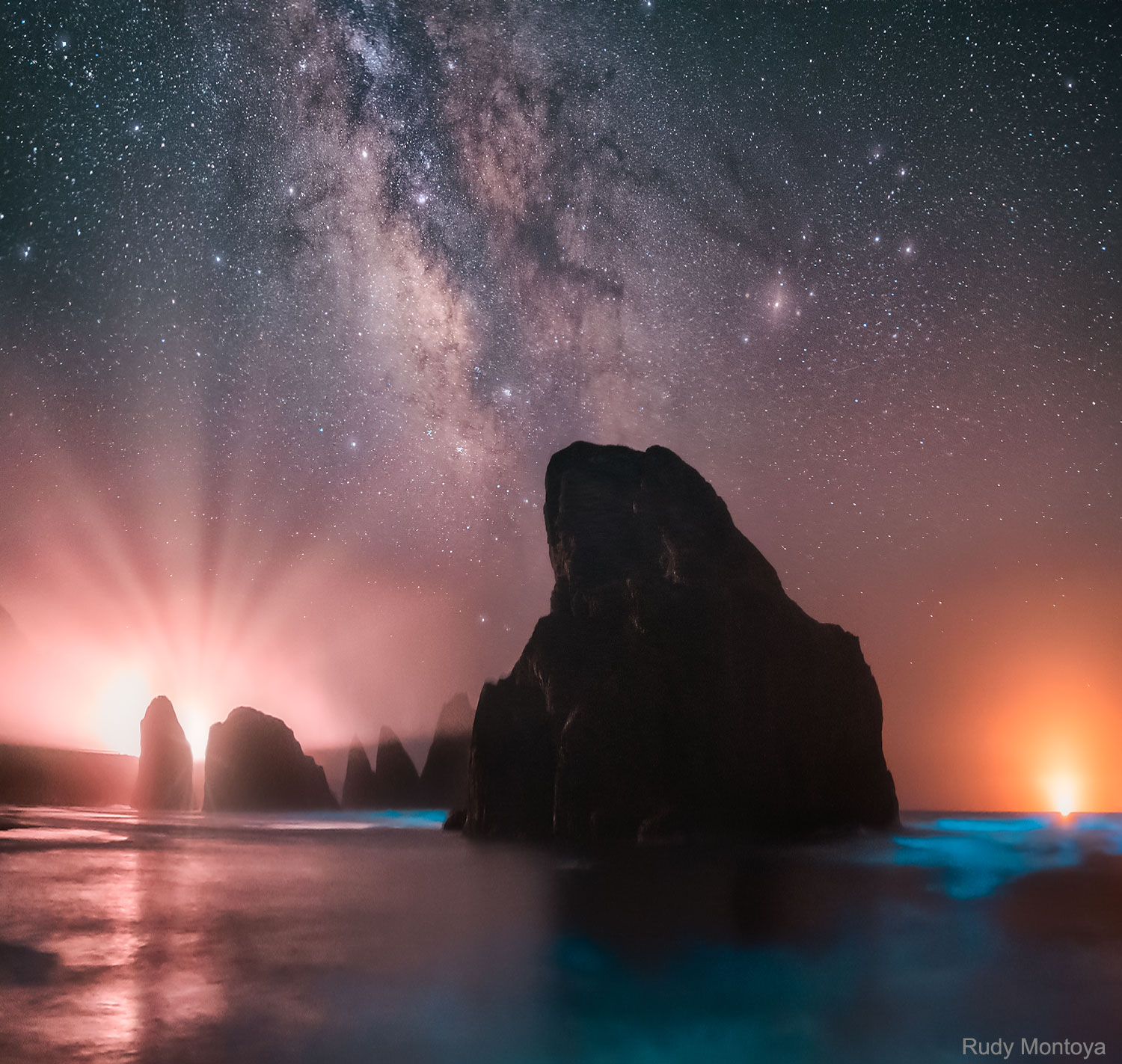
ASTRONOMY - Sea and Sky Glows over the Oregon Coast
2022 September 4
Image Credit & Copyright: Rudy Montoya
Explanation: Every step caused the sand to light up blue. That glow was bioluminescence -- a blue radiance that also lights the surf in this surreal scene captured in mid-2018 at Meyer's Creek Beach in Oregon, USA. Volcanic stacks dot the foreground sea, while a thin fog layer scatters light on the horizon. The rays of light spreading from the left horizon were created by car headlights on the Oregon Coast Highway (US 101), while the orange light on the right horizon emanates from a fishing boat. Visible far in the distance is the band of our Milky Way Galaxy, appearing to rise from a dark rocky outcrop. Sixteen images were added together to bring up the background Milky Way and to reduce noise.
27/09/2022
MACROPHOTOGRAPHIE - Miki Asai - La patience récompensée
VOIE LACTEE SUR TERRE - Ile de La Palma : le Mirador du Roque de los Muchachos
FuturaSciences
ASTRONOMY - DART: Impact on Asteroid Dimorphos
2022 September 27
Video Credit: NASA, JHUAPL, DART
Explanation: Could humanity deflect an asteroid headed for Earth? Yes. Deadly impacts from large asteroids have happened before in Earth's past, sometimes causing mass extinctions of life. To help protect our Earth from some potential future impacts, NASA tested a new planetary defense mechanism yesterday by crashing the robotic Double Asteroid Redirection Test (DART) spacecraft into Dimorphos, a small asteroid spanning about 170-meters across. As shown in the featured video, the impact was a success. Ideally, if impacted early enough, even the kick from a small spacecraft can deflect a large asteroid enough to miss the Earth. In the video, DART is seen in a time-lapse video first passing larger Didymos, on the left, and then approaching the smaller Dimorphos. Although the video ends abruptly with DART's crash, observations monitoring the changed orbit of Dimorphos -- from spacecraft and telescopes around the world -- have just begun.
Astronomy - THE HYDRA CLUSTER OF GALAXIES
2026 June 5 The Hydra Cluster of Galaxies Image Credit & Copyright : Rafael Sampaio Explanation: Within our own Milky Way galaxy, two ...
-
2026 January 1 Auroral Corona Image Credit & Copyright : Roi Levi Explanation: Cycle 25 solar maximum made 2025 a great year for ...
-
Imaginez un monde où le cancer n’est plus une sentence, mais une simple étape à franchir. Grâce à une découverte révolutionnaire, ce rêve es...