Nombre total de pages vues
22/09/2023
AERONAUTIQUE - LES INVENTIONS QUI N'ONT JAMAIS VOLE - Le Hughes H-4 Hercules d'Howard Hugues
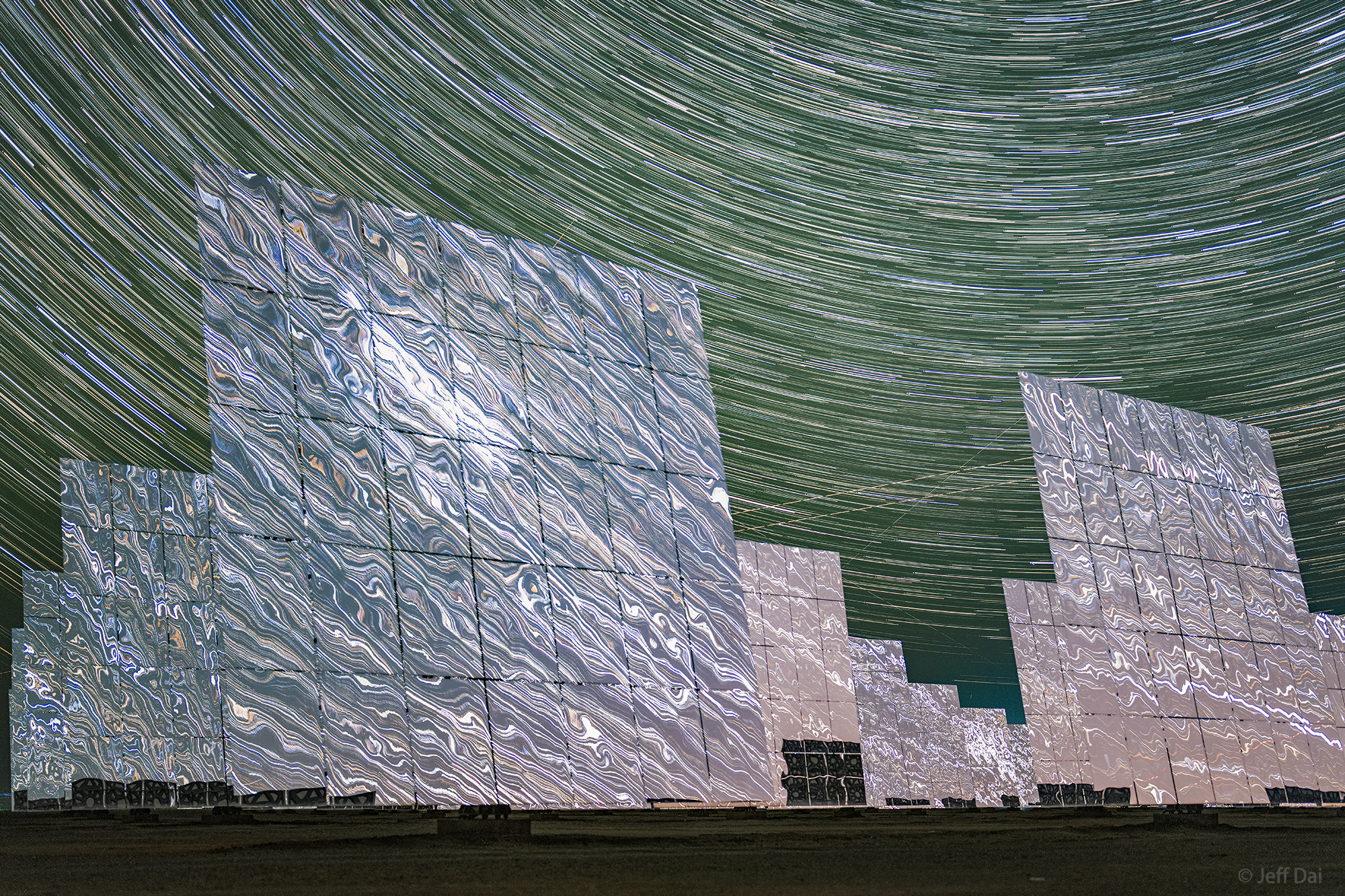
ASTRONOMY - Cosmos in Reflection
2023 September 21
Image Credit & Copyright: Jeff Dai (TWAN)
Explanation: During the day, over 12,000 large mirrors reflect sunlight at the 100-megawatt, molten-salt, solar thermal power plant at the western edge of the Gobi desert near Dunhuang, Gansu Province, China. Individual mirror panels turn to track the sun like sunflowers. They conspire to act as a single super mirror reflecting the sunlight toward a fixed position, the power station's central tower. During the night the mirrors stand motionless though. They reflect the light of the countless distant stars, clusters and nebulae of the Milky Way and beyond. This sci-fi night skyscape was created with a camera fixed to a tripod near the edge of the giant mirror matrix on September 15. The camera's combined sequence of digital exposures captures concentric arcs of celestial star trails through the night with star trails in surreal mirrored reflection.
21/09/2023
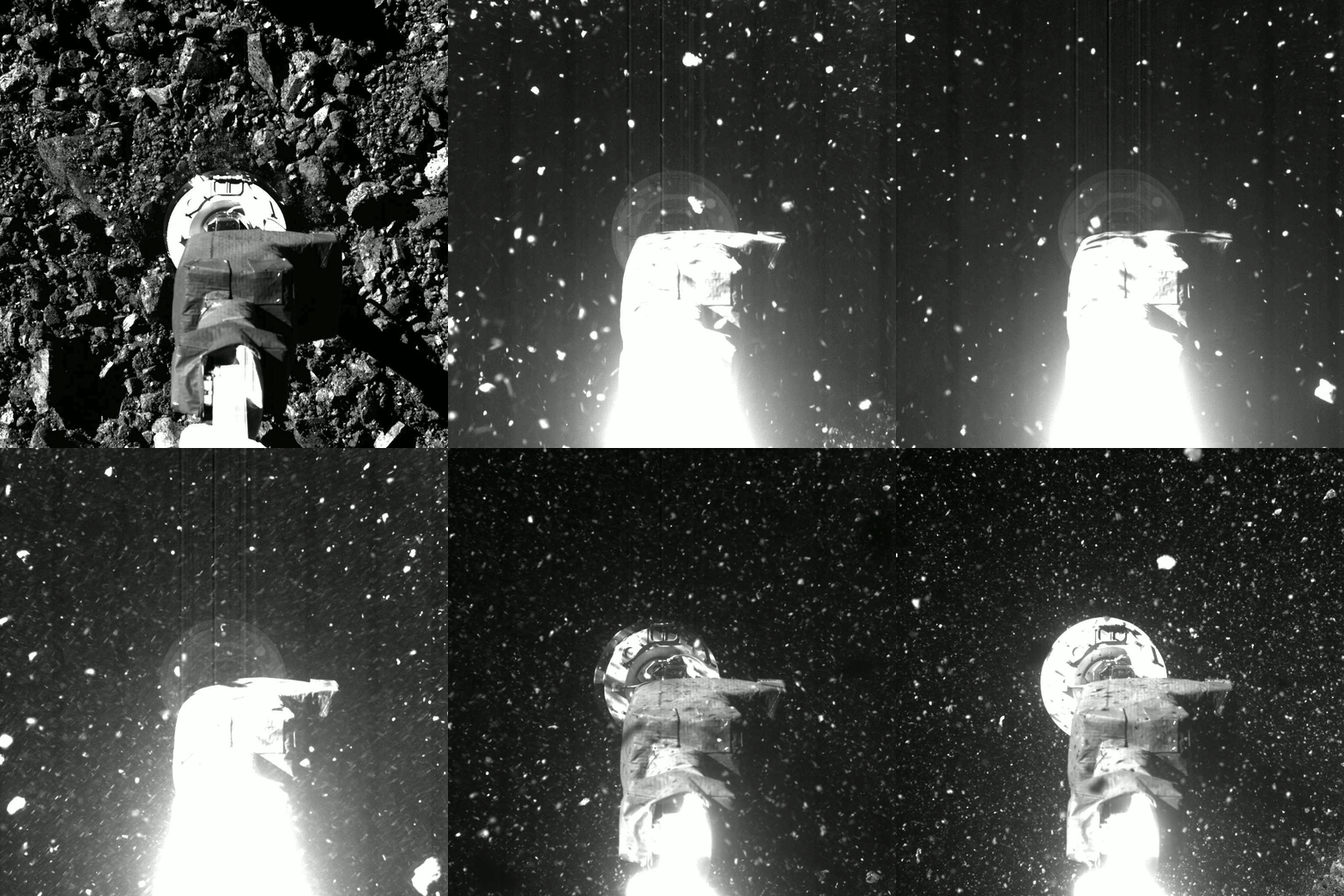
ASTRONOMY - Tagging Bennu
2023 September 21
Image Credit: OSIRIS-REx, University of Arizona, NASA, Goddard Scientific Visualization Studio
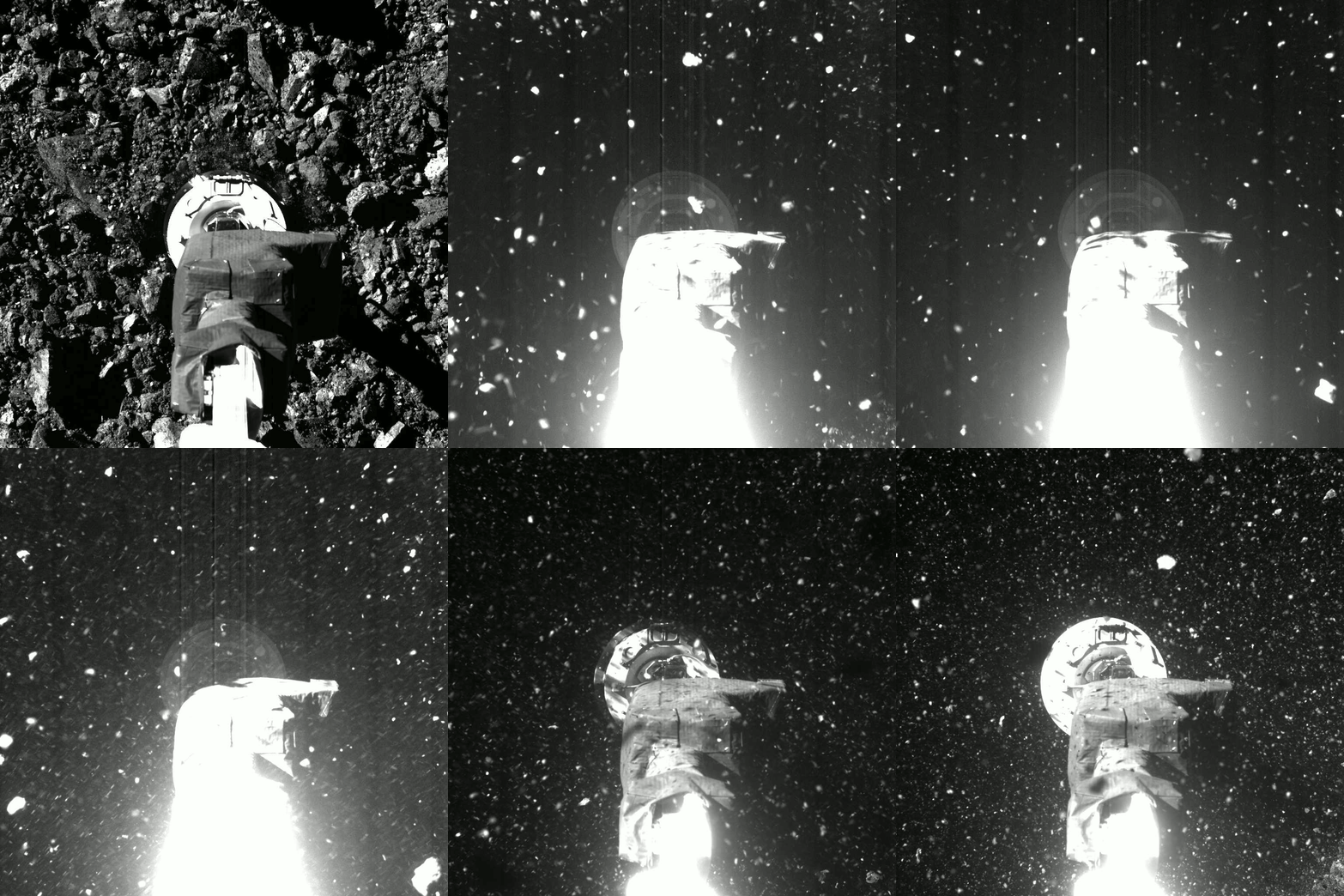
Explanation: The OSIRIS-REx spacecraft's arm reached out and touched asteroid 101955 Bennu on October 20, 2020, after a careful approach to the small, near-Earth asteroid's boulder-strewn surface. Dubbed a Touch-And-Go (TAG) sampling event, the 30 centimeter wide sampling head (TAGSAM) appears to crush some of the rocks in this close-up recorded by the spacecraft's SamCam. The image was snapped just after surface contact some 321 million kilometers from planet Earth. One second later, the spacecraft fired nitrogen gas from a bottle intended to blow a substantial amount of Bennu's regolith into the sampling head, collecting the loose surface material. And now, nearly three years later, on Sunday, September 24, that sample of asteroid Bennu is scheduled to arrive on planet Earth. The sample return capsule will be dropped off by the OSIRIS-Rex spacecraft as it makes a close flyby of Earth. Twenty minutes after the drop-off, the spacecraft will fire its thrusters to divert past Earth and continue on to orbit near-Earth asteroid 99942 Apophis.
20/09/2023
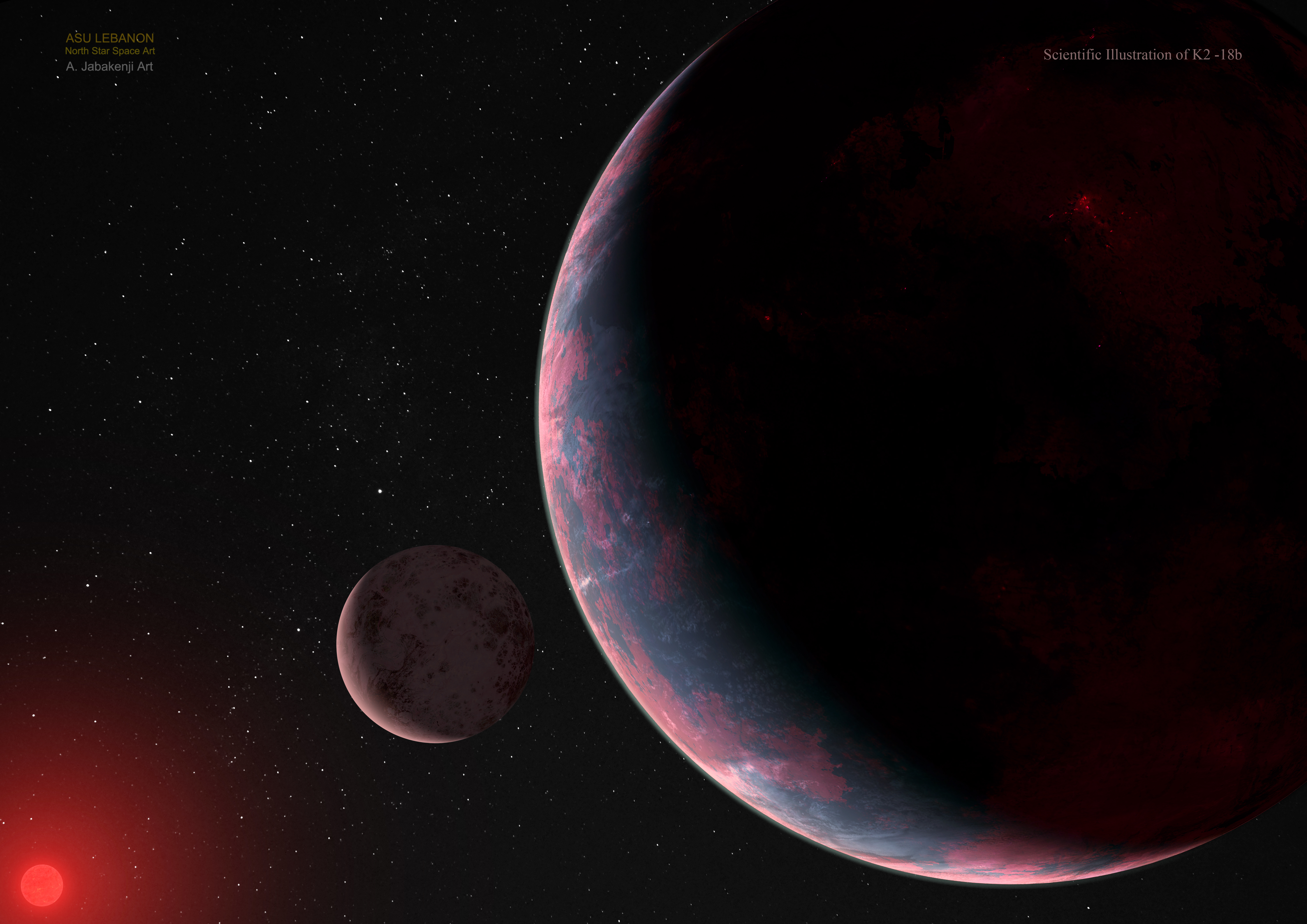
ASTRONOMY - Methane Discovered on Distant Exoplanet
2023 September 20
Illustration Credit: Ahmad Jabakenji (ASU Lebanon, North Star Space Art); Data: NASA, ESA, CSA, JWST
Explanation: Where else might life exist? One of humanity's great outstanding questions, locating planets where extrasolar life might survive took a step forward in 2019 with the discovery of a significant amount of water vapor in the atmosphere of distant exoplanet K2-18b. The planet and its parent star, K2-18, lie about 124 light years away toward the constellation of the Lion (Leo). The exoplanet is significantly larger and more massive than our Earth, but orbits in the habitable zone of its home star. K2-18, although more red than our Sun, shines in K2-18b's sky with a brightness similar to the Sun in Earth's sky. The 2019 discovery of atmospheric water was made in data from three space telescopes: Hubble, Spitzer, and Kepler, by noting the absorption of water-vapor colors when the planet moved in front of the star. Now in 2023, further observations by the Webb Space Telescope in infrared light have uncovered evidence of other life-indicating molecules -- including methane. The featured illustration imagines exoplanet K2-18b on the far right orbited by a moon (center), which together orbit a red dwarf star depicted on the lower left.
19/09/2023
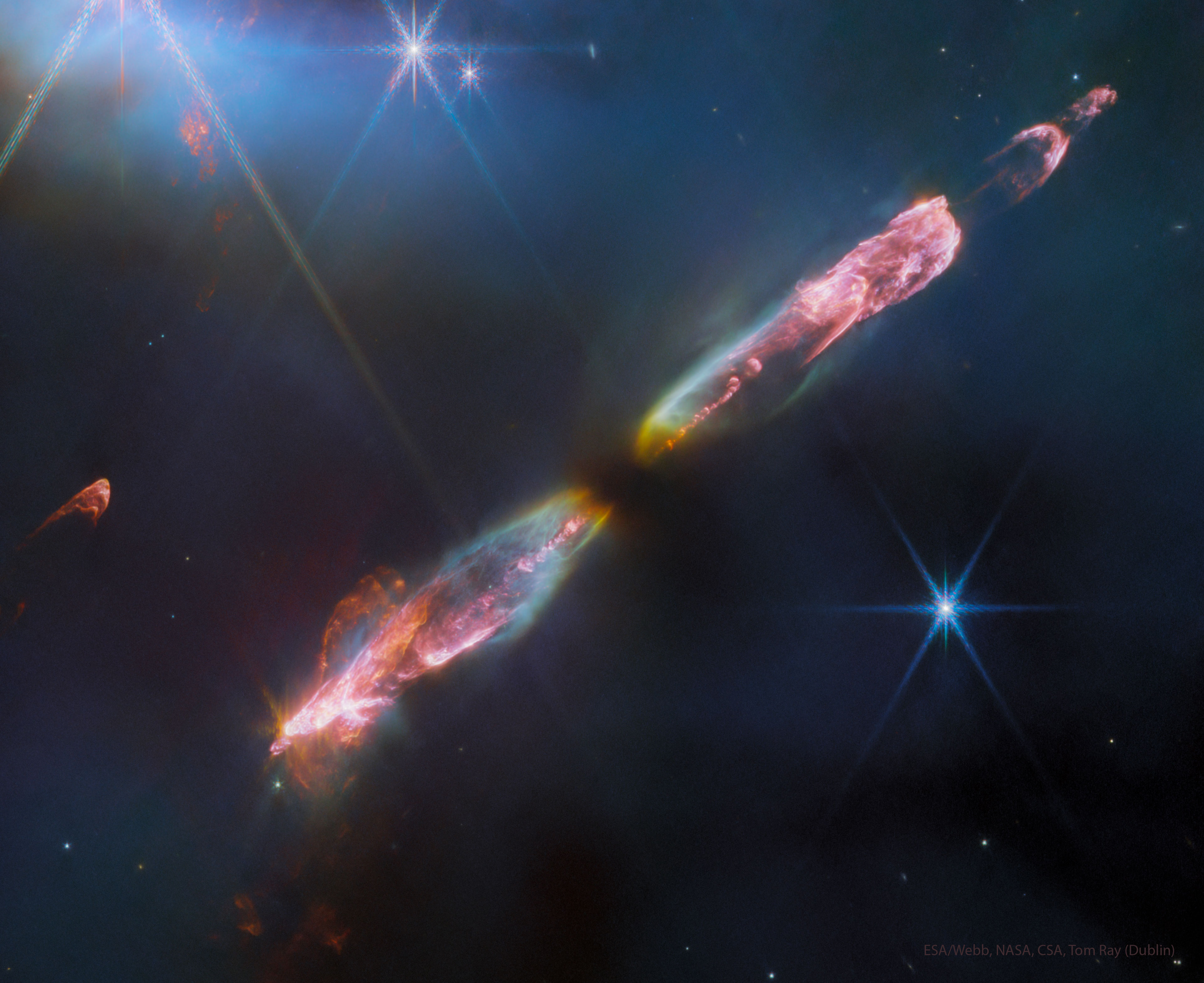
ASTRONOMY - HH 211: Jets from a Forming Star
2023 September 19
Credit: NASA, ESA, CSA, Webb; Processing: Tom Ray (DIAS Dublin)
Explanation: Do stars always create jets as they form? No one is sure. As a gas cloud gravitationally contracts, it forms a disk that can spin too fast to continue contracting into a protostar. Theorists hypothesize that this spin can be reduced by expelling jets. This speculation coincides with known Herbig-Haro (HH) objects, young stellar objects seen to emit jets -- sometimes in spectacular fashion. Pictured is Herbig-Haro 211, a young star in formation recently imaged by the Webb Space Telescope (JWST) in infrared light and in great detail. Along with the two narrow beams of particles, red shock waves can be seen as the outflows impact existing interstellar gas. The jets of HH 221 will likely change shape as they brighten and fade over the next 100,000 years, as research into the details of star formation continues.
18/09/2023
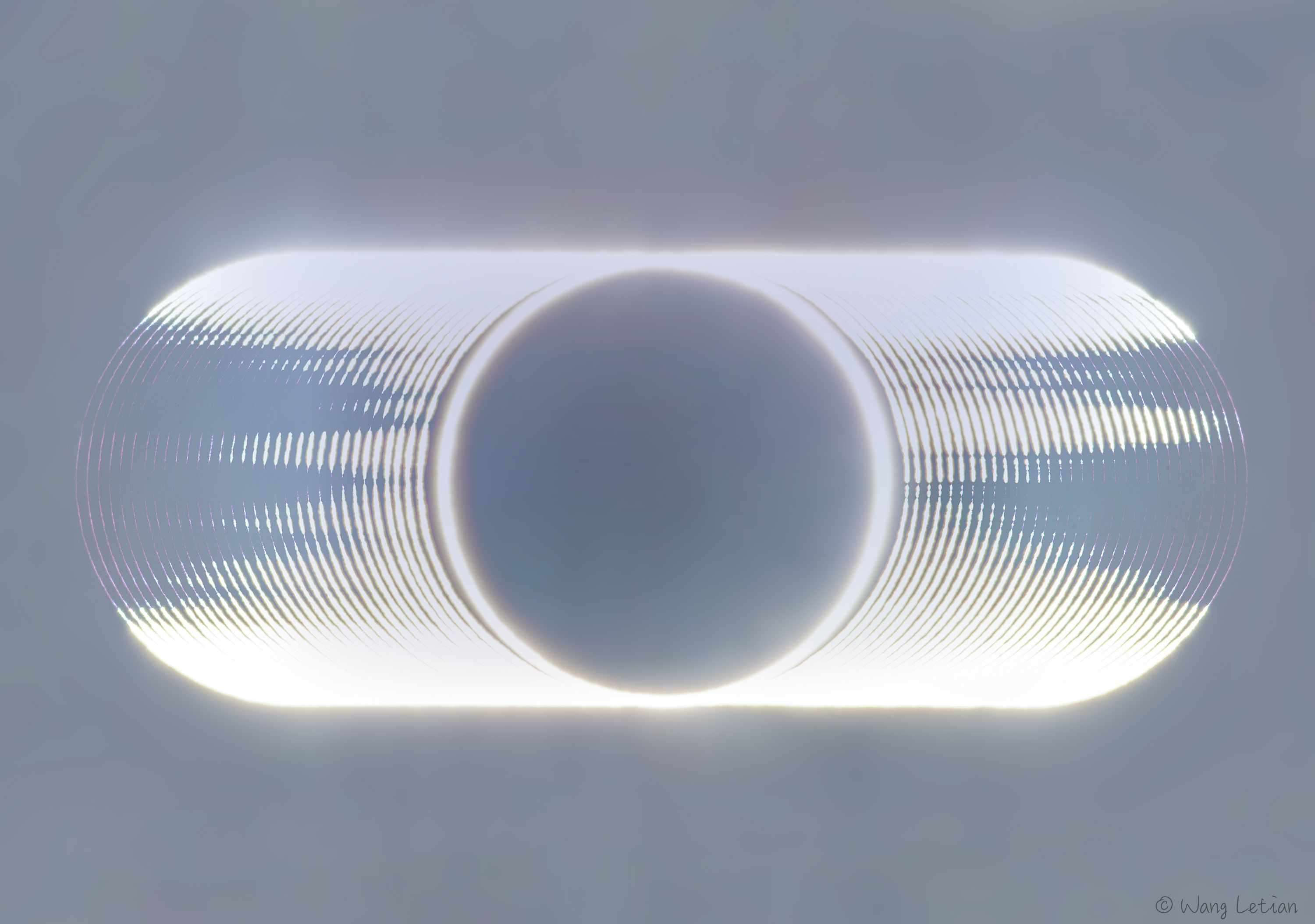
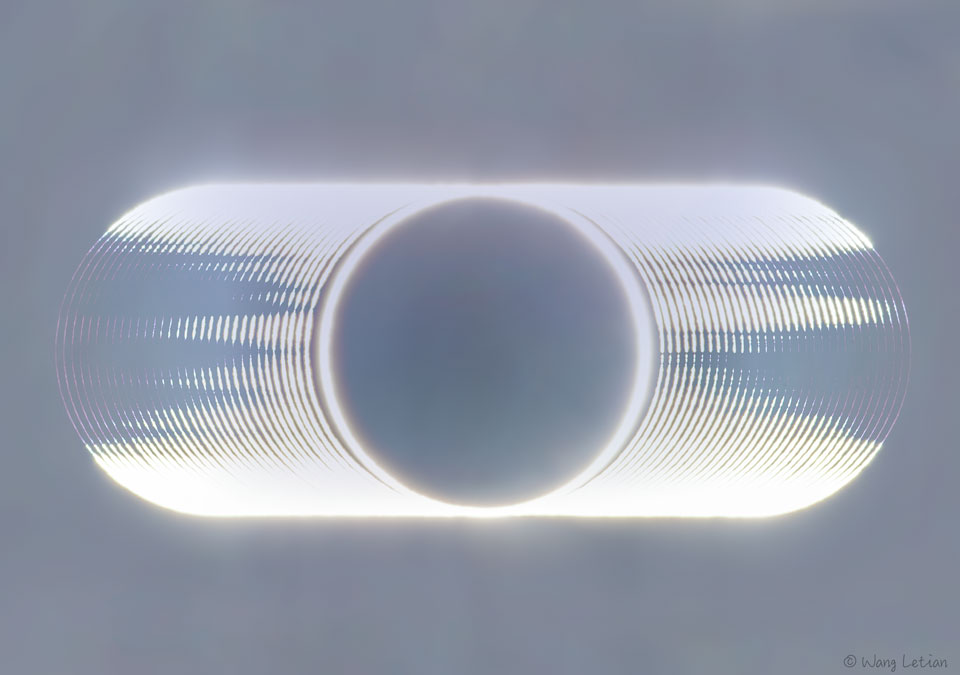
ASTRONOMY - Moon Mountains Magnified during Ring of Fire Eclipse
2023 September 17
Credit & Copyright: Wang Letian (Eyes at Night)
Explanation: What are those dark streaks in this composite image of a solar eclipse? They are reversed shadows of mountains at the edge of the Moon. The center image, captured from Xiamen, China, has the Moon's center directly in front of the Sun's center. The Moon, though, was too far from the Earth to completely block the entire Sun. Light that streamed around the edges of the Moon is called a ring of fire. Images at each end of the sequence show sunlight that streamed through lunar valleys. As the Moon moved further in front of the Sun, left to right, only the higher peaks on the Moon's perimeter could block sunlight. Therefore, the dark streaks are projected, distorted, reversed, and magnified shadows of mountains at the Moon's edge. Bright areas are called Baily's Beads. Only people in a narrow swath across Earth's Eastern Hemisphere were able to view this full annular solar eclipse in 2020. Next month, though, a narrow swath crossing both North and South America will be exposed to the next annular solar eclipse. And next April, a total solar eclipse will be visible across North America.

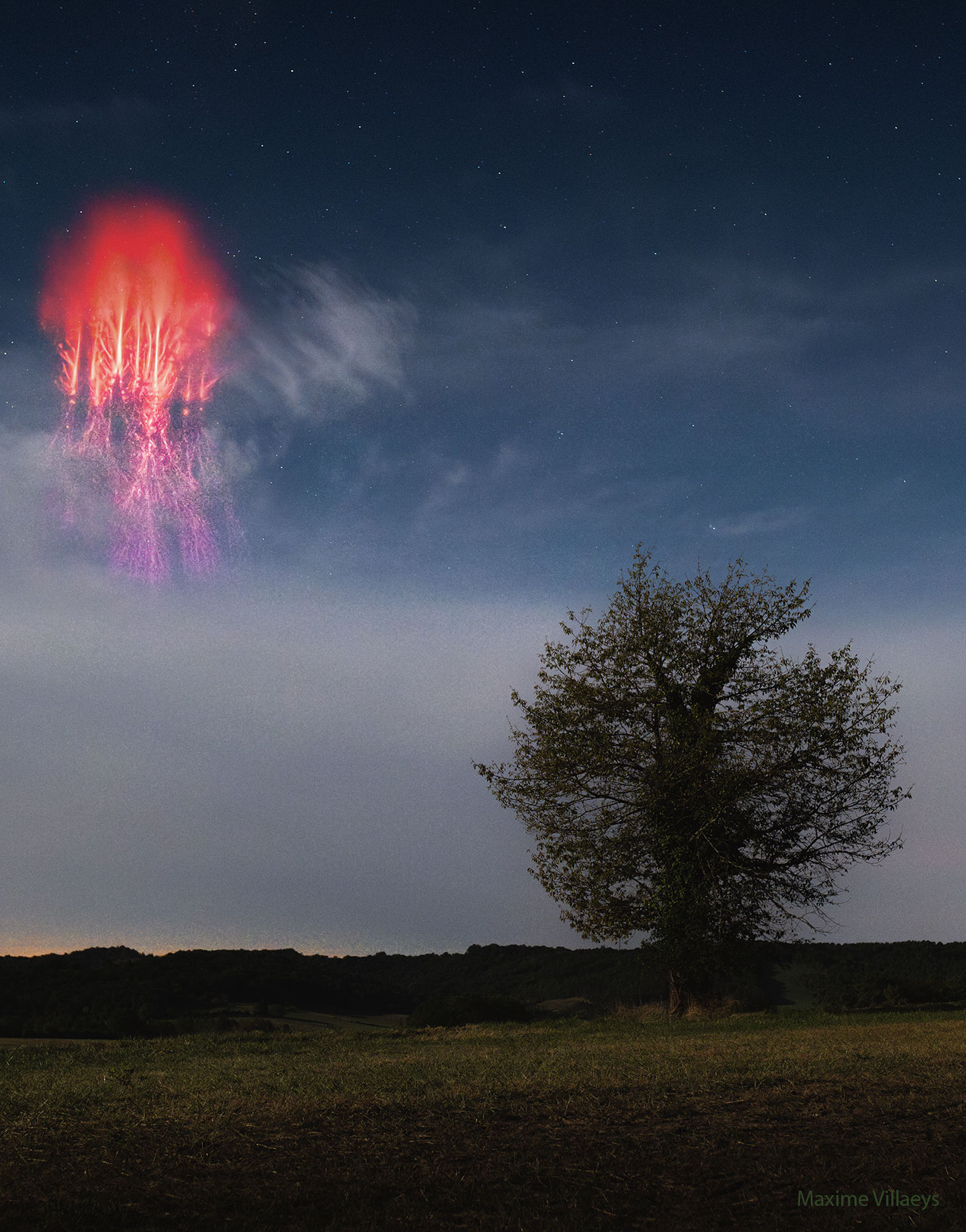
ASTRONOMY - The Red Sprite and the Tree
2023 September 18
Credit & Copyright: Maxime Villaeys
Explanation: The sprite and tree could hardly be more different. To start, the red sprite is an unusual form of lightning, while the tree is a common plant. The sprite is far away -- high in Earth's atmosphere, while the tree is nearby -- only about a football field away. The sprite is fast -- electrons streaming up and down at near light's speed, while the tree is slow -- wood anchored to the ground. The sprite is bright -- lighting up the sky, while the tree is dim -- shining mostly by reflected light. The sprite was fleeting -- lasting only a small fraction of a second, while the tree is durable -- living now for many years. Both however, when captured together, appear oddly similar in this featured composite image captured early this month in France as a thunderstorm passed over mountains of the Atlantic Pyrenees.
16/09/2023
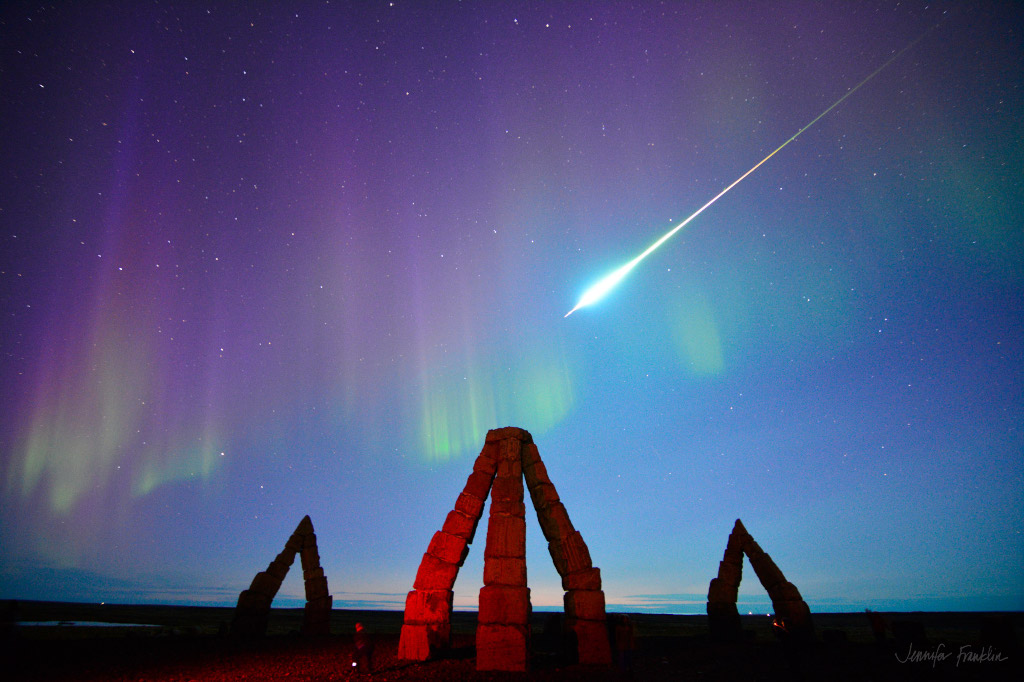
ASTRONOMY - Fireball over Iceland
2023 September 16
Image Credit & Copyright: Jennifer Franklin
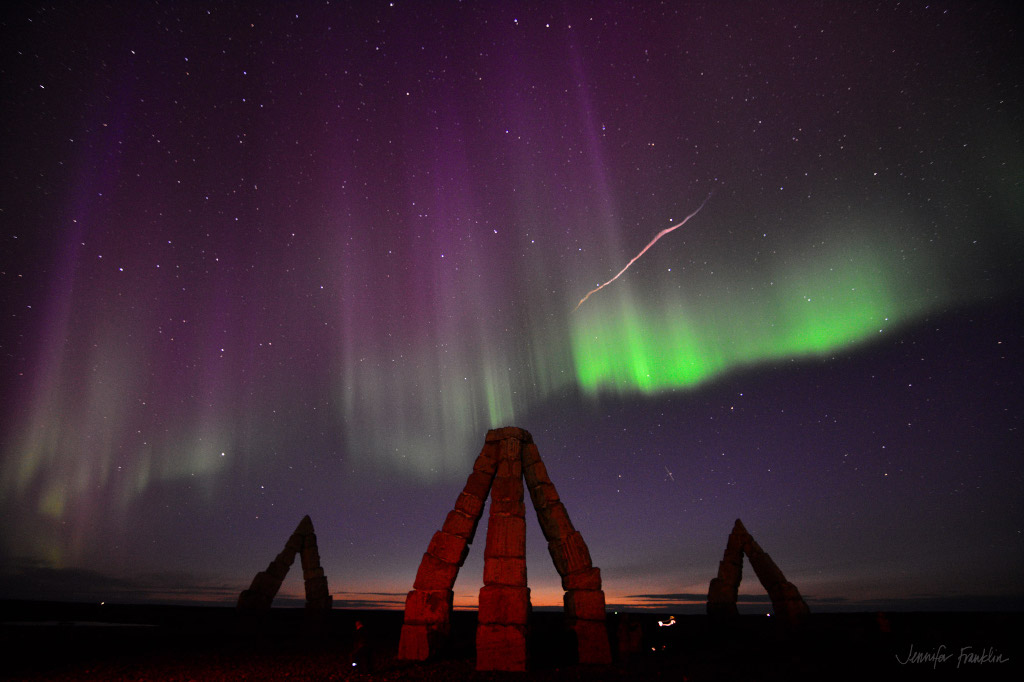
Explanation: On September 12, from a location just south of the Arctic Circle, stones of Iceland's modern Arctic Henge point skyward in this startling scene. Entertaining an intrepid group of aurora hunters during a geomagnetic storm, alluring northern lights dance across the darkened sky when a stunning fireball meteor explodes. Awestruck, the camera-equipped skygazers captured video and still images of the boreal bolide, at its peak about as bright as a full moon. Though quickly fading from view, the fireball left a lingering visible trail or persistent train. The wraith-like trail was seen for minutes wafting in the upper atmosphere at altitudes of 60 to 90 kilometers along with the auroral glow.
15/09/2023
AERONAUTIQUE - LES INVENTIONS QUI N'ONT JAMAIS VOLE - Le manteau parachute de Franz Reichelt
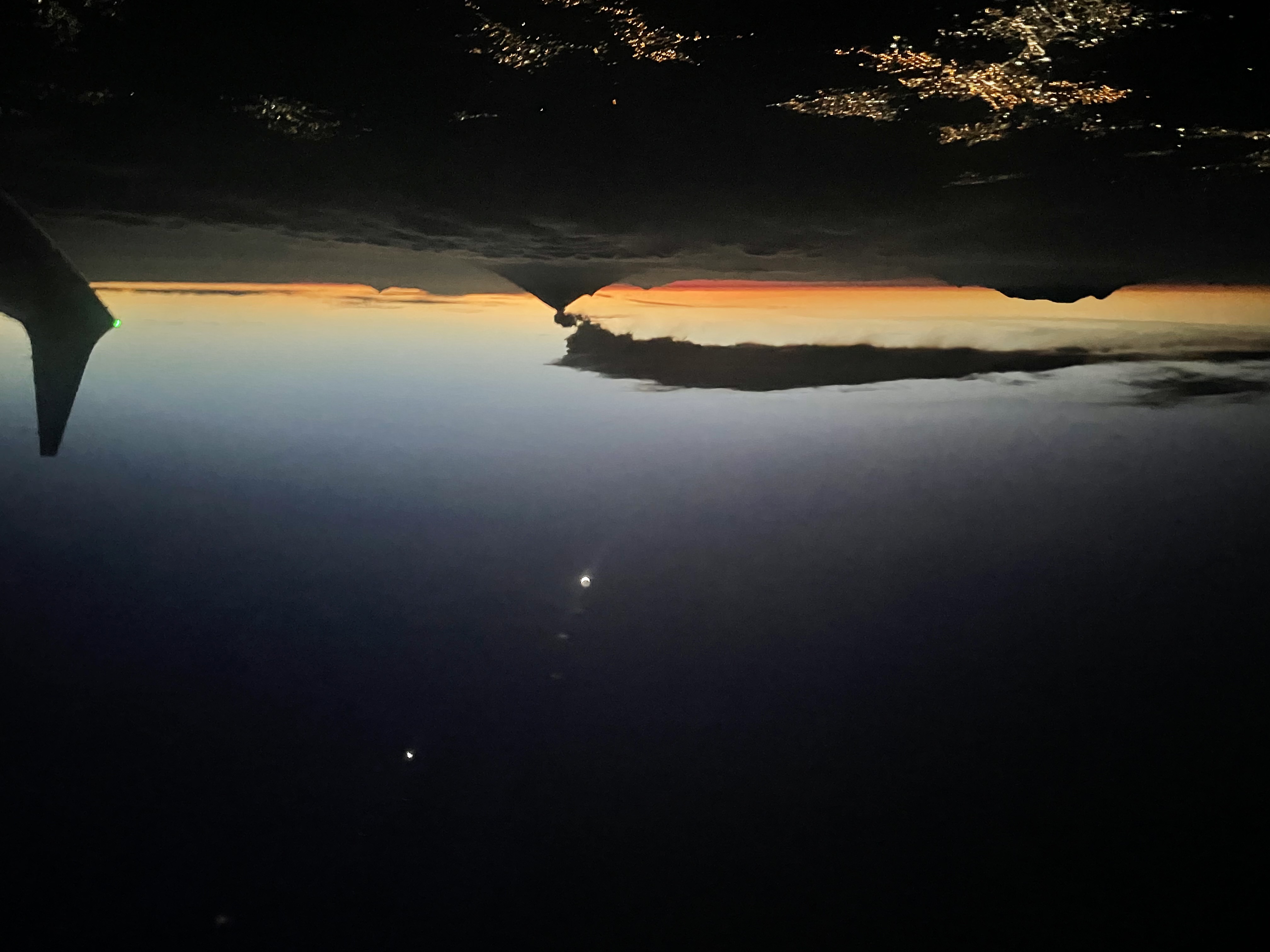
ASTRONOMY - Venus, Moon, and the Smoking Mountain
2023 September 15
Image Credit & Copyright: Luis Miguel Meade Rodríguez
Explanation: Venus has returned as a brilliant morning star. From a window seat on a flight to Mexico City, the bright celestial beacon was captured just before sunrise in this astronomical snapshot, taken on September 12. Venus, at the upper right, shared the early predawn skies with an old crescent Moon. Seen from this stratospheric perspective, both mountain peaks and clouds appear in silhouette along a glowing eastern horizon. The dramatic, long, low cloud bank was created by venting from planet Earth's active volcano Popocatépetl.
ASTRONOMY - Sunset Solstice over Stonehenge
2025 December 22 Sunset Solstice over Stonehenge Image Credit & Copyright: English Heritage , Josh Dury Explanation: Yesterday the Su...
-
2022 September 26 All the Water on Planet Earth Illustration Credit: Jack Cook, Adam Nieman, Woods Hole Oceanographic Institution ; Data ...
-
2025 May 11 The Surface of Venus from Venera 14 Image Credit: Soviet Planetary Exploration Program , Venera 14 ; Processing & Copyri...