Nombre total de pages vues
09/03/2024
SANTé/MEDECINE - HISTOIRE - L'Égypte antique et la momification
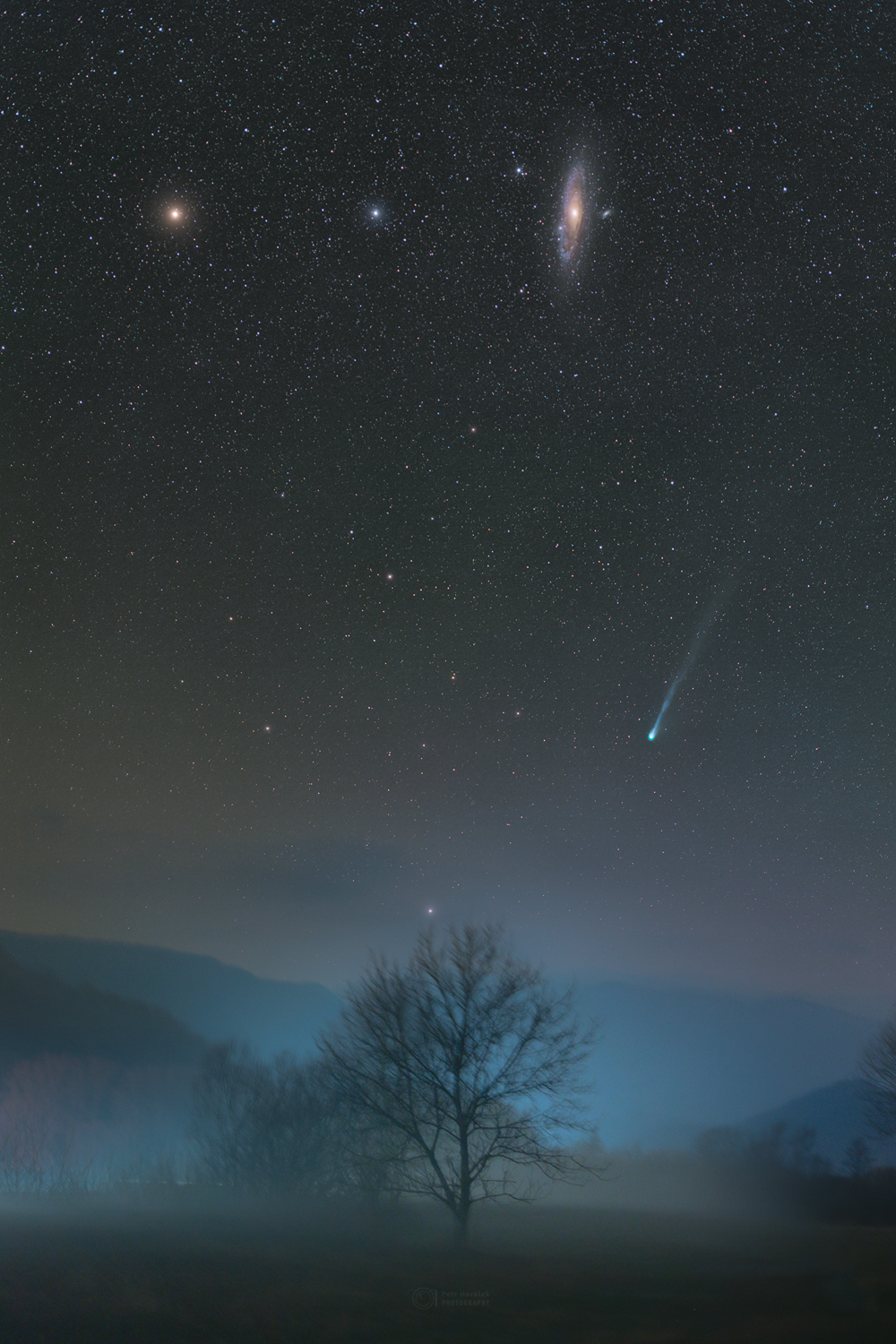
ASTRONOMY - Comet Pons-Brooks in Northern Spring
2024 March 9
Image Credit & Copyright: Petr Horálek / Institute of Physics in Opava
Explanation: As spring approaches for northern skygazers Comet 12P/Pons-Brooks is growing brighter. Currently visible with small telescopes and binoculars the Halley-type comet could reach naked eye visibility in the coming weeks. Seen despite a foggy atmosphere, the comet's green coma and long tail hover near the horizon, in this well-composed deep night skyscape from Revuca, Slovakia recorded on March 5. In the sky above the Halley-type comet, the Andromeda (right) and Triangulum galaxies flank bright star Mirach, beta star of the constellation Andromeda. The two spiral galaxies are members of our local galaxy group and over 2.5 million light-years distant. Comet Pons-Brooks is a periodic visitor to the inner Solar System and less than 14 light-minutes away. Reaching its perihelion on April 21, this comet should be visible in the sky during the April 8 total solar eclipse.
08/03/2024
AUTOMOBILE - INVENTIONS QUI N'ONT JAMAIS VU LE JOUR - Tourne-disques embarqués
ASTRONOMIE - Pons-Brooks, la comète printanière visible aux jumelles
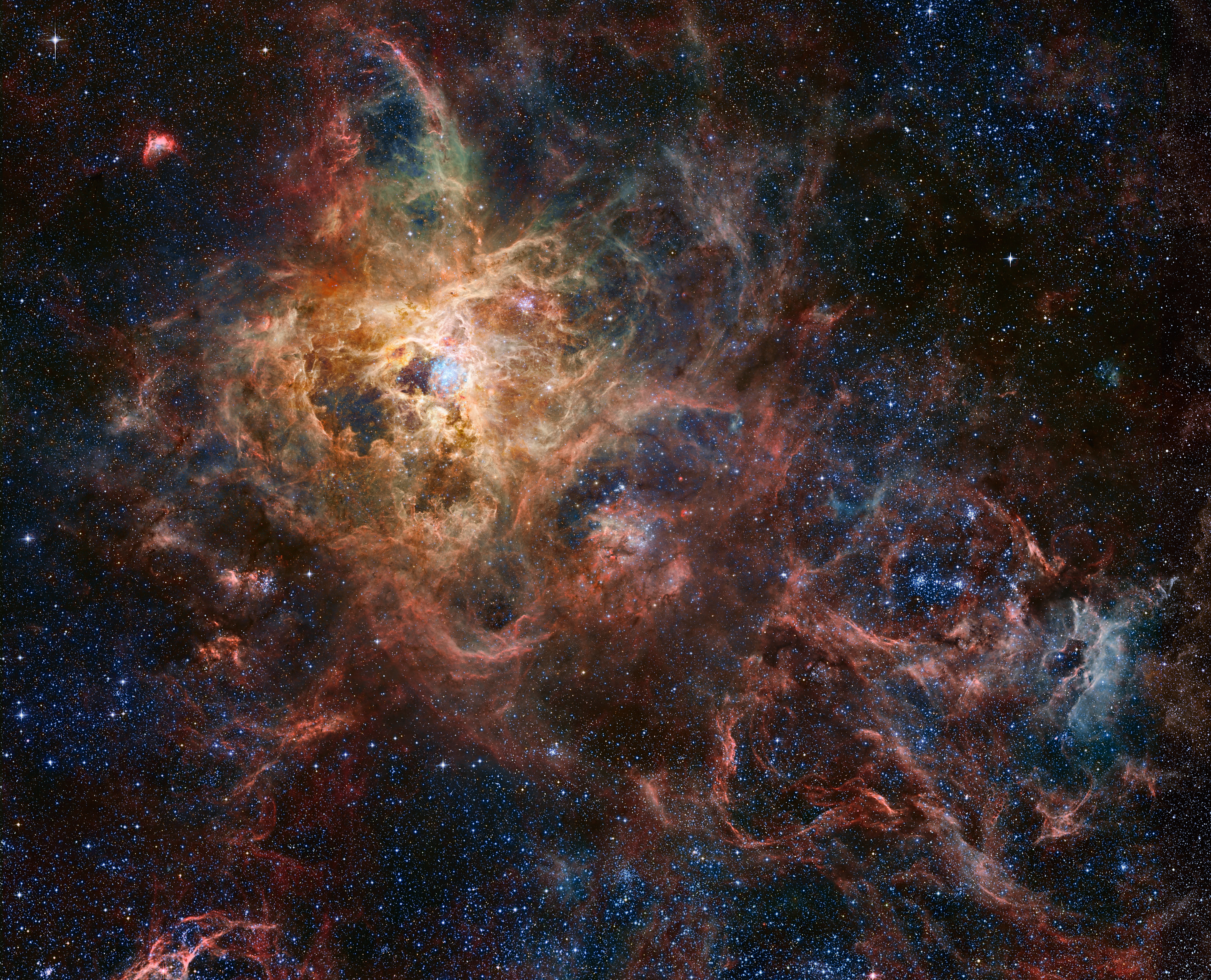
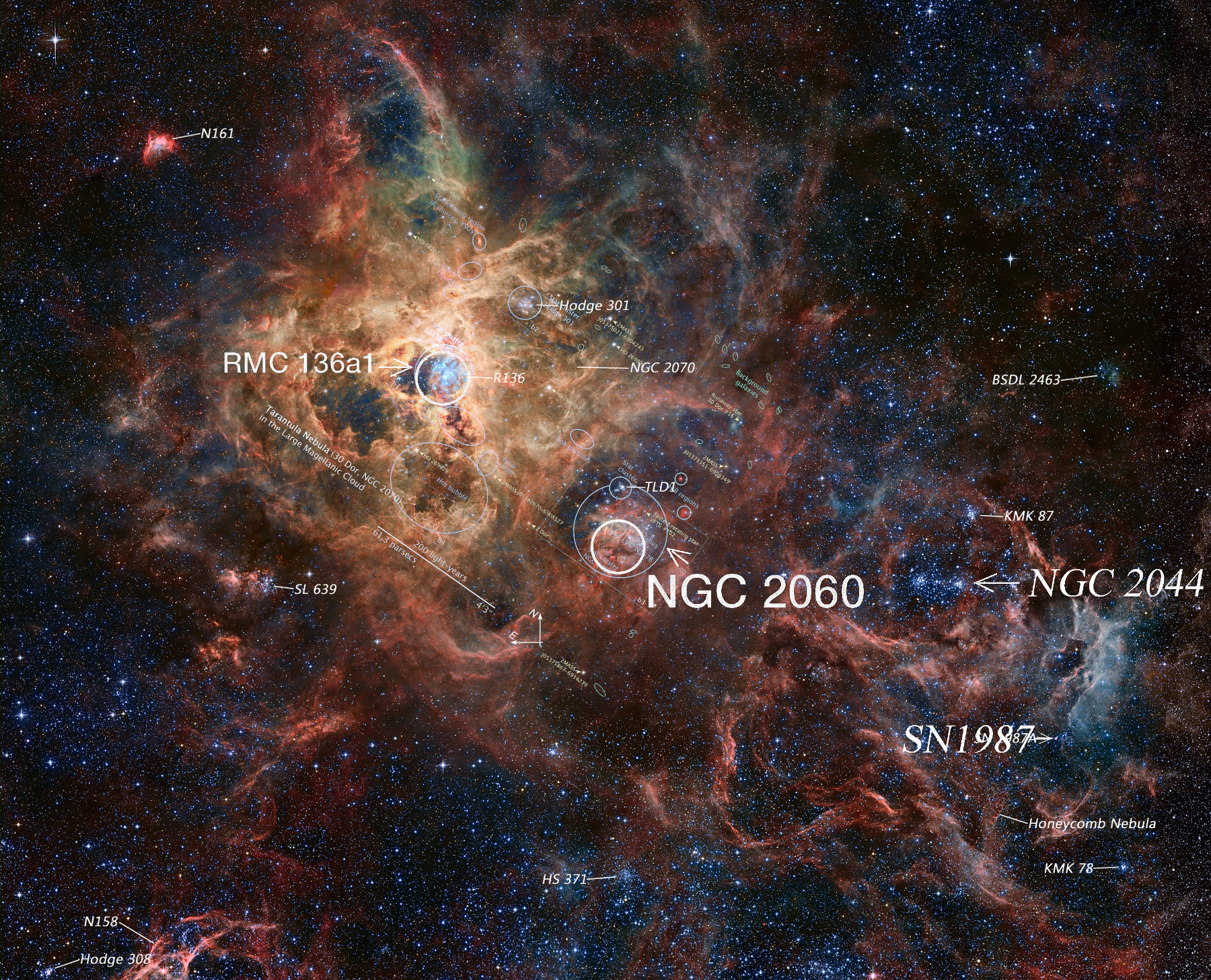
ASTRONOMY - The Tarantula Zone
2024 March 8
Image Credit & Copyright: Processing - Robert Gendler
Data - Hubble Tarantula Treasury, European Southern Observatory, James Webb Space Telescope, Amateur Sources
Explanation: The Tarantula Nebula, also known as 30 Doradus, is more than a thousand light-years in diameter, a giant star forming region within nearby satellite galaxy the Large Magellanic Cloud. About 180 thousand light-years away, it's the largest, most violent star forming region known in the whole Local Group of galaxies. The cosmic arachnid sprawls across this magnificent view, an assembly of image data from large space- and ground-based telescopes. Within the Tarantula (NGC 2070), intense radiation, stellar winds, and supernova shocks from the central young cluster of massive stars cataloged as R136 energize the nebular glow and shape the spidery filaments. Around the Tarantula are other star forming regions with young star clusters, filaments, and blown-out bubble-shaped clouds. In fact, the frame includes the site of the closest supernova in modern times, SN 1987A, at lower right. The rich field of view spans about 2 degrees or 4 full moons in the southern constellation Dorado. But were the Tarantula Nebula closer, say 1,500 light-years distant like the Milky Way's own star forming Orion Nebula, it would take up half the sky.
07/03/2024
MYSTERES SOUS L'EAUDES LACS - L'indispensable herbier subaquatique
AUTOMOBILE - INVENTIONS QUI N'ONT JAMAIS VU LE JOUR - Rétroviseurs latéraux prismatiques
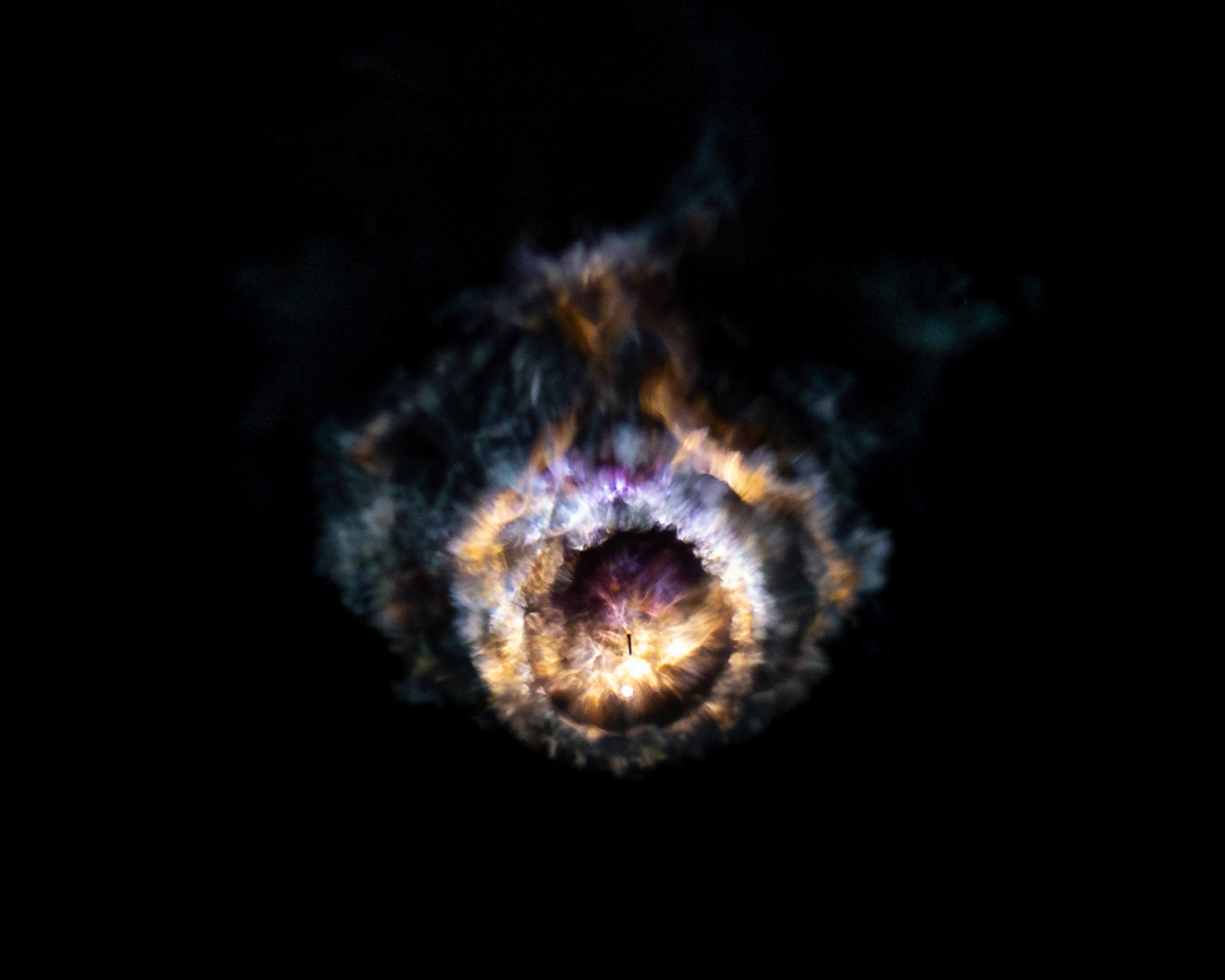
ASTRONOMY - The Crew-8 Nebula
2024 March 7
Image Credit & Copyright: Michael Seeley
Explanation: Not the James Webb Space Telescope's latest view of a distant galactic nebula, this cloud of gas and dust dazzled spacecoast skygazers on March 3. The telephoto snapshot was taken minutes after the launch of a Falcon 9 rocket on the SpaceX Crew-8 mission, to the International Space Station. It captures plumes and exhaust from the separated first and second stage, a drifting Rorschach pattern in dark evening skies. The bright spot near bottom center within the stunning terrestrial nebulosity is the second stage engine firing to carry 4 humans to space in the Crew Dragon spacecraft Endeavour. In sharp silhouette just above it is the Falcon 9 first stage booster orienting itself for return to a landing zone at Cape Canaveral, planet Earth. This reuseable first stage booster was making its first flight. But the Crew Dragon Endeavour capsule has flown humans to low Earth orbit and back again 4 times before. Endeavour, as a name for a spacecraft, has also seen reuse, christening retired Space Shuttle Endeavour and the Apollo 15 command module.
06/03/2024
SANTé/MEDECINE - La résonance magnétique contre les cerveaux déments
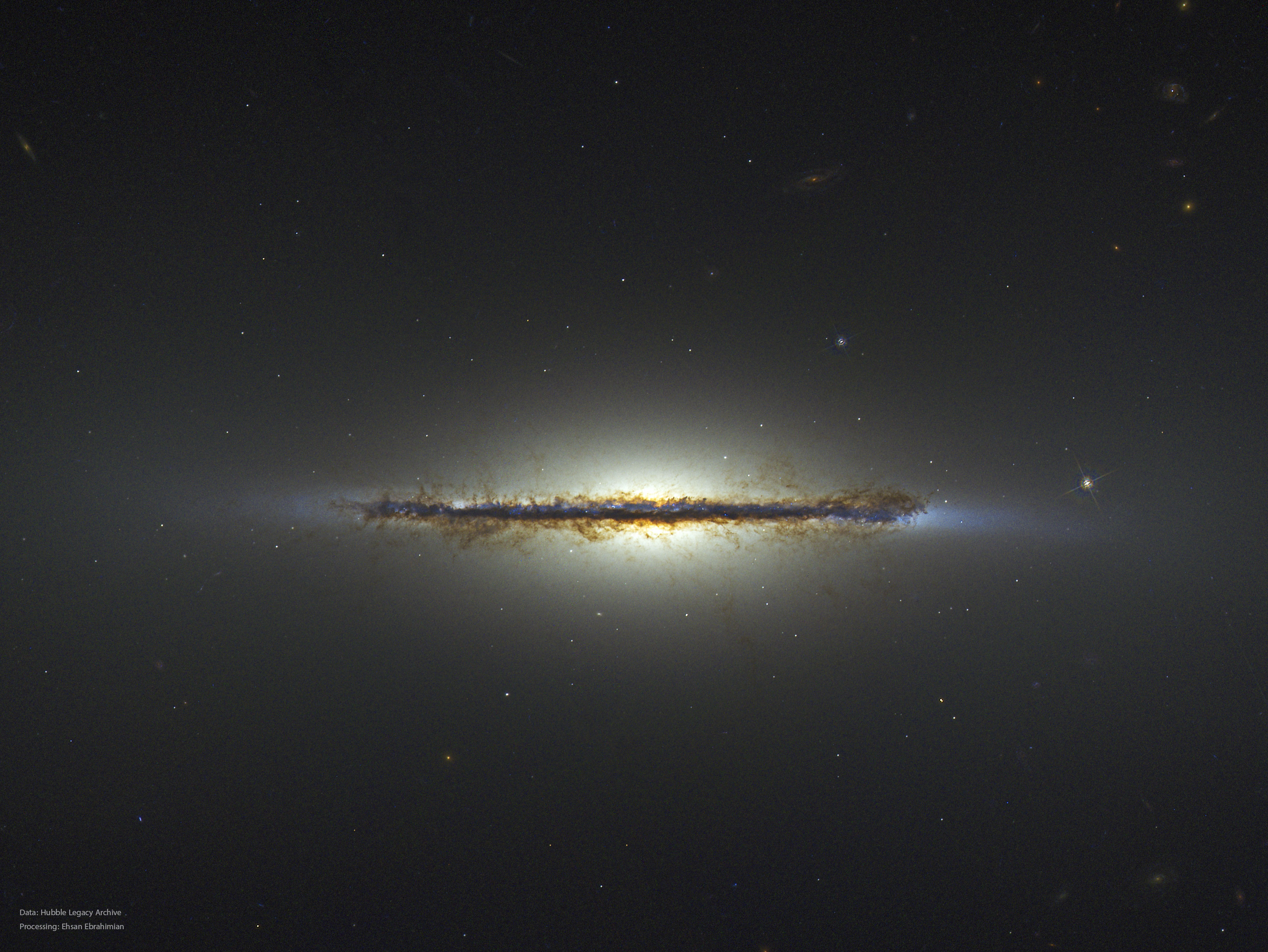
ASTRONOMY - M102: Edge-on Disk Galaxy
2024 March 6
Image Credit: NASA, ESA, Hubble; Processing: Ehsan Ebahimian
Explanation: What kind of celestial object is this? A relatively normal galaxy -- but seen from its edge. Many disk galaxies are actually just as thin as NGC 5866, the Spindle galaxy, pictured here, but are not seen edge-on from our vantage point. A perhaps more familiar galaxy seen edge-on is our own Milky Way galaxy. Also cataloged as M102, the Spindle galaxy has numerous and complex dust lanes appearing dark and red, while many of the bright stars in the disk give it a more blue underlying hue. The blue disk of young stars can be seen in this Hubble image extending past the dust in the extremely thin galactic plane. There is evidence that the Spindle galaxy has cannibalized smaller galaxies over the past billion years or so, including multiple streams of faint stars, dark dust that extends away from the main galactic plane, and a surrounding group of galaxies (not shown). In general, many disk galaxies become thin because the gas that forms them collides with itself as it rotates about the gravitational center. The Spindle galaxy lies about 50 million light years distant toward the constellation of the Dragon (Draco).
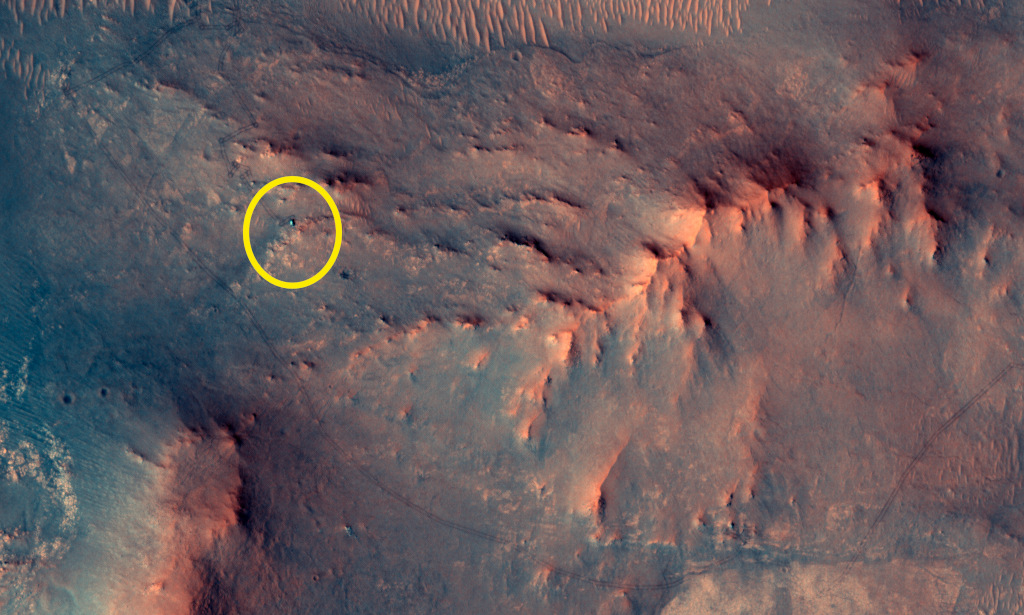
Astronomy - MARS MARATHON BY PERSEVERANCE
2026 June 27 Mars Marathon by Perseverance Image Credit: NASA , LPL (U. Arizona) , MRO , HiRISE Explanation: In this recent HiRISE view fro...
-
Imaginez un monde où le cancer n’est plus une sentence, mais une simple étape à franchir. Grâce à une découverte révolutionnaire, ce rêve es...
-
2026 January 1 Auroral Corona Image Credit & Copyright : Roi Levi Explanation: Cycle 25 solar maximum made 2025 a great year for ...