Nombre total de pages vues
15/10/2025
SANTé/MEDECINE - La grossesse mois par mois - 8ème et 9ème mois
LES BELLES INVENTIONS DE LEONARD DE VINCI - Le char d'assaut
14/10/2025
SANTé/MEDECINE - La grossesse mois par mois - 6ème et 7ème mois
ASTRONOMY - Aurora Timelapse Over Italian Alps
2024 October 13
Video Credit & Copyright: Cristian Bigontina
Explanation: Did you see last night's aurora? This question was relevant around much of the world a few days ago because a powerful auroral storm became visible unusually far from the Earth's poles. The cause was a giant X-class solar flare on Tuesday that launched energetic electrons and protons into the Solar System, connecting to the Earth via our planet's magnetic field. A red glow of these particles striking oxygen atoms high in Earth's atmosphere pervades the frame, while vertical streaks dance. The featured video shows a one-hour timelapse as seen from Cortina d'Ampezzo over Alps Mountain peaks in northern Italy. Stars from our Milky Way Galaxy dot the background while streaks from airplanes and satellites punctuate the foreground. The high recent activity of our Sun is likely to continue to produce picturesque auroras over Earth during the next year or so.
10/10/2025
SANTé/MEDECINE - La grossesse mois par mois - 5ème mois
09/10/2025
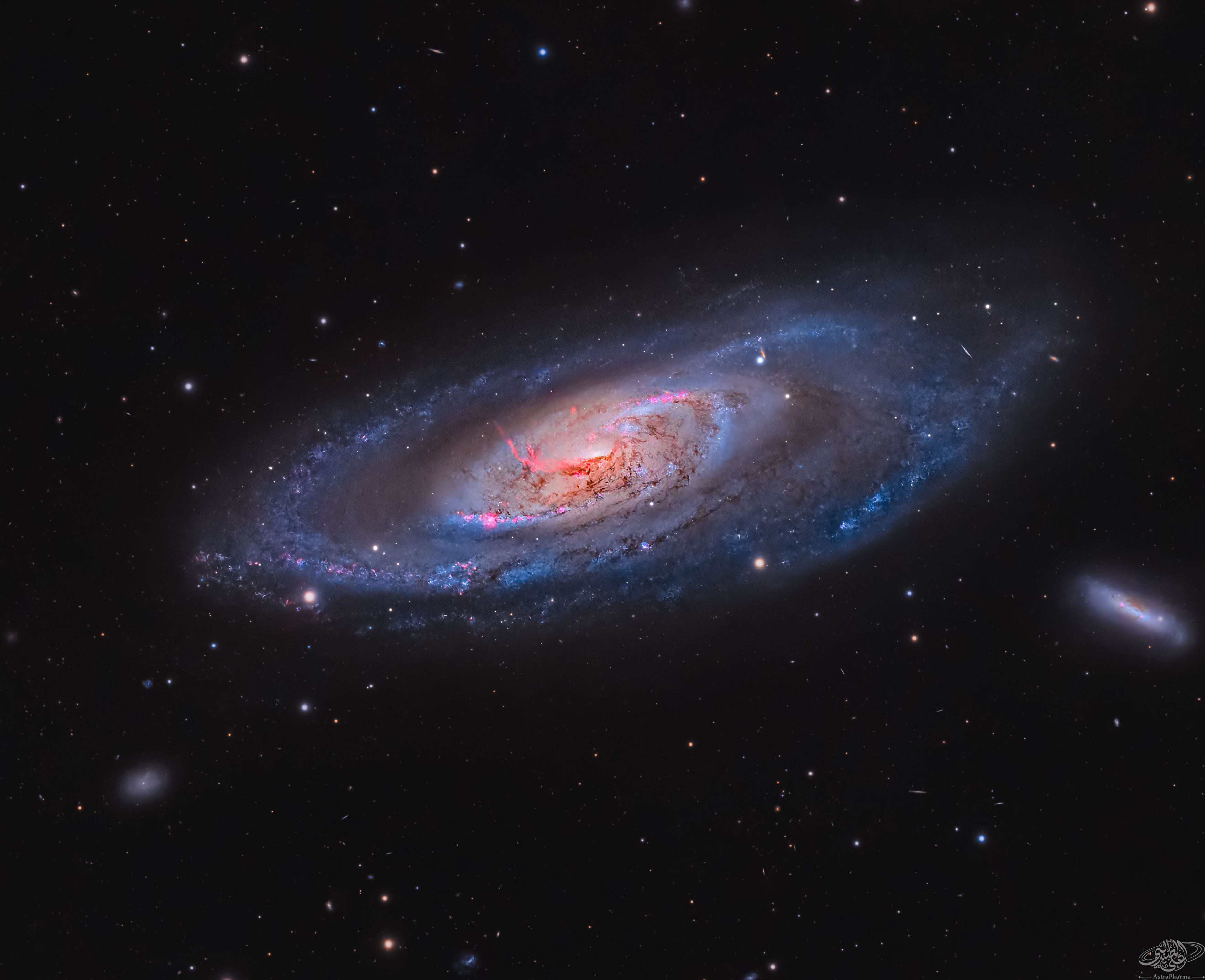
ASTRONOMY - M106: A Spiral Galaxy with a Strange Center
2024 October 9
Image Credit & Copyright: Ali Al Obaidly
Explanation: What's happening at the center of spiral galaxy M106? A swirling disk of stars and gas, M106's appearance is dominated by blue spiral arms and red dust lanes near the nucleus, as shown in the featured image taken from the Kuwaiti desert. The core of M106 glows brightly in radio waves and X-rays where twin jets have been found running the length of the galaxy. An unusual central glow makes M106 one of the closest examples of the Seyfert class of galaxies, where vast amounts of glowing gas are thought to be falling into a central massive black hole. M106, also designated NGC 4258, is a relatively close 23.5 million light years away, spans 60 thousand light years across, and can be seen with a small telescope towards the constellation of the Hunting Dogs (Canes Venatici).
08/10/2025
LES BELLES INVENTIONS DE LEONARD DE VINCI - A-t-il inventé la bicyclette ?
SANTé/MEDECINE - La grossesse mois par mois - 4ème mois
07/10/2025
ASTRONOMY - The Long Tails Comet Tsuchinshan-ATLAS
2024 October 7
Image Credit & Copyright: Jose Santivañez Mueras
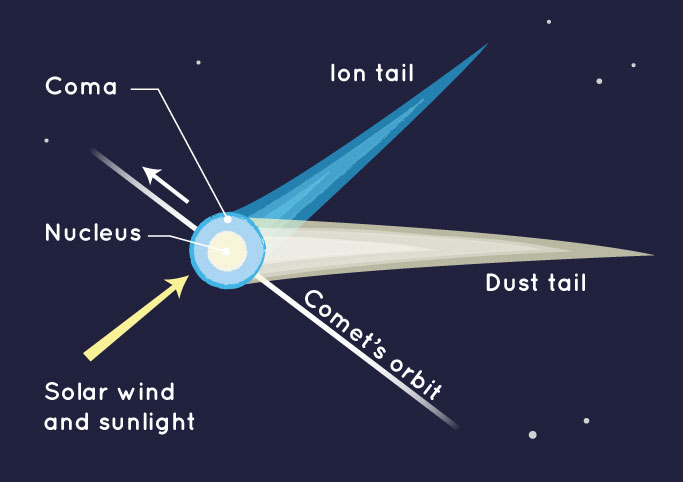
Explanation: A bright comet is moving into the evening skies. C/2023 A3 (Tsuchinshan–ATLAS) has brightened and even though it is now easily visible to the unaided eye, it is so near to the Sun that it is still difficult to see. Pictured, Comet Tsuchinshan–ATLAS was captured just before sunrise from an Andes Mountain in Peru. Braving cold weather, this unusually high perch gave the astrophotographer such a low eastern horizon that the comet was obvious in the pre-dawn sky. Visible in the featured image is not only an impressively long dust tail extending over many degrees, but an impressively long and blue ion tail, too. This month, as the comet moves out from the Sun and passes the Earth, evening observers should be able to see the huge dirty ice ball toward the west just after sunset.
06/10/2025
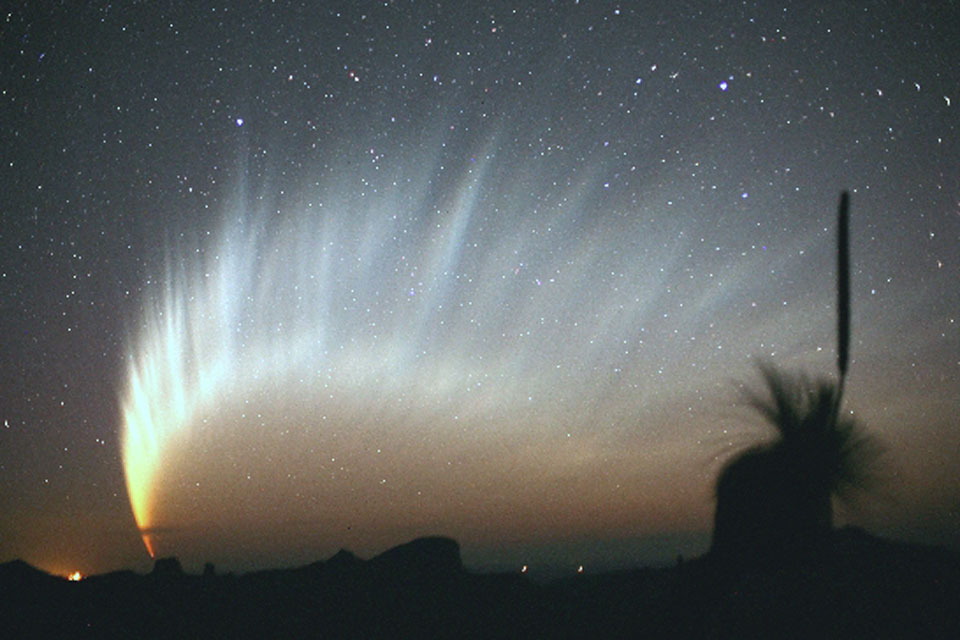
ASTRONOMY - The Magnificent Tail of Comet McNaught
2024 October 6
Image Credit & Copyright: Robert H. McNaught
Explanation: Comet McNaught, the Great Comet of 2007, grew a spectacularly long and filamentary tail. The magnificent tail spread across the sky and was visible for several days to Southern Hemisphere observers just after sunset. The amazing ion tail showed its greatest extent on long-duration, wide-angle camera exposures. During some times, just the tail itself was visible just above the horizon for many northern observers as well. Comet C/2006 P1 (McNaught), estimated to have attained a peak brightness of magnitude -5 (minus five), was caught by the comet's discoverer in the featured image just after sunset in January 2007 from Siding Spring Observatory in Australia. Comet McNaught, the brightest comet in decades, then faded as it moved further into southern skies and away from the Sun and Earth. Over the next month, Comet Tsuchinshan–ATLAS, a candidate for the Great Comet of 2024, should display its most spectacular tails visible from the Earth.
Astronomy - HICKSON 44 IN LEO
2026 March 27 Hickson 44 in Leo Image Credit & Copyright : Peter Kennett Explanation: Scanning the skies for galaxies, Canadian astr...
-
2025 May 11 The Surface of Venus from Venera 14 Image Credit: Soviet Planetary Exploration Program , Venera 14 ; Processing & Copyri...
-
2022 September 26 All the Water on Planet Earth Illustration Credit: Jack Cook, Adam Nieman, Woods Hole Oceanographic Institution ; Data ...