Nombre total de pages vues
21/01/2026
SANTé/MEDECINE - Tout savoir sur le coeur humain - 1
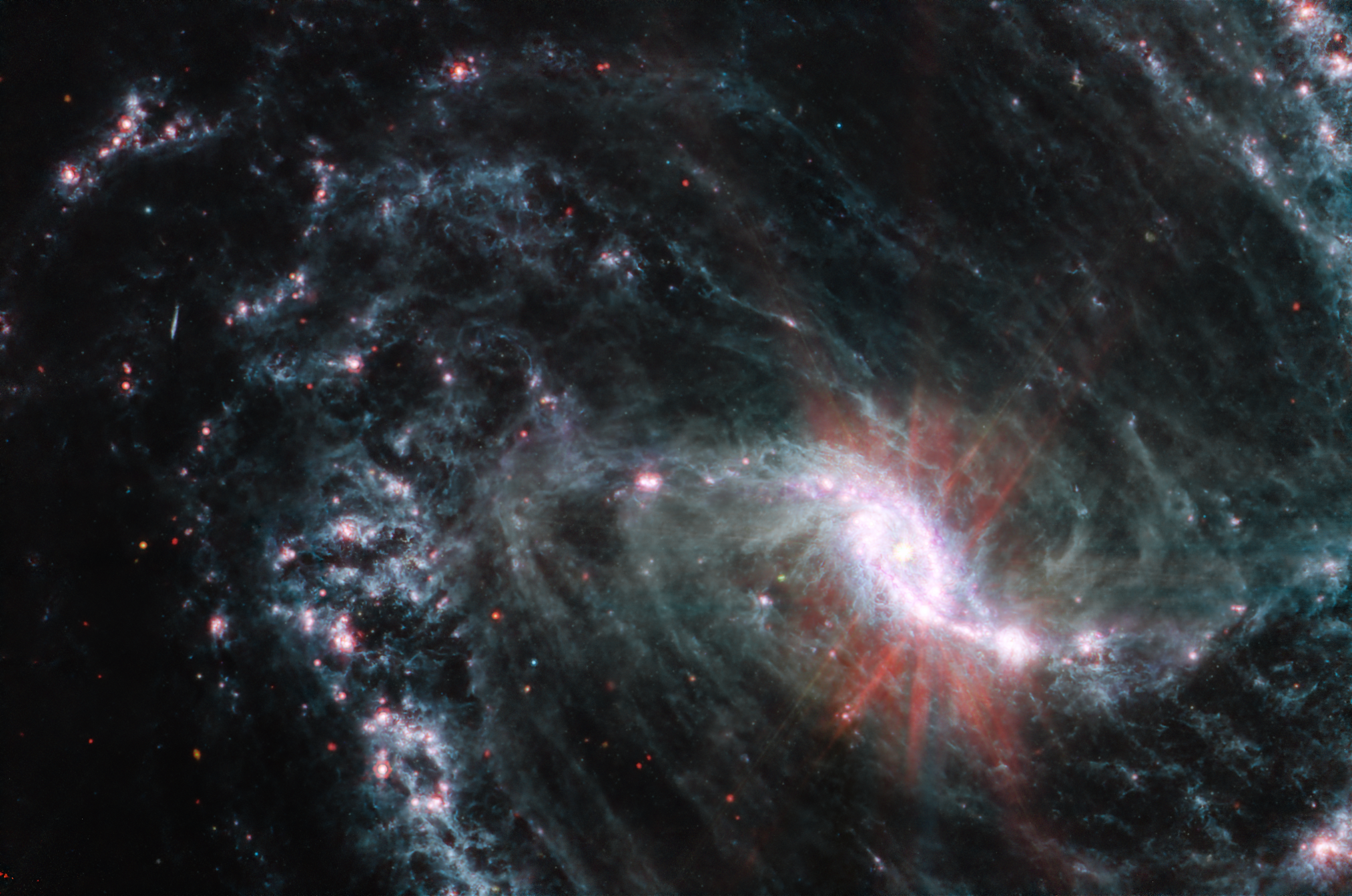
ASTRONOMY - Barred Spiral Galaxy NGC 1365 from Webb
2026 January 21
Image Credit: NASA, ESA, CSA, Janice Lee (NOIRLab) - Processing: Alyssa Pagan (STScI)
Explanation: A mere 56 million light-years distant toward the southern constellation Fornax, NGC 1365 is an enormous barred spiral galaxy about 200,000 light-years in diameter. That's twice the size of our own barred spiral Milky Way. This sharp image from the James Webb Space Telescope's Mid-Infrared Instrument (MIRI) reveals stunning details of this magnificent spiral in infrared light. Webb's field of view stretches about 60,000 light-years across NGC 1365, exploring the galaxy's core and bright newborn star clusters. The intricate network of dusty filaments and bubbles is created by young stars along spiral arms winding from the galaxy's central bar. Astronomers suspect the gravitational field of NGC 1365's bar plays a crucial role in the galaxy's evolution, funneling gas and dust into a star-forming maelstrom and ultimately feeding material into the active galaxy's central, supermassive black hole.
20/01/2026
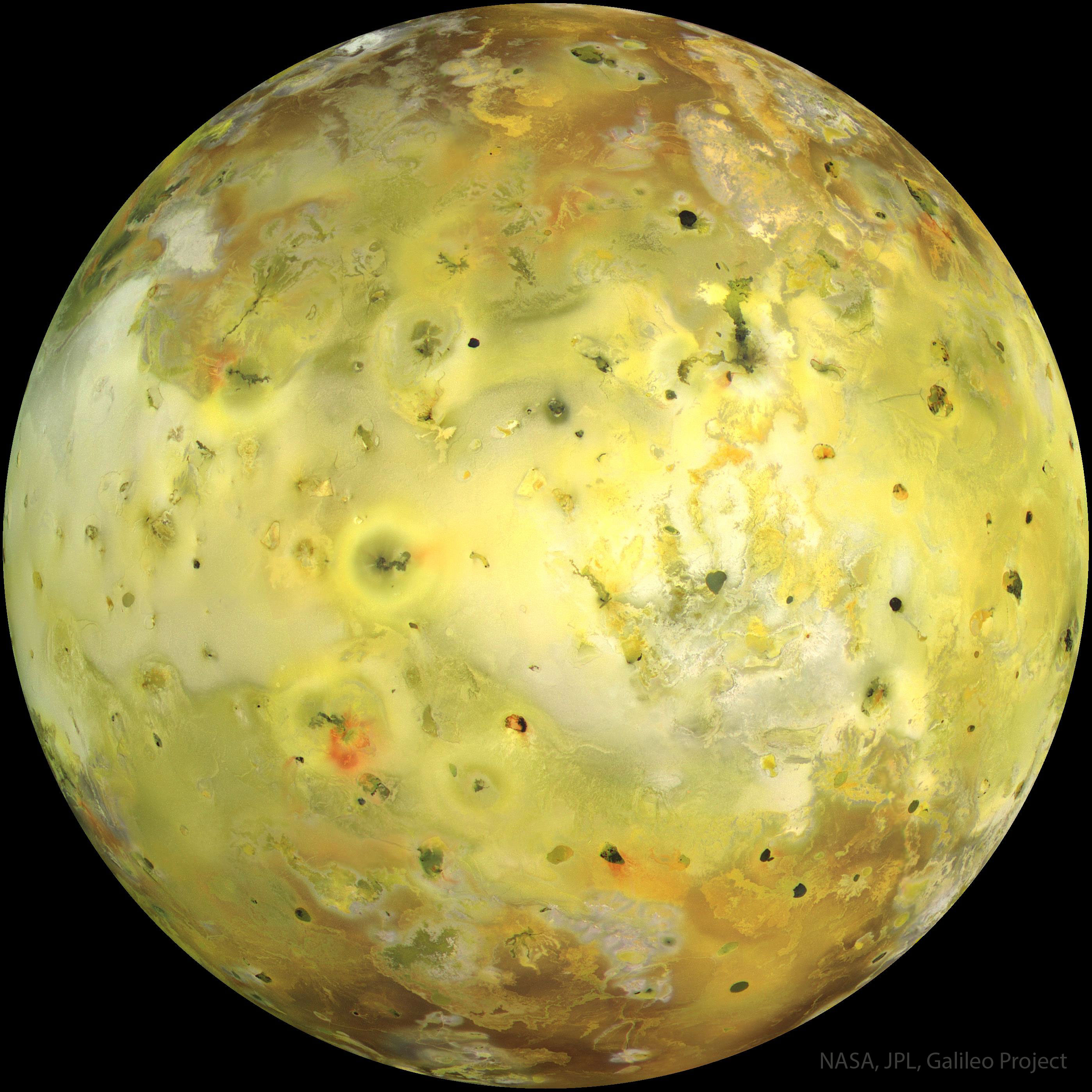
ASTRONOMY - Io in True Color
2026 January 20
Image Credit: NASA, JPL, Galileo Project
Explanation: The strangest moon in the Solar System is bright yellow. The featured picture, an attempt to show how Io would appear in the "true colors" perceptible to the average human eye, was taken in 1999 July by the Galileo spacecraft that orbited Jupiter from 1995 to 2003. Io's colors derive from sulfur and molten silicate rock. The unusual surface of Io is kept very young by its system of active volcanoes. The intense tidal gravity of Jupiter stretches Io and damps wobbles caused by Jupiter's other Galilean moons. The resulting friction greatly heats Io's interior, causing molten rock to explode through the surface. Io's volcanoes are so active that they are effectively turning the whole moon inside out. Some of Io's volcanic lava is so hot it glows in the dark.
19/01/2026
LES BELLES INVENTIONS DE LEONARD DE VINCI - La scie hydraulique et sa roue à godets
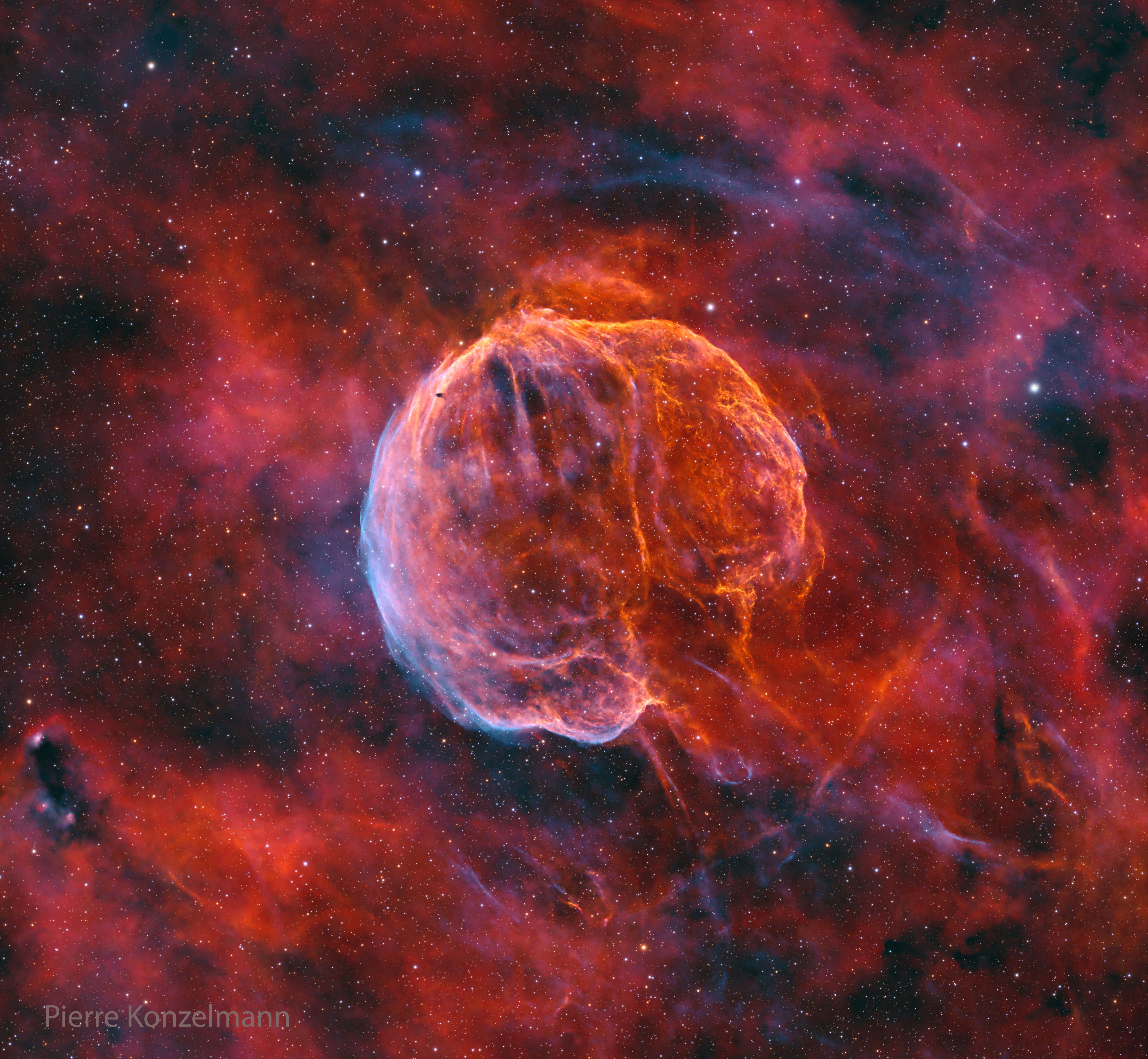
ASTRONOMY - CTB 1: The Medulla Nebula
2026 January 19
Image Credit: Pierre Konzelmann
Explanation: What powers this unusual nebula? CTB 1 is the expanding gas shell that was left when a massive star toward the constellation of Cassiopeia exploded about 10,000 years ago. The star likely detonated when it ran out of elements, near its core, that could create stabilizing pressure with nuclear fusion. The resulting supernova remnant, nicknamed the Medulla Nebula for its brain-like shape, still glows in visible light because of the heat generated by its collision with confining interstellar gas. Why the nebula also glows in X-ray light, though, remains a topic of research. One hypothesis holds that an energetic pulsar was created and powers the nebula with a fast outwardly moving wind. Following this lead, a pulsar was found in radio waves that appears to have been expelled by the supernova explosion at over 1000 kilometers per second. Although the Medulla Nebula appears as large as a full moon, it is so faint that it took 84-hours of exposure with a small telescope in Texas, USA, to create the featured image.
18/01/2026
ASTRONOMY - Jupiter from the Webb Space Telescope
2026 January 18
Image Credit: NASA, ESA, CSA, Jupiter ERS Team; Processing: Ricardo Hueso (UPV/EHU) & Judy Schmidt
Explanation: This infrared view of Jupiter by Webb is illuminating. High-resolution infrared images of Jupiter from the James Webb Space Telescope (Webb) reveal, for example, differences between high-floating bright clouds -- including the Great Red Spot -- and low-lying dark clouds. Also clearly visible in the featured Webb image are Jupiter's dust ring, bright auroras at the poles, and Jupiter's moons Amalthea and Adrastea. The footprint of large volcanic moon Io's magnetic funneling of charged particles onto Jupiter is also visible in the southern aurora. Some objects are so bright that light noticeably diffracts around Webb's optics creating streaks. Webb, which orbits the Sun near the Earth, has a mirror over six meters across making it the largest astronomical telescope ever launched -- with over six times more light-collecting area than Hubble.
17/01/2026
MICROPHOTOGRAPHIE - La clé de voûte de la propreté des abeilles
ASTRONOMY - Apollo 14: A View from Antares
2026 January 17
Image Credit: Edgar Mitchell, Apollo 14, NASA; Mosaic - Eric M. Jones
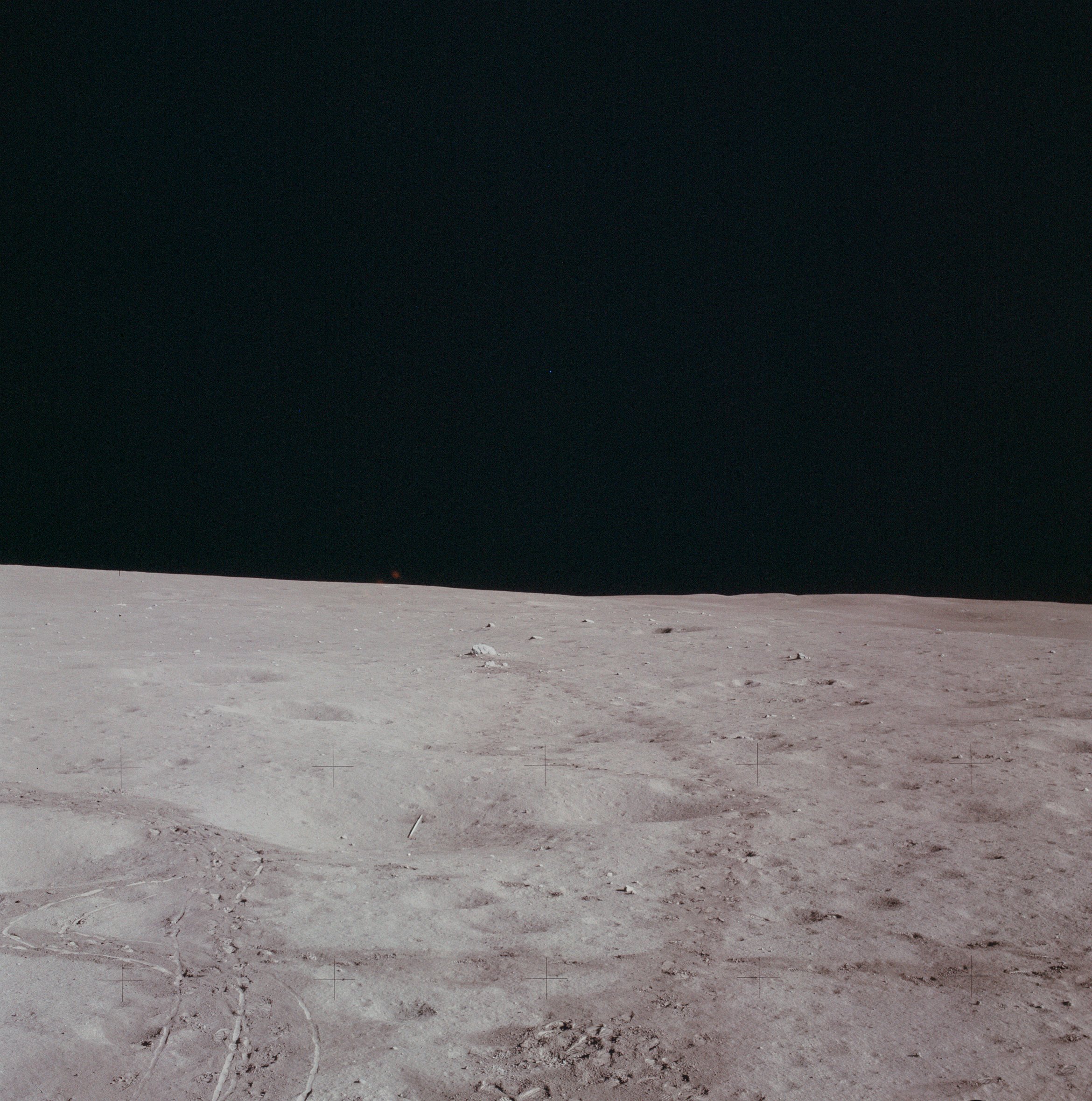
Explanation: Apollo 14's Lunar Module Antares landed on the Moon on February 5, 1971. Toward the end of the stay astronaut Ed Mitchell snapped a series of photos of the lunar surface while looking out a window, assembled into this detailed mosaic by Apollo Lunar Surface Journal editor Eric Jones. The view looks across the Fra Mauro highlands to the northwest of the landing site after the Apollo 14 astronauts had completed their second and final walk on the Moon. Prominent in the foreground is their Modular Equipment Transporter, a two-wheeled, rickshaw-like device used to carry tools and samples. Near the horizon at top center is a 1.5 meter wide boulder dubbed Turtle rock. In the shallow crater below Turtle rock is the long white handle of a sampling instrument, thrown there javelin-style by Mitchell. Mitchell's fellow moonwalker and first American in space, Alan Shepard, also used a makeshift six iron to hit two golf balls. One of Shepard's golf balls is just visible as a white spot below Mitchell's javelin.
16/01/2026
ASTRONOMY - NGC 7023: The Iris Nebula
2026 January 16
Image Credit & Copyright: Justus Falk
Explanation: These cosmic clouds have blossomed 1,300 light-years away in the fertile starfields of the constellation Cepheus. Called the Iris Nebula, NGC 7023 is not the only nebula to evoke the imagery of flowers. Still, this deep telescopic image shows off the Iris Nebula's range of colors and symmetries embedded in surrounding fields of interstellar dust. Within the Iris itself, dusty nebular material surrounds a hot, young star. The dominant color of the brighter reflection nebula is blue, characteristic of dust grains reflecting starlight. Central filaments of the reflection nebula glow with a faint reddish photoluminescence as some dust grains effectively convert the star's invisible ultraviolet radiation to visible red light. Infrared observations indicate that this nebula contains complex carbon molecules known as PAHs. The dusty blue petals of the Iris Nebula span about six light-years.
15/01/2026
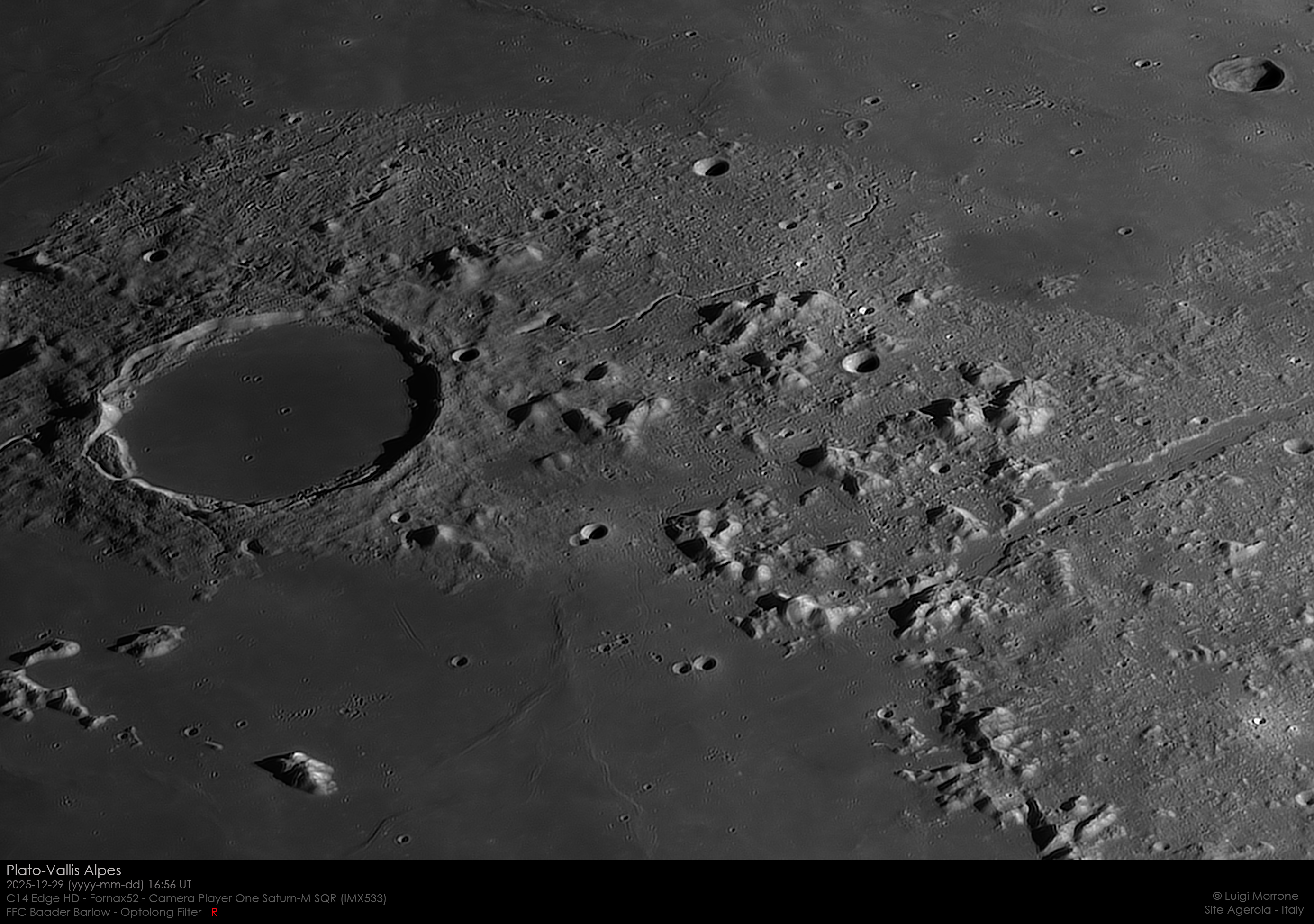
ASTRONOMY - Plato and the Lunar Alps
2026 January 15
Image Credit & Copyright: Luigi Morrone
Explanation: The dark-floored, 95 kilometer wide crater Plato and sunlit peaks of the lunar Alps (Montes Alpes) are highlighted in this this sharp telescopic snapshot of the Moon's surface. While the Alps of planet Earth were uplifted over millions of years as continental plates slowly collided, the lunar Alps were likely formed by a sudden collision that created the giant impact basin known as the Mare Imbrium or Sea of Rains. The mare's generally smooth, lava-flooded floor is seen below the bordering mountain range. The prominent straight feature cutting through the mountains is the lunar Alpine Valley (Vallis Alpes). Joining the Mare Imbrium and northern Mare Frigoris (Sea of Cold) the valley extends toward the upper right, about 160 kilometers long and up to 10 kilometers wide. Of course, the large, bright lunar alpine mountain below and right of Plato crater is named Mont Blanc. Lacking an atmosphere, not to mention snow, the lunar Alps are probably not an ideal location for a winter vacation. Still, a 150 pound skier would weigh a mere 25 pounds on the Moon.
Santé/Médecine - AVANCEES MAJEURES ET ESPOIR - UNE NOUVELLE ARME CONTRE LES CANCERS DU SANG
Reprogrammer la mort cellulaire pour déclencher l’alerte immunitaire De nouvelles stratégies d' immunothérapie émergent . L'une d...
-
2025 May 11 The Surface of Venus from Venera 14 Image Credit: Soviet Planetary Exploration Program , Venera 14 ; Processing & Copyri...
-
2026 January 1 Auroral Corona Image Credit & Copyright : Roi Levi Explanation: Cycle 25 solar maximum made 2025 a great year for ...