Cette maladie affecte aussi le sommeil, ce qui aggrave davantage les symptômes de fatigue. Même après une longue nuit de sommeil, on se réveille fatigué. Ceux qui en souffrent décrivent un sommeil trop léger et non réparateur.
CommentEconomiser
2026 April 29
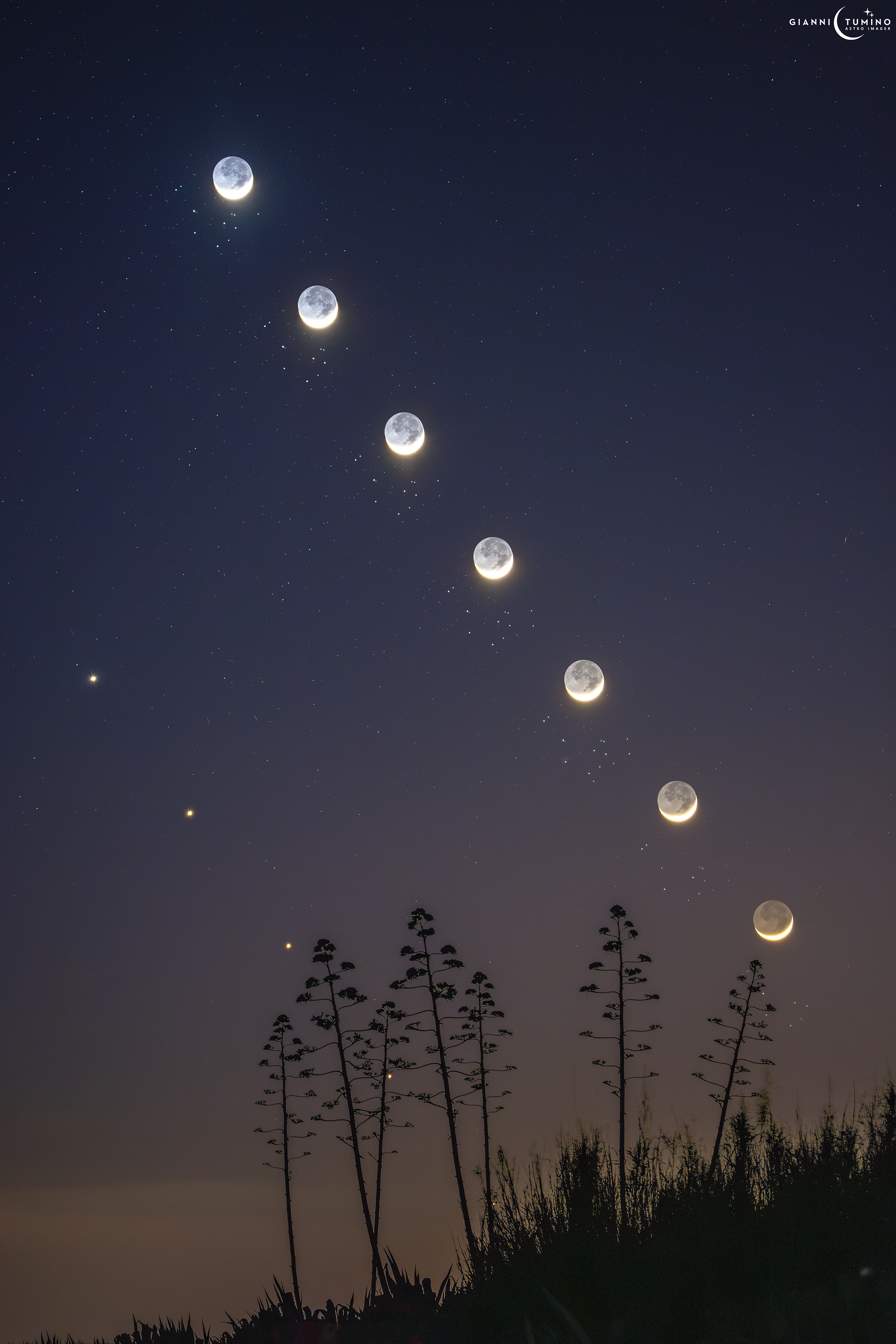
Explanation: No, Earth did not recently acquire six more moons! Today’s APOD is a combination of images following the Moon, Venus, and the Pleiades across a southern Sicilian sky as twilight turned to evening on April 19. From 2023 to 2029, the Pleiades' and the Moon “visit" each other once per month due to the Pleiades' location in the ecliptic plane. April 2026 saw the celestial alignment of their visit with Venus. About six stars in the Pleiades cluster (Messier 45) are typically visible with the unaided eye. Due to the cluster’s visibility across the world, there are many myths and legends across cultures associated with the Pleiades. The Haudenosaunee people of North America, for example, say that seven boys danced so enthusiastically that they lifted off into the sky. Astronomers recently found thousands more Pleiades members, showing that after thousands of years of gazing upon this cluster, there is yet more to learn about the Pleiades.
2026 April 28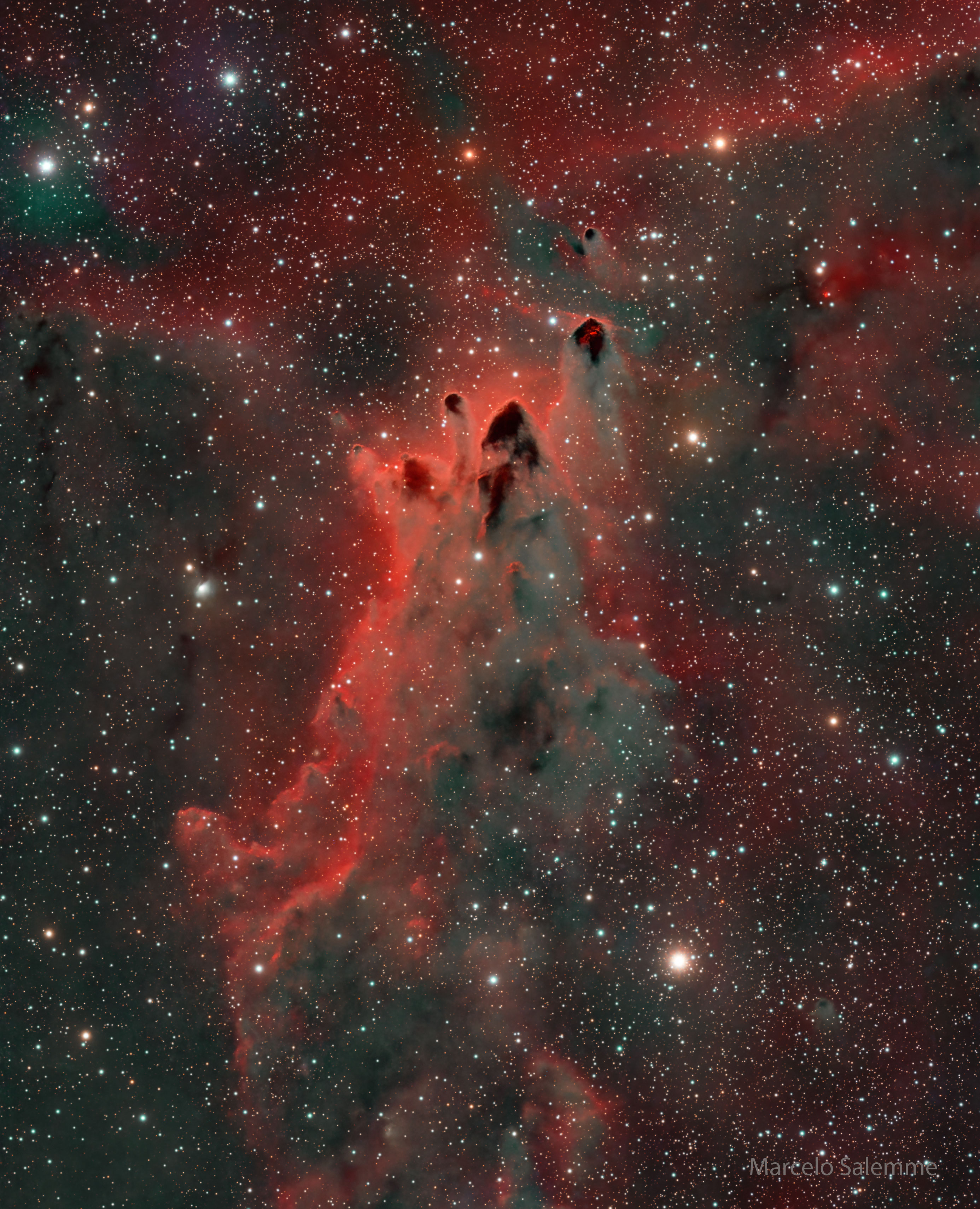
Explanation: They're like mountain peaks, but they are forming stars. Bright-rimmed, flowing shapes gather near the center of this rich starfield toward the borders of the nautical southern constellations Puppis and Vela. Composed of interstellar gas and dust, the grouping of light-year sized cometary globules is about 1300 light-years distant. Energetic ultraviolet light from nearby hot stars has molded the globules and ionized their bright rims. The globules also stream away from the Vela supernova remnant which may have influenced their swept-back shapes. Within them, cores of cold gas and dust are likely collapsing to form low mass stars whose formation will ultimately cause the globules to disperse. In fact, cometary globule CG 30 (upper right in the group) sports a small reddish glow inside its head, a telltale sign of energetic jets from a star in the early stages of formation.

2026 March 11
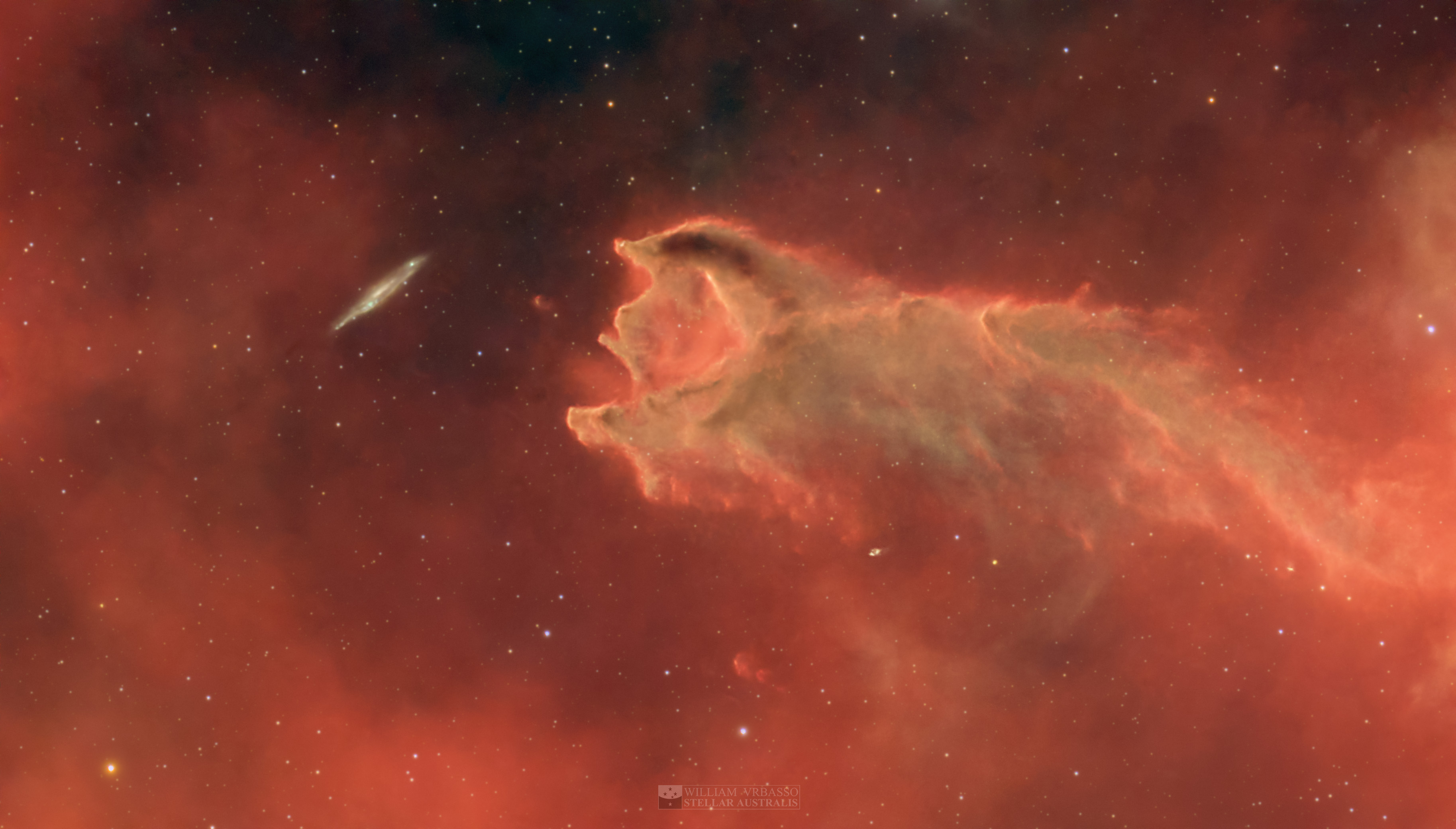
Explanation: Is this a cosmic monster ready to devour an unsuspecting galaxy? Thankfully, that is not the case. The red “monster” shown in the featured image is Cometary Globule CG 4, 1,300 light-years away in the Constellation Puppis. CG 4 is a molecular cloud, where hydrogen becomes cold enough to form molecules that can be brought together by gravity to create stars. The shape of CG 4 resembles that of a comet, but its head is 1.5 light-year in diameter and its tail is 8 light-years long; for comparison, the distance from the Earth to the sun is only 8 light-minutes. Astronomers believe that the tail of a cometary globule could have been shaped by a nearby supernova explosion or by irradiation from hot, massive stars. Indeed, CG 4 and other nearby globules point away from the Vela Supernova Remnant, at the center of the Gum Nebula. The edge-on spiral galaxy, ESO 257-19, is more than a hundred million light-years beyond CG 4, and is completely safe from the “monster”.
2026 April 26
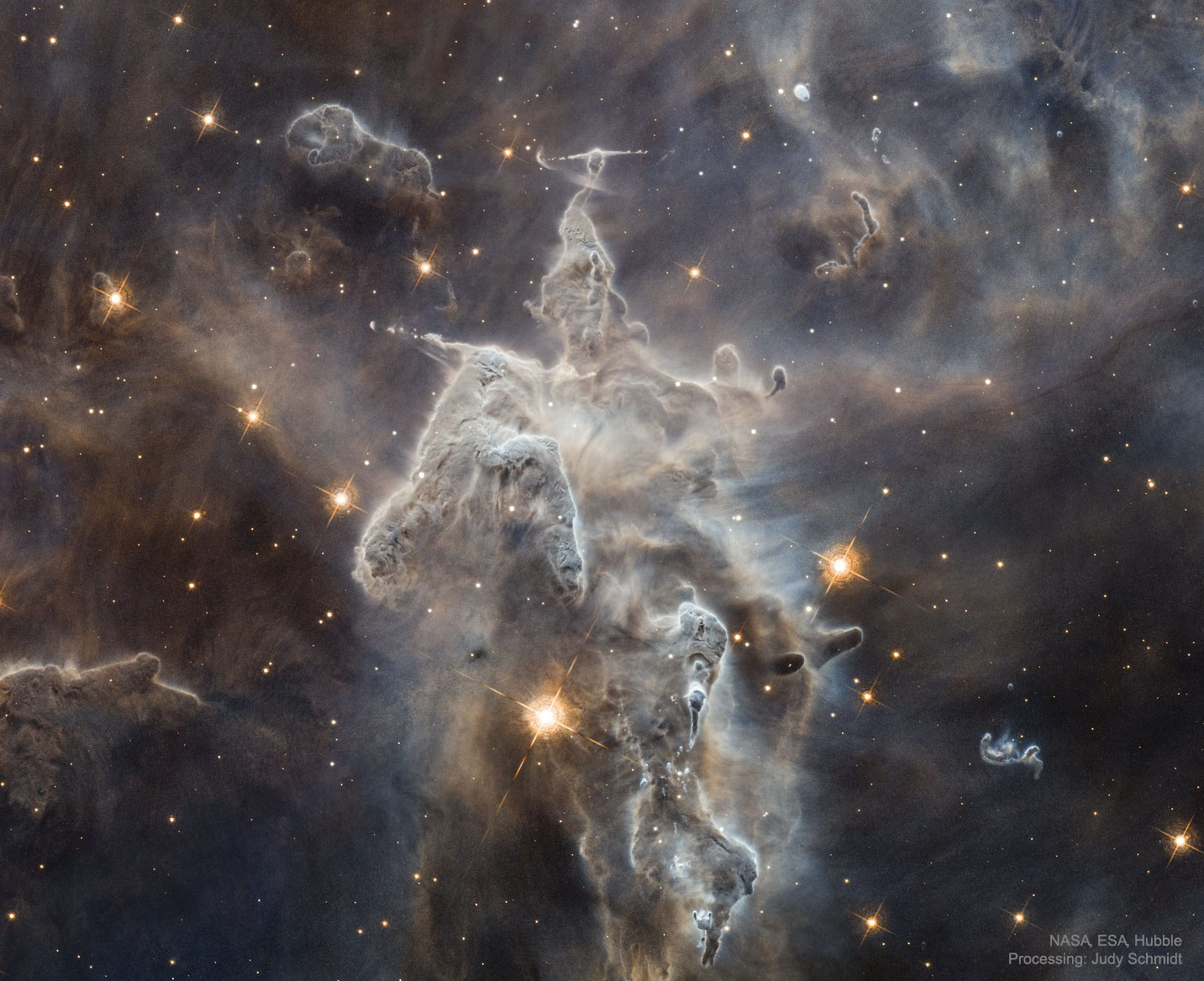
Explanation: Inside the head of this interstellar monster is a star that is slowly destroying it. The huge monster, actually an inanimate series of pillars of gas and dust, measures light years in length. The in-head star is not itself visible through the opaque interstellar dust but is bursting out partly by ejecting opposing beams of energetic particles called Herbig-Haro jets. Located about 7,500 light years away in the Carina Nebula and known informally as Mystic Mountain, the appearance of these pillars is dominated by dark dust even though they are composed mostly of clear hydrogen gas. The featured image was taken with the Hubble Space Telescope. All over these pillars, the energetic light and winds from massive newly formed stars are evaporating and dispersing the dusty stellar nurseries in which they formed. Within a few million years, the head of this giant, as well as most of its body, will have been completely evaporated by internal and surrounding stars.

2026 April 25
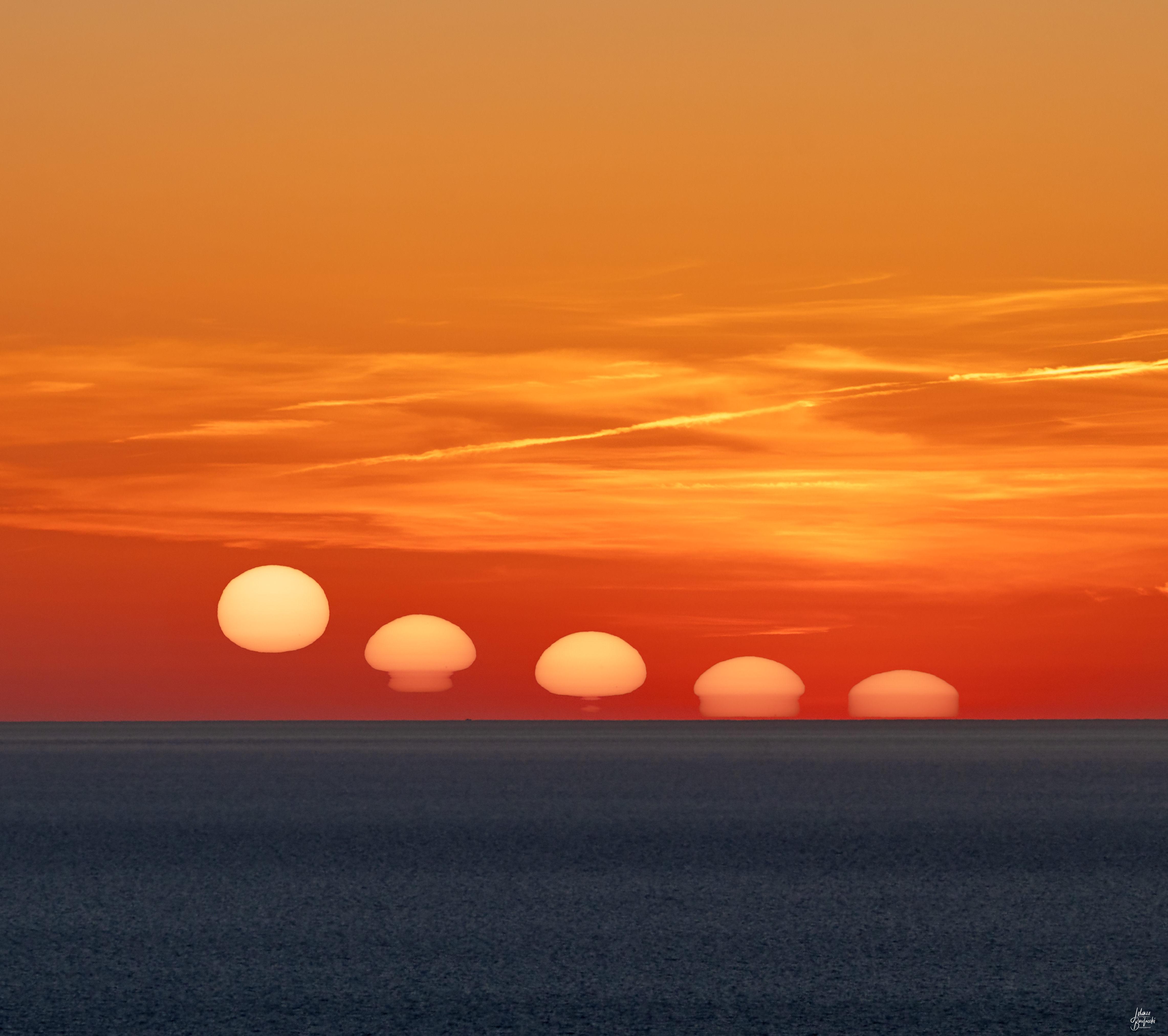
Explanation: This seaside sunset offered a surreal experience, captured in a sea and skyscape from the west coast of Sardinia, Italy, planet Earth. The Daliesque scene is a composition of sequential exposures made with a camera and long telephoto lens. The Sun is not melting, though. Its shifting and fluid appearance as it nears the horizon is caused as refraction along the line of sight changes and creates distorted images or mirages of the reddened solar disk. The changes in atmospheric refraction correspond to atmospheric layers with sharply different temperatures and densities. Another famous but fleeting effect of atmospheric refraction produced by a long sight-line to the setting (or rising) Sun is often called the green flash.
2026 April 24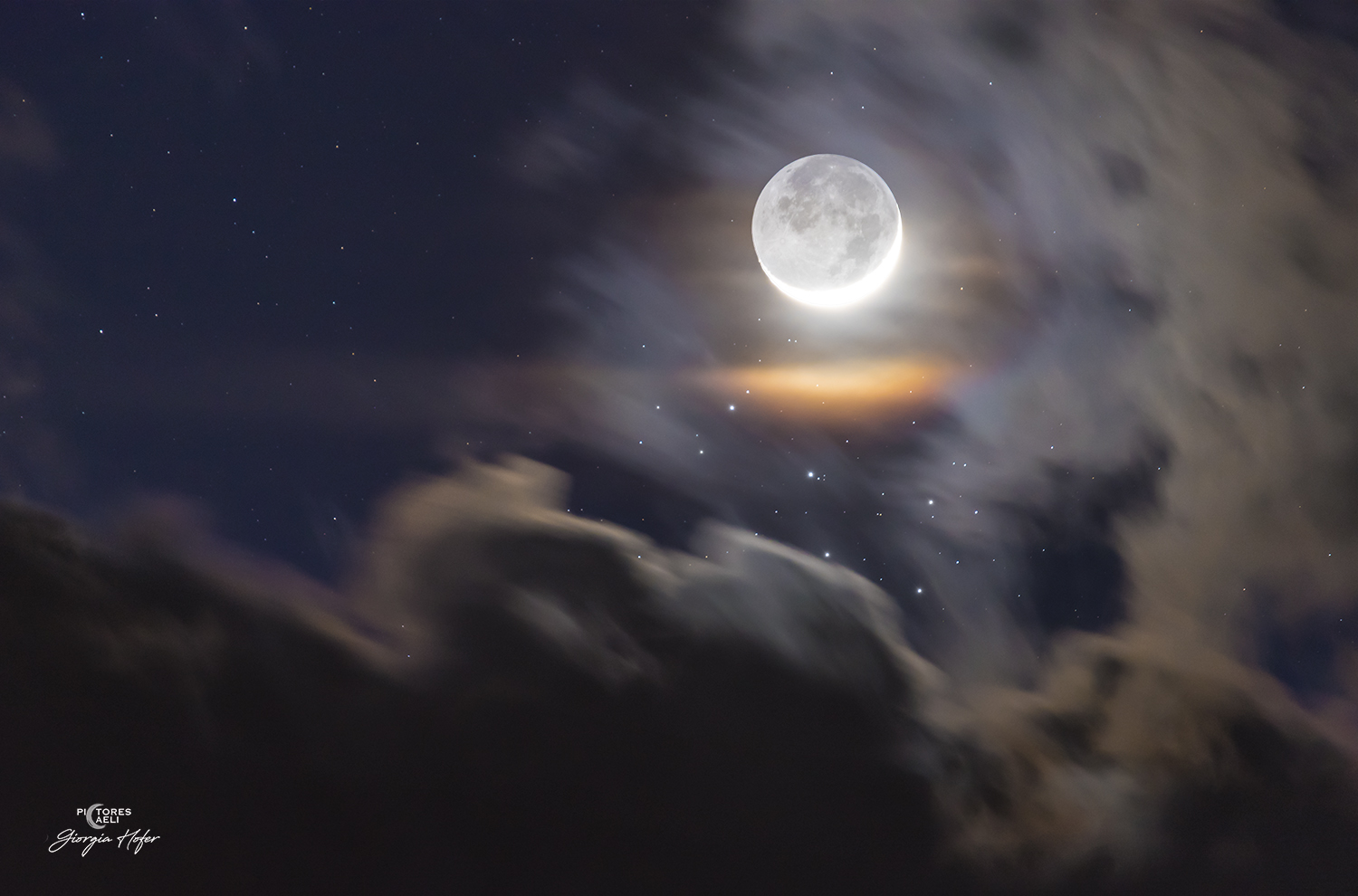
Explanation: Sunlit arms of a crescent moon seem to embrace the faint lunar night side in this dramatic celestial scene from planet Earth. The single telephoto exposure tracking the sky was captured on the night of April 19, when a two day old Moon was near perigee in its elliptical orbit. On that date, the young Moon was also close on the sky to the lovely Pleiades Star Cluster. With the moonlight dimmed by clouds the Pleiades sister stars gather below the Moon's bright crescent, seen through a faint but colorful lunar corona. The lunar night side is illuminated by earthshine, sunlight reflected from the Earth itself. The Moon's ashen glow, also known as the "old moon in the young moon's arms", tends to be brighter in the northern hemisphere spring. And for now, the Moon's orbit takes it near the Pleiades stars each month in planet Earth's sky, though their close conjunctions are easiest to see when the Moon is near a crescent phase.

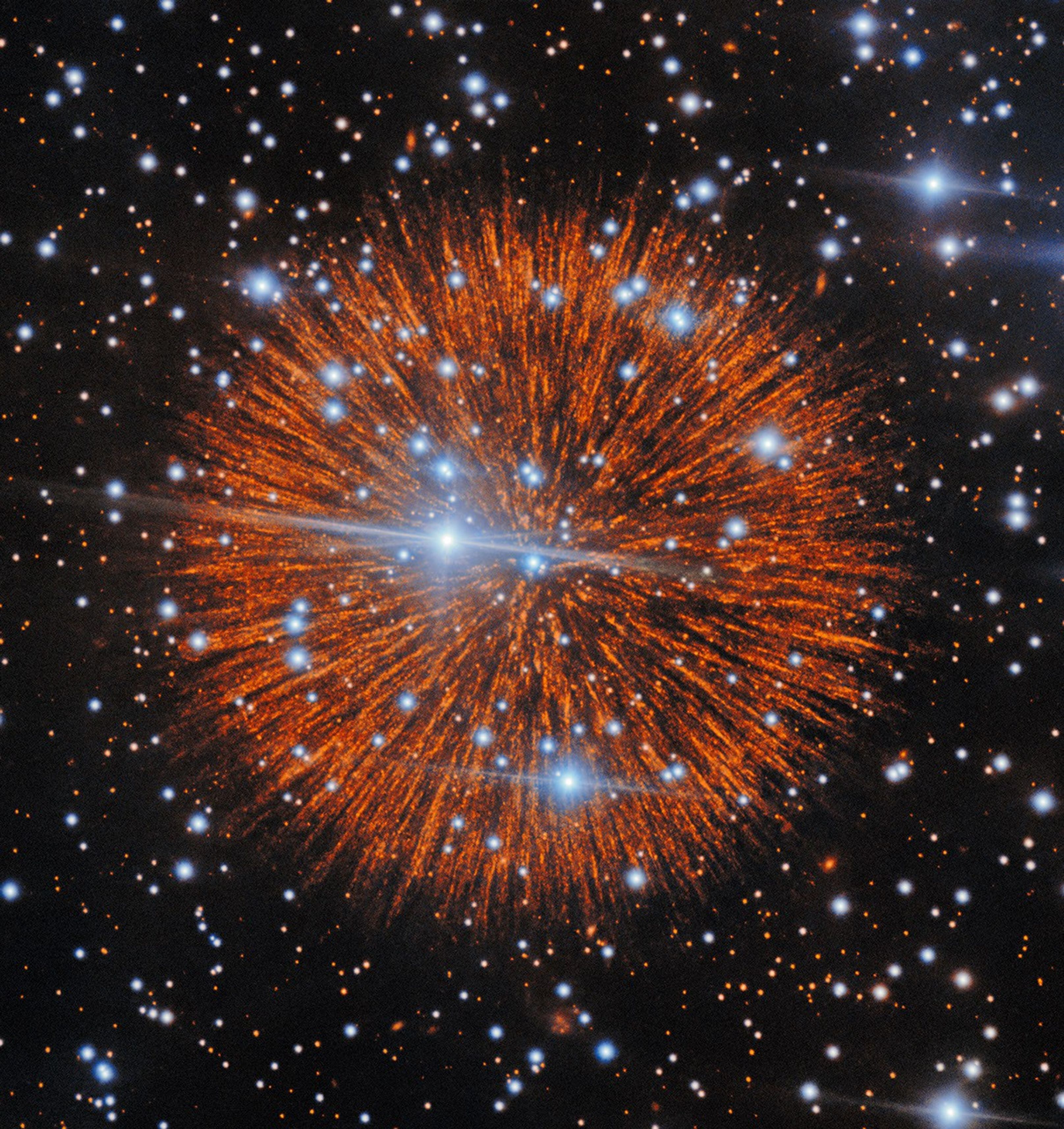
Explanation: "Happy New Year!" No, wait, this is not a fireworks display . This image shows Nebula Pa 30 , observed with the Gemi...