Nombre total de pages vues

06/11/2019

Science & Technology - Astronomy picture of the day : 21st Century M101

2019 November 6
See Explanation.  Clicking on the picture will download
the highest resolution version available.
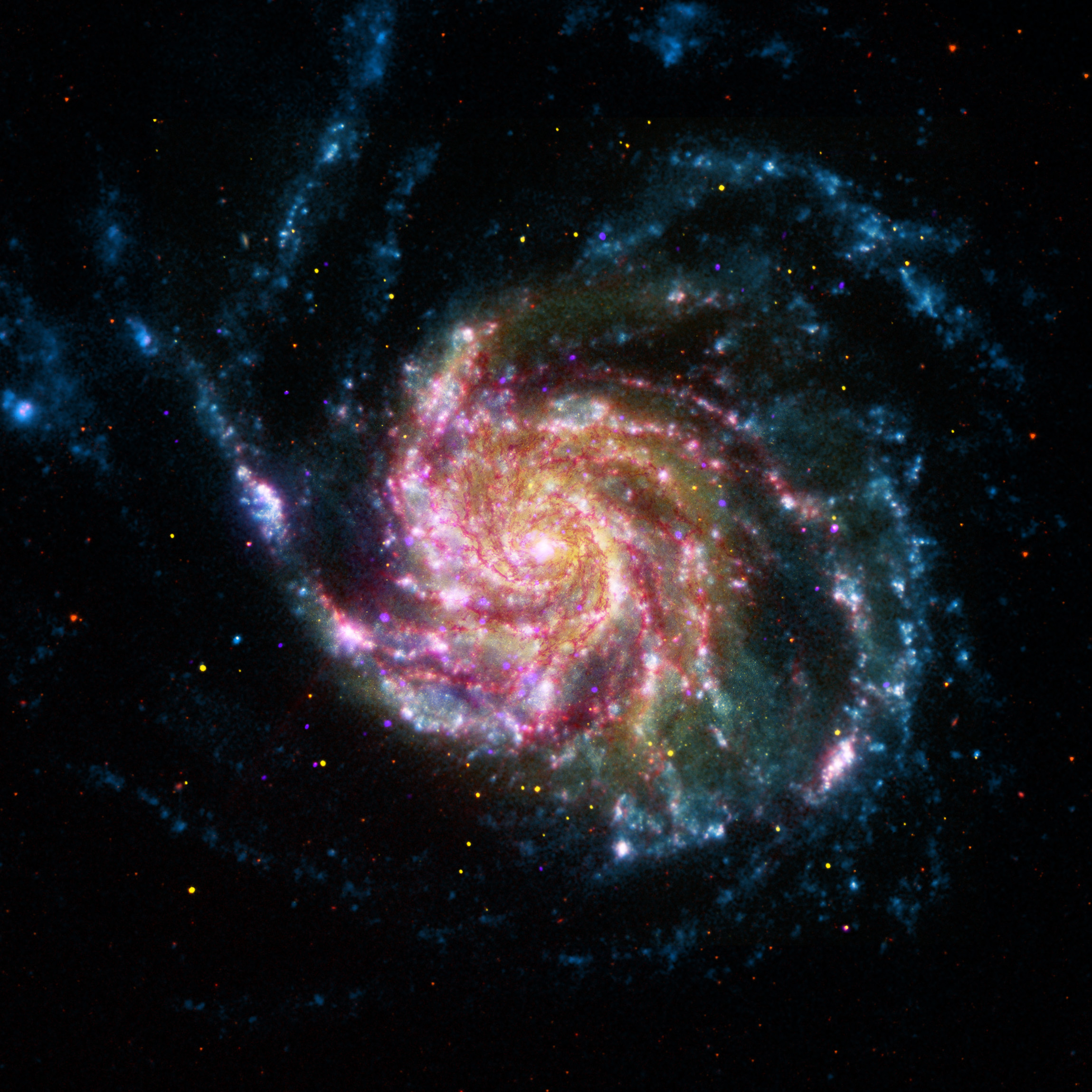
21st Century M101 
Image Credit: NASAESACXCJPL - CaltechSTScI
Explanation: One of the last entries in Charles Messier's famous catalog, big, beautiful spiral galaxy M101 is definitely not one of the least. About 170,000 light-years across, this galaxy is enormous, almost twice the size of our own Milky Way Galaxy. M101 was also one of the original spiral nebulae observed with Lord Rosse's large 19th century telescope, the Leviathan of Parsonstown. In contrast, this multiwavelength view of the large island universe is a composite of images recorded by space-based telescopes in the 21st century. Color coded from X-rays to infrared wavelengths (high to low energies), the image data was taken from the Chandra X-ray Observatory (purple), theGalaxy Evolution Explorer (blue), Hubble Space Telescope(yellow), and the Spitzer Space Telescope(red). While the X-ray data trace the location of multimillion degree gas around M101's exploded stars and neutron star and black hole binary star systems, the lower energy data follow the stars and dust that define M101's grand spiral arms. Also known as the Pinwheel Galaxy, M101 lies within the boundaries of the northern constellation Ursa Major, about 25 million light-years away.

05/11/2019

Science & Technology - Astronomy picture of the day : Spiral Galaxies Spinning Super-Fast

2019 November 5
See Explanation.  Clicking on the picture will download
the highest resolution version available.
Spiral Galaxies Spinning Super-Fast 
Image Credit: Top row: NASAESAHubble, P. Ogle & J. DePasquale (STScI);
Bottom row: SDSS, P. Ogle & J. DePasquale (STScI)
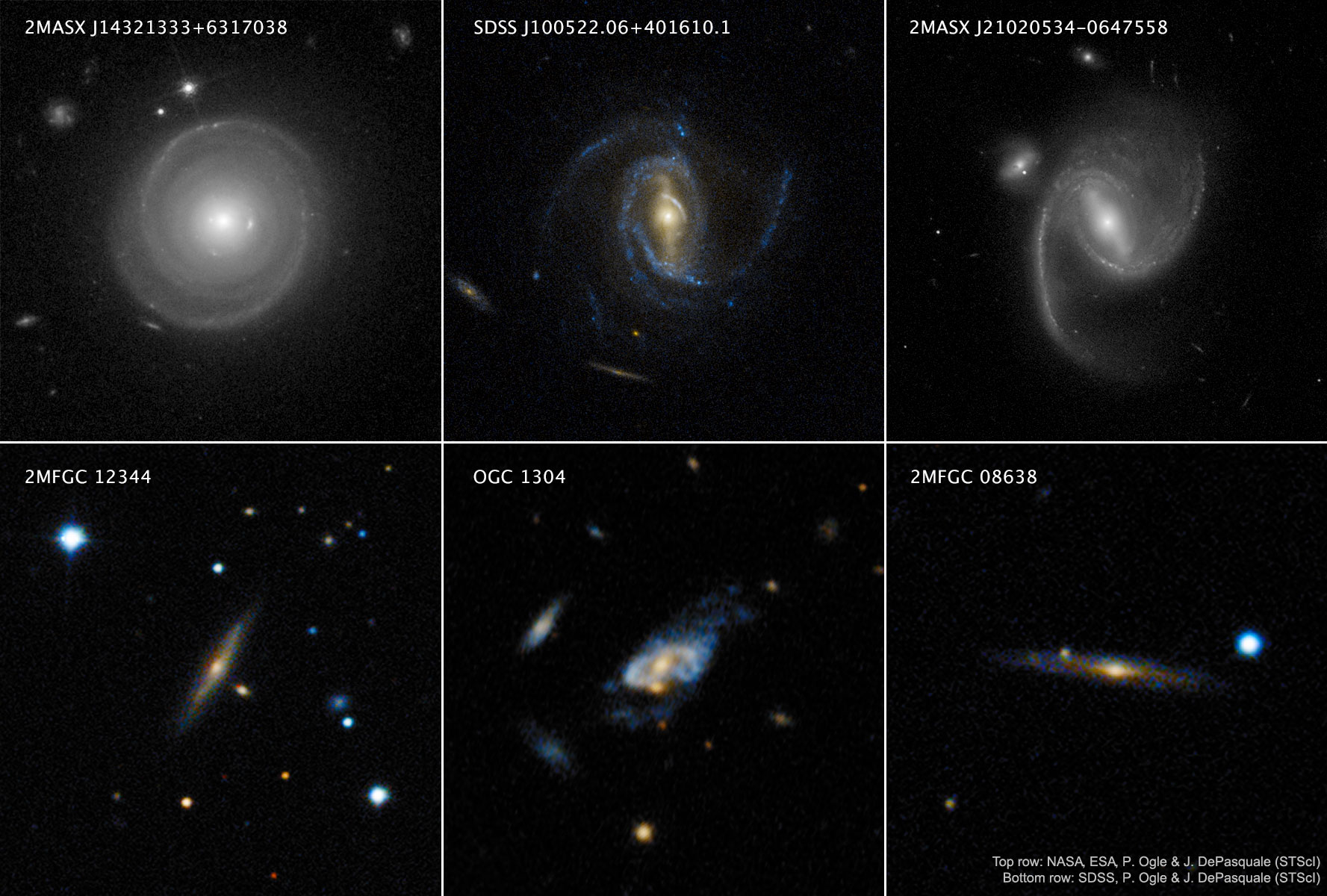
Explanation: Why are these galaxies spinning so fast? If you estimated each spiral's mass by how much light it emits, their fast rotations should break them apart. The leading hypothesis as to why these galaxies don't break apart isdark matter -- mass so dark we can't see it. But these galaxies are even out-spinning this break-up limit -- they are the fastest rotating disk galaxies known. It is therefore further hypothesized that their dark matter halos are so massive -- and their spins so fast -- that it is harder for them to form stars than regular spirals. If so, then these galaxies may be among the most massive spirals possible. Further study of surprising super-spirals like these will continue, likely including observations taken by NASA's James Webb Space Telescope scheduled for launch in 2021.

04/11/2019

Science & Technology - Astronomy picture of the day : Near the Center of the Lagoon Nebula

2019 November 4
See Explanation.  Clicking on the picture will download
the highest resolution version available.
Near the Center of the Lagoon Nebula 
Image Credit & Copyright: Zhuoqun Wu, Chilescope
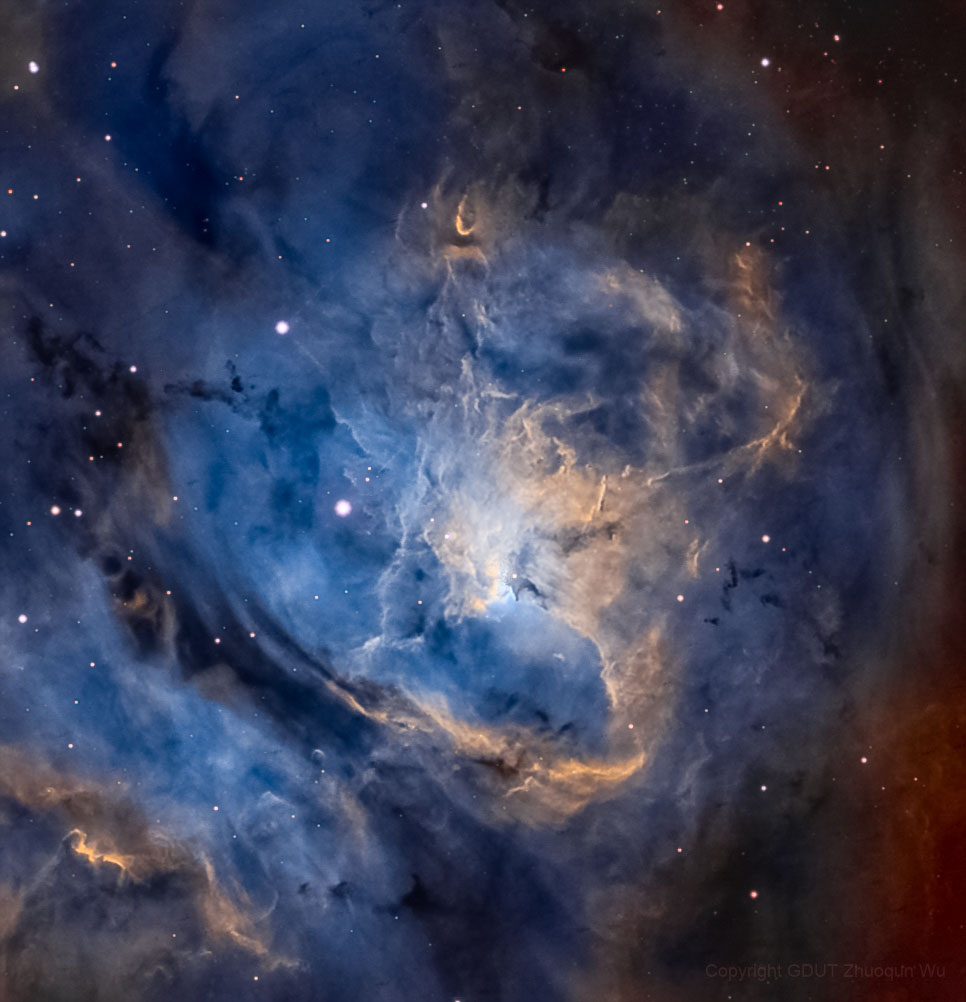
Explanation: Stars are battling gas and dust in the Lagoon Nebula but the photographers are winning. Also known as M8, this photogenic nebula is visible even without binoculars towards the constellation of the Archer (Sagittarius). The energetic processes of star formation create not only the colors but the chaos. The glowing gas results from high-energy starlight striking interstellar hydrogen gas and trace amounts of sulfur, and oxygen gases. The dark dustfilaments that lace M8 were created in the atmospheres of cool giant stars and in the debris from supernovae explosions. The light from M8 we see today left about 5,000 years ago. Light takes about 50 years to cross this section of

03/11/2019

Science & Technology - Astronomy picture of the day : Daphnis and the Rings of Saturn

2019 November 3
See Explanation.  Clicking on the picture will download
the highest resolution version available.
Daphnis and the Rings of Saturn 
Image Credit: NASAJPL-CaltechSpace Science InstituteCassini
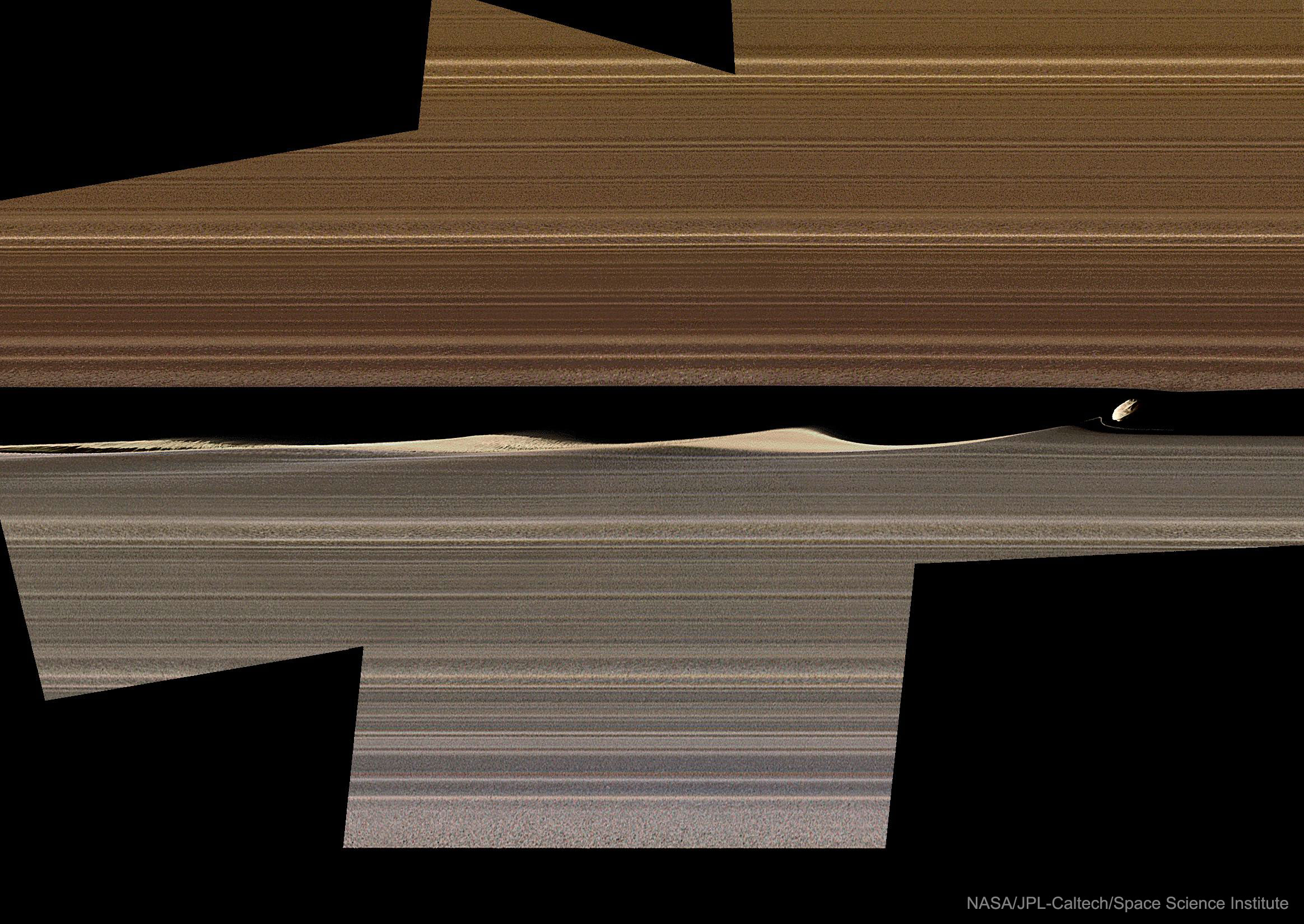
Explanation: What's happening to the rings of Saturn? A little moon making big waves. The moon is 8-kilometer Daphnis and it is making waves in the Keeler Gap of Saturn's rings using just its gravity -- as it bobs up and down, in and out. The featured image is a colored and more detailed version of a previously released images taken in 2017 by the robotic Cassini spacecraft during one of its Grand Finale orbitsDaphnis can be seen on the far right, sporting ridges likely accumulated from ring particlesDaphnis was discovered in Cassini images in 2005 and raised mounds of ring particles so high in 2009 -- during Saturn's equinox when the ring plane pointed directly at the Sun -- that they cast notable shadows.

01/11/2019

Science & Technology - Astronomy picture of the day : The Day After Mars

2019 November 1
See Explanation.  Clicking on the picture will download
the highest resolution version available.
The Day After Mars 
Image Credit & Copyright: Rolando Ligustri (CARA ProjectCAST)
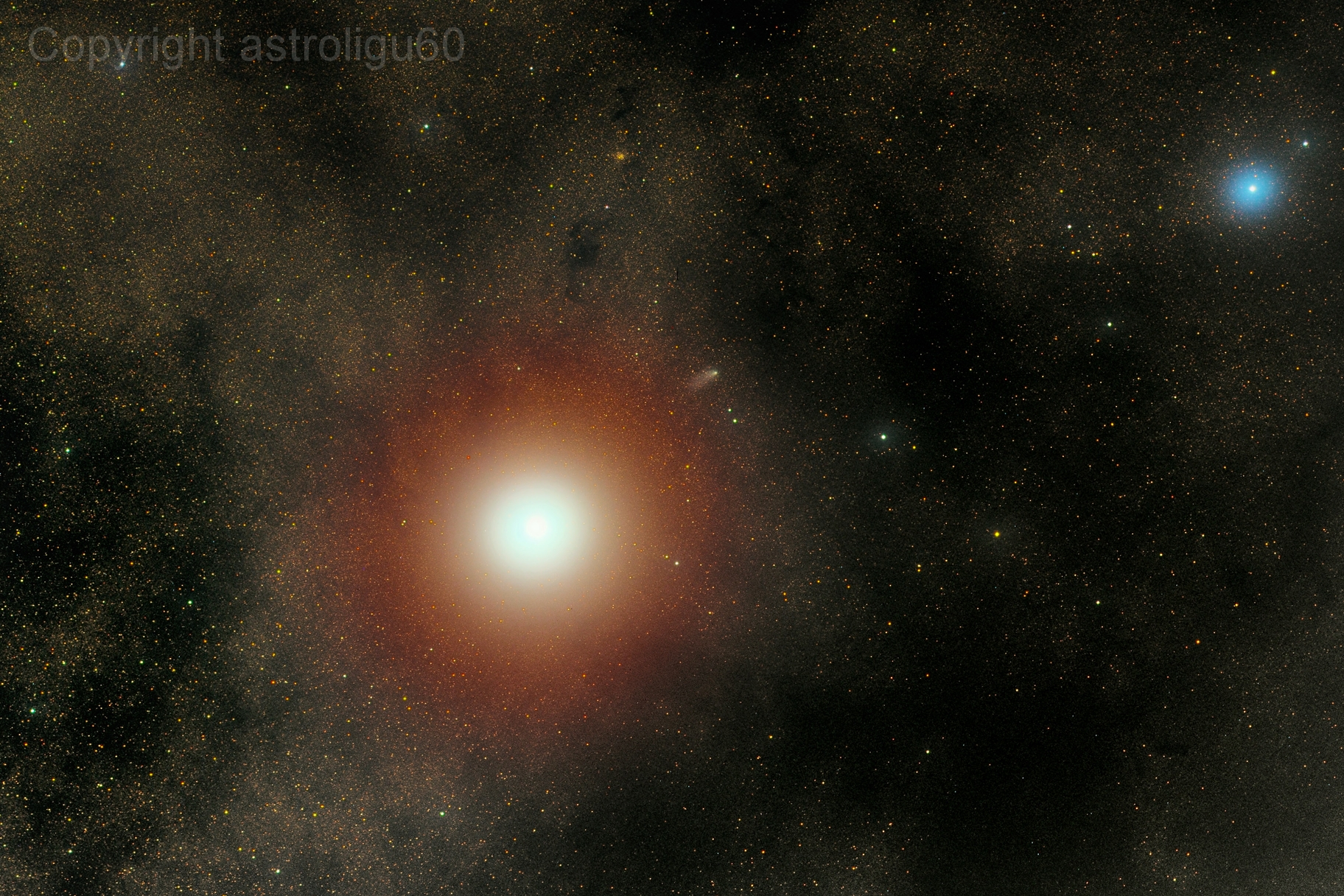
Explanation: October 31, 1938 was the day after Martians encountered planet Earth, and everything was calm. Reports of the invasion were revealed to be part of a Halloween radio drama, the now famous broadcast based on H.G. Wells' scifi novel War of the Worlds. On Mars October 20, 2014 was calm too, the day after its close encounter with Comet Siding Spring (C/2013 A1). Not a hoax, this comet really did come within 86,700 miles or so of Mars, about 1/3 the Earth-Moon distance. Earth's spacecraft and rovers in Mars orbit and on the surface reported no ill effects though, and had a ringside seat as a visitor from the outer solar system passed by. Spanning over 2 degrees against stars of the constellation Ophiuchus, this colorful telescopic snapshot captures our view of Mars on the day after. Bluish star 51 Ophiuchi is at the upper right and the comet is just emerging from the Red Planet's bright glare.

31/10/2019

Science & Technology - Astronomy picture of the day : The Ghostly Veil Nebula

2019 October 31
See Explanation.  Clicking on the picture will download
the highest resolution version available.
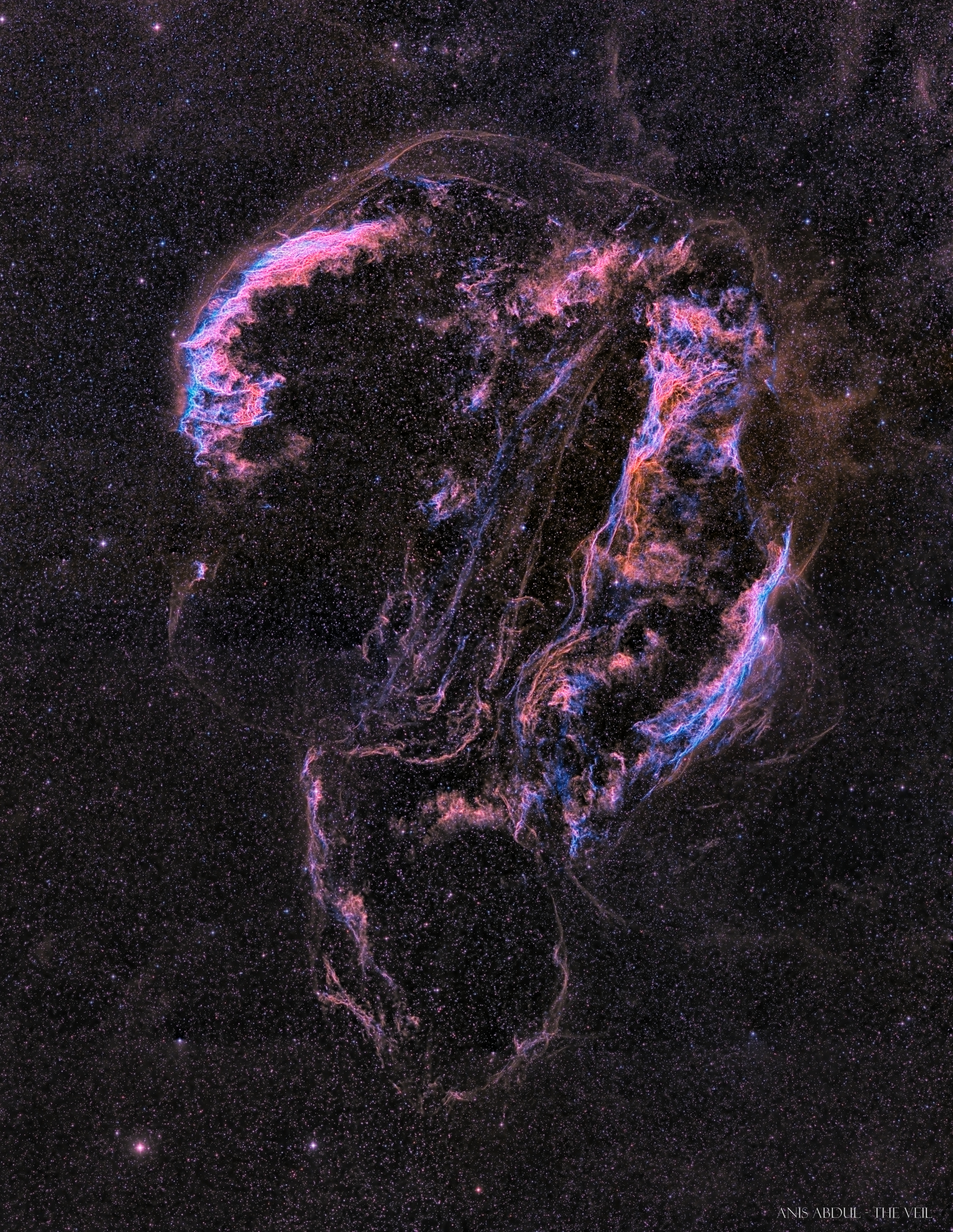
The Ghostly Veil Nebula 
Image Credit & Copyright: Anis Abdul 
Explanation: A ghostly visage on a cosmic scale, these remains of shocked, glowing gas haunt planet Earth's sky toward the constellation of Cygnus and form the Veil Nebula. The nebula itself is a large supernova remnant, an expanding cloud born of the death explosion of a massive star. Light from the original supernova explosion likely reached Earth over 5,000 years ago. Also known as the Cygnus Loop, the Veil Nebula now spans nearly 3 degrees or about 6 times the diameter of the full Moon. That translates to over 70 light-years at its estimated distance of 1,500 light-years. In fact, the Veil is so large its brighter parts are recognized as separate nebulae, including The Witch's Broom (NGC 6960) below and right of center. At the top left you can find the Spectre of IC 1340Happy Halloween!

28/10/2019

Science & Technology - Atronomy picture of the day : The Space Station Crosses a Spotless Sun

2019 October 28
See Explanation.  Clicking on the picture will download
the highest resolution version available.
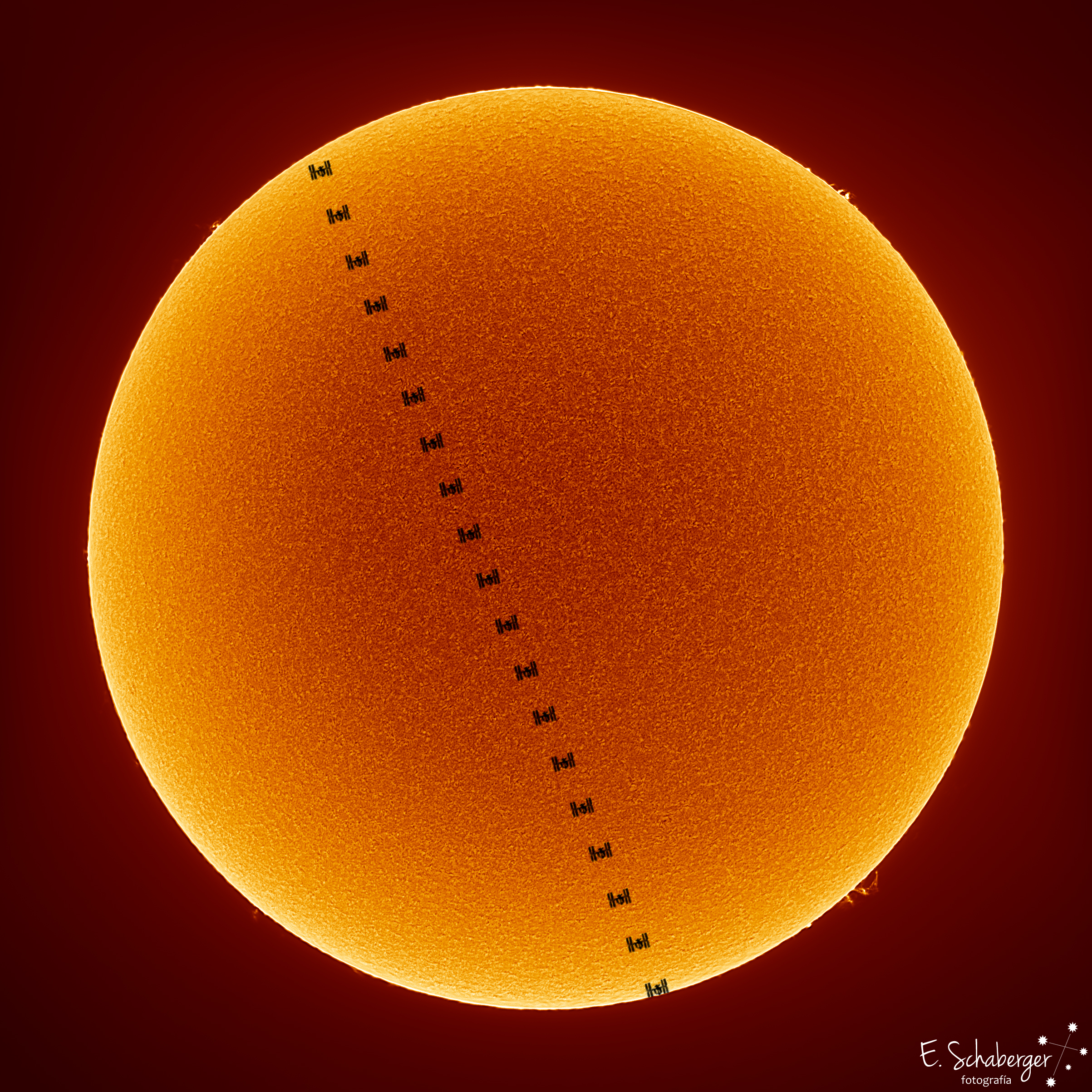
The Space Station Crosses a Spotless Sun 
Image Credit & Copyright: Eduardo Schaberger Poupeau
Explanation: Typically, the International Space Station is visible only at night. Slowly drifting across the night sky as it orbits the Earth, the International Space Station (ISS) can be seen as a bright spot about once a month from many locations. The ISS is then visible only just after sunset or just before sunrise because it shines by reflected sunlight -- once the ISS enters the Earth's shadow, it will drop out of sight. The only occasion when the ISS is visible during the day is when it passes right in front of the Sun. Then, it passes so quickly that only cameras taking short exposures can visually freeze the ISS's silhouette onto the background Sun. The featured picture did exactly that -- it is actually a series of images taken a month ago from Santa FeArgentina with perfect timing. This image series was later combined with a separate image highlighting the texture of the spotless Sun, and an image bringing up the Sun's prominencesaround the edge. At an unusually low Solar Minimum, the Sun has gone without sunspots now for most of 2019.

27/10/2019

Science & Technology - Astronomy picture of the day : Ghost Aurora over Canada

2019 October 27
See Explanation.  Clicking on the picture will download
the highest resolution version available.
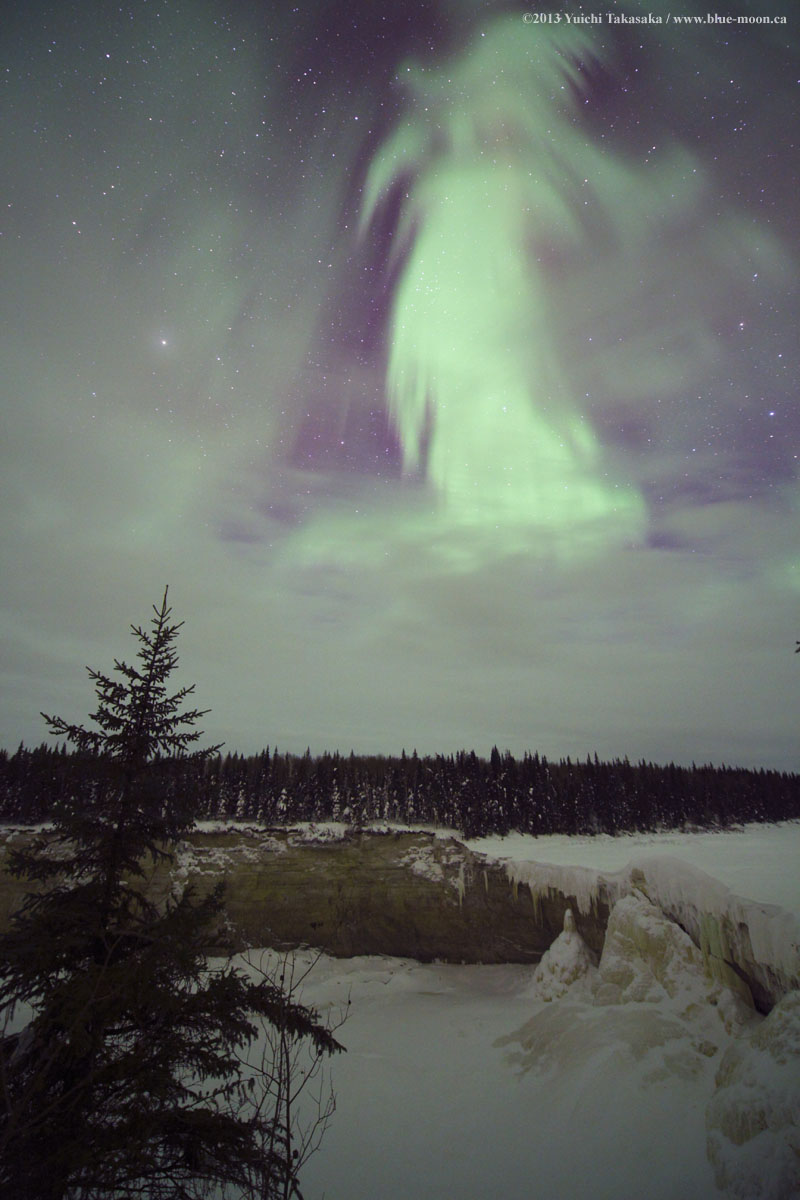
Ghost Aurora over Canada 
Image Credit & Copyright: Yuichi TakasakaTWAN
Explanation: What does this aurora look like to you? While braving the cold to watch the skies above northern Canada early one morning in 2013, a most unusual aurora appeared. The aurora definitely appeared to be shaped likesomething , but what? Two ghostly possibilities recorded by the astrophotographer were "witch" and "goddess of dawn", but please feel free to suggest your own Halloween-enhanced impressions. Regardless of fantastical pareidolicinterpretations, the pictured aurora had a typical green color and was surely caused by the scientifically commonplace action of high energy particles from space interacting with oxygen in Earth's upper atmosphere. In the image foreground, at the bottom, is a frozen Alexandra Falls, while evergreen trees cross the middle.

26/10/2019

Science & Technology - Astronomy picture of the day : Gravity's Grin

2019 October 26
See Explanation.  Clicking on the picture will download
the highest resolution version available.
Gravity's Grin 
Image Credit: X-ray - NASA / CXC / J. Irwin et al. ; Optical - NASA/STScI 
Explanation: Albert Einstein's general theory of relativity, published over 100 years ago, predicted the phenomenon of gravitational lensing. And that's what gives these distant galaxies such a whimsical appearance, seen through the looking glass of X-ray and optical image data from the Chandra and Hubble space telescopes. Nicknamed the Cheshire Cat galaxy group, the group's two large elliptical galaxies are suggestively framed by arcs. The arcs are optical images of distant background galaxies lensed by the foreground group's total distribution of gravitational mass. Of course, that gravitational mass is dominated by dark matter. The two large elliptical "eye" galaxies represent the brightest members of their own galaxy groups which are merging. Their relative collisional speed of nearly 1,350 kilometers/second heats gas to millions of degrees producing the X-ray glow shown in purple hues. Curiouser about galaxy group mergers? The Cheshire Cat group grins in the constellation Ursa Major, some 4.6 billion light-years away.

24/10/2019

Science & Technologie - Santé et médecine : "Cancer l'espoir"


Resultado de imagem para image d'espoir

Je pense que le plus important est de garder espoir, tant que des traitements sont possibles. Il y a 2 ans, on a découvert chez mon mari ,un cancer du poumon, carcinome stade 4 avec des métastases sur la colonne vertébrale et le foie. Il a suivi 2 cures de 5 séances de chimio très dures + de la radiothérapie au niveau de la colonne, tout cela pendant un an et demi. Il y a 4 mois, les médecins ont arrêté tous les traitements,(son organisme était épuisé) malgré des traces visibles au scanner. Ces jours-ci, mon mari va de mieux en mieux, a retrouvé son poids normal, ne boîte plus, n'a plus toutes ces horribles douleurs qui lui provoquaient des insomnies. La semaine dernière, il a subi un scanner qui a montré que son état était très stable, qu'il était en début de rémission. Un grand merci à son médecin qui a toujours eu une attitude positive sans se prononcer sur ses chances de vivre. Elle nous a expliqué que plusieurs types de traitements existaient pour son cas alors il fallait garder espoir et qu'il fallait se battre, que le mental a une part importante dans la guérison. Aujourd'hui, il est tôt pour dire s'il est définitivement sorti d'affaire mais on s'en moque, nous, on y croit dur comme fer ! On profite de la vie, on adopte un esprit positif en toutes circonstances, on ne se prend plus la tête pour des broutilles, on voyage beaucoup, on fait beaucoup de projets pour le futur comme si de rien n'était...
Key

ASTRONOMY - Mystery: Little Red Dots in the Early Universe

 2025 December 24 Mystery: Little Red Dots in the Early Universe Image Credit:  NASA ,  ESA ,  CSA ,  STScI ,  JWST ;  Dale Kocevski  ( Colb...