Nombre total de pages vues
16/01/2024
O FUTURO NO PRESENTE - O carro voador - Pal-V Liberty Pioneer Edition
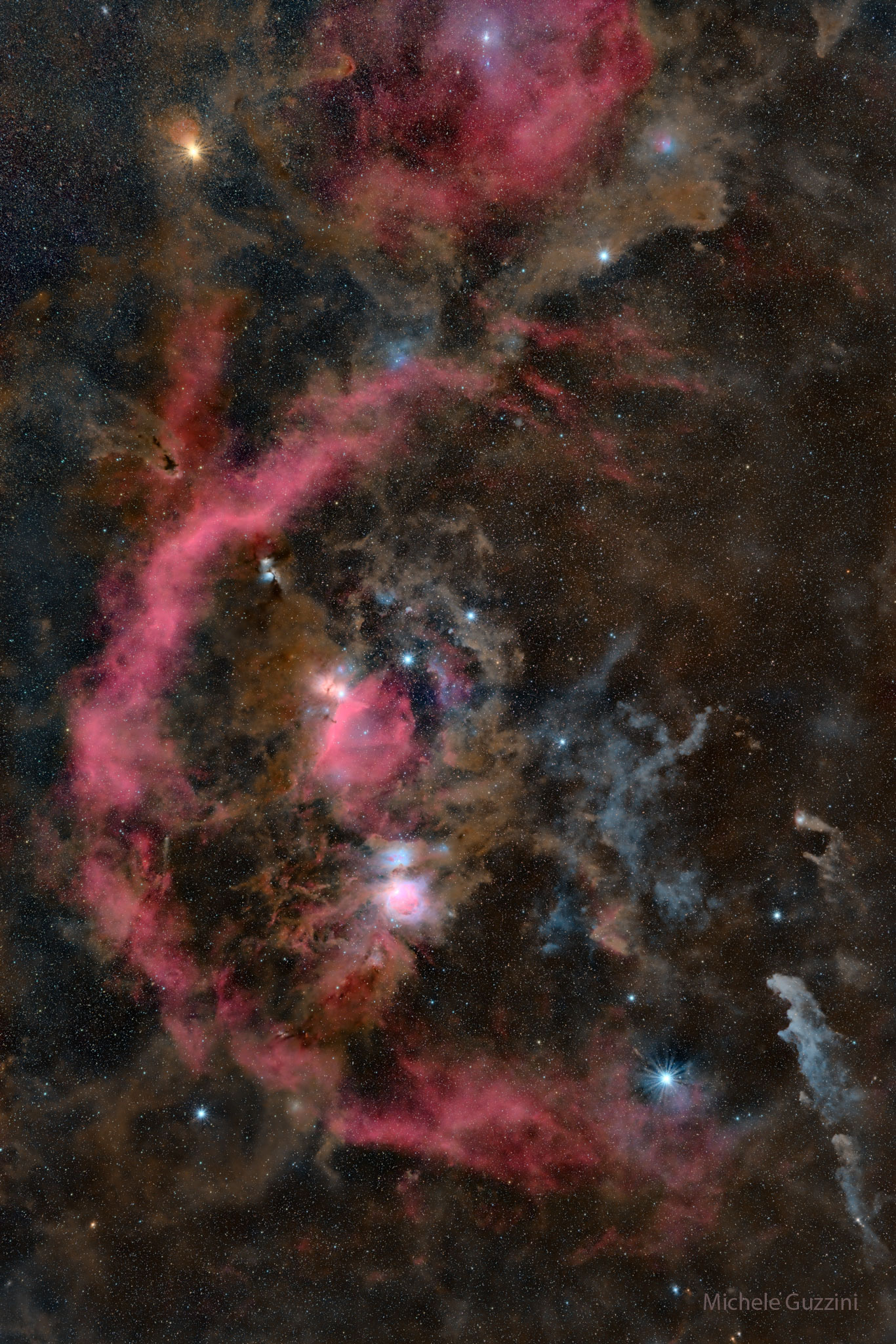
ASTRONOMY - The Orion You Can Almost See
2024 January 16
Image Credit & Copyright: Michele Guzzini
Explanation: Do you recognize this constellation? Although it is one of the most recognizable star groupings on the sky, this is a more full Orion than you can see -- an Orion only revealed with long exposure digital camera imaging and post- processing. Here the cool red giant Betelgeuse takes on a strong orange tint as the brightest star on the upper left. Orion's hot blue stars are numerous, with supergiant Rigel balancing Betelgeuse on the lower right, and Bellatrix at the upper right. Lined up in Orion's belt are three stars all about 1,500 light-years away, born from the constellation's well-studied interstellar clouds. Just below Orion's belt is a bright but fuzzy patch that might also look familiar -- the stellar nursery known as Orion's Nebula. Finally, just barely visible to the unaided eye but quite striking here is Barnard's Loop -- a huge gaseous emission nebula surrounding Orion's Belt and Nebula discovered over 100 years ago by the pioneering Orion photographer E. E. Barnard.
15/01/2024
LE JARDIN MERVEILLEUX DES EPICES - La cardamome - épice à consommer avec modération
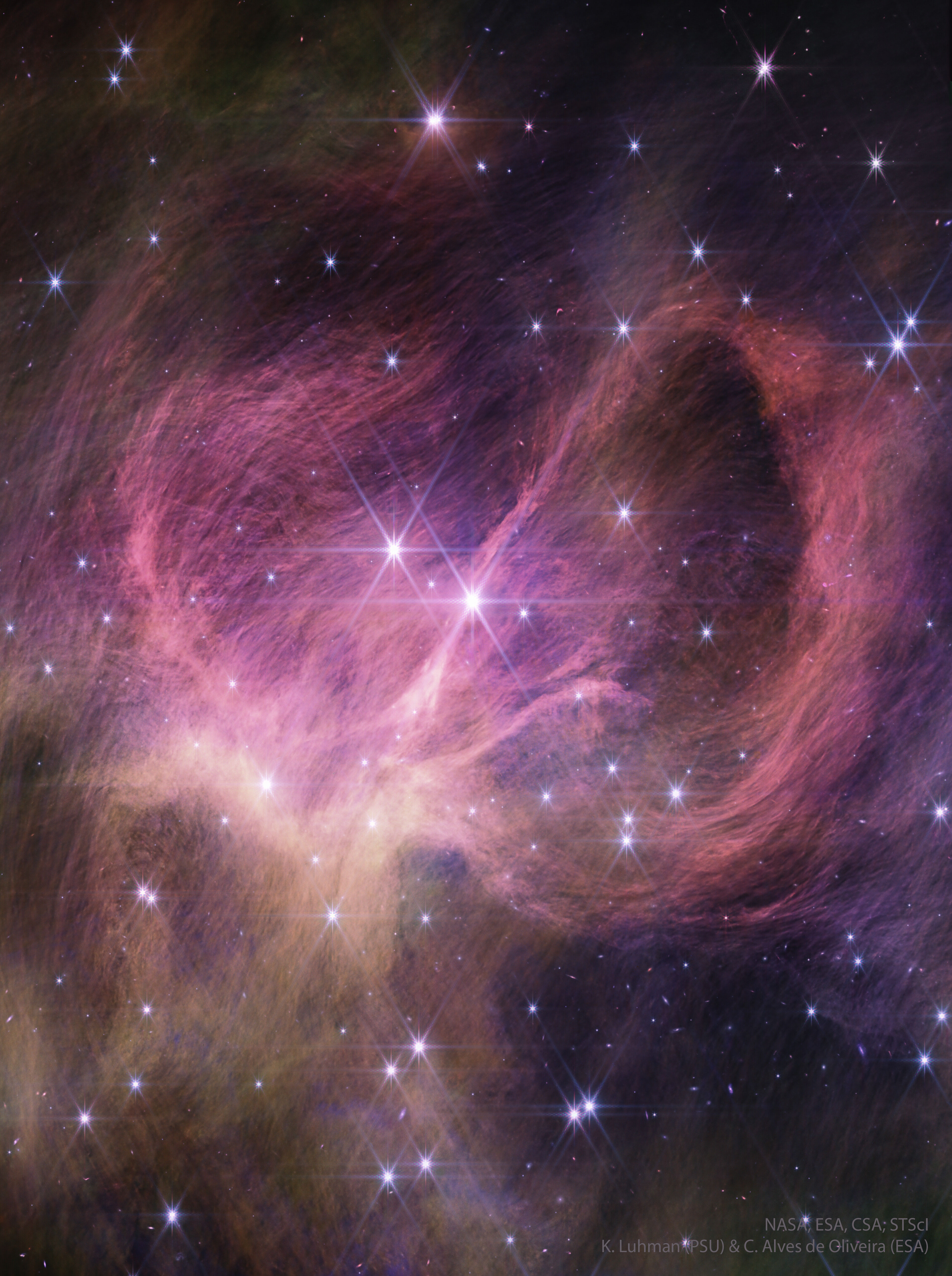
ASTRONOMY - Star Cluster IC 348 from Webb
2024 January 15
Image Credit: NASA, ESA, CSA, STScI, and K. Luhman (Penn State U.) and C. Alves de Oliveira (ESA)
Explanation: Sometimes, it's the stars that are the hardest to see that are the most interesting. IC 348 is a young star cluster that illuminates surrounding filamentary dust. The stringy and winding dust appears pink in this recently released infrared image from the Webb Space Telescope. In visible light, this dust reflects mostly blue light, giving the surrounding material the familiar blue hue of a reflection nebula. Besides bright stars, several cool objects have been located in IC 348, visible because they glow brighter in infrared light. These objects are hypothesized to be low mass brown dwarfs. Evidence for this includes the detection of an unidentified atmospheric chemical, likely a hydrocarbon, seen previously in the atmosphere of Saturn. These objects appear to have masses slightly greater than known planets, only a few times greater than Jupiter. Together, these indicate that this young star cluster contains something noteworthy -- young planet-mass brown dwarfs that float free, not orbiting any other star.
14/01/2024
ASTRONOMY - Dragon Aurora over Iceland
2024 January 14
Image Credit & Copyright: Jingyi Zhang & Wang Zheng
Explanation: Have you ever seen a dragon in the sky? Although real flying dragons don't exist, a huge dragon-shaped aurora developed in the sky over Iceland in 2019. The aurora was caused by a hole in the Sun's corona that expelled charged particles into a solar wind that followed a changing interplanetary magnetic field to Earth's magnetosphere. As some of those particles then struck Earth's atmosphere, they excited atoms which subsequently emitted light: aurora. This iconic display was so enthralling that the photographer's mother ran out to see it and was captured in the foreground. Our active Sun continues to show an unusually high number of prominences, filaments, sunspots, and large active regions as solar maximum approaches in 2025.
13/01/2024
BIOMIMETISME - Innovations inspirées par la Nature - De la peau de requin sur des avions
LE JARDIN MERVEILLEUX DES EPICES - La cannelle, l’une des plus anciennes épices
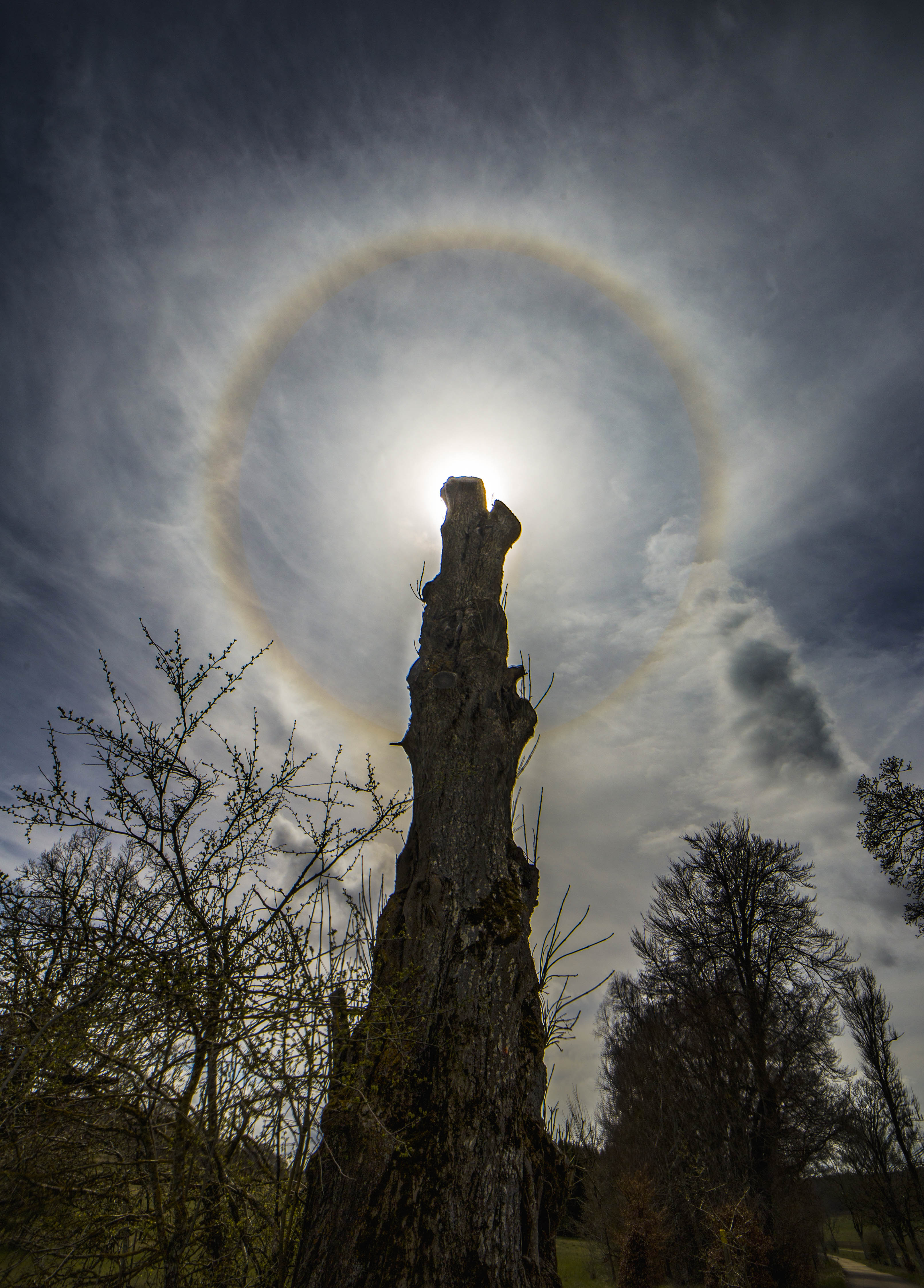
ASTRONOMY - Circling the Sun
Image Credit & Copyright: Radoslav Zboran
Explanation: Earth's orbit around the Sun is not a circle, it's an ellipse. The point along its elliptical orbit where our fair planet is closest to the Sun is called perihelion. This year, perihelion was on January 2 at 01:00 UTC, with the Earth about 3 million miles closer to the Sun than it was at aphelion (last July 6), the farthest point in its elliptical orbit. Of course, distance from the Sun doesn't determine the seasons, and it doesn't the determine size of Sun halos. Easier to see with the Sun hidden behind a tall tree trunk, this beautiful ice halo forms a 22 degree-wide circle around the Sun, recorded while strolling through the countryside near Heroldstatt, Germany. The Sun halo's 22 degree angular diameter is determined by the six-sided geometry of water ice crystals drifting high in planet Earth's atmosphere.
12/01/2024
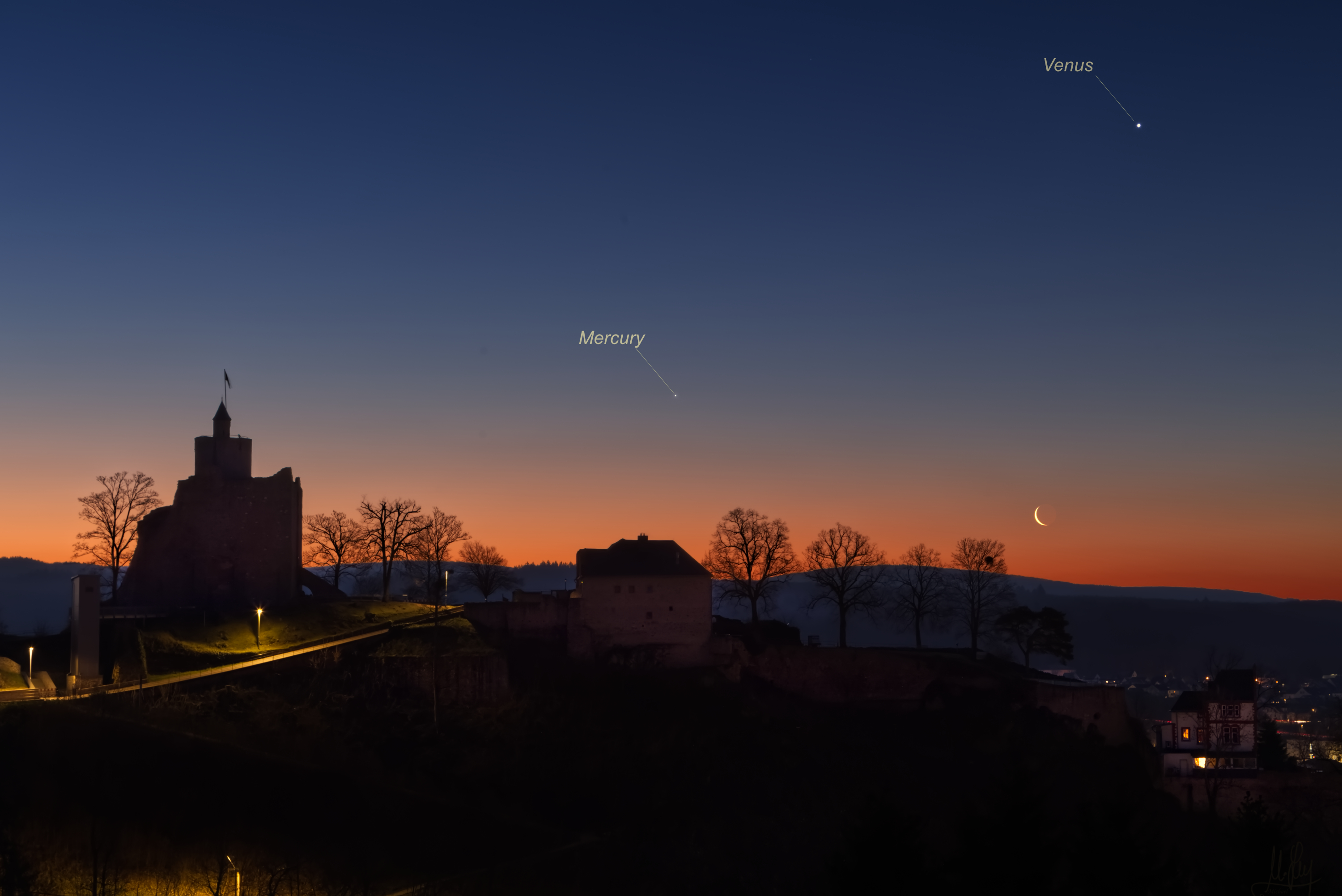
ASTRONOMY - Good Morning Moon
2024 January 12
Image Credit & Copyright: Michael Luy, Trier Observatory, TWAN
Explanation: Yesterday, the Moon was New. But on January 9, early morning risers around planet Earth were treated to the sight of an old Moon, low in the east as the sky grew bright before dawn. Above the city of Saarburg in Rhineland-Palatinate, western Germany, this simple snapshot found the waning Moon's sunlit crescent just before sunrise. But also never wandering far from the Sun in Earth's sky, inner planets Venus and Mercury shared the cold morning skyview. In the foreground are the historic city's tower and castle with ruins from the 10th century.
11/01/2024
BIOMIMETISME - Innovations inspirées par la Nature - Des éoliennes imaginées à partir des nageoires des baleines
La vie et la mort - Y-A-T-IL UNE VIE APRES LA MORT ? (1/5)
Un neurochirurgien de renom : « Il y a une vie après la mort et j'en ai la preuve. » Et si tout ce que vous pensiez savoir sur la mort é...
-
2026 January 1 Auroral Corona Image Credit & Copyright : Roi Levi Explanation: Cycle 25 solar maximum made 2025 a great year for ...
-
Imaginez un monde où le cancer n’est plus une sentence, mais une simple étape à franchir. Grâce à une découverte révolutionnaire, ce rêve es...