Nombre total de pages vues
22/09/2025
SANTé/MEDECINE - La grossesse mois par mois
ASTRONOMY - Equinox at Saturn
2025 September 22
Image Credit & Copyright: Imran Sultan
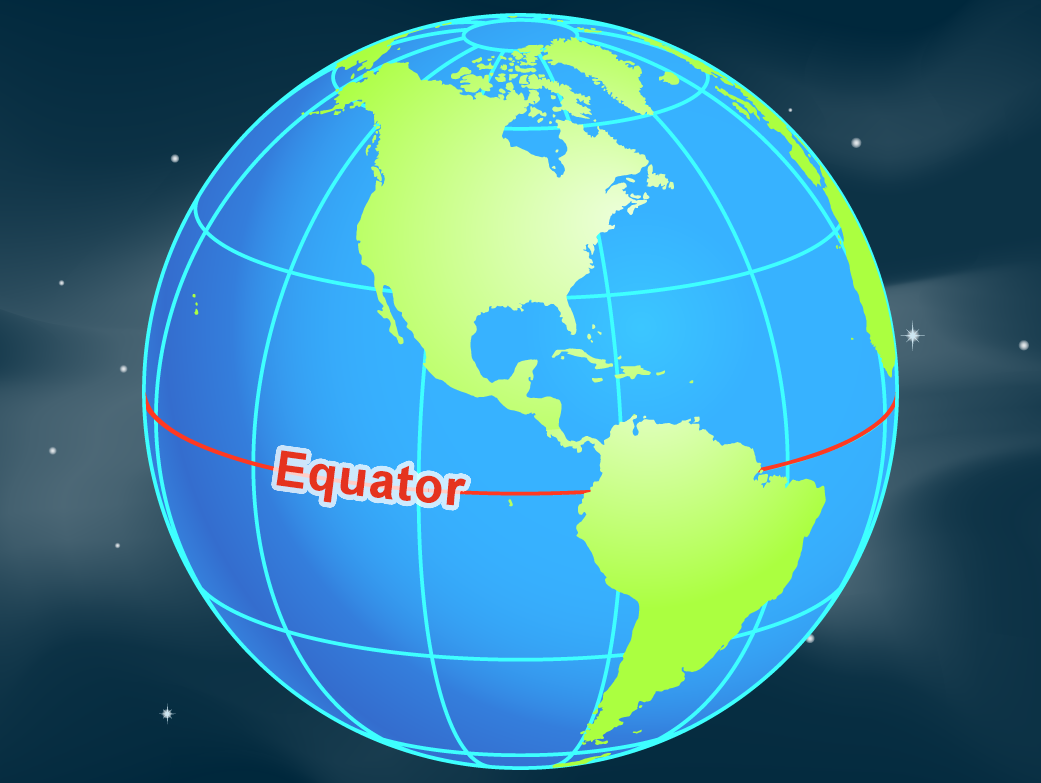
Explanation: On Saturn, the rings tell you the season. On Earth, today marks an equinox, the time when the Earth's equator tilts directly toward the Sun. Since Saturn's grand rings orbit along the planet's equator, these rings appear most prominent -- from the direction of the Sun -- when the spin axis of Saturn points toward the Sun. Conversely, when Saturn's spin axis points to the side, an equinox occurs, and the edge-on rings are hard to see from not only the Sun -- but Earth. In the featured montage, images of Saturn between the years of 2020 and 2025 have been superposed to show the giant planet passing, with this year's equinox, from summer in the north to summer in the south. Yesterday, Saturn was coincidently about as close as it gets to planet Earth, and so this month the ringed giant's orb is relatively bright and visible throughout the night.
21/09/2025
ASTRONOMY - Equinox Sunset
Image Credit: Luca Vanzella
Explanation: Does the Sun set in the same direction every day? No, the direction of sunset depends on the time of the year. Although the Sun always sets approximately toward the west, on an equinox like tomorrow the Sun sets directly toward the west. After tomorrow's September equinox, the Sun will set increasingly toward the southwest, reaching its maximum displacement at the December solstice. Before tomorrow's September equinox, the Sun had set toward the northwest, reaching its maximum displacement at the June solstice. The featured time-lapse image shows seven bands of the Sun setting one day each month from 2019 December through 2020 June. These image sequences were taken from Alberta, Canada -- well north of the Earth's equator -- and feature the city of Edmonton in the foreground. The middle band shows the Sun setting during an equinox -- in March. From this location, the Sun will set along this same equinox band again tomorrow.
OCEANOGRAPHIE - Les scientifiques expliquent enfin le mystère des vagues scélérates (1/29)
20/09/2025
ASTRONOMY - Gibbous vs Crescent
2025 September 20
Image Credit & Copyright: Luca Bartek
Explanation: Early risers around planet Earth have enjoyed a shining crescent Moon near brilliant Venus, close to the eastern horizon in recent morning twilight skies. And yesterday, on September 19, skygazers watching from some locations in Earth's northern hemisphere were also able to witness Venus, in the inner planet's waxing gibbous phase, pass behind the Moon's waning crescent. In fact, this telescopic snapshot was taken moments before that occultation of gibbous Venus by the crescent Moon began. The close-up view of the beautiful celestial alignment records Venus approaching part of the Moon's sunlit edge in clear daytime skies from the Swiss Alps. Tomorrow, the Sun will pass behind a New Moon. But to witness that partial solar eclipse on September 21, skygazers will need to watch from locations in planet Earth's southern hemisphere.
19/09/2025
ASTRONOMY - Galaxies Stars and Dust
2025 August 28
Image Credit & Copyright: Robert Eder
Explanation: This well-composed telescopic field of view covers over a Full Moon on the sky toward the high-flying constellation Pegasus. Of course the brighter stars show diffraction spikes, the commonly seen effect of internal supports in reflecting telescopes, and lie well within our own Milky Way galaxy. The faint but pervasive clouds of interstellar dust ride above the galactic plane and dimly reflect the Milky Way's starlight. Known as galactic cirrus or integrated flux nebulae they are associated with the Milky Way's molecular clouds. In fact, the diffuse cloud cataloged as MBM 54, less than a thousand light-years distant, fills the scene. The galaxy seemingly tangled in the dusty cloud is the striking spiral galaxy NGC 7497. It's some 60 million light-years away, though. Seen almost edge-on near the center of the field, NGC 7497's own spiral arms and dust lanes echo the colors of stars and dust in our own Milky Way.
LES BELLES INVENTIONS DE LEONARD DE VINCI - Léonard de Vinci a revisité la catapulte
18/09/2025
ASTRONOMY - Comet C/2025 R2 (SWAN)
Image Credit & Copyright: Team Ciel Austral
Explanation: A new visitor from the outer Solar System, comet C/2025 R2 (SWAN) also known as SWAN25B was only discovered late last week, on September 11. That's just day before the comet reached perihelion, its closest approach to the Sun. First spotted by Vladimir Bezugly in images from the SWAN instrument on the sun-staring SOHO spacecraft, the comet was surprisingly bright but understandably difficult to see against the Sun's glare. Still close to the Sun on the sky, the greenish coma and tail of C/2025 R2 (SWAN) are captured in this telescopic snapshot from September 17. Spica, alpha star of the constellation Virgo, shines just beyond the upper left edge of the frame while the comet is about 6.5 light-minutes from planet Earth. Near the western horizon after sunset and slightly easier to see in binoculars from the southern hemisphere, this comet SWAN will pass near Zubenelgenubi, alpha star of Libra, on October 2. C/2025 R2 (SWAN) is scheduled to make its closest approach to our fair planet around October 20.
17/09/2025
ASTRONOMY - Nebulas and Clusters in Sagittarius
2025 September 17
Image Credit & Copyright: J. De Winter, C. Humbert, C. Robert & V. Sabet; Text: Ogetay Kayali (MTU)
Explanation: Can you spot famous celestial objects in this image? 18th-century astronomer Charles Messier cataloged only two of them: the bright Lagoon Nebula (M8) at the bottom, and the colorful Trifid Nebula (M20) at the upper right. The one on the left that resembles a cat's paw is NGC 6559, and it is much fainter than the other two. Even harder to spot are the thin blue filaments on the left, from supernova remnant (SNR G007.5-01.7). Their glow comes from small amounts of glowing oxygen atoms that are so faint that it took over 17 hours of exposure with just one blue color to bring up. Framing this scene of stellar birth and death are two star clusters: the open cluster M21 just above Trifid, and the globular cluster NGC 6544 at lower left.
-
2025 May 11 The Surface of Venus from Venera 14 Image Credit: Soviet Planetary Exploration Program , Venera 14 ; Processing & Copyri...
-
Imaginez un monde où le cancer n’est plus une sentence, mais une simple étape à franchir. Grâce à une découverte révolutionnaire, ce rêve es...