Nombre total de pages vues

07/01/2026

LES BELLES INVENTIONS DE LEONARD DE VINCI - L'ornithoptère

C'est, semble-t-il, l'un des premiers dessins que Léonard de Vinci ait consacré à ses machines volantes. Il préfigure d'autres versions de l'ornithoptère, cet aéronef dont la sustentation est assurée par des battements d'ailes suivant le principe du vol des oiseaux. Un système de levier transforme des mouvements alternés des pieds et des mains en battements d'ailes. Le dessin est extrait du Codex Atlanticus.

© Special Collections Toronto Public Library, CC by-nc 2.0

ASTRONOMY - Simeis 147: The Spaghetti Nebula Supernova Remnant

2026 January 7
A starfield surrounds a giant red nebula. The nebula has so 
many winding filaments that it has been dubbed the Spaghetti Nebula.
Please see the explanation for more detailed information.

Simeis 147: The Spaghetti Nebula Supernova Remnant
Image Credit & Copyright: Saverio Ferretti

Explanation: Its popular nickname is the Spaghetti Nebula. Officially cataloged as Simeis 147 and Sharpless 2-240, it is easy to get lost following the looping and twisting filaments of this intricate supernova remnantSeen toward the boundary of the constellations of the Bull (Taurus) and the Charioteer (Auriga), the impressive gas structure covers nearly 3 degrees on the sky, equivalent to 6 full moons. That's about 150 light-years at the stellar debris cloud's estimated distance of 3,000 light-years. The supernova remnant has an estimated age of about 40,000 years, meaning light from this powerful stellar explosion first reached the Earth when woolly mammoths roamed free. Besides the expanding remnant, this cosmic catastrophe left behind a pulsar, a fast-spinning neutron star that is the remnant of the original star's core. The featured image was captured last month from Forca CanapineItaly

06/01/2026

ASTRONOMY - Jupiter's Clouds in High Definition from Juno

 2026 January 6

The planet Jupiter is shown from an unusual angle. Most
prominent are a miasma of jumbled and swirling clouds including
many oval storms. 
Please see the explanation for more detailed information.

Jupiter's Clouds in High Definition from Juno
Image Credit: NASA/JPL-Caltech/SwRI/MSSS; Processing & LicenseThomas Thomopoulos

Explanation: How complex is Jupiter? NASA's Juno mission to Jupiter is finding the Jovian giant to be more complicated than expected. Jupiter's magnetic field has been discovered to be much different from our Earth's simple dipole field, showing several poles embedded in a complicated network more convoluted in the north than the south. Further, Juno's radio measurements show that Jupiter's atmosphere shows structure well below the upper cloud deck -- even hundreds of kilometers deep. Jupiter's newfound complexity is evident also in southern clouds, as shown in the texture and color enhanced featured image taken last month. There, planet-circling zones and belts that dominate near the equator decay into a complex miasma of continent-sized storm swirls. Juno continues in its looping elliptical orbit, swooping near the huge planet every month and exploring a slightly different sector each time around.

05/01/2026

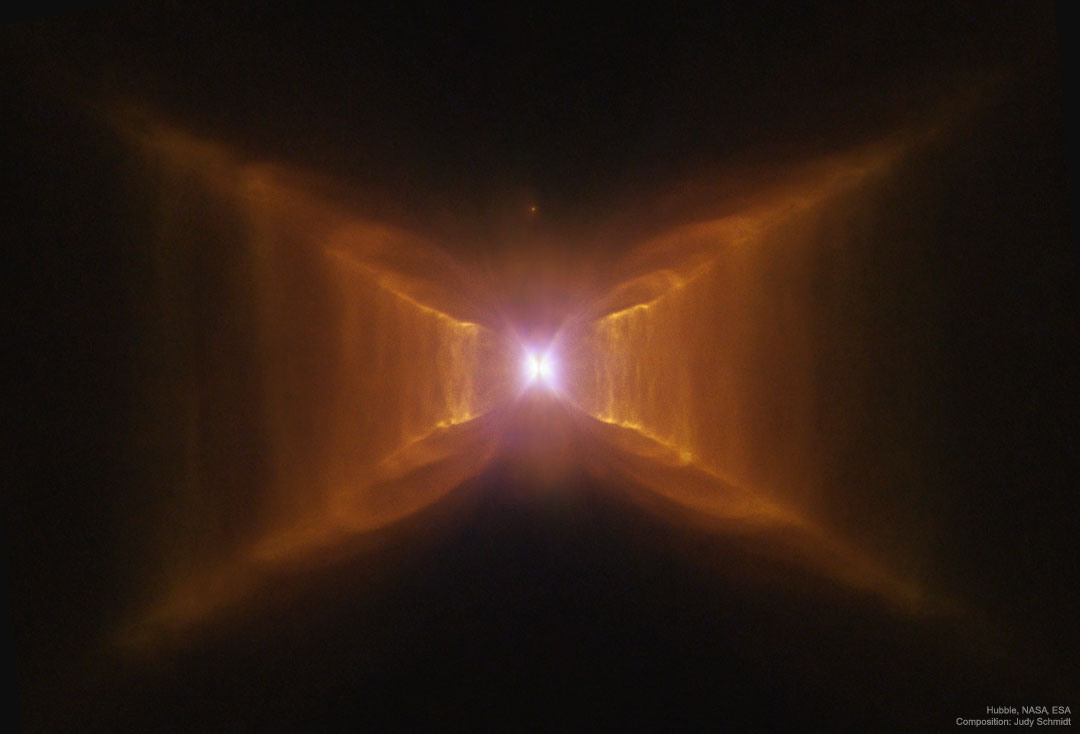
ASTRONOMY - The Red Rectangle Nebula from Hubble

 2026 January 5

A dark field surrounds a red nebula. The shape of the 
nebula appears like the letter

The Red Rectangle Nebula from Hubble
Image Credit: NASAESAHubbleProcessing & LicenseJudy Schmidt

Explanation: How was the unusual Red Rectangle nebula created? At the nebula's center is an aging binary star system that surely powers the nebula but does not, as yet, explain its colors. The unusual shape of the Red Rectangle is likely due to a thick dust torus which pinches the otherwise spherical outflow into tip-touching cone shapes. Because we view the torus edge-on, the boundary edges of the cone shapes seem to form an X. The distinct rungs suggest the outflow occurs in fits and starts. The unusual colors of the nebula are less well understood, however, and speculation holds that they are partly provided by hydrocarbon molecules that may actually be building blocks for organic life. The Red Rectangle nebula lies about 2,300 light years away towards the constellation of the Unicorn (Monoceros). The nebula is shown here in great detail as a reprocessed image from Hubble Space Telescope. In a few million years, as one of the central stars becomes further depleted of nuclear fuel, the Red Rectangle nebula will likely bloom into a planetary nebula.

03/01/2026

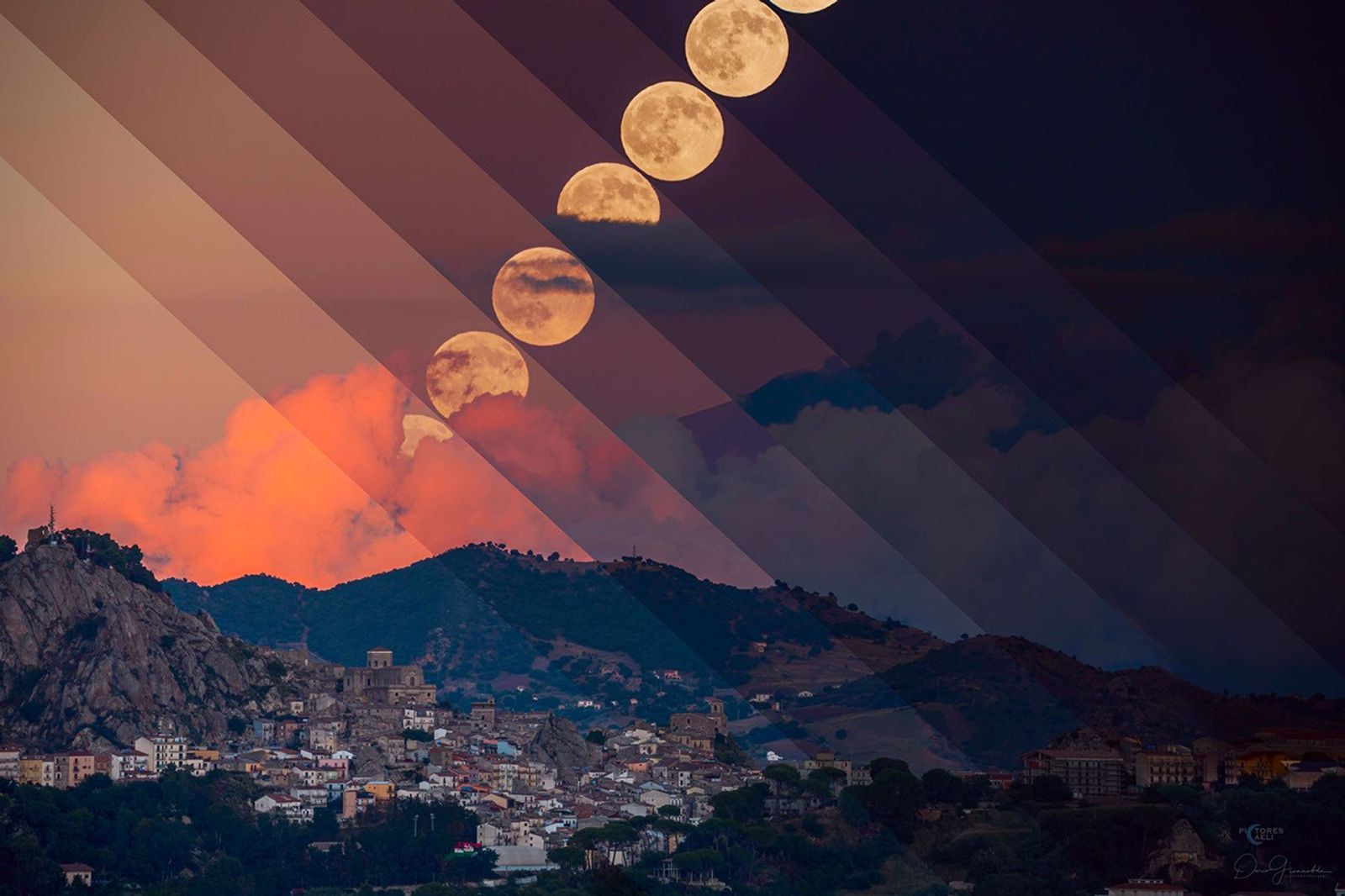
ASTRONOMY - Full Moonlight

 2026 January 3

See Explanation.  Clicking on the picture will download
the highest resolution version available.

Full Moonlight
Image Credit & Copyright: Zhengjie Wu and Jeff Dai (TWAN)

Explanation: The Full Moon is the brightest lunar phase, and tonight you can stand in the light of the first Full Moon of 2026. In fact, the Moon's full phase occurs on January 3 at 10:03 UTC, while only about 7 hours later planet Earth reaches its 2026 perihelion, the closest point in its elliptical orbit around the Sun, at 17:16 UTC. January's Full Moon was also not far from its own perigee, or closest approach to planet Earth. For this lunation the Moon's perigee was on January 1 at 21:44 UTC. You can also spot planet Jupiter, near its brightest for 2026 and close on the sky to the Full Moon tonight. But while you're out skygazing don't forget to look for rare, bright fireballs from the Quadrantid meteor shower.

02/01/2026

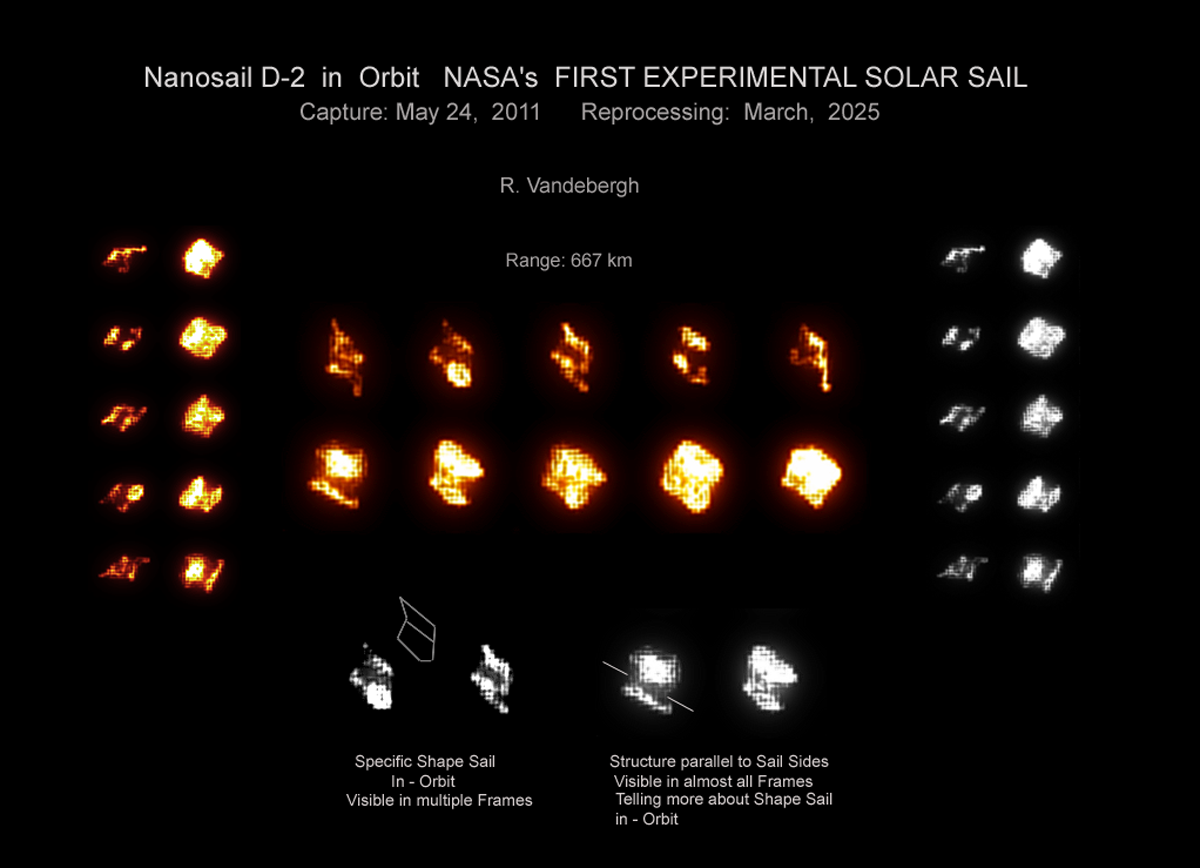
ASTRONOMY - NanoSail-D2

 2026 January 2

See Explanation.  Clicking on the picture will download
the highest resolution version available.

NanoSail-D2
Image Credit & Copyright: Ralf Vandebergh

Explanation: In 2011, on January 20, NASA's NanoSail-D2 unfurled a very thin and very reflective 10 square meter sail becoming the first solar sail spacecraft in low Earth orbit. Often considered the stuff of science fiction, sailing through space was suggested 400 years ago by astronomer Johannes Kepler, who had observed comet tails blown by the solar wind. But modern solar sail spacecraft designs, like NanoSail-D2, Japan's interplanetary spacecraft IKAROS, or the Planetary Society's Lightsail A, rely on the small but continuous pressure from sunlight itself for thrust. Glinting in the sunlight as it circled planet Earth, NanoSail-D2's solar sail was periodically bright and visible to the eye. These remarkably detailed images were captured by manually tracking the orbiting solar sail spacecraft with a small telescope.

01/01/2026

LES BELLES INVENTIONS DE LEONARD DE VINCI - Le scaphandre

Aucun dessin connu de Léonard de Vinci ne ressemble exactement à cette image de scaphandre. Toutefois, il en existe qui possèdent certains éléments analogues. N'oublions pas que les inventions de Léonard sont des améliorations d'idées qui étaient déjà dans l'air du temps chez ses contemporains. D'ailleurs, des moyens pour aller sous l'eau étaient déjà examinés au Moyen Âge avec des esquisses de solution.

Léonard semble avoir imaginé ici une combinaison de plongée équipée d'un masque, lui-même relié à la surface par des tuyaux amenant l'air au plongeur. Hélas, ce système ne permet pas de plonger en dessous de quelques mètres car les poumons doivent travailler contre la pression de l'eau.

© Catalogo collezioni, CC by-sa 4.0

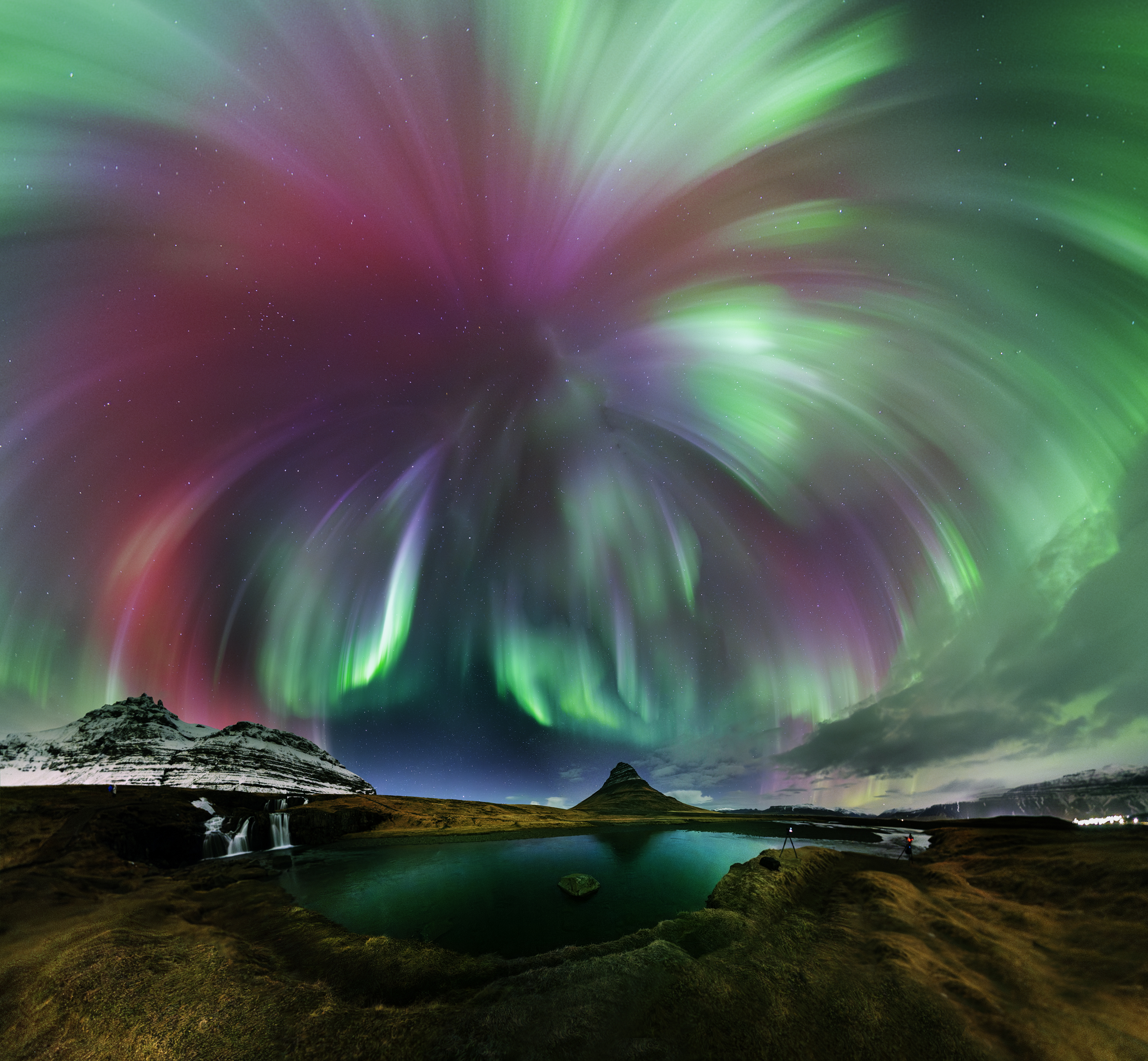
ASTRONOMY - Auroral Corona

 2026 January 1

See Explanation.  Clicking on the picture will download
the highest resolution version available.

Auroral Corona
Image Credit & Copyright: Roi Levi

Explanation: Cycle 25 solar maximum made 2025 a great year for aurora borealis (or aurora australis) on planet Earth. And the high level of solar activity should extend into 2026. So, while you're celebrating the arrival of the new year, check out this spectacular auroral display that erupted in starry night skies over Kirkjufell, Iceland. The awesome auroral corona, energetic curtains of light streaming from directly overhead, was witnessed during a strong geomagnetic storm triggered by intense solar activity near the March 2025 equinox. This northland and skyscape captures the evocative display in a 21 frame panoramic mosaic.

31/12/2025

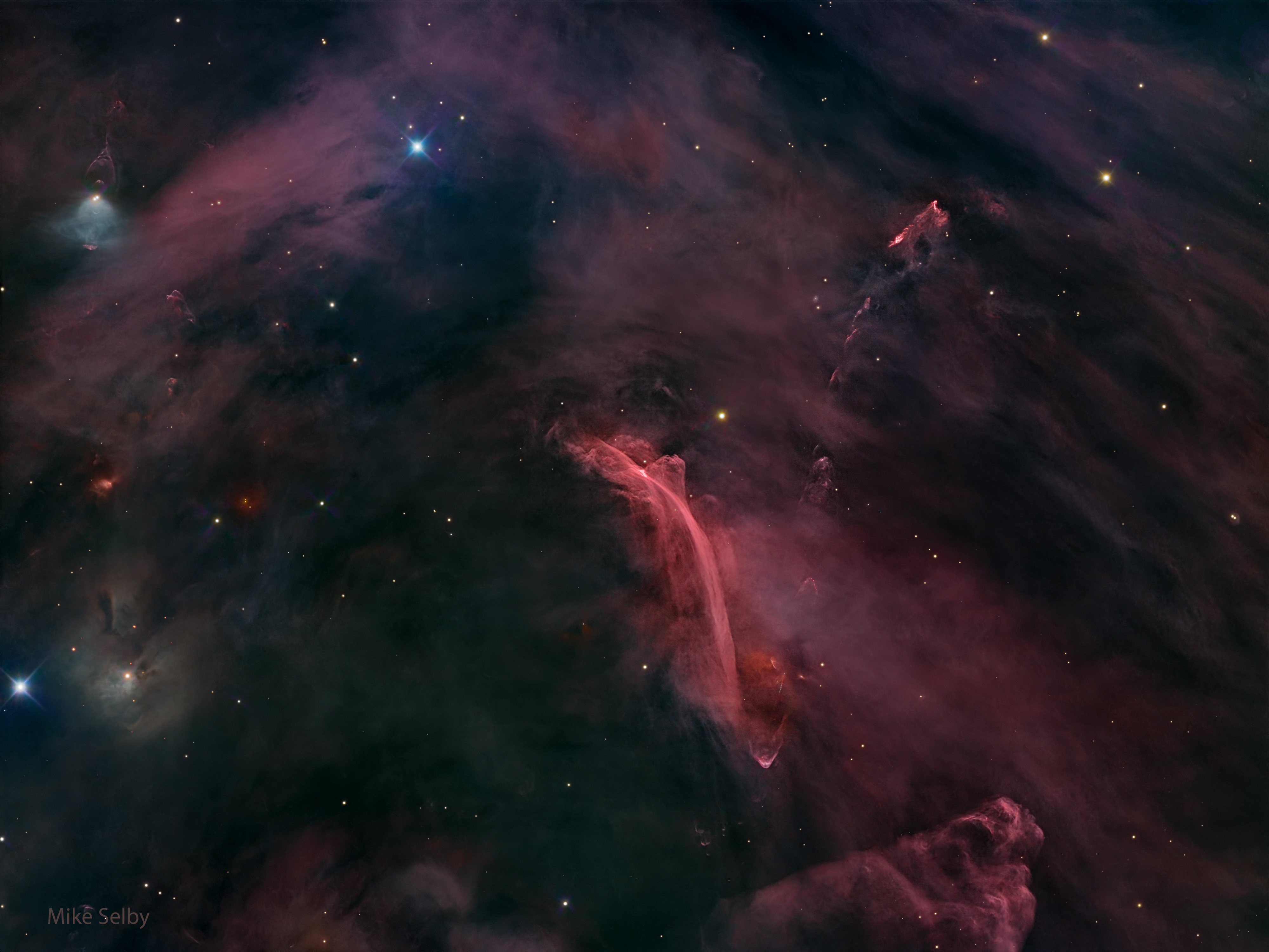
ASTRONOMY - HH-222: The Waterfall Nebula

 2025 December 31

A starfield filled with a diffuse red glow has an
unusual nebula on the lower left. The nebula has bright
red filaments that curve down and appear to be reminiscent of
a waterfall on Earth. 
Please see the explanation for more detailed information.

HH-222: The Waterfall Nebula
Image Credit & Copyright: Mike Selby

Explanation: What created the Waterfall Nebula? The origin is still being researched. The structure, officially designated Herbig-Haro 222, appears in the region of NGC 1999 in the Great Orion Molecular Cloud complex. The elongated gaseous stream stretches about ten light years but appears similar to a long waterfall on Earth. Recent observations indicate that HH-222 is likely a gigantic gaseous bow shock, similar to a wave of water caused by a fast-moving ship. The origin of this shock wave is thought to be a jet outflow from the multiple star system V380 Orionis off the lower left of the frame. Therefore, gas does not flow along the waterfall, but rather the entire structure moves toward the upper right. The Waterfall Nebula lies about 1,500 light years away toward the constellation of Orion. The featured image was captured earlier this month from El Sauce Observatory in Chile.

29/12/2025

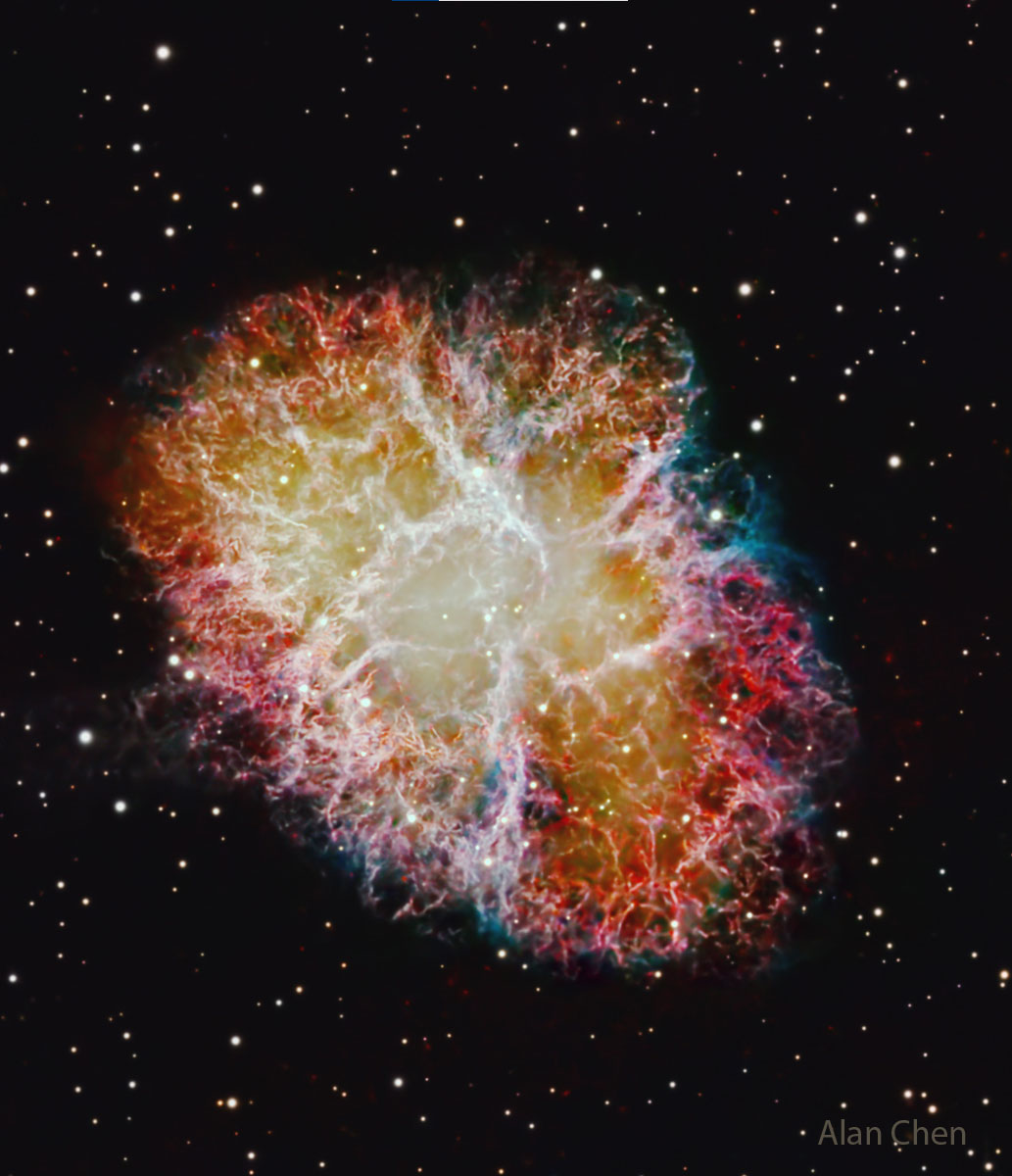
ASTRONOMY - M1: The Crab Nebula

 2025 December 29

A dark starfield surrounds a colorful nebula filled with
tangled filaments.  
Please see the explanation for more detailed information.

M1: The Crab Nebula
Image Credit & Copyright: Alan Chen

Explanation: This is the mess that is left when a star explodes. The Crab Nebula, the result of a supernova seen in 1054 AD, is filled with mysterious filaments. The filaments are not only tremendously complex but appear to have less mass than expelled in the original supernova and a higher speed than expected from a free explosion. The featured image was taken by an amateur astronomer in LeesburgFloridaUSA over three nights last month. It was captured in three primary colors but with extra detail provided by specific emission by hydrogen gas. The Crab Nebula spans about 10 light years. In the Nebula's very center lies a pulsar: a neutron star as massive as the Sun but with only the size of a small town. The Crab Pulsar rotates about 30 times each second.

ASTRONOMY - Miranda Revisited

 2026 February 9 Miranda Revisited Image Credit:  NASA ,  JPL ,  Voyager 2 ; Processing & License: Flickr:  zelario12 ; Text:  Keighley ...