Nombre total de pages vues
05/06/2026
Géoglyphes - L'ARAIGNEE DE NAZCA
04/06/2026
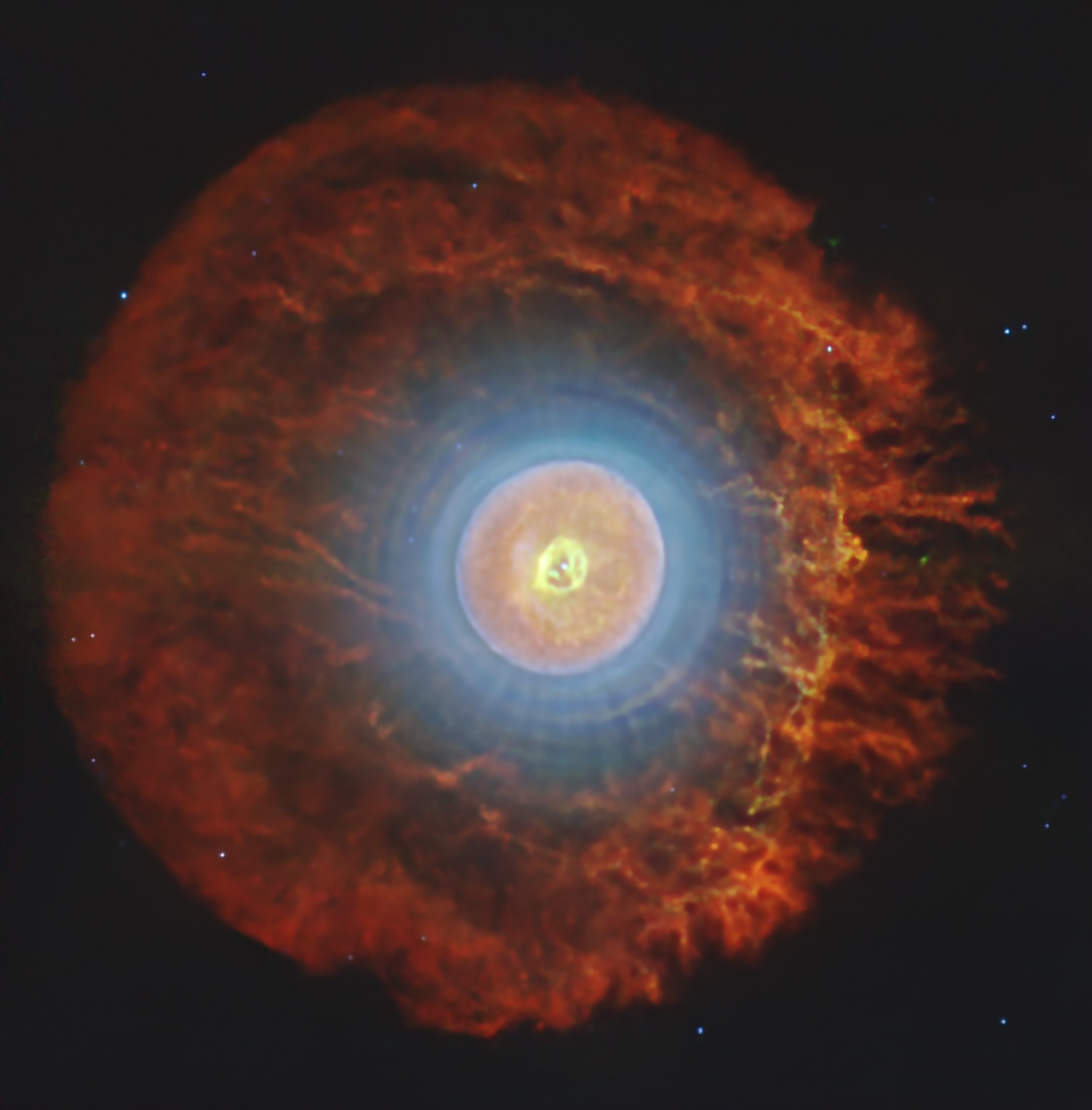
Astronomy - A PLANETARY NEBULA WITH COSMIC BUCKYBALLS
2026 June 4
Image Credit: NASA/ESA/CSA/J. Cami (Western University); Image Processing: K. Beecroft
Text: Jan Cami (Western University) & Cecilia Chirenti (NASA GSFC, UMCP, CRESST II)
Explanation: What is happening inside this unusual nebula? Planetary nebula Tc 1, captured here in exquisite detail by the James Webb Space Telescope, is the celestial site where buckyballs were first identified in 2010. Buckminsterfullerene — as buckyballs are officially called — is a molecule with 60 carbon atoms (C60) arranged in the shape of a soccer ball. The molecule is named for architect Buckminster Fuller because of its resemblance to the geodesic dome he helped popularize. Webb’s new data reveal where the C60 molecules live in this nebula, and the geometry is striking: they populate a thin spherical shell around the central star, visible here as the bright edge of the nebula’s glowing orange central region. Look closely near the nebula’s heart and a more perplexing feature emerges: a delicate structure shaped uncannily like an upside-down question mark, fitting punctuation for the many questions this nebula still poses.
03/06/2026
Astronomy - ANDROMEDA THROUGH GAS AND DUST
Image Credit & Copyright: Nick Fritz
Text: Keighley Rockcliffe (NASA GSFC, UMBC CSST, CRESST II)
Explanation: Over 1000 years ago, Persian astronomer Abd al-Rahman al-Sufi published humanity’s oldest known record of the Andromeda Galaxy in "The Book of Fixed Stars" (Bodleian Library MS. Marsh 144 p. 167). 800 years later, Andromeda became the 31st entry in Charles Messier’s "Catalogue of Nebulae and Star Clusters". From “a small cloud” to “nebula” and now known to be our nearest major galaxy, Andromeda has remained a fundamental astronomical object. Today’s image, taken over 202 hours, shows how far we have come in our ability to observe our neighbor. The diffuse red and blue clouds are mostly foreground ionized hydrogen and oxygen well within our Milky Way. Pink-red clouds of hydrogen ionized by the energetic light of young stars trace the galaxy’s dusty spiral arms. M32 and M110 are satellite galaxies pictured orbiting the larger Andromeda. Despite its long history of observation through ancient unaided eyes to modern telescopes, Andromeda still holds countless secrets that astronomers will continue to search for, including how galaxies merge and evolve, as well as the nature of the dark matter that galaxies reside in.
Santé/Médecine - CHOLESTEROL : UN TRAITEMENT TESTE A LONDRES POURRAIT TOUT CHANGER - 2/2
Santé/Médecine - CHOLESTEROL : UN TRAITEMENT TESTE A LONDRES POURRAIT TOUT CHANGER - 1/2
02/06/2026
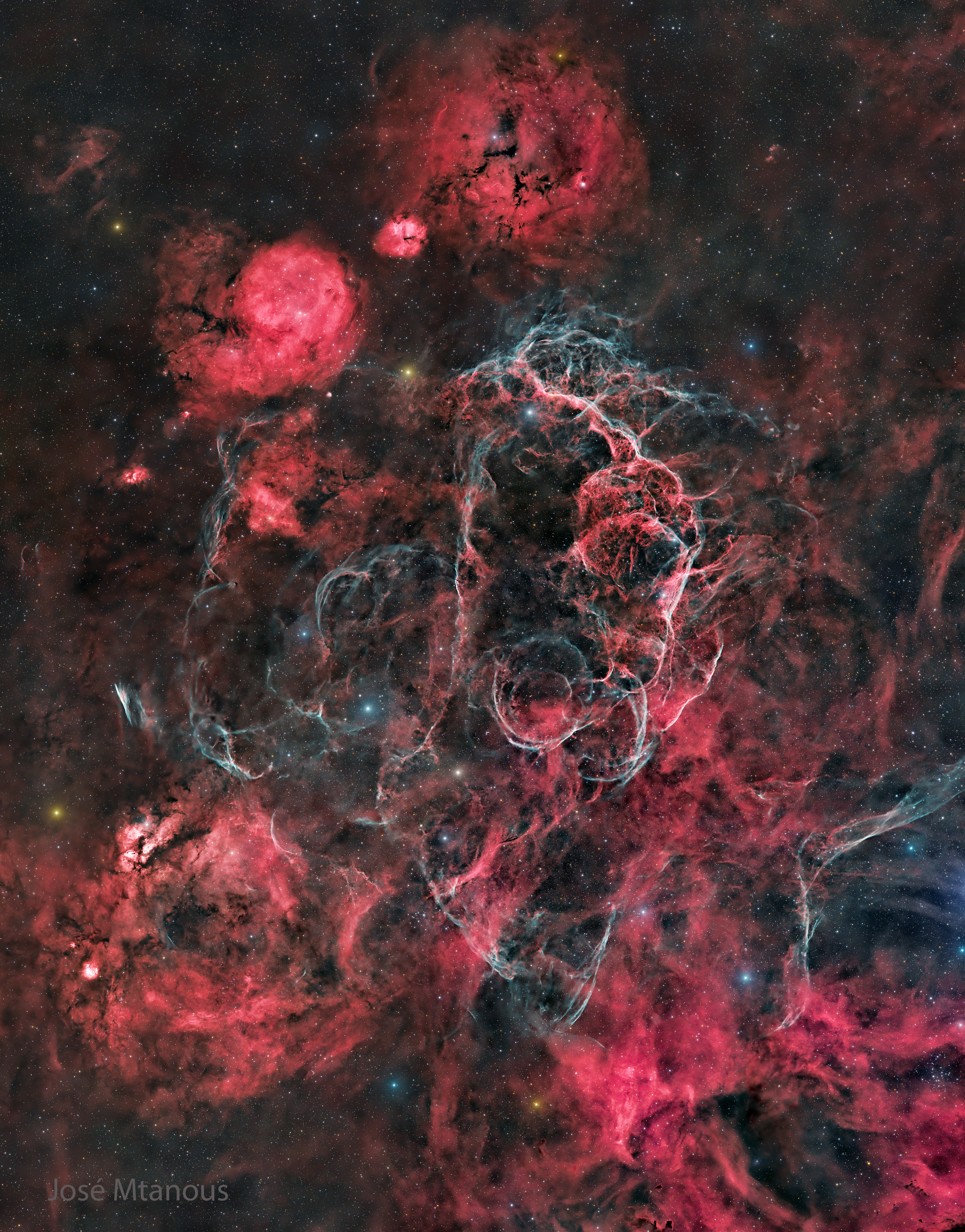
Astronomy - THE VELA SUPERNOVA REMNANT
2026 June 2
Image Credit & Copyright: José Mtanous
Explanation: The explosion is over, but the consequences continue. About twelve thousand years ago, a relatively normal star in the constellation Vela suddenly exploded, creating a strange point of light briefly visible to humans living near the beginning of recorded history. The outer layers of the star crashed into the interstellar medium, driving a shock wave that is still visible today. The featured image, taken piecemeal over 60 hours from the Khomas Region of Namibia, captures some of that filamentary and gigantic shock in visible light, with details highlighted by hydrogen (red) and oxygen (blue) emissions. As gas flies away from the detonated star, it decays and reacts with the interstellar medium, producing light in many different colors and energy bands. Remaining at the center of the Vela Supernova Remnant is a pulsar, a star as dense as nuclear matter that spins around more than ten times in a single second.
01/06/2026
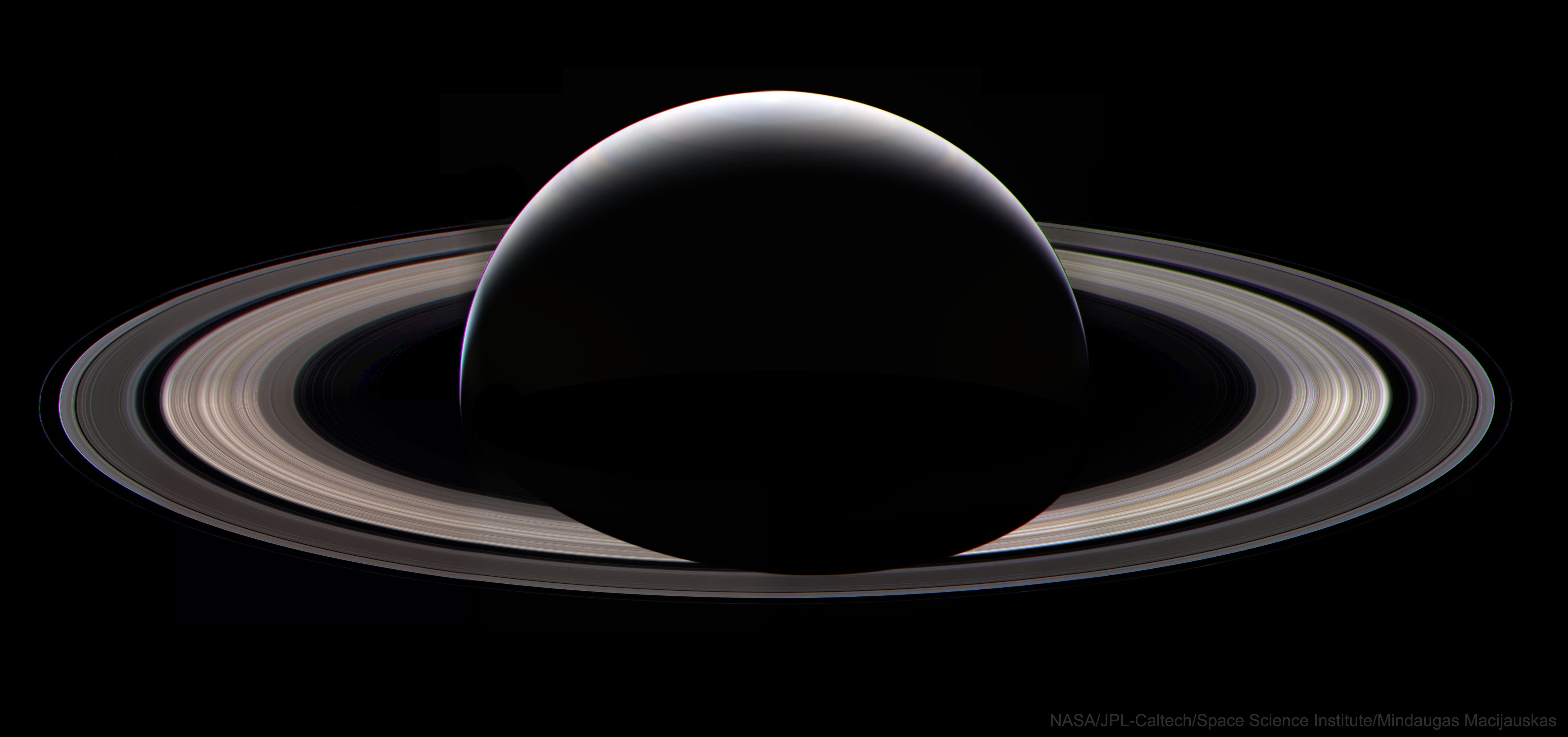
Astronomy - SATURN AT NIGHT
2026 June 1
Image Credit: NASA, JPL-Caltech, Space Science Institute, Mindaugas Macijauskas
Explanation: Telescopic views of Saturn and its beautiful rings often make it the star of star parties. But this stunning view of the outer gas gaint planet's rings and night side just isn't possible from telescopes in the vicinity of planet Earth. Peering out from the inner Solar System they can only bring Saturn's day side into view. In fact, this image of Saturn's slender sunlit crescent with the planet's night shadow cast across its broad and complex ring system was captured by the robot spacecraft Cassini. After a seven year long journey from planet Earth, Cassini called Saturn orbit home for 13 years (from 2004 - 2017) before it was directed to dive into the atmosphere of the gas giant on September 15, 2017. This magnificent mosaic is composed of frames recorded by Cassini's wide-angle camera only two days before its grand final plunge. And Saturn's night will not be seen again until another spaceship from Earth calls.
Vulcanologie - SAKURAJIMA - JAPON -
31/05/2026
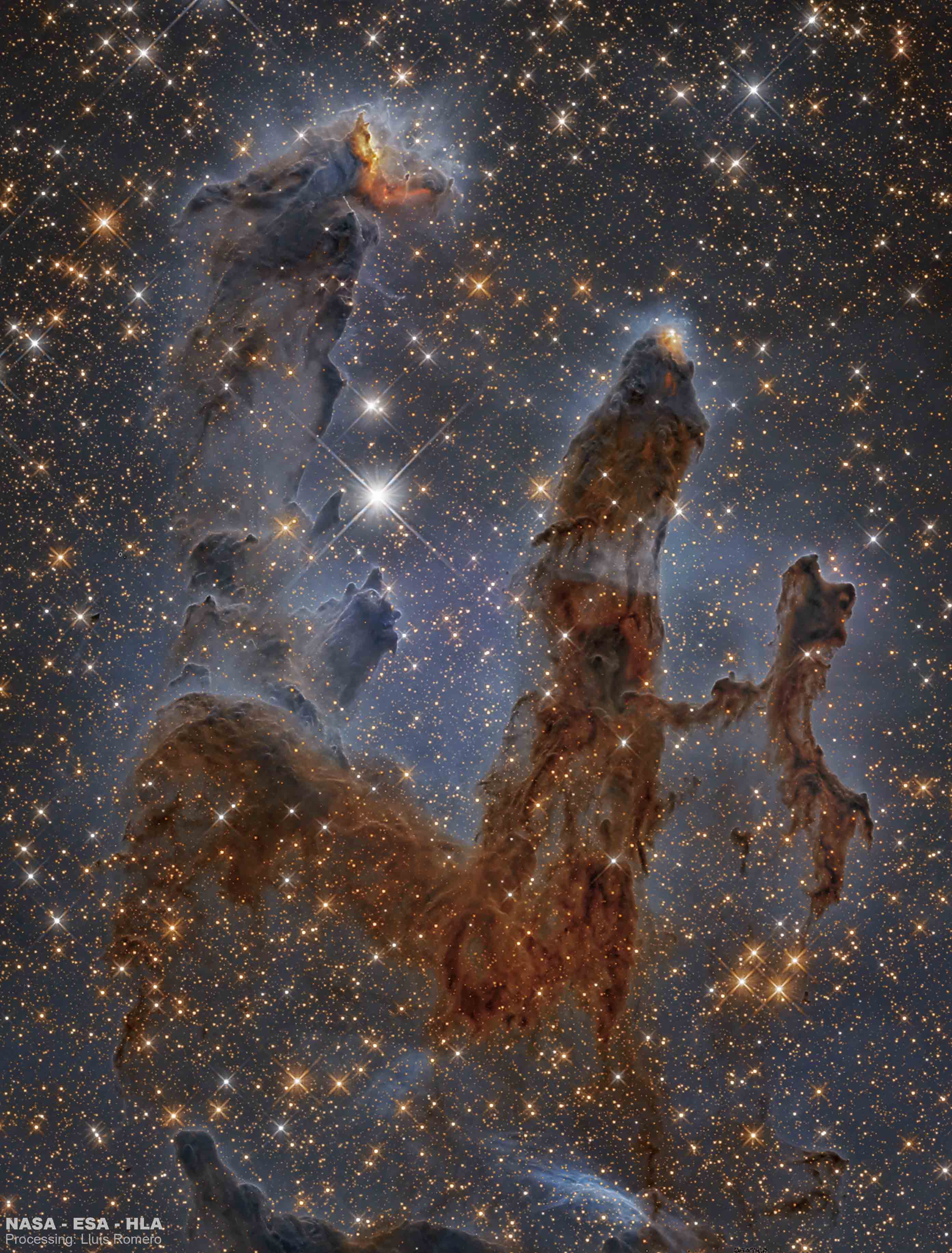
Astronomy - EAGLE NEBULA PILLARS IN INFRARED FROM HUBBLE
2026 May 31
Image Credit: NASA, ESA, Hubble, HLA; Processing: Luis Romero Ventura
Explanation: Newborn stars are forming in the Eagle Nebula. They are gravitationally contracting in pillars of dense gas and dust. The intense radiation of these newly-formed bright stars is causing surrounding material to boil away. This image, taken with the Hubble Space Telescope in near infrared light, allows the viewer to see through much of the thick dust that makes the pillars opaque in visible light. The giant structures are light years in length and dubbed informally the Pillars of Creation. Associated with the open star cluster M16, the Eagle Nebula lies about 6,500 light years away. The Eagle Nebula is a satisfying target for small telescopes in a nebula-rich part of the sky toward the split constellation Serpens Cauda (the tail of the snake).
Géoglyphes - LE GEANT DE WILMINGTON EN ANGLETERRE
Astronomy - THE HYDRA CLUSTER OF GALAXIES
2026 June 5 The Hydra Cluster of Galaxies Image Credit & Copyright : Rafael Sampaio Explanation: Within our own Milky Way galaxy, two ...
-
2026 January 1 Auroral Corona Image Credit & Copyright : Roi Levi Explanation: Cycle 25 solar maximum made 2025 a great year for ...
-
Imaginez un monde où le cancer n’est plus une sentence, mais une simple étape à franchir. Grâce à une découverte révolutionnaire, ce rêve es...