Nombre total de pages vues
08/09/2026
Aéronautique : LA CHINE ET L'AILE VOLANTE A 800 PASSAGERS
07/09/2026
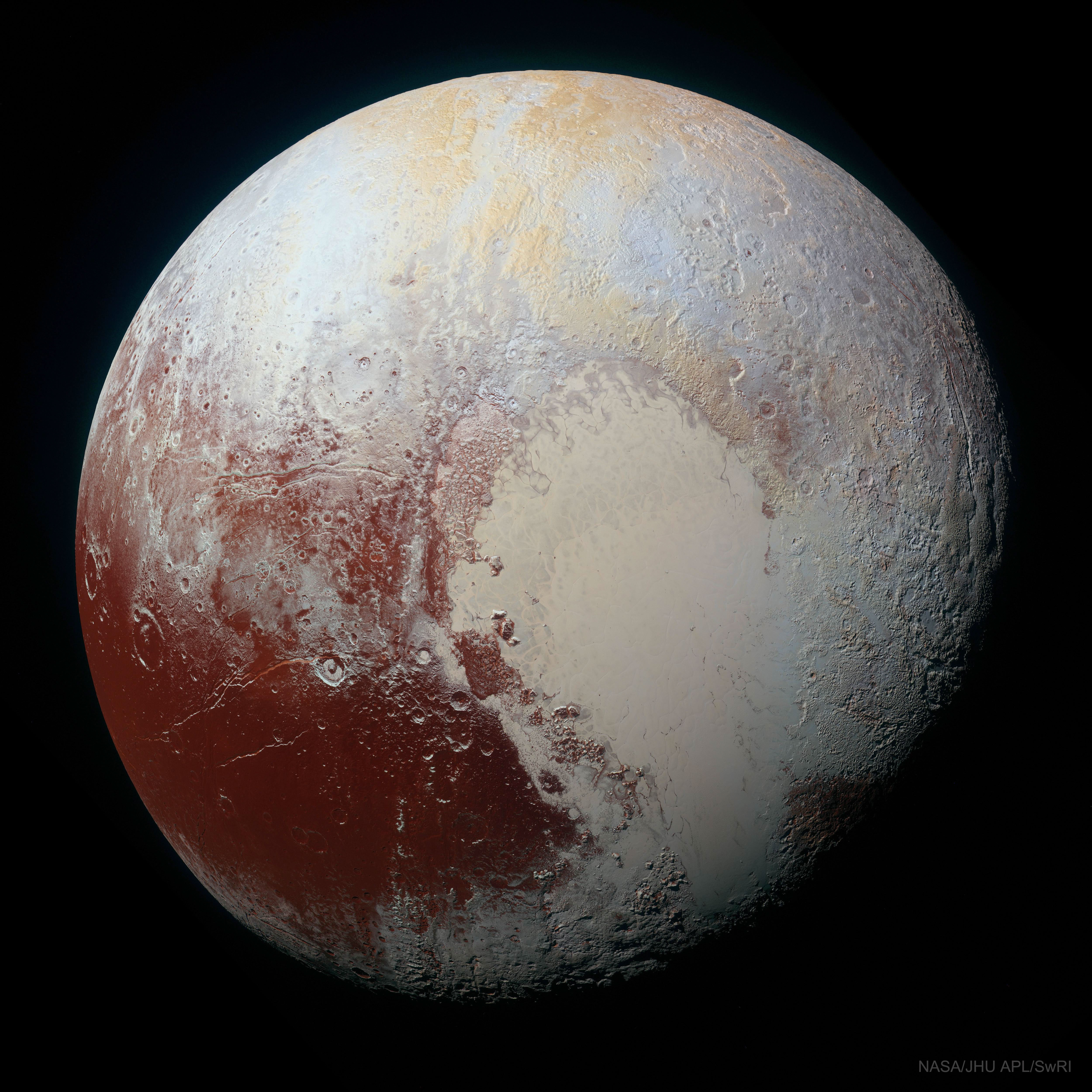
Astronomy - PLUTO IN ENHANCED COLOR
2026 September 6
Image Credit: NASA, Johns Hopkins Univ./APL, Southwest Research Inst.
Explanation: Pluto is more colorful than we can see. Color data and high-resolution images of our Solar System's most famous dwarf planet, taken by the robotic New Horizons spacecraft during its flyby in 2015 July, have been digitally combined to give an enhanced-color view of this ancient world sporting an unexpectedly young surface. The featured enhanced color image is not only esthetically pretty but scientifically useful, making surface regions of differing chemical composition visually distinct. For example, the light-colored heart-shaped Tombaugh Regio on the lower right is clearly shown here to be divisible into two regions that are geologically different, with the leftmost lobe, Sputnik Planitia, also appearing unusually smooth. After Pluto, New Horizons continued on, shooting past asteroid Arrokoth in 2019 with enough speed to escape our Solar System completely.
04/09/2026
Monde sous-marin - UN ANGE DES MERS : PLATYBRACHIUM ANTARCTICUM
03/09/2026
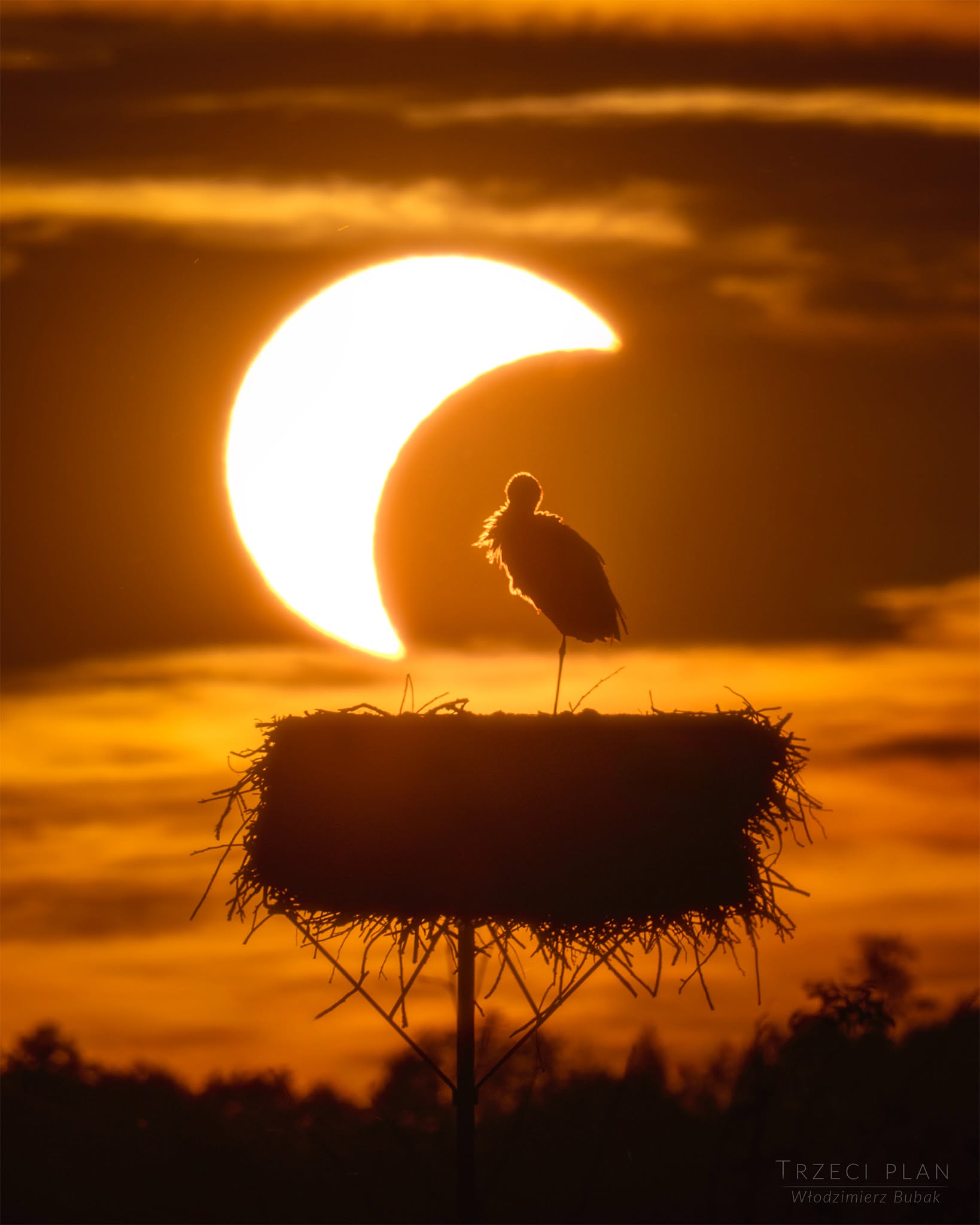
Astronomy - THE ECLIPSE AND THE STORK
2026 September 3
Image Credit & Copyright: Włodzimierz Bubak
Text: Cecilia Chirenti (NASA GSFC, UMCP, CRESST II)
Explanation: How do animals react to a total solar eclipse? The featured image shows a stork roosting on her nest in Poland at a partial phase of the recent total solar eclipse. If you are lucky enough to experience a total eclipse somewhere quiet and close to nature, you may be able to notice unusual daytime animal behaviors. During totality, you may hear nighttime sounds like crickets and frogs and see fireflies. In the dark, most birds are quiet. Thinking that it is time to go to bed, ducks and other waterfowl prepare to sleep on one leg, with their heads turned around and their beaks tucked into their back feathers (they don't really sleep with their heads tucked under one wing). When sunlight returns at the end of totality, songbirds greet the new "morning" with their dawn songs. The crickets and frogs go quiet again. Animals and people resume their lifes, only briefly disturbed by the chance alignment of our Sun and Moon.
02/09/2026
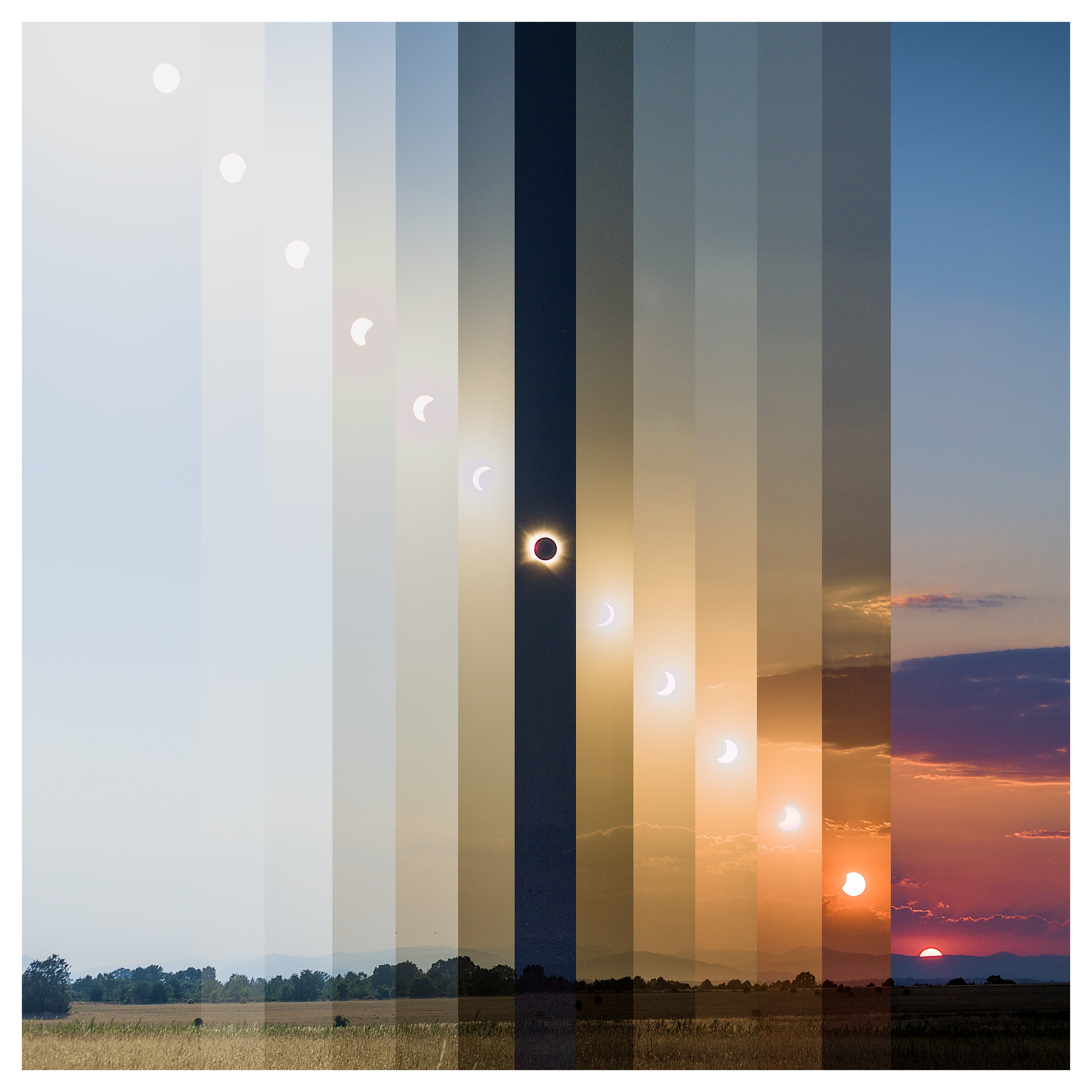
Astronomy - SOLAR ECLIPSES AND CULTURE
2026 September 2
Image Credit & Copyright: Javier Castro
Text: Keighley Rockcliffe (NASA GSFC, UMBC CSST, CRESST II)
Explanation: Pretend you have never heard of a solar eclipse. The Sun’s behavior has been predictable your whole life. One day, you witness the sky transform as it does in today’s spliced image spanning two hours of the August 12, 2026 solar eclipse. The Sun disappears, leaving behind a bright, empty ring. What would you think had happened? Humans have interpreted eclipses in countless ways throughout history, embedding beliefs about connection, rebirth, or danger into culture. “Eclipse” comes from the Greek word “ékleipsis” meaning “abandonment”. In ancient Greece, the solar eclipse marked the anger of the gods and the Sun abandoning humanity. To the Diné people, this celestial alignment is a time of renewal. Out of respect and to avoid the danger of sunlight, the Diné stay inside until the Sun and Moon separate. The Batammariba people of Benin and Togo believe that the Sun and Moon fight during an eclipse, so the community encourages peace among themselves. Eclipses are an example of the longstanding connection between astronomy and society.
01/09/2026
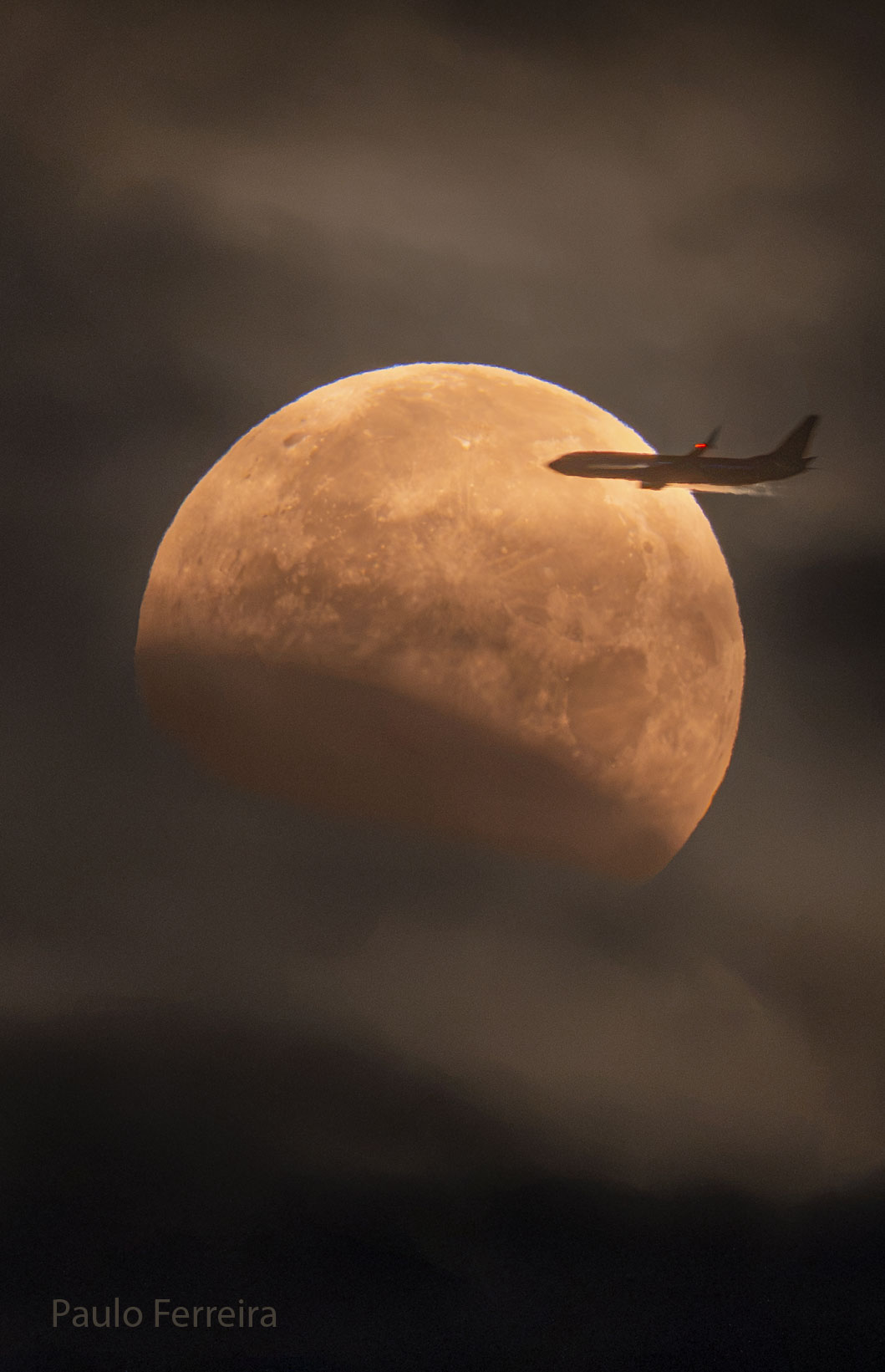
Astronomy - A PLANE LUNAR ECLIPSE
Image Credit: Paulo Ferreira
Explanation: Did you need to be on the right side of this airplane to see this eclipse? No. Lunar eclipses are routinely seen from the half of the Earth facing the Moon when the eclipse occurs, making them some of the most commonly witnessed astronomical events. You don't even need any special equipment to see one -- just your unaided eyes. Lunar eclipses are also some of the most photographed astronomical events because, unlike with a solar eclipse, your eyes and camera do not have to look toward the bright Sun. However, considering the featured image taken last week from Portugal, if you were on the left side of that airplane during takeoff, you might have trouble seeing it -- at first. But even then, after takeoff, since lunar eclipses typically last for hours, you might soon be able to safely cross the aisle(s) to see it.
27/08/2026
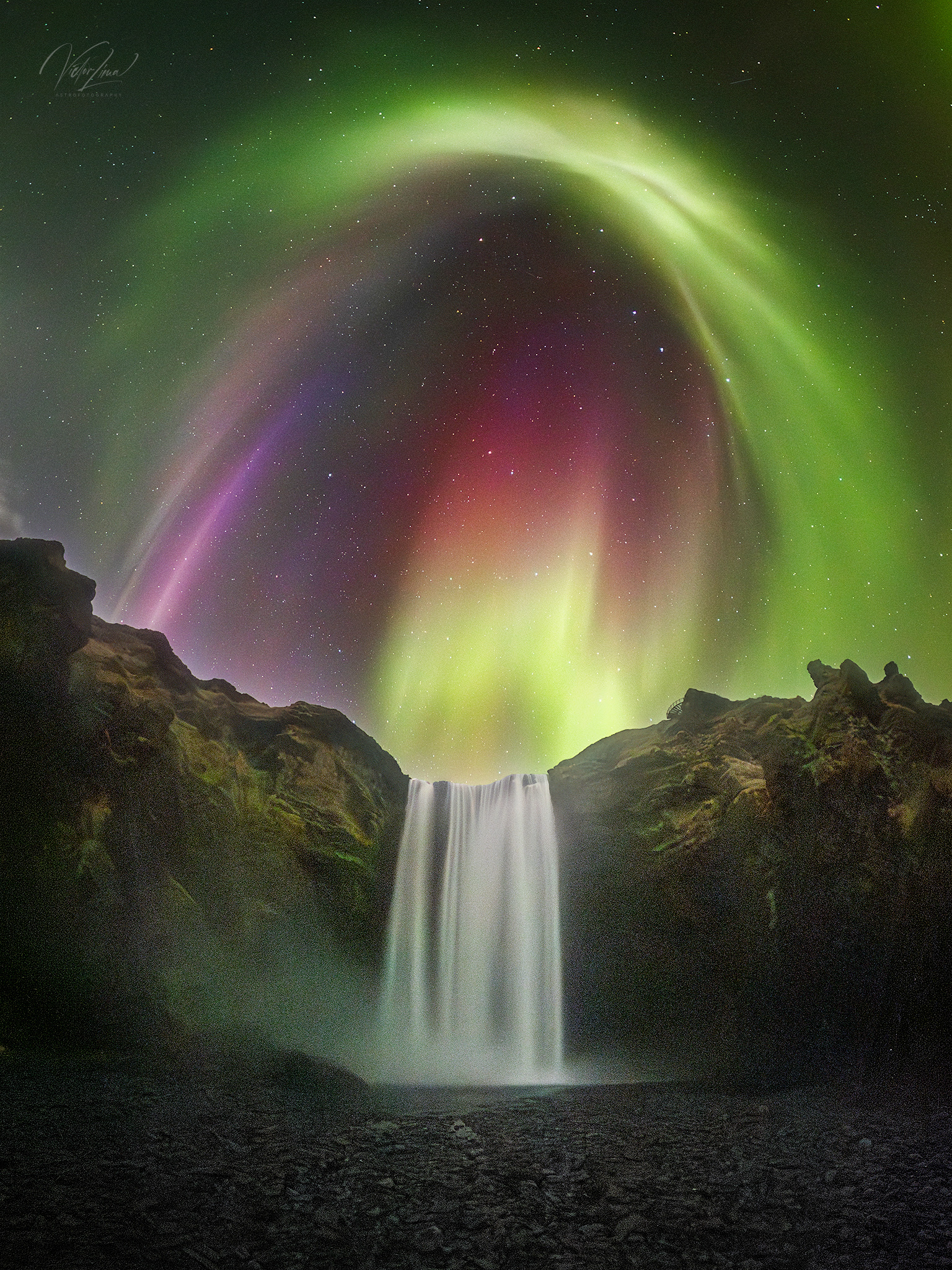
Astronomy - COLORFUL AURORA OVER ICELANDIC WATERFALL
2026 August 27
Image Credit & Copyright: Victor Lima
Text: Cecilia Chirenti (NASA GSFC, UMCP, CRESST II)
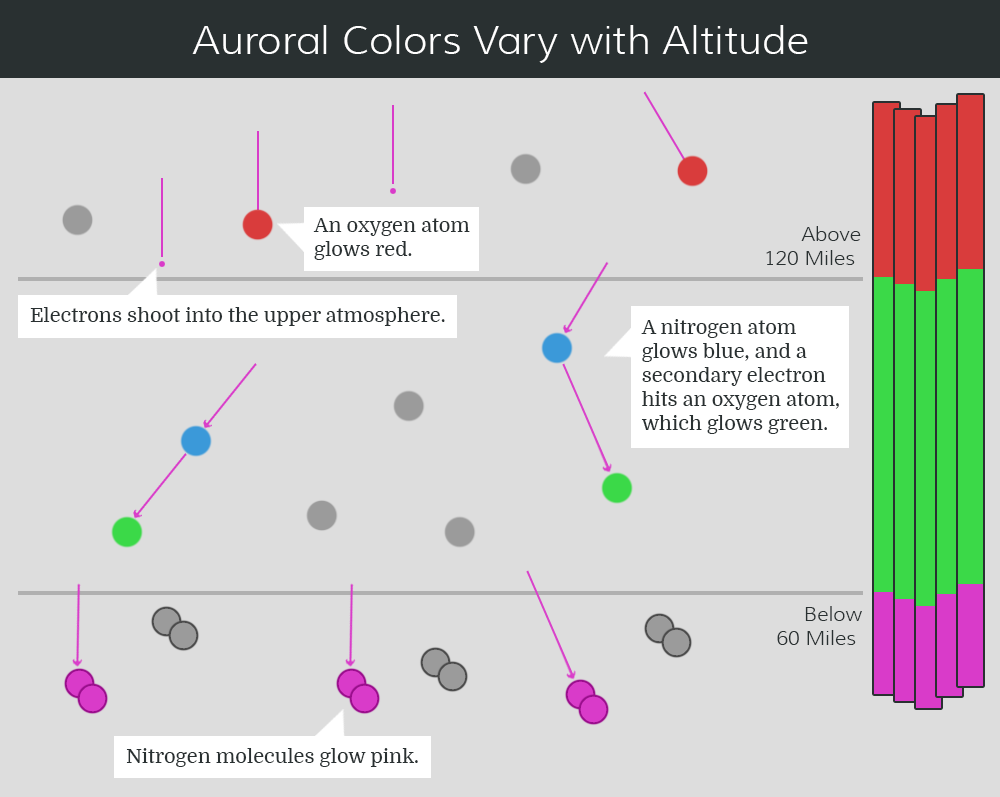
Explanation: What a sight to behold, when a night sky became filled with colors that appeared to rain over the Skógafoss waterfall in Iceland. This image was taken in a single 5 second exposure by the photographer in April 2025. Seeing an aurora is on many people's bucket lists. But it is not easy. It requires high solar activity, dark and clear skies, and usually a viewing location at high latitude. That makes the northern lights more easily seen than the corresponding southern lights, simply because there is less landmass in the Southern Hemisphere, especially around the Antarctic Circle. Auroras are caused by charged particles from the solar wind that are captured by the Earth's magnetosphere and guided by the magnetic field to a region close to one of the poles, where they collide with gas particles in the atmosphere. Different colors indicate interactions with different gases at different altitudes, like oxygen (red and green) and nitrogen (blue and pink).
25/08/2026
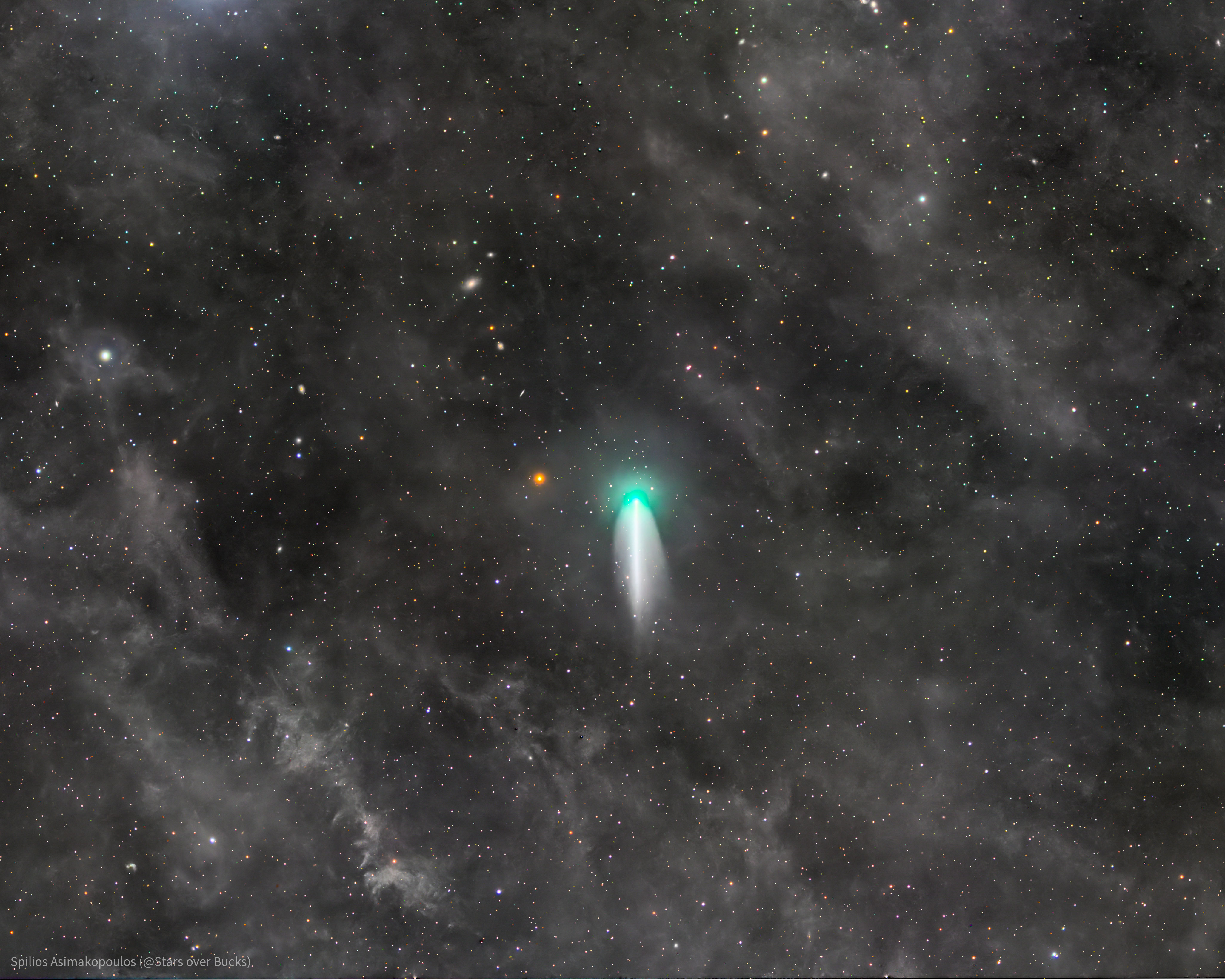
Astronomy - COMET 220P IN OUTBURST
2026 August 24
Image Credit & Copyright: Spilios Asimakopoulos
Explanation: Comet 220P is unexpectedly bright. Normally, periodic Comet 220P/McNaught is so dim that to see it requires a telescope. Two surprising outbursts this year, however, have made it about 20,000 times brighter than usual, so that it is now visible with binoculars and long-duration camera exposures. As expected, Comet 220P continues to orbit the Sun between Mars and Jupiter with a period of over 5 years. The featured long duration exposure, taken 10 days ago from South Africa, shows the comet's bright green head and short dust tail. Reasons for Comet 220P's impressive outbursts are unknown but could be caused by the release of built-up subsurface gas or comet quakes. Comet 220P will pass about one Earth-Sun distance from the Earth in October, after which it is expected to fade quickly as it begins its return to the far part of its orbit.
24/08/2026
Monde sous-marin - UN ETRANGE VER ENCORNET : LE TEUTHIDODRILUS
23/08/2026
Astronomy - CASSINI APPROACHES SATURN
Cassini Approaches Saturn
Music: Adagio for Strings (NY Philharmonic)
Explanation: What would it look like to approach the grand planet Saturn? One doesn't have to just imagine -- the Cassini spacecraft did just this in 2004, recording thousands of images along the way, and hundreds of thousands more since entering orbit. Some of Cassini's early images have been digitally tweaked, cropped, and compiled into the featured inspiring video which is part of a larger IMAX movie project named In Saturn's Rings. In the concluding sequence, Saturn looms increasingly large on approach as cloudy Titan swoops below. With Saturn whirling around in the background, Cassini is next depicted flying over Mimas, with large Herschel Crater clearly visible. Saturn's majestic rings then take over the show as Cassini crosses Saturn's thin ring plane. Dark shadows of the ring appear on Saturn itself. Finally, the enigmatic ice-geyser moon Enceladus appears in the distance and then is approached just as the video clip ends. After more than a decade of exploration and discovery, the Cassini spacecraft ran low on fuel in 2017 was directed to enter Saturn's atmosphere, where it surely melted.
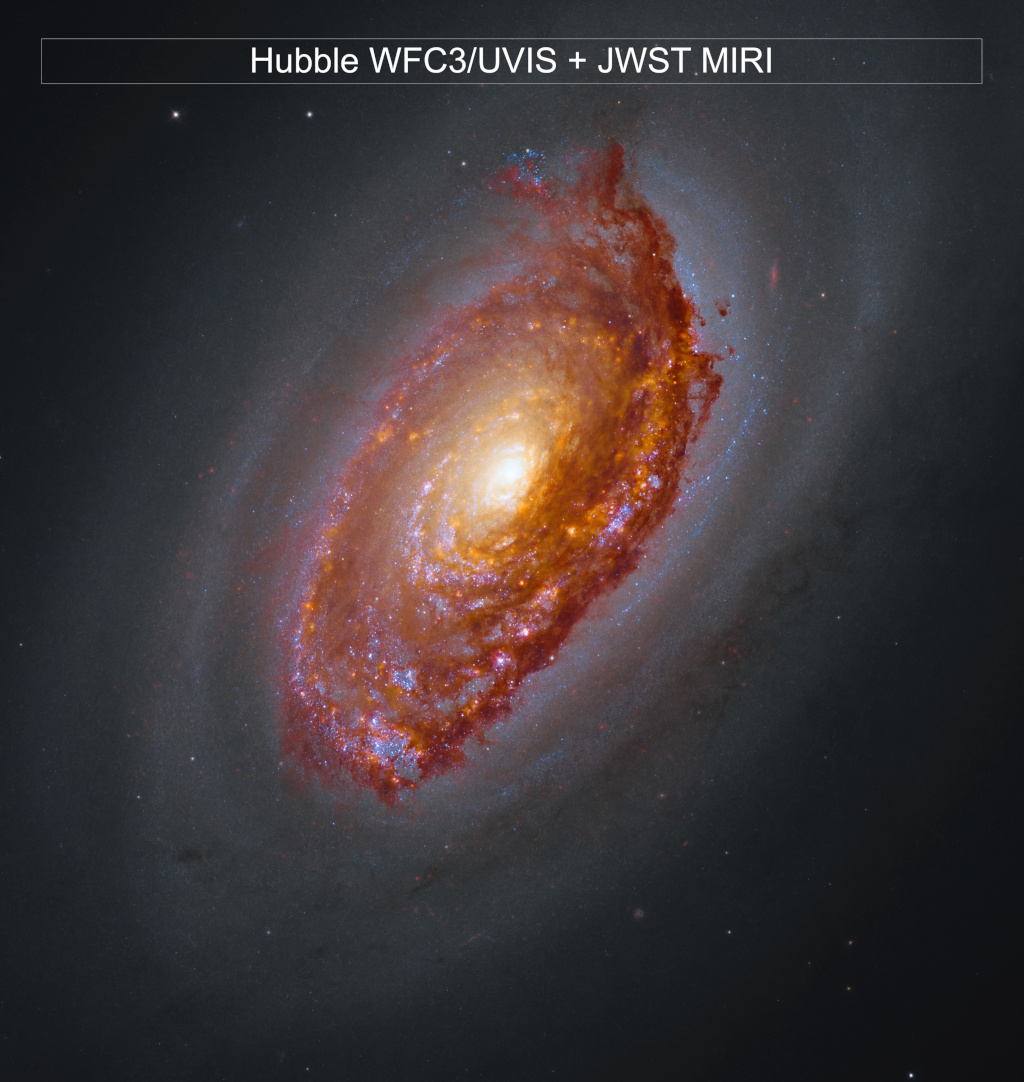
Astronomy -WEBB'S VIEW OF M64
2026 September 16 Webb's View of M64 Image Credit: NASA, CSA, ESA, F. Belfiore (ESO), J. Lee (STScI), A. Leroy (OSU), and D. Thilker (JH...
-
2026 January 2 NanoSail-D2 Image Credit & Copyright : Ralf Vandebergh Explanation: In 2011, on January 20, NASA's NanoSail-D2 ...
-
2026 January 1 Auroral Corona Image Credit & Copyright : Roi Levi Explanation: Cycle 25 solar maximum made 2025 a great year for ...